Today (26 May), Commission President Ursula von der Leyen, Council President Charles Michel and the Prime Minister of Japan ShinzŠAbe will hold a virtual leaders’ meeting to address matters related to the coronavirus pandemic, preparations for the upcoming G7 summit, and the implementation of the EU-Japan Strategic Partnership.
As G7, G20 and strategic, likeminded bilateral partners, the European Union and Japan are committed to ensuring a strong global response to the coronavirus outbreak through close cooperation and enhanced coordination of efforts. The leaders are expected to address the economic recovery, restoring international trade, assisting vulnerable populations, as well as the virus’ impact on geopolitical issues.
Following the end of the meeting, Presidents Michel and von der Leyen will present the outcome to the press. Audiovisual coverage will be available on EbS. For more information on EU-Japan relations, consult the website of the EU Delegation and the dedicated factsheet.
The Keilor Downs College teacher returned a positive diagnosis last Friday amid the state’s COVID-19 testing blitz.
Education Minister James Merlino assured reporters today there was no “further risk”, with the school reopening again today.
“There was no exposure to the school site,” he said.
Keilor Downs College. (Google Maps)
“No close contacts were identified at the school. Because of the timing, there is no further action required at the school.”
Principal Linda Maxwell in a statement said the teacher would remain in isolation at home until the Department of Health permitted them to return to school.
“Please do not be alarmed but one of our staff has tested positive to COVID-19 in a community test,” she wrote on the school’s Facebook page.
“They have not been at school at all during this time so there is no action required at school.
“We have not been asked to close for cleaning and there are no contacts at school.”
Ms Maxwell said the Department of Health indicated the infection was contracted via community transmission, as the teacher had “very limited contact” outside of their home.
“They contracted the virus while they were on remote learning so there is no possibility of involvement from anyone at KDC,” she said.
“I really need your support to keep things calm and to ensure that students still feel confident to return to face-to-face teaching.”
Students are beginning to return to Victorian schools. (9News)
Victorian students from prep to year 2, year 11 and 12 and specialist schools have returned to school grounds today, after spending more than a month of term two learning from home.
About 10,000 school staff have been tested for coronavirus, with just the one teacher returning a positive test.
Mr Merlino stressed it was safe for students to return to face-to-face learning. But immunocompromised students would still be allowed to learn remotely.
“We have been very careful and cautious with how we have approached this pandemic,” he said.
“Our principals, teachers and support staff have done a brilliant job over the last seven weeks, engaging with their students through flexible and remote learning.
“Our teachers are raring to go. This is still going to be a challenging time. Schools will continue to look different.”
The state’s total has risen to 1610, three of those new cases being detected among returned overseas travellers and one through routine COVID-19 testing.
HammondCare in Caulfield. (Google Maps)
“The resident has been moved to a separate building at the facility and identified close contacts are already in quarantine,” Mr Merlino said.
“The source of acquisition for this case is still under investigation including looking at potential links to the pervious case at the facility.”
The facility’s coronavirus tally now sits at two, with an 84-year-old resident initially testing positive before returning two negative results to the virus last week.
HammondCare in a statement confirmed a second resident returned a positive test for coronavirus but has since tested negative.
Senior nurse and general manager Angela Raguz said the conflicting results were “odd and unusual”.
“The impact this has had on residents, family and friends, and staff is significant and is being taken seriously by HammondCare,” she said.
“Discussions continue with the Department of Health and Human Services so we can better understand why these conflicting results have occurred.”
There are eight people in hospitals across the state, including three patients in intensive care.
While 182 cases may indicate community transmission.
There are 56 active coronavirus cases in Victoria.
A white woman called the police and accused a Black man of threatening her and her dog in New York City’s Central Park, as seen in now-viral footage posted to social media on Monday. The man said the confrontation began when he asked her to put her dog on a leash.
The footage was published on Facebook by the man, Christian Cooper, and on Twitter by his sister, Melody Cooper. The video was viewed on Twitter more than 10 million times by late Monday night and sparked widespread outrage.
It begins with the dog walker dragging her dog by the collar toward the man and demanding that he stop filming.
“Please don’t come close to me,†the man is heard repeatedly saying as she approaches.Â
She asks him to stop filming several times and then threatens to call the police. “I’m going to tell them there’s an African American man threatening my life,†she says.
“Please tell them whatever you like,†he responds.
Then, on her phone, the dog walker says: “I’m in the Ramble and there is a man ― African American, he has a bicycle helmet ― he is recording me and threatening me and my dog.â€
A New York Police Department spokesperson said the NYPD were called to the Central Park Ramble for a report of an assault just after 8 a.m. Monday. On arrival, they determined two individuals had engaged in a verbal dispute. There was no crime and no arrests, the spokesperson said.
According to the Central Park website, dogs must be leashed at all times in the Ramble. The woman is also seen repeatedly dragging her struggling dog by its collar during the video and later attaches the leash.
Melody Cooper said her brother is an avid birder and had politely requested that the woman put her dog on a leash, in accordance with signs in the park. Christian Cooper said the dog was “tearing through the plantings in the Ramble†when he asked the woman to leash her pet.
Melody Cooper said she was grateful for the concern she and her brother received on social media.
My brother & I are so grateful for your concern! He is fine and left to continue birding after she leashed the dog, as he politely requested. I wanted folks to know what happened to make sure it never happens again from her. All she had to do was put her poor dog on the leash.
A group of customers in a grocery store went ballistic as a woman shopped without a face mask, yelling at her until she walked off with her cart full of groceries.
The heated confrontation was captured on a video posted Saturday to Facebook on Saturday and quickly went viral on Twitter. “What happens in Staten Island when you don’t wear a mask in ShopRite!†noted the poster, who said it had been filmed by a friend who sent it to her.
It was a surprising scene given all the media attention recently to maskless demonstrators protesting against health and safety measures to help stop the spread of COVID-19. The people yelling at the shopper were over-the-top angry, and several shouted obscenities and insults.
Comments on social media ranged from attacks on the yelling “savages†to “finally†people are standing up for safety.
The woman who posted the video noted: “I get ppl are anxious NO reason to act the way some of them are … especially guy following her to scream at her and call her a pig!â€
No one reached at the ShopRite stores on Staten Island would comment on the incident to HuffPost.Â
New York Governor Andrew Cuomo said Monday that he won’t allow Staten Island to reopen businesses ahead of the rest of the city, as local lawmakers have requested. They’ve argued that certain required safety parameters have already been met. But Cuomo said the city has to move at a unified pace because of travel among the boroughs.
Almost 800 residents in Staten Island’s Richmond County have died of COVID-19, making it 25th on the list of counties in the nation with the highest number of deaths.
“All New Yorkers must wear a face covering when they need to be outside their home and may not be able to maintain at least 6 feet of distance between themselves and others, according to the New York City Department of Health. “Examples include riding the subway, ferry, or bus; riding in a taxi or car service; walking on a busy street; going to pharmacies and grocery stores; and going to the doctor or a hospital.â€
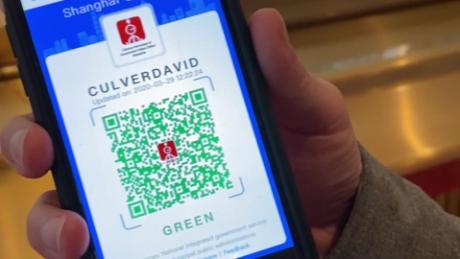
That “health score” will be embedded in a digital QR code accessible on your phone, ready to be scanned whenever needed.
This is what the city government of Hangzhou in eastern China has envisioned for its more than 10 million residents, inspired by a “health code” system it adopted during the Covid-19 pandemic to profile people based on their risk of infection.
Across the globe, governments have stepped up the collection of personal data in their fight against the novel coronavirus, which has killed more than 345,000 people and infected close to 5.5 million, according to data collected by Johns Hopkins University.
But there are also fears that some of these extraordinary measures could be here to stay even after the public health crisis is over, posing a long-term threat to privacy.
That concern was amplified among Hangzhou residents when their municipal government announced Friday that it was planning to make permanent a version of the “health code” app used during the pandemic.
Since February, the Chinese government has used a color-based “health code” system to control people’s movements and curb the spread of the coronavirus. The automatically generated quick response codes, commonly abbreviated to QR codes, are assigned to citizens on their smartphones as an indicator of their health status. The color of these codes — in red, amber or green — decides whether users can leave home, use public transport and enter public places.
The health codes can also serve as a tracker for people’s movements, as residents have their QR codes scanned as they enter public places. Once a confirmed case is diagnosed, authorities are able to quickly trace where the patient has been and identify people who have been in contact with that individual.
Hangzhou, a coastal city about a hundred miles southwest of Shanghai, was among the first cities to use the health code system to decide which citizens should go into quarantine. But now, the city government says it wants the “health code” to be “normalized” — meaning it could be here to stay well beyond the pandemic.
At a meeting of the Hangzhou Municipal Health Commission on Friday, Sun Yongrong, the director of the commission, said they were looking to establish a system that can assign citizens a personal score, color and ranking based on the collected data on their medical history, health checkups and lifestyle habits.
An image demonstrating the design of the proposed system posted on the commission’s website shows the daily health score will range from 0 to 100, corresponding to a color in a gradient from red to green.
The score can be affected by your daily activities: 15,000 steps of daily exercise will increase your score by 5 points, 200 milliliters of baijiu — a sorghum-based Chinese liquor known for its high alcohol content — will lower your score by 1.5 points, five cigarettes will cost you 3 points, and 7.5 hours of sleep will add one point to your score, the demonstration shows.
There might also be a “group health score” for companies and residential committees, Sun said. A demonstration shows the health score for a company can be based on factors such as how much its employees exercise and sleep per day, how many employees have conducted annual health checkups, and how well chronic disease are controlled among its employees.
Sun did not give details on how the data will be collected, whether the app will be compulsory, or how the score will affect people’s daily life and business operations.
“Medical history and health checkup reports are personal privacy, why should they be included in health codes to show others? Points will be deducted for smoking, drinking and not sleeping enough, does this mean our lives will be completely monitored?” said a user on Weibo, China’s Twitter-like platform.
“During the epidemic we had no choice, but I hope after the epidemic individuals will have the right to delete the app, instead of normalizing (its use),” another user said.
The proposal has also raised questions over its wider application. On Zhihu, China’s version of Quora, some users voiced concerns against its possible exploitation by insurance companies and marketing firms, while others worried that it could lead to employment discrimination against people with lower scores.
The proposed health code system bears similarities to China’s social credit system, an ambitious social-engineering style project that uses big data and a combination of rewards and punishments to incentivize good behavior. In Hangzhou’s pilot scheme of the social credit system, residents are assigned a score based on certain behaviors such as their ability to pay debts and fees on time and the amount of community volunteering work they’ve completed.
Hangzhou, home to China’s e-commerce and internet giant Alibaba, has been at the forefront of applying big data and digital technology to urban management. At the moment, it is unclear if the city’s health score proposal will be adopted and rolled out nationwide like the coronavirus QR codes.
Some Chinese internet users, however, are already questioning the feasibility of the plan, pointing to technical difficulties such as how to convert different medical conditions into scores and come up with a workable algorithm.
“This is too big a step. No matter how willing are Chinese people to sacrifice their privacy in exchange for conveniences, (the health score) will surely spark discontent from many users,” said a comment on Zhihu.
The Department of Justice is investigating the death of Ahmaud Arbery as a possible hate crime after the man was shot and killed while jogging in Georgia earlier this year, according to multiplereports.
The move comes amid nationwide outrage over the shooting death. Arbery, a 25-year-old Black man, was confronted by two white men while he was jogging in a coastal South Georgia neighborhood in late February. The pair, Gregory and Travis McMichael, said they believed he was a burglar before they confronted him with guns. Travis McMichael shot Arbery three times during a confrontation, killing him.
No one was arrested, however, until a graphic video of the encounter was released earlier this month.Â
Confirmed: DOJ is officially investigating shooting death of Ahmaud Arbery as a possible hate crime, according to Arbery’s family’s attorney. US Attorney met w/ the parents Thurs & told them DOJ also investigating county & state response for possible equal protection violations.
Attorneys for Arbery’s family said Monday they had met last week with Bobby Christine, the U.S. attorney for the Southern District of Georgia, noting that officials at the DOJ would investigate why it took months for charges to be filed. The lawyers also said the Justice Department was weighing civil and criminal charges against state officials.
“[Christine’s] office is investigating why it took so long to arrest the individuals responsible for Mr. Arbery’s death,†the Arberys’ attorneys said in a statement Monday. “This would involve the consideration of both civil and criminal charges against state officials and other conspirators involved in the murder of Ahmaud Arbery.â€
They added: “We left that meeting feeling satisfied that the DOJ would do their part to fully investigate all players involved in this murder and that they would hold those responsible accountable.â€
The Justice Department said earlier this month that it was weighing federal hate crime charges to determine if they were “appropriate†following the arrest of the men in Georgia. A third man who filmed the encounter was arrested last week on charges of felony murder and criminal attempt to commit false imprisonment.
There has been a lot of speculation about the impact of COVID-19 on the Indonesian island of Bali, which has seen tourist arrivals dry up amid border closures and the grounding of domestic flights. Some of the more balanced stories have focused on the devastating impact to locals employed in the tourism industry such as hotel staff, tour guides and restaurant workers. Others have highlighted the experience of foreigners hunkered down in Bali for the duration of the crisis. These analyses vary in their tone and content, but some of the more sensationalist tend to privilege the perspective of foreigners or use somewhat alarmist language to push a narrative of impending disaster. But how dire is the situation in Bali really? An immensely challenging road certainly lays ahead, but there are some misconceptions and narratives out there that I wanted to push back against a bit.
This story in the LA Times is a good starting point. The piece is rightly critical of the Indonesian government’s slow response to the crisis, but it then says the country’s economy has “been decimated by the lack of tourists to places like Bali.†In fact, tourism makes up a relatively small portion of Indonesia’s GDP – investment and household consumption have been doing the heavy lifting of late for this trillion-dollar economy. And if you totalled up the value of all of Bali’s economic activity in 2019 it would be 1.63% of Indonesia’s total output. Is Bali an important part of the Indonesian economy that brings in large amounts of foreign currency? Undoubtedly. But Bali is not Indonesia.
Yet even if its economic footprint is not quite as big as its outsized place in peoples’ imaginations, it is a very popular tourist destination. And clearly any businesses depending on tourism are in deep trouble right now, as are their employees. The West Australian ran this piece with the headline  “Bali economy collapses.†This story from Al Jazeera states that 80% of Bali’s GDP comes from tourism, while making the rather dramatic claim that “Without tourists, Bali will die.†But how accurate are these claims?
In 2019 according to the Central Statistics Agency (BPS), 45% of Bali’s GDP came from agriculture, education, manufacturing, health care, financial services and other industries that one would not expect to be directly tied to the tourism sector. 55% came from hotels, restaurants, retail, transportation, real estate and construction. The deputy governor has estimated that 60% of the island’s GDP is supported by tourism, while the head of Bali’s tourism department estimates half of the population has some connection to the industry. The loss of visitors is obviously a staggering blow to the economy, especially as service jobs supported by tourism tend to pay well – but the 80% figure still appears to be an over-estimation. It is also far from clear that this has caused the economy to collapse.
Only certain parts of Bali have really high and immediate exposure to tourism. Badung Regency, in which the tourist hot-spots of Kuta, Canggu and Seminyak are located, is the most exposed and is feeling the most immediate impact. Those areas are truly ghost towns already.  But Kuta and Seminyak are not Bali. Outside of Badung, agriculture is actually the dominant industry in the majority of Bali’s regencies, accounting for nearly 25% of output in Karangasem and 26.8% in Bangli. BPS estimated that in 2018 approximately 477,000 workers were employed in the agriculture sector.
While it is possible that the price of agricultural products will fall due to shrinking demand from hotels and restaurants, the state-owned logistics and commodity broker BULOG has already stated that if that happens they will step in to buy staple goods like rice produced by Balinese farmers in order to stabilize the price. This doesn’t mean that agriculture can offset the loss of jobs and revenue from tourism. But it underscores that Bali’s economy extends beyond the tourist resorts of Nusa Dua and the beaches of Kuta into less-seen areas where hardworking people, who have fairly limited direct exposure to the tourism sector, work in the sawah and run local warungs. And their world is still very much alive.
If you travel just a few kilometres outside of the tourist enclaves of Kuta or Seminyak, you will see people out and about. The government has shut the beaches, mandated that businesses close by 9pm, banned mass gatherings and recommended that people stay home if they can. Police in Sanur are forcing anyone caught not wearing a mask to do push-ups. Some shops have closed voluntarily; others have been ordered closed in an ad-hoc fashion by small administrative units called banjar. This patchwork system of closures is a less than ideal strategy, but it does allow some businesses to remain open and pay their staff for now.
In the provincial capital of Denpasar, traffic is noticeably lighter and many restaurants are doing takeout only. The police have set up checkpoints to ensure the rules are being observed, but people are still carrying on as best they can delivering food, selling phones, giving haircuts and otherwise trying to stay afloat. Bali might be on life support, but it’s far from dead. Those who can afford to stay home are doing so. But many do not have that luxury. They must work if they are able, as Indonesia’s weak and patchy social safety net – particularly for migrant labourers – will not catch them. And so life carries on. People buy gas. They get their motorbikes fixed at the bengkel. They show up at Pasar Badung and barter over the price of chickens. Is this risky? Maybe. But the alternative is likely worse.
Excluding Badung Regency and the capital city of Denpasar, 50% or more of all economic activity in Bali’s other seven regencies (home to 2.7 million people) comes from household consumption. That is, people buying the everyday things that they need. With tourism on ice, consumption must sustain the economy on fumes for now. But people can only buy things if they can work and earn income. That is why you see people on the streets of Denpasar every day, trying their best to make do. If they stopped doing that the economy of Bali really would collapse.
The success of large-scale social restrictions is heavily reliant on effective coordination.
For me, this idea that Bali will die without tourists comes uncomfortably close to a White Saviour narrative, implying that local people have no choice but to hunker down and endure this crisis until foreigners start showing up again to rescue them. Such framing strips Indonesians of their agency in rising to meet this challenge, something they are quite capable of doing and have done many times before. Already you see local community efforts coming together to support workers who lost their jobs. Newly unemployed tour guides are trying to pivot toward retail.
Although I know many people are suffering, I have yet to speak to a single Go-Jek driver or restaurant worker or security guard who seemed defeated. Not a single store that I have gone to has had a run on supplies. And while no one can predict when overseas tourism will come back, domestic tourism actually accounts for a larger portion of inbound travel based on sheer volume. In 2018, just over 6 million tourists arrived in Bali from overseas. By comparison, 9.75 million came from other parts of Indonesia. This means the market that is likely to come back to life and provide some revenue the soonest is one driven by Indonesians, not foreigners.
Bali’s economy has taken a huge hit, and the evaporation of the predominant service sector that provided hundreds of thousands of well-paying jobs is a big loss. But it is not an insurmountable one. It will require a monumental effort by the people of Bali—hopefully with assistance from the government—to overcome these historically challenging circumstances. But it seems clear to me such an effort is already underway. Life doesn’t stop just because tourism stops – people find a way to keep going and to push through. It is unclear how long things can go on in this way, but at least for the moment there has been no meaningful supply chain disruption, no liquidity crisis, no social unrest. People are still going out every day buying and selling the things they need in order to keep the economy alive. All of which leads me to conclude that reports of the island’s imminent demise have indeed been greatly exaggerated.
Muddassar Ahmed is a former adviser to the British government, a visiting fellow at German Marshall Fund and patron of the Faiths Forum for London.
LONDON — Several weeks into the lockdown that has ground life to a halt in London, I was confronted with a deeply troubling fact: My neighborhood of Newham, where most residents are, like me, minorities, has the highest COVID-19 death rate in all of Britain.
There is no conclusive answer as to why so many casualties in Western countries are ethnic and racial minorities, or why you would be four times likelier to die from coronavirus-related complications if you live in Newham rather than elsewhere in Britain. But recent studies have given us a sense of the factors responsible: decades of underfunding, discrimination, poverty and marginalization.
A survey by the U.K.’s Office for National Statistics showed that, in London, poverty-stricken inner communities are most at risk of coronavirus-related complications due to existing health inequalities.
It also found that black Britons are more than four times likelier to die from COVID-19 than white residents, and that people of Bangladeshi, Pakistani and Indian origin — as well as those from mixed ethnic backgrounds — also have statistically higher risks of death from COVID-19.
During a pandemic, poverty, already detrimental at the best of times, becomes deadly.
This is as outrageous as it is unacceptable. But, unfortunately, it is not surprising.
In Britain, people of color live in worse socio-economic circumstances, which in turn produce worse health outcomes, which in turn lead to higher death rates.
The poor, for example, live in crowded neighborhoods, where disease spreads faster. They also have fewer health care resources and are, as a result, more prone to the kinds of underlying health conditions that put them at a greater risk of COVID-19.
In diaspora immigrant communities, households are often multigenerational by tradition and circumstance, making it easier for the virus to spread through families. Immigrants also often work in industries with greater exposure to the virus, such as health care and public transport.
During a pandemic, poverty, already detrimental at the best of times, becomes deadly.
This is not a peculiarly British phenomenon. In progressive and enlightened Sweden, individuals of Somali ancestry were found to have higher COVID-19 infection rates than their white counterparts. In nearby, prosperous Norway, the Norwegian Institute of Public Health also found that Norwegians of Somali origin had infection rates 10 times higher than the national average. In the United States, lower-income communities of color have also been hit hard, particularly in New York City.
The needless loss of life makes me deeply angry, as does the unfairness of the virus’ predations. But I am also worried about the consequences of this higher infection rate on our perception of immigrant communities more broadly.
In times of crisis, people often search for scapegoats. If, for example, Muslims in Sweden have higher infection rates than white Swedes, there will no doubt be people who may attribute this not to comprehensible social factors but to cultural (or, worse, genetic and biological) factors.
Muslims, immigrants and people of color — already the target of xenophobic, far-right, white-supremacist anger — could become frightening disease vectors to the population at large. Post-Brexit Britain already saw an increase in hate crimes before the coronavirus pandemic. How will people react to data showing that immigrant communities are more likely to fall ill — and how will that data be manipulated by unscrupulous politicians and pundits?
The British government’s inexcusably delayed response to the pandemic has undeniably made things worse. As Shadow Minister for Mental Health, and medical doctor, Rosena Allin-Khan put it to Health Secretary Matt Hancock: All of these people did not have to die. Our government could and should have done better.
Rosena Allin-Khan, the Labour Party’s shadow minister for mental health in the U.K. | Will Oliver/EPA
Contrast the U.K.’s response with countries like New Zealand and Germany, where political leaders made tough decisions — enforcing an early lockdown, say, or conducting widespread national testing. We Britons did neither, and the resulting spread of the coronavirus, rather than being a so-called great leveler, revealed the glaring inequalities of our societies, disproportionately affecting minority and immigrant communities.
We must hold our leaders accountable for the mistakes they made. We must work harder to protect ethnic minorities, who are at greater risk of disease and of racist fear-mongering.
Higher death rates are the product of past and present discrimination. What a horror it would be if this crisis only extends that inequality far into the future.
Shoppers are heading back to the nation’s malls, with data showing a lift in spending on clothes, beauty products and haircuts in response to the easing of coronavirus lockdowns across the country.
Loading
Figures collated by ANZ and Commonwealth Bank from their debit and credit cards show the advent of winter has prompted consumers to get off their lounges and down to the local shops for some retail therapy.
ANZ reported that in the week to May 22, personal spending was in positive territory year-on-year driven by strong growth in the services and grocery sector.
Senior economists Adelaide Timbrell and David Plank said although the figures might be affected by many businesses requiring customers to use cards rather than cash, there was a clear improvement in shopping activity.
They said it appeared some consumers were tapping into their “household travel budget”, which, because of state and international border bans, had remained unused over recent months.
The pandemic has triggered a worldwide crisis and consumed global politics. But every COVID-19 case, every layoff, every lockdown is also the story of a local community.
To get a sense of how the crisis has affected places and politics beyond the Brussels bubble and national capitals, POLITICO reporters spoke to 28 mayors and other local leaders across Europe (one from each EU country and one from the U.K.).
From the Western Isles of Scotland to Kastoria in northern Greece, from a tiny Spanish village in the foothills of the Pyrenees to the Swedish city of Gothenburg, we asked every leader the same questions. Their answers offer a snapshot of how the coronavirus has touched communities around the Continent in very different ways — but left none unscathed.
Where? Tyrol’s regional capital with a population of about 130,000. Surrounded by breathtaking Alpine scenery, the medieval city attracts more than a million tourists every year. It also lies at the nexus of Europe’s most important north-south trade route: the Brenner Pass, the gateway to southern Europe, which is just 43 km to the south.
Biggest problem? “Keeping the city running around the clock,†said Willi, 61, who belongs to the Green party. Innsbruck registered Austria’s first official coronavirus cases (a hotel receptionist and her boyfriend from Lombardy, Italy) in late February. Navigating the crisis with “very little knowledge,†while adhering to a flurry of new state and federal rules has proved challenging, he said.
Needs from government/EU? Emergency funds from Vienna have been approved by the government and parliament, but getting money into people’s pockets is taking too long. “It needs to go faster,†Willi said.
From Europe, he wants to see more solidarity with hard-hit countries. “Countries like Germany and Austria that have gotten through the crisis in good shape can’t just look at Italy and say, ‘that’s not our problem,’†he says.
Longer-term worries: No worries, but the hope that if we can learn from the experience, we’ll emerge smarter and stronger.
Any upside? “We’ve learned the value of maintaining regional economic structures and supply chains,†he says.
What’s the media missing? That the crisis represents a perfect opportunity to really get serious about combating climate change by retooling the way cities function, whether through more pedestrian areas or bike lanes. “There’s no vaccine for climate change.”
How are you coping? “Very well! Many relationships, including mine, have benefited from the crisis because we’re spending more time with one another.â€
Anything else? “Slowing down can improve your quality of life.â€
Biggest problem? The town is sorely lacking personal protective equipment for nursing homes. “There was a clear lack of anticipation from the federal government. We had to find solutions — to sew face masks ourselves because care homes could not even provide them to their employees,†said Saint-Amand, a member of the Ecolo green party.
Needs from government/EU? Saint-Amand said help was needed long before now. Authorities should have paid much more attention to care homes and worked to have a consistent approach across the country. “We were in a fog,†he said.
Long-term worries? “The economic impact, including the burden on households, worries me a lot. Sooner or later, we will get over the virus, but the economic blow might take months or years to overcome.â€
Any upside? A new vision of society might emerge: “Lots of mayors in the region think the emphasis should now be on short supply chains — we can’t rely on China for everything!â€
What’s the media missing? Saint-Amand pointed to a government decision in 2017 to destroy stocks of face masks that had passed their expiry date and not replace them. He accused Prime Minister Sophie Wilmès and Health Minister Maggie De Block of a cover-up. “The lack of preparation was such that they preferred to lie to protect themselves for not providing face masks,†he said. (Wilmès denied such accusations in an open letter to Belgian surgeons, who sounded the alarm over the lack of protective gear back in March.)
How are you coping? “For the first four to five weeks, I was honestly close to breakdown. Everything had to be done in a hurry — finding supplies, making decisions and keeping up with the news.â€
🇧🇬Â Siyka Surkova, mayor of Momchilovtsi, Bulgaria
Where? Village in the south of the country, perched on the slopes of Rodopi mountains, close to the Greek border. Around 1,200 residents, mostly elderly. Famous for giving its name to a yogurt drink, produced by one of the biggest dairy companies in China, and hosting an annual yogurt festival.
Biggest problem? Momchilovtsi is a place where life happens on the street, so initially Surkova had a hard time convincing people to hunker down at home. She also had to make sure vulnerable residents got meals, grocery shopping and medicines: “The closest pharmacy is 20 km away.â€
Needs from government/EU? Funding to renovate the water supply system and fix other infrastructure. “Development of small towns and villages deserves the same attention as big cities,†Surkova said. “Tourists won’t magically appear in Momchilovtsi unless roads are maintained properly.â€
Longer-term worries? “Young people have been leaving rural areas in scores. We need to create more jobs, so we can reverse the trend.”
Any upside? Surkova hopes the pandemic might rekindle interest in rural life: “Many people who own vacation homes in the village came back and spent quarantine here.”
What’s the media missing? “I would like to see more stories about the psychological toll that the pandemic and self-isolation is having on people.”
How are you coping? “I haven’t had a single day off since the beginning of the lockdown in March. But working closely with residents and catering to their needs kept me going. Hikes in the mountains around the village also help.â€
Anything else? Small businesses have been struggling to stay afloat. Surkova worries that some guest houses and family-owned businesses might not weather the storm.
🇭🇷 Ivana Marković, mayor of Supetar, island of BraÄ, Croatia
Where? BraÄ is the largest island off the southern coast of Croatia. Its main town, Supetar, holds the distinction of being almost entirely run by women. Marković oversaw an eight-year period of economic growth, which was brought to a grinding halt by the pandemic.
Biggest problem? “We barely had a case for two months. Two weeks ago when some lockdown measures were lifted, we became the new epicenter in Croatia,†said Marković, a Social Democrat. And the tourism sector has been devastated: “Our hotels open for tourists in March yet we still haven’t had our first guests for the season.â€
Needs from government/EU? “The central government, in cooperation with the EU, needs to figure out a way for guests to come to our island safely. We’re the only [Croatian] island with an airport.â€
Longer-term worries: Croatia places first in the EU when it comes to the share of GDP reliant on tourism,at 18.4 percent.
Any upside? “The island has eight units of local government, led by different parties. When this began, we set our party differences aside and started working as one.â€
What’s the media missing? Small business owners on the islands earn a year’s worth of profits during the summer and may not be able to recover their losses until mid-2021.
How are you coping? “Being under lockdown on an island feels like you’re trapped, so you have to rely on each other’s support.â€
Anything else? “If we can set our party agendas aside then the rest of Croatia should be able to do that too.â€
Where? The island’s second largest city and largest port, with an urban population of around 184,000. An influx of money thanks in part to the country’s controversial Golden Visa program has transformed the cityscape, with skyscrapers popping up as part of a construction boom.
Biggest problem? The spread of the virus was contained, with the local per capita infection rate about half the national average. But authorities faced a challenge in getting the message out in a city where every fourth resident is a foreigner. “Instructions were given in more than 40 languages,†Nicolaides said.
Needs from government/EU? Specific travel guidelines so that tourists and foreign investors can return. And the continuation of grants for local authorities to keep development projects afloat.Â
Longer-term worries: Hundreds of cranes that stood idle for two months have started operating again, but it remains to be seen how many construction projects will continue. Tourists will also have to return soon if the local economy is not to take a huge hit. “Limassol is the main driver of the Cypriot economy. We should aim to make it the engine that will drive the country out of this crisis, without a growth in inequalities.â€
Any upside? “The crisis activated the philanthropic and altruistic sentiments of the citizens. I saw many wallets opening and also many offers of volunteer work.â€
What’s the media missing? The city council made sure citizens wouldn’t lose contact with culture by organizing and live-streaming theater productions.Â
Anything else? “We are organizing the perfect conditions for tourists’ return,†said Nicolaides. The city is planning to go ahead with its wine festival in September.
Where?The country’s second-largest city, located in the South Moravian region and sometimes called the “Czech Silicon Valley†because of its many tech firms.
Biggest problem so far? An “enormous risk†that the coronavirus would spread to the 2,500 residents of Brno’s nursing homes and to its homeless. So far, they have been spared, said Vaňková, a member of the center-right Civic Democratic Party (ODS). Also, Brno’s key gastronomy, culture and tourism sectors have been “hit very hard†by the lockdown.
Needs from national government/EU? Information from the government about easing the lockdown and support for businesses and the unemployed. From the EU, coordination to help restart the economy. “And we would like to see a common approach to the opening of borders in order to promote tourism.â€
Any upside? Better time management, more efficient discussions, digital communication can sometimes replace face-to-face meetings. Vaňková also said the community showed “great solidarity,†with students taking on voluntary work.
What the media missed? The reaction of the communities of foreigners living and working in Brno: “They were among the first to offer financial assistance.â€
Long-term worries: A possible second wave of the pandemic: “No one can say if the situation will not be more complicated in autumn, especially if other relatively common respiratory diseases are added.†And uncertainty about the economic crisis.Â
How are you personally coping? “Above all, I felt a huge responsibility and, at the same time, respect for the unknown danger that could compromise not only my loved ones, but also our entire city of 400,000 people. It was a situation for which there was no way of preparing in advance.â€
                                                                                            — Siegfried Mortkowitz
Biggest problem? The loss of tourism. “We normally have many visitors arriving during the summer, many of whom are German,†said Grosbøll, who also bemoaned a loss of export business with the U.S. and Asia: “That’s all gone now.â€
Needs from government/EU? “We’re very dependent on government support†to compensate workers who are forced to stay at home because of the coronavirus, the 43-year-old Social Democrat said.
Longer-term worries: It’s taken a lot of work to pull the island out of poverty and increase its appeal as a destination for holidaymakers — and Danish politicians, who flock to Bornholm for the People’s Democratic Festival every summer.Not this year, though.“Four years ago we thought we were about to go into a golden period,†Grosbøll said. “Much of what we’ve built up over 10 years disintegrated over the period of a week.â€
Any upside? There’s a newfound appreciation for cleanliness, and online meetings have proven their worth. Normally, “if we have to go to a meeting in Copenhagen, we fly or take the ferry,†the mayor said. “That’s something we could take a closer look at.â€
What’s the media missing? The psychological consequences of isolation, Grosbøll said. Teenagers are restless and the pandemic has forced many old couples to separate for health reasons.
How are you coping? “I’m doing quite well,†she said with a laugh. “But I miss my work colleagues.â€
🇪🇪Â Kristiina Maripuu, deputy mayor of Saaremaa, Estonia
Where: Estonia’s largest island Saaremaa, with a population of around 31,500. Scene of one of the worst coronavirus outbreaks in the country.
Biggest problem? Officials believe the outbreak started at one busy event-filled weekend, featuring a volleyball match with a team from Italy. Estonia has recorded more than 1,780 cases. Around 550 cases and just under half of the country’s deaths have been in Saaremaa. “We feared
the worst. Now we can say that we have managed the situation very well,†Maripuu said. The island was quarantined from mainland Estonia from March 14 until May 8.
Needs from government? Advice on when borders can open and travel can resume would be useful. “This year we are thinking much more about [welcoming] our Estonian tourists, because it’s a difficult time for foreign tourists,†Maripuu said.
Long-term worries: “When people are struggling with work and business isn’t going well, this is a difficult time for many families. The hard times haven’t ended yet.â€
Any upsides? “This crisis situation makes it easy to see who you can rely on and who you can’t.â€Â
What’s the media missing? How accurate is testing?“I was ill, and was sure I had the disease, but was tested negative,†Maripuu said. “My parents were really ill too. They had all the symptoms and were hospitalized but tested negative.â€
How are you coping? Everyone is in good health now, but “these two months have been the longest time I haven’t seen my parents and grandmother ever.â€
Where: Capital of Lapland, Finland’s northernmost province. Population: 62,900, most famous resident: Santa Claus. The city has only had around two dozen confirmed coronavirus cases.
Biggest problem? Tourism has come to a complete halt. Two-thirds of Rovaniemi’s tourists come from abroad, and the vast majority are from China. Lotvonen is still optimistic his city will persevere: “We are not a mass tourism destination. You can enjoy the Northern Lights and nightless night in smaller groups too,†Lotvonen said.Â
Needs from the government/EU? “I hope the EU will take into account that for the next few years we will have to rebuild our industrial policy,†Lotvonen said. “The EU should support this work in terms of its recovery measures,†he added. This should include building broadband networks in sparsely populated areas.Â
Longer-term worries: “The coronavirus cannot make us abandon our long-term strategies. We want to make sure climate change stays high up on the agenda,†Lotvonen said.Â
Any upside? The way digitalization has changed how people work. Lotvonen said Rovaniemi city employees will continue to work remotely until mid-August.Â
What’s the media missing? “The children of the world can rest assured that Santa Claus does not have the coronavirus and is healthy,†Lotvonen said.Â
How are you coping? “I have learned how to have videoconferences. I had four today!†he said. It also helped that Lapland had good cross country skiing conditions up until May so the mayor could get some exercise and fresh air.Â
Where? Nestled in the Pyrenees, south of Toulouse, the aeronautics capital of Europe, and close to Andorra. It has largely been spared from the health crisis related to coronavirus but two main economic sectors, tourism and agriculture, have suffered.
Biggest problem? Some people “are going to experience great precariousness†financially. And “tourism is affected, we had a winter season that wasn’t great … and our summer season is going to be subdued.â€
Any upside? Jam producers switched to producing gels, table-cloth makers started making masks. And farmers set up drive-through markets, where people could pick up orders placed in advance.
What’s the media missing? Perhaps how much people have turned to consuming more local products and how much appreciation logistics workers deserve.
How are you coping? “It was extremely brutal, we learned right before a weekend that we were going into lockdown, and we had barely 72 hours to tell a large number of our people to work remotely … But it also highlighted how well we can work together with different levels of the state and taught us to be agile, adaptable, and perform well quickly.â€
🇩🇪 Andreas März, mayor of Rosenheim, Germany (freshly elected on May 1)Â
Where? Transport hub and wealthy Bavarian city of 63,000 near the Austrian border.Â
Biggest problem? A major challenge is “to keep people happy, to prevent the public from becoming desperate, frustrated and to lose perspective.†Easing tough lockdown restrictions is bringing people back onto the streets: “When I look out of the window, the hustle and bustle in the pedestrian zone doesn’t much differ from a normal working day before March 1.â€
Needs from government/EU? Financial support has helped cushion the economic fallout, but local communities will likely struggle long into the future. “We’ll need some kind of rescue package on that front,†said März, a member of the conservative Christian Social Union. Government-imposed restrictions on mass gatherings would help ensure people stick with social distancing “even if it’d be legally tricky to do.â€
Longer-term worries: A second wave of infections. “If the numbers go up again, because people are moving freely again, then we have a problem,†März said. “A second wave wouldn’t only hit us economically but also affect people’s mental state.â€
Any upside? For März, the crisis has shown that working and schooling online is possible. It’s also shown Germany’s health system is “excellent†compared to other places in Europe and the world: “I feel well taken care of here.â€Â Â
🇬🇷Â Yiannis Korentsidis, mayor of Kastoria, Greece
Where? City of around 36,000 people in northern Greece, famous for its beautiful lake and its fur industry.
Biggest problem? The city and the broader area were the first to be hit by the pandemic in Greece and recorded one of the highest per capita death tolls.
Needs from government/EU? Incentives for people to stay in the city and work and help for local businesses. Local authorities are applying for EU grants to promote tourism in the area. “The next days will be very hard,†Korentsidis said.
Longer-term worries: There were few jobs even before the pandemic because of a crisis in the fur industry, with revenues down by 90 percent since 2014. “The few young people remaining might soon leave.â€
Any upside? The community’s hospital has been upgraded with new equipment, and health and local officials have shown they know how to handle a crisis. Hopefully more personnel will be hired at the hospital soon too.
What’s the media missing? “We were asking for strict movement restrictions two weeks before they were eventually imposed. Maybe if that happened earlier the spread would have been smaller.â€
How are you coping? “I didn’t close my eyes even for a second in the first three days of the quarantine in the area, but I believe that nothing is difficult if you come out of it healthy eventually.â€
Anything else? Because the area experienced a more severe outbreak than the rest of Greece, local people have been insulted and rejected as seasonal tourism workers, even though the city has been virus-free for more than a month.
Where?Village in eastern Hungary, close to the border with Ukraine. The population is predominantly from the Roma minority and the Christian faith plays a major role in the community. A government public works scheme is the main source of formal employment.Â
Needs from government/EU? Job creation. The community isn’t demanding direct payments for individuals but wants ways to keep them employed: “We are not asking for fish, but a net.â€
Longer-term worries: “If, God forbid, this disease comes here, we are afraid that then people won’t be able to work in public works, and then they won’t have a salary, and they won’t be able to provide for basic living needs.â€Â Â
Where? A city of about 79,000 people in western Ireland. A major tourist destination due to its many festivals, lively pubs and proximity to natural attractions along the coast, Galway is a 2020 European Capital of Culture.
Biggest problem? From a tourism perspective, Galway’s current situation is like “falling off a cliff,†Cubbard said. Tourists are gone and the events surrounding the city’s year as Capital of Culture have been either canceled or postponed. “Restaurants, bars, hotels, etc. will be the biggest impacted,†the mayor said.Â
Needs from government/EU? About a third of the local government’s budget could be wiped out. “We’ve been quite concerned here that obviously our figure will be higher than many other cities because of our reliance on the hospitality sector,†Cubbard said. He wants national government assistance to take into account that some areas of the country have been hit harder than others economically.Â
Any upside? The crisis has “brought a lot of people back full circle to the whole idea of community again,†Cubbard said. Â
How are you coping? The mayor’s daily work has completely changed. From doing about 13-15 public events per week, such as visiting schools and taking walks with residents, Cubbard has switched to working online.
Biggest problem? Sealed off from the mainland, islands should be free from the pandemic, but the seasonal arrival of migrants has put Lampedusa under strain. “There is no crisis today solely due to coronavirus, but an asphyxiating situation that’s been going on for some time now,†said Martello. In recent weeks, more than 200 migrants have arrived on its shores. With the reception center already full of migrants in quarantine, more 100 people were forced to spend a night on the pier before being taken to Sicily by boat.
Need from government/EU? Martello asked the government to moor a quarantine ship for migrants near Lampedusa, “a place where they can keep themselves safe and also keep others safe.†The government contracted a ferry boat, now moored in front of the island.
Longer-term worries: The 2020 summer season is “already completely lost,†and Martello worries about the longer-term future. Italy’s chief anti-mafia prosecutor warned about the risks of struggling businesses falling prey to organized crime. “Failed enterprises that lack liquidity … will end up in the hands of individuals who have the liquidity to buy for a cheap price everything we built over the past 50 years.â€
How are you coping? “Since coronavirus hit, you’re in the front line, taking a beating from everyone … We mayors have been everyone’s favorite target for insults and praise. We had to do things beyond our competence, we had to substitute ourselves physically for the state,†said Martello. “You must step in, because you’re the only institution that people still have a personal, human connection with.â€
Where? A historic industrial center of around 25,000 people at the crossing point of important trans-Baltic routes, Valmiera lies on the A3 highway between the capital Riga and the Estonian border.Â
Biggest problem? The hospitality trade is hurting badly, said Baiks, a member of the party For Valmiera and Vidzeme, as the flow of Latvian and Estonian guests leaving the A3 for Valmiera’s hotels and restaurants has dried up: “A lot of businesses have closed.†Uncertainty is compounding the problem. “We just don’t understand how long this will go on for or how bad it will get.â€
Needs from government/EU? Valmiera’s bigger industrial employers, including a glass fiber plant and a jerry can maker are still in operation, Baiks said, meaning the town is better off than some other cities in Latvia. However, smaller companies are going to need help to recover once the crisis recedes. “The EU might need to change some of its support programs in Latvia … so they focus on certain industries which need more help and maybe where more people work.â€
Any upsides? Cooperation between public bodies, like the emergency services, the police and others has proven effective, which has been heartwarming, Baiks said. And NGOs have really stepped up. “A lot of people have been ready, for free, to come together and help.â€Â
What’s the media missing? It is not so much what’s missing, but what is being reported that’s the problem sometimes, Baiks said. “Sometimes the media publish something that hasn’t been checked, so we tell our inhabitants to always check the source.â€
🇱🇹Â Vytautas Grubliauskas, mayor of Klaipeda, Lithuania
Where? Lithuania’s third biggest city and its main port on the Baltic Sea. Previously known as Memelburg, the city’s castle was founded by the Teutonic Knights at what remains an important meeting point of key waterways.
Biggest problem? As a gateway to Lithuania, via its port and airport, Klaipeda found itself “at the frontline†of the country’s fight against coronavirus, said Grubliauskas, a center-right leaning politician: “We have a lot of guests and activities, making our city one of the hottest spots in Lithuania for the virus.â€
Needs from government/EU? Like most places, Klaipeda had to scramble to get basic equipment to keep workers in hospitals and elsewhere safe, Grubliauskas said: “The main challenge was the big deficit of all the things to protect the people who needed to be protected.â€
Longer-term worries? The worst scenario would be if people were to relax too early. “We must think about the second and third wave of the virus,†Grubliauskas said. “Better to relax the restrictions five days too late than one day too early.â€
Any upside? The advantages of working remotely have become clearer for people and organizations: “It won’t be so easy to come back to the offices.â€
What’s the media missing? There’s been too much sensationalizing of statistics of deaths and infections, the mayor said. More attention should be on how to avoid the virus. “Hopefully lessons have been learned,†Grubliauskas said.Â
How are you coping? The pandemic has meant more time at home with the family: “I hope we learnt that spending time together is important, even in normal times.â€
Where? A small wine-growing community of around 5,000 people, connected to Germany by a short bridge over the river Moselle — which became a border checkpoint due to coronavirus measures taken by Berlin. The town vigorously protested the border closure, keeping flags at half-mast in the run-up to Europe Day.Â
Biggest problem? “These stupid — really stupid — border controls.†Normally 15,000 commuters cross the bridge every day, but that number more than halved. The German checkpoints, initially manned by police with automatic firearms, were reminiscent of wartime, Gloden said — angering and scaring residents. Traffic clogged up Grevenmacher’s roads and families were divided. After weeks of protests, Germany reopened the border on May 16.
Needs from government/EU? Ursula von der Leyen’s Commission was a “big failure†on the border issue, Gloden complained. “They didn’t do anything. I haven’t even heard a speech of Mrs. von der Leyen about this issue — nothing,†he said.
Longer-term worries: Anger toward Germans may not abate quickly. “I receive emails that we should build up on the Luxembourg side concentration camps and just put the Germans there,†he said.Â
Any upside? No.
How are you coping? Gloden is juggling three jobs: Grevenmacher mayor, member of the Luxembourg parliament and partner at one of the country’s largest law firms.
Anything else? “I just hope that Europe has learned about these stupid border controls and that this will not happen again for whatever reason.â€
Where? Northern Maltese town named after theShipwreck of St. Paul. Wider region contains the tourist resorts of Buġibba and Qawra. Population ofalmost 30,000 before the tourists arrive.
Biggest problem? At first it was that St. Paul’s Bay “appeared to be at a bigger risk than other, smaller towns due to its dense population,” Grima said. But most people have “followed the daily directives issued by the health department.” Now, “the most challenging part is in finding the best way to inform migrants and refugees who live in our community about the pandemic and the need of social distancing and quarantine rules.”
Needs from government/EU? The authorities in Malta “are doing a splendid job,†said Grima, a member of the ruling Labour Party. “I cannot say the same about the EU.” The bloc “left Italy to fend for itself” at the start of the crisis, and now Malta “is being left alone to shoulder the burden of illegal immigration during one of the worst pandemic crises.” The EU should come up with “tangible funding schemes to help get businesses and families back on track.”
Longer-term worries: Competition among tourism destinations “will be fiercer than ever after this pandemic is over.” Plus, there are concerns about “families without enough income and the repercussions of it.”
Any upside? “We have much less traffic on our busy streets, which means less pollution.” Plus, “solidarity is everywhere. People are doing their best to help others.”
How are you coping? “I am following the issued directives,” said Grima, but “as a mayor with a very busy schedule, I am more exposed to the virus than some.”
🇳🇱Â Marieke Moorman, mayor of Bernheze, the Netherlands
Where? A small municipality in the southern Netherlands of about 30,000 inhabitants. One of the hardest hit communities in the country, having reported more than 60 deaths.Â
Biggest problem? “There is a lot of grief and mourning — we are a small community, and every death has a big impact,†said Moorman. “Most of those who’ve passed away were seniors, many who kept our community running through voluntary work.â€
Needs from government? “The government has done a hell of a job coming up with a package of financial measures that are helping our entrepreneurs short-term,†she said. But, Moorman noted, the first coronavirus case was detected in the south on February 27 and Prime Minister Mark Rutte only advised people to stop shaking hands on March 9.
Longer-term worries? “This region has been hit very badly during the coronavirus crisis, but also in terms of poor air quality, as when Q fever [an infectious disease caused by bacteria] hit in 2007,†said Moorman, a member of the center-left Labor Party. “I hope we will look in the near future at the links between lung diseases and poor air quality.â€
Any upside? “I have seen in Bernheze a lot of social resilience and willingness to help each other, as well as a realization that we don’t have to fly four times a year to Barcelona or Istanbul in order to live a full life — I hope some of that will stick after the crisis.â€
How are you coping? “I call the next of kin off all the people who have died, which affects me a lot, so I made it a habit to only call four each day.â€
Where? Town of some 31,000 people, nestled close to borders with Germany and the Czech Republic.
Biggest problem so far? For two months, local people couldn’t cross the borders without facing a two-week quarantine, which stopped them going to work in Germany and separated families. “It was a very bizarre situation: Their companies were working but they just couldn’t get to work,†said Gronicz, a member of the Civic Platform opposition party.Â
Needs from national government/EU? Clarity in planning: “I’d like to know what the government is planning to do in the next month, six months, a year,†Gronicz said. He also stressed the EU could give regions more money for investments, as the crisis has left big holes in their budgets. He also wants to see an EU strategy for dealing with crises, which would take account of the challenges for cross-border regions. Â
Biggest longer-term worries? “We’re facing an absolute collapse of local authorities’ budgets, we’ll have to save money on everything.â€
Any upside? Only one thing: Young people will start to realize how important free movement is, Gronicz said. “When they had to stand for hours at the border crossing, maybe they got their eyes opened.â€Â
What’s the media missing? First: how poorly schools were prepared for online education. Second: Foreign citizens, especially those from the Baltic states, who were stuck at the border with no possibility of transit.Â
How are you personally coping? “We’re muddling through,†he said, adding that he’s trying to work every day on a long-term perspective for the community.
Where? Municipality of around 55,000 people in central Portugal. Home to major factories for firms including Bosch and known for Pão de ló sponge cake, a national delicacy. First community in the country to be locked down following a high number of local cases.
Biggest problem? “We had moments of great distress after the government quarantined the municipality,†said Malheiro, vice president of the opposition center-right Social Democrats. “It was the solution that had to be implemented,†but businesses in Ovar had no choice but tocome to a halt while “watching other competing municipalities’ businessmen being able to work.â€Â
Need from government/EU? Financial assistance. Ovar “did not wait for the government or Brussels†but spent its own money to tackle the outbreak — on everything from hospital beds through sampling and protective equipment to quarantine logistics. “We felt a bit alone,†but hope the investment “will be reimbursed by the government using EU funds.â€
Long-term worries? A second wave across the country: “The partial success we had will only continue if each one of us does what has to be done. We need to know how to live with this virus.â€
Any upside? Community spirit has come to the fore and perhaps new opportunities will emerge. “Opportunities arise in the wake of a crisis,†said Malheiro. “Businessmen are able to adapt to new challenges.â€
What’s the media missing? Thediscrepancy between numbers of COVID-19 cases reported locally and those announced by the national government. “The media should confront the government about these numbers.â€
How are you coping? “I haven’t slept much, but I gave everything I have.â€
Where: Village of some 1,500 people in southwestern Romania. Many local young people travel to Germany for seasonal work, have moved to big cities or now live abroad.
Biggest problem? Some people who returned from hard-hit areas in Italy and from seasonal work in Germany had to ask the mayor for help getting food, as they had to self-quarantine for 14 days after arrival. But the village has not recorded any coronavirus cases. Cioi said he used money from the public budget to buy face masks that he distributed to local people.
Needs from government? Clear laws on providing food and other necessities to people self-quarantining, and guidance on how to help children who have to follow online classes but have no tablets or computers. “I would have liked clear and precise laws,†said Cioi, a member of the governing National Liberal Party.
Any upsides? The crisis pushed council officials and locals to try to communicate digitally, by sending emails and using WhatsApp to reach out to the mayor.
What’s the media missing? Cioi would have liked to see more advertising on TV to fight conspiracy theories about the spread of the virus and help people understand it’s serious, even if there were no cases reported in the village.
🇸🇰 Martina Strmeňová, community organizer, Banská Bystrica, Slovakia
Where? The city is known as the base of neo-Nazi leader Marian Kotleba, whose People’s Party-Our Slovakia (LSNS) got 17 seats in February’s general election. The Not in Our Town civic platform was formed in response to Kotleba’s rise, and gathers local politicians, church leaders and activists.
Biggest problem? Lockdown did not stop far-right supporters harassing marginalized communities. They drove by the city’s high-rise neighborhoods, surrounding villages and Roma settlements and shouted offensive remarks. The community organizers were criticized “even by Prime Minister Igor MatoviĆon one occasion for helping kids in vulnerable communities keep up with online lessons.Â
Needs from government/EU? Strmeňová says Not in Our Town can operate even without the financial support of the government but that it should not place obstacles in their way: “MatoviÄ told us to bring them food and not focus on their education. This misses the point.â€
Longer-term worries: The right-leaning government of disparate parties that took office during lockdown and has yet to reveal its true political colors, Strmeňová said.“We’re scared about what will happen after the pandemic,†she said. “We don’t want to become Poland or Hungary.â€
Any upside? Even during the crisis, theNational Criminal Agency has arrested high-level members of the previous government over corruption allegations, suggesting MatoviÄ is delivering on a campaign promise to root out graft.
What’s the media missing? Also during the crisis, an annual human rights report by the national ombudsman’s office was rejected by parliament for the first time — for “not protecting the rights of unborn children,†and focusing too much on “LGBT and women’s rights.â€
Anything else? “The conservatives are not the only patriots. I’ve been in folk dance groups my whole life and probably know more about our traditions than they do.â€
🇸🇮 Matija ÄŒakÅ¡, mayor of Å marje pri JelÅ¡ah, Slovenia
Where? A small community in eastern Slovenia that had the country’s highest number of COVID-19 fatalities, mostly in nursing homes. The government ordered the elderly to be treated and isolated in these homes rather than in hospitals.
Biggest problem? “We had problems convincing the government of how dire the situation was in our municipality since we were one of the first places to be hit.â€
Needs from government/EU? “There are many hotels in our region that are owned by the government. We suggested that since all of these hotels were empty, we isolate the elderly in these hotels. That didn’t happen.â€
Longer-term worries: Nursing homes in Slovenia operate according to outdated norms and have been criticallyunderstaffed for years. This could be a long-term problem if the government doesn’t tackle the issue of care workers going to richer European countries, such as neighboring Austria, where conditions are better.
Any upside? Slovenia has about 50 dialects and a Facebook page set up by two young men to cheer up the community and “preserve and nurture†the local one — Šmarski argo — drew people closer together.
What’s the media missing? “Our nursing homes were not prepared to offer these people the proper treatment.†Critics of the government’s policy say that the elderly were effectivelywritten off or left to die — an allegation the government denies, insisting the palliative and geriatric care system as a whole was caught unprepared.
Anything else?“Fsi za Šmarje, Šmarje za fse!†(“All for Šmarje and Šmarje for all,†in Šmarski argo)
🇪🇸 Aitor Egozcue Guerendiain, mayor of Berasáin, Spain
Where? Village in the Navarre region of northern Spain with a population of just 25, mainly elderly citizens who live in ancient farmhouses. Isolated in the foothills of the Pyrenees, not a single resident has been infected with the coronavirus — a rarity in hard-hit Spain.
Biggest challenge: “Over half the population is over 65 so we’ve kept to ourselves and imposed a 15-day curfew on anyone coming into our valley. It’s worked and, honestly, we’re fine. The biggest hassle is getting fresh fish, which requires going down to another village, but there’s hardly any need for it; we have plenty of food stocked up for winters with heavy snowfall.”
Needs from government/EU? “Fiberoptic investment. We only got phone service in the 90s so we’re used to being disconnected, but the poor connections are making remote work impossible.”
Longer-term worries: “The economic blow. Local farmers are now using WhatsApp to try to sell cheese, eggs, beef, and we are trying to help each other out by buying, but the overall drop in demand is going to hurt us all.”
Any upside: “I think the struggle to get face masks from abroad drove home how much local production we’ve lost to globalization. Maybe this will make us open to spending a little more to support local businesses.”
What’s the media missing: “The distrust generated by the government’s lack of transparency. We have friends who are doctors who say the death tolls aren’t accurate, that the real numbers are far greater. That’s very disconcerting.”
How are you coping: “I go for walks in the woods. It’s mushroom season, so that helps.”
Where? Sweden’s second city, located on its west coast, is an industrial and cultural powerhouse with a population of around half a million.
Biggest problem? The big challenge right now is keeping the coronavirus out of elderly care homes. “We decided quite early on to forbid people from visiting these facilities and that has had an impact,†said Josefson, a member of the center-right Moderate Party.
Needs from government/EU? Stockholm is doing a good job on the whole, Josefson said, but he doesn’t think Gothenburg’s big tourist draw, the Liseberg theme park, should remain closed: “We want some adjustments made in the rules so we can have a responsible openingâ€.Â
Longer-term worries? That the crisis will drag on.Who knows if the recovery will be “V†or “U†or something else-shaped, Josefson said, but the worry is that “it will take longer than people thinkâ€.Â
Any upsides? The city has become more digital and more open to new solutions for communication and meetings, Josefson said. People also seem to be beginning to appreciate what they have in normal times a bit more — “just being able to go out and meet family and friends and have a job to go to, things like that.â€
How are you coping? Friends have had the illness, and one of them was very sick, Josefson said. “But thank God that seems to be going alright now.†Not seeing your mother in person for two months isn’t easy either, he added. “For sure, that has affected me.â€
🇬🇧Â Roddie Mackay, leader of the Western Isles Council; Scotland, United Kingdom
Where? Windswept North Atlantic archipelago of just fewer than 27,000 people. Golden beaches and rugged scenery draw visitors from around the world.Â
Biggest problem? The Western Isles have fewer than 10 COVID-19 cases and no fatalities but lockdown has had a “devastating†effect on the economy, said Mackay, who is not affiliated to a political party. Tourism, the main contributor to local GDP, has been “knocked for six.â€Â
Needs from government? The best post-lockdown assistance the Scottish government could provide from an economic perspective, Mackay said, would be better digital connectivity. Fiber broadband would be a “game changer†for businesses.
Longer-term worries: For the islands to regain sound financial footing, three vital economic sectors will need to be resurrected: tourism, fishing exports and Harris Tweed exports.
Any upside? The council’s long-held ambition to disperse jobs around the islands has been accelerated by remote-working measures.
What’s the media missing? Nothing essential, but the council is waging a cultural battle against self-isolation. “We’re running e-ceilidhs — putting local musicians and dancers online every Thursday, Friday and Saturday night.” Viewing figures have topped 4,000.Â
How are you coping? Wide open spaces and good clean air help a lot. Most island people, Mackay said, are incredibly thankful for their lot — rather than resentful of the restrictions. “I don’t hear much complaining and moaning. I hear people saying ‘aren’t we so fortunate where we live?’â€
Anything else? Wedding crashed: Mackay’s son, Neal, had his wedding, originally scheduled for April 24, postponed. It’s now a waiting game, for when “Nicola [Scottish First Minister Nicola Sturgeon] tells them they can get married.â€Â
We use cookies on our website to give you the most relevant experience by remembering your preferences and repeat visits. By clicking “Accept”, you consent to the use of ALL the cookies.
This website uses cookies to improve your experience while you navigate through the website. Out of these, the cookies that are categorized as necessary are stored on your browser as they are essential for the working of basic functionalities of the website. We also use third-party cookies that help us analyze and understand how you use this website. These cookies will be stored in your browser only with your consent. You also have the option to opt-out of these cookies. But opting out of some of these cookies may affect your browsing experience.
Necessary cookies are absolutely essential for the website to function properly. These cookies ensure basic functionalities and security features of the website, anonymously.
Cookie
Duration
Description
cookielawinfo-checbox-analytics
11 months
This cookie is set by GDPR Cookie Consent plugin. The cookie is used to store the user consent for the cookies in the category "Analytics".
cookielawinfo-checbox-functional
11 months
The cookie is set by GDPR cookie consent to record the user consent for the cookies in the category "Functional".
cookielawinfo-checbox-others
11 months
This cookie is set by GDPR Cookie Consent plugin. The cookie is used to store the user consent for the cookies in the category "Other.
cookielawinfo-checkbox-necessary
11 months
This cookie is set by GDPR Cookie Consent plugin. The cookies is used to store the user consent for the cookies in the category "Necessary".
cookielawinfo-checkbox-performance
11 months
This cookie is set by GDPR Cookie Consent plugin. The cookie is used to store the user consent for the cookies in the category "Performance".
viewed_cookie_policy
11 months
The cookie is set by the GDPR Cookie Consent plugin and is used to store whether or not user has consented to the use of cookies. It does not store any personal data.
Functional cookies help to perform certain functionalities like sharing the content of the website on social media platforms, collect feedbacks, and other third-party features.
Performance cookies are used to understand and analyze the key performance indexes of the website which helps in delivering a better user experience for the visitors.
Analytical cookies are used to understand how visitors interact with the website. These cookies help provide information on metrics the number of visitors, bounce rate, traffic source, etc.
Advertisement cookies are used to provide visitors with relevant ads and marketing campaigns. These cookies track visitors across websites and collect information to provide customized ads.










 Where? On the border of Flanders and Wallonia, a municipality of 14,000 people. It is


