Highest HIV notifications recorded last year

0

New provisional 2019 data show HIV diagnoses highest on record

There were 536 new HIV (human immunodeficiency virus) notifications in Ireland in 2019, the highest on record, according to the latest provisional data just published by the Health Protection Surveillance Centre (HPSC).

The provisional data for HIV in Ireland 2019 shows the number of new notifications was 536 last year.

This reflects a national HIV notification rate of 11.3 per 100,000 population for 2019.

There were 523 diagnoses of HIV notified in 2018, a rate of 11 per 100,000 population. This was a 7 per cent increase compared to 2017 when 489 cases were diagnosed and follows a relatively steady notification rate between 2015 and 2017 (10.1-10.5 per 100,000 population).

valerie.ryan@imt.ie

Source link

Protest updates: Minnesota jail officers allege discrimination; Junipero Serra statues toppled in California; 2 shootings in Seattle

CLOSE

Protesters toppled the statue of Francis Scott Key in San Francisco’s Golden Gate Park on Friday, June 19. Historical figures tainted by racism continues.

Storyful

Eight correctional officers in Minneapolis have filed racial discrimination charges with the state’s Department of Human Rights alleging that they weren’t allowed to be in close contact with Derek Chauvin, the white officer who kneeled on George Floyd’s neck for nearly nine minutes.

Meanwhile, in Thousand Oaks, California, three men were arrested on suspicion of vandalizing a Black Lives Matter sign. Two of the men worked for local law enforcement agencies.

And, in Seattle, a second shooting occurred inside the city’s autonomous zone, also known as the CHOP for “Capitol Hill Occupied Protest.” A 19-year-old was killed and another person injured in a shooting Saturday, and on Sunday, police said a second shooting had occurred, injuring one person. No arrests have been made.

On Monday, a public viewing will be held in Atlanta for Rayshard Brooks, a Black man fatally shot by a white police officer as he tried to flee.

A closer look at some recent developments:

  • The statue of Theodore Roosevelt outside the American Museum of Natural History in New York will be removed. Mayor Bill de Blasio said the statue shows Black and Indigenous people as “subjugated and racially inferior.”
  • Statues of Catholic priest Junipero Serra were toppled in San Francisco and Los Angeles over the weekend. Serra founded nine of California’s 21 Spanish missions.
  • Three men, two who worked for local law enforcement agencies in California, were arrested on suspicion of vandalizing a Black Lives Matter sign in the city of Westlake Village.

Our live blog will be updated throughout the day. For first-in-the-morning updates, sign up for The Daily Briefing.

NYPD officer suspended for ‘apparent chokehold’

New York Police Commissioner Dermot Shea said Sunday that an officer has been suspended without pay after video surfaced of him putting a Black man in an “apparent chokehold.”

The suspension came just hours after the incident on a beach boardwalk in Queens. Video shot by a man involved in the incident shows a group of officers tackling a Black man as one officer puts his arm around the man’s neck as he is lying face down. The group around the officers shouts for the officer to release his arm from the man’s neck, and another officer restraining the man on the ground taps the officer on his back and pulls his shirt before the officer releases the chokehold.

“The officer who intervened to stop his colleague did exactly the right thing,” Mayor Bill de Blasio tweeted Sunday night. “I commend him. That is what we need to see from all our officers.”

Shea said a full investigation was underway. The NYPD has long banned chokeholds, and their use has come under increased scrutiny since the death of Eric Garner in 2014 after an officer used a chokehold on him. New York Gov. Andrew Cuomo recently signed a package of law enforcement accountability laws, which includes a ban on chokeholds.

2 shootings in Seattle’s protest zone over the weekend

Police in Seattle say two shootings occurred over the weekend in the city’s Capitol Hill Occupied Protest (CHOP) zone.

A shooting late Sunday left at least one person injured with a gunshot wound. The person arrived at the hospital in a private vehicle and was in serious condition, Harborview Medical Center spokesperson Susan Gregg said in a statement.

On Saturday, a 19-year-old man died at a hospital after being treated for wounds from a shooting, and another sustained “life-threatening injuries,” police said in a statement.

Police said they responded to a call about shots fired at 2:30 a.m. Saturday morning inside the protest zone. No arrests have been made.

Formerly known as CHAZ, or Capitol Hill Autonomous Zone, the area stretches several city blocks and has been cordoned off by protesters where artists paint murals, speakers discuss topics of racial equity and snacks are handed out for free.

Lawmakers, protesters want answers in shooting death of Andres Guardado by LA deputy

Two Democratic lawmakers in California have called on their state’s attorney general to investigate the death of Andres Guardado, an 18-year-old killed by a Los Angeles County sheriff’s deputy last week.

Reps. Maxine Waters and Nanette Diaz Barragán called for an independent investigation as hundreds of people gathered Sunday near the site where Guardado was fatally shot.

“Another day, and another Black or Brown kid has been shot in the back by police,” said the representatives for Southern California districts. “These killings must stop.”

Authorities say the sheriff’s deputy who shot Guardado spotted him with a gun in front of a business near Gardena but do not believe Guardado fired the weapon. Capt. Kent Wegener said the gun had no serial number and was pieced together with various firearm parts. Wegener also said investigators are reviewing footage from multiple cameras near the scene. 

The shooting took place in the back of the building, Wegener said. Guardado was shot in the torso, he said, adding that the medical examiner will perform an autopsy. 

Roosevelt statue to be removed from Natural History museum

The American Museum of Natural History in New York will remove a prominent statue of Theodore Roosevelt from its entrance after years of objections that it symbolizes colonial expansion and racial discrimination, Mayor Bill de Blasio said Sunday.

The statue that has stood at the museum’s entrance since 1940 depicts Roosevelt on horseback with a Native American man and a Black man standing next to the horse.

“The American Museum of Natural History has asked to remove the Theodore Roosevelt statue because it explicitly depicts Black and Indigenous people as subjugated and racially inferior,” de Blasio said in a written statement. 

President Donald Trump objected to the statue’s removal, calling it “ridiculous” on Twitter. The museum’s president, Ellen Futter, told the New York Times that the museum’s “community has been profoundly moved by the ever-widening movement for racial justice that has emerged after the killing of George Floyd.”

3 men arrested for allegedly vandalizing BLM sign in California

Three men have been arrested on suspicion of vandalizing a Black Lives Matter sign in the city of Westlake Village, authorities said.

One of the men is a civilian employee of the Ventura County Sheriff’s Office, and another is a non-sworn investigative assistant at the Ventura County District Attorney’s Office.

The misdemeanor arrests were announced Saturday night by Ventura County Sheriff Bill Ayub’s office. The announcement covered multiple incidents over the last three weeks.

“I’m deeply disappointed that one of our employees involved himself in this type of illegal activity, especially when this is an infringement on someone’s First Amendment right to freedom of speech,” Ayub said in a statement. “We will not tolerate unlawful or unethical behavior by anyone employed by our agency. We hold our employees to the highest standards, and there will be consequences for this.”

The sign, described as a tarp with the letters BLM painted on it, has been displayed on a fence for the past three weeks, officials said, and has been damaged or removed on several occasions.

– Gretchen Wenner, Ventura (Calif.) County Star

Minnesota officers of color allege discrimination at jail that housed Derek Chauvin

Eight Minnesota correctional officers at the facility where fired police officer Derek Chauvin was held following his arrest for the murder of George Floyd say they were forbidden from coming into contact with him and have reportedly filed a complaint with the state’s Department of Human Rights.

The officers – all people of color – say they were told they would be a “liability” around Chauvin because of their race, The (Minneapolis) Star Tribune reported. According to a copy of charges obtained by the newspaper, once Chauvin arrived at the Ramsey County Jail, officers of color were ordered to a separate floor. The only officers left to guard Chauvin were white, and minority employees were prohibited from having contact with Chauvin, the Star Tribune reported. 

– Jordan Culver

Statues of Spanish missionary Junipero Serra toppled in Los Angeles, San Francisco

Demonstrators in California toppled statues of a Spanish Catholic missionary over the weekend amid ongoing protests against racism sparked by the death of George Floyd on May 25.

Statues of Father Junipero Serra, who founded the state’s 21 Spanish missions, were brought down in Los Angeles and San Francisco. Demonstrators in Ventura County called for the removal of the statue outside of the city hall building on Saturday.

In downtown Los Angeles, Indigenous activists shouted and drummed as the statue was toppled Saturday, the Los Angeles Times reported. No police were present at the demonstration.

In San Francisco, the Serra statue at Golden Gate Park was yanked with ropes on Friday. San Francisco Archbishop Salvadore Cordileone criticized protesters in a statement: “A renewed national movement to heal memories and correct the injustices of racism and police brutality in our country has been hijacked by some into a movement of violence, looting and vandalism.”

San Francisco Mayor London Breed asked for public art to be reviewed after protesters vandalized and tore down statues.

Breed decried the vandalism, saying “the damage done … went far beyond” the removal of the statues.

Other statues targeted included those of Ulysses Grant, the 18th U.S. president, and Francis Scott Key, who wrote the U.S. national anthem “Star Spangled Banner.”

Breed said she will ask the Arts Commission, the Human Rights Commission and the Recreation and Parks Department and its Commission “to evaluate our public art and its intersection with our country’s racist history” to determine the status of other murals and monuments across the city.

– Lorenzo Reyes

More on protests

K-pop fans, TikTok teens may have contributed to Donald Trump rally turnout

President Donald Trump’s Saturday rally in Tulsa, Oklahoma, featured smaller-than-expected crowds, with rows of empty seats at the 19,000-capacity BOK Center despite an expected turnout of nearly a million supporters.

A call to action coordinated by teens and young adults on TikTok and K-pop users on Twitter could explain what happened.

After the Trump reelection campaign opened registration for free tickets to the rally, K-pop fans on Twitter shared information on how to sign up – with directives to obtain tickets, but not attend. 

Rep. Alexandria Ocasio-Cortez praised the collective involved in the action, telling Trump campaign manager Brad Parscale “you just got ROCKED by teens on TikTok.”

“Shout out to Zoomers,” she said, referring to the largely Gen Z makeup of these groups. “Y’all make me so proud.”

– Joshua Bote

Contributing: The Associated Press

Autoplay

Show Thumbnails

Show Captions

Read or Share this story: https://www.usatoday.com/story/news/nation/2020/06/22/protest-updates-minnesota-officers-complaint-seattle-shooting-california/3233223001/


Source link

I Get It. You Want To Restart Your Life. But Doing So Could Kill My Child.

0

Quarantine is long and boring.

My 5-year-old repeatedly asks to go to an amusement park because he is sure he is now tall enough to go on thrill rides with his older siblings. My 9-year-old regularly checks in about whether I think she will be able to have a birthday party in August. My 12-year-old asks nearly every day when he can go to the skate park or bike riding with friends, already at the stage where he finds the company of his family decidedly uncool. My nonverbal 13-year-old hands me my car keys daily then walks to the front door to let me know she is ready to go somewhere, anywhere, that is not home. 

The answer to all of them is always the same: We can’t because of COVID-19.

Lately, these conversations have become more difficult. My children are aware that life is starting to reopen around us. They want to know if they can have play dates, walk to the corner store for ice cream or go to the playground. They want their lives to resume, as we all do.

I, too, miss haircuts, meeting my friends for coffee, going to the gym or for pizza. But the answer is still the same: We can’t because of COVID-19.

Even as I watch our friends, and most of America, leave fears of COVID-19 behind, I know that I cannot do the same. My 13-year-old daughter, Claire — the one who asks to go somewhere in the car daily — fits squarely into several high-risk categories for COVID-19 because of multiple preexisting conditions stemming from a chromosomal duplication.

She is immunocompromised. She has asthma and epilepsy. She has a history of heart and kidney disease and has had pneumonia so many times I’ve lost count. She also loves people-watching, being in the water, looking through books and magazines and watching movies. She is a joy to be around, and those who love her want her to be around for a long time and make it through this pandemic.

I am worried and confused that so many are acting as though COVID-19 is a problem that we have already beaten, even as deaths and cases continue to rise.

No one would like to stop socially distancing and rejoin the world more than Claire. But Claire — who normally becomes very sick from a common cold that leaves her siblings with just a runny nose — does not have the luxury of ignoring the still-real risks of COViD-19 because she is fed up with quarantine. In addition to all of Claire’s other risk factors, there is evidence that those with intellectual and developmental disabilities such as Claire are at a much higher risk of dying from COVID-19. To protect Claire, my entire family is continuing to self-isolate, but that alone is not enough to protect her.

As those in our community venture outside and into gyms, movie theaters, museums, retail stores, offices and restaurants, their risk of contracting COVID-19 grows with each and every interaction. That means with each trip someone in my family takes out of the house out of necessity, the risk to Claire’s life grows that much greater. 

As much as I would like to stay in a bubble where we do not have contact with the outside world until a vaccine or a cure is found, that is just not realistic. Claire and her siblings need medications that include controlled substances and refrigerated liquids that must be picked up in person.

Last week, Claire’s younger sister had to be seen by a doctor to treat a case of strep throat. Occasionally we cannot order one of the limited number of foods Claire will eat, and we must go to a store. Claire’s brother has a toothache, and, although I have been hoping the pain will go away, he will very likely have to go to the dentist soon. We also still need to go through our mail and have groceries, cleaning supplies and books delivered. None of this is risk-free. None of it can be avoided.

Before COVID-19 restrictions were eased, these interactions were scary enough, but I made them knowing that nearly everyone with whom I came into contact was likely socially isolating to the best of their ability, which kept the risk of outside contact low.

Now, even though COVID-19 is not going away, the risk is much higher. Everyone around me is having more interactions with those outside of their household than they were just a couple of weeks ago. Neighbors are having dinner parties. The packs of kids I see roaming the neighborhood together are growing larger and more frequent. Friends and family are taking road trips and going to the beach. I understand the desire to do these things. I want to do them, too — when I can do them without putting myself or others at risk. 

But I am worried and confused that so many are acting as though COVID-19 is a problem that we have already beaten, even as deaths and cases continue to rise. Even knowing that COVID-19 is going to continue to spread and kill until about 80% of the population has been infected or we have a vaccine. And even knowing that up to 50% of COVID-19 carriers may be asymptomatic but still spread the virus to others who may become very sick or die.  

Although it is impossible to determine exactly how many Americans are immune, public health experts agree that the number is in the single digits and likely no more than 5%. Hundreds of thousands more deaths will occur between now and when we no longer need to worry about becoming infected with COVID-19. A disproportionate number of those deaths will be among people with disabilities such as my daughter. Many of those deaths will be directly caused by those who rushed to reopen too soon. In Washington, where I live with Claire, the mayor twice moved forward with phased openings, despite not meeting her own metrics for safely doing so.

Even among those taking these risks, many are unwilling to take even the simple step of wearing a mask that could reduce the chance of contracting COVID-19 by up to 85% and dramatically flatten the curve.

Being responsible in the midst of a public health crisis that is nowhere near being over is not a political statement. It is a statement about who you are as a human being.

My local pharmacy requires masks to enter, but there is little enforcement or sense of responsibility from other customers, such as the man behind me at the pharmacy who wore his mask dangling from one ear while he talked on the phone or the woman who removed her mask to sneeze just as I passed by her in the parking lot.  

I can be as careful as humanly possible, but I cannot control for the selfish and thoughtless people who would rather risk someone else’s death than wear a mask or stay 6 feet behind me during what may for them be a completely optional trip out. 

Even sitting in our front yard has become hazardous as more and more people in our densely populated neighborhood head outside to socialize, not bothering to stay 6 feet away from where Claire sometimes sits on the steps with her siblings to get fresh air and feel the sunshine. 

This carelessness and complete disregard for the health and well-being of the most vulnerable is a major failing of our society. These actions speak louder than any words about how the disabled are viewed. If you do not view my daughter and others with disabilities as an afterthought or disposable, you can continue to take steps to minimize your own exposure to COVID-19 and to protect them when you do go out by wearing a mask, staying 6 feet apart and washing your hands frequently. Her right to live outweighs your right to watch a movie without a mask. 

Even if Claire were not my daughter, I would like to think I would do the same in order to protect both others and myself, since COVID-19 also claims the lives of those who had previously been robust and healthy. 

Being responsible in the midst of a public health crisis that is nowhere near being over is not a political statement. It is a statement about who you are as a human being. Do the right thing for Claire and for all of us.

Do you have a compelling personal story you’d like to see published on HuffPost? Find out what we’re looking for here and send us a pitch!


Source link

Most shoppers plan to keep loading their pantries, survey finds

0

Dive Brief:

  • According to a survey by PwC of more than 1,600 U.S. consumers, COVID-19 and the recession are driving changes in shopper behavior that could be beneficial for grocers long-term. The survey found that 42% of consumers say they won’t stop loading their pantries until COVID-19 is fully resolved, and that 64% will continue to maintain their current rate of pantry loading for the foreseeable future. 
  • Fifty-one percent of those surveyed reported a “significant increase” in cooking at home, and 69% said this activity has added to their quality of life during the pandemic. Sixty-five percent of those surveyed reported eating out less.
  • The survey also shows that customers are experimenting with new brands when grocers are out of stock of their preferred brands. This is especially true for non-food consumables, non-perishable food and perishable items. When it comes to beverages and fresh prepared meals, shoppers say they’re willing to try new brands even when their preferred brand is in stock.

Dive Insight:

The results of the PwC survey indicate the COVID-19 crisis will have a long-lasting effect on the food industry. It found that most surveyed customers are still worried about their safety and until COVID-19 is fully resolved, they plan to continue to fill their pantries with grocery items.

Eighteen percent of those who reported filling their pantries more than normal said they don’t plan to stop doing so even after the virus is gone.

Some consumers are also stockpiling pantry items in response to product shortages. The survey found that 24% of respondents will continue to fill their pantry until grocery stores are consistently restocked. Out-of-stocks have also led to shoppers being more open to purchasing brands that they don’t normally buy in order to keep a stocked pantry. 

Pantry loading has led to a surge in center store sales, breathing life into formerly flat or sagging categories like canned soup and dry cereal. Retailers are also seeing high sales in fresh produce, proteins and baking supplies that are key components of at-home meals. 

As restaurants begin to reopen, the question is whether sales for pantry items and fresh meal components will continue. Judging by the PwC survey, this trend will continue for at least the length of the pandemic. Seventy-nine percent of those surveyed report they now enjoy cooking at home at least occasionally, and 66% said they are reluctant to eat at restaurants due to safety concerns.

As consumers become increasingly price sensitive during the recession, many are turning to private label. According to product data firm IRI, store brand sales will increase between $10 billion and $12 billion this year, up from a $2.5 billion increase a year ago, to $93 billion to $95 billion. 

The PwC survey shows consumers haven stepped up the safety precautions they’re taking as the virus has spread. Seventy-eight percent said they’re wearing a face mask outdoors at least in some circumstances, up from 21% in March. Eighty percent say they’re observing six-foot distancing around people outside their homes, compared to 70% who reported they were taking this precaution in March.

Source link

More than 90 percent of Mexico’s Lacandon Jungle deforested

The future is not looking good for the last remaining tropical rainforest in southern Mexico.

More than 90 percent of the Lacandon Jungle has been cut down to make way for farming.

As Al Jazeera’s Manuel Rapalo reports from Chiapas state, more forest is being lost every year, despite conservation efforts.

Source link

The pandemic has shifted patterns of conflict in Africa

0

During the early stages of the Covid-19 pandemic, some saw an opportunity to push the world’s warring parties toward peace. Combatants now face a “common enemy” that cares little for “nationality or ethnicity, faction or faith” and requires nothing short of an immediate, global ceasefire to confront, said UN Secretary-General Antonio Guterres.

In Africa, it was hoped that movement restrictions and fear of infection might halt fighting, creating space for dialogue in even the most intractable conflicts 

Yet, as the UN raised hope of ceasefires, other projections indicated that Covid-19 would have a devastating effect on African health systems and economic prospects, destabilising the continent and leading to a spike in violence.

These two forecasts for the future of African conflict were misguided. 

Since the official declaration of the pandemic in March, the Armed Conflict Location and Event Data Project (ACLED) has monitored how African conflict and protests have changed in response to Covid-19. Tracking activity over the past 10 weeks, ACLED found that conflict rates held steady across the continent, but patterns of violence have shifted as armed groups and governments take advantage of the pandemic to make moves on political priorities. 

Infographic and data supplied by ACLED

During the pandemic’s early stages, patterns of violence changed in critical ways: governments became more likely to suppress their citizens and crack down on opposition and minority groups, often under the guise of lockdown measures. Violent armed groups expanded their active territories, and inter-group clashes rose by an average rate of 25%. In short, while the governments often targeted their citizens in harsh attempts to control movements, armed groups competed and consolidated their positions. 

At the same time, conflict escalated where fighting was already heaviest. Libya’s civil war activity increased. Khalifa Haftar’s renegade Libyan National Army, in early June, suffered several significant defeats at the hands of the UN backed government, supported by Turkey.  This did not come about from less violence because of the pandemic, but possibly accelerated as European officials turned to dealing with their domestic crises, and leaving Turkey to scale up military operations. A political solution is unlikely.   

In Mozambique’s Cabo Delgado province, the insurgency activity rate tripled. The Islamic State claims its Central Africa Province branch is behind the attacks. Several paramilitary-style groups are involved in the conflict and insurgents are gaining on several large district towns. Macomia was taken on May 28, making it the fourth district capital to be overtaken in three months.

As noted by the Cabo Ligado project:  “… the fundamental dynamics of the conflict remain unchanged — insurgents continue to demonstrate the ability to strike at will within the established conflict zone, government forces remain stretched and unable to proved effective security in the province and civilian confidence in the government’s ability to protect them continues to drop”.

In another example of shifting conflict patterns, Nigeria now has several places in active rebellion. Conflicts in the northwest have grown to attract external interest from Islamic State and Al Qaeda operatives in the Sahel, while internal threats from a resurgent Ansaru — a splinter group of Boko Haram — enters an already unstable situation rife with intercommunal conflict and “banditry”. In this case, as with other areas with high violence rates — in Somalia, the Sahel and the Democratic Republic of Congo — conflict has remained stable or increased in the face of a severe health crisis.

What does this tell us?  The shifts in African conflict patterns were not drastically different to what ACLED saw in the rest of the world. In South America, South Asia and the Middle East, conflict continued, if not intensified. In all cases, the conflicts existed before: armed groups and governments have taken the opportunities provided by little domestic and international attention to pursue competitors, opposition and territory. 

There are no records of new groups becoming active during the pandemic.  But this is cold comfort, and likely to quickly change as people tire of restrictions, limitations and a silent pandemic. 

As for citizen actions, compared with 10 weeks ago, protests rates are now resuming their normal (frequent) rate across most countries. Protests and riots decreased by more than 50% in the early weeks of the pandemic. In recent weeks, and in reaction to crackdowns and poor planning of measures to restrict the spread of Covid-19, demonstrations have quickly returned. But the tone of protests has changed: economic hardship demonstrations have increased, particularly in South Africa, Algeria, Tunisia and Morocco.

Dr Clionadh Raleigh is the director of the Armed Conflict Location and Event Data Project and a professor of political geography and conflict at the University of Sussex


Source link

Khloe Kardashian Wishes Caitlyn Jenner & Tristan a Happy Father’s Day


Khloe Kardashian Wishes Caitlyn Jenner and Tristan Thompson a Happy Father’s Day Following Rifts | Entertainment Tonight


Source link

How to turn on the Nintendo Switch with Joy-Cons or a Pro Controller

0

You know when you do something really embarrassing, so you stuff it deep down inside you to fester, hoping that no one noticed or realized what an absolute dullard you are, but instead of this being relaxing, you end up living with the crushing fear of discovery forever?

This isn’t one of those times. But only for one reason: I’ve decided to broadcast my shame.

Yes, I, a man who has owned a Nintendo Switch for two-and-a-half years, had no idea that you could turn the docked console on with its controllers. And — come a bit closer, that’s right, so you can smell the beans on my breath — you totally can.

And we’re going to show you how.

[Read: Nintendo Switch Online is good, but it needs N64 games to be great]

So, how do I turn on a Nintendo Switch with its controllers?

It’s so simple it makes me sick. All you need to do is press the home button.

That’s it.

So, if you’re using a Pro controller, you can turn on the Nintendo Switch using this button:

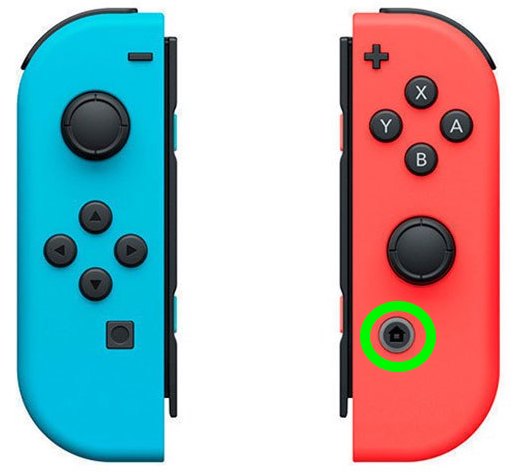
And if you want to turn on the Nintendo Switch (while docked) using the Joy-Cons? Well, just slam your fingers down on this button:

turn on a nintendo switch joy-con