Thursday, May 21, 2026

Home Sweet Home: What keeps Julia Zemiro busy in lockdown

What I’m listening to: A lot of podcasts, I’ve been finding that relaxing. Because we’re sort of stuck a little; music’s fine but I’m enjoying hearing stories and chat. I’m listening to a podcast called Films to be Buried With by Brett Goldstein. He interviews famous people such as Ricky Gervais and Jameela Jamil, through to people that you might not be familiar with. The premise is you die and when you get into heaven they judge you and they want to hear about your life through film. What was the first movie you saw? What’s the film everyone thinks is terrible that you love? He’s such a lovely interviewer, he gets something out of everybody.

And my other favourite is The Guilty Feminist with Deborah Frances-White. She does live shows and interviews with amazing performers and asks them about how hard it is to be a feminist. Like I can be a feminist on the one hand, but on the other hand I find myself loving lipstick. Because I’m not doing anything to audiences — I do my show RocKwiz Live and the Adelaide Cabaret Festival that I’m the artistic director of was cancelled — it’s great to hear The Guilty Feminist because you hear people cheering and laughing. It’s a sound I miss.

What I’m reading: See What You Made Me Do by Jess Hill won the Stella Prize. It’s a book about domestic abuse and power. I particularly wanted to read it now because I’m an ambassador at Our Watch, which is an organisation looking after women and their children in domestic violence situations, and we know that during this lockdown period, any kind of domestic abuse situation is really going to be amplified. It’s excellent journalism; she has really done her research.

What made me laugh this week: People are making some really fun things online. I have enjoyed that sports commentator from the BBC, Andrew Cotter, doing sports commentary with his dogs. He’s bored out of his mind because he’s not working, but he’s got two dogs and they do really innocuous things and he does the commentary. It’s never not funny. I just adore it.

During the crisis I’ve been thinking about: I think it would be typical of us as human beings to not take advantage of this great pause that we’ve had. It would be an absolute devastation if we don’t start going, OK, all of a sudden animals are coming back into areas, all of a sudden the air is cleaner. How can we keep as much of that happening as we can? Can we think about how our economy can be different? This is a great opportunity for people to be bold enough to make a better world. If we all go back to “normal”, I think that would be an absolute missed opportunity.

Julia Zemiro’s Home Delivery airs on Wednesdays at 8pm on ABC and iview.

Source by [author_name]

Trump Calls On Governors To Reopen Houses Of Worship

President Donald Trump announced Friday that he was designating churches, synagogues and mosques as “essential places that provide essential services” as the nation continues to combat the coronavirus, despite lacking legal power over state governance.

“Some governors have deemed liquor stores and abortion clinics as essential, but have left out houses of worship. It’s not right,” Trump said. “So I’m correcting this injustice by calling houses of worship essential.”

“If they don’t do it, I will override the governors,” the president threatened. 

Trump has previously attempted to wield his authority over state governors, particularly those who have criticized him, but legal scholars say he has little formal power to force governors or businesses to do what he wants.

The Centers for Disease Control and Prevention issued revised guidance to places of worship on how to reopen safely as early as this weekend. The agency’s recommendations change depending on how severely the virus has spread in the area.

Trump said he believes religious leaders will be able to keep their congregations safe.

Normal church services, however, can be ideal “superspreader” events, opening the gate for the virus to spread widely within the community. One church in 

Dr. Deborah Birx, a member of the White House’s coronavirus task force, clarified the president’s announcement, suggesting that the most at-risk worshippers should continue to stay home. Elderly people, for example, are significantly more likely to experience severe symptoms or to die from complications of COVID-19.

“Certainly people who have significant comorbidities, we want them protected,” Birx said.

For weeks, some churches have been protesting or choosing to ignore stay-at-home orders, with tragic consequences.

An evangelical pastor in Virginia who vowed to continue holding in-person sermons unless he was “in jail or in the hospital” died of COVID-19 in mid-April. In Northern California, someone who had tested positive for the virus attended a Mother’s Day service, potentially exposing some 180 people. And sudden spike in coronavirus cases and the death of a priest forced a newly reopened Catholic church in Texas to quickly change its plans.

A HuffPost Guide To Coronavirus


Source by [author_name]

US clears way for new arms sale to UAE, despite evidence it violated last one

0

Yemen is embroiled in a civil war that has pitted a coalition backed by Saudi Arabia and the UAE — both key US allies — against the Iran-backed Houthi rebels, and the presence of American-made weaponry has only helped to fuel the fighting.

Two US officials with knowledge of the joint State Department and Pentagon investigation told CNN it took over a year to complete because of what one source described as delaying tactics by the UAE.

While the probe concluded earlier this year, its findings have not been made public. But multiple government officials on both sides of the aisle and within the administration told CNN that the UAE has now been cleared.

The State Department has told some leaders in Congress that it is “satisfied no actual transfers were made,” and has “made sure the UAE fully appreciates the letter of their agreements” with the US, another source with knowledge of the investigation told CNN.

With that assurance, the lawmakers gave their blessing to a new proposed sale of US military hardware to the UAE, the source said.

On May 7, the US Defense Security Cooperation Agency (DSCA) announced that the Pentagon had approved the proposed sale of up to 4,569 surplus US-made Mine-Resistant Ambush Protected (MRAP) vehicles to the UAE for an estimated cost of $556 million. The sale would serve the US national interest by helping to support the security of “an important regional partner,” the DSCA news release said.
But a lack of transparency over the findings of the US investigation has raised questions about the propriety of the Trump administration’s decision to approve the proposed sale of MRAPs to the UAE, given the evidence of past unauthorized transfers and bipartisan Congressional opposition to several proposed arms sales last year. It also comes as Pompeo has been accused of pressuring officials to find ways to justify arms sales to Saudi.

In a statement to CNN last week, the UAE would not confirm or deny whether it had been cleared but said its “armed forces confirmed to the US government its continued adherence to the terms and conditions” of the arms sales.

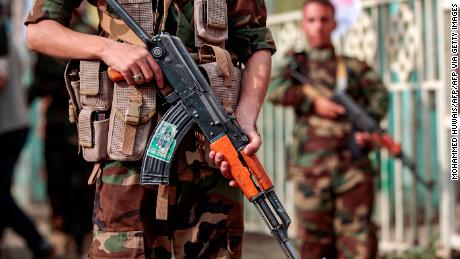
An American-made MRAP in the hands of the Giants Brigade militia in Yemen in February 2019.

The Pentagon said it could not comment on the investigation or subsequent conversations with Congress, and directed CNN to the State Department for further comment.

The State Department confirmed to CNN that its investigation had concluded. “We believe that the UAE now has a better understanding of its EUM (End User Monitoring) obligations,” an official said, without providing further details.

But some US government officials told CNN they were concerned that the UAE was cleared of wrongdoing and that this contentious move was made while Congress was focused on the current coronavirus crisis. Two administration officials were willing to be quoted but asked not to be named due to fears of retribution.

“Look, the arms sales thing is really key for Trump personally and it’s been a real point of contention with Congress, even Republicans have been pushing back,” said one senior official with knowledge of the issue. “The Emirates is a key ally and we believe that this sale is in the US national interest. This felt like a good time to push this through.”

A second senior official familiar with the deal was much more concerned about the approval of the potential MRAP sales at the present time.

“We had real issues getting cooperation from them [the Emirates] on our investigation,” the official told CNN. “Their sense was that they didn’t feel they’d done anything wrong, which doesn’t really bode well for future compliance, but the message we got from the top was Trump wants this done and now is a good time to push through.”

The National Security Council did not respond to CNN’s request for comment.

Fears sale could undermine US national security

Congress and the Trump administration have been at loggerheads over the issue of US arms sales, with rare bipartisan unity shown in efforts to rein in the White House.
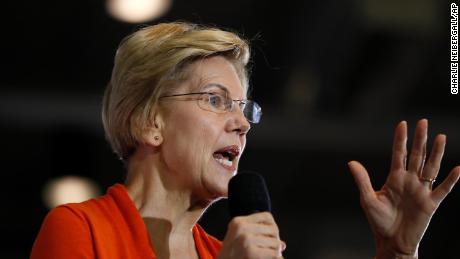
Elizabeth Warren and Chris Murphy, two Democratic senators who have led the push to stop arms sales to the UAE and Saudi Arabia, slammed the May 7 decision and called on the administration to make the findings of its investigation public.
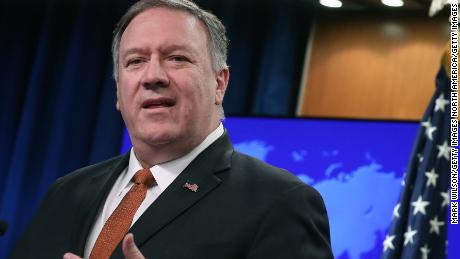
The announcement was made only days before the State Department’s inspector general, Steve Linick, was fired by President Donald Trump at the recommendation of Secretary of State Mike Pompeo.
Allegations subsequently emerged that Pompeo had refused to cooperate with the inspector general, who was conducting an investigation into the administration’s attempt last year to fast-track arms sales to Saudi Arabia. Pompeo defended his push to have Linick dismissed in remarks Wednesday — saying he “should have done it some time ago” — but refused to explain his reasoning for the move. It was unclear whether the inspector general’s investigation spurred Pompeo to recommend his firing.
In May 2019, the Trump administration declared an emergency in an effort to bypass Congress and expedite $8.1 billion in arms sales to Saudi Arabia, the UAE and other countries, citing the need to deter what it called “the malign influence” of Iran throughout the Middle East.
Four sources told CNN this week that Pompeo had pushed State Department officials to find a way to justify the emergency declaration that he had already decided to implement in order to fast-track the arms sales, stunning career diplomats.
Pompeo ordered officials to find a way to justify Saudi arms sale being probed by fired watchdog
Lawmakers on both sides of the aisle came together last summer to pass a trio of Congressional resolutions blocking the sales, but Trump ultimately vetoed those resolutions.

The proposal approved on May 7 is the next phase of a $2.5 billion arms deal that was agreed with the UAE in 2014. The deal was put on hold last year pending the results of the US investigation.

An aide to Rep. Michael McCaul, the top Republican on the House Foreign Affairs Committee, said the State Department had briefed his committee on the probe.

“The Department of State repeatedly briefed Foreign Affairs Committee staff on its investigation into the unauthorized re-transfer of MRAPs that were sold to the UAE in 2014, which concluded earlier this year,” Leslie Shedd said in a statement.

Shedd added that McCaul and other top leaders of the House Foreign Affairs Committee and Senate Foreign Relations Committee had previously reviewed and approved the proposed sale. Shedd referred CNN back to the State Department when asked whether the investigation had cleared the UAE of wrongdoing.

Sen. James Risch, the Republican chairman of the Senate Foreign Relations Committee, declined to comment and referred questions to the State Department. Rep. Eliot Engel, the Democratic chairman of the House Foreign Affairs Committee, did not respond to CNN’s request for comment.

Warren slammed the State Department for not publicly sharing the findings of the investigation in a letter sent last week to Pompeo and Defense Secretary Mark Esper.

Elizabeth Warren slams US arms sales to Saudi Arabia and UAE after CNN report

“To my knowledge, there has been no unclassified publication or transmission of any kind to Congress of the findings of your visits to the UAE and Saudi Arabia to address the improper diversion of US military hardware that we sold to these governments, and the corrective actions, if any, taken to address these allegations,” the senator said in a letter dated May 14 seen by CNN.

“If your Departments’ investigation into the improper diversion of the same category of US military hardware by US allies has not concluded, or concluded without any actions taken to prevent these diversions in the future, then I am concerned that the continued sale of this equipment undermines US national security.”

Murphy, a member of the Senate Foreign Relations Committee, criticized the proposed sale and called on Congress to block it.

“Congress should not allow another arms sale to the UAE until the administration makes public its report regarding the Emiratis’ likely serious violations of previous arms sales agreements. We cannot allow our allies to take arms we sell them and pass them along to dangerous, extremist militias, as the Emiratis did. There should be accountability when there is a meaningful violation of [an] arms sale agreement, and this arms sale sends the opposite message,” Murphy told CNN.

‘Insufficient responses’

Multiple US officials confirmed to CNN that the UAE was investigated under Section 3 of the Arms Export Control Act (AECA), which prohibits the transfer of US armaments to third parties without prior authorization.

CNN revealed last February that the Emiratis had handed over American-made MRAPs to an ultra-conservative militia in Yemen called the Giants Brigades.

At the time, an Emirati official told CNN that the Giants Brigades was a “part of Yemeni forces” and under the UAE’s direct supervision, and therefore the equipment was in the “collective possession” of the coalition.

US sends investigators to UAE and Saudi to probe CNN weapons violations findings

But under the UAE and Saudi Arabia’s arms sales agreements with the US, American-made MRAPs are considered “proprietary technology,” which neither party is supposed to let out of its control. Recipients of US weaponry are legally obligated to adhere to end-use requirements which prohibit the transferring of any equipment to other parties without prior authorization. That authorization was never obtained.

The US Department of Defense, when asked specifically about the Giants Brigades last year, said it had not given the UAE or Saudi Arabia permission to hand over US weaponry to other factions on the ground.
In a letter obtained by CNN in November, the State Department admitted that the “continued insufficient responses” of the UAE and Saudi Arabia had delayed the probe.

The letter, from the State Department’s Bureau of Legislative Affairs, said that a joint State-Pentagon visit was carried out to the UAE in September to verify what had happened to the MRAPs the US supplied.

The letter added that another similar “oversight visit” to Saudi Arabia was planned for November, after which “the Department expects to have a full account of the circumstances related to the disposition of this equipment and any potential violation of the agreements.”

Saudi officials, when asked whether they had been similarly cleared, did not respond to CNN’s request for comment.

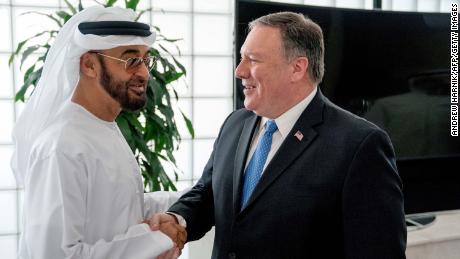
Mike Pompeo (R) pictured with the UAE's Crown Prince Mohammed bin Zayed in 2018.

UAE withdraws troops but maintains influence

CNN revealed in October that US MRAPs had again been distributed — in contravention of arms deals — to militia groups in Yemen, including the Giants Brigades. The militia had taken up the separatist cause and was using this equipment in the fight against government forces, who had also been armed with US weapons by Saudi Arabia. Adding another layer of chaos to an already fracturing conflict.

After five years of involvement in Yemen, the UAE announced last July that it would gradually withdraw all of its troops from the country, switching its strategy of involvement from boots on the ground to relying ever more heavily on its local proxies.

In its latest statement, the Emirates told CNN it has “largely drawn down its presence from Yemen and is concentrated on counter-terrorism efforts against AQAP, ISIS and other dangerous groups.”

But the UAE has maintained operational control of several militias or non-state actors, including the Southern Transitional Council (STC), a secessionist group based in the southern port city of Aden that has often fueled a war within the war between the various factions of the Gulf-backed coalition.

Saudi Arabia declares ceasefire in Yemen over coronavirus

Allied groups have time and again turned their guns on each other, detracting from their larger mission of dislodging the Houthi militia which controls the capital, Sanaa, and much of Yemen’s north.

There were signs of hope last November when, as the Emirati military came close to completing its drawdown, the STC signed an agreement with the Saudi-backed, internationally-recognized government of President Abd Rabbu Mansour Hadi. The Riyadh pact gave the STC the legitimacy it craved and guaranteed the UAE a foothold in the conflict even after the last Emirati soldier left Yemeni soil.

But political maneuvering has once again put the lives of ordinary Yemenis at risk.

On April 25, the STC turned its back on the Riyadh deal and announced it would establish self-rule in the areas under its control.

The move sparked another outbreak of violence in Yemen that has coincided with an increase in Covid-19 infections. The United Nations has warned the virus could spread rapidly in a country where the health care system is fragile and millions are on the brink of famine.

Roughly 80% of the population is already in need of humanitarian assistance or protection, according to the World Health Organization, which said 197 cases and 33 coronavirus-related deaths had been confirmed in Yemen as of Friday.

CNN’s Barbara Arvanitidis, Ryan Browne and Sarah Sirgany contributed to this report.
Source link

These Striking Photos Show What Quarantine Is Like Behind Closed Doors

New York City wedding photographer Priyanca Rao’s business came to a halt in March when weddings and other gatherings were canceled for the foreseeable future due to coronavirus. On top of the financial stress, Rao was quarantining in a small apartment with her husband — a health care worker — and their two young kids in one of the places hit hardest by the pandemic.

To cope with the anxiety, she created a Facebook group so she could connect and collaborate with other photographers in isolation. What came out of it was a photography project that captures a slice of life for the 1.5 billion people around the world who were ordered to stay home to slow the spread of COVID-19.

“My family after only one month of isolation,” Rao captioned this photo of herself, her husband and her two kids.

Since mid-March, the group has grown into a global community of nearly 800 members from the U.S., Canada, the Netherlands, Spain, New Zealand, Mexico, Uruguay and India, among other countries.

“You can find bored quarantine self-portraits, creative fort tents for kids, antsy pets, confinement proposals, kids on sugar highs and so many more stories,” Rao told HuffPost. “The photos span cultures and continents, and show how people are adapting to social distancing in their own unique ways.”

"I'm fine, hanging in there. Good days and bad. How are you?" the photographer captioned this chaotic shot. 
“I’m fine, hanging in there. Good days and bad. How are you?” the photographer captioned this chaotic shot. 

For Rao, the hardest part of the last several months has been balancing homeschooling a 3-year-old and 5-year old with work-related tasks and household chores.

“The kids are not at an age where they can learn independently,” she said. “When I leave the room, they are like cats in a yarn store. Getting them to focus and listen has been hard, because as a mother, I want them to reach their milestones academically. But I also don’t want their memories of this time to be of their mom yelling constantly.”

But in the midst of the challenges, there have been some sunny spots, too — like the friendships and support systems Rao has built virtually.

“Starting with my local mommy group, who are my pillars of strength, my cousins who I reconnected with and so many new photographers I connected with through online communities,“ she said. “I feel so supported and am constantly reminded that we are all in this together.”

Working on this project has also helped Rao find gratitude in the midst of a very challenging period.

“One of our members, Gaby Ermstrang, said that this time with her kids was ‘almost the perfect life’ if you remove the financial aspect,” Rao said. “She makes a valid point because we will probably never have dedicated family time like this ever again. It’s a great reminder to live in the present and enjoy what we have.”

To see how the photographers and their families are holding up, check out the images below with captions from the artists themselves:

"How hard working from home is." 
“How hard working from home is.” 
"Because we couldn't go to our families in person and tell them the good news, we decided to FaceTime everyone from our living room. This shot happened when Molly's aunt completely freaked out in excitement." 
“Because we couldn’t go to our families in person and tell them the good news, we decided to FaceTime everyone from our living room. This shot happened when Molly’s aunt completely freaked out in excitement.” 
"The end of the night is the most exhausting, physically and emotionally."
“The end of the night is the most exhausting, physically and emotionally.”
"He is our youngest of three boys. This guy sometimes needs social distancing from his oldest two brothers at home."
“He is our youngest of three boys. This guy sometimes needs social distancing from his oldest two brothers at home.”
"When you can wear makeup to (home)school LOL."
“When you can wear makeup to (home)school LOL.”
"Week two under full lockdown in Italy. We are adjusting to working from home as well as homeschooling our 6-year-old."
“Week two under full lockdown in Italy. We are adjusting to working from home as well as homeschooling our 6-year-old.”
"In a time of death and sickness, there is still a seed of life."
“In a time of death and sickness, there is still a seed of life.”
"This is how quarantine looks for my family; open windows so the cat can hear the birds, lots of midday snuggles for the dog and my husband working from his favorite chair."
“This is how quarantine looks for my family; open windows so the cat can hear the birds, lots of midday snuggles for the dog and my husband working from his favorite chair.”
"My parents don't live with me but they've moved in for this 21-day period. With my wife and I still having to get some work done she's spending a lot more time with them!" 
“My parents don’t live with me but they’ve moved in for this 21-day period. With my wife and I still having to get some work done she’s spending a lot more time with them!” 
"We all have to adapt to this 'new way' of living. Unfortunately for my little boy, there’s still homework to do."
“We all have to adapt to this ‘new way’ of living. Unfortunately for my little boy, there’s still homework to do.”
"Self-isolation. Might have spotted an animal in the garden."
“Self-isolation. Might have spotted an animal in the garden.”
"Self-isolation can make you feel trapped, but it can also open your eyes to the beauty all around you that you take for granted every day."
“Self-isolation can make you feel trapped, but it can also open your eyes to the beauty all around you that you take for granted every day.”

A HuffPost Guide To Coronavirus

Source by [author_name]

Dozens of Sydney residents evacuated after large factory fire breaks out

Approximately 25 residents were evacuated from their homes last night as a precaution after a large factory fire broke out in Sydney.

Emergency services were called to reports of a blaze at a factory on May Street in St. Peters, at approximately 9.25pm last night.

Firefighters managed to extinguish the blaze, however, the extent of the damage is unknown.

May Street, St Peters closed off due to factory fire (Supplied/CarinaRossi)

The cause of the fire is yet to be determined and a crime scene has been established.

Officers from the Inner West Police Area Command are assisting in the investigations, with specialist forensic officers and fire investigators set to examine the scene once it has been declared safe.

The premises and the businesses surrounding the factory were closed at the time of the fire and no injuries have been reported.

Anyone with information about this incident is urged to contact Crime Stoppers on 1800 333 000

Source by [author_name]

Could This Famous Economist From A Century Ago Solve Today’s Job Market Crisis?

A global pandemic ravages nations, sickening millions. International trade teeters on the brink of collapse. And around the world, authoritarian leaders loom large, peddling militarism and prejudice to those whose future has been stolen.

This is the state of affairs a still young and little-known John Maynard Keynes faced in 1919 as he headed to Paris to advise on negotiations for the Treaty of Versailles — conditions uncomfortably, jarringly close to our present reality.

As many of the world’s democratic institutions come under assault, there’s never been a more urgent need to reexamine the life and times of the economist who helped build them and ask: What would Keynes do?

Join us on Friday, May 29 at 12 p.m. Eastern for a live online Q&A about Keynes and his lessons for today. Register here for the virtual event. 

Leading this conversation will be HuffPost Senior Reporter Zach Carter, author of the just-published, critically acclaimed biography “The Price of Peace: Money, Democracy, and the Life of John Maynard Keynes.” Carter’s absorbing account captures the philosopher and idealist behind the economist, one who believed ardently in human freedom and democracy.

In an interview with HuffPost Enterprise Director Richard Kim, Carter will discuss not just Keynes’ economic theories, but the deeply held passions that animated them and how they might inform our struggles today. 


Source by [author_name]

53-Year-Old Tortoise Left Homeless By COVID-19 Has Hundreds Wanting To Adopt Her

Happier days are ahead for a beloved 53-year-old pet tortoise whose owner died of COVID-19.

Ms. Jennifer, a “very sweet” reptile, came to the Massachusetts Society for the Prevention of Cruelty to Animals’ Boston adoption center on May 9, communications director Rob Halpin told HuffPost.


Ms. Jennifer loves being outside in warm weather.

Her owner, who had become ill from the novel coronavirus and was unable to continue caring for her, died around two weeks later. Before falling sick, the woman had “absolutely doted” on the 4-pound tortoise and loved “showing her off to friends and strangers alike,” MSPCA said in a statement.

“We’re doing all we can for Ms. Jennifer both because she’s a very special animal and because we hope it brings some measure of comfort to the family of her former owner, who we know would want her in the best and most loving home that we can find,” Halpin told HuffPost in an email.

At 53 ― staff held a birthday party for Ms. Jennifer on Wednesday ― she’s believed to be MSPCA’s oldest adoptable animal ever. She also has a winning personality.

Ms. Jennifer, the "birthday queen," during her party held when she turned 53.


Ms. Jennifer, the “birthday queen,” during her party held when she turned 53.

“She loves attention from staff and volunteers at the adoption center,” said Halpin. “She’s social, loves to be outside. She’s just a really special turtle!”

Ms. Jennifer us still up for adoption, but there’s already been massive interest and MSPCA is confident she’ll have no trouble finding a home.

“The MSPCA’s adoption center has now received over 400 inquiries from potential adopters, all of whom have expressed a sincere interest in her, so it’s only a matter of time before we place her into a wonderful new home,” said Halpin. “We’re so excited about her future, especially given the sad nature of her surrender.”

MSPCA is prioritizing adopters who live “locally” in Massachusetts or neighboring states. Any adopter will also need to make sure they can meet her specific needs.

“Ms. Jennifer will need lots of fresh produce (and grass!) and she loves fresh fruit, too,” Halpin said. “And she thrives on time outside on warm days, so someone who is committed to providing her these essentials — along with some basic knowledge of caring for reptiles — is the ideal adopter for Ms. Jennifer.”

Since the pandemic started, MSPCA has received about 10 other animals “from homes in which their owners have either died, become too ill to care for them or have been financially devastated as a result of the economic fallout,” he added.

Animal shelters and rescue groups around the U.S. are working to care for pets who have lost their homes as a result of coronavirus. Many are also trying to help people keep their pets amid financial difficulties. New York City, the U.S. epicenter of the pandemic, has coordinated with multiple animal rescue groups to create a “COVID-19 Pet Hotline” to provide information and help connect people with resources like pet food or lower-cost veterinary care. MSPCA has distributed tens of thousands of pet meals to food pantries around Massachusetts, where Halpin noted the pandemic is having a “profound effect.”

“We believe there will be more animals coming to us in the weeks ahead as a direct result of the crisis that continues to unfold,” he said.


Source by [author_name]

UK’s coronavirus quarantine in force from June 8

0

Britain’s Home Secretary Priti Patel | Tolga Akmen/AFP via Getty Images

Travelers to Britain will be required to self-isolate for 14 days and face fines if they don’t comply.

LONDON — People arriving in the U.K. from overseas will need to self-quarantine for 14 days from June 8, Home Secretary Priti Patel said Friday.

The new measures will apply to all residents and foreign nationals, with exemptions in place for truckers and freight workers, medical professionals working on the coronavirus response, and seasonal agricultural workers, who will be permitted to self-isolate on the property where they are working.

Those moving within the U.K.’s Common Travel Area with Ireland will also be exempt.

Those who breach their quarantine in England will face £1,000 fines or potential prosecution. While the new rules apply to the whole of the U.K., Scotland, Wales and Northern Ireland will be responsible for their own enforcement.

All arriving passengers will have to fill in a form, before they arrive in the U.K., providing contact details and onward travel plans, so that they can be contacted if they, or someone they may have been in contact with, gets the virus.

The U.K.’s Border Force will be empowered to refuse entry to non-resident foreign nationals who refuse to comply. Failure to complete the “contact locator form” will be punished by a £100 fine, and public health authorities will carry out random checks in England to ensure compliance with the quarantine measures.

Anyone who cannot self-isolate at home, in a hotel, or with friends or family, will be required to stay in facilities organized by the government. Travelers are recommended to travel to their place of quarantine in personal transport, such as a car, where possible.

The U.K. measures comes as many EU countries are rethinking their quarantine requirements. Germany announced plans to loosen quarantine rules earlier this month and Italy is set to follow. France however introduced a voluntary two-week quarantine this week.

So-called “air bridges” — agreed between the U.K. and countries with a low rates of coronavirus infection where citizens are allowed to enter without quarantine — are still being considered by the government, but no such arrangements are yet in place. The overall policy, including the list of exemptions, will be reviewed every three weeks from the date the measures come into force.

“We are introducing these new measures now to keep the transmission rate down and prevent a devastating second wave,” Patel said.  “I fully expect the majority of people will do the right thing and abide by these measures. But we will take enforcement action against the minority of people who endanger the safety of others.”

The U.K.’s plan for a quarantine regime was first announced by Prime Minister Boris Johnson on May 10. Explaining the decision to introduce the measures now — as the U.K. emerges from the peak of its coronavirus epidemic — John Aston, Home Office chief scientific adviser said: “The scientific advice so far has been clear: while there has been significant community transmission of the virus within the U.K. the impact of putting in place additional border restrictions would have been negligible to the spread of the virus.

“However, the spread of the virus within the U.K. is now lessening. We have been successful in getting the reproduction number R — the average number of new people infected by one infected person — below 1. As the number of infections within the U.K. drops, we must now manage the risk of transmissions being reintroduced from elsewhere.”


Source by [author_name]

Businesses fear the worst for Hong Kong’s future

0

China announced Thursday that it plans to introduce a law in Hong Kong that is expected to ban sedition, secession and subversion against Beijing. It will also enable Chinese national security agencies to operate in the city.

Investor reaction was swift and fearful: Hong Kong’s benchmark Hang Seng Index (HSI) plummeted more than 5% on Friday, its worst one-day percentage drop since July 2015.
Beijng’s move was so stunning because it implies much greater intervention in the city, which has largely been allowed to manage its own affairs since the former British colony became a semi-autonomous region of China more than 20 years ago. Beijing intends to introduce the law on the city’s behalf, bypassing its legislature.

“Hong Kong today stands as a model of free trade, strong governance, free flow of information and efficiency,” said Robert Grieves, chairman of the American Chamber of Commerce in Hong Kong, in a statement. “No one wins if the foundation for Hong Kong’s role as a prime international business and financial center is eroded.”

A traditionally stable place to operate

Hong Kong’s political and legal freedoms, which are not available on the mainland, have given comfort to foreign companies that view the city as a stable place to operate, free of the restrictions that come with doing business in other Chinese cities like Shanghai or Shenzhen. (Many American and other Western companies already do business in the mainland, though they are often required to work with local partners. Others are still locked out of China altogether.)
The benefit also works in reverse: Chinese companies use the city as a place to raise capital and broaden their investor base, or as a launch pad for overseas expansion.
While confidence in the city was shaken during last year’s antigovernment protests, most companies ultimately chose not to abandon Hong Kong. And the city’s stock exchange had a banner year — it was the world’s top location for IPOs, beating rivals in New York and London.

Even so, Hong Kong’s status as a global business destination never quite felt secure after the protests broke out.

Top executives at its flagship airline, Cathay Pacific, resigned last summer after the carrier was swept up in controversy related to the protests that angered Beijing. And the city’s richest billionaire, Li Ka-shing, appealed for calm as the demonstrations stretched into the back half of the year.

“The road to Hell is often paved with good intentions,” Li said in August. “We need to be mindful of unintended consequences.”

Late last year, the city became entangled in escalating tensions between the United States and China after Washington passed a law in support of the protesters. The law linked Hong Kong’s special trading status with the United States to an annual review of its unique freedoms.
The status grants the city exemptions from the tariffs that the United States imposed on Chinese goods during the trade war between the two countries, for example.
In the context of the nearly $740 billion in goods and services traded in 2018 between the world’s top two economies, the city is a small player.

The United States imported nearly $17 billion in goods and services from Hong Kong in 2018, while exporting $50 billion.

But those numbers don’t tell the whole story of the US-Hong Kong relationship, and the special status offers the city much more than trade privileges.

“[It’s] a bit misleading … because the US counts trade that passes through Hong Kong to China as trade with China,” said William Reinsch, the Scholl Chair in International Business at the Center for Strategic and International Studies in Washington. “Regardless, I think the real issue is less the actual amount of trade than the signal a change in status would send about the unreliability of doing business with Hong Kong.”

A serious development

More than 1,300 US companies alone operate in the city, according to analysts at Citi, who added that the threat of revoking Hong Kong’s special status with the United States “could weigh on business confidence.”

“It remains to be seen if the US would revoke the act immediately,” they wrote in a research note on Friday. “Our economists have argued special status of [Hong Kong] is likely to stay in the near term, as both US and China have significant interests in maintaining the status quo.”

Tensions between the United States and China, though, have been ratcheting up recently as the two seek to blame each other for the coronavirus pandemic. The Trump administration last week, for example, moved to restrict the Chinese tech firm Huawei from working with US companies. Beijing could respond by blacklisting foreign companies.
Here comes the US crackdown on China stocks
US lawmakers, government agencies and stock exchanges have also recently taken steps aimed at limiting Beijing’s access to America’s vast capital markets. The State Department is now requiring American journalists working for Chinese state media in the United States to provide personal information including details of their spouses, children, and anyone else they live with.

Secretary of State Mike Pompeo said Friday that Beijing’s plan would be “a death knell” for the autonomy Hong Kong was promised. And if it went ahead, it would affect Washington’s assessment of the status of the territory.

“The United States strongly urges Beijing to reconsider its disastrous proposal, abide by its international obligations, and respect Hong Kong’s high degree of autonomy, democratic institutions, and civil liberties, which are key to preserving its special status under US law,” he said.

“This authoritarian national security plan will most certainly bring into question [Hong Kong’s] status as a global banking center,” wrote Stephen Innes, chief global markets strategist at AxiCorp, in a research note Friday. “I think this is quite serious.”

Companies that do business in Hong Kong are also concerned about what Beijing’s national security law could mean for people who work in the city, and whether it could have a chilling effect on the ability to attract foreign workers.

“A Beijing inspired national security law leaves open an interpretation of how such an act will be enforced,” said Tara Joseph, president of the American Chamber of Commerce in Hong Kong, in a statement.

The business lobby group added that the “enactment of a vaguely defined national security law will make it harder to recruit and retain top tier talent.”

Source link

Love on the Mountain Bike Trail

For a first date, they went on another mountain bike ride, in nearby Saranac Lake, N.Y., and then afterward to trivia night at a local bar. A first kiss soon followed, as did more dates and more trail rides.

“She’s got really, really beautiful eyes and a beautiful smile that lights up the area,” Mr. McNamara said.

In the spring, as a sort of stress test for their relationship, the couple piled into Mr. McNamara’s 1990 Ford Econoline and drove down the Mid-Atlantic coast to North Carolina, stopping along the way to go mountain biking.

“That’s when I definitely fell in love with him,” Ms. Voyer-McGiver said.

In summer 2018, they moved in together. Ms. Voyer-McGiver recently completed training as a registered nurse (though the traditional “pinning” ceremony was a casualty of the coronavirus pandemic) and has applied for work at a hospital in Saranac Lake. She graduated from the State College at Purchase.

“I think we kind of knew that marriage was coming down the pipeline after that,” he said.

On April 23, the two hiked to a viewpoint that they can see from their house, and were married. Mr. McGiver, the cousin, who is a Universal Life minister, officiated; his wife, Jamie West-McGiver, who is a photographer, took pictures.

After the wedding, the two did not rush home for a first pedal together as a married couple. “But there is a good chance any honeymoon of ours will involve mountain biking,” Ms. Voyer-McGiver said.

Source link