Monday, May 25, 2026

In Letter to UN Chief, Indonesia Takes Stand on South China Sea

0

Indonesia added its weight to recent diplomatic moves by ASEAN members opposing Beijing’s claims in the South China Sea, sending a rare diplomatic note to the head of the United Nations earlier this week.

The letter, sent to U.N. Secretary-General António Guterres on Tuesday, spelled out the Indonesian government’s support for a 2016 ruling by the Permanent Court of Arbitration in The Hague, when the court sided with the Philippines in a case that Manila brought against China over a territorial dispute in the sea.

“Indonesia reiterates that the Nine-Dash line map implying historic rights claim clearly lacks international legal basis and is tantamount to upsetting UNCLOS 1982,” said the letter from Indonesia’s Permanent Mission to the United Nations, referring to a boundary on Chinese maps that encompasses Beijing’s claims in the maritime region.

“As a State Party to UNCLOS 1982, Indonesia has consistently called for the full compliance toward international law, including UNCLOS 1982. Indonesia hereby declares that it is not bound by any claims made in contravention to international law, including UNCLOS 1982,” the letter stated.

The letter, a copy of which was posted by an Asian journalist to Twitter, referred to the United Nations Convention on the Law of the Sea, the international treaty adopted nearly 40 years ago.

On Thursday, a diplomat at Indonesia’s Permanent Mission to the United Nations in New York referred BenarNews requests for comments or a copy of the letter to the foreign ministry in Jakarta.

When contacted earlier in the day, a foreign ministry spokesman had little to say about the letter.

“I’ll check it first,” spokesman Teuku Faizasyah told BenarNews, an RFA-affiliated online news service.

In Washington, Gregory Poling, director of the Asia Maritime Transparency Initiative, said Indonesia’s action broke new ground.

“This note verbale is the first time that any of the Philippines’ Southeast Asian neighbors has stood up and explicitly endorsed its 2016 arbitration win against China. Officials in Jakarta have been pushing this for four years and it looks like they’ve finally won out over political fears about China,” he told BenarNews.

“If this, or more likely the next, Philippine government ever wants to take up the cause again, Indonesian support could be an important part of building a coalition.”

Philippine President Rodrigo Duterte, who took power days before the Permanent Court ruled in favor of his country’s claim to the contested waterway, has instead sought closer ties with China.

The Indonesian letter is the latest in a flurry of letters from ASEAN countries and China following a Malaysian submission to the U.N. in December 2019 that claimed sovereignty over an extended continental shelf in the South China Sea off its northern coast, potentially an area with significant undersea resources.

“It is our sovereign right to claim whatever is there within our waters and which is not claimed by others,” said Saifuddin Abdullah, who was Malaysia’s foreign minister at the time the letter was filed.

The letter drew a response from China, which asserted sole sovereignty over the South China Sea, based not just on its claims to land features, but also on the basis of “historic rights” to the waters themselves.

The Philippines and Vietnam weighed in, submitting protests to China’s territorial claims. Indonesia, Malaysia, the Philippines and Vietnam are members of the Association of Southeast Asian Nations (ASEAN).

The Philippines, Malaysia and Vietnam are among countries that, along with China, have competing claims in the South China Sea. Indonesia is not among the claimant countries, but in early 2020 and in 2016, tensions flared between Jakarta and Beijing over the presence of Chinese fishing boats swarming in South China Sea waters near Indonesia’s Natuna Islands.

In 2002, the 10-nation ASEAN bloc and China agreed on a Declaration of Conduct, which was a statement of principles on how parties should behave in the South China Sea. But completing a more detailed – and binding – Code of Conduct (CoC) has proved much harder.

Negotiations began in earnest in 2016 with a tentative deadline for acceptance in 2021. A draft of the text of the agreement has been released.

Observers have said that Beijing would like to end negotiations early without touching basic but contentious sections including what it actually claims in the sea region.

“China could, by forcing an early resolution to the Code of Conduct, just shut everybody up,” Carl Thayer, professor emeritus at the University of New South Wales, told BenarNews in April. “Sorry, we closed the door, we can’t change anything, what we occupy is China’s and you relinquish it.”

Retno Marsudi statement

Earlier this month, Indonesian Foreign Minister Retno Marsudi issued a statement saying her government was closely following recent developments in the sea region.

“Indonesia expresses its concerns on recent activities in the South China Sea which may potentially escalate tensions at a time where global collective efforts are vital in fighting COVID-19” she said during a speech on May 6.

“Indonesia underlines the importance of maintaining peace and stability in the South China Sea including to ensure freedom of navigation and over-flight and to urge all parties to respect international law, particularly the United Nations Convention on the Law of the Sea,” Retno added.

She also noted that while CoC negotiations had been delayed, all relevant countries should show self-restraint.

“We remain committed to ensuring the conclusion of the CoC that is effective, substantive, and actionable, despite the current circumstances of the COVID-19 pandemic,” she said.

Reported by BenarNews, an RFA-affiliated online news service.


Source link

Wearing Face Masks At Home May Reduce COVID-19 Spread

0

AsianScientist (May 29, 2020) – Wearing face masks, disinfection and social distancing in households might help limit the spread of COVID-19 infection among family members, suggests an observational study of 124 Chinese families published today in BMJ Global Health.

To date, the World Health Organization has not endorsed the wearing of face masks indoors or outdoors, on the grounds that there is little good quality evidence to warrant recommending this. In China, figures suggest that most of the person-to-person transmission of COVID-19 has occurred in families.

To explore if the wearing of face masks might help curb household transmission rates, a research team led by Zhang Ruiguang at the Union Hospital in Wuhan, China, questioned 460 people from 124 families in Beijing on their household hygiene and behaviors during the pandemic.

Each family had at least one laboratory confirmed case of COVID-19 infection between late February and late March 2020. The average family size was four, but ranged from two to nine, and usually comprised three generations. Family members were defined as those who had lived with the infected person for four days before and more than 24 hours after that person’s symptoms first appeared.

The researchers wanted to identify what factors might heighten or lessen the risk of subsequently catching the virus within the incubation period, defined as 14 days from the start of that person’s symptoms. During this time, secondary transmission—spread from the first infected person to other family members—occurred in 41 out of the 124 families. A total of 77 adults and children were infected in this way, giving an ‘attack rate’ of 23 percent, or around one in four.

Four behavioral and hygiene factors were significantly associated with secondary transmission of the virus. Diarrhea was associated with a quadrupling in risk; while close daily contact, such as eating meals round a table or watching TV together, was associated with an 18-fold increased risk.

Conversely, frequent use of bleach or disinfectants for household cleaning was 77 percent effective at stopping the virus from being passed on, and the wearing of a face mask at home before symptoms emerged, including by the first person to have them, were associated with a 79 percent reduction in transmission risk.

The authors acknowledge some key limitations with their study: telephone interviews are subject to recall and the strength of household disinfectants and bleach used was not recorded. Nevertheless, they suggest the findings back universal face mask use, not just in public spaces, and may be particularly relevant for families living with healthcare workers or quarantined family members.

“Household transmission is a major driver of epidemic growth,” the authors wrote, adding that their findings could be used to “inform precautionary guidelines for families to reduce intrafamilial transmission in areas where there is high community transmission or other risk factors for COVID-19.”

The article can be found at: Wang et al. (2020) Reduction of Secondary Transmission of SARS-CoV-2 in Households by Face Mask Use, Disinfection and Social Distancing: A Cohort Study in Beijing, China .

———

Source: British Medical Journal; Photo: Pexels.
Disclaimer: This article does not necessarily reflect the views of AsianScientist or its staff.


Source link

Gilgo Beach murders: Authorities identify woman who vanished two decades ago

A woman whose partial remains were found on Long Island nearly a decade ago during a search for a missing sex worker was identified Thursday by authorities.

The woman, previously known as “Jane Doe #6,” was identified by Suffolk County Police as Valerie Mack, 24.

Mack’s dismembered body was one of 11 sets of remains found along Ocean Parkway, a road on a narrow barrier island in Suffolk and Nassau counties, in 2010 and 2011.

The Suffolk County Police Department, together with the FBI, today announced the identification of “Manorville Jane Doe,” also referred to as “Jane Doe #6,” after utilizing genetic genealogy. The Gilgo Beach victim, Valerie Mack, who also used the name Melissa Taylor, went missing in 2000 at the age of 24.Suffolk County Police Dept

The discovery was made while authorities searched for Shannan Gilbert, 24, an escort who vanished on May 1, 2010, after leaving a client’s home at Oak Beach, a community on the island.

No suspect has publicly been identified in the killings and they remain unsolved. Authorities have said that Gilbert’s killing doesn’t appear to match the other deaths, though they’ve said it could be connected.

Mack disappeared in 2000 while working as an escort in Philadelphia, police said. Partial remains of Mack were found the same year in the community of Manorville, on Long Island, near the skeletal remains of a baby girl and an Asian man.

Manorville is roughly 50 miles east of Gilgo and Oak Beaches, where the other remains were found.

Remains believed to be the girl’s mother were later found along Ocean Parkway, police said. They have not been identified.

The rest of Mack’s body was found 11 years later at Gilgo Beach, police said. Mack was identified using genetic genealogy.

“For two decades, Valerie Mack’s family and friends were left searching for answers and while this is not the outcome they wanted, we hope this brings some sense of peace and closure,” Suffolk County Police Commissioner Geraldine Hart said in a statement.

The other women whose remains have been identified are Melissa Barthelemy, 24; Megan Waterman, 22; Amber Lynn Costello, 27; Maureen Brainard-Barnes, 25; and Jessica Taylor, 20.

There was no familial relationship between Jessica Taylor and Valerie Mack, who was also known as Melissa Taylor, police said.

NBC New York has reported that several of the women were sex workers.

Earlier this year, police released evidence in the case—a black leather belt embossed with the letters “HM” or “WH” — hoping it would yield new tips that could help solved the case.

Tom Winter contributed.

Source link

Free daily horoscope, celeb gossip and lucky numbers for 29 May, 2020

CELEBRITIES BORN ON THIS DAY: Lisa Whelchel, Melanie Brown, Melissa Etheridge, Melanie Janine Brown, Danny Elfman, Bob Hope, Annette Bening, John F. Kennedy, LaToya Jackson.

ARIES (March 21-April 19): Planetary conflicts highlight trivial hassles on the domestic scene today, and minor tensions might arise out of nothing. Try to avoid blurting out what’s bugging you, because it won’t help! Bear in mind the wise saying: let sleeping dogs lie. Let them lie; head off to the mall with a friend instead!

Want to know what the future holds? Get a FREE tarot card reading.

TAURUS (April 20-May 20): Yesterday’s pesky influences ease significantly: today is about relaxation and switching off. Indulge yourself a little: visit the mall, or try online shopping. You don’t need to break the bank to purchase a little pick-me-up – decide what you can afford before you start, and stick to your limit!

GEMINI (May 21-June 20): Communications aren’t particularly well aspected today, thanks to unhelpful planetary aspects. On top of this a couple of taxing aspects suggest that you’ll be a little too inclined to rely on luck rather than careful planning over a certain matter; double check today’s plans thoroughly!

CANCER (June 21-July 22): Communications remain under the spotlight, thanks to tricky planetary influences. What seems a pain, or what seems difficult today, will become a veritable walk in the park tomorrow. Equally, if you end the day on a sour note over a misunderstanding, then don’t fret: tomorrow patches everything up again!

LEO (July 23-Aug. 22): Positive aspects will offset the tricky planetary clashes. Romantic matters can go like a dream, if you let them, but trying to introduce a little too much excitement into the day might not be such a good idea! Go with the flow and try not to give in to the ‘greener-grass’ syndrome!

VIRGO (Aug. 23-Sept. 22): Romance comes under the spotlight, when a clash of opposites or the realization that you are the proverbial chalk to someone else’s cheese kicks in. It needn’t be a problem. If you celebrate the differences you’ll find that there’s much to appreciate. If you’re single, then be prepared to be a little bemused by someone today!

LIBRA (Sept. 23-Oct. 22): Unhelpful planetary aspects highlight cash matters today, and there could be a jolt in the form of an untimely invoice or bill. Hand-in-hand with this, you’ll find the lure of the mall too hard to resist, but today is not a good day to extend your credit! Try and exercise a little self-discipline, Libra; you’ll be glad you did!

SCORPIO (Oct. 23-Nov. 21): There’s an old saying, that sometimes ignorance is bliss. This thought might occur to you throughout the day, since planetary clashes give you an advantage that seems more like a burden. You’ll see pitfalls and problems where others can’t, but will anyone heed your advice? Not yet, but tomorrow they will!

SAGITTARIUS (Nov. 22-Dec. 21): Some minor family tensions could surface today, thanks to taxing planetary influences, which suggest that someone is being too ambitious on your behalf, or that you are feeling pressured to live up to high expectations. Don’t bottle things up; talking through your concerns will help!

CAPRICORN (Dec. 22-Jan. 19): Avoid getting into any deep conversations with a close friend today, especially if the subject is their current relationship. You are likely to be less than delicate in your honest appraisal of the situation. Instead focus on having some light hearted fun this evening with a wide circle of friends!

AQUARIUS (Jan. 20-Feb. 18): Just remember that it is still the weekend, which should mean plenty of fun, time well spent with friends, and more than a smattering of romance –which is all possible today. However, surly influences indicate minor problems relating to a clash of wills. There is middle ground to be reached, but reach it sooner rather than later!

PISCES (Feb. 19-March 20): Today’s thorny planetary influences are likely to bug you in a more subtle way. Beware of misinformation or not being in full possession of the true facts. Challenging this misinformation will save you a lot of stress. Take rumors, secrets, and gossip with a pinch of salt and don’t be drawn in!

FOR THOSE OF US BORN ON THIS DAY: Happy Birthday! The months ahead are likely to start on a fairly hectic note, but will ease up pretty soon. The year will begin on a strong note, favoring trips and journeys, while late June brings problems with communication and misunderstandings. July sees you meeting a potential new friend, but you might not hit it off at first. High expectations of a relationship in the summer could cause stress, but August also sees the chance for embarking on a new direction in life: don’t let a dip in your confidence dictate the terms! September through to November will be the months that focus on romance, while January is likely to be the time where you need to avoid slipping into a bit of a rut. March will be a strong month in terms of finances!

CELEBRITY GOSSIP: Chloe Moretz is one of those stars that everybody is just waiting for to produce her first Oscar worthy performance. According to the planets there may not be very long to wait as her next movie project is set to be a triumph!

Today’s lucky numbers

ARIES  4, 7, 12, 22, 28, 34

TAURUS  3, 17, 22, 28, 32, 47

GEMINI  1, 3, 14, 28, 37, 42

CANCER  5, 13, 17, 28, 32, 45

LEO  1, 8, 14, 29, 36, 42

VIRGO  3, 17, 22, 38, 41, 45

LIBRA  4, 19, 27, 33, 39, 40

SCORPIO  1, 8, 14, 28, 32, 49

SAGITTARIUS  3, 17, 25, 34, 41, 45

CAPRICORN  4, 11, 20, 32, 35, 43

AQUARIUS  8, 19, 27, 31, 40, 47

PISCES  2, 15, 21, 30, 38, 42

TODAY’S CHINESE PROVERB: One who does not like to read is equal to one who cannot read.

TODAY’S MOTIVATIONAL QUOTE: Cherish your visions and your dreams, as they are the children of your soul; the blueprints of your ultimate achievements. – Napolean Hill.

TODAY’S WISDOM FROM AROUND THE WORLD: Unwilling service earns no thanks. – Danish proverb.


Source link

George Floyd: More protests rock Minneapolis after deadly arrest

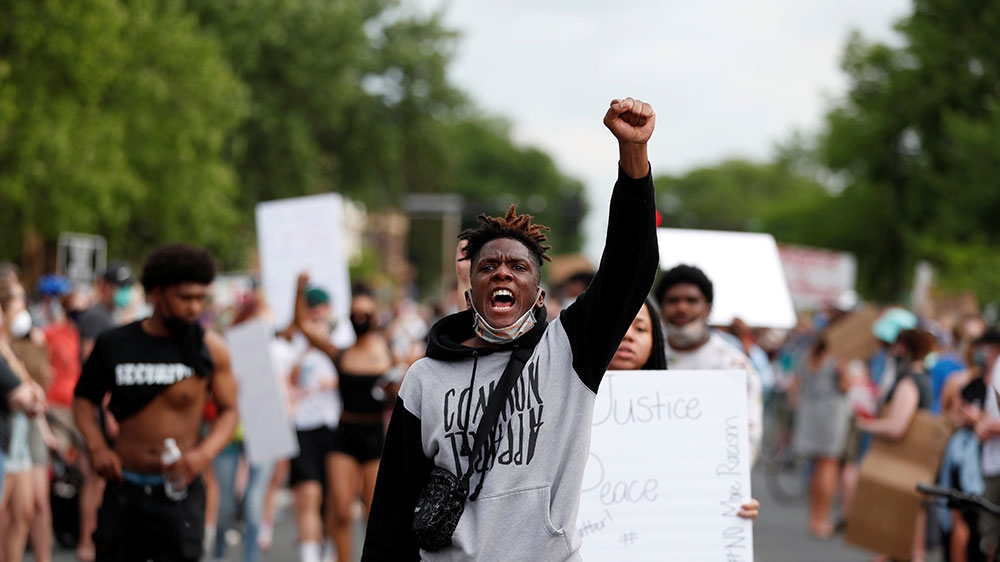
The United States city of Minneapolis was bracing for a third night of protests on Thursday as anger over the death of George Floyd, an unarmed black man, intensified.

Floyd died on Monday after a white police officer used his knee to pin Floyd’s neck to the ground for several minutes.

A video of the incident shows Floyd pleading with officers, saying “I can’t breathe” before going motionless with the officer’s knee still on Floyd’s neck.

More:

The four officers involved were swiftly fired, but Floyd’s family, community leaders and residents are calling for arrests to be made.

“These officers, they need to be arrested right now, the people want justice right now,” Philonese Floyd, George’s brother, told CNN on Thursday morning.

“They need to be convicted and get the death penalty,” Philonese Floyd said.

A small group of protesters “occupied” the space outside the home of Hennepin County Attorney Mike Freeman to demand criminal charges for the four officers involved.

“We aren’t going anywhere until Mike Freeman prosecutes and charges the officers,” protesters said in a Facebook Live video, with at least one tent put up on the sidewalk outside the county attorney’s home.

Protesters gather outside the home of Hennepin County Attorney Mike Freeman to protest the death of George Floyd, an unarmed black man [Eric Miller/Reuters] 

Freeman’s office said in a statement on Tuesday that it was was “shocked and saddened by what appeared in a recent video”.

It said it would make a decision on prosecution after it receives the completed findings of the investigations by the Minnesota Bureau of Criminal Apprehension and FBI.

Freeman said on Thursday that his office would work through the case “as expeditiously, as thoroughly as justice demands”. 

“We just can’t rush this,” Freeman said. “These need to be done right. Please give me and give me the United States attorney time to do this right and we will bring you justice.”

‘No justice, no peace’

Hundreds protested Monday and Tuesday night, chanting “I can’t breathe” and “no justice, no peace”.

Floyd’s death has been compared that of Eric Garner, an unarmed black man who died in 2014 after police put him in a chokehold. Some of Garner’s last words were “I can’t breathe”.

While the protests have initially been peaceful, they have descended into chaos with reports of looting, arson and vandalism.

Police have used tear gas and non-lethal projectiles to disperse the crowds. 

Community leaders on Thursday urged protesters to remain peaceful, largely blaming reports of looting and vandalism on “outsiders”.

“We cannot allow outsiders or our own Minneapolis residents to destroy our city,” said Minneapolis City Council Vice President Andrea Jenkins.

“We want to work together to ensure that people have their voices heard in a safe manner,” she said during a news conference alongside Mayor Jacob Frey.

Minneapolis

Protesters gather at the scene where George Floyd, an unarmed black man, was pinned down by a police officer kneeling on his neck before later dying in hospital in Minneapolis, Minnesota, the US [Eric Miller/Reuters] 

For his part, Frey, who has called for the arrest of the officer who pinned Floyd down, said the city’s anger is “not only understandable, it’s right”.

“‘What we’ve seen over the last two days and the emotion-ridden conflict over the last night is the result of so much built-up anger and sadness … that has been ingrained in our black community – not just because of the five minutes of horror, but for 400 years,” he said.

Minnesota Governor Tim Walz called in the US National Guard on Thursday to support local authorities as they braced for the night’s demonstrations.

Protesters had already started to gather in Minneapolis on Thursday afternoon, with several actions taking place throughout the city, according to community leaders.

‘Your violence has brought this resistance’

Several prominent activists and sports stars have expressed outrage over Floyd’s death and support for those protesting.

Former National Football League star Colin Kaepernick, who took a knee during the national anthem at US football games to protest police brutality, tweeted that “we have to fight back!”

“When civility leads to death, revolting is the only logical reaction,” Kaepernick said in support of the protesters. “The cries for peace will rain down, and when they do, they will land on deaf ears, because your violence has brought this resistance.”

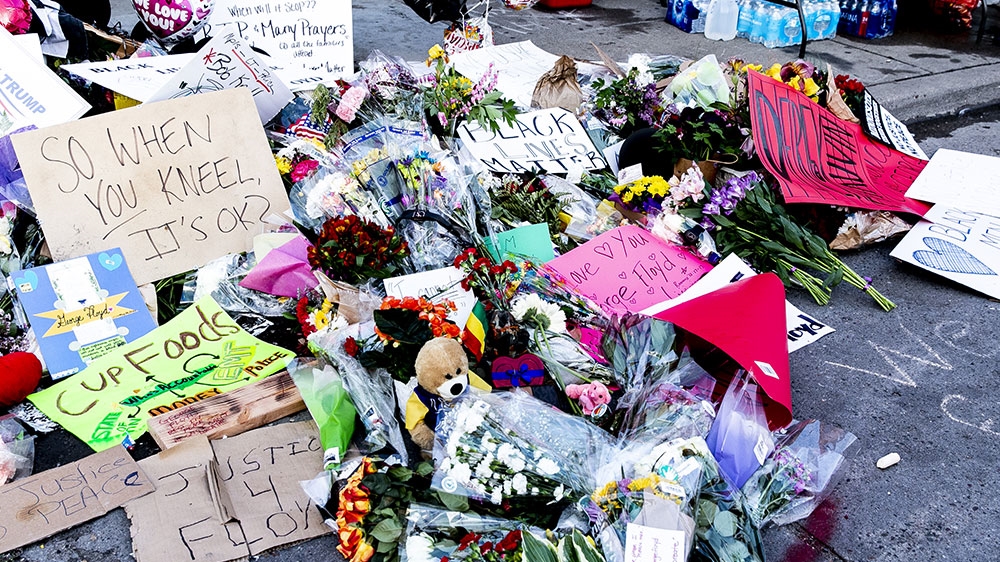
George Floyd

The memorial of George Floyd is seen during the second day of protests in Minneapolis, Minnesota [Jordan Strowder/Anadolu Agency/Getty Images] 

In a joint statement on Thursday, US Attorney Erica MacDonald And FBI Special Agent In Charge Rainer Drolshagen said that the US Department of Justice has made the investigation into Floyd’s death a “top priority”.

“The federal investigation will determine whether the actions by the involved former Minneapolis Police Department officers violated federal law,” the statement read.

US President Donald Trump, who in the past has been accused of stoking racial tensions, on Thursday said he and his administration are “very much involved”.

He said the video of Floyd’s arrest was a “very shocking sight”, but he declined to say whether he believed the officers should be charged.


Source link

How To Wear The Next Face Mask-Friendly Beauty Trend

With protective face masks here to stay until a COVID-19 vaccine is developed, it’s safe to say that the way we wear makeup will change. This means gravitating away from statement lips and contoured cheekbones and shifting toward creative eye and brow makeup looks.

Mask-friendly eye makeup looks have already seen an uptick in popularity on social media ― “eye” searches during April on the popular makeup subreddit r/makeupaddiction were up 36% from March. And makeup-obsessed redditors like Chloe Richmond have shared their own personal looks on the channel, signifying a clear trend on the rise.

Chloe Richmond shows off her mask-friendly eye makeup look.

Richmond told HuffPost that her eyes served as the main focal point of her look.

“I noticed I got way more compliments on my makeup, as the mask caused people to look directly in my eyes,” Richmond said. “I also made sure to pack a highlighter around my eye to really help the look pop.”

Makeup artist Shureice Dawn posted an eye look that became a viral success: a crystal mask and matching eye makeup look. She thinks it’s an indicator of where makeup looks are going in the near future.

“Eye makeup will become the way many people choose to express themselves,” Dawn said. “We will soon have to smile only with our eyes, and this is why eye makeup will become more important than ever.”

As mask-friendly eye makeup looks continue to rise in popularity in the beauty space, we tapped social media pros and beauty vets to break down how to create safe and colorful looks on your own. From eye makeup products to choose, to helpful application tips to bookmark, read this before you start combing through Pinterest for DIY makeup ideas.

Coordinate your eye shadow shades to complement your face mask

Makeup artist Jordan Artistry suggested selecting eyeshadow shades that enhance and flatter your mask and your eye color. You’ll see in the photo atop this article that Richmond chose a shade of red that complements the red ladybugs on her mask, but still contrasts with the green background.

Or you can choose a color on the opposite side of the color wheel as your mask.

“If you would like to create a much bolder eye look, I suggest using a colorful eyeshadow that is different from the shade of the mask,” Artistry said. “A great example would be pairing a pink shadow with a yellow face mask in order to create some eye-catching contrast.”


Source by [author_name]

Trump move could scrap or weaken law that protects social media companies- Technology News, Firstpost

0

By Nandita Bose and Jeff Mason

WASHINGTON (Reuters) – President Donald Trump said he will introduce legislation that may scrap or weaken a law that has protected internet companies, including Twitter and Facebook , in an extraordinary attempt to intervene in the media. Trump signed an executive order on Thursday afternoon after attacking Twitter for tagging his tweets for the first time about unsubstantiated claims of fraud about mail-in voting with a warning prompting readers to fact-check the posts.

In addition, Trump said his administration may “remove or change” a provision of a law known as section 230 that shields social media companies from liability for content posted by their users.

Trump said U.S. Attorney General William Barr will begin drafting legislation “immediately” to regulate social media companies.

On Wednesday, Reuters reported the White House’s plan to modify Section 230 based on a copy of a draft executive order that experts said was unlikely to survive legal scrutiny.

“What I think we can say is we’re going to regulate it,” Trump said at the signing of the order.

“I’ve been called by Democrats that want to do this, so I think you could possibly have a bipartisan situation,” said Republican Trump, who is running for re-election in the Nov. 3 vote.

Facebook and Twitter did not comment on the executive order.

Trump’s remarks and the draft order, as written, attempts to circumvent Congress and the courts in directing changes to long-established interpretations of Section 230. It represents his latest attempt to use the tools of the presidency to force private companies to change policies that he believes are not favorable to him.

“In terms of presidential efforts to limit critical commentary about themselves, I think one would have to go back to the Sedition Act of 1798 – which made it illegal to say false things about the president and certain other public officials – to find an attack supposedly rooted in law by a president on any entity which comments or prints comments about public issues and public people,” said First Amendment lawyer Floyd Abrams.

Others like Jack Balkin, a Yale University constitutional law professor said “The president is trying to frighten, coerce, scare, cajole social media companies to leave him alone and not do what Twitter has just done to him.”

Twitter’s shares were down 4.4% on Thursday. Facebook was down 1.7 percent and Google parent Alphabet Inc was up slightly.

Trump, who uses Twitter virtually every day to promote his policies and insult his opponents, has long claimed without evidence that the site is biased in favor of Democrats. He and his supporters have leveled the same unsubstantiated charges against Facebook, which Trump’s presidential campaign uses heavily as an advertising vehicle.

On Thursday, Trump said there is nothing he would rather do than get rid of his Twitter account but he had to keep it in order to circumvent the press and get his version of events to millions of followers.

The protections of Section 230 have often been under fire for different reasons from lawmakers including Big Tech critic Senator Josh Hawley. Critics argue that they give internet companies a free pass on things like hate speech and content that supports terror organizations.

Social media companies have been under pressure from many quarters, both in the United States and other countries, to better control misinformation and harmful content on their services.

Twitter Chief Executive Jack Dorsey said on the company’s website late Wednesday that the president’s tweets “may mislead people into thinking they don’t need to register to get a ballot. Our intention is to connect the dots of conflicting statements and show the information in dispute so people can judge for themselves.”

On Wednesday evening, Twitter continued to add fact-checking labels and ‘manipulated media’ labels on hundreds of tweets.

Steve DelBianco, president of NetChoice, a trade group that counts Twitter, Facebook and Google among its members, said the proposed executive order “is trampling the First Amendment by threatening the fundamental free speech rights of social media platforms.”

(Reporting by Nandita Bose, David Shepardson, Alexandra Alper and Jeff Mason in Washington, Additional reporting by Elizabeth Culliford in Birmingham, England; Susan Cornwell and Susan Heavey in Washington and Karen Freifeld in New York ; Edited by Nick Zieminski and Grant McCool)

This story has not been edited by Firstpost staff and is generated by auto-feed.

Find latest and upcoming tech gadgets online on Tech2 Gadgets. Get technology news, gadgets reviews & ratings. Popular gadgets including laptop, tablet and mobile specifications, features, prices, comparison.


Source link

Cambodia’s Farmers Thrive as Coronavirus Border Closures Keep Out Crop Competition

0

Farmers in Cambodia’s Battambang province are some of the few people in the country to benefit from efforts to contain the coronavirus outbreak, saying they finally have a market for their crops and can earn a living now that the border of neighboring Thailand has closed due to the pandemic.

The farmers told RFA’s Khmer Service on Thursday that they no longer have to underbid competitors selling crops from Thailand, allowing them to double the price of their produce instead of being forced to take jobs as migrant workers across the border to earn a living.

Additionally, they said, middlemen now come directly to their farms to purchase crops, meaning they no longer need to transport them to the market and hope they find a buyer.

A 40-year-old farmer from Ek Phnom district named Chim Virak said that he has been able to sell corn, cucumbers, eggplants, and watermelon from his three hectares (7.5 acres) of land at top dollar, with plenty of demand.

He said he spent around U.S. $3,000 on his initial investment but expects to turn a healthy profit this year. As soon as his crops are ready, customers come to his fields to buy produce “regardless of the price,” which he said had increased from around 500 riel (U.S. $0.12) per kilogram to 1,800 riel (U.S. $0.44) most recently.

“If prices continue this way, I think our area’s farmers will be a lot wealthier within a few years,” he said, adding that in his village, “most people are growing vegetables.”

Prior to the outbreak, Chim Virak said, his cucumbers sold for between 250 and 600 riel (U.S. $0.06 and $0.15) per kilogram—if he could sell them. As of May, cucumbers were selling for 2,000 riel (U.S. $0.49) per kilogram, and he said he can sell his produce at even higher rates if he brings it to market himself.

While in previous seasons he was struggling to break even, Chim Virak said he had already made around U.S. $7,000.

“Our farms are rotating [producing different crops multiple times a year] and currently my watermelon is being harvested,” he said.

“In the past, we had to rely on middlemen to find buyers, but now I sell everything myself.”

Another farmer in Ek Phnom named Kim Kan said he had planted corn, watermelon, beans, and eggplant on two hectares (five acres) of land, spending about U.S. $300 of his own money and borrowing the same amount from a microfinance lender.

He said he is also making about twice as much as last year, with around U.S. $150 in profit.

“We are very happy that we are having such good business,” he said.

“Farmers have never seen this kind of price hike. Since the outbreak, buyers come straight to us. We don’t have any difficulty finding a market. Buyers are competing to purchase our crops.”

Thriving community

Kim Kan said said his community consists of 60 families farming on 120 hectares (300 acres) of land.

Despite their success, he said the farmers still lack an efficient water supply for their land and have spent “a lot of money” transporting water from a source about one kilometer (two-thirds of a mile) away to irrigate their crops. He and others urged the local government to build an irrigation ditch for them.

Ek Phnom district governor Mel Sophal told RFA that provincial authorities are working to build his constituents, who comprise around 160 farming families, a nine-kilometer (5.6-mile) irrigation system at a cost of around 400 million riel (U.S. $97,000).

“We want to make the area a ‘green zone,’ regardless of whether it is the dry or rainy season,” he said.

Coalition of Cambodian Farmer Community president Theng Savoeun said local farmers are thriving because the closure of the country’s borders with Thailand and Vietnam has prevented retailers from flooding the market with imported vegetables.

He urged the government to put measures into place that continue to protect farmers from the price impacts of crop imports.

Reported by RFA’s Khmer Service. Translated by Samean Yun. Written in English by Joshua Lipes.


Source link

Biden’s Testing Strategy Sets Up a Clear Contrast With Trump on the Coronavirus

WASHINGTON — Joseph R. Biden Jr. has proposed harnessing the broad powers of the federal government to step up coronavirus testing, with a public-private board overseeing test manufacturing and distribution, federal safety regulators enforcing testing at work and at least 100,000 contact tracers tracking down people exposed to the virus.

The presumptive Democratic nominee’s plan, laid out in a little-noticed Medium post, stands in stark contrast to President Trump’s leave-it-to-the-states strategy, detailed in an 81-page document released over the weekend. And it presents voters in November with a classic philosophical choice over the role they want Washington to play during the worst public health crisis in a century.

With more than 100,000 Americans already dead from the coronavirus and at least 1.7 million infected, testing has emerged as a major campaign issue. Polls show that most people want better access to testing and believe that it is the job of the federal government. Like Mr. Biden, Democrats running for Congress have seized on testing as a prime example of what they view as Mr. Trump’s incompetent response to the crisis.

In Michigan, Senator Gary Peters, an incumbent Democrat, tells viewers in a TV ad that “our workplaces need to be safe” and “that means more testing.” In Colorado, an ad for Senator Cory Gardner, an incumbent Republican, begins with footage of a news anchor saying, “Coronavirus tests are coming to Colorado from South Korea because of Senator Cory Gardner.”

In Maine, Sara Gideon, a Democrat running to unseat Senator Susan Collins, is airing an ad in which she says that “the federal government needs to expand testing, which is critical to keeping us safe.” In Washington, Speaker Nancy Pelosi held a news conference on Tuesday to attack the Trump plan as insufficient.

“Mr. President, take responsibility,” Ms. Pelosi declared, adding, “That’s what the president of the United States is supposed to do.”

Beyond the slogans and congressional calls for a national testing strategy, Mr. Biden’s plan, laid out late last month as he struggled to grab voters’ attention, begins to flesh out what such a strategy would entail.

Harking back to the War Production Board created during World War II by Franklin D. Roosevelt, the former vice president proposed a “Pandemic Testing Board” to oversee “a nationwide campaign” to increase production of diagnostic and antibody tests, coordinate distribution, identify testing sites and people to staff them, and build laboratory capacity.

Testing, he and his advisers wrote, “is the springboard we need to help get our economy safely up and running again.”

Mr. Biden said he would do what the Obama administration did during the H1N1 pandemic of 2009 — instruct the Occupational Safety and Health Administration, which regulates workplace safety, and the Centers for Disease Control and Prevention to issue detailed guidance for how employers should protect their workers, including testing, campaign advisers say. OSHA would enforce compliance.

Under Mr. Trump, OSHA has issued Covid-19 guidance for employers that is “advisory in nature and informational in content” and does not mention testing. The C.D.C.’s interim guidance for employers says only that companies “should not require a Covid-19 test result” or a doctor’s note to grant sick leave or to determine whether employees can return to work.

Mr. Biden would also create a federal entity: the U.S. Public Health Jobs Corps, a force of at least 100,000 people, including AmeriCorps and Peace Corps volunteers and laid off workers, to trace the contacts of those who test positive for the virus. It would also “become the permanent foundation” of a service that would address other public health priorities like the opioid epidemic.

Republicans argue in favor of a more localized response led by state governments. “With support from the federal government to ensure states are meeting goals, the state plans for testing will advance the safe opening of America,” says the Trump administration’s 81-page Covid-19 Strategic Testing Plan, prepared by the Department of Health and Human Services.

Senator Lamar Alexander of Tennessee, the chairman of the Senate Committee on Health, Education, Labor and Pensions, called Mr. Biden’s idea a “typical Democratic response.”

“There’s a big difference between what’s going on in Queens, N.Y., and rural Tennessee, and the governors know best what to do,” he said, adding, “Every time you have a national problem, whether it’s education or health, the instinct of Democrats is to say, ‘Let’s solve it from Washington,’ and my instinct and that of Republicans is that this is a country that works state by state, community by community.”

Some public health experts, including those who advise the Biden campaign and some who do not, say that is a false dichotomy. The federal government could and should cooperate with and support the states, and also take a more aggressive role, they say, particularly in a chaotic environment where a global shortage has left governors — and now employers — competing for scant supplies of test kits and wondering how best to use them.

“Every university, every employer, every organization is struggling to figure out how to use testing to create a safe environment,” said David A. Kessler, a Biden campaign adviser who was the commissioner of food and drugs under Presidents George Bush and Bill Clinton.

“If you’re Amazon,” he added, “you can hire people to put in place testing systems to help assure the safety of your work force, but not everyone can do that. Why are we reinventing this firm by firm, school by school, employer by employer?”

Congress required Mr. Trump to provide a national testing strategy in the $484 billion stimulus package it passed last month and required the states to submit plans to the federal government for approval. But Democrats on Capitol Hill say the strategy the Trump administration offered over the weekend falls far short of what they envisioned.

Experts say there should be two main components to a comprehensive national testing strategy: a centralized effort to acquire test kits and distribute them, and clear guidance on how to use them.

Andrew Slavitt, who was the acting administrator of the Centers for Medicare and Medicaid Services under President Barack Obama and has provided advice to the Trump White House during the pandemic, said one reason for the government to control the acquisition of coronavirus tests was that commercial labs were increasing their prices to as much as $140 a test.

“In this laissez-faire policy, there are scarce resources, and whoever has the scarce resources gets to charge what they want, and the states all get to bid and now the employers are bidding,” he said. “The consequences of this are to make the distribution much more costly, much more uneven.”

As for how to use the tests, Republicans say such plans are best developed state by state, community by community. But with a virus that respects no borders, Democrats insist that a national standard is essential.

“We would say, if you want to reopen a school, then you have to test so many kids per day; they have to be retested every so often,” said Representative Frank Pallone Jr. of New Jersey, the chairman of the Energy and Commerce Committee, adding: “The same thing with employers. How many people have to be tested before it’s safe to go back to work? How often do they have to be retested?”

Polls show that voters tend to favor a prominent role for the federal government. In a Pew Research survey released this month, 61 percent of Americans said coronavirus testing was mostly or entirely the responsibility of the federal government, not the states.

A Fox News poll released last week found that 63 percent of registered voters viewed the “lack of available testing” as a “major problem.” Just 12 percent said it was not a problem at all. Voters said they trusted Mr. Biden to do a better job on health care than Mr. Trump by a 17-point margin and favored Mr. Biden on the handling of the pandemic by nine points over Mr. Trump.

In a CNN poll earlier in May, 57 percent of Americans said the federal government was not doing enough to address the limited availability of coronavirus testing.

“When Americans hear Trump talking about testing not being his responsibility, the takeaway is that he’s just passing the buck,” said Geoff Garin, a Democratic pollster.

While Mr. Trump has repeatedly said that anyone who wants a test can get one, that is not true in many parts of the country. It is true in Tennessee, where Gov. Bill Lee, a Republican, has decided that the state will pay for testing. “When in doubt, get a test,” he said on his Facebook page, adding, “Aggressive testing is key to our reopening strategy.”

And while Mr. Trump has emphasized the number of people who have been tested — more than 15 million Americans, as of Monday — experts say the more important metrics are what percentage of the population has been tested, what percentage of tests come back positive and how those tests are deployed.

“Instead of focusing on what we need to do as a country to keep ourselves and our populations and especially our vulnerable people safe, and saying let’s come up with the right testing strategy and make sure we have enough tests to implement it, we’ve just been fighting about the number of tests,” said Ashish Jha, the director of the Harvard Global Health Institute.

Testing has been a confounding issue for Mr. Trump since the early days of the pandemic, when sloppy laboratory practices at the C.D.C. caused contamination that rendered the nation’s first coronavirus tests ineffective, delaying the rollout. The country never quite caught up.

Countries that had aggressive early testing campaigns — South Korea, Singapore, Taiwan and Germany, among others — have largely controlled their epidemics. Before the pandemic there were 12 direct flights between Taiwan and Wuhan, China, its epicenter, each week.

Mr. Trump’s travel ban “led us to believe that we had shut the barn door when there was a flood of virus coming into our country from multiple direction,” said J. Stephen Morrison, who runs a global health program at the Center for Strategic and International Studies. He added, “We didn’t have a testing system and we didn’t want one.”

Emily Cochrane and Thomas Kaplan contributed reporting from Washington, and Giovanni Russonello from New York.

Source link

Cortez Masto Withdraws Consideration To Be Biden’s Running Mate

LAS VEGAS (AP) — Democratic Sen. Catherine Cortez Masto of Nevada said Thursday that she’s not interested in serving as running mate to presumptive presidential nominee Joe Biden.

Cortez Masto, who in 2016 became the first Latina elected to the U.S. Senate, said in a statement that she supports the former vice president and will work tirelessly to get him elected but does not want to join the presidential ticket.


Sen. Catherine Cortez Masto says it was “an honor to be considered” for Joe Biden’s running mate.

“It is an honor to be considered as a potential running mate but I have decided to withdraw my name from consideration,” she said in a statement. “Nevada’s economy is one of the hardest hit by the current crisis and I will continue to focus on getting Nevadans the support they need to get on back on their feet.”

Cortez Masto is one of more than 10 women whose names have been suggested as possible running mates for Biden, who has committed to picking a woman.

Cortez Masto, 56, was one of the highest profile Latinas believed to be on Biden’s short list of potential running mates, and a pick that some activists have said would have helped Biden win over Hispanics whose support could be crucial to winning the presidency in November.


Source by [author_name]