Richard Grenell at a reception in Berlin in 2019 | Alexander Becher/EPA-EFE
Richard Grenell will not return from Washington after interim job as head of the US secret service.
Richard Grenell will step down as U.S. ambassador to Berlin in a few weeks, according to a report from German outlet Die Welt based on information from the German Press Agency.
U.S. President Donald Trump in February called Grenell back to Washington to take over the head of the U.S. secret service on an interim basis, after replacing former acting Director of National Intelligence Joseph Maguire.
Grenell’s term as Trump’s top intelligence official is coming to an end. Last week, the U.S. Senate confirmed that Congressman John Ratcliffe will succeed Grenell in the job.
In early March, the Daily Wire reported that Grenell had informed the White House that he did not wish to return to Berlin once his interim role in Washington was over. At that time though, there was no official confirmation either from the White House or from the embassy in Berlin.
Forty shipping containers have been lost overboard off the NSW coast after a ship rolled during heavy seas while travelling from China to Australia.
About 10.45am on Sunday the Australian Maritime Safety Authority was notified that a container ship had lost cargo overboard off the state’s coast.
The Singapore-flagged container ship APL England experienced a temporary loss of propulsion during heavy seas about 73km southeast of Sydney just after 6.10am, AMSA said in a statement on Sunday.
The ship was en route from China to Melbourne.
“The ship’s power was restored within a few minutes but during this time the ship reported that it was rolling heavily, causing container stacks to collapse and several containers to fall overboard,” the statement said.
The APL England’s master has reported some 40 containers were lost overboard and 74 were damaged.
It’s also been reported that six containers are protruding from the ship’s starboard side while three are protruding from the port side.
AMSA intends to send a challenger jet to the area to look for containers and debris, as well as to inspect the ship for signs of damage or pollution.
As of just after 4.30pm on Sunday, the APL England was located to the north of Sydney, and continuing north to lessen the impact of heavy weather.
“At this stage it is unknown whether there will be any shoreline impacts associated with this incident and AMSA is working with NSW Maritime to monitor the situation and develop an appropriate response,” the authority said.
The Australian Transport Safety Bureau said on Sunday it will investigate the loss of containers.
“ATSB transport safety investigators will meet the vessel when it arrives in port in the coming days to survey damage to the vessel and container stacks, interview the crew and retrieve available recorded data,” the bureau said in a statement.
Investigators will also analyse weather information and review the operator of the ALP England’s loading systems.
“A preliminary report will be released in about one to two months after the initial evidence gathering phase is completed, while the investigation’s final report can be expected to be released in about 18 months’ time,” the bureau said.
“It is crucial that people don’t relax over the weekends as we go forward,” he said.
The latest industries to be unlocked will be beauty and nail salons that can begin treatments from June 1 under strict COVID-safe guidelines. Zoos, reptile parks and aquariums will also be opened next month.
The government and health authorities were also discussing how gyms and community sport might reopen.
“We are working on it and I as Health Minister am very keen to get the gyms reopened,” Mr Hazzard said.
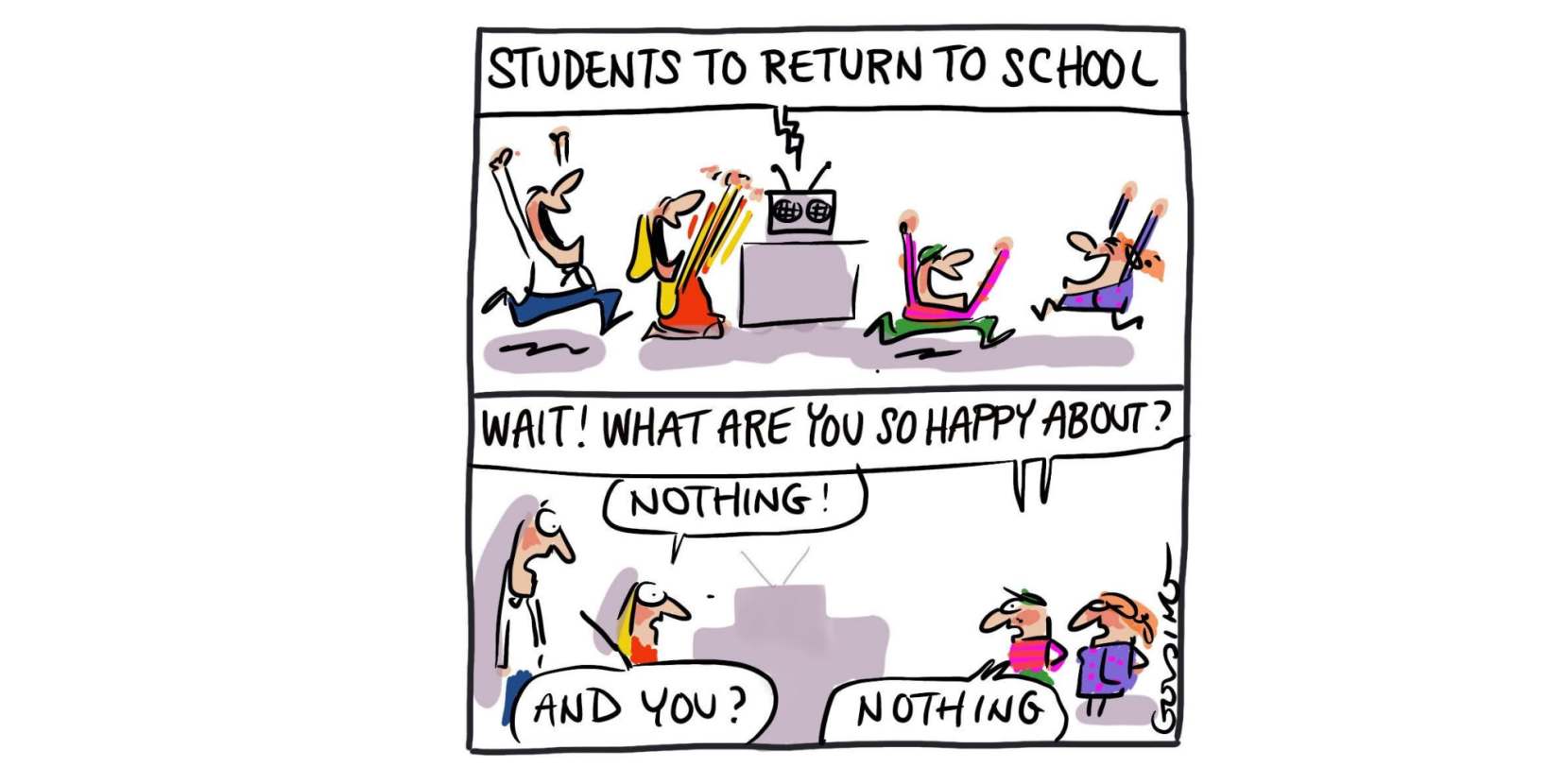
NSW Transport Minister Andrew Constance urged parents to drive children to school or let them walk or ride their bikes on Monday to reduce the risk of spreading COVID-19 infections on public transport.
“Transport is the high-risk area. It’s the area where people can crowd and congregate,” he said.
Loading
An overflow carpark and shuttle services will run from Moore Park into the city. Hundreds of transport marshalls will also be out from Monday to manage crowds on public transport starting at Wynyard, Blacktown, Hurstville, Chatswood, Newcastle, Wollongong and the Blue Mountains.
Marshalls will direct passengers to form lines at bus stops or limit the number of people entering train platforms. Smart phone apps will also start providing data on crowd levels on transport routes.
Mr Constance said cleaning will continue to be ramped up but people with flu symptoms should stay away from public transport. People were also urged to continue working from home where possible to reduce demand on public transport.
Department of Education Secretary Mark Scott said he was confident it was the right time for schools to open to all students. He asked parents to avoid congregating outside schools.
“It’s not a time for parents to be entering the school and joining in school activities,” he said.
Mr Hazzard said it was important to find the right balance to reopen the economy because it could be years before a vaccination or treatment for COVID-19 is found.
NSW Treasurer Dominic Perrottet said zoos and wildlife parks are well placed to be able to meet safety standards “and not only provide a great day out for families but jobs for hundreds of staff”.
Anna Patty is a Senior Writer for The Sydney Morning Herald with a focus on higher education. She is a former Workplace Editor, Education Editor, State Political Reporter and Health Reporter.
We’re here to guide you through the coronavirus lockdown. Check out HuffPost LIFE for daily tips, advice, how-tos and escapism.
Apart from captivating food critiques and entertaining antics for the last 11 years, ’MasterChef Australia’s previous judging panel was known for another thing – Matt Preston’s show-stopping cravats.
While Matt, Gary Mehigan and George Calombaris have now left the cooking show, it appears Jock Zonfrillo has seamlessly stepped in with his own fashion quirk that fans are loving.
The 43-year-old Scottish chef and restaurateur appears to love a good tailored vest, wearing one in almost every episode so far this season.
Whether it’s a standalone vest over a buttoned shirt or an item that’s part of a three-piece suit, Jock has served his smart vests to the ‘MasterChef’ kitchen while dishing feedback to the contestants.
According to Channel 10′s official wardrobe department Instagram account, 10 Styling, Jock has worn a selection of vests, mainly from custom-suit retailer Prinzi Collections and menswear label, Calibre. Vests range from $29 to $160 on Calibre’s official website.
‘MasterChef Australia: Back To Win’ continues at 7:30pm on Channel 10.
Western Australians have been told to stay inside and brace themselves for a once-in-a-decade weather event as ex-tropical cyclone Mangga reaches the west coast today.
Meteorologists are predicting large parts of the state will be affected by severe and dangerous weather conditions including wind gusts of up to 130km/h.
Up to 100ml of rain is expected to fall along the west coast, while tides are predicted to swell before reaching a peak of eight metres tomorrow.
“This is a rare event for WA due to the extent of the area affected by severe conditions and also the possible areas of really quite dangerous weather,” Bureau of Meteorology WA State Manager James Ashley said.
“The worst of the weather is expected this evening, right through the night and into tomorrow morning.”
Department of Fire and Emergency Services Chief Superintendent Danny Mosconi said it was now too late for people to prepare their homes and they needed to stay inside.
“Stay indoors whereever possible and be mindful of any debris like falling branches,” he said.
“Do not go out on the water on Sunday or Monday or you will be risking not only your life but the lives of marine rescue volunteers who will be called upon to help you.”
In the state’s capital Perth, northerly damaging winds are not expected to ease until tomorrow afternoon, and 30-40mm of rainfall is expected.
“Rainfall with be widespread across the state with isolated falls from the Kimberley to Karratha up to around 100mm, and rainfalls on the south over 50mm, and that will extend inland up to 10-20 mm or more,” Mr Ashley said.
“The winds will build up the seas against the coast and a storm tide is expected which can be particularly dangerous and could flood low lying coastal areas.
Michele A. Berdy is a writer and editor at the Moscow Times.
MOSCOW — A few days ago, six weeks into Moscow’s coronavirus lockdown, I was shopping at a local supermarket when the man behind me at the checkout counter started pushing into me. I told him to move away. He was astonished: “How come?†The cashier and I exchanged looks. “You’re supposed to stay at least a meter and half away from other customers,†she said. “Really?†he answered. “This is the first I’ve heard of it.â€
It’s possible that this was simply the first time the guy’s wife made him go to the store since March 25, when Russia officially declared a “national paid vacation†and closed all but essential stores and services to halt the spread of the coronavirus. But it’s also possible he just didn’t watch the news. Or maybe he did watch the news but couldn’t make sense of the contradictory messages he was getting from President Vladimir Putin’s government.
For most of the spring, the official line from state media was that Russia had nothing to worry about. The coronavirus was happening somewhere else, in Europe and Asia and the United States, but not here in Russia. The country had reacted promptly to potential danger, closing the border with China on January 30, then screening incoming passengers and finally halting all incoming air traffic to keep the invading viral army out. Hospitals were refitted, doctors retrained, and protective gear and equipment sent to every hospital in the country. No problem, said the Kremlin: We’ve got this.
That’s no longer believable.As of Monday, May 18, Russia was in second place after the United States in number of infections — 290,678. And those are just the official statistics. Moscow Mayor Sergei Sobyanin has said he believes about 2 percent of the population of Moscow is infected — that is, about 250,000 people. The death rate remains low, with only 2,722 deaths so far, although there are doubts about that number too: Recent media reports have shown how Russian methodology for assigning cause of death has lowered the COVID morbidity numbers, perhaps by more than 50 percent. (This was disputed by Deputy Prime Minister Tatyana Golikova.) I don’t know anyone who thinks the statistics are accurate, if only because people were dying from COVID in Russia before anyone was testing for it.
This was supposed to be a triumphant spring for Putin. Under his stewardship, the country had amassed a huge reserve fund, had confidently started a price war with Saudi Arabia over oil and was arranging a spectacular international event to commemorate the 75th anniversary of the end of World War II. It was planned to be a lavish celebration, where hundreds of foreign leaders and dignitaries, including French President Emmanuel Macron, German Chancellor Angela Merkel, Chinese President Xi Jinping and possibly Donald Trump would stand on the viewing platform above Lenin’s mausoleum and watch a military parade. Millions would march in “Immortal Regiment†parades, honoring relatives who fought in the war; the day would end with banquets, grand concerts and the best fireworks display of the decade.
Ordinary Russians are not worried about big business. They’re worried about themselves.
Putin had also carefully laid the groundwork for a series of political and constitutional moves that would allow him, effectively, to remain in power for the foreseeable future, maybe even for life. In March, the Russian Parliament approved an amendment to the constitution that would limit presidential terms but would also reset Putin’s presidential terms to zero, paving the way for him to stay head of state until 2036, the year he will turn 84. All that remained to seal the deal was a general vote on the constitutional amendments, which was supposed to be held in April.
Because of the coronavirus, the vote was not held and has not yet been scheduled. The 75th anniversary celebration has been postponed indefinitely. On May 9, when Russia celebrated Victory Day, Putin made a short speech and laid a wreath on the grave of the unknown soldier with little fanfare. A military flyover of 75 planes and helicopters was announced, but I watched it — they fly directly over my house, rattling the windows and setting off car alarms — and it looked like barely two dozen. And since no one was supposed to go out in the evening, the only people who saw the fireworks were those who lived near the launch point and had a balcony facing the right direction. The holiday, envisioned as a kind of coronation for Putin’s presidential “reset†and the triumphant return of Russia as a world power, went by almost unmarked.
Now, instead of consolidating public support, Putin appears to be losing it. In early May, the Levada Center, Russia’s sole independent polling agency, found that Putin’s approval rating was down to 59 percent. That might sound enviable to Western politicians, but it’s the lowest rating he has had in 20 years. Thirty-three percent of those polled said they did not approve of his performance. Putin’s hold on power doesn’t look as strong as it did a few months ago. His hands-off response to coronavirus might have something to do with it.
On a morning talk show in early March, I watched the deputy director of the research institute under Russia’s consumer watchdog agency say the situation in the country was “terrific — we’ve been living for almost three months along a huge border with China and have only five cases, so all the measures we’re taking are clearly effective.â€
On other talk shows, where conspiracy theories reign, hosts and guests floated the notion that the virus didn’t exist. It was a hoax invented by the United States to destroy the Chinese economy, or it was made in an American laboratory and planted in China, or Bill Gates invented it so he could then make money on the vaccine. It was just a version of SARS, which in the end turned out to be less dangerous than everyone feared. Besides, 60,000 people die every year from the flu, and no one cares. What’s the big deal?
So many people seemed to believe this, or wanted to believe this, that they ignored the increasingly stringent lockdown measures instituted in Moscow beginning March 25 They didn’t practice social distancing, traveled all over the city, used services that were supposed to be closed, got together with friends, sniffed, sneezed, coughed and even spit in public. In stores, unmasked and barehanded, they squeezed every tomato in a bin before moving on to examine broccoli, then pushed and hovered at the cash register despite social distancing marks on the floor.
On television and social media, we all watched Italians singing on balconies and saw Parisians printing out forms every time they left their apartments. COVID was clearly bad outside Russia. But inside Russia? It was hard to figure out.
For example, on news shows I saw Russian airports with teams in hazmat suits, checking arriving passengers’ temperatures before releasing them. Some passengers were carefully screened. Then three of my friends flew into Moscow in March, two from Italy and one from Tunisia. I asked them about it. None underwent medical checks at the airport, although they all left contact information for public health authorities. One was never called, the second was called the day after arrival and told to quarantine herself for two weeks, and the third answered the door five days after his arrival to find a guy in a mask, handing him a back-dated, signed sick-leave form and telling him he should have been in quarantine for 14 days since his arrival. No one asked him where he’d been for the past week.
The worst situation came on April 15,when the city instituted mandatory digital passes for everyone using public or private transportation. Using a cellphone app or a computer, we all had to get QR passes for every trip out of the house, except for walks to the closest pharmacy or grocery store. For some reason — perhaps to show that the city was serious — on the first morning the passes went into effect, police stood at the entrances to the metro stations and checked each pass manually, so passengers ended up being tightly packed together for hours in the station halls and underground corridors.
Medical workers in a hall of Vinogradov City Clinical Hospital | Dimitar Dilkoff/AFP via Getty Images
When Moscow experienced an 11-day spike in infections two weeks later, in early May, we were wondering if there was a connection.
Of course, in some ways the coronavirus pandemic is playing out in Russia the same way it is everywhere else. Some people are cautious and follow the rules. People who can do their jobs from home do. Schools are closed, and internet memes like dressing as famous works of art have helped occupy the time in lockdown. Zoom has been turned into a Russian verb, and men on bicycles with candy-colored square backpacks speed along the streets delivering food and groceries.
But in other ways, the pandemic is not playing out in Russia like it has in other countries. Since March 25, Putin has been giving addresses to the nation almost every week promising a safe deliverance from COVID and aid for those who need it, but he is leaving the day-to-day decisions to local leaders and has barely left his residence outside Moscow. Meanwhile, his prime minister, three ministers and press spokesman have tested positive for the virus. Petty crime and scams are on the rise as people who are unemployed run out of money. And as time goes on, the Russian approach of finger-pointing, erratically implemented quarantine measures and little economic aid to those in need seems to be increasingly risky.
Economically, Putin has taken a different approach to the economic crisis from other world leaders. In other countries, governments have made trillions of dollars available to businesses and ordinary workers to keep them afloat until the economy can restart. But Russia, despite having a rainy day fund worth about $143 billion at the beginning of April (9.8 percent of the country’s gross domestic product), has pledged only about 2.8 percent of GDP to aid primarily small- and medium-size businesses. The American bailout, by contrast, is close to 10 percent of GDP so far. Russia is actually making less than 1 percent of the GDP available in direct payments, with the rest in loan guarantees and tax deferments.
The Russian Union of Industrialists and Entrepreneurs, the main association for large business interests, has been lobbying for some of the same benefits to be extended to big business, too, and so far has gotten an agreement for loan guarantees of 100 billion rubles ($1.4 billion) from the State Investment Bank. On May 10, the government also agreed to recognize 1,151 companies as “systemically important†— the Russian version of “too big to fail†— and said it will make preferential loans and other benefits available to them.
Russian President Vladimir Putin attends a videoconference meeting on the opening of multifunctional medical centers in several Russian regions | Alexey Nikolsky/AFP via Getty images
In all of Putin’s six addresses to the nation, he has never once mentioned support of big state enterprises. Konstantin Sonin, an economist and professor at the University of Chicago Harris School of Public Policy, says this was for a simple reason: There’s no need. “The entire Russian system is based on supporting Russian big state business. All the tools already exist: You go to the president or cabinet to ask for something, like preferential loans, at any time. These companies already have so many opportunities to do this that there is no need to come up with any new procedures.â€
One of my friends put it another way: “Have you filled up your car with gas lately?†I had, at exactly the same price I paid six weeks ago — maybe even more. Russia has a “shock absorber†system in place that guarantees that the price of filling up your tank never decreases — even when the cost of Russia’s benchmark crude dropped from $56 a barrel in February to $8.48 a barrel in April.
So, ordinary Russians are not worried about big business. They’re worried about themselves.
Twice a day I meet up with a group of dog walkers in my local Moscow park for an hourlong stroll, along with news, gossip and complaints about the weather. Some of us have become close friends, the kind who celebrate birthdays together, borrow sugar or money, and spend time at each other’s dachas. I’ve lived in my apartment for more than 25 years; many of the others have known each other since childhood.
Despite the official assurances, by mid-March our only topic was coronavirus. Should we be worried or not? Some were cavalier. “It’s a bunch of nonsense,†said Masha, the owner of a big friendly mutt. Others were worried, especially if they had health problems or, like one neighbor, a newborn grandchild at home. And we were all worried about the dozen or so small businesses that had appeared on our block in the past couple years — especially because some of the owners were our neighbors.
Alexander, the owner of a big white boxer, has a nail salon in the building next to us. He was worried. The ruble had already tumbled against the dollar and euro. To be on the safe side, he had borrowed some money from a friend and bought a large stockpile of imported materials. And then he waited. But not for long. Just about a week later, Sobyanin, the Moscow mayor, ordered all nonessential stores and services to close, including Alexander’s nail salon.
Servicemen of Russia’s Emergencies Ministry wearing protective gear disinfect Moscow’s Leningradsky railway station | Kirill Kudryavtsev/AFP via Getty Images
In other countries, salons might have closed immediately. But Alexander was worried about his staff. He called them in to discuss their options, and they decided to take the opposite approach, to keep the salon open late every night until the cutoff date, March 28, so that they could earn enough money to hold them over for a week or so. That was almost two months ago. The salon has been closed since.
Alexander and his wife have other jobs that provide basic income. He thinks some of his staff are earning money doing house calls, and others are just waiting it out. Even when he can reopen, he doesn’t really know how to reopen. “It’s a question of safety for the staff and customers. I can figure out how to keep two meters between customers, but when will people feel safe and confident enough to come in?†He thinks it may be a year or more before he can recoup losses and pay off the debt in rent he is running up.
Another neighbor and dog owner Sergei runs a specialty shop. He used to get 35 to 50 orders a day; now it’s two or three. “My landlord lowered the rent by 40 percent, but that doesn’t help much when income has fallen by 90 percent,†he told me.
I asked Nikolai Petrov, a senior research fellow on the Russia and Eurasia Program at Chatham House in London and professor in the political science department at the Higher School of Economics in Moscow, why he thought Putin was willing to risk alienating voters like Alexander and Sergei.
Petrov said Putin didn’t need their support. “Authoritarian regimes rely on important people who are key to stability and staying in power,†he said. “Putin’s political base is the big companies, banks and state companies. He doesn’t depend on citizens, so he doesn’t see or hear those 10 or 15 or 20 percent of the population who are really suffering today from the measures to fight COVID.â€
On May 11, Putin announced that the “national vacation†that had begun in March would end the next day, but that each regional leader would determine how and when to open up businesses. In Moscow, Sobyanin announced that the lockdown would continue until at least the end of the month and now include mandatory gloves and masks in public places, but that several categories of business could open. People shook their heads: Is the situation more dangerous or safer?
Cemetery workers bury a coronavirus victim at a cemetery on the outskirts of Moscow | Kirill Kudryavtsev/AFP via Getty Images
And there was a new joke making the rounds: “When we had 1,000 new infections every day, we were put on lockdown. Now that we have over 10,000 new infections every day, they’re sending us back to work.â€
The problem is that not everyone is going back to work or working at home on salary. Small shops, businesses and services are still closed. In our neighborhood, one beauty salon — a branch of a citywide chain — closed and moved out within the first week of the lockdown. Three other shops have closed and might not reopen.
With the economic pressure mounting, Putin announced in his May address that he would increase aid to the population, mostly through direct payments to families with children, but including tax and insurance write-offs for sole proprietors and even reimbursement of income taxes paid in 2019. I asked my friends if this would help; they laughed. The first round of aid consisted mostly of benefits such as partial debt forgiveness, salary reimbursements if companies continued to pay their staff, and some tax deferments — none of which they qualified for or needed — and the current aid package wasn’t enough to make up for their catastrophic loss of income and continued rent payments.
But neither Alexander nor Sergei had expected state aid. “We never thought we’d get any support,†Sergei said. “But that’s the deal. Either you’re free and are totally on your own, or you work for the state and get a salary and aid, but you also have to do what they say, go to political rallies, whatever. Better to be free.â€
Looking ahead, it’s clear that millions of small-business people, gig economy workers, waiters, salespeople, actors, dancers, musicians, museum curators, nannies, cleaners, fitness instructors and all those Russians working off the books — a large portion of the population — could come out of this with nothing. If they hold on to their businesses, they will probably have a huge debt to pay off. Many thousands, if not millions, of them could lose everything.
To some extent, given the nature of the crisis, economic pain is inevitable. Sonin says, “The crisis is unprecedented, and because the government didn’t move quickly and the measures aren’t, to my mind, sufficient, the downturn will be greater. But getting out of this crisis would have been difficult regardless of what Russia did.â€
The government’s approach isn’t going to improve its popularity ratings, Sonin says, but adds, “I don’t think there is a risk of great discontent. In 2008 and 2009, the GDP fell by 9 percent, and the majority of households were cutting back on basic necessities. But the public didn’t rebel then, and I think it will be about the same this time.â€
People wearing face masks ride an escalator at Savyolovskaya metro station in Moscow | Kirill Kudryatsev/AFP via Getty Images
Nor does he think this crisis, however difficult, will spur Russian leadership to change: “There is no discussion of reconsidering priorities, like cutting back on defense spending, security, or propaganda, or repealing the countersanctions, which in my view would have been the first thing to do. There is no discussion of any of that. That’s not being done because they think the way things are is the way the things ought to be.â€
Petrov is less sanguine about Russian patience. “Putin zeroed out everything,†Petrov says. “He wanted to zero out his presidential terms and start over, and he did that. But COVID has zeroed out all his achievements. His rating is low. Today, people don’t care what happened 10 or 20 years ago. He’ll be a leader if he shows himself a leader in the battle with COVID now. So far, he hasn’t achieved anything, and it doesn’t look as if he will.â€
My neighbors are exasperated but resigned — which is pretty much a default Russian state of mind. Most of them don’t think the government has done a good job of organizing and communicating the response to the coronavirus, but they also think that, for whatever reason, Russia has done better than some other countries. No one knows when and how “life†will begin again, and everyone is looking bleakly ahead to a summer without travel or any sense of normality. “The thing is,†one friend said, “the worst may be yet to come.â€
The New York Times has filled the front page of its Sunday edition with the names of those who have died from the novel coronavirus.
All of the usual articles, photographs and graphics were replaced by the list of names and excerpts from their obituaries to memorialise the dead as the United States approaches the “grim milestone” of 100,000 coronavirus fatalities, the news outlet wrote.
The assistant editor of the paper’s graphics desk Simone Landon said she and her colleagues realised that “both among ourselves and perhaps in the general public, there’s a litle bit of fatigue with the data”.
The page was put together by a researcher who combed through online sources for obituaries and death notices and compiled a list of nearly 1000 names, the newspaper said in an announcement on Saturday.
Short passages were lifted to use on the front page and give a sense of the “uniqueness of each life lost,” including “Alan Lund, 81, Washington, conductor with ‘the most amazing ear'” and “Theresa Elloie, 63, New Orleans, renowned for her business making detailed pins and corsages.”
Overall, the US has confirmed about 1.6 million cases, according to researchers at Johns Hopkins University. The US currently has the world’s highest number of deaths related to the disease.
In New York State, the US state hit hardest by the pandemic, there ar emore than 360,000 confirmed cases and about 29,000 deaths.
But Governor Andrew Cuomo announced signs of progress Saturday, as the state reported its lowest death toll for weeks.
At 84 deaths, the Friday tally marked the first time since March that the daily toll was down in the double digits.
WACO, Texas (AP) — Former U.S. Rep. Allen West of Florida was injured in a motorcycle crash Saturday in Texas.
The former congressman was in stable condition after having been airlifted to a hospital, according to a Saturday night post on West’s Facebook page.
The Facebook post said West was on his motorcycle when a car cut him off, causing him to collide with another motorcyclist.
West’s wife, Angela Graham-West, earlier wrote on Facebook that the crash occurred outside Waco.
The Dallas Morning News reported that West attended a rally Saturday morning at the Texas Capitol that was focused on reopening the state amid the coronavirus pandemic.
Former state Sen. Don Huffines told the newspaper West got in the accident on the way back from the rally.
West, a Republican, moved from Florida to Texas after leaving Congress in 2013. He served one term and once called for then-President Barack Obama’s impeachment.
West is running for chair of the Republican Party of Texas.
Calling all HuffPost superfans!
Sign up for membership to become a founding member and help shape HuffPost’s next chapter
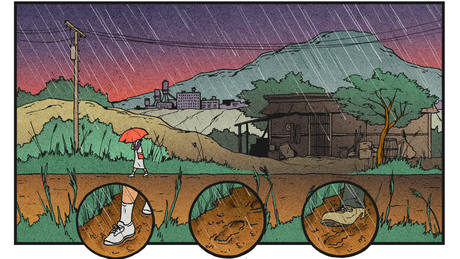
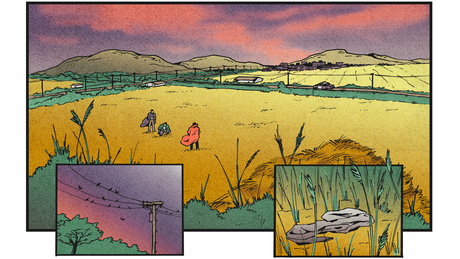
The crime would have been shocking anywhere else, but in Hwaseong, then a rural area near South Korea’s capital Seoul, murders like this were happening with disturbing regularity. She was the eighth female to be murdered there in two years.
Nearly a year after the teen was killed, police arrived at the house of a 22-year-old repairman, just as he was about to eat dinner.
“What’s this about?” Yoon, whose full name is not being published due to a South Korean law that protects the privacy of suspects and criminals, remembers asking. “It won’t take long,” he says police replied.
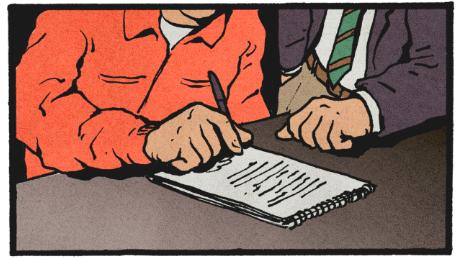
The officers took him to a small interrogation room with a single table at the local police station where they questioned him for three days about the 13-year-old’s rape and murder. Eventually, they extracted a confession.
Yoon told police that on the night of the murder, he had gone for a walk to get some air, according to records of his confession obtained from his attorney. During the walk, he had to stop several times to rest — his childhood polio had left him with a limp so bad that he had been exempted from compulsory military service. Around midnight, Yoon saw a house with a light on and felt a sudden “urge for rape,” he told police, according to transcripts of his confession. He climbed into the house and attacked the young girl, although he told police he knew the parents were asleep next door.
Afterward, he burned his clothes and went home, according to the confessions.
Little is known about the girl and her family, who have never spoken to media.
Yoon’s story is somewhat clearer: He was convicted of raping and murdering the 13-year-old girl and sentenced to life in prison, though his sentence was later reduced on appeal. He was released after 20 years in prison.
The problem is, Yoon says he didn’t do it.
Where everyone knows everyone
Before 1986, Hwaseong wasn’t the sort of place where violent crime happened. About 226,000 people lived in the area, scattered among a number of villages between forested hills and rice paddies.
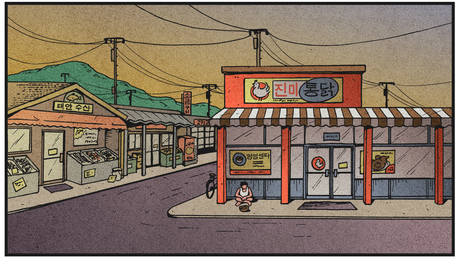
One of those villages was Taean-eup, where Yoon lived. In the 1980s, Taean-eup was a bustling community with rice-wine bars and Korean-style coffee shops where locals liked to gather and gossip. Many people worked in the nearby factories, many of which created electrical goods, such as light bulbs, remembers Hong Seong-jae, who ran the farming machine repair store where Yoon worked. Others worked as rice farmers, and even those who lived downtown kept cows for milk. Everyone in Taean-eup knew each other, Hong said. Before the murders, there was no real crime to speak of — only the odd robbery or break-in.
“But we were all so poor, there wasn’t much to be lost,” Hong said.
But in 1986 that changed. In September that year, a woman was murdered, the first in a series of killings that came to be known as the Hwaseong murders. By 1991, 10 women and girls had been killed Hwaseong region, including the 13-year-old killed in her bed. In all of the cases, the victims had been sexually assaulted, and in many of the cases, an article of their clothing, such as stockings or a blouse, had been used in the killing. The victims included housewives, schoolgirls, and a department store worker, according to Ha Seung-gyun, who was involved in the investigation.
The youngest were teenagers, the oldest were 71 years old, according to police records.
No one seemed safe.
As the murders kept happening, the people of Hwaseong grew more afraid.
Residents formed squads and patrolled the streets at night, armed with sticks. Women avoided going out after dark.
“There were no street lights and it was very dark,” said 55-year-old Park, who worked at a factory in Jinan-ri, another village in Hwaseong, in the 1980s. CNN agreed not to use her full name due to the sensitivity of the case. “I would take the bus and when I encountered a man, I’d be frightened. I was told not to wear red clothes and not to go out after dark.” There were rumors the killer attacked women wearing in that color, Ha said. “There was a big rumor about the red clothes (attracting the killer). The third killing involved a woman, Lee, who worked at a department store in Suwon.”
Hong, the Taean-eup resident, remembers that men were afraid of being questioned by police. The village became quiet and eerie, he said. “We were worried for being mistaken as criminals, so we didn’t go out drinking either. Even if we hadn’t done anything, things could get out of our hands.”
The investigation
When the first victim was murdered, the responsibility fell to local police to investigate. But after three females were found dead within three months, they brought in investigators from a nearby city to help. “From the third killing, the police saw that it was a serious case. It had wide media coverage and local residents were frightened,” said detective Ha, who was one of the leaders of the investigation, in a lengthy interview last year on the South Korean YouTube channel he created to highlight cases he worked on.
By then, police were sure that they were looking for a serial killer, but Ha said they had few clues.
Video taken during the original investigation of the Hwaseong serial killings. Date unknown. (Credit: KBS)
Police authorities investigate the Hwaseong serial killings in Gyeonggi Province. (Credit: JTBC)
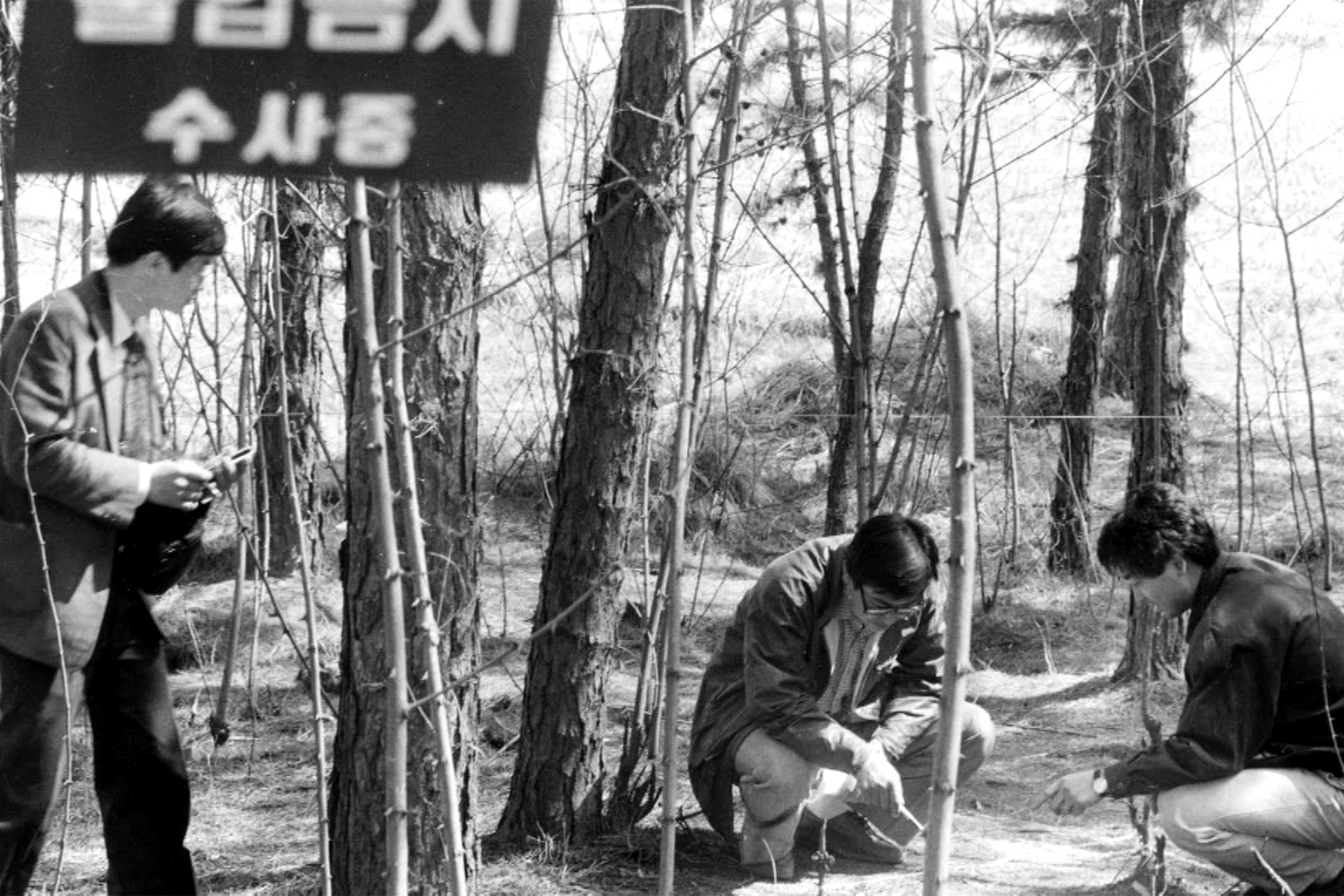
Image taken during the original investigation into the Hwaseong serial killings. (Credit: JTBC)
It was a time before surveillance cameras or phone tracking, and before DNA evidence was widely available. Police had to rely on other, more creative measures to catch the killer.
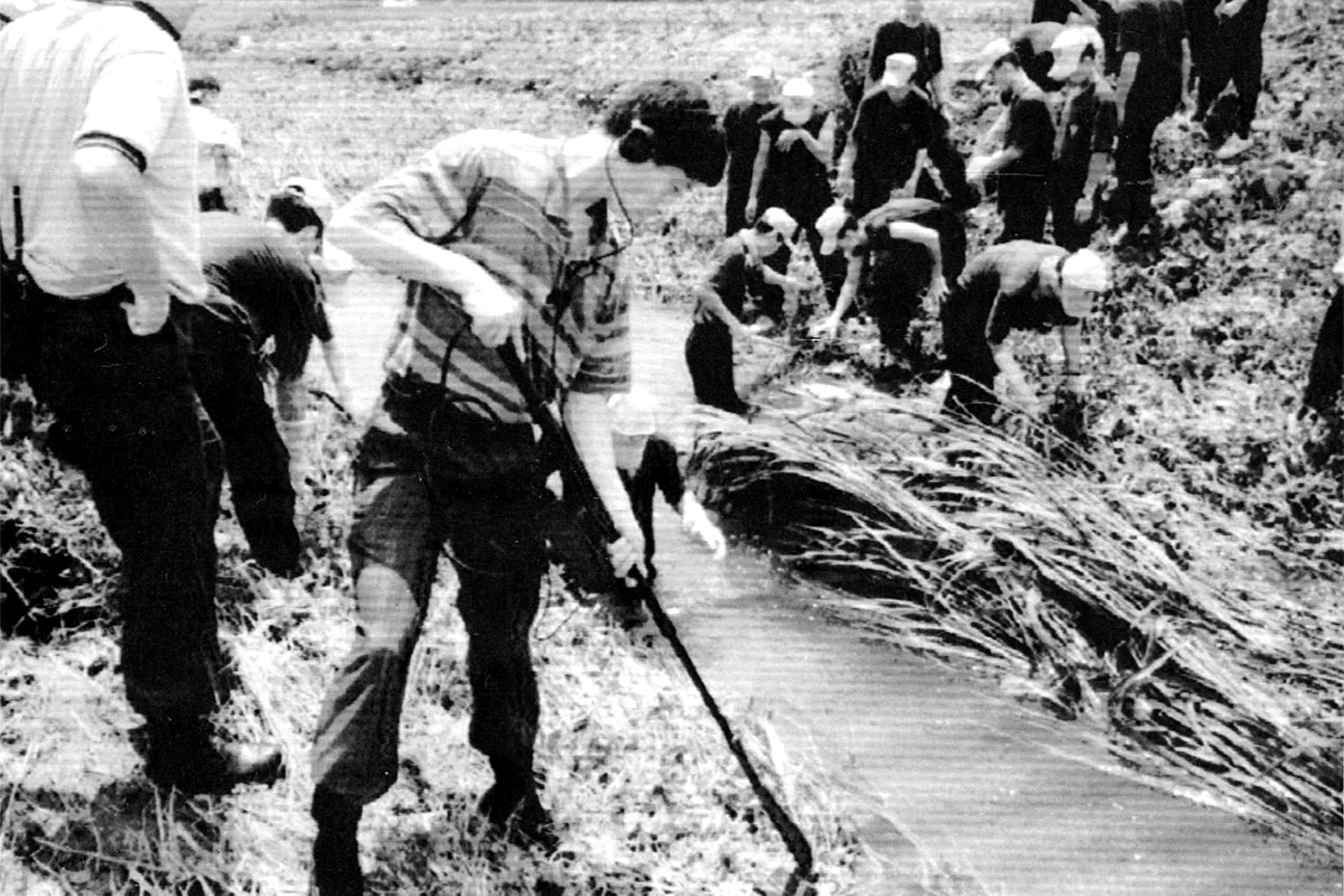
The first five murders happened within a 6 km (3.7 mile) radius in Hwaseong so police spread out in teams of two, dotted every 100 meters (328 feet), Ha said. It didn’t work: the next killing happened where there was no police presence.
Some female police officers wore red and tried to lure the killer into a trap, others went to a clairvoyant who told them to find a man with a missing finger, and some became so frustrated that they performed a shamanistic ritual on a voodoo scarecrow, Ha said.
But the killings kept happening. Police logged more than 2 million days on the case — a record for an investigation in South Korea, according to news agency Yonhap. “The more we looked (at the victim’s bodies), (the more) we couldn’t hide our feeling of powerlessness, our anger at the killer,” said Ha, who is now retired and in his 70s, in his YouTube video.
“After months spent on the rice paddies and fields tracking the killer, I can say that our hatred of him was beyond imagination.”
Yoon was the only person ever convicted of any of the 10 murders. Police suspected he carried out a copycat killing — all the other victims had been murdered outside, said Ha, who wasn’t involved in Yoon’s investigation.
The other nine murders went unsolved.
A breakthrough
For many years, it seemed that one of South Korea’s most infamous serial killers would never be found. The mystery was revisited in “Memories of Murder,” a 2003 film by “Parasite” director Bong Joon Ho. Then a few years later, as the statute of limitations expired for the last victim, it became clear that, even if the killer was found, there would be no trial or justice for the victims’ families.
But the murders didn’t leave Hwaseong’s collective memory, even as the villages eventually incorporated into a small city. And the police didn’t give up their search.
In September 2019, Gyeonggi Nambu Provincial Police superintendent general Ban Gi-soo, the latest police officer in charge of the investigation, made an explosive announcement. In July, police sent evidence that had been held in their files for 30 years to the National Forensic Service for DNA testing.
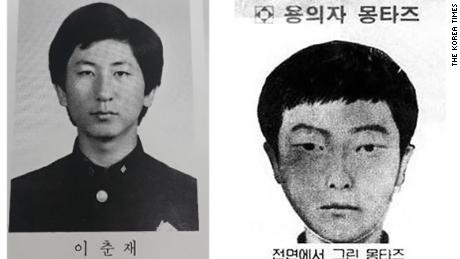
The DNA evidence from at least three of the murders matched one man: Lee Chun-jae. Lee is currently in prison serving a life sentence for the 1994 rape and murder of his sister-in-law, according to Daejeon court officials and South Korea’s Justice Ministry. It was huge news in South Korea.
A month later, there was another development. Lee confessed to all 10 of the Hwaseong murders, and four others that police did not provide details on.
He had given a detailed confession, even drawing on a piece of paper to explain the locations of the killings, an official from Gyeonggi Nambu Provincial Police Agency said.
“It is an important case that had prompted questions all over Korea,” the official said. “The victims and their families had strongly demanded (the truth).”
It was a major breakthrough in one of the country’s most infamous serial killing cases. But it also left authorities in a tricky position.
If Lee murdered all 10 people — including the 13-year-old — then Yoon had spent 20 years in prison for a murder he didn’t commit.
Lee’s confession alone wasn’t enough to clear Yoon’s name. In the eyes of the law, he was still a convicted murderer.
Three days of no sleep
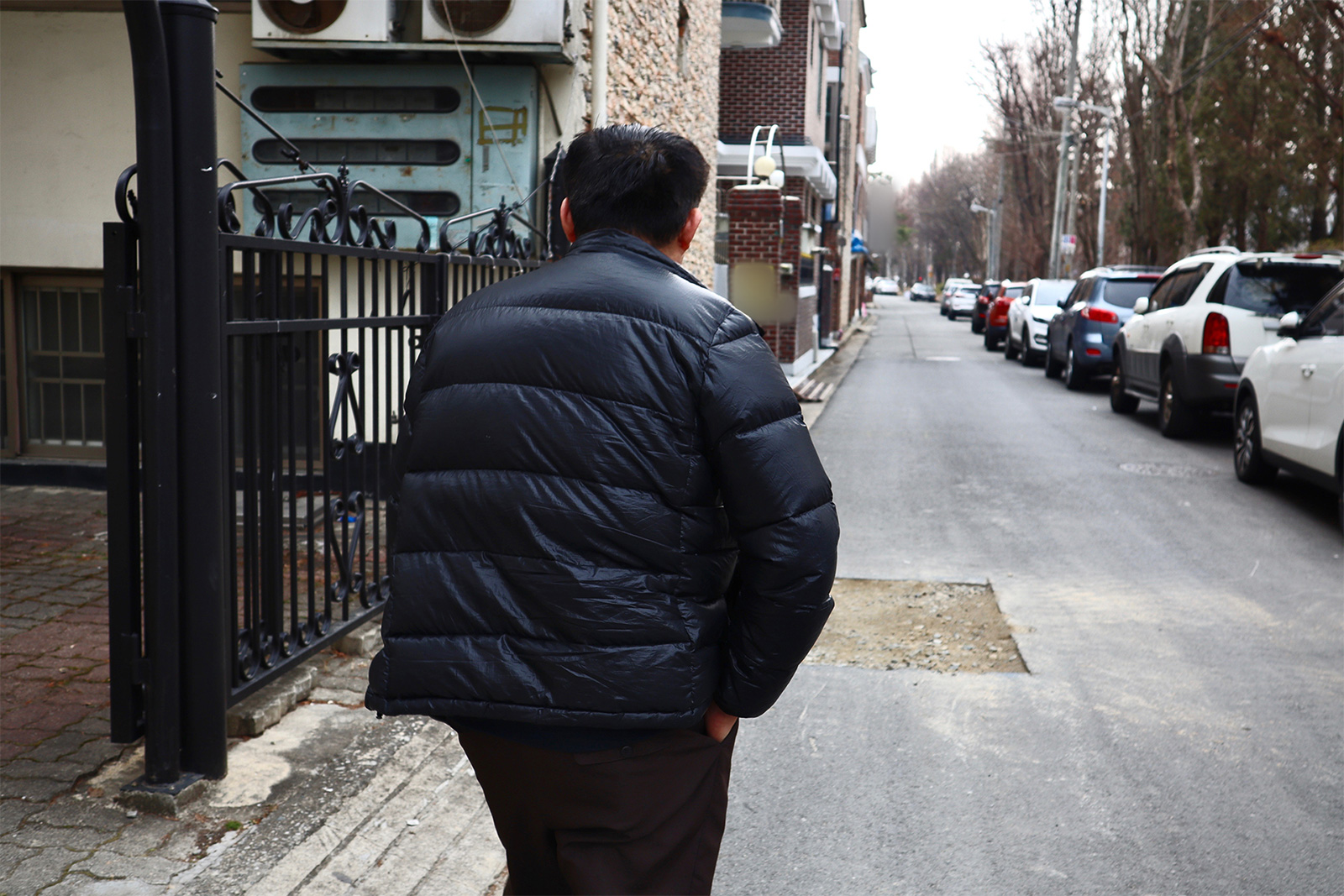
These days, Yoon is a gregarious man in his 50s. He works at a leather proces sing factory in North Chungcheong Province, a few hours’ train ride from Seoul, and he still walks with a limp. On the surface, he is cheerful and sociable, a man who speaks loudly and laughs freely.
But his life has been one of hardship.
As a child, Yoon’s family moved around, Yoon says. When Yoon was in his third year at school, his mother passed away in a car accident. After that, his father disappeared, and Yoon quit school to start work. Yoon came to Hwaseong, where he begged outside a fried chicken restaurant for a year, he said. When he was about 11, he began working at a farming tool center, and by 22 was training at the same center to become a qualified technician.
He was a heavy smoker, and had never been in a relationship with a woman, he told police in his confession. “I haven’t even tried talking to girls because I thought no one would like a disabled person like me,” he said.
His former boss, Hong, remembers him as always being a bit sad. “I think it was because he grew up without his parents,” Hong said. “He wasn’t very articulate and didn’t express his feelings much. He was excellent at repairing machines though.”
After the police took him away, Yoon remembers being kept handcuffed in the interrogation room for three days. He barely ate, and was only allowed to leave to go to the toilet. Whenever he tried to sleep, police would wake him up.
“Those times were much like a nightmare,” he said. “When you don’t get sleep for three days, you don’t know what you said. You don’t remember what you did. You can’t think properly.
“You just go along with their questions, on and on.”
Nowadays, Yoon thinks that he was mistreated, but at the time, Yoon didn’t know anything about law — he hadn’t even finished elementary school.
Yoon served 20 years in prison for the murder and rape of a girl in 1988. Yoon is now seeking to overturn his conviction at retrial. (Credit: Charles Miller)
Yoon walks in his neighborhood in North Chungcheong Province. (Credit: Yoonjung Seo)
Park Joon-young is a South Korean lawyer known for taking retrial cases. He is on Yoon’s defense team. (Credit: Yoonjung Seo)
Yoon ultimately signed three confessions and at trial he admitted to the murder, hoping to avoid the death penalty. He served 20 years.
“He must have felt everything was so unfair, spending years in prison,” said Hong, who went out of business when Yoon went to jail as he couldn’t continue his company without Yoon’s skill set. “I lost my business, but he lost his life.”
Last December, Gyeonggi Namu Provincial Police launched a formal probe into the conduct of seven police officers and one prosecutor who worked on the original investigation into the killings, including reviewing allegations of abuse of power during arrests. The results of the investigation haven’t been released yet.
Yoon’s experience wasn’t totally unusual for the time. In the 1980s, it was common for suspected criminals in South Korea to be kept awake for long periods to extract a confession, according to Lee Soo-jung, a forensic psychology professor at Kyonggi University.
“It was a time when confessions, without evidence, were enough to get someone convicted.”Lee Soo-jung
And it wasn’t just Yoon who accused police of torture. Kim Chil-joon, an attorney who defended other suspects in the Hwaseong murder case, said many people were abused during the investigation.
One of his clients, also surnamed Kim, was accused of the fourth and fifth killings after a medium in the United States said they had seen him in their dream, he said. Kim was subject to torture and interrogation and in 1995 successfully sued the government for damages.
But Kim took his own life two years later after bouts of depression and PTSD, Kim Chil-joon said.
Last year, chief inspector Ban said police were investigating whether officers abused suspects during the original investigation, revisiting allegations that one man was waterboarded with spicy seafood soup.
But these officers will likely never be charged — the statute of limitations has run out on those allegations, too.
“I want my honor back”
Yoon is determined to clear his name, and his retrial began this week. That in itself is a rare event in South Korea.
A tiny fraction of applications for retrials are accepted and they generally require new evidence, according to lawyer Heo Yoon, who specializes in providing retrial legal advice.
Park Joon-young, one of Yoon’s attorneys, says that evidence is rarely kept for longer than 20 years except in the most high-profile cases — like Hwaseong.
How a serial killing case stretched on for decades
1986
A woman is found dead in Hwaseong. This is the first of the Hwaseong serial killings.
1989
Yoon is questioned by police and charged with one of the Hwaseong murders.
1990
Yoon is sentenced to life in prison for the murder.
1991
A 10th woman is killed in Hwaseong, marking the final of the serial killings.
2003
A movie directed by Bong Joon-ho based on the murders is released. The movie is called “Memories of Murder”.
2006
The statute of limitations runs out on the most recent Hwaseong killing.
2009
Yoon is released from prison.
2019
Police test DNA taken from Hwaseong murder scenes. They identify a culprit, who confesses to the murders.
2020
Yoon goes on retrial for the murder that he spent 20 years in prison for.
Source: Korean National Police
In Yoon’s case, Lee Chun-jae’s confession will be crucial. It’s possible that the convicted murderer will testify in court before the three judges, who have the power to overturn Yoon’s conviction, Park said.
There’s a good chance he’ll be acquitted. At a pre-retrial hearing in February, the presiding judge verbally apologized for Yoon’s false conviction.
Yet, there are still issues with Yoon’s case. Although Lee’s DNA matches a number of the murders, police have not announced any DNA evidence connecting him with the 13-year-old girl.
Also, pubic hairs found at the scene returned a 40% match with Yoon’s, according to a 1989 report written by an expert at National Forensic Service (NFS).
Those hairs have not been DNA tested — and even if they do ultimately match Yoon’s, his lawyer Park warns it’s possible that a sample taken from Yoon could have been mixed up with evidence taken from the scene of the murder. The court has ordered the NFS to extract DNA from the hair, Park said.
The retrial is expected to take place over a number of months, but if Yoon is found not guilty, he can make a claim for compensation, according to Park.
Yoon says nothing can compensate him for the 20 years of life he lost. Even when he was freed from prison 10 years ago, the world had changed so much that initially he wanted to go back in. “It took me around three years to adjust,” he said. “I couldn’t live. My life patterns at the prison didn’t accommodate the new world I was faced with.”
“I want to clear my false accusation, and I want my honor back. I want to be satisfied with these, and that’s all.”Yoon
Yoon knows Lee will never be tried for the crime, nor will the police officers who he says tortured him, because too many years have passed since the sleepless nights he spent in that small police interrogation room.
He just wants to live the rest of his life as an innocent man.
“I want to clear my false accusation, and I want my honor back,” he says. “I want to be satisfied with these, and that’s all.”
Julia Hollingsworth wrote from Wellington, New Zealand. Yoonjung Seo reported from Seoul. Jake Kwon reported from Hwaseong, South Korea, and Seoul.
Hilary Whiteman and Jenni Marsh edited.
Illustrations by Max Pepper. Illustrations are based on reporting, however they may not be an exact representation of events at the time. Graphics and layout by Jason Kwok and Natalie Leung.
Sophie Jeong and Paula Hancocks also contributed reporting from Seoul.
We use cookies on our website to give you the most relevant experience by remembering your preferences and repeat visits. By clicking “Accept”, you consent to the use of ALL the cookies.
This website uses cookies to improve your experience while you navigate through the website. Out of these, the cookies that are categorized as necessary are stored on your browser as they are essential for the working of basic functionalities of the website. We also use third-party cookies that help us analyze and understand how you use this website. These cookies will be stored in your browser only with your consent. You also have the option to opt-out of these cookies. But opting out of some of these cookies may affect your browsing experience.
Necessary cookies are absolutely essential for the website to function properly. These cookies ensure basic functionalities and security features of the website, anonymously.
Cookie
Duration
Description
cookielawinfo-checbox-analytics
11 months
This cookie is set by GDPR Cookie Consent plugin. The cookie is used to store the user consent for the cookies in the category "Analytics".
cookielawinfo-checbox-functional
11 months
The cookie is set by GDPR cookie consent to record the user consent for the cookies in the category "Functional".
cookielawinfo-checbox-others
11 months
This cookie is set by GDPR Cookie Consent plugin. The cookie is used to store the user consent for the cookies in the category "Other.
cookielawinfo-checkbox-necessary
11 months
This cookie is set by GDPR Cookie Consent plugin. The cookies is used to store the user consent for the cookies in the category "Necessary".
cookielawinfo-checkbox-performance
11 months
This cookie is set by GDPR Cookie Consent plugin. The cookie is used to store the user consent for the cookies in the category "Performance".
viewed_cookie_policy
11 months
The cookie is set by the GDPR Cookie Consent plugin and is used to store whether or not user has consented to the use of cookies. It does not store any personal data.
Functional cookies help to perform certain functionalities like sharing the content of the website on social media platforms, collect feedbacks, and other third-party features.
Performance cookies are used to understand and analyze the key performance indexes of the website which helps in delivering a better user experience for the visitors.
Analytical cookies are used to understand how visitors interact with the website. These cookies help provide information on metrics the number of visitors, bounce rate, traffic source, etc.
Advertisement cookies are used to provide visitors with relevant ads and marketing campaigns. These cookies track visitors across websites and collect information to provide customized ads.