Asivikelane campaign gives a voice to those living in informal settlements – The Mail & Guardian

COMMENT

About a week ago a municipal official contacted one of the partners of the Asivikelane network trying to find out why his municipality had still not been given the green light in our bi-weekly findings, even after they had delivered water tanks to informal settlements. 

When this query was followed up with community leaders, it was discovered that in one settlement, tanks had been delivered but not yet filled with water.  In another settlement, there were not enough water points for the number of households in the settlement and existing taps were broken. 

After this exchange of information, the municipality addressed these problems, illustrating the power of citizens to hold the government to account with collective action.

Asivikelane provides a platform for residents in informal settlements to communicate severe water, sanitation and refuse removal shortages during the Covid-19 crisis. It is a growing network that already brings together 153 informal settlements in five metropolitan municipalities and five smaller towns. 

The number of informal settlements grow rapidly, as response time to basic service issues is reduced and other nongovernmental organisations join the campaign. Every two weeks, more than 428 participants from informal settlements are asked three simple questions: Was water available every time that you needed it over the last week? Were the toilets cleaned in the last seven days? Was waste collected in your settlement in the last seven days?

There is obvious and clear evidence that hygiene and handwashing has a direct correlation to  the spread of the pandemic. Every possible resource has to be centred to ensure that the estimated 1.2-million households in informal settlements and the invisible number of “backyarders” have access to water and decent sanitation. 

But we should not waste this crisis by only focusing on the short term. This is the precise moment to think further and address the matter of basic services once and for all. Here are five reasons why it is essential for the future: 

Firstly, access to water, decent sanitation and basic services is a constitutional right. It is enshrined in our Bill of Rights, section 27, which reads: “Everyone has the right to have access to sufficient food and water … The state must take reasonable legislative and other measures, within its available resources, to achieve the progressive realisation of these rights.” 

Secondly, this campaign is not just about services, but fundamentally about agency and voice. In our current paradigm, these are largely being determined by the patronage of local politicians and/or local government officials. Taps and toilets are frequently installed with no consultation or in areas that are either completely over serviced, or where they cater to the needs of a few. Through this campaign, citizens are voicing their concerns in the most evidential and direct manner. And as such, collectively holding all spheres of government accountable.

Thirdly, basic services are not simply a resourcing issue, but about prioritisation. The servicing of informal settlements and backyarders haven’t been given the priority they deserve. Each year, millions are underspent on grants to local government that are precisely there to service these areas. Where money is spent, substandard services are often installed because “these are for informal settlements”. 

This campaign highlights that we need to move beyond talking about simply dumping taps and toilets, but exploring new avenues for water and sanitation. Groundbreaking examples come from India, where communities run and manage facilities.

Fourth, the campaign isn’t just about demonstrating the gaps in service delivery, but sharing positive responses too. In many instances, the municipalities and metros are using this data to ensure that they respond urgently to the needs. Water tanks have been delivered in many metros, countless taps and toilets repaired and protective gear and sanitisers distributed to communities to clean communal toilets. Many of these examples highlight the dualistic role of the campaign — recognising improvements when they happen and improving service delivery. Ultimately this is not a monitoring and evaluation tool, but a platform for co-production and engagement.

Finally, the campaign is under no illusion that basic services will alleviate the root causes of poverty and inequality. But it definitely is a step towards restoring dignity to the millions living in extreme poverty. This effort needs to translate, with the support of civil society, into completely rethinking our ability to release well-located land, tenure security for the poor and an economic future that they can determine.

As the campaign gains momentum, we are putting this challenge forward to the nation — can we address the most fundamental needs for our citizens? And will this be the beginning of a new way of charting a comprehensive response to poverty and inequality that doesn’t rely on patronage?  


Source link

Tips to manage the heavy load of lockdown learning – The Mail & Guardian

COMMENT

What started out as a prolonged school holiday in March, has since turned into an education nightmare. 

In most instances, the extended Covid-19 lockdown has forced teachers to transition from classrooms to online learning overnight, with all the upskilling and reimagining of material that this particular shift entails. Parents have similarly had to adapt and are now trying to support their children in their interactive lessons and digital assignments, often while working from home at the same time. 

Even schools that have e-learning infrastructure in place have been ill-prepared for the cognitive and emotional demands that this approach places on teachers, parents, and, in particular, learners. Schools that have neither the digital infrastructure nor the experience to fall back on have been flailing. Given that some form of lockdown learning will likely remain with us for the foreseeable future, how can we improve on this challenging educational experience?

Teachers, this is not business as usual

The stress of this experience cannot be underestimated, and children are not immune to it. Learners’ sense of anxiety, as well as their attention spans and levels of motivation, are likely to be negatively affected by the shift to online learning, and teachers need to factor this into their teaching plans.

One of the biggest challenges for learners is not having a clear understanding of where a particular piece of work fits into the larger picture. They struggle to make connections between different sections, fail to understand the relevance of core foundational concepts, and are unable to relate new knowledge to what they already know. This experience is exacerbated in the virtual space, especially when the normal scaffolding (such as impromptu examples, formative assessments, et cetera) that teachers intuitively provide during classroom lessons is unavailable. 

In the online environment, teachers can help students manage their cognitive load by providing them with bite-size pieces of information that they can easily digest while linking this new information to previous material.  This will go a long way in helping students navigate and master new work as part of a cohesive learning path. Crucial to this approach is the use of technology platforms that act as a single point of entry and that tie the material together coherently, rather than requiring constant task switching which only adds to the cognitive load of students. 

Parents, a supportive home is critical

Lockdown has afforded parents the unique opportunity of observing how their children are dealing with their adjusted schooling. They are likely to be their children’s first port of call if they struggle to understand material or how their teachers have put courses together. This experience — combined with the many other anxieties that Covid-19 has brought with it  — is likely to be extremely stressful for parents. It is crucial, however, for parents to ensure that this stress doesn’t spill over on to their children.

Of course, it is healthy and necessary to share concerns about the effects of Covid-19 on the future and the economy. But parents shouldn’t allow their own fears, specifically about the lockdown learning environment, to become an additional burden. It’s important to remember that children also have the support of their teachers and that they will eventually figure out the technology and find a way of working with it — especially if they have the proper emotional support at home.

Parents can also help children by assisting them with their time management. During ordinary school days, children’s schedules are often guided by timetables, homework requirements and various deadlines — and even then they battle. In the lockdown environment, parents need to establish a fixed routine that includes time allocations for each subject. Fuelling learners’ flagging motivation by helping them to look beyond the immediate uncertainty caused by Covid-19 is equally important.

The future of lockdown learning

It’s likely that the new normal will include some kind of lockdown learning for a long time to come. It’s also clear that, in order for us to navigate this future, we will have to rely on technology more than ever before.

For our ongoing educational initiatives to provide schooling that is on par with pre-Covid-19 standards, we will require more than the emergency measures that make up our current lockdown learning solutions. Going forward, schools will have to think carefully about implementing technologies that enable and support learning. If sanity prevails, these technologies — together with the support of properly trained teachers and prepared parents — should win the day.


Source link

In photos: SpaceX’s historic Demo-2 test flight with astronauts

0

SpaceX founder and chief engineer Elon Musk (left), NASA Administrator Jim Bridenstine, Vice President Mike Pence and Second Lady Karen Pence applaud as NASA astronauts Doug Hurley and Bob Behnken depart the Neil A. Armstrong Operations and Checkout Building for Launch Complex 39A to board the SpaceX Crew Dragon spacecraft, on May 27, 2020, at NASA’s Kennedy Space Center in Florida. 

Source link

Trump Threatens White House Protesters With ‘Vicious Dogs’ and ‘Ominous Weapons’

A day after claiming he didn’t mean to suggest that law enforcement officials should shoot people who were part of the unrest in Minnesota, President Trump said on Saturday that the Secret Service had been prepared to sic the “most vicious dogs” on protesters outside the White House gates on Friday night.

“Great job last night at the White House by the U.S. @SecretService,” Mr. Trump tweeted in a string of four posts on Saturday. “They were not only totally professional, but very cool. I was inside, watched every move, and couldn’t have felt more safe.”

He continued that the Secret Service allowed the protesters to “scream & rant as much as they wanted” and only acted when “someone got too frisky or out of line.”

“The front line was replaced with fresh agents, like magic,” he added. “Big crowd, professionally organized, but nobody came close to breaching the fence. If they had they would have been greeted with the most vicious dogs, and most ominous weapons, I have ever seen. That’s when people would have been really badly hurt, at least.”

Mr. Trump claimed that Secret Service agents told him they were clamoring for engagement with the protesters. “We put the young ones on the front line, sir, they love it, and good practice,” he claimed he had been told.

He also appeared to invite his own supporters to amass outside the White House on Saturday to counter the protesters, despite a ban against gatherings of more than 10 people in effect in Washington amid the coronavirus pandemic.

“Tonight, I understand, is MAGA NIGHT AT THE WHITE HOUSE???” he tweeted.

Mr. Trump’s renewed threat of violence against the protesters came as protests erupted in cities across the country.

And it came a day after he tweeted — and then tried to walk back — that “when the looting starts, the shooting starts” in response to protests in Minneapolis against the killing of George Floyd, an unarmed black man, at the hands of a white police officer.

That phrase was used in 1967 by a Miami police chief in reference to crackdowns on young black men. The chief, Walter Headley, accused the men of operating under the cover of the civil rights movement and said his police force didn’t mind being accused of police brutality.

Mr. Trump waited nearly 14 hours to try to walk that statement back, claiming he had meant that when people loot, they then sometimes fire guns as well. And in remarks at a late afternoon event at the White House, Mr. Trump conceded that some of the protesters had legitimate grievances.

Mr. Trump traveled to Florida on Saturday for the second time this week to watch SpaceX try to launch a rocket to the International Space Station. The initial launch was scrubbed shortly before it was set to take place on Wednesday.

Talking to reporters as he left the White House, Mr. Trump was asked about his tweet that seemed to invite his own supporters to rally outside the White House. As he often does, Mr. Trump distanced himself from his own statements, saying he was merely asking a question and that he didn’t know if people were coming. He claimed not to be trying to stoke racial strife.

“By the way, they love African-American people, they love black people,” Mr. Trump volunteered, unprompted, describing his own supporters, who are overwhelmingly white.

“MAGA loves the black people,” he added, using the acronym for his first campaign slogan, “Make America Great Again.”

He reiterated his condemnation of Minnesota’s governor and the mayor of Minneapolis, both Democrats, painting the matter in starkly political terms as his opposition to “liberal” activists.

“They’ve got to get tougher. They’ve got to get tougher,” Mr. Trump said of the responses to the unrest, which resulted on Thursday night in the burning of the police station where the officers involved in Mr. Floyd’s death worked. “They’ve got to be strong. Honor the memory of George Floyd, honor his memory. They have to get tougher, and by being tougher they will be honoring his memory, but they cannot let that happen.”

He again raised the prospect of sending in the military to quell the unrest.

“We could have troops on the ground very quickly if they ever want our military,” Mr. Trump said.

At Mr. Trump’s behest, the Defense Department ordered the Army to prepare active-duty military police units to deploy from several army bases to Minneapolis. The move does not mean that the units will be activated, but it is a first step toward doing so, officials said.


Source link

COVID-19 latest: Confirmed cases in SA now exceed 30 000

COVID-19 update: Saturday, 30 May 2020

Health Minister Zweli Mkhize announced on Twitter that the number of COVID-19 cases in South Africa now stand at 30 967; an increase of 1 727 since Friday 29 May 2020.

Deaths also increased by 32, standing at a total of 642. A total of 16 116 people have recovered from the novel coronavirus. Health Minister Zweli Mhize added:

“The total number of deaths is 643 and recoveries to date are 16 116 which translates to a recovery rate of 52%.”

Health Minister Zweli Mkhize

Breakdown of new confirmed COVID-19 cases

New cases, deaths and recoveries by province

The confirmed COVID-19 cases per province is as follows:

Province Total Cases New Cases Total Deaths Total Recoveries
Gauteng 3 773
Western Cape 20 160
KwaZulu Natal 2 476
Free State 261
Eastern Cape 3 759
Limpopo 173
Mpumalanga 113
North West 162
Northern Cape 57
Unallocated 33

Tests and screening

On Thursday evening, Minister Mkhize also addressed the backlog of more than 96 000 unprocessed COVID-19 tests. He explained that limited availability of kits poses a challenge. As of today:

  • A total of 680 175 tests have been conducted, of which 24 452 were done in the last 24 hours.
  • The total number of tests conducted in the private sector stands at 335 834, of which 13 555 were done in the last 24 hours.
  • In addition, 344 341 tests were conducted in the public sector, with 10 897 being done within the last 24 hours.

Also read – Mkhize cites backlog of over 96 000 COVID-19 tests


Source link

SpaceX’s historic Demo-2 astronaut launch: Photos, videos and awesome tweets

0

UPDATE: SpaceX’s first attempt to launch the Demo-2 mission on Wednesday (May 27) was scrubbed due to bad weather. The next launch try is set for today (May 30) at 3:22 p.m. EDT (1922 GMT). 

Veteran NASA astronauts are setting out to make history today (May 30) with SpaceX’s Demo-2 mission and everyone from celebrities to astronauts is celebrating around the world.

Astronauts Bob Behnken and Doug Hurley have trained tirelessly to launch today aboard SpaceX’s Crew Dragon from NASA’s Kennedy Space Center all the way to the International Space Station with Demo-2. The pair, who are experienced test pilots as well as veteran astronauts, have worked hard to get to this moment where they will be the first humans to fly this capsule to orbit.

Demo-2 will be a historic launch as it’s the first crewed launch to orbit from the U.S. in nearly a decade, since NASA’s space shuttle program closed in 2011. People around the world are thrilled to watch the event live (remotely), and are sharing their excitement online. 


Source link

We asked, you told us: Camera flashes are basically now just flashlights

0

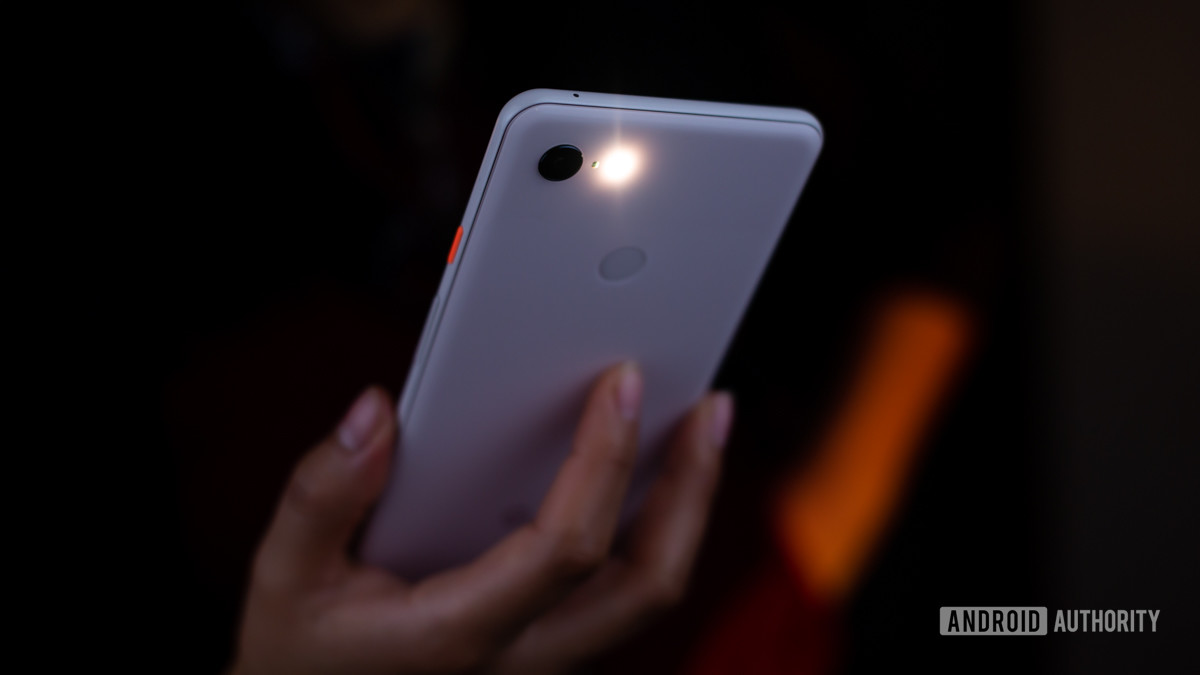
Smartphone flashlight on stock photo 3

Night mode on our smartphone cameras has gotten so good over the years.

How good?!

Night mode on our smartphone cameras has gotten so good over the years, that people are very rarely using their camera flash for taking photos. We asked you last week on the website, Twitter, and YouTube to tell us what you use your camera flash for. Nearly 20,000 Android Authority fans voted, and the results are very clear.

What do you use your phone’s camera flash for?

Results

The majority of voters (61.27%) said they only use their camera flash as a flashlight, completely foregoing its use for nighttime shots. 31.45% of voters said they use their camera flash for taking photos and for the flashlight feature, while just 2.37% of people(470 votes) only use it as a camera flash.

Maybe we should stop referring to these as camera flashes and start calling them flashlights.

The results shouldn’t be too surprising here. Jokes aside, night mode really is the biggest boon to low-light photography we’ve ever seen in the smartphone landscape. Using night mode in lieu of a physical camera flash does make a huge difference.

More posts about photography

Here’s what you had to say

Here are some of the best comments from last week’s poll explaining why they voted the way that they did:

  • Andrew Zuo: The last time I used it is when I upgraded my computer. Made it easier to see those tiny tabs on the sides of the DIMM slots.
  • Scott Hunter: The first thing I turn off in any camera app is the Automatic Flash. If the picture needs a flash, then I don’t need the picture.
  • Alan Burnstine: Very very rarely I need a flash for the camera. Usually only when taking very unusual pictures like trying to figure out the orientation of a part for my car that I have to place by feel because I can’t see the space. Much more often I use it as a flashlight. Often enough that I have used toggling it as one of the uses of the Bixby button using BXActions.
  • Paul Russell: 90% of the time I use the flash, it’s as a torch. However, I do occasionally use it to take photos
  • shollen: Phones are still bad for flash photos. I use DSLR nikon D750 for that it has build in flash and way better sensor
  • roaduardo: Needing to see in the dark in a pinch is the sole reason my smartphone camera flash is used.
  • Steven Weston: I also use the flashlight mode to deposit checks. With BoA, it’s very automatic.

That’s it for this week. As always, thanks for voting, thanks for the comments, and don’t forget to let us know what you thought of the results below.


Source link

UK at ‘dangerous moment’ in pandemic

Britain is at a very dangerous moment as it starts to ease some of its lockdown measures, England’s deputy chief medical officer says, warning that people would need to follow the guidelines and not "tear the pants out of it".

Source by [author_name]

Leave no one behind: Migrants should be given viable livelihood options

0

Dairying may well be a viable livelihood option for migrants, given its low capital investment, short operating cycle and steady income flow

Source link

Lesotho’s former first lady faces murder charge

She was later released on bail. 

On Friday (local time), the High Court revoked Thabane’s bail after police challenged an earlier ruling, saying she could be a flight risk. 

The appeal also included witness testimony saying they feared for their lives if she was released on bail.

Deputy Commissioner of Police Paseka Mokete said officers went to Thabane’s home to inform her of the court’s decision and re-arrest her, but she was not there. The former first has still not been found.

“We need to arrest her so that she could apply for a bail while in detention,” Dep. Comm. Mokete said. 

The former prime minister is also under investigation for the murder. 

He stepped down on May 19 after growing calls for his resignation amid the investigation.

Lipolelo Thabane was gunned down in 2017, with Maesaiah and Thomas Thabane marrying just weeks later.

Source by [author_name]