Question remains on whether shop workers will be required to wear face coverings

0

It is unclear whether shop workers will be made to wear a face covering while commuters will be forced to wear one on public transport.

t the Downing Street press briefing on Wednesday, a question from a member of the public, Ruth from Bournemouth, asked whether gloves and masks will be essential for those serving food and drinks, as more non-essential shops are set to reopen in England on Monday.

The reopening of stores will also coincide with new face covering measures which require everyone using public transport in England, as well as all hospital visitors and outpatients, to wear a face covering.

When making the announcement on face-coverings on Thursday, Transport Secretary Grant Shapps said commuters can be refused travel if they did not comply and could be fined.

But Prime Minister Boris Johnson did not say whether face coverings will be essential for shop workers, stating the Government will be setting out “all sorts of guidelines” for retailers on how to run stores in a Covid-secure way.

Close

Prime Minister Boris Johnson at the Downing Street briefing (Pippa Fowles/10 Downing Street/Crown Copyright)

“The basic guidance on masks, as you know, is that you wear a face covering when you’re likely to be in close contact with people that you don’t normally meet,” he said at the press briefing.

Relaying the advice from the Scientific Advisory Group for Emergencies (Sage) on face coverings, Sir Patrick Vallance, the UK’s chief scientific adviser, said: “Face coverings have potential benefit in situations where there’s indoor spaces where people cannot socially distance, where they are potentially crowded and they will come into contact with multiple people.”

He said the advice from Sage should form the basis of risk assessment for any workplace to decide what should be done.

But Sir Patrick and Professor Chris Whitty, the chief medical officer, focused their answers more on the use of gloves and hand washing in a workplace setting, leaving it unclear whether shop workers will be made to wear a face mask in the same way commuters will be from Monday.

Sir Patrick said: “It’s absolutely the case that touching and surface contact is a major form spreading this disease, and therefore other measures, including the wearing of gloves, can be important in certain circumstances.”

Prof Whitty added: “If someone touches a surface repeatedly without changing gloves that’s actually less good than someone washing their hands between every time they do it.

“So hand washing absolutely critical, gloves can be useful under certain circumstances.”

PA

Source link

Facebook, Twitter, Google to report monthly on fake news fight, EU says

0

BRUSSELS (Reuters) – Facebook (FB.O), Google (GOOGL.O) and Twitter (TWTR.N) should provide monthly reports on their fight against disinformation, two senior EU officials said on Wednesday as they called out Russia and China for their roles in the spread of fake news.

The comments by EU foreign policy head Josep Borrell and the European Commission’s Vice President for values and transparency Vera Jourova underscore the bloc’s concerns about the prevalence of misleading news on COVID-19 and the attempts by foreign actors to influence Europe.

“It really showed that disinformation does not only harm the health of our democracies, it also harms the health of our citizens. It can negatively impact the economy and undermine the response of the public authorities and therefore weaken the health measures,” Jourova told a news conference.

She said the next fake news front was vaccination, citing a study showing that Germans’ willingness to be vaccinated had fallen by 20 percentage points in two months.

The Commission said online platforms should provide monthly reports with details on their actions to promote authoritative content and to limit coronavirus disinformation and advertising related to it.

Jourova also said Chinese video app TikTok, owned by Chinese company ByteDance, will be joining the bloc’s voluntary code of conduct to combat fake news on its platform. Signatories to the code of conduct include Google, Facebook, Twitter and Mozilla.

Borrell described the fake news fight as involving warriors wielding keyboards rather than swords.

“Foreign actors and certain third countries, in particular Russia and China, have engaged in targeted influence operations and disinformation campaigns in the EU, its neighbourhood, and globally,” the Commission said.

The EU executive plans to counter foreign actors by stepping up its communication strategy and diplomacy, and provide more support to free and independent media, fact checkers and researchers.

Reporting by Foo Yun Chee; editing by Phil Blenkins

Source link

Federal Reserve Vows To Help Economy Weather The Pandemic Recession

An employee sets a table for pick up orders at a restaurant in Arlington, Va. Even as states are moving to reopen their economies, tens of millions are out of work.

Olivier Douliery/AFP via Getty Images


hide caption

toggle caption

Olivier Douliery/AFP via Getty Images

An employee sets a table for pick up orders at a restaurant in Arlington, Va. Even as states are moving to reopen their economies, tens of millions are out of work.

Olivier Douliery/AFP via Getty Images

The Federal Reserve left interest rates near zero Wednesday and once again promised to deliver whatever monetary medicine it can to an economy that’s badly ailing from the coronavirus pandemic.

“The Federal Reserve is committed to using its full range of tools to support the U.S. economy in this challenging time,” the central bank said in a statement. The central bank noted that “financial conditions have improved, in part reflecting policy measures to support the economy and the flow of credit to U.S. households and businesses.”

With double-digit unemployment and no sign of inflation on the horizon, the Fed’s rate-setting committee reiterated its intent to leave interest rates at rock bottom levels, “until it is confident that the economy has weathered recent events and is on track to achieve its maximum employment and price stability goals.”

Wednesday’s vote by committee members was unanimous.

The Labor Department reported this week that consumer prices fell in May for the third month in a row. Over the last 12 months, prices have risen just 0.1% — or 1.2% if volatile food and energy prices are excluded. That’s well below the central bank’s 2% inflation target. While the Fed uses a slightly different measure of inflation, the consumer price index suggests there’s no need to worry about runaway prices for the foreseeable future.

Unemployment, however, remains extremely high at 13.3%, despite the surprising addition of 2.5 million jobs in May. Although the Trump administration is predicting a rapid recovery as stay-at-home orders are lifted and businesses reopen, Fed officials expect unemployment to remain elevated for the remainder of the year.

In addition to keeping interest rates low, the Fed has launched a series of emergency lending programs with the Treasury Department, in an effort to keep families and businesses afloat during the pandemic. These include unprecedented efforts by the central bank to loan money to state and local governments and mid-sized businesses.

Loans may not be enough to help some whose livelihoods have been hurt by the pandemic. Fed chairman Jerome Powell has repeatedly suggested that Congress may have to do more to prevent the coronavirus recession from doing even more lasting damage.

Treasury Secretary Steven Mnuchin acknowledged as much Wednesday during a hearing before the Senate Small Business Committee.

“I definitely think we are going to need some kind of bipartisan legislation to put more money into the economy,” he said.

Source link

Cooking Rice In Sunlight: Migrant Workers Who Stayed Back Caught Between Hunger And Govt Apathy

0

CHANDIGARH — For almost three months, since the first phase of India’s lockdown to tackle coronavirus began, 35-year-old Masoom Ansari and eight others were stuck inside a budget hotel situated on Relief road in Ahmedabad where they work.

While the hotel owner gave them some ration, they have not been paid their salaries since March. Seven of them left for their villages in Uttar Pradesh last week, worn out by the sheer effort of getting through each day as provisions ran out.

With no cooking gas left, Ansari and a colleague have been surviving by eating partially cooked rice heated in sunlight.

For the latest news and more, follow HuffPost India on Twitter, Facebook, and subscribe to our newsletter.

He is desperate to go home, Ansari told HuffPost India over the phone but is waiting for his employer to release his pending salary for three months. 

“I can earn a living by making samosas and kachoris in the village but I do not have money to return home.  The private buses are asking Rs 6,000 per head to drop us till Koderma district in Jharkhand, which is around 200 km from my village. I have asked my uncle to lend me some money to reach home,” said Ansari, who has been working at the hotel for the last 21 years. His current salary is Rs 12,000 a month. 

Raju Kumar, a construction worker in Phagwara city in Punjab, was among the lucky ones who got a seat on a Shramik Special train to Bihar. But at the last minute, he decided against travelling back to his hometown of Araria, worried about what the future holds if he can’t find work. 

“I would have travelled for two days and then been put in quarantine for the next 14 days. I thought it’s better to stay here for some more days as the construction work of residential houses has started in my area,” said Kumar. Last week, he landed a job at a private construction site, where he will earn Rs 450 daily due to a shortage of labourers.


Hotel staff of a budget hotel on relief road in Ahmedabad showing half cooked rice prepared under sunlight.

Ansari and Kumar are among the thousands of migrant workers who are still staying in the cities they work in, while their companions set off on arduous journeys back home. While the exodus of millions of workers back to their villages has deservedly made headlines, those who stayed back are fighting for unpaid wages as a net of hunger and government apathy closes in around them.

As India slowly begins exiting from an ill-planned, brutal lockdown, it has recorded more than 267,000 cases of the highly infectious disease. It’s currently fifth in the world in case tally and is set to soon overtake the UK.

While industries have slowly restarted operations, dozens of workers whose wages have not been paid since March told HuffPost India that they are being forced to put in extra hours and do more tasks for no extra pay to make up for the shortage of labour.

The situation looks set to worsen as state governments take the opportunity to dilute critical labour laws. While the central government has announced an economic stimulus package that it claims adds up to Rs20 trillion, struggling workers say they have barely received any help.

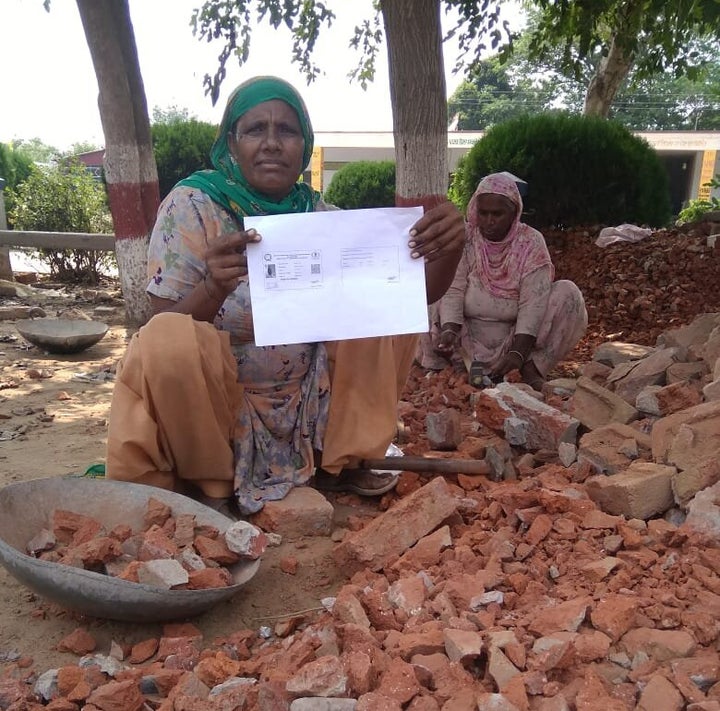
Ranjeet Kaur, a construction worker registered with the Punjab government did not receive the state government's aid of Rs 6,


Ranjeet Kaur, a construction worker registered with the Punjab government did not receive the state government’s aid of Rs 6,000 announced during lockdown.

“A daily wager does not have money to buy his meals, how can you expect him to put money in banks? I opened a Jan Dhan account as I was told the government would transfer us some money in times of need,” said Ansari, who opened an account in a Gramin Bank branch near his village in Jharkhand in 2014. 

Gurcharan Das, a writer who was earlier CEO of Procter & Gamble India, said that labour laws in India fail to protect workers, and the government should have provided unemployment benefits to urban workers. 

“Labour laws are applicable only to 10% of the total workforce in India. The pandemic has failed to sensitize the bureaucracy, who should have acted in a more humane way. This has caused a huge dharma-sankat for the workers, as losing their job leads to starvation. While the government has MGNREGA for rural people, there should be unemployment insurance for urban workers also. The funds for this should have been arranged by weeding out unmerited subsidies from various sectors including PDS and electricity,” he said. 

In a proposal sent recently to Prime Minister Narendra Modi on short-term relief measures for vulnerable workers, the Indian Society of Labour Economics, which includes prominent academics, suggested providing immediate financial assistance through cash transfers to households who do not have a taxpayer or a formal worker. 

Speaking to HuffPost India over the phone, Alakh Sharma, director, Institute for Human Development, Delhi, said that the centre’s announcement of transferring Rs 500 per month to each woman Jan Dhan account holder was not sufficient. 

“The centre and states together should try and ensure a minimum transfer over the next three months of at least Rs 6,000 per month with a major part borne by the central government. Assuming that about 20 crore households will require such assistance, the total quantum of assistance will be about Rs 3.6 trillion over three months,” said Sharma. 

He also added that instead of pushing migrants to board Shramik trains and creating a huge void in the supply chain of allied services, migrants should be encouraged to stay back.

“Instead of asking for Shramik trains, all state governments should set up committees at the village panchayat, block, district and state levels. They should start online portals, and organizations and individual volunteers could indicate the nature of the resources that they could muster, areas of work, support required etc,” said Sharma, adding that panchayat leaders, officials, and sub-district health staff, who will be key in the local management of resources and control of the pandemic, should be educated and trained at the earliest.

States holding on to workers 

After the partial resumption of industrial activities in many regions from May 18, state governments and companies have been trying hard to hold on to workers by offering them the bare minimum and then some—higher wages, advance salaries, temporary accommodation and even return tickets from their homes for skilled workers. 

Punjab is coordinating with its industrial bodies and has begun to promote self -employment schemes. It has also announced a Rs 96 crore package under which it said immediate relief of Rs 3,000 would be granted to each of the registered construction workers in the state. However, soon after the announcement, the scheme was hit with allegations of fake registrations. 

The Times of India  reported that Rajasthan has announced skill development courses for inbound migrant workers. Pune Mirror  reported that some companies and real estate developers are convincing workers to stay back by offering salary hikes, food and other benefits.

India’s biggest salt industry in Kutch has also offered double the salary to its workers who would report back on duty. In Karnataka, the state government has announced additional financial assistance to construction workers along with ration kits. 


Source link

Revealed: Children Beg To Go Back To School After Being Locked Down In Abusive Homes

0

Get the latest on coronavirus. Sign up to the Daily Brief for news, explainers, how-tos, opinion and more.

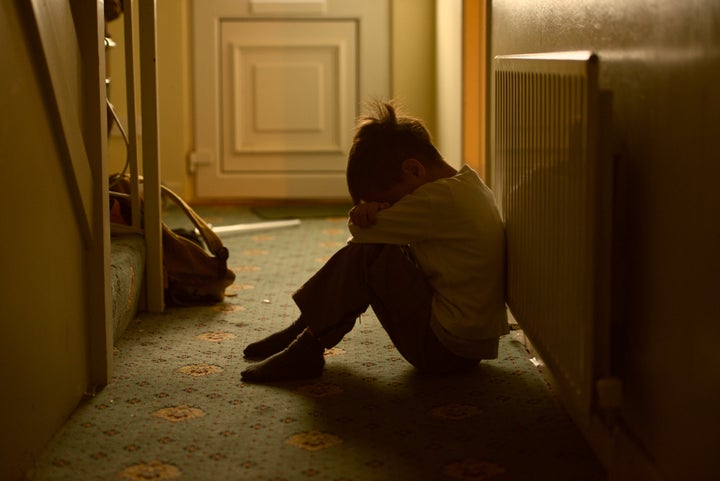
Youngsters are begging to return to school to escape the nightmare of domestic abuse as figures reveal calls to helplines have soared to an average of one an hour.

The National Society for the Prevention of Cruelty to Children (NSPCC) say calls are up by nearly a third since the beginning of lockdown, from 140 to 185 a week.

In one heartbreaking call, a 10-year-old boy told Childline: “We should be allowed back to school now so my step-dad stops hitting mummy.”

One 16-year-old girl told the helpline: “I want my parents to break up. They are constantly arguing and they have both started drinking a lot more.

“They say some pretty horrible things to each other. It’s been like this for ages. Since the lockdown, my mum has been physically abusive and I’m really worried because they have both spent the night in jail before.

“I have no school work to do and my mum is not working and everything feels like it’s getting worse.”


Some children are living with the nightmare of domestic abuse during lockdown

Another girl told Childline: “I really wish I was back living with my foster carers, but I’m stuck at my mum’s place ’cause of the lockdown.

“My step-dad makes mum drink every night and I hear them shouting and throwing stuff at each other – it makes me so uncomfortable.

“I don’t like being alone with my step-dad either – he tries to kiss me really hard on the neck and other private places. Last time, it made a bruise. 

“He said I’m not allowed to ‘snitch’ on him as everyone will be cross with me. I don’t know what to do.”

Some children are living with the nightmare of domestic abuse during lockdown


Some children are living with the nightmare of domestic abuse during lockdown

The NSPCC says the increased risks of domestic abuse during the Covid-19 lockdown highlights the devastating impact on young people.

Since lockdown began, 1,500 adults have told the NSPCC’s helpline about their fears for children trapped in their homes. Some 58% led to referrals or a referral update to the local authority.

May saw the highest number of contacts to the helpline about domestic abuse – 1,017 – since recording changed in 2016.

It is feared the plight of some children may be going under the radar during the lockdown as they are not attending school and other organisations where people might have spotted signs that something was wrong.

Although schools have been open to vulnerable children throughout lockdown, the worry is that some youngsters will fall through the cracks; or their parents will choose not to send them to school, or that they may be facing living in an abusive household for the first time.

Tom, 50, an abuse survivor, told HuffPost UK how he was physically and mentally abused for 10 years by his parents from the age of six and how going to school had been his only respite from the constant fear.

He admitted he doesn’t know how he would have survived the current situation being locked down with his parents and he can empathise with the ordeal faced by children trapped in similar situations.

“I was withdrawn from society and locked up in my room,” he recalled. “I was allowed to come out to eat, but that was about it.

“I was sometimes allowed out for short intervals but that would normally constitute some other form of abuse so in some ways. Being locked up was almost a relief as I knew I would not get physically hit.”

Like a caged animal, I didn’t know any different – what it was like to be outside that cage. I didn’t know what real life was.
Tom, 50, an abuse survivor

Tom told HuffPost UK how he was mentally tormented by his controlling mother and lived in constant fear of his violent father, but because his parents were church-goers and religious, to the outside world, they seemed much nicer people than they actually were.

“It started seriously when I was about six, but there were things that went on before that,” he said. “Like a caged animal, I didn’t know any different – what it was like to be outside that cage. I didn’t know what real life was.”

Tom remembers once dropping a ball so it landed on the garden and his father struck him with a spade several times to punish him. Being attacked with the spade formed a regular part of his punishments and he still bears the scars.

If he did anything that his parents deemed as wrong, such as mentioning he had spoken to someone at school, he would be punished and denied food and was locked up and not allowed to go to the toilet, wash or bathe.

“It becomes your normal and the good bits of my life were when I was not being hit and the bad bits were when I was being physically hit. I just lived in constant fear.” 


Tom remembers fracturing his arm after his father threw him around and attacked him. When he went to school, he was unable to hold his hand up to answer a question and when he explained to his teacher that he had a sore arm, he was sent to the school nurse – who in turn sent a letter to his parents asking them to take him to the doctor. He then got in trouble all over again.

“I suffered years of physical and mental abuse,” Tom told HuffPost UK. “My father predominantly carried out the physical abuse while my mother was the instigator of the mental abuse and made out everything I did was a bad thing so my father would physically abuse me.

“It was almost like a double act.”

Tom also faced the fear of a vicar, a friend of his parents, visiting the home as he touched him inappropriately for more than four years. “I could not speak out about it as my parents thought he was great and my parents would be in the same room and see.

“It was a case of trying not to squirm away from him as that would lead to me being punished later by my parents.”

Feeling he had no one to turn to for help and only realising when he was about 11 that his life was significantly different from that of other children, Tom began planning his way out from the age of 13 and finally escaped the family home three years later.


Since leaving his abusive childhood, Tom has forged a successful career and personal life and is now a loving and supportive father to a 17-year-old daughter and a 15-year-old son.

He told HuffPost UK he never talks about his past with anyone and hides it as he fears being judged.

He described himself as feeling like “a spoilt picture that you want to screw up and throw in the bin”.

Tom said he can relate to the children currently trapped in abusive situations in lockdown as he says the abuse is “intense and constant” and that “even when you are not experiencing physical abuse, you are living in constant fear of it”.

I used to dread the school bell ringing signalling the end of the school day as it meant I had to go home.
Tom, 50, an abuse survivor

“The only break you ever get from it is when you go out to do something – which for me was going to school.

“I used to dread the school bell ringing signalling the end of the school day as it meant I had to go home. And I would dread the school holidays.

“For children in abusive households, being at school is often the only time they get to access other people and their teachers are like a safety net. To lose that must be horrendous.

“I always hoped someone would notice what was happening to me and teachers are people these children usually have regular contact with and can trust.”

Many people are worried about the risk of children being exposed to coronavirus by returning to school – but Tom says these fears need to be balanced against the harm some children may be being subjected to in their homes.

The NSPCC argues that the increased risk during the coronavirus crisis further highlights the need for the government to amend the law to recognise the daily nightmare of violence and coercive control for some children.

It wants young people who escape abuse to have access to specialist support to recover.

The charity says the Domestic Abuse Bill, which is at committee stage, fails to do this in its current form despite repeated calls from experts including the domestic abuse, children’s and victims’ commissioners – as well as the Home Affairs Select Committee.

New analysis of 11 serious case reviews submitted to MPs set to scrutinise the Bill shows children have been seriously harmed and even killed because domestic abuse was not considered to be a child protection issue.

During lockdown, fears about the virus are being exploited to cut off kids’ contact with family and friends and to monitor their movements under the pretext of keeping them safe from the virus.

One mother who called the NSPCC helpline described how her former partner had taken her baby son away and she didn’t know what to do.

“He stormed into the house the other day saying he was going to take the baby for a few days – he said he wouldn’t get to see him until the summer because of the lockdown.

“When I refused, he pushed me against the wall and took off with the baby and house keys. I’ve not heard from him since.

“I’m really worried about my baby’s safety. My ex can be a bit rough when he handles him and he sometimes tells him to ‘shut the f*** up.’ I told my social worker what’s happened and they’re trying to locate him so I can get my baby back.”

Even when children aren’t always the ones to suffer physical harm, they have told Childline they feel trapped. In some cases, it has led to depression, suicidal thoughts and self harm.

The smallest things make him angry and he starts shouting. I’m terrified of him and I’ve had enough. I can’t take it any more – please help me.
A 14-year-old boy calling Childline

One 14-year-old boy told Childline: “I really need your help. My dad has been physically abusing my mum. He has an anger problem and it’s getting out of hand.

“The smallest things make him angry and he starts shouting. I’m terrified of him and I’ve had enough. I can’t take it any more – please help me.”

Emily Hilton, NSPCC senior policy and public affairs officer, told HuffPost UK that before coronavirus: “Many of these children would have been able to go places like school or out with their friends and get some respite.

“But [now] they are not able to physically meet people the same or have that safety net.

“Children are not really having much interaction with the wider world. Instead, they are constantly at home where abuse might take place.”

Action for Children told HuffPost UK it is deeply concerned about the record rise in contacts to the NSPCC’s helpline.

“Under normal circumstances, these children would be much more visible,” said head of policy and research Eleanor Briggs.

“But at the moment, a lot of children are not in school and are ‘hidden’ and this is a very dangerous time for children experiencing domestic abuse in their household.

“This alarming new evidence shows that for thousands of children exposed to horrifying physical and psychological abuse under lockdown, the ‘stay at home’ message sadly did not mean ‘stay safe’.

Eleanor Briggs, Action for Children’s head of policy and research


Eleanor Briggs, Action for Children’s head of policy and research

“The lockdown’s impact on our most vulnerable children trapped behind closed doors shows just how vital it is the government gets this Bill right and recognises them as innocent victims, not just witnesses.

“Throughout the crisis, our frontline workers have been carrying out doorstep visits at a safe distance to give eyes on families we know are at risk, but what these children desperately need in the long term are the right laws to keep them safe.” 

  • Adults concerned about a child living with domestic abuse can contact the NSPCC Helpline confidentially for advice and support on: 0808 800 500 or e-mail: help@nspcc.org.uk

  • Children with any worries can call Childline on: 0800 1111 or e-mail: www.childline.org.uk


Source link

Hundreds of ex-US officials urge review of Barr’s role in protest crackdown

0

Hundreds of former justice department officials have called for an internal review of attorney general William Barr’s handling of street protests in recent weeks, including Barr’s role in a crackdown on peaceful demonstrators outside the White House earlier this month.

Nearly 1,300 former department of justice (DoJ) employees signed a letter published on Medium and addressed to the department’s inspector general, Michael Horowitz.

“We are asking you to immediately open and conduct an investigation of the full scope of the attorney general’s and the DOJ’s role in these events,” the letter said. “The rule of law, the maintenance of the department’s integrity, and the very safety of our citizens demand nothing less.”

The former officials expressed concern about Barr’s role in using gas and rubber bullets to clear protesters outside the White House on 1 June.

“In particular, we are disturbed by Attorney General Barr’s possible role in ordering law enforcement personnel to suppress a peaceful domestic protest in Lafayette Square on June 1 2020, for the purpose of enabling President Trump to walk across the street from the White House and stage a photo op at St John’s Church, a politically motivated event in which Attorney General Barr participated,” the letter said.

Barr has disputed reports that he personally ordered the crackdown on the protesters, telling the Associated Press: “My attitude was: get it done. But I didn’t say, ‘Go do it’.”

But Barr was spotted reviewing security arrangements outside the White House shortly before the crackdown began, and Trump’s press secretary said flatly on Monday: “It was AG Barr who made the decision.”

The signatories of the justice department letter included veterans of both Democratic and Republican administrations.

“We are also disturbed by the attorney general’s deployment of federal law enforcement officers throughout the country, and especially within the District of Columbia, to participate in quelling lawful first amendment activity,” the letter said.

“If the attorney general issued orders to officers of a variety of federal agencies, including US Secret Service, US park police, DC national guard, and US military police, it is unclear under what purported authority he did so.” 

The former officials said that crackdowns on peaceful protesters violated free speech and press protections, the right to assemble, and prohibitions on unreasonable seizures.

The letter concluded: “If the attorney general or any other DOJ employee has directly participated in actions that have deprived Americans of their constitutional rights or that physically injured Americans lawfully exercising their rights, that would be misconduct of the utmost seriousness, the details of which must be shared with the American people.”

Source link

China Increased Detentions For ‘Extremist’ Religious Behavior in Xinjiang in 2019: Report

0

Authorities in northwest China’s Xinjiang Uyghur Autonomous Region (XUAR) ramped up detentions of Uyghurs and other Muslim minorities last year to implement “counterterrorism” measures that severely violated religious freedoms, the U.S. State Department said in an annual report released Wednesday.

According to U.S. government estimates, more than 1 million Uyghurs, ethnic Kazakhs, Hui, and other Muslim groups have been detained in a vast network of internment camps in the XUAR since April 2017, the State Department’s 2019 International Religious Freedom Report said, although many nongovernmental organizations believe the number is much higher.

Detainees were subjected to “forced disappearance, political indoctrination, torture, psychological and physical and psychological abuse, including forced sterilization and sexual abuse, forced labor, and prolonged detention without trial because of their religion and ethnicity” at the camps, which RFA’s Uyghur Service has reported may number around 1,300 facilities and have held up to 1.8 million people.

The report, which included a separate section on the XUAR this year due to “the scope and severity of reported religious freedom violations specific to the region,” said that amidst the detentions, “the whereabouts of hundreds of prominent Uighur intellectuals, doctors, journalists, artists, academics, and other professionals, in addition to many other citizens, who were arrested or detained remained unknown.”

“The government intensified use of detentions in furtherance of implementing a Xinjiang counterextremism regulation that identifies ‘extremist’ behaviors (including growing beards, wearing headscarves, and abstaining from alcohol) and the National Counterterrorism Law, which addresses ‘religious extremism,’” the report said.

In particular, authorities punished people for praying or studying the Quran, and donating to mosques; demanded that individuals remove religious symbols from their homes, and barred youths from taking part in religious activities.

They also banned several categories of people from fasting during the holy Islamic month of Ramadan and considered observing the Ramadan fast and participating in the Hajj pilgrimage to Mecca to be suspicious behavior. The report noted that satellite imagery indicated that the government destroyed “numerous mosques and other religious sites,” and monitored others.

Additionally, authorities maintained what the State Department called “extensive and invasive security and surveillance,” in part to document the religious adherence and practices of individuals. Some of the monitoring included behavioral profiling and forcing Uyghurs to accept government officials living in their homes and to install mandatory spyware applications on their phones.

Many of these measures were undertaken in the name of eradicating the “three evils” of “ethnic separatism, religious extremism, and violent terrorism”—a longstanding pretext used by the government to justify its restrictions in the region.

In late 2019, several internal government documents were leaked that described the government’s mass detention and surveillance programs, including a manual for how to operate internment camps, keep their existence secret, and methods of forced indoctrination. Another document showed that the government initially interned or extended internment of individuals on religious grounds in four camps in one county in Hotan (in Chinese, Hetian) prefecture.

Uyghur Muslims also continued to endure significant societal discrimination in employment and business opportunities—in addition to suppression of language, culture, and religious practices—while authorities promoted the Han Chinese majority in political, economic, and cultural life.

The report comes as the Uyghur Human Rights Policy Act of 2020—which makes possible U.S. sanctions on Chinese government officials responsible for arbitrary incarceration, forced labor and other abuses in the XUAR—awaits signing by President Donald Trump.

TAR and other parts of China

In the Tibet Autonomous Region (TAR) and other Tibetan areas of China, authorities continued to engage in “widespread interference in religious practices,” especially in Tibetan Buddhist monasteries and nunneries, the report said, noting reports of forced disappearance, torture, physical abuse, prolonged detention without trial, and arrests of individuals due to their religious practices.

Government and ruling Chinese Communist Party (CCP) and government-approved monks were appointed to manage religious institutions, while authorities continued to restrict the size of Buddhist monasteries and other institutions, evict monks and nuns from monasteries, and prohibit them from practicing elsewhere. Monasteries were forced to display portraits of CCP leaders and the national flag.

In July, Wang Neng Shang, vice minister of the TAR and director general of the People’s Government Information Office, said the selection of the next Dalai Lama—the Tibetan spiritual leader—was not the current Dalai Lama’s decision to make, and instead must be recognized by the central government in Beijing.

In other parts of China, a State Department-designated Country of Political Concern (CPC) since 1999, the government exerted control over religion and restricted activities and personal freedom of religious adherents when it perceived them as threatening state or ruling Chinese Communist Party (CCP) interests, the report said, while only state-sanctioned religious groups were permitted to hold worship services.

The government also continued a campaign of religious “Sinicization” to bring all religious doctrine and practice in line with CCP doctrine, adopting a formal five-year plan on Jan. 7.

The State Department noted reports of deaths in custody and that the government tortured, physically abused, arrested, detained, sentenced to prison, or harassed adherents of both registered and unregistered religious groups for activities related to their religious beliefs and practices.

Myanmar

In Myanmar, the State Department noted continued violence, discrimination, and harassment against ethnic Rohingya in Rakhine state in the aftermath of an “ethnic cleansing” campaign against the group in 2017 that resulted in the displacement of more than 700,000 refugees to Bangladesh.

“Rohingya remaining in Burma continued to face an environment of severe repression and restrictions on freedom of movement and access to education, healthcare, and livelihoods based on their ethnicity, religion, and citizenship status,” it said, citing the United Nations and nongovernmental organizations (NGOs).

Those who fled Myanmar during 2019 reported ongoing abuses in Rakhine state, while others spoke of continuing government pressure to participate in a residency verification campaign, which they stated they did not trust.

In November the International Criminal Court (ICC) approved a request from prosecutors to investigate allegations of certain crimes committed against the Rohingya, while in that same month, The Gambia filed a case at the International Court of Justice stating Myanmar’s actions against the Rohingya violated the country’s obligations as a signatory to the 1948 United Nations genocide convention.

Several U.N. entities spoke out or released reports on the Rohingya crisis in 2019, with a U.N. Fact-Finding Mission concluding in September that “the threat of genocide continues for the remaining Rohingya.” The government denied the mission permission to enter the country and publicly disavowed the report.

A second attempt by the governments of Myanmar and Bangladesh to initiate a return in August was refused by Rohingyas, who said they would be subjected to rights abuses if they returned without a guarantee of citizenship.

Meanwhile, government and military officials continued to use anti-Rohingya and anti-Muslim rumors and hate speech circulating on social media in formal meetings, public speeches, and other official settings, it said. Facebook removed hundreds of accounts, pages and groups linked to military leadership for propagating hate speech, including anti-Muslim rhetoric.

In addition to the Rohingyas, non-Buddhist minorities throughout Myanmar—a Buddhist majority country that has also been on the CPC list since 1999—reported restrictions on religious practice, denial of freedom of movement, closed places of worship, an inability to obtain permits for religious buildings and repairs, and discrimination in employment and housing.


Source link

Prithviraj Sukumaran’s post quarantine mantra: Lift, burn, build

Image Source : INSTAGRAN/PRITHVIRAJ SUKUMARAN

Prithviraj Sukumaran’s post quarantine mantra: Lift, burn, build

After reuniting with his family last week, Malayalam star Prithviraj Sukumaran is focusing on himself and has started working out. Prithviraj shared a photograph of himself from his gym on Instagram. In the picture, the actor can be seen in black gymwear, posing in front of a mirror. Gym equipment can be seen in the background.

“Lift, Burn, Build,” wrote the actor, who recently completed seven days of institutional quarantine.

Prithviraj and director Blessy, along with a 58-member entourage of their upcoming film “Aadujeevitham”, were stranded at a desert camp in Jordan since March 12 due to global COVID-19 outbreak.

In May, the actor returned to the country after which he was in quarantine. He also shared his COVID-19 test results on social media, which showed he had tested negative.

Prithviraj, who was last seen on screen in February in the Malayalam blockbuster “Ayyappanum Koshiyum” directed by Sachy, has also made his mark in the Hindi film industry.

He made his Bollywood debut in 2012 with the film “Aiyyaa” co-starring Rani Mukerji, and was later seen in films like “Aurangzeb” and “Naam Shabana”.

Fight against Coronavirus: Full coverage


Source link

13,500-year-old bird figurine discovered in China is a game-changer for prehistoric art

0

Written by Oscar Holland, CNN

A Stone Age bird figurine uncovered in China could be a “missing link” in our understanding of prehistoric art, according to research published Wednesday.

Dating back almost 13,500 years, the sculpture is now the oldest known example of three-dimensional art in East Asia, preceding other discoveries in the region by nearly 8,500 years.

Described as being in “an exceptional state of preservation,” the figurine was found at an archeological site in Lingjing, in central China’s Henan province. It was hand-carved from burned animal bone using stone tools.

Researchers say the sculpture depicts a bird on a pedestal, pointing to deliberate marks where the creature’s eyes and bill would be. It is believed that the bird’s oversized tail was made to prevent the figurine from tilting forward when laid on a surface.

The bird figurine is the oldest-known sculpture to be found in East Asia. Credit: Francesco d’Errico/Luc Doyon

Significantly older artifacts have been discovered in Europe, with mammoth ivory figures from the Swabian Jura region of southern German believed to be more than 40,000 years old. But much less is known about the emergence of sculptural representations in other parts of the world.

“This discovery identifies an original artistic tradition and pushes back by more than 8,500 years the representation of birds in Chinese art,” the authors said in a press release. “The figurine differs technologically and stylistically from other specimens found in Western Europe and Siberia, and it could be the missing link tracing the origin of Chinese statuary back to the Palaeolithic period.”

Analyzing techniques

As well as using radiocarbon dating to ascertain the object’s age, scientists used CT scans to reveal the carving techniques used by the Paleolithic sculptor. They found evidence that abrading, gauging, scraping and incising with stone tools were all used to produce the figurine.

The excavation was led by researchers from East China’s Shandong University, alongside experts from colleges in France, Israel and Norway. Li Zhanyang, who led the study, has been excavating the site since 2005. Other discoveries there include shards of pottery, burned animal remains and an ostrich egg pendant.

Li has contributed to other archeological findings in Lingjing, including a variety of ancient tools and two skulls belonging to an extinct species of early human. In 2019, he led a study into two engraved bones, also found in the region, that may date back 125,000 years.

Source link

Lizzo calls out ‘fat-shamers’ on TikTok: ‘I’m not working out to have your ideal body type’

Lizzo is calling out her “fat-shamers” with a message on TikTok about body positivity and her ongoing health journey in response to those who speak negatively about her figure.

“I’ve been working out consistently for the last five years, and it may come as a surprise to some of y’all that I’m not working out to have your ideal body type,” the Grammy award-winning artist says in the video posted on Tuesday. “I’m working out to have my ideal body type. And you know what type that is? None of your f***ing business.”

The video captures the “Truth Hurts” singer doing some of her regular workouts, including cycling, jumping rope and weight training. She also shares snapshots of herself in bathing suits showing off her body.

“I am beautiful, I am strong, I do my job and I stay on my job,” she continues. “So next time you want to come to somebody and judge them, whether they drink kale smoothies or eat McDonald’s, or workout or not workout, how about you look at your own f***ing self and worry about your own god*** body because health is not just determined on what you look like on the outside. Health is also what happens on the inside and a lot of y’all need to do a f***ing cleanse for your insides.”

People immediately took to the comments the singer, songwriter, rapper and flutist on her message.

“You dance, sing, and play the flute all in one performance. Some of these haters can’t even walk a block without complaining. Stay LEGENDARY!” one wrote.

Another commented, “LIZZO FOR PRESIDENT.”

But the post isn’t her first on the app to address unrealistic beauty standards and hateful comments from body shamers. In fact, she has shared her workout routines on multiple occasions with some meaningful words to her 7.8 million followers.

“Seen a lot of slim chicks posting they workouts on here so I thought I’d join the fun. If you’re watching this just know you’re beautiful!” she wrote on April 30.

In late May she posted a similar video. “Stop scrolling and grab your thighs or your belly or your arms and tell your body you love it! Whether you do squats or not ur perfect just as u are.”

Followers on the app have expressed Lizzo’s impact with videos that she’s commented on or even duetted, which is reposting a video and sharing a video response, onto her own page. She even thanked people for shouting her out in videos of other “big girls on this app” and shared how proud she is to see people loving their bodies.

Read more from Yahoo Entertainment:

Source link