India bowling coach Bharat Arun says it will take ‘6-8 weeks’ to prepare before playing international cricket again- Firstcricket News, Firstpost

0

With inter-state travel still banned due to the coronavirus-forced lockdown, Indian cricketers will have to avail the grounds of their respective home states to indulge in running and focus on their skillwork, said national bowling coach Bharat Arun.

Confined to their homes since a nationwide lockdown was enforced to contain the health crisis, the Indian cricketers have not been able to indulge in running which is an important part of their fitness regime.

File image of Bharat Arun. AFP

“Partially now the lockdown is lifted but inter-state travel is going to be a problem. What the players are going to do is, they will be going to their respective hometown, the grounds that are available, they would do their running and they would also combine it with skill-work,” Arun said in Lockdown But Not Out series by FanCode.

Arun said players will take at least a month-and-a-half to achieve match fitness and hoped BCCI can conduct a tournament before they play international cricket.

“It’d take us at least six-eight weeks for us to play international matches, whereby we’d be first working on the skill, and fitness in the camps and then we’ll progress onto match simulations, and hopefully the BCCI can organise a tournament just before we play the international matches, that would be great for us,” he said.

The 57-year-old said the lockdown was an opportunity for the bowlers to recover from niggles and work on their fitness.

“I’m not worried about the bowlers because they’ve had ample time in the last two months, to work on strength and their fitness,” he said.

“Very rarely does an international cricketer, especially our bowlers, would get this kind of time to work on their fitness. Also, it is a wonderful opportunity for them to get over the little niggles, that they may have got over the long season.”

The former all-rounder said he has no doubts that the players will be raring to go once the camp starts.

“I’m very confident that when we regroup, they would be raring to go mentally and physically. They would be really raring to go and that augurs well for them,” he said.

Talking about India’s semi-final exit at last year’s World Cup, Arun said: “Yes, the World Cup loss still hurts us, it’s still hurting us and we’ll probably go all out to see that we leave no stone unturned in our preparation to make sure that we do exceptionally well in the World Cup.

“To win a World Cup, I think we need to really plan well and how far we execute our plan.”

Updated Date: Jun 06, 2020 20:30:50 IST

Find latest and upcoming tech gadgets online on Tech2 Gadgets. Get technology news, gadgets reviews & ratings. Popular gadgets including laptop, tablet and mobile specifications, features, prices, comparison.


Source link

Coronavirus updates LIVE: Global COVID-19 cases surpass 6.7 million as Australian death toll stands at 102

If you suspect you or a family member has coronavirus you should call (not visit) your GP or ring the national Coronavirus Health Information Hotline on 1800 020 080.

Source by [author_name]

Is the Secret to Japan’s Virus Success Right in Front of Its Face?

0

TOKYO — When the coronavirus arrived in Japan, people did what they normally do: They put on masks.

Face coverings are nothing new here. During flu and hay fever seasons, trains are crowded with commuters half-hidden behind white surgical masks. Employees with colds, worried about the stigma of missing work, throw one on and soldier into the office. Masks are even used, my hairdresser once told me, by women who don’t want to bother putting on makeup.

In the United States, where masks only recently arrived on the scene, they have been a less comfortable fit — becoming an emblem in the culture wars. A vocal minority asserts that nobody can force anyone to put a mask on. Protesters have harassed mask-wearing reporters. The president himself has tried to avoid being seen in one.

As Japan has confounded the world by avoiding the sort of mass death from coronavirus seen in the United States, I began to wonder whether the cultural affinity for masks helped explain some of this success. It also got me thinking about the evolution in my own feelings about face coverings.

A decade ago, before we moved to Tokyo when I became The New York Times bureau chief, my husband, two children and I visited Japan to see family and friends. I had picked up a cough on the plane, and my Japanese godfather pointedly dropped into a convenience store to buy me a packet of masks.

Shame on me, but I declined to wear one — they seemed unsightly and uncomfortable.

Fast forward to early this year, when news of a strange virus started emerging from China, and Japan soon reported its first case.

Advice on masks that I was reading from international experts was mixed, if not outright skeptical. The surgeon general of the United States implored the public in a tweet to “STOP BUYING MASKS!” The Centers for Disease Control and Prevention initially said it was not necessary to wear one if I wasn’t sick.

Still, living in Tokyo, I had grown accustomed to seeing them everywhere. I decided it was better to buy some for me and my family. By then, masks were sold out in most Japanese drugstores, but the Tokyo bureau of The Times managed to procure a small supply that we had to ration.

I was sometimes confused about when to wear one, though I did so when reporting near the Diamond Princess, the cruise ship that was the site of a large coronavirus outbreak, or when I attended crowded news conferences in unventilated rooms.

It took some getting used to. The mask made my glasses fog. I didn’t like the feeling of my own breath on my face.

But I’m now a convert, especially since Tokyo was placed under a state of emergency in mid-April. I bought handmade cloth face coverings from a Facebook friend in Okinawa. We wash them daily and line them with coffee filters. Even though the emergency declaration was lifted in late May, I still won’t let anyone in my family leave our apartment without putting on a mask.

With paper masks sold out everywhere, the Japanese government sent cloth masks in the mail in April. The initiative, which cost about $400 million, became the butt of jokes, when people discovered the masks were too small to cover most adults’ mouths and noses.

The masks became a symbol of failings in the government’s coronavirus response. In the early months of the pandemic, Japan seemed not to follow much of the conventional epidemiological wisdom, deliberately restricting testing and not ordering a lockdown.

Yet a feared spike in cases and deaths has not materialized. Japan has reported more than 17,000 infections and just over 900 deaths, while the United States, with a population roughly two and a half times as large, is approaching 1.9 million cases and 110,000 deaths.

“Japan, I think a lot of people agree, kind of did everything wrong, with poor social distancing, karaoke bars still open and public transit packed near the zone where the worst outbreaks were happening,” Jeremy Howard, a researcher at the University of San Francisco who has studied the use of masks, said of the country’s early response. “But the one thing that Japan did right was masks.”

But one of Japan’s most visible responses has been near-universal mask wearing, seen here as a responsible thing to do to protect oneself and others, and as a small price to pay to be able to resume some semblance of normalcy.

Japan’s experience with masks goes back hundreds of years. Mining workers started using them during the Edo period, between the 17th and 19th centuries, to prevent inhalation of dust. The masks were often made from the pulp of plums, said Kazunari Onishi, author of “The Dignity of Masks” and an associate professor at St. Luke’s International University in Tokyo.

Dr. Onishi said that early in the 20th century, the Japanese viewed masks as unattractive, but were persuaded to wear them during the 1918 flu pandemic. More recently, the Japanese public has used masks during the SARS and MERS outbreaks — which also left Japan relatively unscathed — as well as to protect against pollution and pollen.

During the current pandemic, scientists have found a correlation between high levels of mask-wearing — whether as a matter of culture or policy — and success in containing the virus.

  • Updated June 5, 2020

    • How many people have lost their jobs due to coronavirus in the U.S.?

      The unemployment rate fell to 13.3 percent in May, the Labor Department said on June 5, an unexpected improvement in the nation’s job market as hiring rebounded faster than economists expected. Economists had forecast the unemployment rate to increase to as much as 20 percent, after it hit 14.7 percent in April, which was the highest since the government began keeping official statistics after World War II. But the unemployment rate dipped instead, with employers adding 2.5 million jobs, after more than 20 million jobs were lost in April.

    • Will protests set off a second viral wave of coronavirus?

      Mass protests against police brutality that have brought thousands of people onto the streets in cities across America are raising the specter of new coronavirus outbreaks, prompting political leaders, physicians and public health experts to warn that the crowds could cause a surge in cases. While many political leaders affirmed the right of protesters to express themselves, they urged the demonstrators to wear face masks and maintain social distancing, both to protect themselves and to prevent further community spread of the virus. Some infectious disease experts were reassured by the fact that the protests were held outdoors, saying the open air settings could mitigate the risk of transmission.

    • How do we start exercising again without hurting ourselves after months of lockdown?

      Exercise researchers and physicians have some blunt advice for those of us aiming to return to regular exercise now: Start slowly and then rev up your workouts, also slowly. American adults tended to be about 12 percent less active after the stay-at-home mandates began in March than they were in January. But there are steps you can take to ease your way back into regular exercise safely. First, “start at no more than 50 percent of the exercise you were doing before Covid,” says Dr. Monica Rho, the chief of musculoskeletal medicine at the Shirley Ryan AbilityLab in Chicago. Thread in some preparatory squats, too, she advises. “When you haven’t been exercising, you lose muscle mass.” Expect some muscle twinges after these preliminary, post-lockdown sessions, especially a day or two later. But sudden or increasing pain during exercise is a clarion call to stop and return home.

    • My state is reopening. Is it safe to go out?

      States are reopening bit by bit. This means that more public spaces are available for use and more and more businesses are being allowed to open again. The federal government is largely leaving the decision up to states, and some state leaders are leaving the decision up to local authorities. Even if you aren’t being told to stay at home, it’s still a good idea to limit trips outside and your interaction with other people.

    • What’s the risk of catching coronavirus from a surface?

      Touching contaminated objects and then infecting ourselves with the germs is not typically how the virus spreads. But it can happen. A number of studies of flu, rhinovirus, coronavirus and other microbes have shown that respiratory illnesses, including the new coronavirus, can spread by touching contaminated surfaces, particularly in places like day care centers, offices and hospitals. But a long chain of events has to happen for the disease to spread that way. The best way to protect yourself from coronavirus — whether it’s surface transmission or close human contact — is still social distancing, washing your hands, not touching your face and wearing masks.

    • What are the symptoms of coronavirus?

      Common symptoms include fever, a dry cough, fatigue and difficulty breathing or shortness of breath. Some of these symptoms overlap with those of the flu, making detection difficult, but runny noses and stuffy sinuses are less common. The C.D.C. has also added chills, muscle pain, sore throat, headache and a new loss of the sense of taste or smell as symptoms to look out for. Most people fall ill five to seven days after exposure, but symptoms may appear in as few as two days or as many as 14 days.

    • How can I protect myself while flying?

      If air travel is unavoidable, there are some steps you can take to protect yourself. Most important: Wash your hands often, and stop touching your face. If possible, choose a window seat. A study from Emory University found that during flu season, the safest place to sit on a plane is by a window, as people sitting in window seats had less contact with potentially sick people. Disinfect hard surfaces. When you get to your seat and your hands are clean, use disinfecting wipes to clean the hard surfaces at your seat like the head and arm rest, the seatbelt buckle, the remote, screen, seat back pocket and the tray table. If the seat is hard and nonporous or leather or pleather, you can wipe that down, too. (Using wipes on upholstered seats could lead to a wet seat and spreading of germs rather than killing them.)

    • Should I wear a mask?

      The C.D.C. has recommended that all Americans wear cloth masks if they go out in public. This is a shift in federal guidance reflecting new concerns that the coronavirus is being spread by infected people who have no symptoms. Until now, the C.D.C., like the W.H.O., has advised that ordinary people don’t need to wear masks unless they are sick and coughing. Part of the reason was to preserve medical-grade masks for health care workers who desperately need them at a time when they are in continuously short supply. Masks don’t replace hand washing and social distancing.

    • What should I do if I feel sick?

      If you’ve been exposed to the coronavirus or think you have, and have a fever or symptoms like a cough or difficulty breathing, call a doctor. They should give you advice on whether you should be tested, how to get tested, and how to seek medical treatment without potentially infecting or exposing others.


“I think there is definitely evidence coming out of Covid that Japan, as well as other countries which practice mask-wearing, tend to do much better in flattening the curve,” said Akiko Iwasaki, a professor of immunobiology at Yale.

The scientific evidence on whether a mask protects the wearer from infection is mixed. But experiments show that masks can be effective in blocking the emission of respiratory droplets that may contain the virus, even when someone has no symptoms of illness. And there is some evidence that infected people with no symptoms can still transmit the coronavirus.

A study published last month suggested that just talking can launch thousands of small droplets.

“Wearing a simple cloth mask could significantly block speech droplets from being released,” two of the study’s authors, Philip Anfinrud and Adriaan Bax of the National Institutes of Health, wrote in an email.

Dekai Wu, a professor of computer science and engineering at Hong Kong University of Science and Technology, has modeled the potential for mass mask-wearing to significantly reduce infections.

While it may be possible to establish only correlation, not causation, he said, “if the downside is nothing, and the upside is huge, then you take the bet.”

Still, most scientists say, masks alone are not enough; social distancing is also needed.

“Many people think that just covering their mouth and nose is enough,” Dr. Onishi said. “If they wear a mask, they think they can go to crowded areas, but that is still very dangerous.”

My family and I have seen that kind of thinking in action. On a recent weekend, we masked up and went for a bicycle ride in Tokyo. After miles of coasting down quiet residential streets and along a flower-lined path, we took a turn into a surprisingly crowded shopping arcade.

As we wove through the crowds, I spotted a long, tightly packed line for coffee at a cafe. Inside a grocery store, nobody was paying much attention to the distance between customers. At a food stand, a huddle formed around the server’s window.

But nearly everyone was wearing a mask.

Hikari Hida contributed reporting.


Source link

Mourners gather in Raeford, NC to honor life of George Floyd at memorial service

The memorial service is the second to honor the life of George Floyd, following a memorial in Minneapolis. Floyd was born in Raeford, NC.


Source link

Latin America is losing the battle against coronavirus

0

Coronavirus-related cases and deaths across the region are rising faster than anywhere in the world. And in the worst-hit countries, they show no signs of slowing down. The region has recorded nearly 1.2 million cases and more than 60,000 deaths.

“We are especially worried about Central and South America, where many countries are witnessing accelerating epidemics,” World Health Organization Director-General Tedros Adhanom Ghebreyesus said on Wednesday.

The WHO does not believe Central or South America have reached peak transmission, meaning the number of people getting sick and dying might continue to rise.

Health officials warn countries against reopening their economies too soon, even as nations prepare to reopen or have already done so.

Here’s a look at the outbreaks in three of Latin America’s hardest-hit countries, which account for roughly 60% of the region’s population. And there is a success story as well.

Brazil

Brazil is stuck in crisis mode.

The country has recorded at least 645,771 coronavirus cases and 35,026 deaths.

It recently passed Italy to become the country with the third-highest deaths in the world and will likely surpass the United Kingdom soon.

That means Brazil will have both the second-most cases and deaths in the world, trailing only the United States.

It’s worth noting, however, that Brazil is testing at a far lower rate than the US. That means many cases go unregistered.

In the country’s most populous state of São Paulo, the Health Ministry coordinator says some coronavirus cases have likely been recorded as severe acute respiratory syndrome, or SARS, due to the state’s low Covid-19 testing capacity.

A study released this week by the Federal University of Rio Grande do Sul says Brazil will record 1 million cases and 50,000 deaths by June 20.

Meanwhile, some of Brazil’s big cities are beginning to reopen. Rio de Janeiro is allowing non-essential businesses like churches, car shops and decoration stores to accept customers once again.

Mexico

Two things happened in Mexico this week that seem at odds with each other.

First, Mexico recorded its worst week of the outbreak, both in confirmed cases and deaths.

It recorded more than 1,000 deaths in a single day for the first time. And for three consecutive days, it recorded single-day highs in new cases.

Despite the bleak numbers, and conflicting messages from government leaders, officials have pushed ahead with a phased reopening plan across the country.

Deputy Health Secretary Hugo López Gatell, who leads Mexico’s Covid-19 response, has urged Mexicans to stay home. He has stressed that the country is not out of the woods, even if some sectors of the economy begin to reopen.

But President Andrés Manuel López Obrador offered a different message.

“Don’t steal, don’t rob, don’t betray, and that helps a lot with not getting the coronavirus,” he said Thursday.

AMLO, as the President is commonly known, ventured out of Mexico City on Monday for the first time since late March.

He toured the Yucatán Peninsula and inaugurated construction of the so-called Maya Train, an ambitious infrastructure project that will connect cities in five southeastern states.

Mexico has recorded 110,026 cases and 13,170 deaths. But given extremely low testing rates in the country, health officials have said the true number of cases is likely well into the millions.

Peru

People in Callao, Peru, lined up for hours this week to get their oxygen tanks refilled. But once they got to the front of the line, relatives of patients with Covid-19 found skyrocketing prices.

One person told CNN affiliate TVPerú Noticias that oxygen prices have doubled. And the government now admits there’s a problem.

“Our mission is to avoid the development of a black market that is mercantile and uses a pandemic to abuse people,” said Cesar Chaname, a spokesperson for Peru’s public health agency.

Peru continues to grapple with one of Latin America’s worst outbreaks, its 187,400 cases the second highest in the region behind Brazil.

The country has far better testing rates than other countries in the region, something experts say helps understand how bad the outbreak there truly is.

Residents stand in a line at a soup kitchen on the outskirts of Lima, Peru, on Friday, May 29.

But even with that knowledge, the economic toll has pressured authorities to reopen the economy.

This week officials announced Peru would enter Phase 2 of its reopening plan, where businesses like clothing stores and hair salons can operate again.

Peruvian President Martin Vizcarra said the moves mean roughly 80% of the economy would soon be open.

“We can’t support 100% of the country’s needs with just 50% of the economy’s output,” he said.

Uruguay

People have called Uruguay the New Zealand of Latin America, given the country’s largely successful Covid-19 response.

The country of roughly 3.5 million people borders Brazil, where the worst outbreak in Latin America has played out to devastating effect.

But Uruguay has recorded just 832 cases. It has recorded one death since May 24 and just 23 fatalities in total.

Experts say the reasons for the country’s success are numerous — a robust early response including quarantine measures, a large and efficient system of tracing and isolating those infected, randomized testing and the creation of a crisis response committee.

Consequently, there is less risk as Uruguay begins to reopen its economy.

The country began easing restrictions in early May. On June 1 primary and secondary rural education started again in more than 400 schools, and businesses are also gradually being allowed to reopen.

Source link

Serco wins Covid-19 test-and-trace contract despite £1m fine

Serco, one of the companies that has secured a lucrative government contract for the Covid contact-tracing programme, was fined more than £1m for failures on another government contract just months ago, the Observer has learned.

The revelation has led to campaigners against the privatisation of public services to call for the £45.8m test-and-trace contract to be cancelled.

Serco has a range of government contracts both in the UK and overseas, much of it focused on criminal justice and immigration. It has already had to apologise after breaching data protection rules on its test-and-trace contract by inadvertently revealing the email addresses of new recruits. The junior health minister, Edward Argar, is a former Serco lobbyist.


Rupert Soames, grandson of Sir Winston Churchill, is chief executive of Serco. Photograph: David Levene/The Guardian

Serco, whose chief executive is Rupert Soames, grandson of Sir Winston Churchill, is one of a number of companies that has contracts with the Home Office to provide accommodation for asylum seekers. As a result of failures in this contract in 2019, Serco was fined more than £1m by the government, but no breakdown of the failures has been disclosed in a freedom of information response obtained by the Scottish Refugee Council after a six-month battle.

This latest fine does not appear to have hampered Serco’s ability to win a raft of government contracts in recent months. According to the company’s website, alongside the test-and-trace contract, it secured an £800m 10-year prisoner escort-and-custody contract in October 2019, and in February this year a new contract, valued at £200m, to manage two immigration removal centres close to Gatwick airport .

Serco has received larger fines in the past, notably more than £19m as part of a settlement with the Serious Fraud Office over failures in electronic tagging dating back to 2010.

Cat Hobbs, the director of We Own It, which campaigns against the privatisation of public services, said: “The public will be outraged to hear this latest news of a further fine. We call on the government to cancel Serco’s contracts and bring test, track and trace into local, expert public sector hands.”

A Department of Health and Social Care spokesperson said: “As part of an unprecedented response to this pandemic, we have drawn on the expertise and resources of a number of public and private sector partners to support our NHS and social care sector.” ”

A Serco spokesperson said: “Service credits are a natural part of undertaking a demanding and rigorous contract such as Compass [housing people seeking asylum].” Service credits are sums deducted from a company’s monthly invoice when it fails to meet key performance indicators.

The spokesperson added: “However, it showed significant improvements … and Serco developed a strong reputation for service delivery.”


Source link

From ‘Flash Bangs’ To ‘Rubber’ Bullets: The Very Real Risks of ‘Riot Control Agents’

0

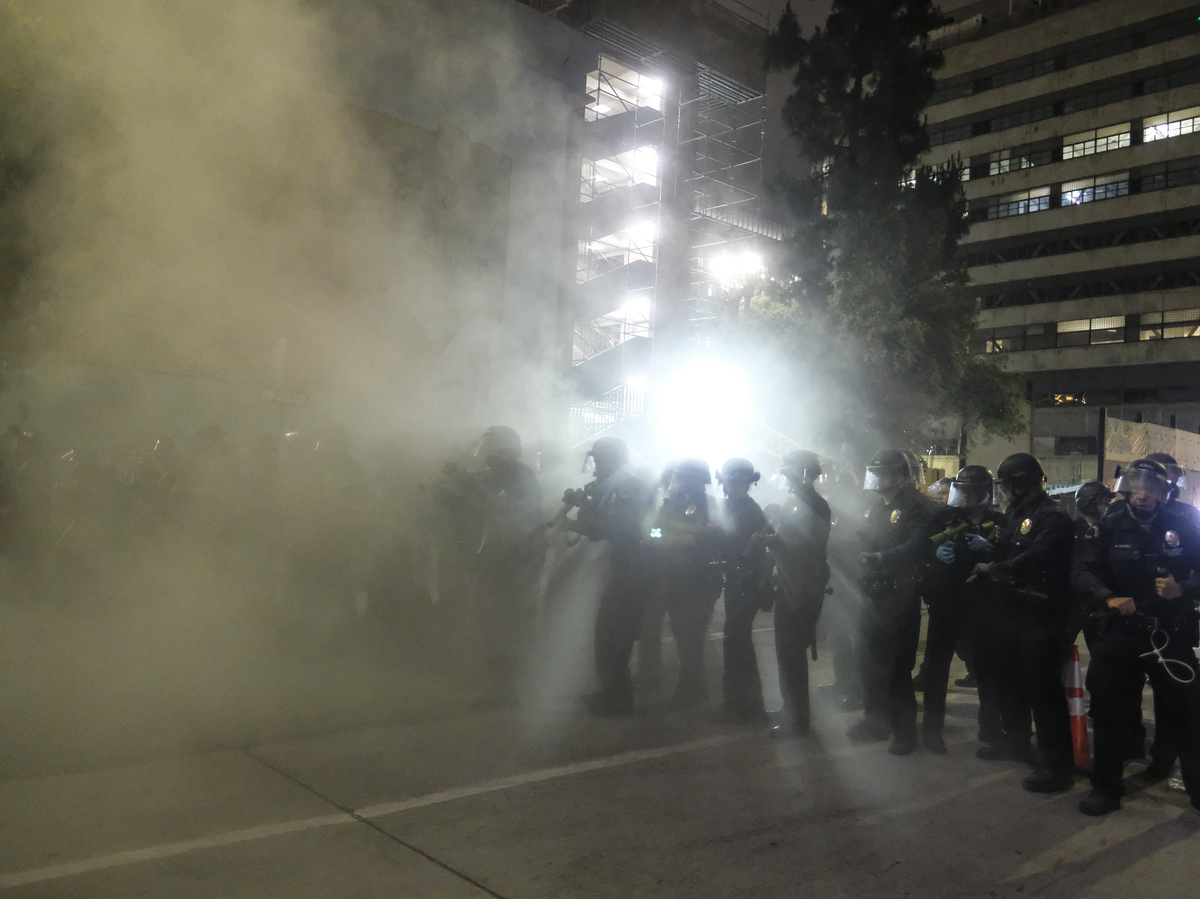
Police officers fire rubber bullets May 29 during a Los Angeles protest over the death of George Floyd.

Ringo H.W. Chiu/AP


hide caption

toggle caption

Ringo H.W. Chiu/AP

Police officers fire rubber bullets May 29 during a Los Angeles protest over the death of George Floyd.

Ringo H.W. Chiu/AP

Nationwide protests against police brutality and systemic racism have brought tens of thousands of Americans into tense and sometimes violent encounters with law enforcement. Many police departments are using crowd-control tactics like barriers, curfews and surveillance and riot-control weapons such as tear gas, rubber bullets and flash bangs.

Concern about the excessive use of these weapons has been growing in recent days: On Friday, the mayor of Seattle announced a 30-day ban on the use of tear gas. There are calls for other cities to do the same. In Minneapolis, where George Floyd died last week after a police officer pressed a knee into his neck, the police department agreed to ban the use of chokeholds.

Police departments use a variety of strategies and weapons against crowds. Often dubbed “less than lethal” weapons, they can still cause serious injuries, and the occasional death, especially when used at close range.

“Tear gas”

What is it? Tear gas is an umbrella term for a variety of aerosolized chemical irritants used by police and military to incapacitate and disperse crowds. CS gas and pepper spray are the most common. Although chemically different, they both target pain-sensing nerves and cause similar symptoms. The active ingredient in pepper spray is oleoresin capsicum, which is derived from chiles. In contrast, CS gas (o‐chlorobenzylidene malononitrile) is a chlorinated, organic chemical. (An alternative to CS gas is CN (chloroacetophenone), still used in Mace, but it’s not widely used for crowd control anymore because it is more toxic than CS gas.)

The “tear gas” chemicals now seen drifting over crowds in the recent protests are banned in warfare. But the Chemical Weapons Convention does not bar their use against civilians as “riot control agents,” or RCAs.

How do police use these chemicals?

In law enforcement, they are called “riot control agents.” Police spray them as a liquid from a pressurized dispenser, lob them into crowds as grenades or fire off canisters that contain a powdered blend, which then disperses as smoke or fog. It can be difficult to determine what exact chemicals are being used, though, says Charles Mesloh, a professor of criminal justice at Northern Michigan University. “There’s no regulation on chemical agents, so you can put anything in that you want,” he says.

Mesloh has analyzed numerous brands and found in them chemicals such as dry-cleaning solvent. Mesloh says sometimes you can get hints of what is being used from the color of the smoke. He warns that one should be extra wary when the smoke has a rainbow-like appearance — something he observed during the 2014 Ferguson protests. An unusual blend of colors can indicate different brands and chemicals are mixing together, which could be hazardous, Mesloh says.

What do they do to your body?

Tear gases and pepper sprays induce a cascade of symptoms. Eyes tear up, become inflamed, and feel like they’re burning. Sometimes vision becomes blurry. Your skin may turn red, break out in blisters, or develop a rash or chemical burn. Inhaling tear gas causes violent coughing, crying and mucus production. Sometimes people struggle to breathe.

SAFETY TIPS FOR PROTESTERS

  • Don’t wear contact lenses, but do consider eye protection
  • Wear a bike helmet to protect your head
  • Bring plenty of water
  • Use a cloth face covering and goggles for chemical irritants and the coronavirus
  • Leave most valuables at home, but consider bringing a small towel, umbrella for sun and shielding, sunscreen, ID and medical information
  • Find a buddy and keep track of each other

CS gas can also provoke severe inflammation and cause chemical injury to the lining of the airways and the lungs, according to Duke University professor Sven Eric Jordt, who studies the physiological effects of tear gas. Some people also experience severe respiratory symptoms such as pulmonary edema, reactive airways dysfunction and respiratory arrest, vomiting and allergic reactions from these chemical agents. Other possible health effects include permanent damage to the tissues of the eye, persistent symptoms of asthma and traumatic brain injury from the projectiles used to deploy the chemicals.

How likely am I to be seriously hurt from tear gas?

The use of tear gas and other chemical irritants has been increasing, both in the U.S. and globally. Jordt and other experts say there needs to be more research on their risks, especially when used against civilians who may have underlying health conditions. A 2017 review of the evidence found the majority of exposed people recover after being exposed to tear gas and pepper spray. The chemical irritants are rarely lethal, but the authors concluded that they “can cause significant injuries as well as permanent disabilities,” particularly if there is prolonged exposure. Your overall vulnerability hinges on several factors: how close you are, how much is used and whether the exposure happens outdoors (safer) versus indoors (less safe).

“We now have more evidence that tear gas is much more toxic than it was previously thought,” says Jordt.

A 2014 study showed that tear gas makes people more susceptible to developing respiratory illness. This finding led the U.S. military to significantly reduce the amount of CS gas its recruits were exposed to during training exercises.

Experts have told NPR that using these chemical agents during the coronavirus pandemic is especially problematic because they cause people to cough and spread infectious droplets, and set back the body’s antiviral defenses, making it more likely for someone to develop symptomatic or severe COVID-19.

What should I do if I’m exposed to tear gas or pepper spray?

The best thing you can do is get away from the chemicals. Then apply “copious amounts of water on your skin,” using soap if possible, says Dr. Ruddy Rose, director of the Virginia Poison Center at Virginia Commonwealth University Medical Center. For your eyes, Rose advises continuously irrigating them for 10 to 15 minutes with saline solution, if possible. Although milk can help relieve the burning sensation of spicy food, and can have soothing effects on the skin, Rose says it is not necessarily helpful for dealing with the pain of tear gas or pepper spray. You should definitely not flush your eyes with milk, Rose says. Thoroughly wash any clothing that came into contact with tear gas.

“Flash bangs”

How dangerous are “flash-bang” grenades?

Flash bangs are explosives that are intended to stun and disorient people. “All you are trying to do is make a loud noise and a bright light,” says Mesloh, who compares the explosion to that of an M-80 firecracker. Flash bangs are designed to temporarily blind or deafen people. But in rare circumstances, they can cause serious injuries (like blowing off fingers or hands) or even death. That may happen when the police officers make an error throwing the devices, and injure themselves. You are also at risk if a flash-grenade explodes near glass or gravel, creating a dangerous spray of tiny sharp fragments. Also, flash bangs can start fires.

“Rubber bullets”

What are they?

Protest coverage has described police officers shooting “rubber bullets,” but that term can be misleading, says Brian Higgins at John Jay College of Criminal Justice. Police use a wide variety of “less than lethal” projectiles made of plastic, rubber, dense foam or a sponge-like material with a rubber coating. Others have metal cores. Police also shoot special bean bags that fit into shotgun casings. “Pepper balls” are filled with pepper spray, but are sometimes mistaken for rubber bullets when they don’t explode on impact. Another form of projectile are baton rounds made of plastic, wood or rubber that are intended to be shot toward the ground and skip, before making contact with someone.

How dangerous are “less than lethal” projectiles?

There are now numerous examples from recent days of protesters and journalists being seriously injured and permanently blinded by these projectiles. Higgins says “these rounds are not supposed to be fired indiscriminately into a crowd.” He says police should be trained to shoot them at the lower body — never above the shoulders — and not at close contact. As Kaiser Health News reports, they can break bones, fracture skulls, explode eyeballs, cause traumatic brain injury and damage internal organs. A 2017 study found that among people injured by “less than lethal” projectiles, more than 70% had severe injuries, 15% were permanently injured and less than 3% percent died. The study’s authors concluded that these projectiles “do not appear to be an appropriate means of force in crowd-control settings.” Research shows that using these weapons does not deescalate tensions during protests, but can actually lead to more violence.


Source link

How to Navigate Your Community Reopening? Remember the Four C’s

When the country was largely under lockdown, at least the rules were mostly clear. Essential workers ventured out; everyone else sheltered in. Bars and restaurants were closed except for dining out; hair salons and spas were shuttered. Outings were limited to the supermarket or the drugstore.

Now states are lifting restrictions, but detailed guidance about navigating the minutiae of everyday life is still hard to come by — and anyway, there’s never going to be a ready solution to every problematic circumstance you may encounter.

“Ramping down was easy by comparison, even though it felt hard at the time — we basically flipped a switch,” said Dr. Preeti Malani, an infectious disease expert who is chief health officer for the University of Michigan.

“Reopening is much more complicated. There is no template, no playbook. We can’t just say, ‘Follow these 10 rules, and you’re good.’”

Even in the absence of detailed directives, however, there’s scientific consensus about a general approach that can reduce the spread of the virus as the world around you reopens. As you tiptoe toward normalization — whatever that is, given these times — try to follow three precautions: avoid contact, confinement and crowds. And make realistic choices.

You need to continue with social distancing precautions. That means wearing masks, washing hands well and often, and keeping a distance of at least six feet from one another. No hugs, at least not in the usual way. No handshakes.

Try to make sure that public spaces you frequent are maintaining mitigation measures: spreading out tables at a restaurant, limiting or spacing out patrons in shops and parks, and conducting frequent cleaning and disinfection.

The virus is spread most efficiently from person to person, but the Centers for Disease Control and Prevention nonetheless recommends frequent cleaning of high-touch objects and surfaces like tables, doorknobs, light switches, countertops, handles, phones, keyboards, toilets and faucets, touch screens, A.T.M.’s and gas pump handles.

Any 15-minute face-to-face conversation between people who are within six feet of each other constitutes close contact, said Dr. Muge Cevik, an expert on infectious diseases and virology at the University of Saint Andrews School of Medicine in Scotland.

The longer the conversation and the closer the physical proximity between the participants, the greater the risk of the virus spreading if one person is infected.

That explains why transmission is rampant within households, and why family gatherings where people embrace and spend a couple of hours together over a meal have led to outbreaks.

In one case investigated by federal health officials, an individual with mild respiratory symptoms attended a funeral in Chicago in February, setting off a chain of transmission that led to more than a dozen people getting sick and three deaths.

The individual was a family friend who embraced the mourners at the service, spent a few hours sharing a takeout dinner and a potluck meal, and went to a family birthday party.

As various relatives fell ill, household members who took care of them were also infected; birthday party guests who had contracted the virus went to church, infecting congregants sitting in the next row.

Altogether, 15 people were infected. The C.D.C. has recommended limiting funerals to immediate family or holding virtual memorial services, depending on local transmission of the coronavirus.

Indoor activities in confined enclosed spaces, even large ones, are more conducive to spreading the virus than events held outside, especially if the air inside the building is being recirculated or the windows don’t open.

Many infections have been traced to public transportation vehicles like buses and vans. Some experts have raised questions about the safety of enclosed public spaces, like office buildings, indoor restaurants and nightclubs.

“When there’s stagnant air, the droplets could persist longer than you would expect, and there will be a lot of contamination on surfaces,” Dr. Cevik said.

[Like the Science Times page on Facebook. | Sign up for the Science Times newsletter.]

A flow of fresh air dilutes the virus, she added: “When you’re next to a good air flow source or by a window, your upper respiratory tract won’t be exposed to that much virus anymore.”

Dr. Cevik referred to a study that traced a Covid-19 outbreak in China to a service at a Buddhist temple in Ningbo, in Zhejiang Province, in January.

Some 300 people were at the service, which lasted two and a half hours and included lunch. It was held outdoors, and most of the worshipers were not infected. And of the 30 people who were infected, most had traveled on the bus to the temple and back with the first person who became ill, about an hour’s drive each way.

On that bus, no one sitting by an open window got sick, with the sole exception of an individual who sat directly next to the infected woman.

In recent guidance to businesses that are reopening, the C.D.C. told employers they must make sure ventilation systems are working properly and take steps to maximize the circulation of outdoor air by opening windows and doors and using fans.

Large groups are risky, no matter where they are gathered. Even outdoors, crowds mean more people, more contacts — and more potential sources of infection. And ultimately, preventing infection is a numbers game, where less is more.

“It’s a really different way of thinking that most people in the world aren’t used to,” said Dr. Barbara Taylor, an infectious disease specialist at the University of Texas Health Science Center at San Antonio. “It’s all math.”

  • Updated June 5, 2020

    • How many people have lost their jobs due to coronavirus in the U.S.?

      The unemployment rate fell to 13.3 percent in May, the Labor Department said on June 5, an unexpected improvement in the nation’s job market as hiring rebounded faster than economists expected. Economists had forecast the unemployment rate to increase to as much as 20 percent, after it hit 14.7 percent in April, which was the highest since the government began keeping official statistics after World War II. But the unemployment rate dipped instead, with employers adding 2.5 million jobs, after more than 20 million jobs were lost in April.

    • Will protests set off a second viral wave of coronavirus?

      Mass protests against police brutality that have brought thousands of people onto the streets in cities across America are raising the specter of new coronavirus outbreaks, prompting political leaders, physicians and public health experts to warn that the crowds could cause a surge in cases. While many political leaders affirmed the right of protesters to express themselves, they urged the demonstrators to wear face masks and maintain social distancing, both to protect themselves and to prevent further community spread of the virus. Some infectious disease experts were reassured by the fact that the protests were held outdoors, saying the open air settings could mitigate the risk of transmission.

    • How do we start exercising again without hurting ourselves after months of lockdown?

      Exercise researchers and physicians have some blunt advice for those of us aiming to return to regular exercise now: Start slowly and then rev up your workouts, also slowly. American adults tended to be about 12 percent less active after the stay-at-home mandates began in March than they were in January. But there are steps you can take to ease your way back into regular exercise safely. First, “start at no more than 50 percent of the exercise you were doing before Covid,” says Dr. Monica Rho, the chief of musculoskeletal medicine at the Shirley Ryan AbilityLab in Chicago. Thread in some preparatory squats, too, she advises. “When you haven’t been exercising, you lose muscle mass.” Expect some muscle twinges after these preliminary, post-lockdown sessions, especially a day or two later. But sudden or increasing pain during exercise is a clarion call to stop and return home.

    • My state is reopening. Is it safe to go out?

      States are reopening bit by bit. This means that more public spaces are available for use and more and more businesses are being allowed to open again. The federal government is largely leaving the decision up to states, and some state leaders are leaving the decision up to local authorities. Even if you aren’t being told to stay at home, it’s still a good idea to limit trips outside and your interaction with other people.

    • What’s the risk of catching coronavirus from a surface?

      Touching contaminated objects and then infecting ourselves with the germs is not typically how the virus spreads. But it can happen. A number of studies of flu, rhinovirus, coronavirus and other microbes have shown that respiratory illnesses, including the new coronavirus, can spread by touching contaminated surfaces, particularly in places like day care centers, offices and hospitals. But a long chain of events has to happen for the disease to spread that way. The best way to protect yourself from coronavirus — whether it’s surface transmission or close human contact — is still social distancing, washing your hands, not touching your face and wearing masks.

    • What are the symptoms of coronavirus?

      Common symptoms include fever, a dry cough, fatigue and difficulty breathing or shortness of breath. Some of these symptoms overlap with those of the flu, making detection difficult, but runny noses and stuffy sinuses are less common. The C.D.C. has also added chills, muscle pain, sore throat, headache and a new loss of the sense of taste or smell as symptoms to look out for. Most people fall ill five to seven days after exposure, but symptoms may appear in as few as two days or as many as 14 days.

    • How can I protect myself while flying?

      If air travel is unavoidable, there are some steps you can take to protect yourself. Most important: Wash your hands often, and stop touching your face. If possible, choose a window seat. A study from Emory University found that during flu season, the safest place to sit on a plane is by a window, as people sitting in window seats had less contact with potentially sick people. Disinfect hard surfaces. When you get to your seat and your hands are clean, use disinfecting wipes to clean the hard surfaces at your seat like the head and arm rest, the seatbelt buckle, the remote, screen, seat back pocket and the tray table. If the seat is hard and nonporous or leather or pleather, you can wipe that down, too. (Using wipes on upholstered seats could lead to a wet seat and spreading of germs rather than killing them.)

    • Should I wear a mask?

      The C.D.C. has recommended that all Americans wear cloth masks if they go out in public. This is a shift in federal guidance reflecting new concerns that the coronavirus is being spread by infected people who have no symptoms. Until now, the C.D.C., like the W.H.O., has advised that ordinary people don’t need to wear masks unless they are sick and coughing. Part of the reason was to preserve medical-grade masks for health care workers who desperately need them at a time when they are in continuously short supply. Masks don’t replace hand washing and social distancing.

    • What should I do if I feel sick?

      If you’ve been exposed to the coronavirus or think you have, and have a fever or symptoms like a cough or difficulty breathing, call a doctor. They should give you advice on whether you should be tested, how to get tested, and how to seek medical treatment without potentially infecting or exposing others.


Many bars in Texas are outside, she noted, and are therefore relatively low risk. But the number of patrons in a space still matters.

“You can create a scenario where you have everybody six feet apart, but if that scenario involves 500 people, that is inherently more risky than if that same scenario involves 30 people,” Dr. Taylor said. “There’s more potential for one of those 500 people to have Covid-19 and be spreading it,” she said.

Another concern about drinking holes: As people become inebriated, they let their guard down and lose their inhibitions.

The C.D.C. ranks dining options from lowest to highest risk situations. The lowest risk is a drive-through, delivery, takeout or curbside pick up of food. Restaurants with the highest risk have indoor and outdoor seating with no additional spacing between tables.

Every individual ultimately must make a personal decision about the level of risk he or she is comfortable with, weighing their own age and health status, life circumstances and general level of risk aversion or tolerance.

People at high risk for developing severe disease if they become infected with the coronavirus will want to take the greatest of precautions. That group includes those 65 and over, residents of nursing homes and long-term care facilities, and people with compromised immune systems, chronic lung or kidney disease, heart conditions or severe obesity.

But young, healthy adults and children should also consider the protection of people around them, including family members, colleagues or friends who are vulnerable because of chronic disease or other life circumstances, Dr. Taylor said.

Her tolerance for risk is very low, she said. Though Dr. Taylor has no health problems, she is a physician who treats vulnerable and immunocompromised patients, and also sees her parents regularly.

“We are our brothers’ keepers,” she said. “Although I’m not in a risk group, I’m regularly in contact with people who are, so it comes down to not just thinking about ourselves, but our whole communities, and how we all have to protect one another.”

Source link

Thank you Sydney, your lockdown sacrifices saved my life

I’d been reluctant to go anywhere near a hospital during a pandemic, but the antibiotics were doing bupkus, and now I couldn’t swallow them anyway. Time to go to emergency.

Loading

The one good thing about COVID-19, at least for me, is that when you present to ER with a sore throat, shortness of breath, a fever of 38.8, profuse sweating, and difficulty breathing, you get the “please sir, come this way sir” treatment.

The COVID clinic at my local hospital was well-appointed. Comfy chairs, lovely staff, TV tuned to SBS. (Well, it was the inner west.) There was just one other patient in there. The staff were relaxed and calm and well-drilled. It didn’t seem that anyone had been working quadruple shifts hoiking the dead into the back of a U-Haul.

I had a battery of tests done. Bloodwork. Chest X-ray. CT workup of my neck. No significant wait for any of them.

Quinsy is one of those old-timey diseases, like dropsy, or ague, or barrel fever, that we hardly remember, and would never dream of catching. Dear reader, I had caught it.

The affliction is now more commonly known as a peritonsillar abscess. Doctors have moved away from wanting diseases to sound like the effect of too many cocktails.

Sydney COVID clinics are not overwhelmed with patients.Credit:Kate Geraghty

An increasingly large reservoir of bacterial infection and pus was building up in the left side of my throat and threatening to terminate my airway and my life. I’m sure we can agree: that would not be the Sunday night I hoped for.

My doctors explained to me they would need to make a small incision in my neck, work around some muscles and nerves and my carotid artery, suction out as much infected material as possible and install a drain to allow the remaining pus to drip out over the course of the next few days. Oh, and that, at least for this pandemic, I was not going to win the isobeard competition.

In order to preserve my airway while they did this, I would need to be intubated and ventilated.

If I was in the US, or Britain, or any one of a bunch of countries that have not been as diligent and effective in keeping COVID-19 infection rates low as we have, the need to be intubated and ventilated could be a very big problem indeed.

Loading

When I got out of the operating theatre there was only one COVID case in ICU in NSW. Today there are none. So there’s plenty of room in ICU for people with quinsy (and dropsy and scarlet fever and all the other diseases from the 1600s). But, more importantly, there’s room for all the people who have 21st-century injuries, like being hit by a Tesla, or drowned in rising oceans, or my mate Tim who snapped his ankle surfing.

If you think that there is no chance that you or a loved one might end up, completely unexpectedly, where I was, then sure – ignore social distancing, refuse a vaccination if and when there is a vaccine, laugh about COVID being “boomer doomer”.

But I am (thankfully, still) living proof that the difficult and economically and socially devastating lockdown did exactly what it needed to. It enabled lives to be saved – not just from COVID, but from every random potentially lethal thing that life throws at us.

After two days in ICU and five in a ward, my immune system has taken a bit of a battering. So it’d be helpful if you could all keep up the social distancing for a little while longer. Not just for me, but for yourself, and your loved ones. Because you just don’t know when a niggly sore throat can lead to intubation, ventilation, and critical, life-saving surgery.

Al Donnelley is an engineering consultant.

Most Viewed in Politics

Loading

Source by [author_name]

Alario sneaks by Bayern Munich to score early goal for Leverkusen – Sportsnet.ca

0

var adServerUrl = “”;
var $el = $( “#video_container-397487” );
var permalink = $el.closest(‘.snet-single-article’).data(‘permalink’);

/*
if ( “1” == true && ‘undefined’ !== typeof window.getIndexAds ) {
var so = {preroll:{1:{1:{siteID:191888},2:{siteID:191889}}}};
adServerUrl = window.getIndexAds( ‘http://pubads.g.doubleclick.net/gampad/ads?sz=640×360&cust_params=domain%3Dsportsnet.ca&iu=%2F7326%2Fen.sportsnet.web%2FVideo&ciu_szs=300×250&impl=s&gdfp_req=1&env=vp&output=vast&unviewed_position_start=1&ad_rule=1&vid=6162111874001&cmsid=384’, so, permalink);
} else {
adServerUrl = “http://pubads.g.doubleclick.net/gampad/ads?sz=640×360&cust_params=domain%3Dsportsnet.ca&iu=%2F7326%2Fen.sportsnet.web%2FVideo&ciu_szs=300×250&impl=s&gdfp_req=1&env=vp&output=vast&unviewed_position_start=1&ad_rule=1&vid=6162111874001&cmsid=384”;
}
*/
adServerUrl = “http://pubads.g.doubleclick.net/gampad/ads?sz=640×360&cust_params=domain%3Dsportsnet.ca&iu=%2F7326%2Fen.sportsnet.web%2FVideo&ciu_szs=300×250&impl=s&gdfp_req=1&env=vp&output=vast&unviewed_position_start=1&ad_rule=1&vid=6162111874001&cmsid=384”;

$el.after( unescape(“%3Cscript src=”” + (document.location.protocol == “https:” ? “https://sb” : “http://b”) + “.scorecardresearch.com/beacon.js” %3E%3C/script%3E”) );

$( document ).one( ‘ready’, function() {
$( “#video_container-397487” ).SNPlayer( {
bc_account_id: “1704050871”,
bc_player_id: “rkedLxwfab”,
//autoplay: false,
//is_has_autoplay_switch: false,
bc_videos: 6162111874001,
is_has_continuous_play: “false”,
adserverurl: adServerUrl,
section: “”,
thumbnail: “https://www.sportsnet.ca/wp-content/uploads/2020/06/6162111874001-1024×576.jpg”,
direct_url: “https://www.sportsnet.ca/soccer/alario-sneaks-bayern-munich-score-early-goal-leverkusen/”
});
});

Source link