Travelling freely in the EU was until two months ago a given for most Europeans, but restrictions introduced to halt the spread of the coronavirus meant the closing of internal borders in most parts of Europe. As the epidemiological situation improves and with the summer holidays in sight, countries are gradually restoring freedom of movement. MEPs demand that the passport-free Schengen zone returns to its full functioning as soon as possible.
Schengen in lockdown
“Member states were acting alone and it is now high time the EU steps in before it is too late and irreparable damage to Schengen has been done,†said MEPTanja Fajon, The chair of the civil liberties committee’s working group on Schengen scrutiny. “The Commission should take on a key role in restoring freedom of movement and firstly for crucial categories such as cross-border workers. European co-ordination is therefore essential.â€
The phased system of lifting restrictions could start between regions or countries with similar epidemic levels, but there should be no discrimination based on nationality. The goal is to eventually open all borders throughout the EU to allow for smooth and safe travel for both professional and personal reasons. However, there is no set timetable as it depends on the epidemiological situation and member state decisions.
Border management and reintroduction of controls is a member state prerogative, but.since the outbreak of the pandemic, the Commission has been facilitating common guidelines to make sure that workers in critical sectors as well as deliveries of goods and services in the single market are guaranteed. It also facilitated the repatriations of almost 600,000 Europeans stranded abroad and proposed restricting entry of non-EU nationals into the EU, with an extension until 15 June.
MEPs are pressing for the restoration of borderless free movement for people, goods and services in the Schengen area. They want stronger EU cooperation to guarantee that there is no discrimination against any EU citizen.
In a debate on the state of Schengen by the civil liberties committee on 12 May, Tanja Fajon (S&D, Slovenia) recalled the closures introduced in the midst of the migration crisis in 2015. Some countries maintained those controls for years, which Parliament criticized as unjustified.
“If we fail to restore the integrity of Schengen, we would seriously endanger the European project,†Fajon said. MEPs therefore want to ensure that any future internal borders controls remain truly exceptional and very limited in time.
The civil liberties committee is preparing a resolution on the situation in the Schengen zone, which MEPs are likely to vote on during June’s plenary session.
There have been no new cases of COVID-19 recorded in the ACT in the past 24 hours, marking 17 days where Canberra has been coronavirus-free.
So far, 14,916 Canberrans have tested negative for coronavirus, with 311 of those results coming through in the past 24 hours.
Despite having no current cases, the ACT Government has pushed on with its pop-up emergency department, built in just 37 days.
Deputy Chief Executive from Canberra Health Services, Dave Peffer, said the $23 million site may never actually be used.
“No one buys insurance hoping to crash their car, you have it in case and this is certainly part of our in case plan for the Territory,” he said.
There is space for 51 patients, including one palliative care bed, with two separate entrances and exits.
“On side is for suspected COVID, these are for patients who we have not yet confirmed they do have the virus, and the other side is for known COVID,” Mr Peffer said.
The facility will stay in Canberra until well after the flu season ends.
“It’s been designed and built in such a way that it can be de-mobilised at any point in time and stored in 20-foot shipping containers,” he said.
The KBC Bank consumer sentiment index climbed to 52.3 from 42.6 in April, its largest month-on-month improvement since January 2015, but remained far below the 77.3 recorded in early March.
The April fall was the sharpest month-on-month decline in the survey’s 24-year history and May’s level is within the lowest 5% of readings recorded, the authors said.
“While the improvement … should be seen as encouraging, the level of the May sentiment survey remains comparable with responses seen through the more difficult moments of the financial crisis (a decade ago),†Austin Hughes, chief economist at KBC Ireland, said.
Ireland in March shut bars, restaurants and non-essential retail outlets and ordered people to stay at home, measures that will be gradually relaxed during the coming three months, starting this week.
The damage to the economy has been severe, with the unemployment rate, including those receiving emergency COVID-19-related jobless benefits, shooting up to 28.2% from 4.8% in two months.
The survey’s authors linked the improvement to a slowing of the spread of the disease in recent weeks combined with the beginning of the phased easing of the lockdown.
But eight out of 10 consumers still expected the economy to weaken in the following 12 months down from nine in 10 in May.
The survey found that 86% of consumers expected the Irish government to introduce cutbacks in public spending or tax increases within the next two to three years.
The threat of a return to austerity “could translate into an economic ‘second wave’â€, Hughes said.
Billionaire investor and “Shark Tank†star Mark Cuban appeared on one of President Donald Trump’s favorite Fox News shows Wednesday night and tore into the constant complaints coming from the White House.Â
Given that Cuban is the owner of the NBA’s Dallas Mavericks, he initially spoke with Sean Hannity about how sports could return amid the coronavirus pandemic. But it wasn’t long before the conversation turned to the president ― and the exchange got a little heated. Â
“This is what really bothers me about the president: He’s the most powerful man in the world and he always plays the victim card: ‘The Dems are out to get me, the media is out to get me,’†Cuban said. “You’ve got to be the leader, you’ve got to be the strongest man in the game and he just hasn’t shown that strength.â€
Hannity interjected that “they†spied on Trump, but Cuban wouldn’t let him change the subject.
“Who cares?†Cuban shot back. “He’s the most powerful man in the world. Be powerful, be a leader, set an example.â€Â
Earlier in the interview, the two sparred over the administration’s response to the pandemic. Hannity noted that Cuban supports former Vice President Joe Biden, and said: “Tell me all the things that Bunker Joe did on coronavirus that you admire, then I’ll tell you what I think Trump did that I admire.â€
But Cuban noted that Biden isn’t the president and has no role at all in the government.
“You can’t really put him in that category,†Cuban said, then shared some specific details about the Trump administration’s shortcomings. Â
Check out more of their conversation below:
A HuffPost Guide To Coronavirus
Calling all HuffPost superfans!
Sign up for membership to become a founding member and help shape HuffPost’s next chapter
British Finance Minister Rishi Sunak (pictured) said on Tuesday (19 May) it would take time for the economy to get back to normal even when the government’s coronavirus shutdown is lifted,write David Milliken and Andy Bruce.
“It is not obvious that there will be an immediate bounce-back,†Sunak told lawmakers, saying the retail sector, for example, would still face restrictions when it reopens.
“In all cases, it will take a little bit of time for things to get back to normal, even once we have reopened currently closed sectors.â€
Rather than quell concerns that the app could aid Chinese spies, the news this week that Mayer will become the CEO of TikTok — owned by Beijing-based startup Bytedance — insteadsparked a fresh round of calls for even tougher scrutiny.
ByteDancewas founded by Zhang Yiming, a 37-year-old tech entrepreneur and former Microsoft(MSFT) employee. People who have worked with Zhang describe him as someone who thinks deeply about technology and spends much of his free time writing code. The company’s name refers to 0s and 1s dancing together to form a byte, the binary code used by computers.
Hawley and other lawmakers have called TikTok a threat to national security because of its ties to China, and have claimed that the company could be compelled to “support and cooperate with intelligence work controlled by the Chinese Communist Party.”
TikTok has said that it operates separately from ByteDance. It says its data centers are located entirely outside of China, and that none of that data is subject to Chinese law. US user data is stored in the United States, with a backup in Singapore, according to TikTok.
“While we think the [national security] concerns are unfounded, we understand them and are continuing to further strengthen our safeguards while increasing our dialogue with lawmakers,” a TikTok spokesperson told CNN Business.
The company also says it has formed a “Transparency Center” in Los Angeles, which will allow third party experts to look into TikTok’s source code,along with the company’s work on data privacy, security and content moderation.
In addition to his role at TikTok, Mayer will also serve as chief operating officer of ByteDance. He “will be charged with driving the global development of ByteDance, as well as overseeing corporate functions including corporate development, sales, marketing, public affairs, security, moderation, and legal,” the company said in a press release on Tuesday.
But if ByteDance was hoping Mayer could smooth things over with Hawley and his colleagues, experts say the company will be disappointed.
“TikTok will always be considered a threat, no matter who is at the helm, because of what it represents: the emergence of Chinese tech-ecosystems,” said Abishur Prakash, co-founder of Center for Innovating the Future, a consulting firm that works on technology and geopolitics.
Until now, American companies have dominated when it comes to cloud computing, social media and artificial intelligence, said Prakash.
“Now, Chinese firms, like TikTok, are creating their own alternatives, building a new kind of geopolitical footprint for China,” he said.
An explosion of popularity, followed by controversy
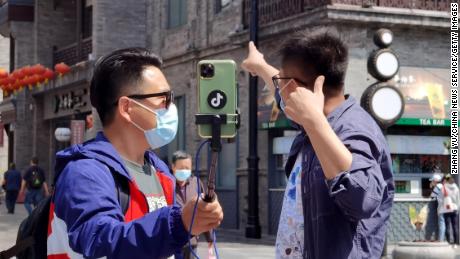
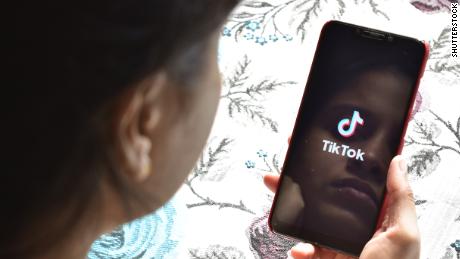
TikTok has exploded in popularity in the United States and other western countries, becoming the first Chinese social media platform to gain traction with users outside of its home country. It was downloaded 315 million times in the first three months of this year, more quarterly downloads than any other app in history, according to analytics company Sensor Tower.
TikTok is an endless scroll of short videos. Many of them feature users showing off their best dance moves — or most cringe-worthy ones — to 15-second snippets of music. Big US brands such as the NBA, Ralph Lauren(RL), and Chipotle(CMG) have sponsored dance challenges or cartoon filters on the app. And it’s beginning to grow beyond its teenage base and attract Instagram influencers.
It hardly seems like the kind of content that would alarm US lawmakers.
But social media platforms such as TikTok, Facebook(FB) and Twitter(TWTR) are always under scrutiny, said Jeffrey Towson, a private equity investor and former professor of investment at Peking University.
“The business they’re in has become politically and culturally sensitive. Forever,” he said.
In the United States, TikTok has been accused by users and lawmakers of censoring content related to mass protests that caused havoc in Hong Kong for most of last year. It also ran intocontroversy after a US teenager claimed TikTok suspended her account — an accusation the company denied —when she posted a video criticizing the Chinese government and its detention centers, which hold mostly Muslim Uyghurs in the region of Xinjiang.
The USmilitary last year banned the use of TikTok by its soldiers, calling it a security threat. Military employees were ordered to uninstall TikTok “to circumvent any exposure of personal information.”
TikTok has repeatedly said that it does not moderate content due to political sensitivities. In addition to storing data outside of China, the company has also said that it has a “dedicated technical team focused on adhering to robust cybersecurity policies, and data privacy and security practices.”
The suspicion from US lawmakers, though, could be damaging for TikTok.
Florida Republican Sen. Marco Rubio, for example, has called on the Committee on Foreign Investment in the United States, or CFIUS, to review TikTok’s acquisition of rival app Musical.ly — a deal that helped add millions of users to its platform.
Such an investigation could be a blow to TikTok, because CFIUS has the authority to retroactively review foreign acquisitions of US businesses and force a company to divest itsinterests.
TikTok has been trying to separate itself from China and its Beijing-based parent company.
Its main office is in Los Angeles County, and it has offices in London, Paris, Berlin, Dubai, Mumbai, Singapore, Jakarta, Seoul and Tokyo. TikTok is also not available in China, although another Bytedance app — Douyin — is similar and they share the same logo and branding.
A TikTok spokesperson told CNN in an interview earlier this year that it is managed separately from other ByteDance apps, and owned by an entity outside of China.
The homepage of ByteDance’s website includes a graph illustrating the company’s corporate structure. It shows several businesses falling under larger entities listed in the Cayman Islands, the United States and Hong Kong.
Towson called TikTok’s use of legal structures to distance itself from mainland China and its parent company “nonsense.”
Tech founders and CEOs are responsible for their companies, much like when Facebook or any of its apps are criticized by officials, Mark Zuckerberg often comes under scrutiny, said Towson.
Likewise with Zhang, the founder and CEO of ByteDance.
“He owns it, full stop. Legalese is not going to change that,” said Towson.
A tense political climate
The other problem for TikTok is the current political climate: US-China relations are reaching new lows.
Washington last week pushed for a new crackdown on telecom equipment and smartphone maker Huawei by moving to further restrict its ability to work with US companies. The Global Times, a combative state-run media tabloid in China, hinted that Beijing could soon retaliate with a long-rumored blacklist of foreign companies.
And President DonaldTrump -— whohas claimed, without providing evidence, that the coronavirus originated in a laboratory in Wuhan, China — could hit the country with more tariffs as punishment for the pandemic.
Against that backdrop, hiring Mayer or any other American wouldn’tbe enough, according to Prakash.
“Hiring a local is part of an age old playbook. And, while it might have worked in the past, it won’t for TikTok,” he said.
Because technology is driving geopolitics, Prakash added, the United States will be eyeing Chinese technology firms with increasing scrutiny.
“Who is in the leadership position won’t change the fact that TikTok is going to be in the crosshairs of the US government,” he said.
“It may be possible for COVID-19 to spread in other ways, but these are not thought to be the main ways the virus spreads.”
Dr John Whyte, chief medical officer for the healthcare website WebMD, told Fox News that the CDC’s slight update brings clarity and helps to reduce fears.
“Many people were concerned that by simply touching an object they may get coronavirus and that’s simply not the case. Even when a virus may stay on a surface, it doesn’t mean that it’s actually infectious,” Whyte was quoted.
“I think this new guideline helps people understand more about what does and doesn’t increase risk. It doesn’t mean we stop washing hands and disinfecting surfaces. But it does allow us to be practical and realistic as we try to return to a sense of normalcy,” he said.
The CDC still warns that the main way the virus is spread is through person-to-person contact, even among those who are not showing any symptoms.
The main way to prevent infection, the CDC says, is by practising social distancing and staying at least 6 feet away from others, washing your hands with soap and water, and cleaning and disinfecting frequently-touched areas.
A recent study in the New England Journal of Medicine shows that coronavirus can live on some surfaces for up to three days and up to three hours in the air.
It can live up to four hours on copper, up to 24 hours on cardboard and up to 2-3 days on plastic and stainless steel, according to the study.
The CDC, however, has said that catching the coronavirus from boxes delivered by Amazon or on your takeout food bag is highly unlikely “because of poor survivability of these coronaviruses on surfaces.”
We’re here to guide you through the coronavirus lockdown. Check out HuffPost LIFE for daily tips, advice, how-tos and escapism.
With hairdressers closed during coronavirus lockdown, I’ve been searching for ways to style my locks without risking a crooked fringe or a dodgy dye job.
Now I’ve finally found something to spruce up my tresses, giving it a lift for my next Tik Tok video or dinner date (when I eventually part ways with my cosy couch).
Introducing the clip-in ponytail. Many of you may already be aware of this gift from the hair gods, but I only recently discovered its wonders when admiring ‘MasterChef Australia’ judge Melissa Leong’s on-screen looks.
Makeup artist Maureen Moriarty has been using some clip-in ponytails during this season to help give Melissa’s hair some body and length and enhance her already stunning locks.
“Melissa wears a range of our hair extensions, including our clip-ins,“Melbourne Human Hair Extensions owner Travis George told HuffPost Australia.
“She has one of our wrap around ponytails, which is made with 100% Remy Human Hair. It is made with a combination of colours to blend in with her natural hair.â€
However, if you’re after a similar look, it could set you back a few hundred dollars. Travis said this particular piece is values at $350.
The stylist explained there’s no minimum hair length requirement for a clip-in ponytail.
“Provided your natural hair is long enough to tie in a ponytail at the top of your head, ponytail hair extensions can be worn,†he said.
The application process is also quite straightforward:
Tie your own hair into a ponytail.
Place the comb of the clip-in into the front section of the ponytail.
Wrap the clip-in’s tail around the natural ponytail once and then secure with velcro.
Wrap the rest of the tail around the ponytail and secure with a bobby pin.
“Clip-in Ponytails are the perfect solution for creating a glamorous look in seconds (even better when combined with a striking lipstick),†said Travis.
“Added to this, they are versatile, excellent for creating fullness and a great option for those wanting to mix up their look, particularly when going out.â€
Enjoy creating the ponytail of your dreams.
Channel 10
‘MasterChef Australia: Back To Win’ judges Jock Zonfrillo, Melissa Leong and Andy Allen
DUBLIN — As Ireland’s data protection authority was closing in late last year on its first major penalty against Facebook over alleged privacy abuses, the agency — a key global enforcer of data protection rules — reshuffled its top team, replacing a senior official in charge of its most high-profile cases.
Dale Sunderland, a soft-spoken deputy commissioner who was overseeing the agency’s investigations into Facebook, as well as others targeting Apple and Google, moved into a new supervisory role.
In his place three regulators — Anna Morgan, John O’Dwyer and Tony Delaney — took on shared responsibility for these blockbuster cases that have become a bellwether in Europe’s effort to rein in how Big Tech collects, stores and makes money from personal data.
The yearlong restructuring, which culminated last fall, capped a lengthy transformation for the watchdog from bit player to the Western world’s first line of defense against misuses of people’s data. As many Silicon Valley companies have international headquarters in Dublin, the country’s regulator has overarching powers to enforce the European Union’s tough privacy standards.
But the agency’s face-lift also contributed to confusion about its ability to enforce the law, according to more than two dozen current and former Irish data protection officials, other countries’ European privacy regulators, tech company executives, data protection lawyers and privacy campaigners. Many spoke to POLITICO on the condition of anonymity due to their ongoing relationships with Ireland’s Data Protection Commission (DPC).
“When you deal with them, you don’t get the sense that they are there to vindicate data protection rights” — Fred Logue, a privacy lawyer in Dublin
The internal changes were not well communicated outside the DPC, leaving some across the bloc in doubt over who was in charge of high-profile cases, according to officials at other EU agencies. People who had filed complaints with the regulator went months without a response, raising questions about how officials were enforcing the rules. Other European watchdogs began to voice concerns in public that the region’s flagship privacy standards were not being enforced.
“Nothing has really changed,” said Fred Logue, a privacy lawyer in Dublin who has filed multiple cases on behalf of clients with Ireland’s privacy watchdog, adding that months would go by without hearing from officials. “When you deal with them, you don’t get the sense that they are there to vindicate data protection rights.”
The agency’s restructuring was the latest headache for the regulator two years after Europe’s landmark privacy overhaul, known as the General Data Protection Regulation, or GDPR, came into force in late May 2018.
Over that time, Helen Dixon, the agency’s head, and her staff of more than 140 regulators have yet to complete any of their investigations into Big Tech. Europe’s new laws allow officials to impose fines of up to 4 percent of a company’s global revenue, or potentially billions of euros, for failures to protect people’s personal information. They’ve become the de facto global standard from Colombia to Japan, an achievement Brussels is eager to promote.
Yet discussions with both advocates and critics of Dublin’s oversight reveal a picture of an agency struggling to come to terms with a powerful new regulatory weapon, with little experience or training about how to wield it. Last year, the agency received more than 7,000 data protection complaints, a record high. It’s working through a backlog of cases as EU agencies are still trying to figure out how best to enforce the rules.
“We’re dealing with a new framework,” Dixon told POLITICO at the agency’s Georgian townhouse headquarters in central Dublin, just a stone’s throw from the country’s parliament, in early March. She rejected claims her agency had been slow to act. “We are now on a pathway where we are going to resolve, one by one, as fast as we can with as many resources as we can, these very entrenched issues.â€
Pressure on Ireland
With the two-year anniversary of Europe’s privacy standards coming next Monday, Dixon is under mounting pressure to show that her agency can act.
Significant fines and orders for change against both Facebook and Twitter are still expected by early summer, almost a year after the enforcement actions were originally expected.
It will be a make-or-break moment for the privacy regulator — and for Europe’s boasts that it’s the global trendsetter on privacy.
For the agency defenders, its slow pace in taking on cases, putting together bulletproof investigations and figuring out how to enforce Europe’s new data protection laws is a sign that Dixon and her team are taking their beefed-up role seriously. The bloc’s revamped privacy regime, advocates insist, does not give enough detail on how to implement the rules, particularly for policing multinational tech giants, It has been left mostly to the Irish to fill in the gaps.
“It’s 10 times more complicated, and regulators aren’t ten times as big,” said Eduardo Ustaran, global co-head of the privacy and cybersecurity practice at Hogan Lovells, a law firm, in London. “Nothing really could have prepared them for the size of GDPR.”
“If a train never gets moving, less locomotives don’t cause further delays” — Max Schrems, an Austrian privacy campaigner
Others disagree. They point to multiple delays in even straightforward cases, including probes into publicly-disclosed misuse of social media data, as a sign that Dublin is not taking its role seriously.
Privacy advocates and some EU regulators grumble that despite Ireland’s backlog of complaints, it is still dragging its feet on investigations that stretch back years, giving companies too much leeway in enforcing the rules and fostering a too close relationship with those it oversees.
“If a train never gets moving, less locomotives don’t cause further delays,” said Max Schrems, an Austrian privacy campaigner who has become the Irish regulator’s quasi-bête noire after pushing them to take action, mostly against Facebook, since the early 2010s.
Struggling to keep up
In discussions with Irish regulators, European counterparts and others involved in Europe’s new privacy regime, POLITICO pieced together how Dublin struggled to cope with its expanded role.
A major stumbling block has been creating watertight legal cases needed to levy hefty fines because, under the bloc’s previous privacy regime that dated back to the mid-1990s, Dublin did not have the authority to issue financial penalties for wrongdoing. Under Irish law, it did gain lengthy litigation experience around privacy violations. But without a track record of financial enforcement, regulators have been racing to get up to speed just as pressure to act becomes ever more acute.
That left some within the agency anxious to avoid procedural mistakes — particularly when dealing with untested, new privacy standards — that could be unpicked in eventual appeals. Irish law provided little breathing space for such legal missteps, according to several local privacy experts.
Dublin currently has almost two-dozen open cases into companies like Microsoft | David Ramos/Getty Images
For outsiders, the delays proved frustrating.
“You don’t hear anything about cases transferred to Ireland,” said Johannes Caspar, head of Hamburg’s data protection regulator, whose agency is the first port of call for privacy complaints about almost all U.S. tech firms in Germany. “What goes on, what type of information was exchanged, we don’t get any of that. We’re here just standing and waiting.”
Graham Doyle, a spokesman for the Irish authority, said other regulators could ask Dublin for updates on the ongoing cases during monthly meetings of EU privacy agencies.
Difficulties began soon after Europe’s new privacy rules began in May 2018.
Days into the new regime, the regulator was flooded with requests, both from locals and people abroad who wanted to take advantage of the new privacy protections to land major complaints.
Some, like those lodged by Schrems, garnered international attention and focused on Big Tech’s data collection practices. Currently, Dublin has 23 open cases into the likes of Microsoft, Apple and Facebook, which is under investigation for everything from mundane data breaches to complex probes into how the company makes money from Europeans’ personal information. The social networking giant declined to comment for this article.
The influx of work represented a challenge for a staff that had grown from just 29 when Dixon took over in 2014 (when the agency was mostly based over a small convenience store in a Portarlington, a small town in central Ireland) to a team of roughly 175 by the end of this year, spread over three different locations. Some complaints took months to garner responses, as different units divvied up tasks and regulators juggled to keep people in the loop on how investigations were proceeding, according to those involved in the some of ongoing cases.
Last year, amid a record number of complaints, the agency said it had sent people’s cases for enforcement, or closed others’ complaints, in just over 80 percent of the 6,904 cases it had received last year, according the DPC’s annual report. Roughly 4,500 were concluded without specific enforcement, while 1,100 are now waiting potential fines and other remedies.
“When the spotlight is on you, you have to be seen to act” — Daragh O’Brien, Irish data protection consultant
Currently, the watchdog has just under 2,500 open complaints filed since Europe’s new privacy rules came into effect in 2018. Dixon, the Irish regulator, said that many cases had been resolved before reaching the need for a formal investigation, and that her team was in regular contact with those who had submitted complaints.
Yet Daragh O’Brien, an Irish data protection consultant who filed multiple complaints on behalf of himself and mostly domestic clients, said that months would go by before receiving confirmation the agency had received his requests. Case workers would be replaced by someone new, often without explanation, and few, if any updates, would be sent out to those who had submitted cases. Schrems also said he had yet to receive an update from Dublin on his cases against WhatsApp and Instagram since he filed them almost two years ago. The regulator sent its initial findings to him in those cases earlier this week.
“When the spotlight is on you, you have to be seen to act,” said O’Brien.
Ireland pushes back
Just as Dublin was plowing through the increased regulatory work, European counterparts piled on the pressure.
At regular monthly gatherings of the region’s privacy agencies, officials would ask for updates on the high-profile cases involving Facebook and other tech giants, and urged Dixon and her colleagues to move faster on enforcement, according to several officials involved in the meetings. Some, including French and German regulators, moved against these companies on their own, with Paris fining Google €50 million — a then-record penalty — in early 2019 for privacy violations. The search giant is appealing that decision.
Officials at several EU data protection authorities told POLITICO that cases they had sent to Ireland for investigation sat in an internal IT system for Europe’s data protection agencies for months with few, if any, updates to the case work. Some, including Hamburg’s Caspar, felt they had been left in the dark over how cases involving their citizens were unfolding, despite monthly calls between Ireland and French and German regulators. Ireland recently joined forces with Spain as part of its investigation into Verizon Media.
Those inside the Irish watchdog pushed back against those claims. Officials said they would go months without receiving the necessary information from other EU agencies to push investigations forward despite other regulators chiding Dublin for not moving fast enough. At the regular meetings of the bloc’s privacy authorities to update on its case load, the Irish would ask others to lend a hand — requests that often went unmet.
Irish officials also questioned others’ intentions in criticizing their work. They pointed out that few, if any, EU watchdogs had successfully brought enforcement actions against international companies, like banks and other global financial institutions, which fell under other countries’ own jurisdictions.
Ireland’s data protection watchdog “will eventually come out with a few big decisions and everyone will calm down,” said Johnny Ryan, chief privacy officer at Brave, a mobile browser, who filed a complaint against Google with the agency, but has yet to receive an update on his case. “But they’re taking more than enough time.”
Internal changes
Amid this political wrangling, the restructuring of Ireland’s privacy watchdog was well underway, with several senior managers leaving the organization late in 2019 just as Dublin was preparing its first blockbuster enforcement action against Facebook.
Officials like Donna Creaven, former head of supervision and engagement with multinational tech companies, took senior roles in other public sector bodies, according to data from LinkedIn. As part of a recruitment push, the agency said it would hire several senior lawyers and data protection experts for its ongoing investigations. But the benefits package — maximum salaries for positions posted earlier this year topped out at €83,740 — has put off possible candidates, according to four local privacy experts who had considered applying. In response, an Irish official told POLITICO they had been inundated with applications.
Irish regulators have acted as a bellwether for how European authorities tackle Big Tech companies like Apple | Daniel Leal-Olivas/AFP via Getty Images
Just as the watchdog’s revamp was winding down in late 2019, Helen Dixon got some bad news.
Last fall, she had asked the Irish government for an extra €5.9 million, or an almost 40 percent bump, to top up the regulator’s annual budget. The request was both to hire investigators and create new internal structures to reduce the agency’s reliance on the justice ministry for back-office functions like IT and human resources support. All EU privacy agencies have been pleading for more resources to handle the increased workload under the region’s new rules.
But the answer was no.
In October, Irish lawmakers instead doled out an additional €1.6 million, an 11 percent annual rise, for the agency’s war chest. It was enough to hire up to 40 more employees, but remained well below what many inside had hoped for.
“Governments all signed up to this law,†Dixon told POLITICO, adding that she was satisfied with the budget increase her agency was given. “If you want to meet those expectations, additional staff are going to be required.â€
The budget decision came at a delicate time.
Ireland’s regulators had expected to announce their first major decision against Facebook by the end of 2019. It would be the culmination of years of work and a symbol that Dublin was able to fulfill its role as the West’s first line of defense against data protection abuses.
But amid legal delays, the decision — linked to how Facebook failed to explain to users how their data would be shared between WhatsApp and the social network, the internet messenger’s parent company — stalled. An announcement was postponed well into 2020.
For Dublin’s supporters, the delay was unavoidable. Better to wait and build cases that would hold up in court, they insist. “We want to create sustainable solutions to problems that have been around in data protection for a long time,” Dixon said when asked about why no enforcement action against tech companies had yet to be published. She did not comment on any specific case.
But for those already losing patience with Ireland, the country’s inability to bring Silicon Valley to heel almost two years after Europe’s new privacy regime began had started to wear thin.
“I won’t say they did a good job,” said Caspar, the German regulator, in reference to the Irish privacy watchdog. “To do a good job, they would need to issue draft (enforcement) decisions.”
Vincent Manancourt contributed reporting from Brussels, Elisa Braun contributed reporting from Paris.
Want more analysis from POLITICO? POLITICO Pro is our premium intelligence service for professionals. From financial services to trade, technology, cybersecurity and more, Pro delivers real time intelligence, deep insight and breaking scoops you need to keep one step ahead. Email pro@politico.eu to request a complimentary trial.
A miner injured in the Grosvenor underground mine explosion has spoken publicly for the first time after being released from the Royal Brisbane and Women’s Hospital.
In a statement, Mr Wiki revealed he is recovering in Brisbane with his family and admits “the road to recovery is going to be a long one”.
Hundreds of staff were working the day of the Moranbah mine explosion. (9News)
Mr Wiki would not give further details about the explosion due to ongoing investigations but says he grateful for the support he has received.
“A tremendous amount of thanks goes out to the first responders and hospital workers that have been with me and continue to care for me and my work colleagues throughout this ordeal,” Mr Wiki said.
“I am looking forward to eventually returning back to Moranbah and reconnecting with the community that has been so supportive during this time.
“This has been a traumatic time for not only myself and my family, but for all the other victims and their respective families also.”
Fundraising organisers shared this photo from inside the Grosvenor mine. (Supplied)
The four other miners injured in the explosion remain in a critical condition.
The Moranbah mine explosion was the fifth mine accident in Queensland in the last 12 months, prompting an independent board of inquiry.
Mines Minister Dr Anthony Lynham announced the board members in Parliament today.
Retired District Court Judge Terry Martin SC will chair the board of inquiry, joined by Professor Andrew Hopkins AO from the Australian National University, an expert in coal mine health and safety.
“The board will be able to conduct public hearings, call witnesses and make broad inquiries, findings and recommendations relating to the incident,” Dr Lynham said.
“Further the Board of Inquiry is to make recommendations for improving safety and health practices and procedures to mitigate against the risk of these incidents happening again.”
We use cookies on our website to give you the most relevant experience by remembering your preferences and repeat visits. By clicking “Accept”, you consent to the use of ALL the cookies.
This website uses cookies to improve your experience while you navigate through the website. Out of these, the cookies that are categorized as necessary are stored on your browser as they are essential for the working of basic functionalities of the website. We also use third-party cookies that help us analyze and understand how you use this website. These cookies will be stored in your browser only with your consent. You also have the option to opt-out of these cookies. But opting out of some of these cookies may affect your browsing experience.
Necessary cookies are absolutely essential for the website to function properly. These cookies ensure basic functionalities and security features of the website, anonymously.
Cookie
Duration
Description
cookielawinfo-checbox-analytics
11 months
This cookie is set by GDPR Cookie Consent plugin. The cookie is used to store the user consent for the cookies in the category "Analytics".
cookielawinfo-checbox-functional
11 months
The cookie is set by GDPR cookie consent to record the user consent for the cookies in the category "Functional".
cookielawinfo-checbox-others
11 months
This cookie is set by GDPR Cookie Consent plugin. The cookie is used to store the user consent for the cookies in the category "Other.
cookielawinfo-checkbox-necessary
11 months
This cookie is set by GDPR Cookie Consent plugin. The cookies is used to store the user consent for the cookies in the category "Necessary".
cookielawinfo-checkbox-performance
11 months
This cookie is set by GDPR Cookie Consent plugin. The cookie is used to store the user consent for the cookies in the category "Performance".
viewed_cookie_policy
11 months
The cookie is set by the GDPR Cookie Consent plugin and is used to store whether or not user has consented to the use of cookies. It does not store any personal data.
Functional cookies help to perform certain functionalities like sharing the content of the website on social media platforms, collect feedbacks, and other third-party features.
Performance cookies are used to understand and analyze the key performance indexes of the website which helps in delivering a better user experience for the visitors.
Analytical cookies are used to understand how visitors interact with the website. These cookies help provide information on metrics the number of visitors, bounce rate, traffic source, etc.
Advertisement cookies are used to provide visitors with relevant ads and marketing campaigns. These cookies track visitors across websites and collect information to provide customized ads.