Banana Republic Donates $20M of New Clothing in Response to National Crisis

0

TAKING ACTION: In the midst of what is shaping up to be a cataclysmic week for many communities that have been ravaged by looting, Banana Republic has started the “Will Work for a Better Republic” initiative by donating more than $20 million of new clothing to those in need.

The efforts are geared to the millions of unemployed Americans who need support “getting back to work and getting back on their feet,” according to press material unveiling the program. The retailer has partnered with Delivering Good, a nonprofit that connects retailers, manufacturers, foundations and individuals to support underprivileged Americans. Banana Republic will donate apparel to a variety of partner organizations in some of the U.S. states that have been most impacted, including Hour Working Women Program in New York, Central City Neighborhood Partners in Los Angeles, and Family Focus Englewood in Chicago, among others.

Mark Breitbard, head of Banana Republic and Gap Inc. specialty brands, said, “As America faces historic unemployment rates, Banana Republic ‘Will Work for a Better Republic,’ helping Americans get back to work by providing confidence through clothing they can wear for interviews and in different work environments, including working from home.”

Monday marked the seventh consecutive night of protests in the U.S., sparked by the death of George Floyd, an unarmed black man who had been under police custody. Ex-Minneapolis police officer Derek Chauvin has been charged with third-degree murder and second-degree manslaughter.

Gap Inc., the parent company of Banana Republic, Gap, Athleta and Old Navy, and scores of retailers have had their stores looted, due to vandalism in cities. Police in New York, Chicago, Philadelphia, Dallas, Atlanta and Los Angeles, among others, are dealing with varying degrees of vandalism. With more than 700 community partners, Delivering Good helps those dealing with homelessness, job loss and poverty. Banana Republic’s donation will be used for nonprofits that focus on workforce training and re-entry programs, according to president and chief executive officer Lisa Gurwitch.

On Sunday, Gap Inc. revealed a $250,000 donation to support the National Association for the Advancement of Colored People and EmbraceRace to fight for equal rights.

Prior to the outbreak of riots, the Gap Foundation had made a $1 million donation to local, state, national and international nonprofits to help underserved families during the coronavirus crisis.


Source link

‘Barely Holding It Together’: Stresses Of An Early Child Care Center That Stayed Open

Parkview Early Learning Center in Spokane, Wash., has been operating at one-third capacity under pandemic guidelines. Co-owner Luc Jasmin III says it has been tough to turn away parents, many of whom are essential workers.

Kathryn Garras


hide caption

toggle caption

Kathryn Garras

Parkview Early Learning Center in Spokane, Wash., has been operating at one-third capacity under pandemic guidelines. Co-owner Luc Jasmin III says it has been tough to turn away parents, many of whom are essential workers.

Kathryn Garras

When Luc Jasmin III took over Parkview Early Learning Center six years ago, he wanted to create a safe space where young children could not only be cared for but also get an educational foundation to prepare them for a lifetime of learning.

During normal times, the center in Spokane, Wash., serves about 100 children who range in age from 4 weeks old to 13 years. The center didn’t close down during the coronavirus pandemic, except for a couple of days to retrain staff on social distancing and cleaning guidelines.

However, since mid-March, it has been operating at one-third capacity under the guidelines. Because the center serves families in need, it has been a tough decision. Jasmin says he gets calls every week from parents asking about enrollment, but he has had to turn them away.

It’s tough, he says, “because so many essential workers rely on us to be consistent and reliable. And we’re really unable to offer that right now.”

A majority of the children at his center come from low-income families — about 90% of them get some kind of subsidy and some are homeless.

At a time when routine and structure have changed drastically, Jasmin says some children are having more outbursts and challenging behaviors than usual. The stresses under the coronavirus have been tough — not just on the kids but also on his staff, many of whom experienced trauma as children.

“They can relate to the kids we have here, but the increased behaviors are triggering the traumas of my own employees. There are kids swearing at them and punching them in the face,” Jasmin says. “They’re trying to be bigger, kinder, stronger, wiser for these kids, but inside they’re barely holding it together.”

Most of the kids who have continued to come in are children of essential workers — those in front-line emergency services and health care, grocery and food delivery. Jasmin especially understands the need for child care for families with working parents and their role in reopening the economy.

“I’m really worried,” he says. “Unless we as a nation … decide to fund early learning, I don’t know how we’re going to get back to normal.”

Read more stories in Faces Of The Coronavirus Recession.

Source link

Three arrested in #Hungary in €1.4 million #VAT fraud investigation

0

Three arrested in #Hungary in €1.4 million #VAT fraud investigation

Three arrested in #Hungary in €1.4 million #VAT fraud investigationLast week, the Hungarian National Tax and Customs Administration (Nemzeti Adó és Vámhivatal) unravelled a sophisticated tax evasion scheme which caused close to half a billion forints (€ 1.4 million) in tax loss to the Hungarian state budget. A total of three individuals were arrested for their involvement in this value-added tax (VAT) fraud scheme.

The action day was also supported by Croatian and Slovenian investigators who executed warrants issued by Hungarian prosecutors. The 3 suspects now face a penalty of up to twenty years of imprisonment for their involvement in this criminal activity.

The syndicate used a sophisticated infrastructure to facilitate such tax evasion spread over various countries. The criminals would purchase soybeans from Slovenian companies managed by Slovakian frontmen. The goods were then sold on the domestic market in Hungary without paying VAT. To support their criminal activity, the organised crime group set up an accounting office which handled bank transactions, tax reporting and invoicing.

By not paying the VAT to the Hungarian treasury, the criminals were able to get a 27% margin (the VAT rate in Hungary) which they used to lower the price of the goods; thus, they were able to offer the soybeans at a very competitive price, gaining an unlawful advantage over the other compliant traders.

What is MTIC fraud? 

MTIC fraud is a compound form of VAT fraud that relies on the violation of the VAT rules for cross-border transactions. MTIC scammers obtain €60 billion in criminal profits every year in the EU by avoiding the payment of VAT or by corruptly claiming repayments of VAT from national authorities.

Europol’s role

Europol supported the investigation from the beginning, by providing a secure network for international exchange of information as well as through analytical and operational support in order to detect and report all relevant international hits to the Hungarian authorities. Moreover, Europol set up a Virtual Command Post with a view to provide a secure communication and real time analytical support for the investigative teams.

Europol’s Analysis Project on missing trader intra-community (MTIC) frauds is responsible for tackling and identifying organised crime networks involved in cross-border VAT fraud.

Source by [author_name]

Rampant inflation adds to Syria’s economic turmoil

The Syrian economy is entering its most fragile phase yet in the country’s nine-year-long conflict. After being devastated by the fighting, constrained by biting Western sanctions, and ravaged by widespread corruption, it is now witnessing the sharpest rise in inflation in its history.

Several dynamics have combined to push the country toward a looming economic implosion. This will not happen overnight, but rather over a long-drawn-out period of time. The Syrian pound has experienced intense volatility and currently trades at around 1820 to the dollar. Just eight months ago, in October 2019, the currency was largely stable at around 500 to the dollar, but since then the situation has quickly spiraled out of control.

The current crisis started in October 2019 — the beginning of the protest movement in Lebanon — and in the eight months since Syria has seen a sharp devaluation of its currency. The number of Syrian pounds to the dollar has quadrupled, marking a 30-fold increase from the pre-war exchange rate of 50 to the dollar. The already difficult economic situation has been exacerbated by Western sanctions, which are set to be ratcheted up following the imminent implementation of the U.S. Caesar Syria Civilian Protection Act, as well as the impact of large-scale domestic profiteering and economic mismanagement.

Salaries have become worthless

Today, the average government salary is 50,000 Syrian pounds a month, and in the current economic climate that doesn’t go far at all. For the majority of people working regular jobs the choices are bleak; one month’s salary buys slightly more than two watermelons, or if one really pushes the boat out, a kilo and a half of mabrumeh, a popular local delicacy.

In short, workers on an average salary will quickly spend whatever money they earn on basic necessities, before running up debts, relying on assistance from family and friends abroad, or becoming locked into a circle of poverty. Currency exchange companies in Damascus have already registered a 20 percent increase in money sent from abroad over the last few months.     

To compare, the pre-war average income was 10,000 Syrian pounds, which at the time was worth around $500, as opposed to a meagre $27 today. To make matters worse, prices are rising steeply and the Syrian government seems paralyzed and unable to do anything about the situation, like adopting a genuine economic strategy, while sanctions hinder any potential outside investment. 

The pressure-cooker atmosphere in government-held areas has been exacerbated by grossly unrealistic statements from state officials. After Minister of Finance Ma’moon Hamdan was quoted as saying, “A citizen is able to live on his salary if he handles his finances accordingly,” the responses on social media came thick and fast and the displeasure was clear. One user joked, “Please give us a way in which we can manage our livelihoods, we would be grateful for your elaboration.” Although an official denial of the minister’s quotes was issued, the damage was already done.  

Damascus is now bearing the brunt of the rising economic pressure. Famous actor Bashar Ismael was one of the disgruntled who called out the beleaguered minister of finance, saying, “We are citizens, minister, not puppets that you and others are entertaining.” Meanwhile, former Economy Minister Lamia Assi criticized the Central Bank of Syria for “continuing a deep sleep amid the devaluation of the Syrian pound,” adding that “criminalization laws for those dealing in dollars” were not adequate to contain the sharp fall of the currency.

Prices have increased so much that Syrian sweets are now cheaper in Germany than they are in Syria. Pistachio ma’moul, for instance, a famous Syrian sweet often enjoyed during Eid and other holidays, now costs 30,000 Syrian pounds per kilo — a luxury many Syrians simply cannot afford. Food prices increased by a staggering 25 percent in the month of May alone, prompting criticism of traders and the government’s economic policy. Food distributers have been reluctant to show their bills and invoices for fear of repercussions from the customs authorities — and to hide their healthy mark-ups. According to the UN World Food Program, food prices in Syria are now 115 percent higher than they were just a year ago — with no sign of a reprieve.          

Economic hardship, sanctions, and fuel shortages

As the economic burden intensifies, so too does the dark humor in government-held areas. According to one common seasonal anecdote making the rounds, “The government denies its role in raising the temperature of the weather, insisting that it can only raise prices.” While discontent with the economic situation is now widespread, the stories of just how hard it has become are testament to the dire state of affairs in which Syrians from all walks of life are affected. Soccer player Mohammed Bash Yuyuk, who plays for Hama club Nawa’er, recently posted a picture of himself on the street, claiming he had been kicked out of his apartment because he was unable to pay the rent given delays in getting his salary from the club.

Many Syrians are now facing similar financial insecurities, with house prices in upmarket areas of Damascus and Aleppo rivaling top European capitals. But with salaries so low, it can often cost up to three or four times a monthly salary for a decent apartment in a respectable Damascene neighborhood. Much of the real estate trade is unrestricted and not subject to governmental scrutiny. Landlords can raise rents for tenants whenever they feel like it by using the excuse of wanting prices to reflect the declining value of the pound against the dollar.

Meanwhile in Syria’s oil and gas sector demand is now far exceeding supply, which has forced the government to take measures to address the imbalance. Syrian Oil Minister Ali Ghanem cut government subsidies for large vehicles with engines over 2000 cc — a move he defended by suggesting that it only affected 9 percent of vehicles, while maintaining that with current Western sanctions Syria is spending much-needed money on petroleum transport and financial transfer costs.

Syrian economist Samir Aita told MEI, “The balance of fuel in Syria is negative, with demand surpassing supply. Countries such as Algeria and others were able to export oil, resources, and goods to Syria, but that all stopped. Syria relies on the import-export system to maintain its economy, and is dependent on exchanging goods.” The decision to cut subsidies indicates that unless a sustainable supply-and-demand balance is reached, further rationing of resources may be on the agenda in the near future. The fuel crisis could be set for further escalation as the European Union has extended its sanctions on Syria for an additional year.     

The sanctions system has hit Syria’s economy hard, with the lack of imports leading to price rises. According to Nicholas Frakes, a journalist covering Syria, Damascus cannot affect much with regards to the economy. “The government can only do so much in order to try and solve this crisis on its own. But the two main problems — the inflation and devaluating currency — the government can’t really do anything about. Prices are going to inflate if businesses have to pay more to import [goods].”

With the Caesar sanctions set to come into effect in mid-June, it remains to be seen if the situation can be stabilized or whether Syria’s main allies, Russia and Iran will perhaps step in to assist. Frakes continued, “They can’t import to Syria directly anymore, especially not with the Caesar Act coming into effect next month. The sanctions, the war, and the economic crisis in neighboring Lebanon have all contributed to the devaluated Syrian lira. The government can’t do much about that either. The two biggest backers of the government, Iran and Russia, aren’t in any position to help them.”

The impact of Syria’s poor economic performance and sky-rocketing exchange rate have been felt throughout the country. In southern Syria, in the province of Sweida — which is becoming increasingly vocal about government policies and retains a robust sense of semi-autonomy due to its majority Druze status — a silent protest recently took place in response to inflated prices. Dozens of protesters held placards calling on the government to assume its economic responsibilities.

Despite Syria’s current economic predicament and the grim outlook, prices are expected to decrease slightly in the post-Eid al-Fitr holiday period as demand eases. Economist Abed Fadlia told the pro-government Al-Watan newspaper that the current price increases were the result of three fundamental factors: Ramadan, when prices always increase on a year-to-year basis; the fighting, which has greatly affected shipping and imports; and lastly COVID-19, which has shut down parts of the supply chain. Although Syria registered a low number of COVID-19 cases, a curfew and lockdown were imposed for the best part of six weeks. Since then both have been fully lifted due to the low infection rates and need to restart the economy.

Lebanon’s crisis is a big problem for Damascus

The evidence that Lebanon’s turbulence has had a major detrimental impact on Syria is now irrefutable, and with Western-imposed sanctions halting any serious reconstruction efforts or investment, it has been nearly impossible to maintain cash flow. Lebanon has been Syria’s main economic outlet throughout the war, and most if not all Syrian businesses and traders have significant sums of money in Lebanese banks.

For a period of four years from 2015-19 the Syrian pound was largely stable at around 500 pounds to the dollar, partly because of the limited nature of the day-to-day fighting and the stable flow of commerce with Lebanon. This changed, however, as Lebanon’s own economic crisis worsened and widespread protests broke out, creating a new layer of problems that Syria has struggled to deal with. Economist Samir Aita put the drastic changes in Syria’s economic fortunes down to the troubles with neighboring Lebanon. “Syria’s foreign trade with Lebanon has been harmed. Almost all Syrians have a bank account in Lebanon, and since the financial crisis there they have all tried to withdraw their money. The situation in Lebanon is as much as an important factor as the Caesar sanctions with regards to the impact on Syria’s economy.”

The two economic crises are now inextricably intertwined, and with Lebanon’s economy expected to remain troubled for the foreseeable future, Syria will continue to suffer as a result. Lebanon was not only Syria’s economic get-out-of-jail card, but it is the beating heart of Syria’s business community.

Organized crime is on the up

As the economic situation continues to worsen, there has been a rise in illegal narcotics activity and petty theft in government-controlled areas — partly driven by desperation as well as efforts to exploit the delicate security situation. This has been a recurring issue in Syria as priorities remain fixed on more pressing matters, such as COVID-19.

In late May, Syria’s drug enforcement administration seized 800 kilos of hashish in Damascus that were hidden in vegetables, while the narcotics branch in the Damascus countryside arrested a drug smuggler and confiscated six kilos of hashish in al-Tabbalah district. Narcotics has grown into a profitable and widespread industry in Syria, especially during the worst years of the fighting, when it was given an understandably low priority by authorities.

Smaller crimes have also been on the rise. In Latakia, for instance, one individual was arrested after several robberies of homes were reported, while in Damascus the owner of an agricultural pharmacy was arrested for stealing around 2 million Syrian pounds in al-Zablatani market. While it is not unusual for Syria to see small-scale crimes, the desperate nature of life in government areas and rampant poverty are pushing people toward illegal activities.  

The economic pressures have come hand-in-hand with rising tempers. In the Martini neighborhood in Aleppo, security forces were injured and damage was done to several cars in the area after an altercation between security forces and auxiliary forces who had been causing trouble during the evening COVID-19 curfew.

Syria today is fixed on a path of growing economic hardship, with no clear end in sight. The situation in Lebanon is unlikely to improve anytime soon and the chances of a rapprochement with the West are limited, so everything points toward a long impasse. With the Caesar sanctions looming, Damascus’ economic problems may only get worse before they get better.


Danny Makki is a journalist covering the Syrian conflict. He has an M.A. in Middle East politics from SOAS University, and specializes in Syrian relations with Russia and Iran. The views expressed in this article are his own. 

Photo by DELIL SOULEIMAN/AFP via Getty Images


Source link

Lawmakers Begin Bipartisan Push to Cut Off Police Access to Military-Style Gear

Doug Stafford, Senator Rand Paul’s chief strategist, responded on Sunday night to Mr. Schatz’s idea: “We’ve being doing this one for years. Happy to help,” he wrote on Twitter. Mr. Paul has also been a longtime proponent of the demilitarization of local police and has previously teamed with Mr. Schatz to reform the Pentagon program, known as 1033.

It is unclear how much support Mr. Schatz’s measure could receive in the Republican-controlled Senate. But in the House, Representative Ruben Gallego, Democrat of Arizona and a former Marine, said on Monday that he would introduce similar legislation, opening up the possibility that the measure could find additional traction in making its way into the final defense bill.

“As a combat veteran and proud Marine, very little of my equipment or training was relevant to policing Phoenix or other American communities,” Mr. Gallego said. “Our neighborhoods aren’t war zones.”

The program was created in the 1990s in an effort to offload surplus military equipment and aid police departments during the war on drugs. It expanded in the wake of the Sept. 11, 2001, attacks but came under heavy scrutiny in the aftermath of a string of high-profile deaths of black men at the hands of the police, including the shooting of Michael Brown, an unarmed 18-year-old, by a white police officer in Ferguson, Mo., in 2014.

In response to stark images of heavily armed police confronting unarmed protesters in armored vehicles in Ferguson, Mr. Obama placed limits on that program in 2015, restricting the transfer of weapons, including battering rams and explosives, from the Pentagon to local police. The Pentagon reported in 2017 that 126 tracked armored vehicles, 138 grenade launchers and 1,623 bayonets had been returned since Mr. Obama prohibited their transfer.

But Mr. Trump rescinded those restrictions in 2017, opening the flow of equipment to police departments. He argued the gear was necessary for officers to protect themselves and their communities.

On his call with governors on Monday, the president appeared to applaud the National Guard’s handling of the riots in Minneapolis, pointedly remarking on their use of tear gas.


Source link

IHCA raps ‘real failure’ to hold tripartite talks on private hospitals agreement

‘Real failure’ not to have held tripartite talks for discussions on private hospitals agreement

There was not enough flexibility or agility in how the private hospitals agreement worked in practice, Irish Hospital Consultants Association Council (IHCA) Secretary General, Martin Varley told the Oireachtas Special Committee on Covid-19 Response this morning.

The IHCA suggested there were ways of introducing the agreement that would have optimised the use of private hospitals capacity. Varley said the agreement was necessary but hasty “we could have done better by putting more practical arrangements in place”.

He maintained bed utilisation had been running at about 30 to 40 per cent when the health service could have used private hospitals to the extent of 60 to 80 per cent.

There was now an urgent and essential need to utilise these capacities to their optimum and prevent a surge of non-Covid-19 emergency cases in the coming months which hospitals would not be in a position to cater for in such volumes due to the delays in care.

The real failure had been the inability to have three groups, health service management, the private hospitals and private practice and other hospital consultants’ representatives in one room, IHCA Council member and Consultant Orthopaedic Surgeon, Mr Maurice Neligan, told Committee members.

Varley also referred to inflexibility in the contracts for private consultants who either signed a contract or could not maintain private practice as “Hobson’s choice”.

He raised the need to put intensive care unit (ICU) beds on a sustainable capacity, consultants had always known it was a problem to deliver scheduled and unscheduled care.

valerie.ryan@imt.ie

Source link

Company Denied Woman Coronavirus Sick Leave, Then Fired Her: Lawsuit

An embroiderer in Florida is suing her former employer, alleging it did not provide her with paid sick days while she quarantined at home with COVID-19 symptoms and then fired her via text message the day before she was to return to work. 

The suit, filed Tuesday by Tracey Graham against Barrier Technologies, appears to be the first over the sick leave provisions in the Families First Coronavirus Relief Act, one of the stimulus bills passed in March to deal with the coronavirus pandemic. 

Under the new law, employers with fewer than 500 workers are required to provide up to 80 hours of paid sick time to anyone diagnosed with COVID-19 or under doctor’s orders to quarantine or isolate because of the disease. 

That should have applied to Barrier Technologies, a small manufacturer in Davies, Florida, with around 26 employees. The company makes gear like vests, gloves and aprons that protect medical workers from radiation from X-rays and other machines. Graham was paid $14 an hour to embroider company logos and other things onto the gear. On its website, Barrier says it is COVID-19 “compliant” because the material it uses to make gear is made of an antibacterial fabric that is easy to disinfect.

After Graham left work sick, she consulted a doctor via telemedicine, according to the suit. She doesn’t have a car, so she wasn’t able to physically be tested for the disease. But the doctor told her to stay home for at least seven days, according to the suit.

Graham forwarded the doctor’s letter to Barrier’s general email address and received an acknowledgment from Barrier’s vice president of sales, the lawsuit alleges. But the company did not offer to pay sick leave and did not want to bring her back to work, she says. In the suit, filed in U.S. District Court in southern Florida, Graham says that the company owes her sick pay for the time she was at home and that her firing was unlawful. 

“They recruit her and the minute she happens to fall victim to the pandemic they kick her out the door. That just seems horrible,” said Parisis G. Filippatos, a partner at the law firm Wigdor who is representing Graham along with Bryan Arbeit, a senior associate at Wigdor.


Barrier Technologies fired Tracey Graham via text.

The company said Graham’s firing was due to a loss of business during the pandemic and economic downturn, not her illness.

“We don’t feel we did anything wrong,” the company’s owner and managing director, Marc Glickman, told HuffPost. He said that Graham never told the company she had COVID symptoms, and that she was fired because business is down considerably at his company right now.

Hospitals have canceled elective surgery and aren’t amenable to sales calls right now, Glickman said. The company has taken out a small business loan through the new Paycheck Protection Program, also part of the federal response to the pandemic.

“We didn’t have a choice. It had nothing to do with her ailment,” he said. “Our business was down significantly. We were going to have to let her go. We weren’t happy about it.”

The case may be the first of many disputes between companies and workers as businesses start to reopen in an ailing economy. It also demonstrates how tricky it will be for workers to actually access the sick leave benefits ― already weakened by the White House ― in the coronavirus legislation.

Limited Protections 

The sick leave provisions in the coronavirus relief law were originally intended to cover the entire workforce and enable people to stay home and avoid infecting others with the virus. Such a provision was deemed critical. Unlike other developed countries, the U.S. has no paid sick leave policy ― a big vulnerability during a pandemic. 

Yet the provisions were whittled down by the White House and Senate Republicans at the behest of big business and ended up covering only a small fraction of Americans. If every company took the available exemptions, 83% of the workforce would be left out, according to an estimate from the Center for American Progress, a liberal think tank.

The Department of Labor further weakened the law by making it easier for companies ― particularly health care providers ― to exempt themselves from providing leave. (The bill also includes provisions for a longer-term leave to care for children at home because of school closures.)

Considering all this, it’s fairly remarkable that a case has popped up already.

In fact, Graham did not know at first she was entitled to paid sick leave. She just believed she’d been mistreated by her employer.

“I knew it was wrong. It was something I’d never do to someone else,” Graham told HuffPost.

The company fired her via text message on April 16, the day before she was to return to work. Thankfully her COVID-19 symptoms had been mild ― a sore throat, nausea, fever ― and she was OK to go back. 

They recruit her and the minute she happens to fall victim to the pandemic they kick her out the door. That just seems horrible.
Parisis G. Filippatos, a partner at the law firm representing Tracey Graham

“Tracy [sic]… due to the current economic conditions related to the COVID-19 crisis we have made the difficult decision to eliminate your position effective immediately,” reads the text sent to Graham.

Graham told HuffPost she was “flabbergasted” by the text. In shock, the only reply she could think of was a message about the pineapple-shaped clock she kept at her workstation. “I do need my clock,” she wrote.

Glick said that after Graham went home sick, she never updated her employer on her condition. They tried reaching her once, he said. “We tried calling her and never heard back and we had no choice but to contact her via text message,” he said.

Graham does not believe that the company was hurting financially. She started looking for a lawyer soon after she got the text.

Graham loved her work as an embroiderer, she said. She learned the skill from her grandmother when she was growing up, splitting her time between Washington state and Alaska, where they stayed in a remote area without running water or electricity. 

She was recruited to her job by Glickman and started in February, with $14-per-hour pay and medical benefits after 60 days. She was only there for 34 days, Glickman pointed out.

Some of the masks Tracey Graham has made recently, now that she's been fired from her job.


Some of the masks Tracey Graham has made recently, now that she’s been fired from her job.

Graham’s attorneys said the firm expects to see more cases like this as more companies open back up and employees start going back to work.

Employers are going to want to cut staff, and it’s inevitable that discrimination allegations will crop up.

In her lawsuit, Graham claims that under the Americans with Disabilities Act, the company should have worked with her on a reasonable accommodation so that she could keep her job.

Right now Graham is managing to get by with some help from her grown sons ― something she can barely talk about without crying. 

“That one really does hurt,” she said.

And she also got her stimulus check recently, part of another relief measure enacted to mitigate the losses from COVID-19 shutdowns. She filed for unemployment but, like so many other Florida workers, hasn’t been able to get through to file a claim.

She’s spending her time now making masks and watching Disney movies. 

“I don’t know how to not work,” Graham said. “At least I feel like I’m helping somebody.”

A HuffPost Guide To Coronavirus


Source link

Philippines Backs Off Threat to Terminate Military Pact With U.S.

0

MANILA — In a reversal, the Philippine government on Tuesday said it was suspending plans to terminate a longstanding military pact with the United States that President Rodrigo Duterte had criticized as unfair to his country in a fit of angry rhetoric.

The Philippine foreign secretary, Teodoro Locsin, made the announcement over Twitter, saying that he had informed Washington of the decision in a diplomatic note. The decision was made “in light of political and other developments in the region,” Mr. Locsin said in the diplomatic note, without elaboration.

“The abrogation of the Visiting Forces Agreement has been suspended upon the president’s instruction,” Mr. Locsin said in his Twitter post, referring to Mr. Duterte. “The note is self-explanatory and does not require comment from me.”

In February, Mr. Duterte had ordered the termination of the Visiting Forces Agreement, endangering a security blanket for the Philippines, which has been facing increasingly hostile Chinese actions in the South China Sea. Under terms of the agreement, Washington and Manila had 180 days after the issuance of a termination notice — until August, in this case — to try to salvage the deal.

The pact permitted large-scale joint exercises that allowed the United States military to operate in the Philippines, decades after the Americans were evicted from naval bases north of Manila because of lease disagreements.

“The United States welcomes the Philippine government’s decision,” the U.S. Embassy in Manila said in a statement on Tuesday. “Our longstanding alliance has benefited both countries, and we look forward to continued close security and defense cooperation with the Philippines.”

Mr. Duterte’s decision to end the military alliance came after Washington refused to grant a visa to Senator Ronald dela Rosa, the early architect of Mr. Duterte’s violent war against drugs.

The notice to terminate the Visiting Forces Agreement came as Mr. Duterte was warming up to China while distancing himself from the United States, the Philippines’ former colonial ruler, and alarmed those in his administration who saw the alliance as a cornerstone of Philippine security and a counterweight to China’s growing naval might in the South China Sea.

Mr. Duterte had lashed out at the United States, saying that it had always gotten the better of the pact, and complained that American troops had taken their modern weapons with them after the military exercises.

He called the Americans “ill mannered” and cursed Central Intelligence Agency agents who he said may have been bugging his phone.

Mr. Duterte had also dismissed the deterrent effect of American forces against China, with which the Philippines has overlapping territorial claims in the South China Sea. “They do not mean harm,” he said of China and its military, as long as “we do not also do something that is harmful to them.”

Under the Visiting Forces Agreement, Philippine forces have received training from their American counterparts to combat terrorism and drug trafficking. Hundreds of joint exercises are conducted annually.

Jose Antonio Custodio, a military historian at the Institute of Policy, Strategy and Development Studies, a Philippine think tank, said that many of Mr. Duterte’s own allies were not enthusiastic about ending the treaty, and potentially a military alliance that stretched back to 1951.

Mr. Custodio said that Manila needed the alliance more than the United States did, adding that the economic effects of the coronavirus pandemic would “wallop” the Philippines’ ability to maintain and modernize its armed forces.


Source link

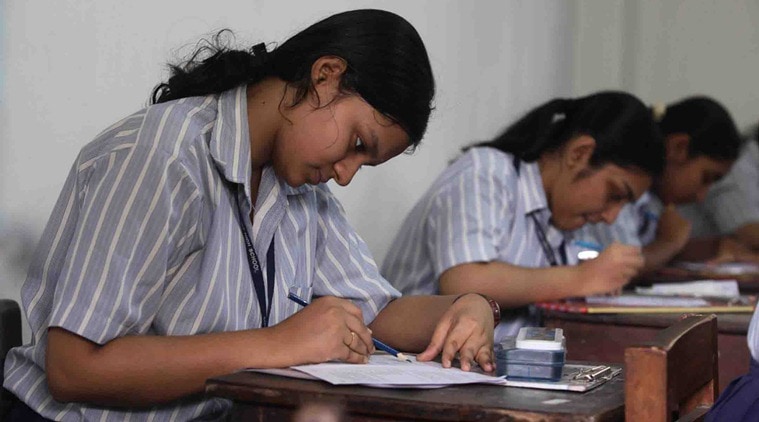
AP SSC exams from July 10

0

By: PTI | Amaravati |

Published: June 2, 2020 8:41:44 pm


BSEAP to hold pending board exams from June 10 (Representational image)

The annual public examinations for Class 10 students in Andhra Pradesh will be held from July 10. The examinations, originally scheduled to be held in the first week of March, were postponed due to elections to local bodies and subsequently because of the COVID-19 lockdown.

State Education Minister Audimulapu Suresh said on Tuesday that the public examinations would now be held from July 10 with all precautions for prevention of coronavirus spread.

“We have identified 4,154 examination centres across the state. Only 10-12 students will be accommodated in each examination room at these centres. We are also readying about eight lakh face masks for the students,” the minister said at an official review meeting.

While sanitisers would be kept ready at all examination centres, the invigilators would be supplied hand gloves as part of coronavirus prevention measures. Also, 4,500 thermal scanners would be kept ready at the exam centres.

The minister said there would not be any exam centres in the identified containment zones.

“If any new cases are found anywhere and a particular area is earmarked as (new) containment zone, we will shift the examination centre to an alternative location. Officials have been directed to identify such alternative locations and keep them ready,” Suresh said.

The minister said examinations for ‘AP Open School’ would also be conducted in a similar fashion with all necessary precautions. They were opening 1,022 examination centres as against the previous 580 for open school exams, he added.

📣 The Indian Express is now on Telegram. Click here to join our channel (@indianexpress) and stay updated with the latest headlines

For all the latest Education News, download Indian Express App.

Source link

Biden Promises ‘Era Of Action’ To Battle Racial Inequality

Former Vice President Joe Biden on Monday promised an “era of action” to battle racial inequality, including racism in the criminal justice system, and called for Congress and local governments to immediately move to reform police departments and tactics.

Biden also harshly criticized President Donald Trump for his inflammatory and frequently racist rhetoric following the death of George Floyd at the hands of Minneapolis police officers. Floyd’s death has led to days of protests and riots across the country, during which police departments have often deployed tear gas and violence. 

“Look, the presidency is a big job. Nobody will get everything right. And I won’t either,” Biden said from Philadelphia’s City Hall. It was first time leaving his hometown of Wilmington, Delaware, in months because of the coronavirus pandemic.

“But I promise you this: I won’t traffic in fear and division,” he added. “I won’t fan the flames of hate. I will seek to heal the racial wounds that have long plagued this country — not use them for political gain.”

Biden acknowledged creating an equal justice system would take more than a single term in office, but he said Congress should “immediately” pass “real police reform,” including legislation to ban police chokeholds, legislation to improve oversight and accountability, a ban on transferring military weaponry to police departments and the creation of a uniform standard for when police officers can deploy force.

So far, Congress has taken little action in response to Floyd’s death and the resulting protests.

Biden also said “every police department in the country” should undertake a review of their hiring and training processes.

“More police officers meet the highest standards of their profession,” he said. “All the more reason why bad cops should be dealt with severely and swiftly.”


Source by [author_name]