White House puts up new security fence amid fresh George Floyd protests

A new security fence has been constructed around the White House to keep Black Lives Matters protesters and race rioters at bay hours after US President Donald Trump freely walked Washington, DC’s streets and declared himself an “ally of all peaceful protesters”.

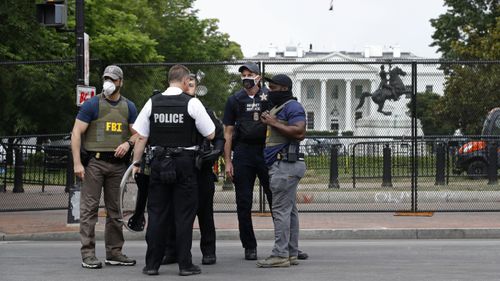
The streets around the White House complex were shut Tuesday morning, guarded by a mix of Secret Service officers and FBI agents.

Overnight, the fence was constructed around Lafayette Park and along 17th St at Pennsylvania Ave, two areas that have been focal points for protests.

Work crews were still at work boarding up businesses in the area and attempting to remove graffiti from federal buildings.

The security fence was constructed overnight on Monday. (AP)
The White House
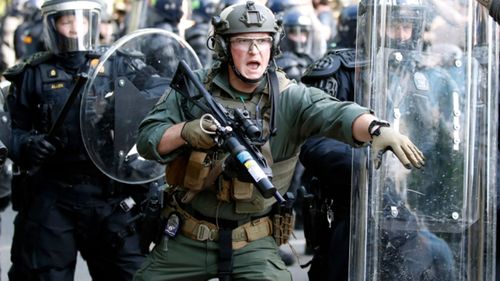
Members of police and the US Secret Service stand near Lafayette Park across from the White House, June 2, 2020, in Washington, following protests over the death of George Floyd, who died after being restrained by Minneapolis police officers. (AP)
Trump addressed the nation from the Rose Gardens on Monday as protesters outside the White House gates were dispersed with tear gas and flash bangs.
He said in the speech that he was “dispatching thousands and thousands of heavily-armed soldiers, military personnel, and law enforcement officers” to stop the rioting, looting, vandalism, assaults, and destruction of property seen during protests over the death of African American George Floyd in Minneapolis.

A 7pm curfew was also announced and has been strictly enforced in Washington, DC.

By 4am, however, 9News’ US Correspondent Amelia Adams had reported the new security fence had been erected in preparation for the coming day’s protests.

It comes as Trump described some of the actions of protesters across the United States as “domestic terror, the destruction of innocent life and the spilling of innocent blood”.

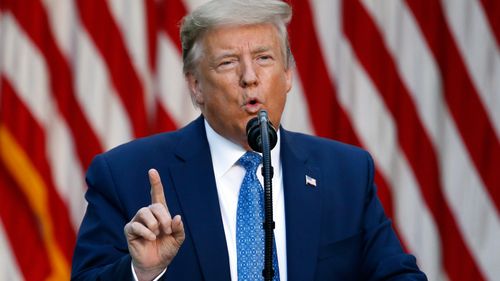
President Donald Trump speaks in the Rose Garden of the White House
President Donald Trump addressed the nation from the Rose Gardens on Tuesday as protesters outside the White House gates were dispersed with tear gas and flash bangs. (AP)
Washington, DC
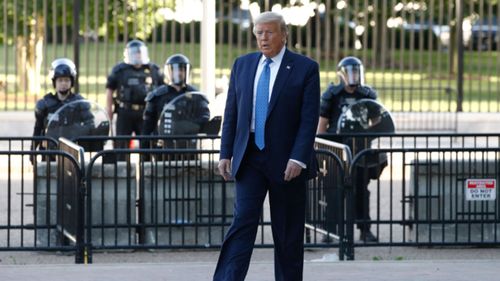
The President and his entourage then left the White House precinct and walked nearby streets. (AP Photo/Patrick Semansky)

“I want the organisers of this terror to be on notice that you will face severe criminal penalties and lengthy sentences in jail. This includes Antifa and others who are leading instigators of this violence,” he said.

The President and his entourage then left the White House precinct and walked nearby streets.

Washington DC
Police begin to clear demonstrators gather as they protest the death of George Floyd near the White House in Washington DC. (AP Photo/Alex Brandon)
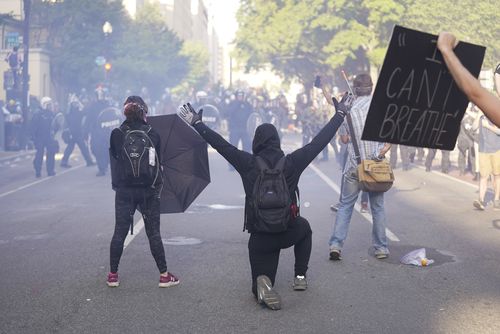
Demonstrators kneel in front of a line of police officers during a protest for the death of George Floyd, near the White House in Washington
Demonstrators kneel in front of a line of police officers during a protest for the death of George Floyd, near the White House in Washington (AP)

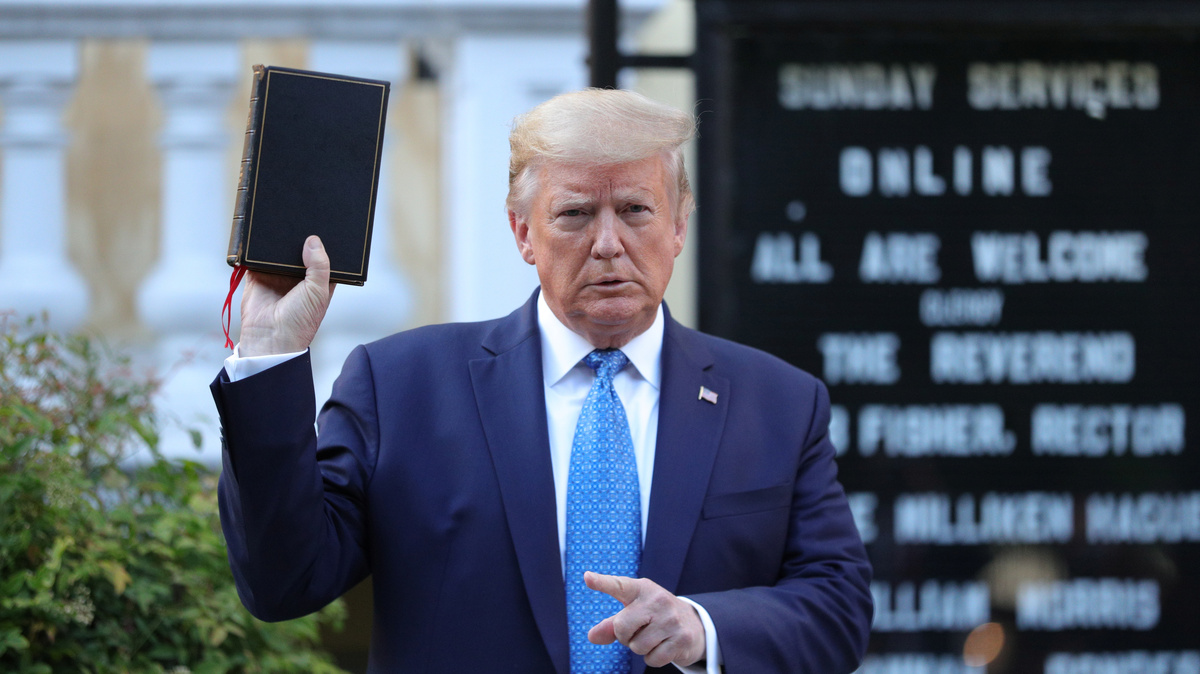
Flanked by police, Mr Trump carried a bible to St John’s Church which had been damaged by fire in the riots.

After a moment of silence, Mr Trump said the US nation was “the best in the world” and he pledged to “keep it nice and safe”.

Source by [author_name]

5 winning ways for kids to burn energy – Harvard Health Blog

0

Could your kids power the electrical grid, if you could only figure out how to tap that energy? Someday, all the hours spent cooped up at home will be a memory, not a daily reality. But if your children are bouncing off the walls with schools and day care still closed and summer coming, here are five active ideas to safely channel their energy. Pandemic or not, preschoolers benefit from active play throughout the day, and children ages 6 to 17 should rack up at least 60 minutes of activity daily, according to the Centers for Disease Control and Prevention. And since regular activity boosts health and lifts mood, everyone stands to benefit.

Pick a card

Annelieke Rietsema, an employee health coach and fitness specialist at Newton-Wellesley Hospital, suggests this simple strategy. Take a pack of playing cards and assign different exercises to each suit. For example, hearts could be jumping jacks or bear crawl; diamonds could be burpees or somersaults (if you have room); spades could be mountain climbers or cat-cow; clubs could be knee pushups or squats. Now shuffle or mix up the cards (face down), then start going through the deck. Kids do the number of each exercise on cards numbered 2 to 9. They do 10 of an exercise if a card is an ace, jack, queen, or king. So, a jack of hearts in the spades suit could equal 10 mountain climbers. For an exercise without discrete repetitive movements, like the bear crawl, try assigning a number of seconds based on the card selected (a five of hearts equals five seconds of bear crawl).

Children can do the shuffling and assign exercise choices, even picking simpler or harder exercises depending on age or ability.

Top of the hour

Five-minute or 10-minute energy burns at the top of each hour may help keep the peace. Have kids set a timer and choose easy exercises: running in place, jumping jacks, skipping rope, practicing sit-ups and squats. Children can compete with each other or with friends — from one week to the next, is it getting easier to do certain exercises? Can you do more than you could before?

Creature moves

Challenge younger children to think up and enact the moves of animals and other creatures: waddle like a duck, small hops like a bunny, giant hops like a kangaroo, slither like a snake, jump high like a frog, crawl-walk like a bear, inch forward like a turtle, waggle-dance like a honeybee, flap arms like a bird, crawl sideways like a crab, and so on. Set up indoor races for the quieter moves (crab, duck, snake) and occasional outdoor races for louder critters, to see who reaches the finish line in the least and most time. Extra points for unusual choices.

Personal best

Record how long a child can hop or balance on one foot or the number of push-ups, sit-ups, jumping jacks, or other exercises a child can do in a row. Practice three times a week and track the results once weekly.

Teens and some younger children may enjoy setting goals and logging progress in virtual races. The Healthy Kids Virtual Running Series for children in pre-K to grade 8 has a state-by-state locator to find local races. Many charities are encouraging people of all ages to raise money while walking, running, biking — or even dancing — in virtual events.

Yoga and fitness classes online

Two engaging options are Cosmic Kids, which combines yoga and storytelling into a calming, enjoyable workout for many children, and Go Noodle, which has high-energy video or app games to get kids moving and silly costumes to amuse them. Or you can find free online options, or sample classes available through local gyms, recreation centers, or YMCAs. Be sure to screen fitness videos aimed at children, to check if they are appropriate for your child.

Whatever you choose to help children burn energy, do give a thought to your neighbors. Quieter exercises are best if you live above someone, and mixing in safe outdoor time is good for everyone, parents included. If there’s enough room to move freely while maintaining safe distances, a game of tag or soccer, a bike ride, or just a run, skip, or kangaroo-hop to the end of each block could be fun.

Source link

‘He Did Not Pray’: Fallout Grows From Trump’s Photo-Op At St. John’s Church

0

President Trump’s photo opportunity in front of St. John’s Episcopal Church in Washington has set off criticism, as police used tear gas and force to clear a path for him to walk from the White House.

Tom Brenner/Reuters


hide caption

toggle caption

Tom Brenner/Reuters

President Trump’s photo opportunity in front of St. John’s Episcopal Church in Washington has set off criticism, as police used tear gas and force to clear a path for him to walk from the White House.

Tom Brenner/Reuters

President Trump’s controversial foray to St. John’s Church on Monday is generating widespread criticism, after police and National Guard troops physically cleared out demonstrators and used tear gas to allow a photo opportunity outside the church. The bishop who oversees St. John’s is among the critics.

“He used violent means to ask to be escorted across the park into the courtyard of the church,” Bishop Mariann Edgar Budde of the Episcopal Diocese of Washington tells NPR’s Morning Edition. “He held up his Bible after speaking [an] inflammatory militarized approach to the wounds of our nation.”

The bishop continued:

“He did not pray. He did not offer a word of balm or condolence to those who are grieving. He did not seek to unify the country, but rather he used our symbols and our sacred space as a way to reinforce a message that is antithetical to everything that the person of Jesus, whom we follow, and the gospel texts that we strive to emulate … represent.”

Every president since James Madison has visited St. John’s Church, which opened in 1816 and sits across the park from the White House. Despite that longstanding relationship, Budde says her diocese had no warning of Monday’s visit.

“There was no reaching out, no sense that it would require some sort of authorization before using the church as a backdrop in that way,” Budde told NPR’s Tom Gjelten hours after the incident.

The president had used the Bible, and her church, as a prop, she said.

“I was outraged that he felt that he had the license to do that, and that he would abuse our sacred symbols and our sacred space in that way,” the bishop told Gjelten.

Within hours, the White House had assembled footage of the brief outing into a triumphant video that shows the president pumping his fist as he strides past a row of riot police, culminating in him standing in front of the church. Set to swelling orchestral music, the video shows nearly no sign of the destruction and debris that days of intense protests have wrought near the White House.

The president, accompanied by his daughter Ivanka, several Cabinet members and Secret Service agents, walked to St. John’s nearly 30 minutes before Washington’s just-installed 7 p.m. curfew was to begin – timing that added to the chaos and confusion among demonstrators, and which incensed Mayor Muriel Bowser.

“Shameful!” Bowser said via Twitter, saying that after “federal police used munitions on peaceful protestors in front of the White House,” the city’s police force’s job of keeping the peace would be made more difficult.

When the federal force rushed at protesters outside the White House, journalists were also pushed out. Officers attacked Australian reporter Amelia Brace and also hit cameraman Tim Myers, prompting Australia’s Prime Minister Scott Morrison to call for an investigation. The scene played out on live TV, during Australia’s breakfast-time Sunrise show.

“While live on air, Myers was struck in the chest by a riot shield and Brace was clubbed with a police baton,” Channel 7 News reports.

Brace tells Australia’s ABC that she repeatedly identified herself as a journalist as officers quickly closed in on them during the rush to clear a path for Trump.

“Despite that as I ran away, clearly stating that we were media, with my cameraman with a camera on his shoulders, I was hit across the back with the baton,” she says. “We were then fired upon by the National Guard with those rubber bullets, who are the exact people I had shown my media pass to … and then we ended up getting tear-gassed.”

The situation, she said, was “absolutely terrifying.”

“I also managed to get a rubber bullet to the backside, and Tim got one in the back of the neck, so we’ll have a few bruises tomorrow — but we’re feeling perfectly safe,” Brace says.

Shock and anger over the incident led U.S. Ambassador to Australia Arthur B. Culvahouse Jr. to issue a statement saying, “Freedom of the press is a right Australians and Americans hold dear. We take mistreatment of journalists seriously, as do all who take democracy seriously.”

Trump’s use of force to allow him to walk across the park has also prompted Arlington County, Va., to pull its police officers out of the nation’s capitol.

The county had sent a police contingent to help keep peace in Washington. But it says the officers were put in a dangerous position that exposed them and others to risk “for a purpose not worthy of our mutual aid obligations.”

“All ACPD officers left the District of Columbia at 8:30 p.m. Monday,” Arlington County says.

The church has suffered damage during the unrest in Washington against police violence, including a fire that was lit in its basement. While Budde is thankful to first responders who put out that fire, she says she wants the focus remain on the death of George Floyd and others who have died at the hands of police.

“I want to acknowledge the loss of property, but in no way equate it with the loss of life,” she said. “I want to be a church that stands in solidarity with those who are making peaceful protest.”

Source link

‘I won’t fan the flames of hate’: Biden blasts Trump in Philly

Biden called for police reform and also condemned violence and vandalism. But he faulted Trump most of all, zeroing in on the president’s Rose Garden address Monday evening when he announced a military response to the protests and riots that have emanated from Minneapolis to rock cities across the U.S., including Washington.

Moments before Trump spoke, law enforcement used flash-bang grenades and rubber bullets to clear an apparently peaceful crowd from Lafayette Square, across from the White House. With the park cleared, Trump walked across to visit St. John’s Church, where a small fire had been set during the weekend amid rioting, and held up a Bible for a photo up.

“The president held up the Bible at St John’s Church yesterday. I just wish he opened it once in a while, instead of brandishing it,” Biden said. “If he opened it, he could have learned something that we’re all called to love one another as we love ourselves. It’s really hard work. But it’s the work of America. Donald Trump isn’t interested in doing that work.”

Biden said Trump, instead, is sweeping away “the guardrails that have long protected our democracy.”

“In addition to the Bible, he might also want to open the U.S. Constitution. If he did, he’d find the First Amendment,” Biden said, reading the passage about the “the right of the people peaceably to assemble, and to petition the government for a redress of grievances.’”

Biden’s speech marked the latest evolution of a campaign that until recently was literally stuck in the basement of his home in Wilmington, Del., where he has ridden out the coronavirus pandemic since mid-March. Though he has been criticized from both the left and right for the strategy, Biden has seen his poll numbers rise against Trump, whose handling of the pandemic was widely panned.

As the nation began slowly opening back up amid the pandemic, Floyd’s death led to the nationwide unrest and gave Biden impetus to start leaving quarantine for the campaign trail to contrast his leadership style with Trump’s. Biden met with protesters in Delaware over the weekend and with black leaders at a Wilmington church on Monday.

In reaction to the speech, the Trump campaign zeroed in on Biden’s campaign staffers offering to bail out people arrested in Minneapolis after the protests in the city that turned violent.

“Joe Biden spent days hiding in his basement while the country was rocked to its core. When Joe Biden and his team finally emerged, their initial reaction was to bail out the criminals that burned, looted and destroyed Minneapolis,” Trump spokeswoman Melissa Reed said.

“While livelihoods were decimated, the Biden team was focused on raising money to bail out the criminals arrested. President Donald Trump was focused on restoring peace and pursuing justice for George Floyd and the victims of the violence. A stark contrast in values.”

Biden, though, leveled a values-based attack against Trump, pointing to incendiary comments by the president that echoed the words of two segregation-era law enforcement officers in Miami, Fla., and Birmingham, Ala.

“When you tweet the words ‘when the looting starts, the shooting starts’ — those weren’t the words of a president. They were the words of a racist Miami police chief from the 1960s,” Biden said. “When he tweeted that protesters ‘would have been greeted with the most vicious dogs … that’s when people would have been really badly hurt.’ Those weren’t the words of a president — those were the kind of words a Bull Connor would have used unleashing his dogs.”

Biden emphasized how Floyd’s last words — “I can’t breathe” — first became a rallying cry in 2014 when another black man, Eric Garner, died after a struggle with New York police officers that was caught on video.

The officer in Floyd’s death has been charged with third-degree murder and second-degree manslaughter. But protests against widespread racial injustice in the U.S. have persisted, with some calling on prosecutors to charge other officers as accomplices in Floyd’s death.

Though Biden condemned both the violence and police brutality, his speech focused heavily on racial injustice and the unrest. He reiterated his pledge to establish a national police oversight board, called on Congress to pass “real police reform” and plugged Democratic legislation to outlaw police choke holds as well as “to stop transferring weapons of war to police forces, to improve oversight and accountability, to create a model use of force standard.”

“I promise you this,” Biden said, “I won’t traffic in fear and division. I won’t fan the flames of hate. I will seek to heal the racial wounds that have long plagued this country — not use them for political gain.”

Source link

China Delayed Releasing Coronavirus Info, Frustrating WHO: AP Report

0

Throughout January, the World Health Organization publicly praised China for what it called a speedy response to the new coronavirus and thanked the Chinese government for sharing the genetic map of the virus “immediately.”

But in fact, Chinese officials sat on releasing the genetic map, or genome, of the deadly virus for over a week after multiple government labs had fully decoded it, not sharing details key to designing tests, drugs and vaccines. Strict controls on information and competition within the Chinese public health system were largely to blame, The Associated Press has found from internal documents, emails and dozens of interviews.

Health officials only released the genome after a Chinese lab published it ahead of authorities on a virology website on Jan 11. Even then, China stalled for at least two weeks more on giving WHO the details it needed, according to recordings of multiple internal meetings held by the U.N. health agency in January — all at a time when the outbreak arguably might have been dramatically slowed.

Although WHO continued to publicly commend China, the recordings obtained by the AP show they were concerned China was not sharing enough information to assess the risk posed by the new virus, costing the world valuable time.

“We’re currently at the stage where yes, they’re giving it to us 15 minutes before it appears on CCTV,” said WHO’s top official in China, Dr. Gauden Galea, referring to the state-owned China Central Television, in one meeting.


Gao Fu, bottom, the head of the Chinese Center for Disease Control and Prevention (CDC), speaks to journalists after a press conference about a virus outbreak at the State Council Information Office in Beijing, Sunday, Jan. 26, 2020. (AP Photo/Mark Schiefelbein)

The story behind the early response to the pandemic comes at a time when the U.N. health agency is under siege. U.S. President Trump cut ties with WHO on Friday, after blasting the agency for allegedly colluding with China to hide the extent of the epidemic. Chinese President Xi Jinping said China has always provided information to WHO and the world “in a most timely fashion.”

The new information does not support the narrative of either the U.S. or China, but portrays an agency now stuck in the middle that was urgently trying to solicit more data. Although international law obliges countries to report information to WHO that could have an impact on public health, the U.N. agency has no enforcement powers. Instead, it must rely on the cooperation of member states.

The AP has found rather than colluding with China, WHO was itself largely kept in the dark, as China gave it only the minimal information required. But the agency did attempt to portray China in the best light, most likely to coax the country into providing more outbreak details.

WHO officials worried about how to press China for more information without angering authorities or jeopardizing Chinese scientists, whom they praised for decoding the genome with astonishing speed. Dr. Michael Ryan, WHO’s emergencies chief, said the best way to “protect China” was for WHO to do its own independent analysis, because otherwise the spread of the virus between people would be in question and “other countries will take action accordingly.”

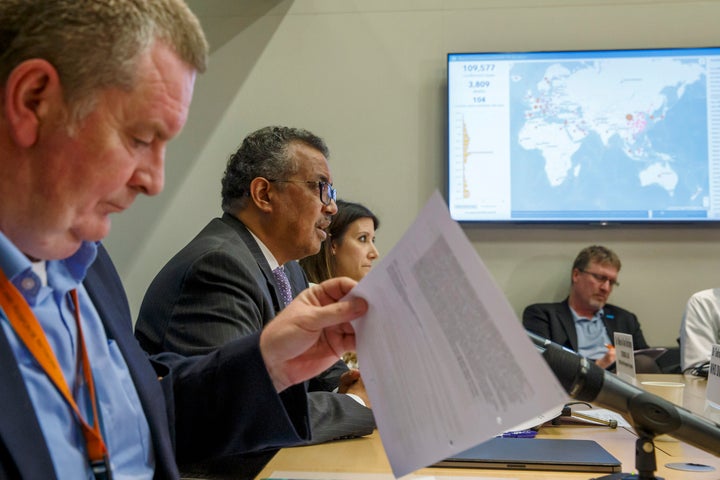
In this Monday, March 9, 2020 file photo, Tedros Adhanom Ghebreyesus, second left, director-general of the World Health Organ


In this Monday, March 9, 2020 file photo, Tedros Adhanom Ghebreyesus, second left, director-general of the World Health Organization speaks during a news conference on updates regarding on the COVID-19 coronavirus at WHO headquarters in Geneva, Switzerland. At left is Michael Ryan, executive director of WHO’s Health Emergencies program, and at third left is Maria van Kerkhove, technical lead of WHO’s Health Emergencies program. (Salvatore Di Nolfi/Keystone via AP)

From the time the virus was first decoded on Jan. 2 to when WHO declared a global emergency on Jan. 30, the outbreak grew by a factor of 100 to 200 times, according to retrospective Chinese Center for Disease Control and Prevention data.

WHO and officials named in this story declined to answer questions asked by the AP without audio or written transcripts of the recorded meetings, which the AP was unable to supply to protect its sources.

“Our leadership and staff have worked night and day….to support and share information with all Member States equally, and engage in frank and forthright conversations with governments at all levels,” a WHO statement said.

China’s National Health Commission and Ministry of Foreign Affairs had no comment. But in the past few months, China has repeatedly defended its actions, and many other countries — including the U.S. — have responded to the virus with even longer delays of weeks and even months.

In late December, doctors noticed mysterious clusters of patients with unusual pneumonia. Seeking answers, they sent samples to commercial labs. By Dec. 27, one company, Vision Medicals, had pieced together most of the genome of a new virus with striking similarities to SARS. They alerted Wuhan officials, who, days later, issued internal notices warning of the unusual pneumonia.

On Dec. 30, Shi Zhengli, a renowned coronavirus expert at the Wuhan Institute of Virology, was alerted to the disease, and by Jan. 2, her team had fully decoded it.

But when it came to sharing the genome with the world, things went awry. China’s top medical authority, the National Health Commission, issued a confidential notice forbidding labs from publishing about the virus without authorization. The order barred Shi’s lab from publishing the sequence or warning of the possible danger.

Commission officials later said the order was to prevent any accidental release of the then-unknown pathogen, and to ensure consistent results by giving it to four state labs to identify at the same time.

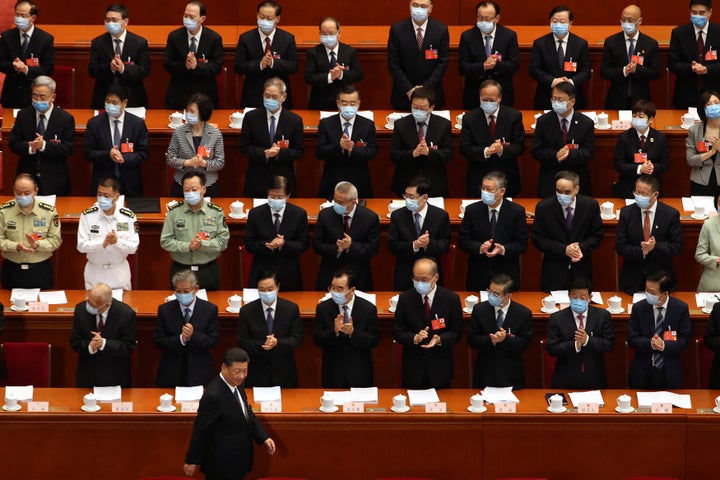
Delegates applaud as Chinese President Xi Jinping arrives for the opening session of China's National People's Congress (NPC)


Delegates applaud as Chinese President Xi Jinping arrives for the opening session of China’s National People’s Congress (NPC) at the Great Hall of the People in Beijing, Friday, May 22, 2020. (AP Photo/Ng Han Guan, Pool)

By Jan. 5, two other government labs sequenced the virus, and another lab in Shanghai led by Zhang Yongzhen had also decoded it. Zhang warned the National Health Commission the virus was “likely infectious.” The Chinese CDC raised its emergency level to the second highest, but did not have the authority to alert the public.

Suspicious cases starting surfacing across the region. In Thailand, airport officials pulled aside a woman traveling from Wuhan with a runny nose, sore throat and high temperature. Scientists at Chulalongkorn University soon figured out she was infected with a new coronavirus, but did not have a sequence from China to match it.

WHO officials, meanwhile, grumbled in internal meetings that China was stalling on providing crucial outbreak details even though it was technically meeting its obligations under international law. Ryan, WHO’s emergencies chief, said it was time to “shift gears” and push for more information.

“The danger now is that despite our good intent…there will be a lot of finger-pointing at WHO if something does happen,” he said.

On Jan. 11, Shanghai’s Zhang finally published the coronavirus sequence ahead of health authorities on virological.org, used by researchers to swap tips on pathogens. It was only then that the Chinese CDC, Wuhan Institute of Virology and the Chinese Academy of Medical Sciences raced to publish their sequences, doing so on Jan. 12.

On Jan. 20, Chinese authorities warned the virus spread between people. WHO dispatched a small team to Wuhan from its Asia offices. China representative Galea told colleagues the Chinese were “talking openly and consistently about human-to-human transmission.”

WHO’s emergency committee of independent experts met twice that week and decided against recommending an emergency. But the agency’s concern prompted an unusual trip to Beijing by WHO director-general Tedros Adhanom Ghebreyesus and top scientists.

At the end of Tedros’ trip, WHO convened another emergency meeting, finally declaring a global emergency on Jan. 30. Tedros thanked China profusely, declining to mention any of WHO’s earlier frustrations.

“We should have actually expressed our respect and gratitude to China for what it’s doing,” he said. “It has already done incredible things to limit the transmission of the virus to other countries.”

Contact AP’s global investigative team at Investigative@ap.org


Source link

House of Commons bans virtual voting, opts for a queue

0

The House of Commons proved Tuesday just how much it loves a queue.

MPs backed a proposal to end virtual voting in the U.K.’s lower chamber, casting their votes using a socially-distanced queuing system for the first time.

Standing in a long line stretching from the chamber through to Westminster Hall and out of the building, roughly two-thirds of MPs slowly edged their way into the chamber to cast their votes in a process that took just over 45 minutes.

The system replaces the usual “divisions,” which see MPs walk through either the Aye or No lobby and usually take around 15 minutes, even if all 639 voting members are present.

Leader of the House Jacob Rees-Mogg, who drew up the plan, said parliament must be conducted in person, asserting that during the pandemic MPs have “not been doing the important work of legislating” and that “voting while on a sunny walk or watching television does democracy a disservice.”

Many of his colleagues, who spent much of the afternoon waiting in what has been dubbed the “Rees-Mogg conga” by Opposition Chief Whip Nick Brown, were less convinced.

“Voting. In the 21st century. Yep,” tweeted Labour’s Liz Kendall. “This is a farce. I should think we will be back to remote voting before we are all much older,” added Conservative Steve Baker.

Shadow Leader of the House Valerie Vaz and women and equalities committee chair Caroline Nokes both labeled the plan “discriminatory” in a fiery debate before voting began.

Mogg was also blasted by Orkney and Shetland MP Alistair Carmichael, who said that he had traveled for 18 hours, involving four different forms of transport, to get to London. He added the plan represented a “recipe for a parliament for people who live within driving distance of London.” The Scottish National Party’s Westminster leader Ian Blackford, who has a similar journey from the Isle of Skye, called his long commute “a waste of time.”

Rees-Mogg had earlier promised an amendment would be put forward Wednesday to allow those who could not attend due to age or for medical reasons to take part in debates remotely — but not to vote. Pressure had grown on Rees-Mogg after MPs on all sides, including Conservative Robert Halfon, had publicly complained about the impact the new system would have on MPs who are shielding from coronavirus.

But MPs rejected — after another queue — an amendment from procedures committee chairwoman and former minister Karen Bradley to allow remote voting to continue and Rees-Mogg’s plan eventually passed with a majority of 91.

The Commons had operated hybrid proceedings since April, with members able to take part in debates either in person or virtually using Zoom. Digital voting was introduced after lengthy trials last month, with some MPs voting online from home on May 13 for the first time ever.

Many MPs looked visibly confused by the new system, which requires members to line up before stating their name and which way they wish to cast their vote. Welsh committee chair Stephen Crabb accidentally voted the wrong way, while countless MPs had to be told what to do as they entered the chamber, adding considerable amounts of time.

Happily for all concerned, MPs have another opportunity to try the system before they go home Tuesday night. Unhappily, it is forecast to rain Wednesday, when MPs will be back to do it all again.

The House of Lords, meanwhile, will start its own hybrid proceedings next Monday with the first digital votes held the following week.


Source by [author_name]

MEP takes part in debate in his underwear

0

MEP Luke “Ming” Flanagan | Fred Marvaux/European Union

‘Hope you like my legs,’ says Irish lawmaker.

By

Updated

Irish MEP Luke “Ming” Flanagan’s efforts to contribute to a debate on agriculture and the EU’s long-term budget were slightly undone by the fact that he wasn’t wearing trousers.

Flanagan was taking part in a discussion in the European Parliament’s agriculture committee via videoconference on Tuesday. And while Flanagan was making a point about payments to farmers to Budget Commissioner Johannes Hahn, the footage being beamed into the debating chamber showed that he was very much adhering to the “business on the top, party on the bottom” style of dress while sitting on an unmade bed.

Asked about his state of undress by a journalist on Twitter, Flanagan said he was “just back from a run” and “was in a T-shirt two minutes before. Decided to put on shirt to look respectable! That worked really well.” He added: “Hope you like my legs!”

Flanagan later tweeted at fellow Irish MEP Mick Wallace, known for his flamboyant shirts: “I’ll see your pink shirt and raise you a pair of underwear.”


Source by [author_name]

‘I Am George Floyd’: Air Force’s Top Enlisted Officer Denounces Police Killing

Kaleth O. Wright, the highest-ranking enlisted officer in the U.S. Air Force, said Monday that racism doesn’t care about titles or stature as he denounced the death of George Floyd.

“Who am I? I am a Black man who happens to the Chief Master Sergeant of the Air Force,” Wright, the second Black person to become the Air Force’s top enlisted member, wrote in a 31-message Twitter thread.

“I am George Floyd…I am Philando Castile, I am Michael Brown, I am Alton Sterling, I am Tamir Rice,” Wright continued, invoking the names of Floyd, who died last week in Minneapolis after a white police officer knelt on his neck, and other Black men who have been killed by police.

Wright expressed his outrage at “watching another Black man die on television before our very eyes,” saying his “greatest fear” was waking up to a report “that one of our Black Airmen has died at the hands of a white police officer.” 

He acknowledged his own struggles with the Air Force’s “demons” of diversity in top roles, and revealed he was working on a “thorough independent review” of its military justice system, which the Air Force Times reported Monday has been accused of disproportionately punishing young Black service members.

“You might think you know what it’s like to grow up, exist, survive & even thrive in this country as a Black person, but let me tell you, regardless of how many Black friends you have, how Black your neighborhood was, or if your spouse or in-laws are Black… You don’t know,” Wright wrote.

“You don’t know the anxiety, the despair, the heartache, the fear, the rage and the disappointment that comes with living in this country, OUR country every single day,” he added.

Read Wright’s full thread below:


Source by [author_name]

EU seeks feedback on new antitrust power to investigate companies

0

FILE PHOTO: European Competition Commissioner Margrethe Vestager presents the EU executive’s economic response to the coronavirus epidemic in Brussels, Belgium, March 13, 2020. REUTERS/Johanna Geron/File Photo

BRUSSELS (Reuters) – EU regulators are seeking feedback about a possible new power to investigate businesses and demand changes even when no competition rules have been broken, in a move aimed at stopping companies from abusing their dominance.

The prospective power underlines a European Commission push for a speedier and a more effective antitrust capability and came after a decade-long battle with Google (GOOG.O) which rivals said has not resulted in any effective changes.

The new initiative would be similar to one introduced by Britain’s Competition and Markets Authority three years ago which subsequently led to a shake-up of the UK audit market following an investigation.

The Commission said the new power aims to address gaps in existing competition rules and to intervene against structural competition problems across markets in a timely way.

“After establishing a structural competition problem through a rigorous market investigation during which rights of defense are fully respected, the new tool should allow the Commission to impose behavioral and where appropriate, structural remedies,” the EU executive said.

“However, there would be no finding of an infringement, nor would any fines be imposed on the market participants,” it said.

The new effort could target industries ranging from tech to beverages to digital agriculture.

Areas of concern include the creation of powerful market players with an entrenched market or acting as gatekeepers, and markets where companies are unable to enter because of lack of access to data and other barriers, or where consumers are locked in to companies which offer a diverse range of services.

The consultation period runs to Sept. 8, with the Commission planning to roll out legislation in the final quarter of 2020.

Reporting by Foo Yun Chee, Editing by William Maclean

Source link

George Floyd death: Activism in America against systemic racism and injustice is a powerful lesson to us all, says Kumar Sangakkara- Firstcricket News, Firstpost

0

“The activism in America against systemic racism and injustice is a powerful lesson to us all,” said former Sri Lanka captain Kumar Sangakkara on Tuesday, calling on ordinary citizens to create a culture that has no place for ignorance and prejudice.

Offering his views on racism after an African-American man George Floyd was killed last week while a white police officer pressed his knee on the handcuffed man’s neck in the USA, Sangakkara urged people to create a better society.

Kumar Sangakkara. Image Courtesy: Twitter @KumarSanga2

“We the people, the ordinary citizen, can together achieve extraordinary change for the better, to set in place a world culture of openness, respect and understanding,” he tweeted.

“A world culture that has no place for ignorance and prejudice and where true freedom reigns,” he said.

“The State should not determine our wisdom, compassion, empathy and understanding. It should not and cannot limit the openness of our hearts and minds to others nor our ability to embrace and value difference and differences,” he said.

Sangakkara said political leadership is nothing but a reflection of what a society is and to ensure that better people take that role, the ordinary citizens have to become better versions of themselves.

“We also choose our representatives from among our own. We are responsible for the character traits they bring to government. We are responsible for the people they are or have become. Their nature has been set by our influence and nurture,” he reasoned.

“Our choices guide the State’s attitudes, actions, policy and legislation. In order to establish the best government and the best most equitable governance we need to be better people,” he said.

His comments came after West Indian cricketers Darren Sammy and Chris Gayle denounced racism in social media posts.

“Our strengths and our weaknesses are mirrored in each other’s conduct and in the conduct of our elected representatives.

“We have to be courageous, keep the faith and actively participate in the journey. It’s our choices today that will determine the culture our children inherit tomorrow.

“If we want to be proud of our lives, to see our children proud to carry our legacy forward and onwards, then let’s be better. Let’s demand it of ourselves, for each other, for our children. CHOOSE,” he concluded.

Updated Date: Jun 02, 2020 19:34:22 IST

Find latest and upcoming tech gadgets online on Tech2 Gadgets. Get technology news, gadgets reviews & ratings. Popular gadgets including laptop, tablet and mobile specifications, features, prices, comparison.


Source link