Commission approves €5 billion French ‘umbrella’ scheme to support research, development, testing infrastructures and production of #Coronavirus relevant products

0

The European Commission has approved a €5 billion French “umbrella” scheme to support research and development, testing and upscaling infrastructures and production of coronavirus relevant products. The scheme was approved under the state aid Temporary Framework adopted by the Commission on 19 March 2020, as amended on 3 April and 8 May 2020.

Executive Vice President Margrethe Vestager, in charge of competition policy, said: “This €5 billion French ‘umbrella’ scheme will support research and development, and investments in testing and upscaling infrastructures and in the production of coronavirus relevant products, such as medicines, vaccines, and protective clothing. It will contribute to the European effort in the fight against the coronavirus outbreak. We continue to work closely with all member states to find solutions to tackle the outbreak, in line with EU rules.”

The French support measure

France notified to the Commission under the Temporary Framework an umbrella scheme (régime cadre temporaire) supporting (i) coronavirus relevant research and development (R&D) projects; (ii) construction and upgrade of testing facilities; and (iii) investments in production of coronavirus relevant products and technologies.

The aim of the scheme is to stimulate the R&D into medicinal products such as vaccines, medicaments, hospital and medical equipment (including ventilators), and protective clothing and equipment. The measure will also enhance the rapid construction of production facilities for these products, as well as the provision of necessary raw materials and ingredients.

The scheme has a total estimated budget of €5bn, possibly co-funded by EU structural funds. The public support will take the form of direct grants, repayable advances and tax advantages. Guarantees to cover losses may also be granted either in addition to a direct grant, tax advantage or repayable advance, or as an independent aid measure.

Furthermore, undertakings are encouraged to cooperate with each other or with research organisations by benefitting from a 15% bonus when the R&D research project is carried out in cross-border collaboration with research organisations or other undertakings, or when the research project is supported by more than one member state.

The measure allows aid to be granted by French authorities at all levels, including the government, regional and local authorities. The scheme is open to all enterprises capable to carry out such activities in all sectors.

The Commission found that the French scheme is in line with the conditions set out in the Temporary Framework. In particular, the aid will cover a significant share of the R&D project costs, as well as of the investment costs necessary for deploying testing infrastructures or for setting up new production facilities. Furthermore, under the scheme, investment projects will have to be completed within six months after the date of granting of the aid.

The Commission concluded that the French measure is necessary, appropriate and proportionate to fight the health crisis and contribute to address the common European production needs in the current crisis, in line with Article 107(3)(c) TFEU and the conditions set out in the Temporary Framework.

On this basis, the Commission approved the measures under EU state aid rules.

Background

The Commission has adopted a Temporary Framework to enable member states to use the full flexibility foreseen under state aid rules to support the economy in the context of the coronavirus outbreak. The Temporary Framework, as amended on 3 April and 8 May 2020, provides for the following types of aid, which can be granted by member states:

(i) Direct grants, equity injections, selective tax advantages and advance payments of up to €100,000 to a company active in the primary agricultural sector, €120,000 to a company active in the fishery and aquaculture sector and €800,000 to a company active in all other sectors to address its urgent liquidity needs. Member States can also give, up to the nominal value of €800,000 per company zero-interest loans or guarantees on loans covering 100% of the risk, except in the primary agriculture sector and in the fishery and aquaculture sector, where the limits of €100,000 and €120,000 per company respectively, apply.

(ii) State guarantees for loans taken by companies to ensure banks keep providing loans to the customers who need them. These state guarantees can cover up to 90% of risk on loans to help businesses cover immediate working capital and investment needs.

(iii) Subsidised public loans to companies (senior and subordinated debt) with favourable interest rates to companies. These loans can help businesses cover immediate working capital and investment needs.

(iv) Safeguards for banks that channel State aid to the real economy that such aid is considered as direct aid to the banks’ customers, not to the banks themselves, and gives guidance on how to ensure minimal distortion of competition between banks.

(v) Public short-term export credit insurance for all countries, without the need for the Member State in question to demonstrate that the respective country is temporarily “non-marketable”.

(vi)   Support for coronavirus related research and development (R&D) to address the current health crisis in the form of direct grants, repayable advances or tax advantages. A bonus may be granted for cross-border cooperation projects between member states.

(vii)  Support for the construction and upscaling of testing facilities to develop and test products (including vaccines, ventilators and protective clothing) useful to tackle the coronavirus outbreak, up to first industrial deployment. This can take the form of direct grants, tax advantages, repayable advances and no-loss guarantees. Companies may benefit from a bonus when their investment is supported by more than one Member State and when the investment is concluded within two months after the granting of the aid.

(viii)  Support for the production of products relevant to tackle the coronavirus outbreak in the form of direct grants, tax advantages, repayable advances and no-loss guarantees. Companies may benefit from a bonus when their investment is supported by more than one Member State and when the investment is concluded within two months after the granting of the aid.

(ix) Targeted support in the form of deferral of tax payments and/or suspensions of social security contributions for those sectors, regions or for types of companies that are hit the hardest by the outbreak.

(x) Targeted support in the form of wage subsidies for employees for those companies in sectors or regions that have suffered most from the coronavirus outbreak, and would otherwise have had to lay off personnel.

(xi) Targeted recapitalisation aid to non-financial companies, if no other appropriate solution is available. Safeguards are in place to avoid undue distortions of competition in the Single Market: conditions on the necessity, appropriateness and size of intervention; conditions on the state’s entry in the capital of companies and remuneration; conditions regarding the exit of the state from the capital of the companies concerned; conditions regarding governance including dividend ban and remuneration caps for senior management; prohibition of cross-subsidization and acquisition ban and additional measures to limit competition distortions; transparency and reporting requirements.

Research and innovation projects, including those supported under the Temporary Framework, can be part of the joint European effort to tackle the coronavirus pandemic and to recover from the crisis. The success of this joint effort depends, among others, on open access to data and knowledge, and on improved collaboration between national programmes and Horizon 2020, the EU research and innovation programme.

The Temporary Framework enables Member States to combine all support measures with each other, except for loans and guarantees for the same loan and exceeding the thresholds foreseen by the Temporary Framework. It also enables Member States to combine all support measures granted under the Temporary Framework with existing possibilities to grant de minimis to a company of up to €25,000 over three fiscal years for companies active in the primary agricultural sector, €30,000 over three fiscal years for companies active in the fishery and aquaculture sector and €200,000 over three fiscal years for companies active in all other sectors. At the same time, member states have to commit to avoid undue cumulation of support measures for the same companies to limit support to meet their actual needs.

Furthermore, the Temporary Framework complements the many other possibilities already available to member states to mitigate the socio-economic impact of the coronavirus outbreak, in line with EU state aid rules. On 13 March 2020, the Commission adopted a Communication on a Coordinated economic response to the COVID-19 outbreak setting out these possibilities. For example, member states can make generally applicable changes in favour of businesses (e.g. deferring taxes, or subsidising short-time work across all sectors), which fall outside State Aid rules. They can also grant compensation to companies for damage suffered due to and directly caused by the coronavirus outbreak.

The Temporary Framework will be in place until the end of December 2020. As solvency issues may materialize only at a later stage as this crisis evolves, for recapitalization measures only the Commission has extended this period until the end of June 2021. With a view to ensuring legal certainty, the Commission will assess before those dates if it needs to be extended.

The non-confidential version of the decision will be made available under the case number SA.57367 in the state aid register on the Commission’s competition website once any confidentiality issues have been resolved. New publications of State aid decisions on the internet and in the Official Journal are listed in the State Aid Weekly e-News.

More information on the Temporary Framework and other action the Commission has taken to address the economic impact of the coronavirus pandemic can be found here.


Source by [author_name]

With Real-Life Games Halted, Betting World Puts Action on E-Sports

0

Some publishers are appearing to embrace betting by hiring integrity monitors that also sell data and betting services to bookmakers. For example, in mid-April, Nevada regulators approved Activision Blizzard’s Call of Duty League and Overwatch League for betting. Three weeks later, the leagues announced an “integrity services” deal with the Swiss company Sportradar, modeled on similar deals that Sportradar has with traditional sports organizations like the N.F.L. and the e-sports pioneer Riot Games, the creator of League of Legends, one of the most popular e-sports.

“When we first looked at e-sports it was the Wild West,” said Doug Watson, head of e-sports insights for Riot, which is owned by the Chinese media and gaming behemoth Tencent. “Sports betting is a big part of the ecosystem and was going to happen regardless of whether we said it should happen or not. So we decided to invest to protect the sport and ensure its longevity and legitimacy.”

Andy Cunningham, head of integrity and league relations for North America at Sportradar, said that traditional and e-sports leagues pay his company to monitor betting for suspicious patterns, investigate possible corruption, educate players and officials on proper behavior and establish anti-corruption procedures. He said those integrity services are separated from the company’s other divisions, which sell sports data and betting services to bookmakers. “There is absolutely no conflict in what we do,’’ he said, though some gambling executives, like Blume at Pinnacle, disagree.

Days after Riot announced its integrity deal with Sportradar last summer, the companies announced a separate deal under which a Sportradar joint venture pays Riot for exclusive access to data from the company’s League of Legends e-sports tournaments. The Sportradar venture, Bayes Esports Solutions, then sells that data to other companies, including bookmakers. Sportradar’s relationship with the N.F.L. is similar. Activision Blizzard has not announced a data distribution deal with Sportradar to follow on last month’s integrity deal. But such an arrangement is being negotiated, according to two people close to the companies who spoke on condition of anonymity because they were not authorized to discuss the deal before it was publicly announced.

A separate path for integrity monitoring is also emerging for e-sports.

Gambling regulators in Nevada, Britain and Malta, as well as betting companies including William Hill, have strengthened their ties to the Esports Integrity Commission, a group in Britain that is attempting to become a central authority to help stop match-fixing and other corruption — helping to legitimize the competitions for bettors, fans and sponsors.

But major game publishers have been reluctant to sign up. Game industry executives explained that publishers may want to avoid giving the impression that they actively support gambling or that their games need an international integrity commission in the first place. In Asia, the original home of big-money e-sports, match-fixing scandals have toppled careers, teams and entire leagues.

Source link

My working week: ‘Lockdown has shattered my autistic foster child’s world’

Monday

How do I know it is Monday in this current hazy blur of uncertainty? My quirky eight-year-old foster child’s pants – that is my cue for deciphering the days of the week currently. She is routine-obsessed with an enthusiasm for days and dates, and her passion for her underwear to match the correct day of the week is more helpful than my 2020 planner at present.

As a varied family of five, we’ve finally managed to carve out a system in lockdown that works for us regarding home schooling. 

It’s been a particularly difficult process for my foster child, who’s already carrying the long-term effects of previous neglect in addition to autism and learning difficulties. Her world has been shattered by an invisible threat that is so hard for her to understand. 

Tuesday

I’m woken at 2am by my 10-year-old, who has had a bad dream about coronavirus. We cuddle and I try to soothe her as she drifts off to sleep again. 

In the morning I absent-mindedly cut my eight-year-old’s toast in triangles, not squares … it should always be squares. Autism is rigid and a non-forgiving condition, and this hiccup causes a one-hour meltdown. 

I take a phone call from my 14-year-old’s head of year, who is ringing to congratulate her for her commitment to Google classroom lessons. As the house mood has been wobbly, today we have a family movie afternoon with cuddles and popcorn. 

Wednesday

We’re halfway through the week. I say good morning to my teenager, who promptly bites my head off, but my other two children are full of the joys of spring. I wonder if, by the end of lockdown, we could coordinate to all having a great day at the same time.

Our saving grace during the crisis has been our garden. It is the one place that has consistently improved our collective mental health. A huge part of fostering is emotional regulation, for myself and the children entrusted in my care. 

Two children have just gone to bed when our supervising social worker rings to do our monthly supervision. It is a valuable time to reflect on the month’s fostering challenges and achievements.

Thursday

It’s Thursday, or “clapping day” as it was known until the clap for carers stopped. We manage a successful home school session followed by cosmic kids yoga. While playing in the garden this afternoon, my 10-year-old is stung by a wasp. She screams and cries and the understandable reaction causes my eight-year-old to go into meltdown. For children with adverse childhood experiences, seeing others in pain can trigger a flashback of their unresolved pain. Both children require different types of tender loving care. For my 10-year-old, that’s first aid, Calpol and a cuddle; for my eight-year-old, it’s a deep pressure sensory wrap cuddle in a blanket and breathing exercises to bring her back to the present, and gentle but constant reassurance of her safety. Attuning to the needs of all my family members is a critical element of fostering.

Friday

The last session of home school takes place without any tantrums. Lockdown is easing but not over, which is sad but necessary, so our weekends aren’t the same as before Covid-19 came along.

I recognise our foster children are already survival experts by sad default of their previous harmful experiences, but their ability to relearn trust and allow themselves to be loved and cared for is a beacon of hope in uncertain times. 

The writer works with Amicus Foster Care

If you would like to contribute to our My working week series about your job in public services, get in touch by emailing sarah.johnson@theguardian.com

Source link

Hospitals Got Bailouts and Furloughed Thousands While Paying C.E.O.s Millions

HCA Healthcare is one of the world’s wealthiest hospital chains. It earned more than $7 billion in profits over the past two years. It is worth $36 billion. It paid its chief executive $26 million in 2019.

But as the coronavirus swept the country, employees at HCA repeatedly complained that the company was not providing adequate protective gear to nurses, medical technicians and cleaning staff. Last month, HCA executives warned that they would lay off thousands of nurses if they didn’t agree to wage freezes and other concessions.

A few weeks earlier, HCA had received about $1 billion in bailout funds from the federal government, part of an effort to stabilize hospitals during the pandemic.

HCA is among a long list of deep-pocketed health care companies that have received billions of dollars in taxpayer funds but are laying off or cutting the pay of tens of thousands of doctors, nurses and lower-paid workers. Many have continued to pay their top executives millions, although some executives have taken modest pay cuts.

The New York Times analyzed tax and securities filings by 60 of the country’s largest hospital chains, which have received a total of more than $15 billion in emergency funds through the economic stimulus package in the federal CARES Act.

The hospitals — including publicly traded juggernauts like HCA and Tenet Healthcare, elite nonprofits like the Mayo Clinic, and regional chains with thousands of beds and billions in cash — are collectively sitting on tens of billions of dollars of cash reserves that are supposed to help them weather an unanticipated storm. They awarded their five highest-paid officials about $874 million in the most recent year for which they have disclosed their finances.

At least 36 of those hospital chains have laid off, furloughed or reduced the pay of employees as they try to save money during the pandemic.

Industry officials argue that furloughs and pay reductions allow hospitals to keep providing essential services at a time when the pandemic has gutted their revenue.

But more than a dozen workers at the wealthy hospitals said in interviews that their employers had put the heaviest financial burdens on front-line staff, including low-paid cafeteria workers, janitors and nursing assistants. They said pay cuts and furloughs made it even harder for members of the medical staff to do their jobs, forcing them to treat more patients in less time.

Even before the coronavirus swept America, forcing hospitals to stop providing lucrative nonessential surgery and other services, many smaller hospitals were on the financial brink. In March, lawmakers sought to address that with a vast federal economic stimulus package that included $175 billion for the Department of Health and Human Services to hand out in grants to hospitals.

But the formulas to determine how much money hospitals receive were based largely on their revenue, not their financial needs. As a result, hospitals serving wealthier patients have received far more funding than those that treat low-income patients, according to a study by the Kaiser Family Foundation.

One of the bailout’s goals was to avoid job losses in health care, said Zack Cooper, an associate professor of health policy and economics at Yale University who is a critic of the formulas used to determine the payouts. “However, when you see hospitals laying off or furloughing staff, it’s pretty good evidence the way they designed the policy is not optimal,” he added.

The Mayo Clinic, with more than eight months of cash in reserve, received about $170 million in bailout funds, according to data compiled by Good Jobs First, which researches government subsidies of companies. The Mayo Clinic is furloughing or reducing the working hours of about 23,000 employees, according to a spokeswoman, who was among those who went on furlough. A second spokeswoman said that Mayo Clinic executives have had their pay cut.

Seven chains that together received more than $1.5 billion in bailout funds — Trinity Health, Beaumont Health and the Henry Ford Health System in Michigan; SSM Health and Mercy in St. Louis; Fairview Health in Minneapolis; and Prisma Health in South Carolina — have furloughed or laid off more than 30,000 workers, according to company officials and local news reports.

The bailout money, which hospitals received from the Health and Human Services Department without having to apply for it, came with few strings attached.

Katherine McKeogh, a department spokeswoman, said it “encourages providers to use these funds to maintain delivery capacity by paying and protecting doctors, nurses and other health care workers.” The legislation restricts hospitals’ ability to use the bailout funds to pay top executives, although it doesn’t stop recipients from continuing to award large bonuses.

The hospitals generally declined to comment on how much they are paying their top executives this year, although they have reported previous years’ compensation in public filings. But some hospitals furloughing front-line staff or cutting their salaries have trumpeted their top executives’ decisions to take voluntary pay cuts or to contribute portions of their salary to help their employees.

The for-profit hospital giant Tenet Healthcare, which has received $345 million in taxpayer assistance since April, has furloughed roughly 11,000 workers, citing the financial pressures from the pandemic. The company’s chief executive, Ron Rittenmeyer, told analysts in May that he would donate half of his salary for six months to a fund set up to assist those furloughed workers.

But Mr. Rittenmeyer’s salary last year was a small fraction of his $24 million pay package, which consists largely of stock options and bonuses, securities filings show. In total, he will wind up donating roughly $375,000 to the fund — equivalent to about 1.5 percent of his total pay last year.

A Tenet spokeswoman declined to comment on the precise figures.

The chief executive at HCA, Samuel Hazen, has donated two months of his salary to a fund to help HCA’s workers. Based on his pay last year, that donation would amount to about $237,000 — or less than 1 percent — of his $26 million compensation.

“The leadership cadre of these organizations are going to need to make sacrifices that are commensurate with the sacrifices of their work force, not token sacrifices,” said Jeff Goldsmith, the president of Health Futures, an industry consulting firm.

Many large nonprofit hospital chains also pay their senior executives well into the millions of dollars a year.

Dr. Rod Hochman, the chief executive of the Providence Health System, for instance, was paid more than $10 million in 2018, the most recent year for which records are available. Providence received at least $509 million in federal bailout funds.

A spokeswoman, Melissa Tizon, said Dr. Hochman would take a voluntary pay cut of 50 percent for the rest of 2020. But that applies only to his base salary, which in 2018 was less than 20 percent of his total compensation.

Some of Providence’s physicians and nurses have been told to prepare for pay cuts of at least 10 percent beginning in July. That includes employees treating coronavirus patients.

  • Updated June 5, 2020

    • How many people have lost their jobs due to coronavirus in the U.S.?

      The unemployment rate fell to 13.3 percent in May, the Labor Department said on June 5, an unexpected improvement in the nation’s job market as hiring rebounded faster than economists expected. Economists had forecast the unemployment rate to increase to as much as 20 percent, after it hit 14.7 percent in April, which was the highest since the government began keeping official statistics after World War II. But the unemployment rate dipped instead, with employers adding 2.5 million jobs, after more than 20 million jobs were lost in April.

    • Will protests set off a second viral wave of coronavirus?

      Mass protests against police brutality that have brought thousands of people onto the streets in cities across America are raising the specter of new coronavirus outbreaks, prompting political leaders, physicians and public health experts to warn that the crowds could cause a surge in cases. While many political leaders affirmed the right of protesters to express themselves, they urged the demonstrators to wear face masks and maintain social distancing, both to protect themselves and to prevent further community spread of the virus. Some infectious disease experts were reassured by the fact that the protests were held outdoors, saying the open air settings could mitigate the risk of transmission.

    • How do we start exercising again without hurting ourselves after months of lockdown?

      Exercise researchers and physicians have some blunt advice for those of us aiming to return to regular exercise now: Start slowly and then rev up your workouts, also slowly. American adults tended to be about 12 percent less active after the stay-at-home mandates began in March than they were in January. But there are steps you can take to ease your way back into regular exercise safely. First, “start at no more than 50 percent of the exercise you were doing before Covid,” says Dr. Monica Rho, the chief of musculoskeletal medicine at the Shirley Ryan AbilityLab in Chicago. Thread in some preparatory squats, too, she advises. “When you haven’t been exercising, you lose muscle mass.” Expect some muscle twinges after these preliminary, post-lockdown sessions, especially a day or two later. But sudden or increasing pain during exercise is a clarion call to stop and return home.

    • My state is reopening. Is it safe to go out?

      States are reopening bit by bit. This means that more public spaces are available for use and more and more businesses are being allowed to open again. The federal government is largely leaving the decision up to states, and some state leaders are leaving the decision up to local authorities. Even if you aren’t being told to stay at home, it’s still a good idea to limit trips outside and your interaction with other people.

    • What’s the risk of catching coronavirus from a surface?

      Touching contaminated objects and then infecting ourselves with the germs is not typically how the virus spreads. But it can happen. A number of studies of flu, rhinovirus, coronavirus and other microbes have shown that respiratory illnesses, including the new coronavirus, can spread by touching contaminated surfaces, particularly in places like day care centers, offices and hospitals. But a long chain of events has to happen for the disease to spread that way. The best way to protect yourself from coronavirus — whether it’s surface transmission or close human contact — is still social distancing, washing your hands, not touching your face and wearing masks.

    • What are the symptoms of coronavirus?

      Common symptoms include fever, a dry cough, fatigue and difficulty breathing or shortness of breath. Some of these symptoms overlap with those of the flu, making detection difficult, but runny noses and stuffy sinuses are less common. The C.D.C. has also added chills, muscle pain, sore throat, headache and a new loss of the sense of taste or smell as symptoms to look out for. Most people fall ill five to seven days after exposure, but symptoms may appear in as few as two days or as many as 14 days.

    • How can I protect myself while flying?

      If air travel is unavoidable, there are some steps you can take to protect yourself. Most important: Wash your hands often, and stop touching your face. If possible, choose a window seat. A study from Emory University found that during flu season, the safest place to sit on a plane is by a window, as people sitting in window seats had less contact with potentially sick people. Disinfect hard surfaces. When you get to your seat and your hands are clean, use disinfecting wipes to clean the hard surfaces at your seat like the head and arm rest, the seatbelt buckle, the remote, screen, seat back pocket and the tray table. If the seat is hard and nonporous or leather or pleather, you can wipe that down, too. (Using wipes on upholstered seats could lead to a wet seat and spreading of germs rather than killing them.)

    • Should I wear a mask?

      The C.D.C. has recommended that all Americans wear cloth masks if they go out in public. This is a shift in federal guidance reflecting new concerns that the coronavirus is being spread by infected people who have no symptoms. Until now, the C.D.C., like the W.H.O., has advised that ordinary people don’t need to wear masks unless they are sick and coughing. Part of the reason was to preserve medical-grade masks for health care workers who desperately need them at a time when they are in continuously short supply. Masks don’t replace hand washing and social distancing.

    • What should I do if I feel sick?

      If you’ve been exposed to the coronavirus or think you have, and have a fever or symptoms like a cough or difficulty breathing, call a doctor. They should give you advice on whether you should be tested, how to get tested, and how to seek medical treatment without potentially infecting or exposing others.


Stanford University’s health system collected more than $100 million in federal bailout grants, adding to its pile of $2.4 billion of cash that it can use for any purpose.

Stanford is temporarily cutting the hours of nursing staff, nursing assistants, janitorial workers and others at its two hospitals. Julie Greicius, a spokeswoman for Stanford, said the reduction in hours was intended “to keep everyone employed and our staff at full wages with benefits intact.”

Ms. Greicius said David Entwistle, the chief executive of Stanford’s health system, had the choice of reducing his pay by 20 percent or taking time off, and chose to reduce his working hours but “is maintaining his earning level by using paid time off.” In 2018, the latest year for which Stanford has disclosed his compensation, Mr. Entwistle earned about $2.8 million. Ms. Greicius said the majority of employees made the same choice as Mr. Entwistle.

HCA’s $1 billion in federal grants appears to make it the largest beneficiary of health care bailout funds. But its medical workers have a long list of complaints about what they see as penny-pinching practices.

Since the pandemic began, medical workers at 19 HCA hospitals have filed complaints with the Occupational Safety and Health Administration about the lack of respirator masks and being forced to reuse medical gowns, according to copies of the complaints reviewed by The Times.

Ed Fishbough, an HCA spokesman, said that despite a global shortage of masks and other protective gear, the company had “provided appropriate P.P.E., including a universal masking policy implemented in March requiring all staff in all areas to wear masks, including N95s, in line with C.D.C. guidance.”

Celia Yap-Banago, a nurse at an HCA hospital in Kansas City, Mo., died from the virus in April, a month after her colleagues complained to OSHA that she had to treat a patient without wearing protective gear. The next month, Rosa Luna, who cleaned patient rooms at HCA’s hospital in Riverside, Calif., also died of the virus; her colleagues had warned executives in emails that workers, especially those cleaning hospital rooms, weren’t provided proper masks.

Around the time of Ms. Luna’s death, HCA executives delivered a warning to officials at the Service Employees International Union and National Nurses United, which represent many HCA employees. The company would lay off up to 10 percent of their members, unless the unionized workers amended their contracts to incorporate wage freezes and the elimination of company contributions to workers’ retirement plans, among other concessions.

Nurses responded by staging protests in front of more than a dozen HCA hospitals.

“We don’t work in a jelly bean factory, where it’s OK if we make a blue jelly bean instead of a red one,” said Kathy Montanino, a nurse treating Covid-19 patients at HCA’s Riverside hospital. “We are dealing with people’s lives, and this company puts their profits over patients and their staff.”

Mr. Fishbough, the spokesman, said HCA “has not laid off or furloughed a single caregiver due to the pandemic.” He said the company had been paying medical workers 70 percent of their base pay, even if they were not working. Mr. Fishbough said that executives had taken pay cuts, but that the unions had refused to take similar steps.

“While we hope to continue to avoid layoffs, the unions’ decisions have made that more difficult for our facilities that are unionized,” he said. The dispute continues.

Apparently anticipating a strike, a unit of HCA recently created “a new line of business focused on staffing strike-related labor shortages,” according to an email that an HCA recruiter sent to nurses.

The email, reviewed by The Times, said nurses who joined the venture would earn more than they did in their current jobs: up to $980 per shift, plus a $150 “Show Up” bonus and a continental breakfast.

Source link

Project in Russia spreads passion for books amid lockdown

Lockdowns in Russia are hitting book publishers hard.

Shops are shut and publishing houses are facing bankruptcy.

But some young children are getting around the coronavirus lockdown restrictions thanks to a project aimed at spreading the love of reading books.

Al Jazeera’s Priyanka Gupta reports.

Source link

India Records Biggest Single-day Spike of 9,983 Covid-19 Cases; Death Toll 7,135: Health Ministry

0

The death toll due to COVID-19 rose to 7,135 and the number of cases climbed to 2,56,611 in the country after it registered 206 fatalities and a record single-day spike of 9,983 cases till Monday 8 am, according to the Union Health Ministry.

India is the fifth worst-hit nation by the COVID-19 pandemic after the US, Brazil, Russia and the UK, according to Johns Hopkins University data.

The number of active novel coronavirus cases stands at 1,25,381 while 1,24,094 people have recovered and one patient has migrated, it said.

“Thus, around 48.36 per cent patients have recovered so far,” a senior health ministry official said.

The total number of confirmed cases include foreigners.

Of the 206 deaths reported since Sunday morning, 91 were in Maharashtra, 30 in Gujarat, 18 each in Tamil Nadu and Uttar Pradesh, 13 each in West Bengal and Madhya Pradesh, nine in Rajasthan, four in Haryana, two each in Andhra Pradesh, Karnataka, Jammu and Kashmir and Uttarakhand, and one each in Odisha and Punjab.

Out of the total 7,135 fatalities, Maharashtra tops the tally with 3,060 deaths followed by Gujarat with 1,249 deaths, Delhi with 761, Madhya Pradesh with 412, West Bengal with 396, Uttar Pradesh with 275, Tamil Nadu with 269, Rajasthan with 240 and Telangana with 123 deaths.

The death toll reached 75 in Andhra Pradesh, 61 in Karnataka and 51 in Punjab.

Jammu and Kashmir has reported 41 fatalities due to the coronavirus disease, while 30 deaths have been reported from Bihar, 28 from Haryana, 15 from Kerala, 13 from Uttarakhand, nine from Odisha and seven from Jharkhand.

Himachal Pradesh and Chandigarh have registered five COVID-19 fatalities each and Assam and Chhattisgarh have recorded four deaths each so far.

Meghalaya and Ladakh have reported one COVID-19 fatality each, according to ministry data.

More than 70 per cent of the deaths are due to comorbidities, the ministry’s website stated.

The highest number of confirmed cases in the country are from Maharashtra at 85,975 followed by Tamil Nadu at 31,667, Delhi at 27,654, Gujarat at 20,070, Rajasthan at 10,599, Uttar Pradesh at 10,536 and Madhya Pradesh at 9,401, according to the health ministry’s data updated in the morning.

The number of COVID-19 cases has gone up to 8,187 in West Bengal, 5,452 in Karnataka, 5,088 in Bihar and 4,708 in Andhra Pradesh.

It has risen to 4,448 in Haryana, 4,087 in Jammu and Kashmir, 3,580 in Telangana and 2,856 in Odisha.

Punjab has reported 2,608 novel coronavirus cases so far while Assam has 2,565 cases. A total of 1,914 people have been infected by the virus in Kerala and 1,355 in Uttarakhand.

Jharkhand has registered 1,099 cases, while 1,073 cases have been reported from Chhattisgarh, 800 from Tripura, 413 from Himachal Pradesh, 314 from Chandigarh and 300 from Goa 300. Manipur has 172 and Nagaland has 118 cases till now.

Ladakh has 103 COVID-19 cases, Puducherry has 99 cases, Arunachal Pradesh has 51 cases, Meghalaya 36 cases, Mizoram has 34 cases while Andaman and Nicobar Islands has registered 33 infections so far.

Dadar and Nagar Haveli has 20 cases while Sikkim has reported seven cases till now.

The ministry’s website said that 9,189 cases are being reassigned to states and “our figures are being reconciled with the ICMR”.

State-wise distribution is subject to further verification and reconciliation, it said.


https://pubstack.nw18.com/pubsync/fallback/api/videos/recommended?source=n18english&channels=5d95e6c378c2f2492e2148a2&categories=5d95e6d7340a9e4981b2e10a&query=India,Records,Biggest,Single-day,Spike,of,9,983,Covid-19,Cases;,Death,Toll,7,135:,Health,Ministry,coronavirus,death,toll,&publish_min=2020-06-06T14:06:37.000Z&publish_max=2020-06-08T14:06:37.000Z&sort_by=date-relevance&order_by=0&limit=2

Source link

Authorities Begin Scaling Down of Delhi’s Nizamuddin Basti Containment Zone

0

Representative image. (Reuters)

An order issued by the south east district magistrate said health authorities have recommended scaling down of Nizamuddin Basti since no new COVID-19 case was detected in the last 28 days.

  • PTI
  • Last Updated: June 8, 2020, 12:23 AM IST

The authorities on Sunday began scaling down of Nizamuddin Basti containment zone that was set up after several cases of COVID-19 were reported from there in wake of the gathering at Tablighi Jamat headquarters in the area in March.

The area was under containment for the last 70 days after south east district administration declared it a containment zone on March 30 to prevent the further spread of the COVID-19 virus.

An order issued by south east district magistrate Harleen Kaur on Sunday said health authorities have recommended scaling down of Nizamuddin Basti since no new COVID-19 case was detected in the last 28 days.

The last COVID-19 patient from the zone was a woman who tested positive on May 5 and died on May 12. No new case was reported in past 28 days, said the order.

As per health ministry guidelines, containment operations in a so designated zone are scaled down if no secondary laboratory confirmed case of COVID-19 is reported from there for at least four weeks after the last confirmed case is isolated and all her/his contacts traced.

A containment zone is barricaded and sealed prohibiting all entry and exit. Essential services are provided to people living in the zone by the officials through select suppliers.

Now, the local police and district administration team will maintain strict vigil to ensure minimum movement, the order stated. The sub divisional magistrate (Defence Colony) will keep a watch over the area for next 14 days.

Social distancing will be maintained and masks will be used by those living in the area, it said.

The area became a major COVID-19 hotspot after a number of Jamat members tested positive for coronavirus following the religious gathering in mid March at the headquarters of the outfit in the area.


https://pubstack.nw18.com/pubsync/fallback/api/videos/recommended?source=n18english&channels=5d95e6c378c2f2492e2148a2&categories=5d95e6d7340a9e4981b2e10a&query=Authorities,Begin,Scaling,Down,of,Delhi’s,Nizamuddin,Basti,Containment,Zone,coronavirus,coronavirus,containment,zone,&publish_min=2020-06-06T19:35:08.000Z&publish_max=2020-06-08T19:35:08.000Z&sort_by=date-relevance&order_by=0&limit=2

Next Story

Source link

‘Never keep things bottled up’: Jofra Archer urges victims of racial abuse to speak out against social inequality- Firstcricket News, Firstpost

0

England fast bowler Jofra Archer has urged victims of racial abuse to speak out following the death of an unarmed black man in police custody in the United States.

File image of Jofra Archer. Reuters

Video footage showed a white police officer kneeling on the neck of George Floyd, 46, for nearly nine minutes before he died on 25 May, triggering outrage and protests across the world.

“I’m very glad the Black Lives Matter campaign has got as vocal as this,” Archer, who was racially abused by a fan during a test against New Zealand in November last year, wrote in his column for the Daily Mail.

“As an individual, I’ve always been one for speaking out, especially if something bothers you. My personal view is that you should never keep things bottled up, because racism is not okay.”

Archer has played seven Tests and 14 one-day internationals for England and has lauded the team for its diversity.

“We all live in the country and if you are English, you have as much right to play as anyone else,” the 25-year-old added.

“There was a picture … of me, Jos Buttler and Adil Rashid hugging in celebration during the 2019 World Cup. It told you everything you need to know about our team,” he added.

Updated Date: Jun 08, 2020 12:21:22 IST

Find latest and upcoming tech gadgets online on Tech2 Gadgets. Get technology news, gadgets reviews & ratings. Popular gadgets including laptop, tablet and mobile specifications, features, prices, comparison.


Source link

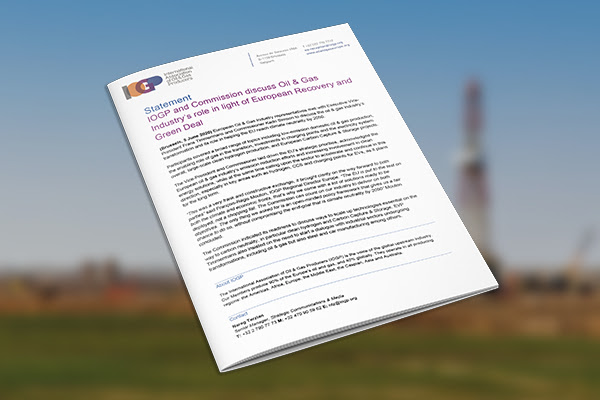
#IOGP and Commission discuss oil and gas industry’s role in light of #EuropeanRecovery and #GreenDeal

0


Image

(Brussels, 5 June 2020) European Oil & Gas Industry representatives met with Executive Vice-President Frans Timmermans and Commissioner Kadri Simson to discuss the oil & gas industry’s transformation and its role in helping the EU reach climate neutrality by 2050.

Participants covered a broad range of topics including low-emission domestic oil & gas production, the enabling role of gas in the transition, investments in charging points and the electricity system overall, large-scale clean hydrogen production, and European Carbon Capture & Storage projects.

The vice president and commissioner laid down the EU’s strategic priorities, acknowledged the European oil & gas industry’s emission reduction efforts and increasing involvement in clean energy solutions, while at the same time calling upon the sector to accelerate and continue in this direction, especially in key areas such as hydrogen, CCS and charging points for EVs, as it plans for the long term.

“This was a very frank and constructive exchange, it brought clarity on the way forward to both parties” said François-Régis Mouton, IOGP Regional Director Europe. “The EU is put to the test on both the climate and economic fronts, that’s why we came with a list of solutions ready to be deployed, not a shopping list. The Commission can count on our industry to deliver on both objectives. The only thing we asked for is an open-minded policy framework that gives us a fair chance to do so, without compromising the end-goal that is climate neutrality by 2050,” Mouton concluded.

The Commission indicated its readiness to discuss ways to scale up technologies essential on the way to carbon neutrality, in particular clean hydrogen and Carbon Capture & Storage. EVP Timmermans also insisted on the need to start a dialogue with industrial sectors undergoing transformations, including oil & gas but also steel and car manufacturing among others.

Click here to access this document online.

Source by [author_name]

Sonu Sood to help daily wage workers and domestic abuse victims : Bollywood News – Bollywood Hungama

0

Actor Sonu Sood has been getting praised for his relentless work towards sending migrants back home. The actor, who has been working day in and out has sent thousands of migrants home by arranging transportation. Social media is full of praises for the actor, who has been called ‘God’ by those who were in need of help, and Sonu’s team made their dream of going home possible amid lockdown.

Now, Kulsum Shadab Wahab has joined has with the actor to help daily wagers and domestic violence victims. Kulsum, who is the Executive Director of the well known Hothur Foundation, has been instrumental in bringing in different industries together to work for the cause of acid attack survivors, underprivileged people and children. She has in the past also collaborated with superstar Shah Rukh Khan’s Meer Foundation to support acid attack survivors.

Now, Sonu Sood has collaborated with Kulsum Shadab Wahab to support daily wagers and their families. He is also helping Hothur foundation in raising awareness for domestic abuse victims who have suffered during the lockdown.

Talking about this, Sonu says, “I have known Kulsum does a wonderful job with Hothur foundation in the last 10 years. They are dedicated to uplifting people. They are doing a great job in the tough times of COVID 19 and the lockdown and I want to help and support them as much as I can. We are providing support to daily wagers who are worst hit because of the lockdown. Even domestic abuse has increased with many spending time at home. We want to help those in need.”

To help the domestic violence victims, Hothur foundation has started campaign Victory Over Violence, which showcases brave women narrating their stories. Kulsum Shadab Wahab says, “Domestic abuse cases have increased substantially ever since the lockdown has started. Victory over Violence will help women who are stuck in their household feel encouraged when they hear other women tell their stories. Sonu has been a great support and his work for migrants is commendable. He is someone we all look up to and his hard work is paying off with every migrant’s blessing. When he talks about domestic abuse and helps daily wagers, it will reach many people. It is great to have Sonu on board and I am sure that a lot of people who are in need of help with benefit from this collaboration.”

ALSO READ: Sonu Sood meets Maharashtra CM Uddhav Thackeray and Aaditya Thackeray to discuss relief efforts for migrants

BOLLYWOOD NEWS

Catch us for latest Bollywood News, Bollywood Movies update, Box office collection, New Movies Release & upcoming movies info only on Bollywood Hungama.

Source link