To get inside SASSA offices you must sleep outside – grant applicant

By Ashraf Hendricks and Zoë Postman for GroundUp

Waleed Daniels came to the Bellville offices of the South African Social Security Agency (SASSA) in Cape Town at 19:00 on Wednesday night. He was served after 9:00 on Thursday morning. He is 64-years-old and was applying for a disability grant.

Daniels said that he spent the night shivering in the cold and did not sleep. This was not the first time he had spent the night outside the Bellville SASSA offices and he was one of many applicants who did so.

With the move to level three lockdown, SASSA said in a statement on 25 May that it would be fully operational which should speed up the provision of services which had been slowed during lockdown levels five and four. But there were still dozens of people sleeping outside the Bellville offices on Wednesday night, said Tyrese Van Rooyen who spent the night outside with his wife who was applying for a disability grant. When Groundup spoke to Van Rooyen around midday, his wife still had not come out of the SASSA offices.

Van Rooyen and his wife brought a tent and camping chairs along. They slept in an alleyway opposite the SASSA office, along with more than 60 other people, he said. From Bishop Lavis, Van Rooyen said, it costs the couple R100 to travel to these offices and home again, each time.

Daniels did manage to get some of his papers sorted on Thursday, but he will have to come back again. He doesn’t know where to get the money for these trips. “Where must I get taxi fare? I am a pensioner.” It costs him R26 per trip.

To get inside, “you must sleep on the streets,” said Van Rooyen.

SASSA OPERATES WITH A THIRD OF STAFF

At SASSA offices around the country, applicants and beneficiaries have been queuing through the night, in the hope of being served the next day. SASSA has been operating with a third of its usual staff, during levels five and four of the lockdown, and GroundUp has reported on people sleeping outside SASSA offices in Long Street, Cape Town (some of them for two days), in Mdantsane and in Khayelitsha.

In Pietermaritzburg, some beneficiaries slept outside Langalibalele post office to collect their grants. In East London, hundreds of beneficiaries were turned away last month, some of whom had queued since 2:00. In some of these snaking lines and overnight stays, there was little evidence of physical distancing being implemented by SASSA officials, though many people in the queues wore masks.

Eastern Cape Department of Social Development spokesperson, Gcobani Maswana, said the department was aware of the people who slept outside the Mdantsane offices. He said police had been dispatched “for the safety of the beneficiaries”, and the department was ensuring that beneficiaries receive their grants “in a dignified and respectful manner”.

He said chairs had been organised, ensuring compliance with social distancing regulations. “Our elders can not be left alone to sort themselves during this time of COVID-19,” he said.

Asked whether SASSA was aware of the pensioners who slept outside the post office in Pietermaritzburg, KwaZulu-Natal SASSA spokesperson Sandy Godlwana said the agency had received reports of “people flocking into our offices on days not designated for specific grants”.

Social grant payments had been staggered to avoid an influx at paypoints and beneficiaries could access their grants through ATMs, the post office and some stores.

“We reiterate that beneficiaries can access their grants at any time of the month once it has been deposited. There is no need to withdraw your grant on the first day.”

STAGGERED SERVICE TO PREVENT OVERCROWDING

Western Cape SASSA spokesperson Shivani Wahab also referred to the staggering of grant payments to “avoid a high influx and overcrowding at contact points”. She said general queries were being handled through the call centre and the COVID-19 social relief of distress grant applications were processed electronically.

But despite these measures, she said, some SASSA offices still experienced a high demand for services.

Wahab said SASSA was trying to discourage applicants from sleeping outside the offices.

“The provision of tents and blankets to members of the public however will further exacerbate the current challenge of sleep-overs at Sassa local offices. SASSA is making a concerted effort, in collaboration with other government stakeholders, to mitigate sleep-overs at any SASSA contact point,” she told GroundUp.

Nandi Mosia, SASSA Gauteng spokesperson, told GroundUp that instead of providing blankets or shelter to those who slept outside, SASSA had opted for “beneficiary education” to discourage them from sleeping outside.

Mosia said SASSA had asked landlords and security guards at its premises to help spread the message that it is not necessary and is unsafe to sleep outside SASSA offices. SASSA officials had been sent to malls which were hotspots for long lines to enforce social distancing, and malls had played their part by providing chairs, she said.




Source link

‘They Just Kept Escalating The Use of Force’

0

Hongkonger Wong Keung took part in major pro-democracy and anti-extradition protests in 2019, including the November siege of the Polytechnic University (Poly U), the Oct. 1 demonstrations, and many protests in Kowloon. Now seeking a new life in Canada with his wife and two small children, Wong tells RFA’s Mandarin Service what it was like to be the target of routine police violence on the front lines of the pro-democracy movement:

A lot of police officers would humiliate and curse out arrested protesters during the anti-extradition movement. When they got you back to the police station they would do everything they could to make it harder for us. For example, it was very hot in the police station and there was a long wait to go to the bathroom.

The food was terrible, and so was the attitude of the police officers. I had an injured hand at that time, which was bleeding, but they didn’t bandage it up for me, and they wouldn’t let me go to the hospital.

[The non-lethal weapons the police used] really hurt. Especially the water cannon. I felt that they just kept escalating the use of force. For example, they added some kind of irritant to the blue-dyed water cannon stream that made your skin feel like it was burning.

The strength of the active ingredients in the tear gas they were using clearly increased a lot. It felt like being on fire. The worst time was at the siege of Poly U, when I got drenched [by water cannon] so I was blue from head to foot. I washed myself for more than an hour, but I still had the feeling that my scalp was on fire. But the blue dye still runs in the [shower] water even after you wash for a long time. It’s really scary.

I was also getting followed more and more closely, maybe three or four days in any given week. I also had the sense that my phone calls were being monitored. I wanted to live in Hong Kong. I wanted to raise my kids there. I still had stuff I wanted to do there.

But I decided to emigrate because I couldn’t bear not being able to speak my mind freely. I had also seen a lot of people who had it far worse than me, who had sacrificed far more than I had, and I always felt that I should do something more, that I should stay in the fight.

I had had my passport and ID card confiscated by the [Canadian] immigration authorities [pending my immigration application], so all I can do is wait. I can’t go anywhere; all I can do is hang around in Canada.

Hong Kong’s prosperity and stability are going to gradually disappear. Everything that was good about it will disappear. This is going to be the darkest time, because the U.S. sanctions will lead to a lot of problems, so Hong Kong will go down the drain.

Reported by Liu Fei for RFA’s Mandarin Service. Translated and edited by Luisetta Mudie.


Source link

This Isn’t Strawberry Shortcake as You Know It

This might be a controversial position in the world of desserts, but I think berries and whipped cream go better with a nice, crisp cookie than with the soft biscuits of a classic New England strawberry shortcake.

I adore biscuits, but, to my mind, they’re bread, not cake, and best eaten for breakfast, not dessert.

Cookies are decidedly sweet, and crunchy, offering textural contrast to all that syrupy fruit and fluffy cream. They are also more convenient. You can make the cookies a few days in advance while biscuits need to be eaten within a few hours of baking.

To make these cookies extra crisp, I added a little more sugar than I usually would for shortbread. I also used cultured butter to make them especially rich. But regular butter works perfectly well, so use what you have. You could even use salted butter. Just reduce the salt to 1/4 teaspoon.

A word of warning, though: The dough is very sticky. The easiest way to deal with it is to squish the dough into a log (or two), wrap it in plastic, then chill, slice and bake.

I like to bake them until they have a deep brown ring at the circumference and are slightly caramelized in flavor. My husband likes them baked until the tops are barely pale gold and the flavor is more vanilla-focused. Pulling one cookie sheet out of the oven sooner than the other means we are both happy. Do whatever works in your household.

Because the cookies are on the sweeter side, you won’t need much sugar for the berries. If you’re lucky enough to get strawberries so ripe they leak scarlet juice when you cut them, sprinkle them with just a bit of sugar, as if you were seasoning them with salt. Berries that are less ripe might need a little more, but use just enough to bring out their juiciness.

Then set out the whipped cream, strawberries and cookies in separate serving dishes and let everyone combine them individually in bowls, adding cream or berries to taste.

I like to use the cookies instead of a spoon, scooping up berries and cream and nibbling as I go. Just try that with a biscuit.

Recipe: Strawberry Shortbread and Cream

Source link

Anyone Living in Areas With ‘Widespread’ COVID-19 Transmission Should Wear Masks, WHO Says

0

Months after many cities and countries directed their residents to wear fabric face masks to prevent the spread of COVID-19 even if they are healthy, the World Health Organization (WHO) has issued the same guidance for the global community.

At a press briefing on June 5, WHO Director-General Dr. Tedros Adhanom Ghebreyesus announced that the organization now recommends people who live in areas experiencing “widespread transmission” of COVID-19 wear a fabric mask whenever social distancing of at least one meter (about three feet) is not possible. The guidance applies even to those not showing symptoms of coronavirus, as research now strongly suggests many people with the disease are asymptomatic or only mildly symptomatic. People in high-risk groups, including the elderly and those with underlying conditions, should try to wear a medical-grade mask.

“Governments should encourage the general public to wear masks where there is widespread transmission and physical distancing is difficult, such as on public transport or in shops,” Ghebreyesus said.

The WHO’s guidance also describes the most effective materials to use in a fabric face mask. Ideally, masks should consist of three layers: an inner layer made of an absorbent material like cotton, which can trap the wearer’s own respiratory droplets; a middle layer made of a non-woven material, like polypropylene, that acts as a filter; and an outer layer made of a non-absorbent material like polyester, which stops outside particles from getting in.

If that’s not possible, the WHO recommends at least folding or sewing your mask such that it has multiple layers. Stretchy, elastic fabrics aren’t ideal because they don’t filter very well, and can’t be washed in hot water. (Fabric masks should be washed frequently with hot water and soap or detergent, the WHO says.)

Keep up to date with our daily coronavirus newsletter by clicking here.

Previously, the WHO only advised individuals experiencing symptoms or caring for people sick with coronavirus to wear masks, although many areas have already implemented more expansive policies at the local level. The U.S. Centers for Disease Control and Prevention (CDC) first recommended the widespread use of fabric face coverings on April 3, for example.

The WHO’s delay illustrates the difficulty of drafting and communicating public-health guidance for the entire world, even in a fast-moving pandemic. “Every recommendation that we put out needs to be applicable for every type of situation. That’s a blessing and a curse,” Dr. Maria Van Kerkhove, the WHO’s technical lead on COVID-19, told TIME. “We need to put out guidance that’s appropriate for all, but it means we cannot be as specific for every exact situation.”

Masks have been a particularly contentious topic during the COVID-19 pandemic. At first, most health officials strongly dissuaded the general public from wearing masks—in large part because of supply issues, but also because some researchers said there was not enough evidence to support the practice. But as more research emerged about asymptomatic transmission—suggesting that even seemingly healthy people could be spreading the virus—and the efficacy of face masks, most health groups reversed course.

Related Stories

Still, there’s gray area even in the WHO’s latest guidance. For instance, it recommends masks for healthy people only in areas with widespread coronavirus transmission—but what does that mean, exactly?

Van Kerkhove says the guidance applies to areas with intense community spread (demonstrated by lots of people getting sick without a clear point of exposure) and an inability to isolate, test and contact trace everybody who becomes infected. But interpreting that criteria is largely up to individual officials, since the WHO cannot know the intricacies of each local environment, Van Kerkhove says. “It needs to be done at the lowest administrative level as possible to make this work,” she says.

That’s a necessary reality, perhaps, but one that renders international policies more guidelines than rules.

The WHO has also upgraded its guidance for health care workers. The group has directed health care professionals treating confirmed or suspected COVID-19 patients to wear face masks (as well as other personal protective equipment) since the beginning of the outbreak. Now, all physicians who are treating patients of any kind in high-transmission areas should wear medical-grade masks for their entire shifts, the WHO says. The new policy is meant to help eliminate asymptomatic or mild transmission in health care environments.

Even with the new guidelines, Van Kerkhove emphasizes that “masks alone are not enough.”

“Anyone who is unwell should be at home. All suspect [cases] should be tested. Confirmed cases should be isolated and cared for. Contacts should be quarantined,” she says. “If that were actually taking place, we would drastically, drastically reduce transmission. We’re trying to put into context the use of an additional tool, a fabric mask, that can be used in certain situations.”

Write to Jamie Ducharme at jamie.ducharme@time.com.

Source link

As Iran redeploys amid COVID-19, Russia is filling the vacuum in eastern Syria

Despite efforts by the Assad regime and Iran to downplay and hide, it is now fairly well documented that the coronavirus outbreak in Syria initially hit Iranian fighters and Iranian-supported units hardest. By April 12, 40 pro-Iranian militia fighters had been taken to hospitals in Syria with COVID-19. Meanwhile, medical staff at a hospital in Abu Kamal — a major crossing town on the Syrian-Iraqi border and one now under the heavy influence of Iran — were threatened by regime and Iranian troops not to disclose the presence of cases. This calamity afflicting Iran-linked forces in Syria has provided Russia with an opportunity to expand its influence through its proxy forces, particularly in eastern Syria, as Iranian and pro-Iranian forces redeploy elsewhere in the country.

Russia reacted to the reports of coronavirus cases among pro-Iranian militias by ordering both Russian troops and Syrian regime units supported by Russia to separate from Iranian militias in mid-March, in a move that demonstrated how seriously Russia took the consequences of an outbreak among pro-government fighters and soldiers in Syria at a time when the Syrian government was still denying the existence of cases in the country. Another opposition source reported that Russian troops repositioned in late April away from the Bustan al-Qaser neighborhood in Aleppo, known as a stronghold for pro-Iranian militias in the city. Assuming the reports are true, the move to insulate pro-Russian Syrian units demonstrates a degree of foresight by Russia, with the assumption that having un- or less-infected units post-COVID-19 would be an advantage. The irony is that Russia appears to have dealt with the coronavirus outbreak in Syria more decisively than in Russia itself.

Iranian redeployment

At around the same time coronavirus cases were spreading through Iranian and pro-Iranian Syrian units, reports began to emerge of an Iranian “withdrawal” from Syria. At the beginning of May, Israeli sources began reporting that Iran was leaving Syria due to sustained Israeli airstrikes in the east of the country. Syrian government sources, however, officially denied that Iranian forces had left Syria, though this was to be expected. Moreover, several reports, including in Israeli media, indicated an increasing presence of Hezbollah fighters in southwestern Syria, particularly along the Israeli border. Meanwhile in eastern Syria, pro-Iranian Afghani fighters of the Fatemiyoun Brigade militia were reportedly moved away from Deir ez-Zor city and al-Mayadin in the same province south to the city of Palmyra and the Sayeda Zeinab suburb of Damascus. There are also rumors that frontline areas in western Aleppo and eastern Idlib provinces were being reinforced with pro-Iranian militias.

The reality is that Iran has not withdrawn from Syria but rather redeployed and repositioned Iranian and proxy forces throughout the country for a number of reasons. Undoubtedly, the sustained deadly attacks by Israeli jets on Iranian sites in eastern Syria made a larger and overt Iranian presence in the area a liability. And at the same time, the outbreak of the coronavirus in Iran and increasing pressure from U.S.-led sanctions on Iran have imposed a financial strain that likely caused a rethink in priorities across the region. In eastern Syria in particular, Iran can also be viewed as having largely accomplished its goal of establishing significant presences in the border crossing town of Abu Kamal and, further up the Euphrates River, in al-Mayadin and Deir ez-Zor. As such, Iran likely calculated that it was best to shift its efforts elsewhere in Syria.

Russia rushing in

Russia has exploited Iran’s repositioning in Syria and moved quickly to fill the void left by these redeployed pro-Iranian militias. It was able to move its forces in Syria so quickly in great part because it had swiftly ordered its forces and Syrian government units and militias friendly to it to isolate from pro-Iranian forces early on in the outbreak. In Deir ez-Zor city, unnamed pro-Iranian militia units handed over control of a number of checkpoints to other Syrian forces under the supervision of Russian military police and the Jerusalem Brigade, the latter of which is supervised by the Wagner Group. The report is unclear whether Jerusalem Brigade units took charge of the checkpoints or merely supervised the handover. Either way, their presence in the handover is a signifier of the supplanting of Iranian influence by Russia in Deir ez-Zor city. It is also notable that the Jerusalem Brigade used to be a pro-government militia supervised by Iran but has now become a popular militia for Russia, deployed to Syria’s expansive desert region known as the Badia, likely as part of a planned offensive against ISIS cells in the area.

Further to the northwest, Russia stepped in when pro-government National Defense Forces (NDF) units complained that they hadn’t been paid by their Iranian and Syrian government patrons for a number of months. The NDF is a nationwide structure for some pro-government militias that focus on defending home areas and whose financial support varies throughout the country. In late April or early May, several dozen NDF fighters and commanders stationed in southern Raqqa Province met in the town of Maadan, situated along the Euphrates River, and declared their intention to go to Russia to ask for salary payments. Notably, they cited the coronavirus as the reason why they assumed payments from Iran’s Islamic Revolutionary Guard Corps had ceased. By mid-May, Iranian-supported forces had withdrawn completely from the Maadan area as pro-Russian NDF units and Russian military police deployed there.

So why does it matter?

It now seems clear that Iran is repositioning within Syria, rather than withdrawing, and that this is a result of a combination of factors, including the coronavirus. The repositioning should be viewed as a shift in priorities away from the east of Syria to the southwest, closer to Israel. It is likely that Iran felt that it had achieved its main objective of securing al-Mayadin and Abu Kamal and that paying for troops to stay there and get routinely hit by Israeli air strikes was no longer worth it. Further, the fact that NDF units in southern Raqqa did not receive their salaries for several months indicates that they were not a priority for Iran in the wake of the pandemic and that it was best to cut its losses in that area.

Furthermore, Russia demonstrated that it is ready and willing to quickly fill the security void left by Iran with Syrian units friendly to it. Competition over influence in eastern Syria has been ongoing for some time and while this isn’t the end of the fight, it does signal a tipping of the scales toward Russia. Moreover, the persistent presence of Russian military police at the handover operations is a sign that these units are perhaps the closest thing to a neutral force in Syria, having been deployed during security breakdowns in coastal areas, monitoring cease-fires in northern Aleppo Province, and even in the tense Daraa Province.


Nick Grinstead is a non-resident scholar with the Middle East Institute’s Syria program. He has been researching the dynamics in regime-held Syria for several years now, first as a researcher for the Clingendael Institute in The Hague, where he provided research and policy advice for the Dutch government and the European Union. In particular, he looks at the relations of loyalist militias to the state and with foreign patrons. He also works as a Senior Regional Security Analyst for Le Beck International, a Middle East based security and risk consultancy. The views expressed in this piece are his own.

Photo by AFP via Getty Images

Source link

New Music Friday: The Hottest Songs and Albums of the Week


New Music Friday: Kane Brown, Run the Jewels & More of the Hottest Songs and Albums of the Week | Entertainment Tonight


Source link

Automotive Industry and Covid-19 – The Mail & Guardian

SPONSORED

This Webinar was hosted by the Mail & Guardian and Absa. It featured Faisal Mkhize, Managing Executive, of Absa Vehicle and Asset Finance; Mike Mabasa, Chief Executive Officer of the National Association of Automobile Manufacturers of South Africa; Mark Dommisse, Financial Director of the Mekor Motor Group; and was facilitated by Michael Avery, Anchor for Classic Business.

There has been a 25% decline in the automotive sector thus far compared to last year, which will have a major impact and may lead to job losses. The automotive industry was in decline even before the Covid-19 crisis, due to environmental concerns and a reduced demand for vehicles because of services such as Uber.

South Africa hosts seven global brands, of which 64% is for export purposes. Any changes in the world, such as the present crisis, affects exports directly; it is a very interlinked industry. Local manufacturers, which contribute 7% of the country’s GDP, and employ over 100 000 people, are engaging with government to see how they can weather this storm.

Mark Dommisse is the Chairperson of the National Automobile Dealers Association

Foreign markets are also in crisis; the tourism industry is still not operating. We export about 11% of what we produce into the rest of Africa, so the proposed pan-African trade system is very exciting; there is a lot of potential and opportunities in this market.

There are four key performance indicators in the manufacturing part of the automotive industry:

  • Production: will targets still be met? Are we on track with the automotive development programme?
  • Exports: South Africa is trading with 151 different markets
  • Imports: We need to check if numbers have gone up or down or remained flat
  • Domestic vehicle sales: Are people earning enough to buy new vehicles?

A report has been drawn up to examine the viability of making electric vehicles in South Africa, whether demand can be stimulated for them, and to ensure that there is a standard charging network that works for all electric cars. There is a lot of focus on this area right now in the local industry.

The consumer

Asset finance has also been hard hit, as sales have slumped, but the consumer is still under pressure, and 42% have asked for relief, for a period of three months at least. Buying a car is for most South Africans their second-biggest acquisition, but because we are in a recession, most people don’t have much disposable income.

Faisal Mkhize is the Absa Group’s Managing Executive of Vehicle & Asset Finance

Many people want to buy down or restructure, but as most people are reliant on their cars to get around, newer cars are still in demand, and some people are buying cars — the depreciation of the rand has helped in this regard.

As many rental fleets are no longer operational, their cars are entering the market in big numbers, and there is huge opportunity for people to buy these cars at good prices and get mobile; rental cars are usually very well maintained.

Dealerships

South Africa’s car dealerships have been devastated by the crisis. They are very asset-intensive businesses, they have lots of debt and they rely heavily on sales. Dealerships are now open, but they have had to rely on support from manufacturers, banks and their landlords. Dealerships have also been helped by interest deferral, to help them through this trying period.

There will probably be a U-shaped or L-shaped recovery, and a lot depends on what happens this month, but we may come out of this quite strongly. About R5-billion in relief has been made available to dealerships, and there has been good take-up on the initiatives offered, both in South Africa and Africa. Many dealerships have challenges of liquidity, so we have asked government, which supports this industry heavily, for deferrals on debt; we are also in talks with the International Finance Corporation.

Michael Avery, Anchor of Classic Business, Classic 1027

There are many cars that need to be serviced because they couldn’t be under lockdown, and the industry is relatively positive about the workshop stream at the moment. There may be a future challenge with parts, but it’s not a crisis at this stage. Dealerships are easy to sanitise, and we deal with customers by appointment only. All customers are screened, and as premises are not packed, there is no social distancing issue. Most of the sales process is now online until the last part, where you actually physically encounter your new car and kick its tyres, and this trend is growing. The dealerships of the future will be around the workshop, for servicing, and the idea is to make this process painless and seamless.

There are a lot of SMME dealerships out there and they play a huge role in communities. If we can get back up to 90% of where we were, we will be very happy; political stability in South Africa will help immensely.

For more information visit:

https://www.absa.co.za/business/funding-my-business/vehicle-and-asset-finance/explore/


Source link

Trump declares ‘this is a great day’ for George Floyd after jobs gains as protests continue – live


Trump leaves ‘press conference’ without taking questions


Trump’s comment about Floyd sparks outrage


Trump just said hospitality and leisure gained 1.2m jobs last month – that’s true. Those jobs accounted for most of this months surprise gains,

But hospitality and leisure lost 8.4m jobs in the previous two months. While it’s true the reopening has brought people back to work, the unemployment rate at 13.3% is still at heights unseen since the worst days of the 1980s.


Trump: ‘Hopefully George is looking down right now’


Trump veers between coronavirus and protests


Bowser requests additional law enforcement be removed from DC


Stocks surging as Trump prepares to brief press

Updated


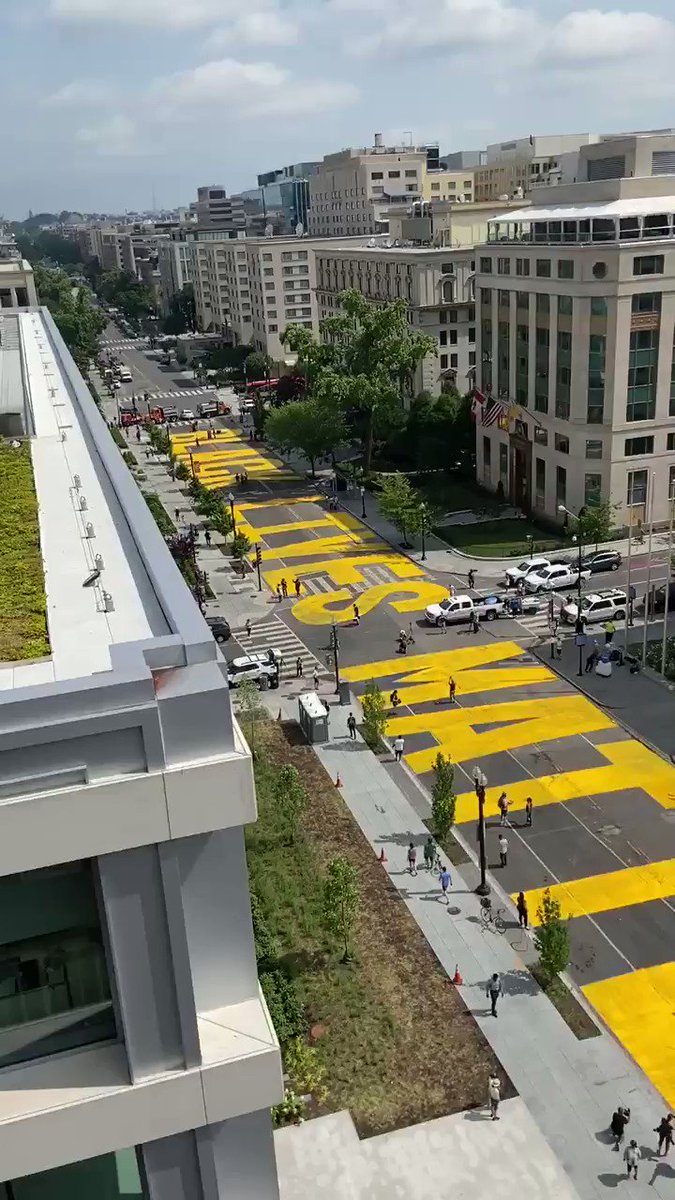
Black Lives Matter painted on DC street

Updated


Worldwide actions in solidarity with US protests over George Floyd


Trump to hold press conference after jobs numbers better than expected


Source link

NYC calmer as Buffalo police face ire after officer shoved elderly protester

The mayor of the western New York city, who expressed he was “deeply disturbed” by the video, said the unidentified man was in “stable but serious” condition at a hospital.

Erie County Executive Mark Poloncarz tweeted Friday morning that a hospital official said the man was “alert and oriented.”

“Let’s hope he fully recovers,” Poloncarz added.

New York Gov. Andrew Cuomo endorsed the officers’ suspensions, tweeting that what was seen on video was “wholly unjustified and utterly disgraceful.” The office of State Attorney General Letitia James tweeted that they were aware of the video. U.S. Sen. Charles Schumer called for an investigation, according to a statement reported by WIVB-TV.

“The casual cruelty demonstrated by Buffalo police officers tonight is gut-wrenching and unacceptable,” John Curr, the Buffalo chapter director for the New York Civil Liberties Union, said in a statement, adding that it should be a “wake-up call” for city leaders to address police violence.

Calls and emails to Buffalo police from The Associated Press seeking comment Thursday night hadn’t been returned by Friday morning.

Meanwhile in New York City, protesters again stayed on the streets past 8 p.m., in defiance of the citywide curfew that’s set to remain in effect through at least Sunday. Nationwide, the tenor of the protests set off by the death of Floyd, a black man who died Memorial Day after a white Minneapolis police officer pressed his knee into Floyd’s neck, moved from explosive anger to a quiet yet forceful call for more to be done to address racial injustice.

The switch was largely mirrored in New York, which saw fewer violent clashes than in days past. But several videos posted to Twitter on Thursday night showed police aggressively confronting peaceful protesters — often resulting in arrest — in the Bronx and elsewhere. In other places, police watched but didn’t immediately move in, or made orderly arrests without the batons and riot gear of previous nights.

Miguel Fernandes said there were “a lot more nights to go” of marching.

“We’re still waiting for a conviction. We still haven’t gotten it,” Fernandes said. “All they’re doing is putting in charges. The system is not doing anything to make these guys pay for what they did.”

Earlier Thursday, a memorial service featuring Floyd’s brother Terrence Floyd was held at Brooklyn’s Cadman Plaza, where the night before police had used batons and pepper spray on protesters who remained after curfew, videos show.

Mayor Bill de Blasio and Cuomo, both Democrats, said they hadn’t seen the widely shared videos, but Cuomo later tweeted that he was asking James to investigate as part of her ongoing look into police tactics during the protests.

NYPD Commissioner Dermot Shea has defended his officers and the department’s overall use of force.

De Blasio was booed and heckled at Floyd’s memorial, where even some speakers took shots at the mayor, criticizing his management of the NYPD and response to the coronavirus pandemic. The mayor had previously praised the police for using “a lot of restraint” overall, but added that “if there’s anything that needs to reviewed, it will be.”

Shortly after midnight, the mayor tweeted that he had spoken to Shea after seeing a video of a delivery worker arrested. Food delivery is essential work, de Blasio said, adding in a second tweet that journalists covering protests, too, were essential workers.

De Blasio had previous condemned police for roughing up journalists, including two from the AP who were shoved, cursed at and told to go home by officers Tuesday night.

“Will get NYPD to fix this immediately,” he tweeted Thursday.

Both Cuomo and de Blasio have said protesters should abide by the curfew to deter the violence, vandalism and destruction that followed protests Sunday and Monday nights. But as darkness fell Thursday, cries of “George Floyd” and “No justice, no peace” continued to ring out from crowds, even as they shrank.

“It’s energetic,” Kenyata Taylor said. “It’s great to be alive, it’s history right now.”

Source link

The Complex Debate Over Silicon Valley’s Embrace of Content Moderation

0

The existential question that every big tech platform from Twitter to Google to Facebook has to wrestle with is the same: How responsible should it act for the content that people post?

The answer that Silicon Valley has come up with for decades is: Less is more. But now, as protests of police brutality continue across the country, many in the tech industry are questioning the wisdom of letting all flowers bloom online.

After years of leaving President Trump’s tweets alone, Twitter has taken a more aggressive approach in recent days, in several cases adding fact checks and marks indicating the president’s tweets were misleading or glorified violence. Many Facebook employees want their company to do the same, though the chief executive, Mark Zuckerberg, said he was against it. And Snapchat said on Wednesday that it had stopped promoting Mr. Trump’s content on its main Discover page.

In the midst of this notable shift, some civil libertarians are raising a question in an already complicated debate: Any move to moderate content more proactively could eventually be used against speech loved by the people now calling for intervention.

“It comes from this drive to be protected — this belief that it’s a platform’s role to protect us from that which may harm or offend us,” said Suzanne Nossel, the head of PEN America, a free-speech advocacy organization. “And if that means granting them greater authority, then that’s worth it if that means protecting people,” she added, summarizing the argument. “But people are losing sight of the risk.”

Civil libertarians caution that adding warning labels or additional context to posts raises a range of issues — issues that tech companies until recently had wanted to avoid. New rules often backfire. Fact checks and context, no matter how sober or accurate they are, can be perceived as politically biased. More proactive moderation by the platforms could threaten their special protected legal status. And intervention goes against the apolitical self-image that some in the tech world have.

But after years of shrugging off concerns that content on social media platforms leads to harassment and violence, many in Silicon Valley appear willing to accept the risks associated with shutting down bad behavior — even from world leaders.

“Our intention is to connect the dots of conflicting statements and show the information in dispute so people can judge for themselves,” Twitter’s chief executive, Jack Dorsey, wrote.

A group of early Facebook employees wrote a letter on Wednesday denouncing Mr. Zuckerberg’s decision not to act on Mr. Trump’s content. “Fact-checking is not censorship. Labeling a call to violence is not authoritarianism,” they wrote, adding: “Facebook isn’t neutral, and it never has been.”

Timothy J. Aveni, a Facebook employee, wrote in a separate letter that he was resigning and said: “Facebook is providing a platform that enables politicians to radicalize individuals and glorify violence.”

Ellen Pao, once the head of Reddit, the freewheeling message board, publicly rebuked her former company. She said it was hypocritical for Reddit’s leader to signal support for the Black Lives Matter movement, as he recently did in a memo, since he had left up the main Trump fan page, The_Donald, where inflammatory memes often circulate.

“You should have shut down the_donald instead of amplifying it and its hate, racism, and violence,” Ms. Pao wrote on Twitter. “So much of what is happening now lies at your feet. You don’t get to say BLM when reddit nurtures and monetizes white supremacy and hate all day long.”

A hands-off approach by the companies has allowed harassment and abuse to proliferate online, Lee Bollinger, the president of Columbia University and a First Amendment scholar, said last week. So now the companies, he said, have to grapple with how to moderate content and take more responsibility, without losing their legal protections.

“These platforms have achieved incredible power and influence,” Mr. Bollinger said, adding that moderation was a necessary response. “There’s a greater risk to American democracy in allowing unbridled speech on these private platforms.”

Section 230 of the federal Communications Decency Act, passed in 1996, shields tech platforms from being held liable for the content that circulates on them. But taking a firmer hand to what appears on their platforms could endanger that protection.

One of the few things that Democrats and Republicans in Washington agree on is that changes to Section 230 are on the table. Mr. Trump issued an executive order calling for changes to it after Twitter added labels to some of his tweets. Former Vice President Joseph R. Biden Jr., the presumptive Democratic presidential nominee, has also called for changes to Section 230.

“You repeal this and then we’re in a different world,” said Josh Blackman, a constitutional law professor at the South Texas College of Law Houston. “Once you repeal Section 230, you’re now left with 51 imperfect solutions.”

Mr. Blackman said he was shocked that so many liberals — especially inside the tech industry — were applauding Twitter’s decision. “What happens to your enemies will happen to you eventually,” he said. “If you give these entities power to shut people down, it will be you one day.”

Brandon Borrman, a spokesman for Twitter, said the company was “focused on helping conversation continue by providing additional context where it’s needed.” A spokeswoman for Snap, Rachel Racusen, said the company “will not amplify voices who incite racial violence and injustice by giving them free promotion on Discover.” Facebook and Reddit declined to comment.

Tech companies have historically been wary of imposing editorial judgment, lest they stray from the protection of Section 230 and have to take more responsibility for the content they publish, like a newspaper.

It is complicated when Mr. Dorsey begins doing that at Twitter. Does that mean a person who is now libeled on the site and asks for a fact check gets one? And if the person doesn’t, is that grounds for a lawsuit?

The circumstances around fact checks and added context can quickly turn political, the free-speech activists said. Which tweets should be fact-checked? Who does that fact-checking? Which get added context? What is the context that’s added? And once you have a full team doing fact-checking and adding context, what makes that different from a newsroom?

“The idea that you would delegate to a Silicon Valley board room or a bunch of content moderators at the equivalent of a customer service center the power to arbitrate our landscape of speech is very worrying,” Ms. Nossel said.

There has long been a philosophical rationale for the hands-off approach still embraced by Mr. Zuckerberg. Many in tech, especially the early creators of the social media sites, embraced a near-absolutist approach to free speech. Perhaps because they knew the power of what they were building, they did not trust themselves to decide what should go on it.

Of course, the companies already do moderate to some extent. They block nudity and remove child pornography. They work to limit doxxing — when someone’s phone number and address is shared without consent. And promoting violence is out of bounds.

They have rules that would bar regular people from saying what Mr. Trump and other political figures say. Yet they did not do anything to mark the president’s recent false tweets about the MSNBC host Joe Scarborough. They did do something — a label, though not a deletion — when Mr. Trump strayed into areas that Twitter has staked out: election misinformation and violence.

Many of the rules that Twitter used to tag Mr. Trump’s tweets have existed for years but were rarely applied to political figures. Critics like the head of the Federal Communications Commission, Ajit Pai, have pointed out, for example, that the Iranian leader, Ayatollah Ali Khamenei, has a Twitter account that remains unchecked.

“What does and does not incite violence is often in the eyes of the reader, and historically it has been used to silence progressive antiracist protest leaders,” said Nadine Strossen, a former head of the American Civil Liberties Union and an emerita law professor at New York University.

“I looked at Twitter’s definition of inciting violence, and it was something like it could risk creating violence,” she added. “Oh? Well, I think that covers a lot of speech, including antigovernment demonstrators.”

Corynne McSherry, the legal director of the Electronic Frontier Foundation, an organization that defends free speech online, said people could be worried about Mr. Trump’s executive order targeting Twitter “without celebrating Twitter’s choices here.”

“I’m worried about both,” she said.


Source link