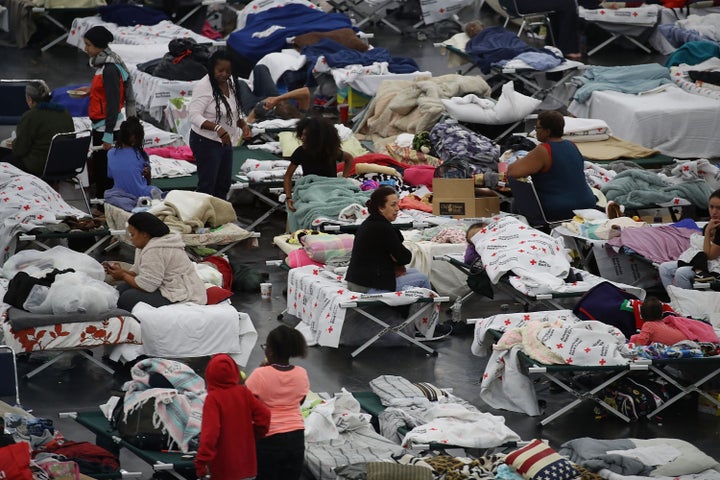
We cannot reform ourselves out of the times we are in – The Mail & Guardian

It is a sad day when Target, a corporation, releases a statement more in touch with the reality of being black in America, than the black former President Barack Obama. In fact the most hard hitting words in his statement, “’the knee on the neck’ as a metaphor for how the system so cavalierly holds black folks down, ignoring the cries for help” are arguably not his, as he is quoting a friend.

Meanwhile, Target in their own words state categorically that, “The murder of George Floyd has unleashed the pent-up pain of years, as have the killings of Ahmaud Arbery and Breonna Taylor. We say their names and hold a too-long list of others in our hearts.” And, where Obama signals that not all cops are bad, his way of saying there are good people on both sides, the Target statement does not mention the police at all. For those who might have been hoping for a more progressive post-presidency Obama, it is time to simply recognise him as the first black president who gave us hope and leave it at that.

Both statements however do not go enough in understanding that, to put it bluntly, the United States is fucked unless we call for and find radical solutions. They don’t speak to just how weak the façade of democracy and how hollow the claim of being the “richest nation on earth” is. The US national debt stands at $25-trillion with about 10% of that being owned by China and Japan. Internationally, the US is becoming more isolationist, withdrawing from international treaties and organisations the latest one being the World Health Organisation, and this at a time of a global pandemic. In effect, it is becoming a colossal, irrelevant giant with a military-industrial-complex to match. And, without diplomacy more war is the likely recourse.

Forty-three million people in the US were living in poverty before the pandemic. Jobless claims stand at $40-million decimating the much touted middle class—which was made up of millions of people living from pay cheque to pay cheque, in mortgaged homes, and driving loaned cars. To put it another way, the dream never really existed for black people, and it had long died for millions of others. Racialised incarceration rates, always a major concern, and amongst the highest in the world, are now turned deadly by the pandemic.

There are 100 000 COVID-19 deaths, and because we have a government that delayed locking down and is now opening up the country for business without doing the minimum preparation of contact tracing and testing, we can be sure that without a vaccine, more people will die.

And in all these examples, black people have been doing most of the suffering and in today’s context, most of the getting sick and dying.

It is a terrible and worsening economic system, except for the wealthy, that has been driven by racist ideology. White supremacy is the opium of white people. Even the liberals and those on the left are beneficiaries, in the same way the North was benefiting from slavery in the South — money did not respect state borders, trade continued, and money was kept in banks in the North. They need to take responsibility for slavery, the very foundation on which our present racist society rests. No more saying my great-grandparents were not slave owners and/or I am not a racist and therefore it is not my concern.

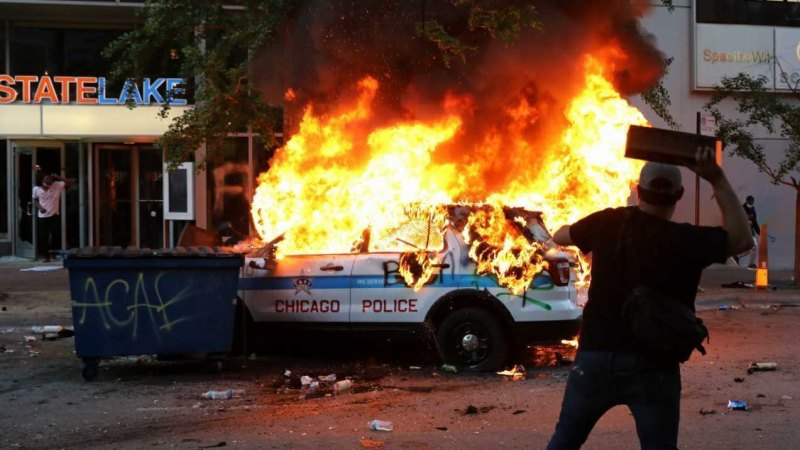
When US Vice President, Mike Pence, tweets, “We condemn violence against property or persons” and in that order, he means white property and white persons. Having previously refused to acknowledge police racism and violence, he is in effect defending his soldiers out in the frontlines of the war against black people — the predators, the thugs, welfare queens and looters. On looting, I have only two words to say, it James Baldwin who said, “you’re accusing a captive population who has been robbed of everything of looting. I think it’s obscene.”

In a sense I can understand why the police sometimes seem perplexed when people protest, after all they are just doing the job the government has tasked them to do. But as agents and enforcers of a racist state, they must be protested, at least so they can enforce their mandate without shooting and strangling black people to death. So at least we can at least breathe, and live and work to dismantle the system that makes a racist police its foot soldiers.

Given the radical times we are in, both the vacuous and vicious nature of American capitalism and the failure and racism of the Trump regime have to go. Given how deep the hole we are in is, to crawl out there is no real difference between Obama, Trump, or Joe Biden. There was a vast difference between Bernie Sanders or Elizabeth Warren and Trump. But the fear that Sanders could not win led us to picking the safer bet in Biden. And for that choice black people, especially, will continue to suffer the most.

For Karl Marx, looking back on revolutionary France and its failure to transform the lives of workers, part of the problem was the impossibility of making change as if the past did not matter. He argued that, “Men make their own history, but they do not make it as they please; they do not make it under self-selected circumstances, but under circumstances existing already, given and transmitted from the past.” To end racism, we will have to change the structures from which it draws its mandate, and get rid of liberal and right-wing politicians who give it oxygen while we are being asphyxiated.

We cannot reform ourselves out of the times we are in.

This article was first published on Africa is a Country.


Source link

How close can you get to a black hole?

0

Streams of gas fall to their dooms, plunging into black holes, locked away from the universe forever. In their final moments, these gassy shreds send out one last flare of light, some of the brightest emissions in the universe. 

These death dives are too far away to be seen directly, but astronomers have devised a new technique for detecting their panicked cries for help. They’re using the method to test our knowledge of gravity in the most extreme environments in the universe.

Source link

George Floyd protests LIVE updates: US unrest ensues as Black Lives Matter demonstrators continue to clash with police

Bystander video showed the crowd parting seconds before the semi-trailer rolled through, then the truck gradually slowed and demonstrators swarmed the truck.

Public Safety Commissioner John Harrington said on Sunday that it initially appeared from traffic camera footage that the semi-trailer was already on the freeway before barricades were set up at 5pm. State Corrections Commissioner Paul Schnell said at a later briefing, however, that the truck went around a traffic barrier to stay on the road.

In a Sunday evening news conference, Governor Tim Walz described footage of the truck driving into the crowd as a “horrifying image” and said that it underscored the “volatile” nature of the situation.

“I don’t know the motives of the driver at this point in time,” he said. “But at this point in time to not have tragedy and many deaths is an amazing thing.”

AP

Source by [author_name]

Public trust in UK government over coronavirus falls sharply

Public trust in the UK government as a source of accurate information about the coronavirus has collapsed in recent weeks, suggesting ministers may struggle to maintain lockdown restrictions in the aftermath of the Dominic Cummings affair.

According to surveys conducted on behalf of the University of Oxford’s Reuters Institute by YouGov, less than half of Britons now trust the Westminster government to provide correct information on the pandemic – down from more than two-thirds of the public in mid-April.

“I have never in 10 years of research in this area seen a drop in trust like what we have seen for the UK government in the course of six weeks,” said the institute’s director, Rasmus Kleis Nielsen.

The research was conducted in the last week of May, including the period when Cummings’ apparent flouting of lockdown rules by driving from London to Durham – with a trip to Barnard Castle to check his eyesight – dominated the headlines.

Less than half of Britons now trust the government to provide accurate information on the pandemic

This loss of trust poses a challenge for a Downing Street political operation that has often voiced the belief it can reach the public directly without having to go through established media outlets. It is particularly risky as ministers start to gradually relax lockdown rules and ask the British public to use their common sense to minimise the risk of a second wave of infection.

The institute concluded that the UK government and politicians were now “far more widely seen as a source of concern over false or misleading information” than any other source of information, noting that while the Cummings incident probably influenced this outcome, the public was already losing faith in the information provided by Boris Johnson’s government before that.

There are also signs that people are returning to their pre-pandemic political behaviour. There has been a substantial fall in public trust in the media’s coverage of the coronavirus, with the decline largely driven by voters who identify as rightwing. Levels of trust in individual politicians have fallen, providing increased space for conspiracy theories.

Epidemics of infectious diseases behave in different ways but the 1918 influenza pandemic that killed more than 50 million people is regarded as a key example of a pandemic that occurred in multiple waves, with the latter more severe than the first. It has been replicated – albeit more mildly – in subsequent flu pandemics.

How and why multiple-wave outbreaks occur, and how subsequent waves of infection can be prevented, has become a staple of epidemiological modelling studies and pandemic preparation, which have looked at everything from social behaviour and health policy to vaccination and the buildup of community immunity, also known as herd immunity.

Is there evidence of coronavirus coming back in a second wave?

This is being watched very carefully. Without a vaccine, and with no widespread immunity to the new disease, one alarm is being sounded by the experience of Singapore, which has seen a sudden resurgence in infections despite being lauded for its early handling of the outbreak.

Although Singapore instituted a strong contact tracing system for its general population, the disease re-emerged in cramped dormitory accommodation used by thousands of foreign workers with inadequate hygiene facilities and shared canteens.

Singapore’s experience, although very specific, has demonstrated the ability of the disease to come back strongly in places where people are in close proximity and its ability to exploit any weakness in public health regimes set up to counter it.

What are experts worried about?

Conventional wisdom among scientists suggests second waves of resistant infections occur after the capacity for treatment and isolation becomes exhausted. In this case the concern is that the social and political consensus supporting lockdowns is being overtaken by public frustration and the urgent need to reopen economies.

The threat declines when susceptibility of the population to the disease falls below a certain threshold or when widespread vaccination becomes available.

In general terms the ratio of susceptible and immune individuals in a population at the end of one wave determines the potential magnitude of a subsequent wave. The worry right now is that with a vaccine still months away, and the real rate of infection only being guessed at, populations worldwide remain highly vulnerable to both resurgence and subsequent waves.

Peter Beaumont

“The drops for all three sources [government, media and individual politicians] are large and significant, and much more dramatic than the much smaller changes around other institutions and around trust in ordinary people,” concluded the report’s author.

“This is particularly concerning as researchers have found that distrust leaves some people more vulnerable to conspiracy beliefs, including about coronavirus.”

The increasingly politicised approach to the lockdown – with individuals who identify as rightwing more likely to be demanding an end to restrictions on movement, despite warnings from scientists – is reflected in the data.

Leftwing voters who were previously willing to give the government the benefit of the doubt during the pandemic are increasingly distrustful of their messaging.

However, research found the British public still overwhelmingly believes information provided by health officials and scientists.

This could mean that the large television audiences watching the daily Downing Street press conferences put more weight on the implicit criticism of Cummings from government science advisers than the defence of his behaviour from individual ministers.

Source link

How to Help Demand Justice for George Floyd

0


How to Help Demand Justice for George Floyd | InStyle


this link is to an external site that may or may not meet accessibility guidelines.

Source link

CDC Report Shows Few Coronavirus Cases Until Late January in US

0

In its latest Morbidity and Mortality Weekly Report, researchers at the U.S. Centers for Diseases Control (CDC) say that there were limited instances of COVID-19 in the U.S. during most of January, and that SARS-CoV-2, the virus that causes the disease, didn’t start to spread widely until the end of the month and into February.

These findings suggest that an aggressive testing and detection program might have mitigated some of the spread of the SARS-CoV-2 and allowed public health officials to contain the infection more reliably. In a telebriefing with reporters, however, CDC director Dr. Robert Redfield said that the number of cases of COVID-19 until late January was so low, that finding them, even if testing had been more widespread, would be like “looking for a needle in a haystack.” Redfield says that existing systems for picking up respiratory diseases “really did have eyeballs on this outbreak.”

The U.S. government initially screened passengers arriving from infection hot spots in China in mid-January before stopping arrivals from the country altogether several weeks later. But COVID-19 tests developed by the CDC were also delayed because of early contamination issues, which meant that public health officials were behind in identifying those who were infected.

Dr. Jay Butler, the CDC’s deputy director for infectious diseases; head of the agency’s COVID-19 response; and a co-author of the recent paper, highlights four lines of evidence to support idea that COVID-19 was in the U.S. earlier than late January, but didn’t spread until then. First, he says, emergency room data from 14 counties across the country did not show an uptick in some of the hallmark symptoms of the disease, including fever, cough and difficulty breathing, until Feb. 28. Those data, part of the National Syndromic Surveillance Program, include 4,000 health care facilities in 47 states who report information on emergency room visits. The 14 counties the agency focused on included those that ended up having early community-based cases and likely were among the first regions to have spread of the disease.

Second, genetic sequences of the SARS-CoV-2 virus in the U.S. and elsewhere also suggest that the virus wasn’t spreading widely in the U.S. until the end of January. Based on the these sequences, which serve as a type of genetic fingerprint for tracing different strains and lineages of the virus, the researchers believe there was one virus lineage introduced from China in late January, when the first confirmed U.S. case was identified in Washington state; other cases identified in the area shared similar genetic signatures.

Related Stories

That conclusion is supported by another set of tests on specimens collected from nasal passages from people in the Seattle area, where the first U.S. case was identified. Those came from people who were participating in the Seattle Flu Study to monitor for flu prevalence, and provided samples from the nose and back of the throat which could be re-analyzed for SARS-CoV-2. More than 5,000 samples from this study collected from people with respiratory symptoms from Jan. 1 to Feb. 20 “showed no evidence of COVID-19 infection,” Butler says. “That doesn’t mean the virus wasn’t present anywhere in the community. It only means that if it was circulating, it was at such low levels that it could not be detected even when testing 5,000 specimens from people with respiratory illness.”

Third, the CDC team also looked at similar flu-surveillance data from five other site across the U.S. in that time period and found no specimens that tested positive for COVID-19.

Finally, Butler noted three early cases of COVID-19 among people who had not traveled to China or other areas where the disease was flourishing, which suggests they were exposed to the virus in their community. That, in turn, means it is likely that the virus was present in the U.S., although not widespread, in early January. Two people in Santa Clara County, Cal. died of a COVID-19 infection on Jan. 31 and between Feb. 13 and 17, respectively. Post-mortem analyses confirmed COVID-19 in both, and investigation of their infection and course of illness is ongoing. Given that the virus takes about five days to incubate and start causing symptoms, it’s likely that these people were infected several weeks before their deaths, before there were reports of clusters of cases.

Looking back at the how COVID-19 gained a foothold in the U.S. isn’t just academic, says Butler. “Understanding more about the dynamics of the spread in the community is an important part of planning how we go forward in controlling [this disease].”

Contact us at editors@time.com.

Source link

Should you fly yet? Here’s what an epidemiologist and an exposure scientist say

0

Editor’s Note — The views expressed in this commentary are solely those of the writer. CNN is showcasing the work of The Conversation, a collaboration between journalists and academics to provide news analysis and commentary. The content is produced solely by The Conversation.

(CNN) — We don’t know about you, but we’re ready to travel. And that typically means flying.

We have been thinking through this issue as moms and as an exposure scientist and infectious disease epidemiologist. While we’ve decided personally that we’re not going to fly right now, we will walk you through our thought process on what to consider and how to minimize your risks.

Why the fear of flying?

The primary concern with flying — or traveling by bus or train — is sitting within six feet of an infected person. Remember: Even asymptomatic people can transmit. Your risk of infection directly corresponds to your dose of exposure, which is determined by your duration of time exposed and the amount of virus-contaminated droplets in the air.

A secondary concern is contact with contaminated surfaces. When an infected person contaminates a shared armrest, airport restroom handle, seat tray or other item, the virus can survive for hours though it degrades over time. If you touch that surface and then touch your mouth or nose, you put yourself at risk of infection.

Before you book, think

While there is no way to make air travel 100% safe, there are ways to make it safer. It’s important to think through the particulars for each trip.

One approach to your decision-making is to use what occupational health experts call the hierarchy of controls. This approach does two things. It focuses on strategies to control exposures close to the source. Second, it minimizes how much you have to rely on individual human behavior to control exposure. It’s important to remember you may be infectious and everyone around you may also be infectious.

The best way to control exposure is to eliminate the hazard. Since we cannot eliminate the new coronavirus, ask yourself if you can eliminate the trip. Think extra hard if you are older or have preexisting conditions, or if you are going to visit someone in that position.

If you are healthy and those you visit are healthy, think about ways to substitute the hazard. Is it possible to drive? This would allow you to have more control over minimizing your exposures, particularly if the distance is less than a day of travel.

You’re going, now what?

If you choose to fly, check out airlines’ policies on seating and boarding. Some are minimizing capacity and spacing passengers by not using middle seats and having empty rows. Others are boarding from the back of the plane. Some that were criticized for filling their planes to capacity have announced plans to allow customers to cancel their flights if the flight goes over 70% passenger seating capacity.

Federal and state guidance is changing constantly, so make sure you look up the most recent guidance from government agencies and the airlines and airport you are using for additional advice, and current policies or restrictions.

While this may sound counterintuitive, consider booking multiple, shorter flights. This will decrease the likelihood of having to use the lavatory and the duration of exposure to an infectious person on the plane.

After you book, select a window seat if possible. If you consider the six-foot radius circle around you, having a wall on one side would directly reduce the number of people you are exposed to during the flight in half, not to mention all the people going up and down the aisle.

Also, check out your airline to see their engineering controls that are designed or put into practice to isolate hazards. These include ventilation systems, on-board barriers and electrostatic disinfectant sprays on flights.

When the ventilation system on planes is operating, planes have a very high ratio of outside fresh air to recirculated air — about 10 times higher than most commercial buildings. Plus, most planes’ ventilation systems have HEPA filters. These are at least 99.9% effective at removing particles that are 0.3 microns in diameter and more efficient at removing both smaller and larger particles.

A passenger at Pittsburgh International Airport travels through security on May 7, 2020.

A passenger at Pittsburgh International Airport travels through security on May 7, 2020.

Jeff Swensen/Getty Images

How to be safe from shuttle to seat

From checking in, to going through security to boarding, you will be touching many surfaces. To minimize risk:

Bring hand wipes to disinfect surfaces such as your seat belt and your personal belongings, like your passport. If you cannot find hand wipes, bring a small washcloth soaked in a bleach solution in a zip bag. This would probably freak TSA out less than your personal spray bottle, and viruses are not likely to grow on a cloth with a bleach solution. But remember: More bleach is not better and can be unsafe. You only need one tablespoon in four cups of water to be effective.

Bring plastic zip bags for personal items that others may handle, such as your ID. Bring extra bags so you can put these things in a new bag after you get the chance to disinfect them.

Wash your hands or use hand sanitizer as often as you can. While soap and water is most effective, hand sanitizer is helpful after you wash to get any parts you may have missed.

Once you get to your window seat, stay put.

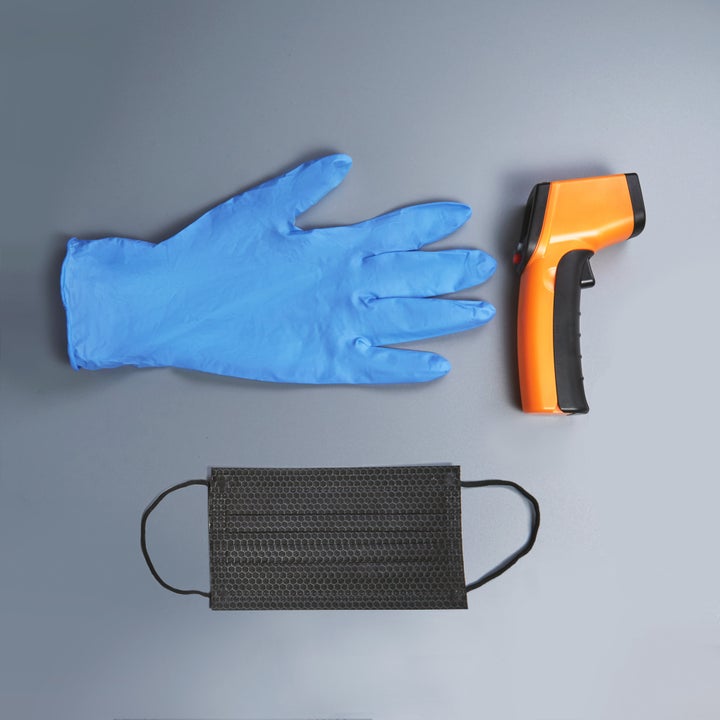
Wear a mask. If you already have an N95 respirator, consider using it but others can also provide protection. We do not recommend purchasing N95 until health care workers have an adequate supply. Technically, it should also be tested to make sure you have a good fit. We do not recommend the use of gloves, as that can lead to a false sense of security and has been associated with reduced hand hygiene practices.

If you are thinking about flying with kids, there are special considerations. Getting a young child to adhere to wearing a mask and maintaining good hygiene behaviors at home is hard enough; it may be impossible to do so when flying. Children under 2 should not wear a mask.

Each day, we are all constantly faced with decisions about our own personal comfort with risk. Arming yourself with specific knowledge about your airport and airline, and maximizing your use of protective measures that you have control over, can reduce your risk. A good analogy might be that every time you get in the car to drive somewhere there is risk of an accident, but there is a big difference between driving the speed limit with your seat belt on and driving blindfolded, 60 miles an hour through the middle of town.

Source link

How To Prepare For Hurricane Season Amid The Coronavirus Pandemic

It’s officially hurricane season — and yes, we’re still in a pandemic.

The six-month hurricane season, which officially starts June 1, is predicted to have an above-average number of storms. That adds a layer of complexity and danger to the coronavirus outbreak, with all its social distancing and hygiene rules.

Local and federal agencies as well as emergency experts have released new guidelines and shared tips on how to prepare for this year’s storm season ― from stockpiling additional supplies to determining what you should do if you are sick and forced to evacuate.

Here’s how to prepare and what to expect:


Hurricane Michael is seen in the Gulf of Mexico in 2018. It was the first Category 5 storm to make landfall in the U.S. since Hurricane Andrew in 1992, and only the fourth on record. 

Before a storm

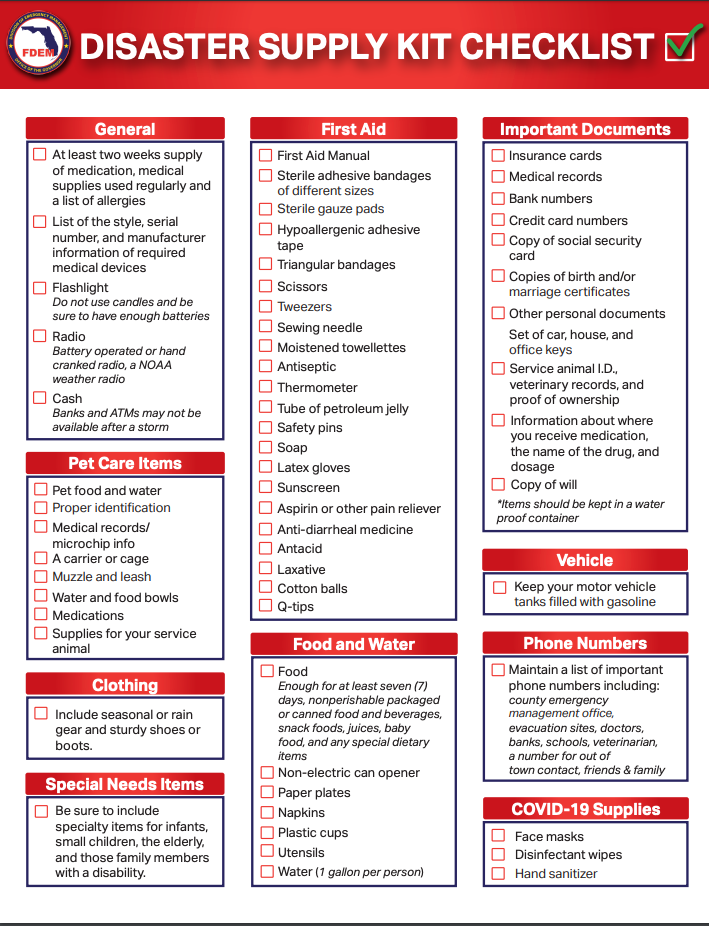
Gather supplies: Health and safety officials advise giving yourself more time than usual this year to stock up on sheltering essentials, especially if home delivery is your primary source for these items.

Each person and pet should have three to seven days’ worth of food and water (about a gallon per day), as well as any needed medical and cleaning supplies, according to the Centers for Disease Control and Prevention. A list of recommended supply items can be found here. 

A “go kit” should also be prepared to take during an emergency. This kit would include any items that you cannot go without, such as medication ― ideally a month’s supply. Because of the coronavirus outbreak, include two cloth face coverings per person, and cleaning supplies such as hand sanitizer or soap and sanitizing wipes if available, the CDC and the Federal Emergency Management Agency advise.

“Have a bag for each member of your family, including pets,” Michelle Belles, director of emergency disaster services for the Salvation Army, a nonprofit that assisted FEMA’s guidance task force for this hurricane season, told HuffPost.

Here are supplies authorities say should be prepared in advance of a storm. Face masks, disinfectant wipes and hand sanitizer


Here are supplies authorities say should be prepared in advance of a storm. Face masks, disinfectant wipes and hand sanitizer should be included due to COVID-19.

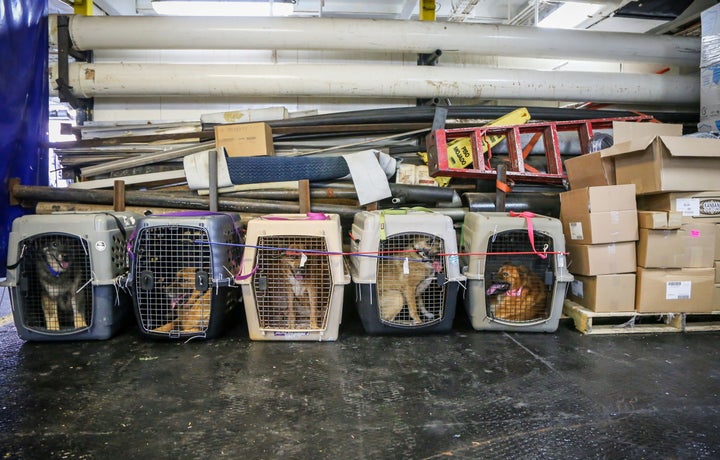
Don’t forget the animals: The CDC’s website offers guidance on how to prepare a disaster kit for a pet, as well as resources on how to locate a pet-friendly hotel or shelter if having to evacuate.

In addition to gathering vet information and several days’ worth of food, water, and medication, pet owners should ensure their pet is microchipped and has a collar and tags with up-to-date contact information in case of separation.

Register for alerts: Determine how you will receive warnings and alerts from local government and weather officials. Most phones will provide automatic alerts through the Emergency Alert System, though additional sources of information should be prepared, according to FEMA. These could include using a weather radio, Twitter, or smartphone apps, like the Red Cross emergency app that provides local weather alerts.

Anyone with special needs who may need assistance before a storm can register with their state’s emergency management department to receive information and direction.

Dogs whose owners are missing or presumed dead are seen in the aftermath of Hurricane Dorian and Tropical Storm Humberto in t


Dogs whose owners are missing or presumed dead are seen in the aftermath of Hurricane Dorian and Tropical Storm Humberto in the Bahamas in 2019.

Have a plan: Know your evacuation zone and your designated shelter, which may have changed this year. Some cities are creating more shelters to allow for social distancing. 

Officials advise that you only report to a shelter as a last resort ― if you live in a mandatory evacuation zone and are unable to shelter at home or stay with out-of-town family or friends. Public evacuation shelters may have limited space due to COVID-19 and may not be the safest choice for you and your family, according to FEMA’s pandemic guide for the 2020 hurricane season.

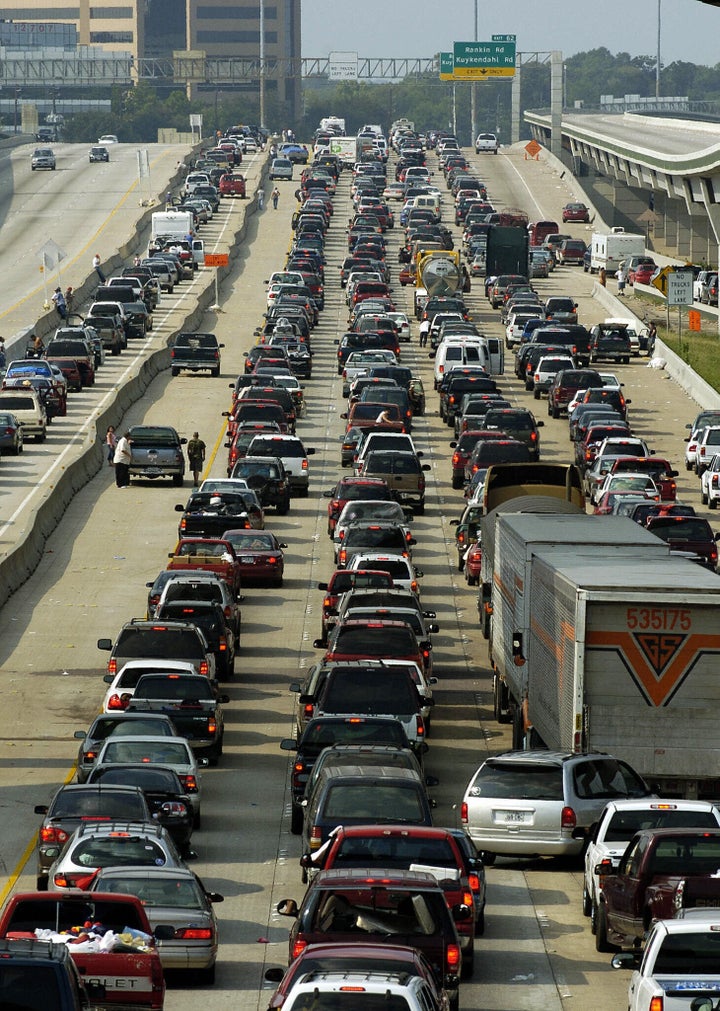
It’s also important to follow local officials’ instructions on when to evacuate and when not to so that evacuation routes are not jammed, advised Brian Mason, Houston’s Public Works Emergency Manager, who blamed traffic snarls during 2005′s Hurricane Rita for evacuation difficulties.

Vehicles jam the northbound lanes of I-45 in Houston as people try to evacuate in advance of Hurricane Rita in 2005.


Vehicles jam the northbound lanes of I-45 in Houston as people try to evacuate in advance of Hurricane Rita in 2005.

“As hard as it is to hold off and wait, if possible, please try to follow the directions of city leadership so we can get everyone out safely and in a timely manner,” Mason said during a May public forum on Houston’s 2020 hurricane-pandemic response.

During a storm

What to expect at shelters: Some shelters will require evacuees to wear a face covering and to stay at least six feet from others. Upon arrival, evacuees may have their temperature taken and staff may check them for a cough and shortness of breath, as per CDC and FEMA guidelines. 

If you have COVID-19 or its symptoms: Anyone who is sick is advised to contact their health care provider for further instructions and to shelter in place if possible. If this is not possible and you need to stay at a shelter or public facility, alert shelter staff immediately so they can call a local hospital or clinic. If possible, put on a cloth face covering before being physically assisted, FEMA advises.

“In the event that someone is showing a fever or sick, we are separating them immediately,” said George T. Buenik, director of the Houston mayor’s Office of Public Safety and Homeland Security at his city’s public forum on hurricane safety. “We have different places where we can shelter people that we suspect may be COVID positive or have tested positive.”

Storm evacuees may have their temperature taken and may be checked for a cough and shortness of breath when arriving at shelt


Storm evacuees may have their temperature taken and may be checked for a cough and shortness of breath when arriving at shelters. Each person evacuating should have at least two masks with them.

Other shelter options: Noncongregate shelters like hotels and dormitories would be another option for people who need to be isolated. If a national disaster is declared, local governments would be eligible for financial support for these locations, according to FEMA.

“We’re prioritizing individual hotel rooms or dormitory-style rooms to make sure people have a safe place to stay if they can’t return home after a disaster,” Trevor Riggen, senior vice president of Disaster Services for the American Red Cross, told HuffPost.

If hotels and dormitories are not an option, but additional space is needed by local officials, Riggen said emergency shelters would be erected. These shelters would feature additional safety precautions due to the virus.

“In these cases, we will work with local public health authorities to set up a health screening process for everyone coming into the shelter, provide masks, add additional space between cots, and use enhanced cleaning and disinfecting practices,” Riggen said.

Food distribution sites will also have new social distancing rules, according to Belles.

“In some locations, we are adapting our feeding model by providing shelf-stable meals alongside prepared food, so we can increase the amount of meals that survivors receive while limiting contact,” she said.

People are seen sheltering at the George R. Brown Convention Center in Houston after floodwaters from Hurricane Harvey inunda


People are seen sheltering at the George R. Brown Convention Center in Houston after floodwaters from Hurricane Harvey inundated the city in 2017.

In emergencies, physical distance is no guarantee: First responders will try to limit virus transmission whenever possible, but if there is an immediate situation involving life or death, there may not be extra masks, hand sanitizer or physical distancing, said Houston Fire Chief Samuel Peña.

“We’re going to consider what can kill us right now,” he said during the city’s public safety forum “Although the concern of transmission of this virus is present with us, if we get to [a rescue] situation, that’s going to be secondary. The primary focus is going to be to evacuate, to remove that individual or individuals from that risk ― that immediate risk that’s detrimental to their safety ― and then when we have the ability, we will consider” social distancing. 

How you can help

Donations and volunteers are always needed and don’t necessarily require you to leave home.

Red Cross volunteer opportunities include donating blood and delivering services to communities. There are work-from-home opportunities as well. Learn more here.

The Salvation Army asks do-gooders to consider a financial donation, as this is often the most efficient way to respond to demand. More information can be found here.

A HuffPost Guide To Coronavirus


Source by [author_name]

Barack Obama Writes Essay On Effecting Real Change After George Floyd’s Killing

After releasing a statement on the police killing of George Floyd in Minneapolis, former President Barack Obama on Monday wrote a more lengthy statement on the role of protest in catalyzing political change.

“The bottom line is this: if we want to bring about real change, then the choice isn’t between protest and politics,” he wrote on Medium. “We have to do both. We have to mobilize to raise awareness, and we have to organize and cast our ballots to make sure that we elect candidates who will act on reform.”

Obama first spoke out Friday, urging Americans “to work together to create ‘a new normal’ in which the legacy of bigotry and unequal treatment no longer infects our institutions or our hearts.”

Over the weekend, protests grew in cities across the country, with police mobilizing and often violently intervening and arresting scores of protesters and journalists, spawning renewed calls for the demilitarization of and systemic reform of police.

“The point of protest is to raise public awareness, to put a spotlight on injustice, and to make the powers that be uncomfortable; in fact, throughout American history, it’s only in response to protest that the political system has even paid attention to marginalized communities,” Obama wrote Monday. “But eventually, aspirations have to be translated into specific laws and institutional practices — and in a democracy, that only happens when we elect government officials who are responsive to our demands.”

Obama, who began his career as a community organizer in Chicago, recommended that protesters and organizers calling for police reform make specific demands in order to more readily hold leaders accountable, and tailor those demands to local institutions.

“The more specific we can make demands for criminal justice and police reform, the harder it will be for elected officials to just offer lip service to the cause and then fall back into business as usual once protests have gone away,” he wrote.

He also emphasized voting not only on the national level but in state and local races where elected leaders are directly responsible for police policies, such as mayors, county executives, state attorneys general, district and state’s attorneys, and in some communities, police review boards.

“I recognize that these past few months have been hard and dispiriting — that the fear, sorrow, uncertainty, and hardship of a pandemic have been compounded by tragic reminders that prejudice and inequality still shape so much of American life,” Obama wrote. “But watching the heightened activism of young people in recent weeks, of every race and every station, makes me hopeful. If, going forward, we can channel our justifiable anger into peaceful, sustained, and effective action, then this moment can be a real turning point in our nation’s long journey to live up to our highest ideals.”


Source by [author_name]

Samsung rolls out Access upgrade plan for new Galaxy devices

0

Samsung is rolling out Samsung Access, a monthly premium upgrade program in the US for users who purchase new Galaxy S20, Galaxy S20 Plus, or Galaxy S20 Ultra phones, the company announced in a blog post.

Unlike its legacy upgrade program, Samsung Access provides additional benefits, including a Premium Care membership, and a premium Microsoft 365 subscription, which includes Word, Excel, Outlook, PowerPoint, and Skype, along with 1TB of OneDrive cloud storage. Another big difference between the new Access plan and the legacy upgrade plan: if you already have a Samsung device, you can’t trade it in to join the new Access plan. The standard upgrade plan allows you to trade in an existing device and put any remaining balance toward a new one.

Pricing for a minimum three-month subscription to Samsung Access will cost $37 per month for the S20, $42 per month for the S20 Plus, and $48 per month for the S20 Ultra. Access subscribers can upgrade their devices every nine months, or earlier for $100. There’s also the option to cancel the plan entirely after three months, or earlier for a $100 fee (although you’ll have to return the phone, of course).

It’s a similar offer to Apple’s iPhone Upgrade Program, which allows users to get the newest iPhone, Apple’s premium AppleCare membership for a monthly fee, and simple upgrade opportunities.

Source link