Defund The Police

It would be nice if all of the chaos and cruelty unleashed by police forces across the nation over the past week could be blamed on President Donald Trump. 

It would be nice because it would be simple. One man’s cartoonish brutality would be responsible for a society falling apart. The solution would be straightforward: Remove him from office and let the world naturally return to stability and harmony. 

Trump has indeed encouraged violence against protesters, and he cannot escape culpability for the vivid tragedy now unfolding in the United States. But we cannot pin all of this on the president, however grotesque his failures. On Saturday night, when Minneapolis police fired rubber bullets at journalists and New York law enforcement attempted to run down protesters in an SUV, they were acting under the authority of Democratic mayors and governors. New York Mayor Bill de Blasio’s full-throated defense of the violent excesses of his police force differed from Trump’s fevered strongmanism only in tone, not content. 

“I do believe the NYPD has acted appropriately,” de Blasio said Saturday night. “I saw a lot of restraint under very, very difficult circumstances.”

And so it has been throughout much of the country. The major policy choices that have led to this epidemic of police brutality ― from macroeconomic management to police procurement ― have been bipartisan. It is only at the margins that Democratic voters and Republican voters disagree. In Los Angeles, Democratic Mayor Eric Garcetti and a Democratic City Council approved $41 million in new bonuses for police officers amid a local budget crisis that has forced pay cuts for thousands of other city employees. New York City spends $6 billion a year on the NYPD, even as 100,000 children remain homeless.

For Black communities, the American policing crisis has always been obvious. It has been a part of everyday life for decades. Los Angeles police beat Rodney King within an inch of his life in 1991. New York police fired 41 shots at an unarmed Amadou Diallo in front of his own apartment in 1999. The militarized police occupation of Ferguson, Missouri, in 2014 should have presented both parties with an opportunity to rethink the armed control of low-income neighborhoods by agents of the state. Democratic leaders across the country have had nearly six years to grapple with the reality that U.S. police are largely at war with their communities, and they have generally responded by increasing law enforcement budgets and ignoring police violence. It took five years for the NYPD to fire the officer who killed Eric Garner. In the interim, both de Blasio and New York Gov. Andrew Cuomo were reelected.

Police brutality is the flashpoint of our current social unrest, but it is only one dimension of the crime against democracy that our national project has become. Our current uprising is taking place in the middle of an economic catastrophe in which roughly one-fourth of Americans are out of work. The distribution of this devastation has not been shared equally. Job losses have been concentrated among Black workers, and deaths related to the coronavirus have been concentrated among Black families. The legislative response from Washington to this crisis was not only bipartisan, but comprehensive: a 96-0 vote in the Senate for a bill that funnelled trillions of dollars to the richest people in the world and treated working people as an afterthought.

Similar outrages have been standard fare for decades. The racial wealth gap tripled between 1984 and 2009, and expanded still further during the recovery from the 2008 financial crisis, as then-President Barack Obama refused to rescue Black and brown homeowners and Republicans refused to fund relief programs for working people. The globalization project that began in the 1990s destroyed the foundations of the Black middle class in the United States by offshoring good-paying jobs and leaving minimum wage work in its wake. The foreclosure crisis of the Great Recession eliminated what was left. These were bipartisan pursuits.

Nationally, the Republican Party has become the party of white grievance, while the Democratic Party’s leadership remains more committed to beating back reforms from the party’s progressive bloc than it does to addressing economic justice or restoring civil rights. In an ABC News appearance Sunday morning, House Speaker Nancy Pelosi (D-Calif.) cited “a commission studying the social status of Black men and boys” and “a motion condemning police brutality” as examples of the work her caucus supports to correct racial and economic inequality. The House is currently in recess, and Pelosi has no plans to convene lawmakers to address the current crisis. Pelosi practices a different brand of leadership than the president does, but it is a failure nonetheless.

When failure is this broad and this deep, it is tempting to blame the nation itself. America was founded on slavery and genocide. Is it any wonder that it is descending into racist ruin in the 21st century?

But the fact is that the United States has beaten back its demons before. Between the 1930s and the 1960s, economic inequality plummeted along with the Black poverty rate, stalling out only when Democrats began to retreat from their commitments to civil rights and economic justice. We know what policies we can adopt to make this a nation of equals. Ours is the wealthiest nation in the history of wealthy nations. We can easily afford to provide all of our citizens with the fruits of a full life. And yet, we simply choose not to. We elect people in both parties who take pride in pursuing opposite agendas.

That work begins with defunding police forces across the country and reimagining community maintenance as an act of support, not an act of violence. But it cannot end there. Democracy assumes conditions of relative social equality. Until we reject an economic system that creates oligarchic winners and brutalized losers, our political system will continue to crumble.

Zach Carter is the author of “The Price of Peace: Money, Democracy, and the Life of John Maynard Keynes,” available now from Random House.


Source link

Chicxulub collision put Earth’s crust in hot water for over a million years

0

The asteroid that slammed
into Earth 66 million years ago left behind more than a legacy of mass
destruction. That impact also sent superheated seawater swirling through the
crust below for more than a million years, chemically overhauling the rocks. Similar transformative hydrothermal systems, left in the wake of powerful impacts much earlier in
Earth’s history, may have been a crucible for early microbial life on Earth,
researchers report May 29 in Science Advances.

The massive Chicxulub crater
on Mexico’s Yucatán peninsula is the fingerprint of a killer, probably responsible for the destruction of more
than 75 percent of life on Earth, including all nonbird dinosaurs (SN: 1/25/17).
In 2016, a team of scientists made a historic trek to the partially submerged crater,
drilling deep into the rock to study the crime scene from numerous angles.

One of those researchers was
planetary scientist David Kring of the Lunar and Planetary Institute in
Houston. A dozen years earlier, Kring had found evidence at Chicxulub that the
layers of rock bearing the signs of impact — telltale features such as shocked
quartz and melted spherules — were subsequently cut through by veins of newer minerals
such as quartz and anhydrite. Such veins, Kring thought, suggest that hot
hydrothermal fluids had been circulating beneath Chicxulub some time after the
impact.

Hydrothermal systems can
occur where Earth is tectonically active, such as where tectonic plates pull the
seafloor apart, or where mantle plumes like the one beneath Yellowstone rise up
into the crust. The molten rock rising through the crust in these regions superheats
water already circulating within the crust.

But the Yucatán peninsula is
tectonically quiescent, and has been for 66 million years, Kring says. So, as
part of the International Ocean Discovery Program’s Expedition 364 to
Chicxulub, he and colleagues drilled 1,335 meters below the ring of the crater,
retrieving long cores of sediment and rock.

The team then analyzed the
minerals found in the cores. “It was immediately obvious that they had been
hydrothermally altered. It was pervasive and apparent,” Kring says. The intense
heat of the circulating seawater caused chemical reactions within the rock,
transforming some minerals into others. By identifying the different types of
minerals, the team determined that the initial temperature of the fluids was
more than 300° Celsius,
later cooling to about 90°
C.  

The chemically altered rocks
beneath the crater extended down about four or five kilometers below the crater’s
peak ring, a circular, mountainous region within the vast crater. The
hydrothermally altered zone covers a volume more than nine times that of the Yellowstone
Caldera system, Kring says. Paleomagnetic data suggest that the hydrothermal system
lasted for more than a million years.

Rock core
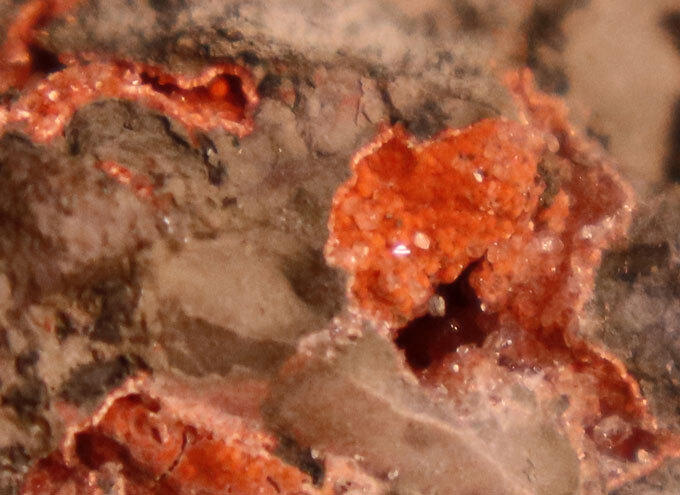
A core of rock and sediment extracted from within the Chicxulub impact crater revealed centimeter-sized cavities within the rocks containing hydrothermally altered minerals. Here, tiny cavities within impact breccia — a type of rock formed of broken fragments cemented together by fine-grained sediment — contain analcime (transparent crystals), which forms at temperatures around 200° Celsius and dachiardite (red crystals), which forms at temperatures around 250° C.D. Kring

Those conditions, the
researchers say, may have also been capable of fostering life akin to the
extremophiles that thrive in Yellowstone’s boiling pools. In addition to the
metal-rich fluids that could provide an energy source for microbes, the
Chicxulub cores revealed that the rocks were both porous and permeable — in
other words, filled with interconnected nooks and crannies that could have been
cozy shelters for microbes.

“It looks like a perfect
habitat,” Kring says.

Kring has previously
suggested that the very same destructive impacts that annihilate life may also
create appealing habitats — not just on Earth, but potentially on other
planetary bodies such as Mars. Even more tantalizing is the possibility that
hydrothermal systems, engendered beneath ancient impacts, may have been where life on Earth began (SN: 3/1/13).

Evidence from lunar craters
suggests that Earth was heavily bombarded by asteroids about 3.9 billion years ago (SN: 10/18/04). Most of those more ancient craters on Earth have long since vanished or been altered by
the constant tectonic recycling of Earth’s surface (SN: 12/18/18). So
the hydrothermal system beneath Chicxulub offers a window into what such
systems might have actually looked like much deeper in the past, says
geophysicist Norman Sleep of Stanford University, who was not involved in the
study. “It shows the reality of the process,” Sleep says.

The new study may set the
stage for the possibility of life thriving beneath an impact. But whether a
microbial cast of characters was actually present beneath Chicxulub is a
question for future studies, Kring says.

“Let me be clear: This paper
has no evidence of microbial life,” Kring says. “We just have all the
properties of hydrothermal systems that do support life elsewhere on Earth.”

Ancient environments that
provided water, chemical building blocks and energy “are very promising
candidates for hosting [life’s] origins and early evolution,” says NASA
astrobiologist David Des Marais, who was not involved in the study.
Impact-generated hydrothermal systems aren’t the only such environments;
researchers have also made a compelling case for hot springs, Des Marais says.

That’s an ongoing debate, he
notes, adding “I consider hydrothermal systems to be highly promising
exploration targets for astrobiology.”

Source link

Trump calls governors facing unrest ‘weak’ and ‘fools,’ urges stronger police tactics

WASHINGTON — President Donald Trump on Monday lashed out at governors during a White House videoconference, telling them that “most of you are weak” after states grappled with another night of anger and unrest following the killing of George Floyd last week.

According to a source on the call, Trump was “annoyed” with the governors for their response to the protests and urged law enforcement to crack down and make more arrests. “You’ve got to arrest people, you have to track people, you have to put them in jail for 10 years and you’ll never see this stuff again,” Trump said, according to the source.

Trump was described by one person on the call as “losing it,” with another saying the president called the governors “fools” and expressed anger with Democratic mayors in particular over the protests and unrest ravaging cities nationwide.

Trump said that other countries watching the situation unfold think Americans are pushovers.

“You have to dominate. If you don’t dominate, you’re wasting your time,” the president said, according to a person listening in.

The president also called the initial response in Minneapolis “weak and pathetic” and said that protestors have likely spread out to other cities. The person said Trump seemed obsessed with “antifa,” or anti-fascists, and Occupy Wall Street, which he said was handled well by comparison and “just went away one day.”

During the call, Trump claimed to have intelligence showing who the “bad actors” and professional instigators are, though he did not elaborate.

Trump also asked states to enact laws against flag burning in what the source described it as “a rant.”

The White House billed the event as a “video teleconference with governors, law enforcement, and national security officials on keeping American communities safe.”

Several governors pushed back on Trump’s narrative, including J.B. Pritzker of Illinois, a Democrat, the source said. Maine Gov. Janet Mills, also a Democrat, said she was concerned about the president visiting her state this week “because of security.” Maine is home to Puritan Medical Products, the company the administration compelled through the Defense Production Act to produce coronavirus testing swabs.

Trump’s response to the unrest has been to call for stronger law enforcement rather than calling for calm or addressing the concerns about police brutality and racism that many protestors say drove them to come out. Critics say an escalation in force would exacerbate already high tensions between protestors and the police.

After another night of protests led to fires and vandalism blocks from the White House, Trump spent Monday morning on Twitter blaming the unrest on antifa and accusing staffers of former Vice President Joe Biden of “working to get the anarchists out of jail.”

Trump had no public events scheduled for Monday, after not appearing in public on Sunday.

Trump’s advisers have been divided over what role the president should take in responding to the widest unrest the country has seen in decades. Some say the president should focus his message on Floyd, the black man who died last week at the hands of Minneapolis police, and urge calm.

Others say the top priority is stopping the violence and looting that have taken place in some areas, arguing that the best path to that end is strong police tactics, not presidential speeches.

Peter Alexander and Alex Moe contributed.


Source link

‘Far too soon’ to ease lockdown in north-east England, leaders warn

Political leaders in the north-east of England have urged residents to disregard the government’s “reckless” relaxation of the lockdown amid concerns it will lead to a second spike of coronavirus in a region with the UK’s highest infection rate.

On the day that some primary schools reopened and people were allowed to meet more family and friends in England, council leaders and MPs warned that the easing of the measures had come “far too soon” in the north-east.

Martin Gannon, the leader of Gateshead council, which has the second-highest rate of infections in the UK, said: “The current approach from government is reckless and they haven’t put systems in place to keep it safe.

“Our advice is that [people] should be staying with the initial advice, which was lockdown, stay socially isolated within our homes until such time as we can have an effective testing, tracking and tracing system in place.”

The north-east has the highest per-capita infection rate of any region in the UK. It is thought to be particularly vulnerable given its relatively high proportion of people with secondary illnesses linked to heavy industry, such as mining and shipbuilding. Of the 10 worst-affected local authorities, the top four are all in the north-east: Sunderland, Gateshead, South Tyneside and Middlesbrough.

The region’s current R value – the number of people an infected person will on average infect – is the highest in the UK, at 0.8, double the rate in London, according to analysis by Cambridge University scientists working with Public Health England. If the R value reaches 1, it means the virus is spreading.

R, or the ‘effective reproduction number’, is a way of rating a disease’s ability to spread. It’s the average number of people on to whom one infected person will pass the virus. For an R of anything above 1, an epidemic will grow exponentially. Anything below 1 and an outbreak will fizzle out – eventually.

At the start of the coronavirus pandemic, the estimated R for coronavirus was between 2 and 3 – higher than the value for seasonal flu, but lower than for measles. That means each person would pass it on to between two and three people on average, before either recovering or dying, and each of those people would pass it on to a further two to three others, causing the total number of cases to snowball over time.

The reproduction number is not fixed, though. It depends on the biology of the virus; people’s behaviour, such as social distancing; and a population’s immunity. A country may see regional variations in its R number, depending on local factors like population density and transport patterns.

Hannah Devlin Science correspondent

In Sunderland, which has the highest infection rate in the country, the city council leader, Graeme Miller, said the council was still urging residents to “stay at home” – the government’s original message – and not encouraging people to meet with others. He said the lockdown had been “forgotten” at the weekend and that the city had been “full of people not socially distancing”.

“To open schools up, when we can’t guarantee safety and when you’ve now got the ability to meet in groups of six, is terribly reckless,” Miller said, adding that he accepted the need to get the economy back on its feet but that “the way they’re doing it at the moment is terribly dangerous”.

In South Tyneside, only one of 54 primary schools reopened its doors to more pupils on Monday. Most of the region’s local authorities have advised primary schools not to open before next Monday.

Iain Malcolm, the leader of South Tyneside council, said he would prefer schools not to reopen until September due to concerns over safety and potential second spike in cases.

Malcolm said the relaxation of the measures had come too soon for the north-east and that councils could take action collectively to impose some form of local lockdown if there was an increase in infections. “You’re gambling with people’s health here and there’s going to be a health consequence. I really fear that people are going to die because there’s going to be a spike here if we’re not careful,” he said.


“We have to keep making it clear to people that if you are going to meet with your family and your friends in small numbers, you must still maintain that social distance and regularly washing your hands.”

Emma Lewell-Buck, the MP for South Shields, said people had “flooded” to the region’s coast in recent days and that “it was as if nothing had ever happened”.

The new government guidance was “reckless and causing confusion,” she said: “I’m being more cautious than the government and saying that you need to stick to ‘stay at home’ measures and you need to stick to social distancing because we have high infection rates in the northeast. In South Tyneside, we’re a hotspot within that and I don’t want any more of my constituents to die from this.”

Source link

Their Minneapolis Restaurant Burned, but They Back the Protest

On Friday morning, as dawn broke through the smoke hanging over Minneapolis, the Gandhi Mahal Restaurant was severely damaged by fire. Hafsa Islam, whose father owns the Bangladeshi-Indian restaurant with members of his family, woke at 6 a.m. to hear the news.

“At first, I was angry,” said Ms. Islam, 18. “This is my family’s main source of income.”

But then she overheard her father, Ruhel Islam, speaking to a friend on the phone. “Let my building burn,” he said. “Justice needs to be served.”

On Friday afternoon, after the fire stopped smoldering and the family came together, he repeated his support for the protests that had closed his restaurant. “We can rebuild a building, but we cannot rebuild a human,” said Mr. Islam, 42. “The community is still here, and we can work together to rebuild.”

For days, the Islam family has watched the protests over the arrest and killing of George Floyd, the African-American man who died on Monday after a white police officer pinned him to the ground, a knee pressed against Mr. Floyd’s neck. The officer has been fired, and on Friday was arrested and charged with third-degree murder and manslaughter, the authorities said.

The restaurant is just a few doors away from the Third Precinct headquarters of the Minneapolis Police Department, which was set ablaze by protesters on Thursday night. Other buildings also burned, and fire eventually reached the restaurant.

Ms. Islam, who delivers food part time for Door Dash, said she had stopped her car at a red light on Monday as Mr. Floyd was arrested. She watched, horrified, from her car, she said. She learned only later that he had died.

“I understand why people did what they did,” she said of the demonstrators. “They had tried with the peaceful protesting, and it hasn’t been working.”

Gandhi Mahal opened in 2008, during the Great Recession. Although Mr. Islam believes in nonviolent protest — he named his restaurant in honor of Mohandas K. Gandhi — he empathizes with the frustration of many Minneapolis residents.

“I am going to continuously promote peaceful ways and nonviolent movement,” he said. “But our younger generation is angry, and there’s reason to be angry.”

So as mounted police fired tear gas into the crowd on Tuesday, the Islam family opened a room in their spacious restaurant to medics, who set up a makeshift field hospital. Ms. Islam said she saw at least 200 people come in and out on both Tuesday and Wednesday night.

Some needed to catch their breath after inhaling tear gas, she said. One woman had been hit in the eye by a rubber bullet, damaging her vision. A rubber bullet tore open the back of another man’s neck. When he fell unconscious, the medics laid him out on a table.

“We were just trying to do what we could to help our community,” said Ms. Islam, who helped treat wounded protesters. “Sure, we had our business. Sure, we were trying to keep our kitchen open. But more than anything, we were concerned for our people.”

The tension in Mr. Islam’s adopted city reminds him of his childhood in Bangladesh, when he lived through a dictatorship. Two of his fellow students were killed by the police, he said. “We grew up in a traumatic police state, so I am familiar with this type of situation,” he said.

The restaurant has been a hub for interfaith efforts against climate change, and a related art collection was lost to the flames. In the basement, the family also cultivated a small aquaponics farm to supply the restaurant with fresh ingredients.

“Now probably, the whole basement is aquaponics with the water,” Mr. Islam said, laughing, joking about the sprinkler damage.

Both Tuesday and Wednesday night, before the medics had to relocate to a nearby church to protect their patients, Mr. Islam kept cooking. As wounds were bandaged and hands were held in the front room, he was in the kitchen, preparing daal, basmati rice and naan. Simple food, he said, but high in protein — just the thing to get his community through a long, dark night.

Source link

U.S. and Chinese Scientists Trace Evolution of Coronaviruses

0

An international team of scientists, including a prominent researcher at the Wuhan Institute of Virology, has analyzed all known coronaviruses in Chinese bats and used genetic analysis to trace the likely origin of the novel coronavirus to horseshoe bats.

In their report, posted online Sunday, they also point to the great variety of these viruses in southern and southwestern China and urge closer monitoring of bat viruses in the area and greater efforts to change human behavior as ways of decreasing the chances of future pandemics.

The research was supported by a U.S. grant to EcoHealth Alliance, a New York-based nonprofit, that was recently canceled by the National Institutes of Health. The grant, for more than $3 million, was well on its way to renewal, and the sudden reversal prompted an outcry in the scientific community.

Thirty-one U.S. scientific societies signed a letter of protest on May 20 to the N.I.H., and 77 Nobel laureates sent another letter to the N.I.H. and the Department of Health and Human Services seeking an investigation of the grant denial. The Nobelists said the cancellation appeared to be based on politics rather than a consideration of scientific merit.

The report on the research, which has been accepted by the journal Nature Communications, was posted on the BioRxiv, (pronounced bio-archive), where scientific research is often released before publication.

The report gives a glimpse of the work the grant had supported.

The researchers, mostly Chinese and American, conducted an exhaustive search for and analysis of coronaviruses in bats, with an eye to identifying hot spots for potential spillovers of these viruses into humans, and resulting disease outbreaks.

The genetic evidence that the virus originated in bats was already overwhelming. Horseshoe bats, in particular, were considered likely hosts because other spillover diseases, like the SARS outbreak in 2003, came from viruses that originated in these bats, members of the genus Rhinolophus.

None of the bat viruses are close enough to the novel coronavirus to suggest that it jumped from bats to humans. The immediate progenitor of the new virus has not been found, and may have been present in bats or another animal. Pangolins were initially suspected, although more recent analysis of pangolin coronaviruses suggests that although they probably have played a part in the new virus’s evolution, there is no evidence that they were the immediate source.

The new research includes an analysis of bat and viral evolution that strongly supports the suspected origin of the virus in horseshoe bats, but isn’t definitive, largely because a vast amount about such viruses remains unknown.

The report also adds detail to what scientists know of coronaviruses in bats, how they have evolved and what kind of threat they pose. Renewal of the grant would have supported a continuation of this work.

N.I.H. canceled the grant shortly after President Trump was asked at a news conference about money erroneously described as going to the Wuhan institute. That lab has been the target of conspiracy theorists who promote the idea that the novel coronavirus was made in a lab. Scientists and U.S. intelligence agencies agree that the overwhelming likelihood is that the virus evolved in nature.

Richard Ebright, a microbiologist and biosafety expert at Rutgers University, has argued that there could have been an accidental leak of a naturally evolved virus that was present in the lab, and that lab safety should be investigated. Many scientists view the leak scenario as unlikely given the many opportunities for infection in the wildlife trade, markets and farming.

There is also no reported evidence that the new virus was ever present at the Wuhan Institute of Virology. It was first discovered after numerous human cases appeared in late December, most in people with connections to a wet market in Wuhan.

Zheng-Li Shi, the director of the Center for Emerging Infectious Diseases at the institute, known for work tracking down the source of the original SARS virus in bats and identifying SARS-CoV-2, as the novel coronavirus is known, is one of the authors of the new paper, along with Peter Daszak, the president of EcoHealth Alliance.

The researchers collected oral and rectal swabs, as well as fecal pellets from bats in caves across China from 2010 to 2015, and used genetic sequencing to derive 781 partial sequences of the viruses. They compared these to sequence information already documented in computer databases on bat and pangolin coronaviruses.

  • Updated June 1, 2020

    • How do we start exercising again without hurting ourselves after months of lockdown?

      Exercise researchers and physicians have some blunt advice for those of us aiming to return to regular exercise now: Start slowly and then rev up your workouts, also slowly. American adults tended to be about 12 percent less active after the stay-at-home mandates began in March than they were in January. But there are steps you can take to ease your way back into regular exercise safely. First, “start at no more than 50 percent of the exercise you were doing before Covid,” says Dr. Monica Rho, the chief of musculoskeletal medicine at the Shirley Ryan AbilityLab in Chicago. Thread in some preparatory squats, too, she advises. “When you haven’t been exercising, you lose muscle mass.” Expect some muscle twinges after these preliminary, post-lockdown sessions, especially a day or two later. But sudden or increasing pain during exercise is a clarion call to stop and return home.

    • My state is reopening. Is it safe to go out?

      States are reopening bit by bit. This means that more public spaces are available for use and more and more businesses are being allowed to open again. The federal government is largely leaving the decision up to states, and some state leaders are leaving the decision up to local authorities. Even if you aren’t being told to stay at home, it’s still a good idea to limit trips outside and your interaction with other people.

    • What’s the risk of catching coronavirus from a surface?

      Touching contaminated objects and then infecting ourselves with the germs is not typically how the virus spreads. But it can happen. A number of studies of flu, rhinovirus, coronavirus and other microbes have shown that respiratory illnesses, including the new coronavirus, can spread by touching contaminated surfaces, particularly in places like day care centers, offices and hospitals. But a long chain of events has to happen for the disease to spread that way. The best way to protect yourself from coronavirus — whether it’s surface transmission or close human contact — is still social distancing, washing your hands, not touching your face and wearing masks.

    • What are the symptoms of coronavirus?

      Common symptoms include fever, a dry cough, fatigue and difficulty breathing or shortness of breath. Some of these symptoms overlap with those of the flu, making detection difficult, but runny noses and stuffy sinuses are less common. The C.D.C. has also added chills, muscle pain, sore throat, headache and a new loss of the sense of taste or smell as symptoms to look out for. Most people fall ill five to seven days after exposure, but symptoms may appear in as few as two days or as many as 14 days.

    • How can I protect myself while flying?

      If air travel is unavoidable, there are some steps you can take to protect yourself. Most important: Wash your hands often, and stop touching your face. If possible, choose a window seat. A study from Emory University found that during flu season, the safest place to sit on a plane is by a window, as people sitting in window seats had less contact with potentially sick people. Disinfect hard surfaces. When you get to your seat and your hands are clean, use disinfecting wipes to clean the hard surfaces at your seat like the head and arm rest, the seatbelt buckle, the remote, screen, seat back pocket and the tray table. If the seat is hard and nonporous or leather or pleather, you can wipe that down, too. (Using wipes on upholstered seats could lead to a wet seat and spreading of germs rather than killing them.)

    • How many people have lost their jobs due to coronavirus in the U.S.?

      More than 40 million people — the equivalent of 1 in 4 U.S. workers — have filed for unemployment benefits since the pandemic took hold. One in five who were working in February reported losing a job or being furloughed in March or the beginning of April, data from a Federal Reserve survey released on May 14 showed, and that pain was highly concentrated among low earners. Fully 39 percent of former workers living in a household earning $40,000 or less lost work, compared with 13 percent in those making more than $100,000, a Fed official said.

    • Should I wear a mask?

      The C.D.C. has recommended that all Americans wear cloth masks if they go out in public. This is a shift in federal guidance reflecting new concerns that the coronavirus is being spread by infected people who have no symptoms. Until now, the C.D.C., like the W.H.O., has advised that ordinary people don’t need to wear masks unless they are sick and coughing. Part of the reason was to preserve medical-grade masks for health care workers who desperately need them at a time when they are in continuously short supply. Masks don’t replace hand washing and social distancing.

    • What should I do if I feel sick?

      If you’ve been exposed to the coronavirus or think you have, and have a fever or symptoms like a cough or difficulty breathing, call a doctor. They should give you advice on whether you should be tested, how to get tested, and how to seek medical treatment without potentially infecting or exposing others.

    • How can I help?

      Charity Navigator, which evaluates charities using a numbers-based system, has a running list of nonprofits working in communities affected by the outbreak. You can give blood through the American Red Cross, and World Central Kitchen has stepped in to distribute meals in major cities.


They found evidence that the novel coronavirus may have evolved in Yunnan Province, but could not rule out an origin elsewhere in Southeast Asia outside China.

The family of bats that included the horseshoe genus, Rhinolophus, seems to have originated in China tens of millions of years ago. They have a long history of co-evolution with coronaviruses, which the report shows commonly jump from one bat species to another.

Dr. Daszak said that the region where China, Laos, Vietnam and Myanmar converge may be “the real hot spot for these viruses.”

He said the region was characterized not only by bat and coronavirus diversity, but by urbanization, population growth and intense poultry and livestock farming, all of which could lead to viruses jumping from one species to another, and to the spread of human disease.

Not only bats should be monitored, Dr. Daszak said, but humans. “People are farming wildlife all across Southern China, tens of thousands of people involved in the industry, they should be getting regular tests, not just for Covid-19, but for what other viruses they are picking up.”

He acknowledged that such an effort would be very costly, but said that compared to the cost of a pandemic, “You’re definitely getting a good return on investment.”

Source link

Gay Couples Can Teach Straight People a Thing or Two About Arguing

Likewise, it is unfair to lump all straight couples together, and disingenuous to suggest that they are not capable of arguing in a healthy way.

But because male and female same-sex couples each have different strengths that help them endure, we can all learn from them, Miller said.

Here are some constructive methods to handle disagreements, as observed by researchers of gay couples:

Cracking a joke in the midst of a heated moment can backfire, but when done properly, “it almost immediately releases the tension,” said Robert Rave, 45, who lives with his husband, David Forrest, in Los Angeles.

Rave cited a recent car trip where Forrest, 35, used humor to help end an escalating argument over whether they should rely on Google Maps.

“For me, as a general rule, I self-admittedly will get very much in my head. And David will just simply take the piss out of it and make me laugh,” Rave said.

A 2003 study compared 40 same-sex couples with 40 heterosexual couples over the course of 12 years to learn what makes same-sex relationships succeed or fail. The findings suggested that same-sex couples tended to be more positive when bringing up a disagreement and were also more likely to remain positive after a disagreement when compared to heterosexual couples.

“Gay and lesbian couples were gentler in raising issues, far less defensive, and used more humor than heterosexual partners,” said John M. Gottman, Ph.D., the lead author of the study and co-founder of the Gottman Institute, an organization that provides resources, like workshops and online courses, to help couples strengthen relationships and offers professional training to clinicians. “These were large differences.”

Source link

Russia’s involvement in the Middle East: Building sandcastles and ignoring the streets

The collapse of the OPEC+ deal and the diplomatic impasse in Syria reveal the intrinsic fragility of Russia’s gains in the Middle East. Building relations with the region’s autocratic leaders and maintaining a status quo based on a personalistic approach might be effective for some time, but in the long run the Kremlin’s strategy fails to institutionalize relations and thus will be unable to protect them from disruption. Moreover, the absence of a clear exit strategy and Moscow’s underestimation of the region’s volatility could make it a hostage of its previous achievements.

It has been nearly five years since Russia’s unexpected military intervention in the Syrian civil war and the endgame still remains unclear. The objectives might continue to puzzle analysts for years to come, but the manner in which the Kremlin surgically inserted itself into the region’s security equation could be helpful in predicting the likelihood of long-term sustainability. The region’s power vacuum and the Western powers’ foreign policy stalemate may only reveal the context, but the answer can be found in Russia’s own political system. 

In line with Russia’s personalist authoritarian regime, its foreign policy under President Vladimir Putin has been focused on building bridges with other autocrats and strongman leaders. The Middle East, with its abundance of small-coalition governments, turned out to be an easy target. Struggling with intra-regional rivalries and multiple domestic problems, Sunni-Shi’a competition, and Saudi Arabia-Iran proxy wars, the region’s leaders welcomed the involvement of a powerful player like Russia in the messy local situation. 

Russia’s return to the Middle East

Memories of the balance that existed in the days of the Soviet Union and the threat of chaos posed by the rise of radical non-state actors such as ISIS paved the way for Russia’s return to the Middle East and the acceptance of its growing regional role. Russia was perceived as a maverick power whose populist conservative ideology and anti-revolutionary stance held considerable appeal amid the reactionary politics of the post-Arab Spring Middle East. Known for its pragmatism and anti-Western stance, Russia was deemed both effective and powerful enough to act as a counterweight to the U.S., the foreign policy of which over the last two decades has prompted comparisons to a bull in a china shop.

The speed with which the Kremlin integrated itself into the Middle East security dynamic and its ability to secure access to the corridors of power are indeed impressive, but they may also be signs of fragility. The collapse of the OPEC+ deal in early March and the resulting finger-pointing by both Moscow and Riyadh — with Putin blaming the Saudis for the oil price crash and the Saudi foreign minister rebutting the remarks as “fully devoid of the truth” — were in stark contrast to the lavish reception the Russian leader received in Riyadh, complete with 16 Arabian horses accompanying his motorcade, just last year. Although Russia and Saudi Arabia eventually resumed cooperation, it became clear that bilateral relations are largely based on positive personal interactions at the leadership level alongside mutual interests dictated by the broader context of declining oil revenues and geopolitical dynamics.

The same calculus may apply to Russia’s major regional ally, Syria. While the multiple critical stories about the regime in Damascus that appeared across Russian media in April — and specifically one by former Russian ambassador to Syria Aleksandr Aksenenok — may not reflect Moscow’s growing displeasure with Bashar al-Assad and Tehran, a diatribe by Khaled al-Aboud, a member of Syria’s Parliament from the southern governorate of Daraa, underscored that Russia’s presence in Syria is not immune to internal power rivalries. While the arrest of Rami Makhlouf, a Syrian tycoon and cousin of Bashar al-Assad, may have prompted speculation about a regime crackdown on economic mismanagement due to pressure from the Kremlin, it more likely reflects Assad’s decision to nip Makhlouf’s growing political ambitions in the bud and project his unchallenged power to the elites. Drawing on the historical lesson of President Anwar Sadat’s expulsion of the Soviets from Egypt, Moscow’s presence in Syria may not be permanent, but rather only accepted as long as it serves political interests and there are no other, better alternatives available.

Personal ties, not institutional ones

The Kremlin has managed to successfully project its hard power and build bridges on the personal level with the region’s leaders, but such relations are neither institutionalized nor supported by significant trade and investment flows. The Kremlin’s gamble might have helped to secure some lucrative deals with the wealthy Gulf monarchies and boost its overall volume of trade, but these are merely bonuses and not the driver of its policy. The Arab world’s share in Russia’s trade balance is still quite marginal — the Middle East as a whole, including Israel, Turkey, and Iran, only accounts for around 7 percent of its total foreign trade. Similarly, Moscow is not considered a major trading partner by most Middle Eastern capitals. 

Russia’s own political system, which relies on personal relations and lacks strong and independent institutions, acts as a double-edged sword. The unrestrained political power of Putin and his ability to make important decisions quickly and without domestic opposition facilitated rapprochement and flattened institutional differences in diplomatic exchanges with countries in the Middle East. The flipside of this, however, is that similar to the region’s rivalries and persistent disputes, Russia’s bilateral relations are not shielded from a 180-degree change and could sour just as quickly. In effect, the Kremlin has chosen to enter uncharted waters where it has enough agency to build good relations and establish alliances, but lacks the resources, power, and institutional framework to shield these ties from disruptions. 

A changing Middle East

Russia’s reliance on relations with autocratic leaders and its potential misunderstanding of the rapidly changing nature of the Middle East could be its Achilles’ heel. Although institutional similarities to the region’s authoritarian governments give the Kremlin a competitive advantage, it is still an external power that during the past four decades has waged two destructive — and very unpopular — wars in Afghanistan and Chechnya. Moscow likewise struggles with insurgency across its southern border, and only recently stabilized the situation in the North Caucasus. Therefore, the volatile dynamics in the Middle East could ultimately make Russia a hostage of its own tactics, which lack defined strategic objectives and a proper exit strategy. The Kremlin may end up not only suffering a powerful blow to its ambitions, but it could also find itself surrounded by sectarianism and radicalism that could spill over and trigger insurgency within its own borders. 

In the coming decades autocratic regimes across the Middle East will likely come under greater strain than ever before. The past year’s youth-driven protests in Iraq might be among the first signs of the tectonic changes sweeping the region. The government in Baghdad is struggling financially even as it faces growing demographic challenges: more than 60 percent of Iraqis are under the age of 25, half of whom are unemployed, and the population is forecast to increase by 45 million by 2050. The UN projects that the population of the Middle East and North Africa will increase to around 600 million by 2050, while per capita water resources are set to fall by 50 percent. Amid resource scarcity, climate change, and high unemployment levels, especially among the region’s youth, regimes across the Middle East will need to create more than 300 million jobs during the next 30 years to avoid social unrest, protests, and insurgency. But there are few signs indicating commitments to structural, long-term, or serious reforms among most of the region’s leaders, suggesting that in the coming decades the Middle East may be even more volatile and less predictable than it is today.

The Kremlin approaches the Middle East like it does Russia

Russia’s support of strongman leadership across the Middle East, as well as its domestic crackdown on dissent and backtrack to authoritarianism, underscore that the Kremlin neither believes in, nor is eager to support any form of democratic agenda. Multiple statements by top Russian officials in regard to Syria and in support of the domestic personalist authoritarian regime suggest that there is a firm belief in the “great man theory” of history. In many ways, Russia’s leadership treats Arab countries like it does its own population, as being intrinsically unsuited for democracy. Clearly, such a perspective imposes constraints on Russia’s behavior in the Middle East, and Moscow is likely to miss major trends across the region in the same way that it still does not fully understand the socio-economic factors that triggered the Arab Spring nearly a decade ago. In effect, Russia might not only quickly lose touch with the realities on the ground, but its support for authoritarian incumbents amid volatility might also backfire.

According to a Zogby research poll of eight Arab states, improving ties with Russia over the next decade is among the least important priorities for the public. On the one hand, this might reflect the Kremlin’s carefully nurtured image of strategic neutrality, but on the other, it also indicates that Russia is not viewed as a role model, unlike Western nations, and may be seen as a declining or even fellow autocratic power that has little to offer. As a result, the Kremlin’s reliance on the impartial intermediary strategy might not work in the medium term, as more Arabs may start to perceive Russia as an external bulwark of intra-regional authoritarianism and hold it responsible for supporting despotic and corrupt leaders. Such an analogy could be particularly troublesome if more disenfranchised people across the Middle East appeal to the Islamic concepts of social justice promoted by the Islamist parties that are perceived as threats and repressed by autocratic incumbents. 

Reliance on the impartial intermediary approach and realpolitik might be effective to an extent as a way of building bridges with autocratic incumbents, but evidence suggests that Russia’s leadership fails to fully grasp the potential for growing popular unrest in the Middle East. Prone to disruptions, the Kremlin’s approach could still deliver geopolitical gains in the years to come, as signs suggest has been the case with Russia’s growing military presence in Libya. But the region’s changing dynamics might not only offset these gains, but also turn Russia’s involvement into a costly endeavor, wounding it both at home and abroad. 


Dmitriy Frolovskiy is a political analyst and consultant on policy and strategy in the Middle East and Central Asia. The views expressed in this article are his own. 

Photo by DELIL SOULEIMAN/AFP via Getty Images

Source link

‘Tenderpreneurs’ block the delivery of protective equipment to schools – The Mail & Guardian

The fight about who gets the tender to provide schools with personal protective equipment (PPE) has added to the delay of some schools receiving these Covid-19 essentials. 

This was revealed on Monday in a media briefing in Rustenburg, North West by the department of basic education. 

Basic Education Minister Angie Motshekga postponed a briefing on Sunday evening that was supposed to have addressed the readiness of schools to reopen, which had been expected to happen on Monday June 1. 

Instead, the department released a statement yesterday evening, saying that schools for grades seven and 12 will now open on June 8. Part of the reasoning for the decision was that three reports that Motshekga had received over the weekend had indicated that some schools were not ready to welcome learners, because they still had not received their protective equipment. 

One of the reports Motshekga referred to was from the consortium that she had previously announced she had appointed to monitor the state of readiness of schools. 

Godwin Khosa — the chief executive of the National Education Collaboration Trust, which co-ordinates the consortium — stated at the briefing that there were protests in some provinces by local suppliers who wanted to provide protective equipment at schools. He said these protests blocked the delivery of the protective equipment at schools. 

Basic education director general Mathanzima Mweli said the protests occurred in Gauteng and the Eastern Cape. He said the OR Tambo region of the Eastern Cape had experienced the lowest delivery level because of the protests, and that, by the weekend, the figures for delivery in that region stood at 18%. 

Shortage of supplies

Mweli said provinces had contracted local suppliers but, when they had failed to meet the deadline, they moved to suppliers who demonstrated the capacity to deliver on time. 

Khosa said some suppliers had a shortage of cloth masks, and that some of them did not have adequate stock or the ability to produce the products to meet the needs of the provinces. He added that some suppliers misrepresented their ability and capacity to supply the protective equipment.

“So you could expect that has had a knock-on effect on the case of the delivery of the PPE,” he said. 

Khosa sadded that one of the observations the consortium made in support of the conclusion that schools were not ready to open on Monday was that some schools had only enough protective equipment for the management team, and not teachers and learners. 

What schools will do this week

Motshekga said that this week would be used to get supplies to those schools that had still not received their protective equipment. Those that had received equipment should continue with the orientation of teachers on working in a Covid-19 environment, as well as familiarising them with the revised curriculum. 

In the statement on Sunday, the department said teachers were expected at school today. However, Motshekga emphasised at the briefing in Rustenburg that the teachers who should report to school are those whose schools have received the necessary Covid-19 essentials. 

In his weekly newsletter, President Cyril Ramaphosa said no school should reopen until all the necessary precautions are in place. 

“There needs to be transparency about the level of preparedness of each of the schools. Everyone who is a key role player, be they a parent, a school governing body member, a teacher or a government official, should be able to have the correct information about the state of preparedness of each school. It is our collective responsibility to ensure that the learning environment is safe,” said Ramaphosa. 

Warnings from unions

For the past weeks, teachers unions have been saying that the system was not ready to open, because most schools were not safety compliant. Two surveys by five teachers unions revealed that most schools have not received protective equipment and that some schools had not been deep-cleaned. The teachers unions and school governing body associations have said that no teacher or learner should report to school if it is not safe to do so. 

In a joint statement on Monday, Equal Education, Section 27 and Equal Education Law said it was not surprising that the department of basic education and provincial departments had not met their own deadline to open schools. 

 “The failure of the department and provincial education departments to comply with their undertakings and meet their own deadlines in terms of preparing schools for reopening, unfortunately mirrors their ongoing failures to provide textbooks, essential school infrastructure like toilets, and scholar transport,” read the statement. 

Lack of water 

Teboho Joala of Rand Water, which is assisting the department in providing water in those schools that do not have it, said the organisation has to provide water to more than 3 000 schools in six provinces, excluding the Western Cape, Gauteng and the Northern Cape. 

He said these were schools that had water tanks but no place to draw water for the tanks and 2 634 schools that did not have water at all. 

The provinces with a dire need for water at schools are KwaZulu-Natal, with 1 125 schools; the Eastern Cape, with 756; Limpopo, with 475; and Mpumalanga with 435. 

Joale said progress had been made in providing water to these schools and he was adamant that by this weekend all these schools would have water. 

Underlying disease 

Another issue that teachers unions have raised — and criticised the department for not providing clarity on — is that of teachers with underlying illnesses. 

However, basic education director general Mweli said that over the weekend he signed a collective agreement about how the sector would deal with teachers with underlying conditions during this period. 

He added that heads of departments had seen the agreement and made their inputs, and that it was waiting for teachers unions to sign it. “It will be a protocol that determines the step-by-step processes of how teachers should go about dealing with comorbidities,” he said. 

Mweli and Motshekga said teachers with pre-existing medical conditions need to consult a doctor and obtain supporting documents stating that they cannot work in a Covid-19 environment. 

However, the department has not been clear about what should happen to learners with underlying issues; the only point it has noted in some of its documents is that learners who are sick must not come to school. 

On Monday, through a WhatsApp line, the Mail & Guardian asked for clarity on what should happen to learners with underlying issues and how their learning would be facilitated if they stay at home. The department did not answer the question. 

The Western Cape’s status 

Khosa told the briefing that, in terms of the data the consortium had received, it was Gauteng and the Western Cape that were largely ready to open schools. 

He said the Northern Cape, Free State, the North West and the Eastern Cape had a medium readiness rating. And the provinces that were rated with a high-risk, low-readiness level were Limpopo, Mpumalanga and KwaZulu-Natal. 

On Sunday evening, the Western Cape said that it was going ahead with reopening schools, even though Motshekga had said that schools must open only on June 8. In a statement, the province said it had done a lot to prepare for learners to come back to school and that it would be “unfair” not to go ahead with opening the school as planned, if its schools were ready. 

On Monday, Motshekga was asked about the province going ahead with opening schools even though she had released a national directive, but she did not respond to the question. 

In a joint statement on Sunday evening, five teachers unions said the attitude of the Western Cape must not be allowed. 

“South Africa is one country and their insistence to go it alone undermines the unitary nature of our education system. We are not only going to scrutinise but challenge their move. This is time to show solidarity with the plight of other provinces and indeed, sympathy with the plight of thousands of our teachers and children across the nation,” reads the statement. 

The department also failed to respond to questions by the M&G about when grade one and two learners are expected to return to school. In the Friday’s gazette, these grades do not appear under either the July 6 or August 3 dates, which is when other grades are expected back at school. 


Source link

Finding Euphoria in Bangkok’s Food Scene

0

With travel restrictions in place worldwide, we’ve launched a new series, The World Through a Lens, in which photojournalists help transport you, virtually, to some of our planet’s most beautiful and intriguing places. This week, Louise Palmberg shares a collection of photographs from the markets and food stands in Bangkok.


Early this year, in search of inspiration beyond the food scene in New York (and not yet locked down by the spread of Covid-19), I spent two weeks visiting and documenting life among the fresh markets and street vendors in and around Bangkok.

It made for an unlikely itinerary since tourists in Thailand often spend only a day or two in the capital before heading south toward the country’s many islands.

But, energized by Thailand’s rich culinary heritage, I ventured — by train, motorcycle taxi and tuk-tuk — into an endless array of scenes and exchanges.

What struck me more than anything was the mobility of the various food operations. At the Maeklong Railway Market in Samut Songkhram, about 40 miles southwest of Bangkok, an active rail line slices a clean path directly through the vendors’ stations; their awnings and umbrellas are retracted, with mere inches to spare, each time a train arrives and departs.

The aromas here are rich and pungent — smoked, cured, dried and fresh seafood, along with many forms of meat, both raw and cooked. The awnings over the stalls create a shadowy atmosphere that’s punctuated by thin streaks of dancing light.

In the wake of the coronavirus pandemic, which has been linked to the sale of wildlife at a market in Wuhan, China, the practices at some of Bangkok’s markets have raised concerns about the potential spread of diseases between animals and humans — though nothing overtly problematic ever caught my eye.

The views on the train ride to and from the market were equally enthralling. I watched my fellow passengers, their hair billowing in the wind, and gazed out at the steady stream of sea-salt farms aglow in the distance.

At the nearby Damnoen Saduak floating market, vendors paddle past in wooden boats overflowing with goods: fruits, vegetables, noodles, spices, flowers.

One vendor, now in her 80s, said she’d been serving noodles by boat here for 60 years.

At the Khlong Toei market, one of Bangkok’s largest and most trafficked, I lost my way in a maze of tiny alleyways — and, despite spending several hours here, I experienced only a small fraction of what was on offer.

Observing the vendors themselves is breathtaking: their poise, their efficiency, the fluidity of their movements. I watched, transfixed, as one woman fried spring roll wrappers on a large skillet, expertly crafting three at once. The dexterity and precision of her movements were truly mesmerizing.

The markets here draw a fair number of tourists. But they’re also essential to local restaurateurs and chefs. It’s common to see departing tuk-tuks and motorbikes that are fully laden with vegetables, soon to be featured as fresh ingredients on plates and in bowls throughout the city.

Though I didn’t know it at the time, this trip would prove to be my last for a while. Lately I find myself thinking back on all the moments of closeness — squeezing through alleyways in a crowded market, or sitting atop brightly colored plastic stools in narrow street stalls, or drinking beers alongside new acquaintances. It’s hard to reconcile those moments with my present reality, where I’m stuck alone inside my Brooklyn apartment for months on end, talking to no one but my plants.

For a while, that dissonance made it hard for me to look back at the pictures and videos from my trip; I longed for the warmth and the thrill I’d just experienced. But as time has passed I’ve settled into the silence of my quarantine, I can view them now with a certain fondness. In the end, there’s no doubt that I left with an abundance of creative inspiration — from both the people I met and the many food cultures in which I was invited to participate.


Louise Palmberg is a Swedish photographer and director who lives in New York. You can follow her work on Instagram.


Source link