Chicago Mayor Lori Lightfoot Says ‘F U’ To Trump For ‘Looting’ Tweet

When Chicago mayor Lori Lightfoot was asked if there was anything she’d like to say to Donald Trump, she was ready with an answer.

“I will encode what I really want to say to Donald Trump. It’s two words: It begins with ‘F’ and it ends with ‘U.’” she said on Friday.

And, yes, there’s video. Thanks for asking.

Lightfoot’s comment came in reaction to a tweet the president posted early Friday morning where he threatened protesters demanding the arrest of the four Minneapolis police officers responsible for George Floyd’s death by saying, “When the looting starts, the shooting starts.”

The Chicago mayor also said the president’s comment “was profoundly dangerous,” according to WGN TV. “And we must stand firm in solidarity and say this is totally unacceptable no matter who the speaker is.”

Lightfoot added: “And we see the game he is playing. Because he’s transparent and he’s not very good at it.”


Source by [author_name]

Coronavirus updates LIVE: Global COVID-19 cases top 5.8 million as Australian death toll stands at 103

If you suspect you or a family member has coronavirus you should call (not visit) your GP or ring the national Coronavirus Health Information Hotline on 1800 020 080.

Source by [author_name]

Minneapolis Cop Derek Chauvin Arrested, Charged With Murder, Manslaughter In George Floyd Killing

The Fraternal Order of Police issued a statement Thursday condemning the killing.

“Based on the by-stander’s video from this incident, we witnessed a man in distress pleading for help,” FOP President Patrick Yoes said in the statement. “The fact that he was a suspect in custody is immaterial — police officers should at all times render aid to those who need it. Police officers need to treat all of our citizens with respect and understanding and should be held to the very highest standards for their conduct.”

Protests escalated throughout the week, both in Minneapolis and across the country, as demonstrators demanded justice. Police tear-gassed protesters in the city where Floyd was killed. Some protesters turned violent, setting fire to retail stores and a construction site on Wednesday night. One person was shot and killed by the owner of a pawnshop. 

Tensions hit another breaking point Thursday when protesters set fire to a Minneapolis police building.

State police arrested Omar Jimenez, a Black CNN correspondent who was reporting on the ground, and his crew, even as Jimenez could be heard asking officers where they would like him to go. He was later released, and the governor issued an apology. 

President Donald Trump weighed in on the protests early Friday morning by calling for violence.

“These THUGS are dishonoring the memory of George Floyd, and I won’t let that happen,” Trump tweeted. “Just spoke to Governor Tim Walz and told him that the Military is with him all the way. Any difficulty and we will assume control but, when the looting starts, the shooting starts. Thank you!”

The phrase “when the looting starts, the shooting starts” was taken from a racist Miami police chief who fought against civil rights protesters in the 1960s.

Ben Crump, an attorney representing Floyd’s family, said Friday in a statement that the arrest was a “welcome but overdue step on the road to justice.” Crump told HuffPost the family had no plans to address Trump’s tweets. 

Freeman said Friday that his team moved quickly to gather evidence about the case and make a charging decision.

“This is by far the fastest we’ve ever charged a police officer,” he said. “Normally these cases can take nine months to a year.”


Source by [author_name]

US: Derek Chauvin charged with murder in death of George Floyd

The white police officer who was seen on video kneeling on the neck of George Floyd, a handcuffed black man who died in custody after pleading that he could not breathe, was arrested Friday and charged with murder in a case that sparked protests across the United States and violence in Minneapolis, Minnesota.

Derek Chauvin, the officer seen on a bystander’s mobile phone video kneeling on Floyd’s neck on Monday before the 46-year-old man died, has been charged with third-degree murder and manslaughter, Hennepin County Attorney Mike Freeman told a news briefing.

More:

“He is in custody and has been charged with murder,” Freeman said of Chauvin. “We have evidence, we have the citizen’s camera’s video, the horrible, horrific, terrible thing we have all seen over and over again, we have the officer’s body-worn camera, we have statements from some witnesses.”

The mobile phone footage showed Floyd repeatedly moaning and gasping while he pleaded to Chauvin, kneeling on his neck, “Please, I can’t breathe.” After several minutes, Floyd gradually grows quiet and ceases to move.

The arrest and charges come after three days of protests, which escalated in violence as demonstrators torched a police precinct that had been abandoned by officers.

Residents welcomed the charges, but said the other three officers involved must also be arrested and charged. 

Freeman said those officers were still under investigation.

With smoke drifting over Minneapolis, Minnesota Governor Tim Walz on Friday acknowledged the “abject failure” of the response to this week’s violent protests and called for swift justice for police involved in Floyd’s death.

A protestor stands next to a burning car and holds a sign in support of the Black Lives Matter movement during the third day of protests over the death of George Floyd [Anadolu] 

Walz said the state would take over the response and that it’s time to show respect and dignity to those who are suffering. The US National Guard had arrived in Minneapolis by midday Thursday.

“Minneapolis and Saint Paul are on fire. The fire is still smouldering in our streets. The ashes are symbolic of decades and generations of pain, of anguish unheard,” Walz said, adding, “Now generations of pain is manifesting itself in front of the world – and the world is watching.”

His comments came the morning after protesters torched a police station that officers abandoned during a third night of violence.

Livestream video showed protesters entering the building, where intentionally set fires activated smoke alarms and sprinklers. US President Donald Trump threatened action, tweeting “when the looting starts, the shooting starts”, which prompted a warning from Twitter for “glorifying violence”.

The governor faced tough questions after National Guard leader Major General Jon Jensen blamed a lack of clarity about the guard’s mission for a slow response. Walz said the state was in a supporting role and that it was up to city leaders to run the situation.

“You will not see that tonight, there will be no lack of leadership,” Walz said.

Dozens of fires were also set in nearby Saint Paul, where nearly 200 businesses were damaged or looted. Protests spread across the US, fuelled by outrage over Floyd’s death, and years of violence against African Americans at the hands of police.


Watch: Who was George Floyd?

Source link

Rep. Bass: ‘It’s open season on black folks’

Congressional Black Caucus Chair, Rep. Karen Bass, says she will be supporting legislation to combat racism against African Americans. The move comes in the wake of several incidents, including the death of George Floyd in police custody. (May 29)


Source link

Trump announces unprecedented action against China

0

“They’ve ripped off the United States like no one has ever done before,” Trump said of China, as he decried the way Beijing has “raided our factories” and “gutted” American industry, casting Beijing as a central foil he will run against in the remaining months of his re-election campaign.

Trump called out China for “espionage to steal our industrial secrets, of which there are many,” announced steps to protect American investors from Chinese financial practices, accused Beijing of “unlawfully claiming territory in the Pacific Ocean” and threatening freedom of navigation.

The President also blasted Beijing for passing a national security law that fundamentally undermines Hong Kong’s autonomy, announcing that going forward the US will no longer grant Hong Kong special status on trade or in other areas and instead will apply the same restrictions to the territory it has in place with China. Trump outlined that the US will strip Hong Kong of the special policy measures on extradition, trade, travel and customs Washington had previously granted it.
Trump announced the US will pull out of the World Health Organization even as the global coronavirus pandemic continues to claim lives, claiming that China has “total control” over the organization of 194 member states. He said China had pressured the WHO to “mislead the world” over the origins of the pandemic, which he described as the “Wuhan virus,” and said that health funding would be redirected to “other worldwide and deserving, urgent global public health needs.”

The President said the US would also take action on a number of other fronts, including barring “certain foreign nationals from China” from entering the US and sanctioning officials in China and Hong Kong for their direct or indirect role in “smothering” Hong Kong’s freedoms.

“US-China relations are in full crisis,” said Richard Fontaine, the CEO of the Center for a New American Security. “We’ve hit the floor and keep falling through it. Beijing will retaliate in response to the Hong Kong steps the administration takes, and then the ball will be back in the President’s court. Things will get worse — potentially much worse — before they get any better.”

Escalating confrontation

Trump’s announcement was a multi-part salvo in what has been a steadily escalating confrontation playing out over trade, telecommunications, the media, student visas, the South China Sea, the coronavirus and most recently, the question of Hong Kong’s autonomy.

The Cantonese-speaking enclave was handed over from the UK to China in 1997 under an agreement that was meant to preserve Hong Kong’s autonomy in domestic matters, including the judiciary, and ensure its citizens could vote for their leaders.

“This week China unilaterally imposed control over Hong Kong security,” Trump said Friday, calling it “a plain violation of Beijing’s treaty obligations with the United Kingdom.”

As a result, Trump said Hong Kong “is no longer sufficiently autonomous to warrant the special treatment that we have afforded the territory” and his administration would “begin the process of eliminating policy exemptions that give Hong Kong different and special treatment.”

The direction will impact the “full range” of agreements the US has with Hong Kong, including their extradition treaty, export controls on dual use technologies and more, Trump said. The US will also revoke Hong Kong’s preferential customs and travel status, the President said.

Chad Bown, a senior fellow at the Peterson Institute for International Economics, said revoking Hong Kong’s special status and extending Trump’s tariffs to the enclave “would have very little immediate impact,” given that in 2019, the US imported less than $5 billion of goods from Hong Kong that Trump could hit with new tariffs.

China likely to strike back

In comparison, the US imported $452 billion worth of goods from China in 2019. Bown pointed out, however, that Beijing could strike back in ways that would hurt American businesses.

“Ironically, it would be more impactful for trade if China were to respond with an escalation and forceable takeover of Hong Kong’s trade policy,” Bown said. “If Beijing were somehow able to extend its retaliatory tariffs that would have a bigger impact, as the United States exports over $30 billion a year to Hong Kong.”

Trump also said the State Department’s travel advisory for Hong Kong will be revised “to reflect the increased danger of surveillance and punishment by the Chinese state security apparatus.”

Some former officials said Trump’s response could end up hurting Hong Kong’s residents.

“The Hong Kong-related provisions in Trump’s announcement were fairly vague and it remains to be seen how quickly and extensively they are implemented,” said Danny Russel, a former senior director for Asian affairs on the National Security Council who is now a vice president at the Asia Society Policy Institute. “But it is not at all clear that the removal of Hong Kong’s special status will make things better for the people we would like to help and, in fact, might inadvertently accelerate their loss of autonomy.”

‘Bold’ and appropriate

Others offered praise.

“The President’s response on Hong Kong is bold and, I think, appropriate,” said Fontaine, a former State Department and NSC official. “Beijing moving to end Hong Kong’s separate political system should trigger an American response, including by terminating Hong Kong’s special economic status. The administration has zigged and zagged on questions of democracy and human rights abroad and I’m glad it is standing up.”

Trump was widely expected to announce a restriction on Chinese students, about 350,000 of whom come to the US to study each year, and senior Cabinet officials signaled that limits on their entry would be just one of several moves the President would make.

Secretary of State Mike Pompeo said in a Thursday interview with Fox News that Trump would make “a series of announcements” on China “in the coming days” and suggested that visa restrictions on Chinese graduate students and researchers could be among them.

Shortly after Trump’s remarks, the White House issued a presidential proclamation suspending US entry for graduate and postgraduate students and researchers from China that takes effect at noon on Monday and remains in effect until it is terminated by the President.

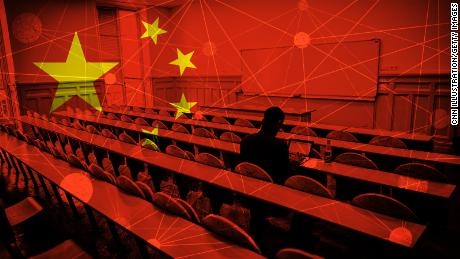
US intelligence warns China is using student spies to steal secrets

Authorities in the People’s Republic of China “use some Chinese students, mostly post graduate students and post-doctorate researchers, to operate as non-traditional collectors of intellectual property,” the proclamation said. These students “are at high risk of being exploited or co-opted by the PRC authorities and provide particular cause for concern.”

Letting those students enter the US “to study or conduct research in the United States would be detrimental to the interests of the United States,” the proclamation announced.

Trump’s Friday announcement is just the latest limit his administration has imposed on Chinese students and other Chinese entities.

In 2018, the State Department issued new time restrictions on visas for Chinese graduate students in fields such as aviation, robotics and advanced manufacturing, which are considered sensitive to national security, scaling back the period students could stay from as long as five years to just one.

In October 2019, the State Department began requiring Chinese diplomats posted in the US to report all their meetings with state and local officials, as well as visits to educational and research institutions.
And in March, the State Department imposed caps on the number of Chinese nationals who may be employed at five Chinese media entities after designating them as foreign diplomatic missions as opposed to journalistic outlets.

CNN’s Jason Hoffman, Jennifer Hansler and Kylie Atwood contributed to this report.

Source link

Partying on Minecraft, in a Replica of a Brooklyn Club

On a recent Friday, thousands of partygoers gathered on the rooftop of a popular Brooklyn club to hear a performance by Alice Glass, the former front woman of the Canadian electronic band Crystal Castles.

The diverse group wore dark green camouflage, electric blue jumpsuits and pink hair, while they moshed with abandon before the multitiered stage.

This dance party did not violate New York’s social distancing rules. It was a virtual concert that took place on Minecraft, the sandbox video game in which players create Lego-like worlds — in this case a reimagining of Elsewhere, an indie-music club in the Bushwick section of Brooklyn.

The Minecraft club, which is called Elsewither, was a collaboration among Elsewhere; Open Pit, an engineering group that specialize in virtual events; and Heav3n, a roving L.G.B.T.Q. party based in Los Angeles.

“Gaming is about 10 years ahead of live music in terms of an interactive online experience,” said Jake Rosenthal, 32, a founder of Elsewhere. “Buying a ticket and a virtual ticket might be part of the new paradigm of being a music venue.”

“When Elsewhere reopens, it’s going to be at some kind of limited capacity,” he said. “It’s a way to bring experimentation back to what we do.”

About 2,400 Minecraft users visited Elsewither between 6 p.m. and midnight on May 8 to hear performances by Pussy Riot, the punk political band from Russia; Rina Sawayama, a Japanese R&B pop singer; Pabllo Vittar, a Brazilian drag queen; and 18 others. The audio was also streamed to more than 30,000 listeners over the gaming platform Twitch.

At a time when Zoom party fatigue is real and the initial excitement of being able to see your favorite D.J.s spin from the comfort of your living room has worn off, video games have emerged as another means of hosting a party during the coronavirus shutdown.

In late April, 100 Gecs, the electronic pop absurdist duo, hosted a virtual concert called #Square Garden on Minecraft featuring Charli XCX, Cashmere Cat, Benny Blanco and Kero Kero Bonito. And Travis Scott held a live concert on the video game Fortnite on April 23 and 25, reaching more than 12.3 million players. (The next Elsewither is scheduled for June 6.)

Admission to Elsewither was free, but a $5 donation on Groundswell offered access to a V.I.P. room and to the artists’ conversations on Discord. After every set, the M.C. would command the audience to type slogans like “Down with Capitalism” and “Queer Rights,” and the chat stream would explode with a repeating chorus of all-capitalized phrases.

While thousands logged on, only 20 to 30 avatars seemed to be in the hall at a given time. This was, in part, by design. An earlier attempt at a Minecraft music festival called Block by Blockwest crashed when too many tried to join. (It was successfully rescheduled for May 16 and attracted 5,000 users.)

At Elsewither, no more than 100 people were allowed into any one server at a time, a setup much like having a bouncer at the door. “Technically, it was the smoothest event so far,” said Umru Rothenberg, a graphic designer with Open Pit. “We’ve ironed a lot of issues out.”

For the musical artists, video game concerts lets them reach a wider audience, free of physical constraints. Nadezhda Tolokonnikova, a member of Pussy Riot, who does not normally play Minecraft, said she appreciated the party’s emphasis on an anticapitalist, pro-L.G.B.T.Q. agenda.

“For queer kids in Russia, seeing a Russian band performing in this amazing online queer community is encouraging because they feel like they are represented somehow,” she said. “I think if I was able to log onto Minecraft and see a concert with this lineup, it would probably have changed my life in a lot of ways.”


Source link

11 Amazing Photos You Missed This Week

0

With the news continuing to revolve around the coronavirus pandemic, it’s easy to miss great images that fly under the radar. We’ve got you covered.

We’re highlighting exceptional photos from around the world for the week of May 23 to 29. Check them out below.

Above: Maria Velez of Orlando, Florida, hugs the tombstone of her son Stephen at the Ohio Western Reserve National Cemetery on Memorial Day in Seville, Ohio, on May 25, 2020. Credit: Aaron Josefczyk/Reuters


A protester carries the carries a U.S. flag upside-down, a sign of distress, next to a burning building on May 28, 2020, in Minneapolis, after the police killing of George Floyd.


Italy’s aerobatic team Frecce Tricolori (Tricolour Arrows) flies over Milan’s Duomo Square as part of celebrations for the 74th anniversary of the proclamation of the Italian Republic on May 25, 2020.


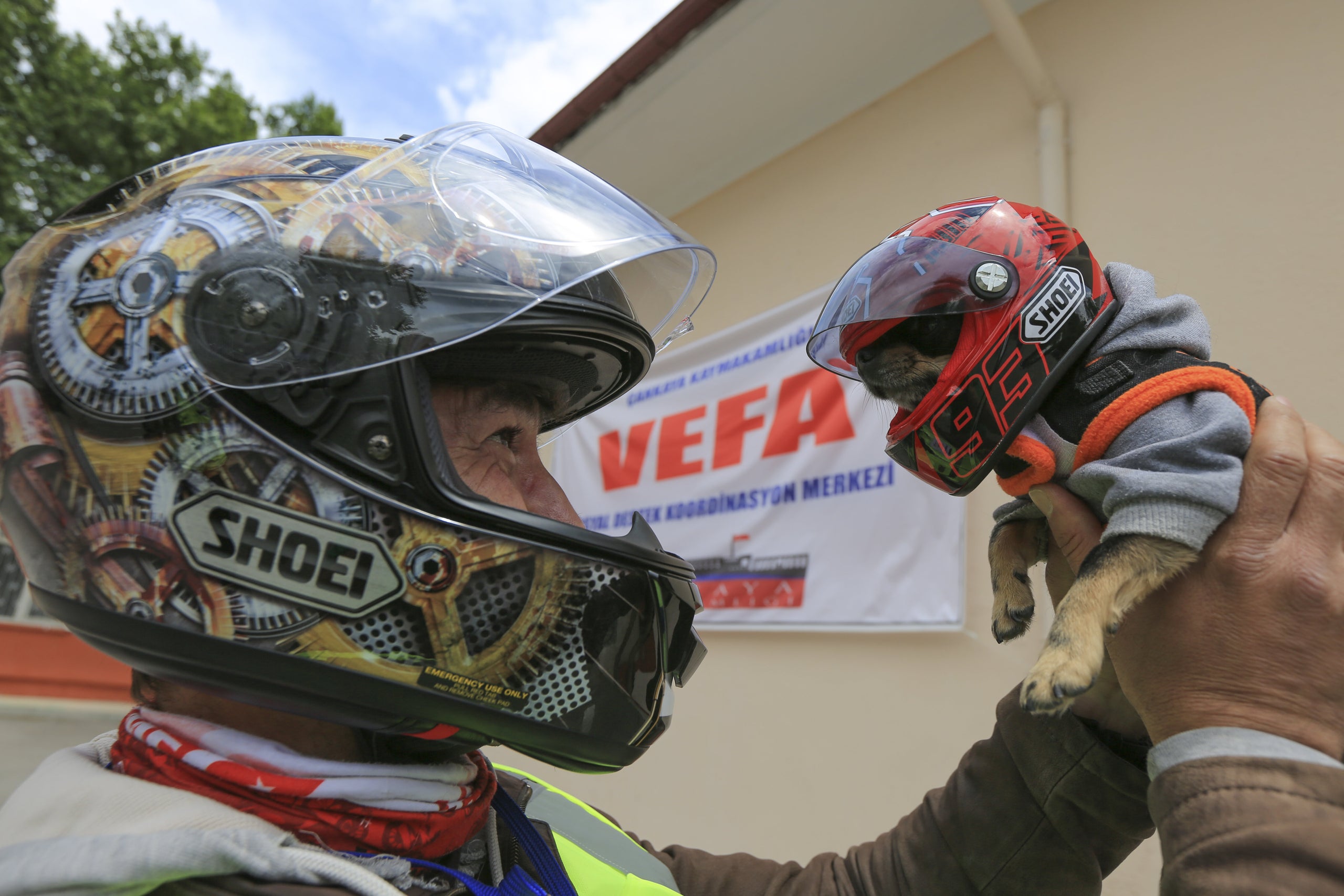
Serdal Kizilcik, one of the members of a volunteer group of motorcycle riders, accompanied by his Chihuahua, “Asil,” on May 23, 2020, in Ankara, Turkey.


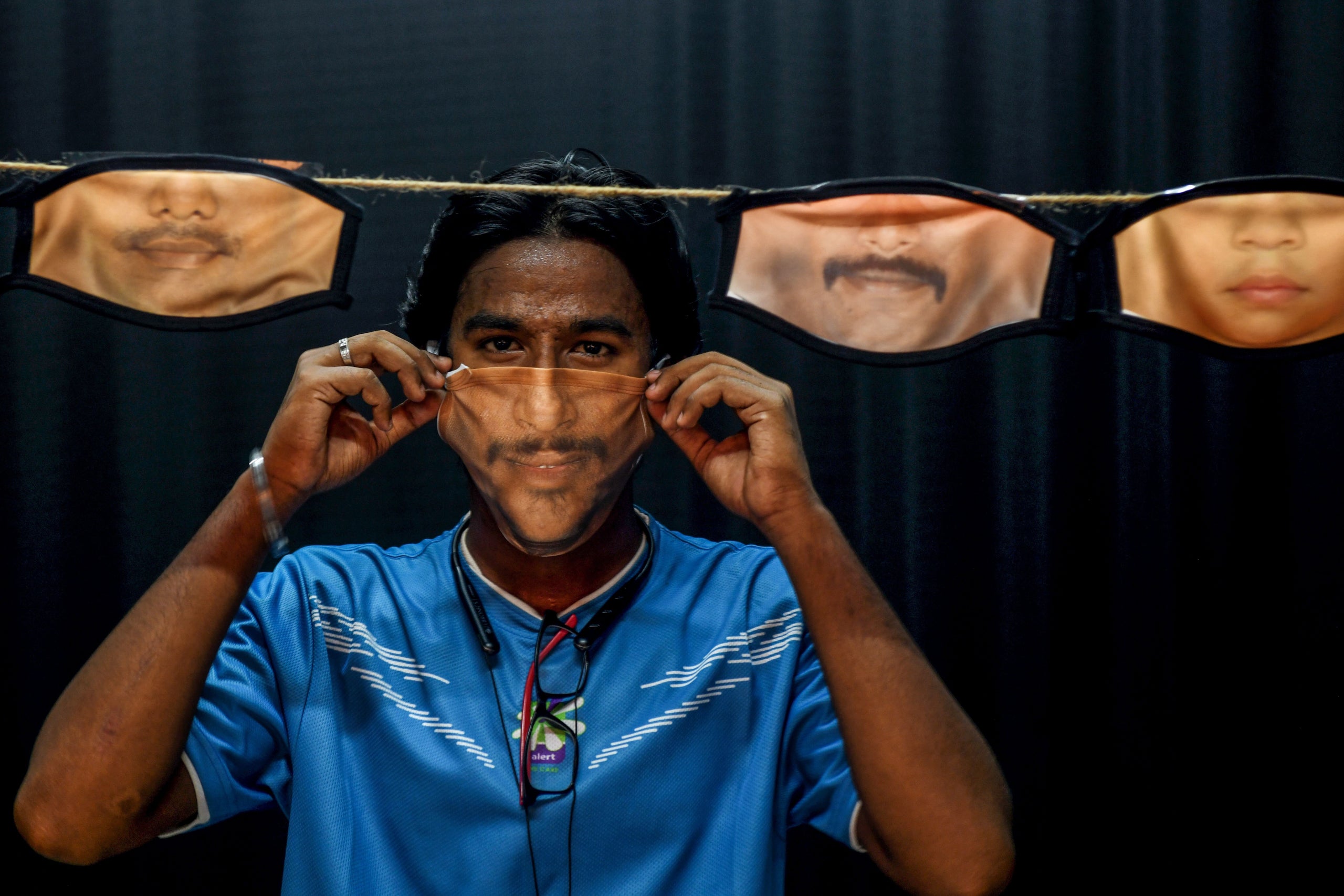
A man adjusts a face mask with his nose and mouth printed on it at a photo studio in Chennai, India, on May 23, 2020.


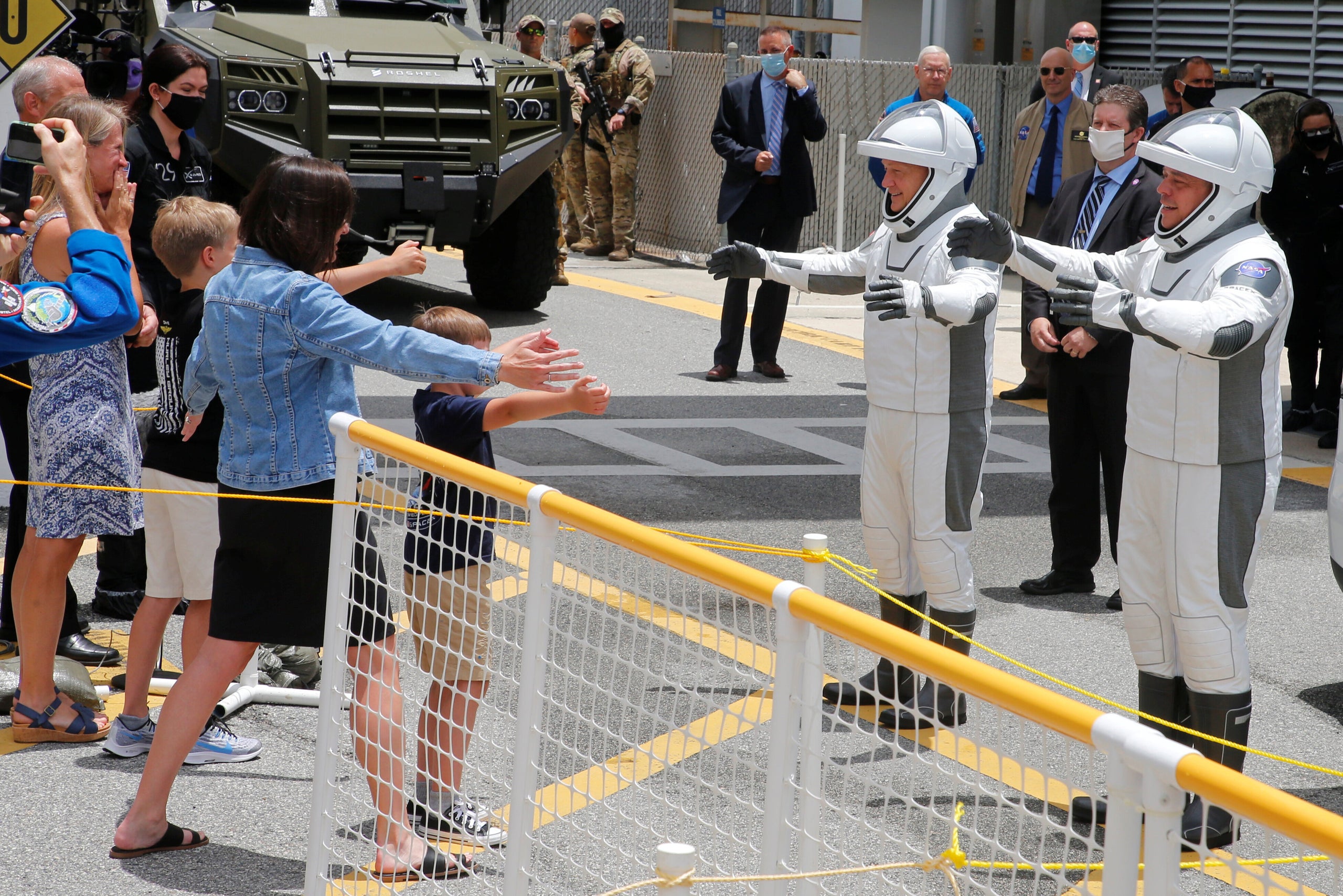
NASA astronauts Doug Hurley and Bob Behnken greet their families before the launch of a SpaceX Falcon 9 rocket and Crew Dragon spacecraft at the Kennedy Space Center in Cape Canaveral, Florida, on May 27, 2020.


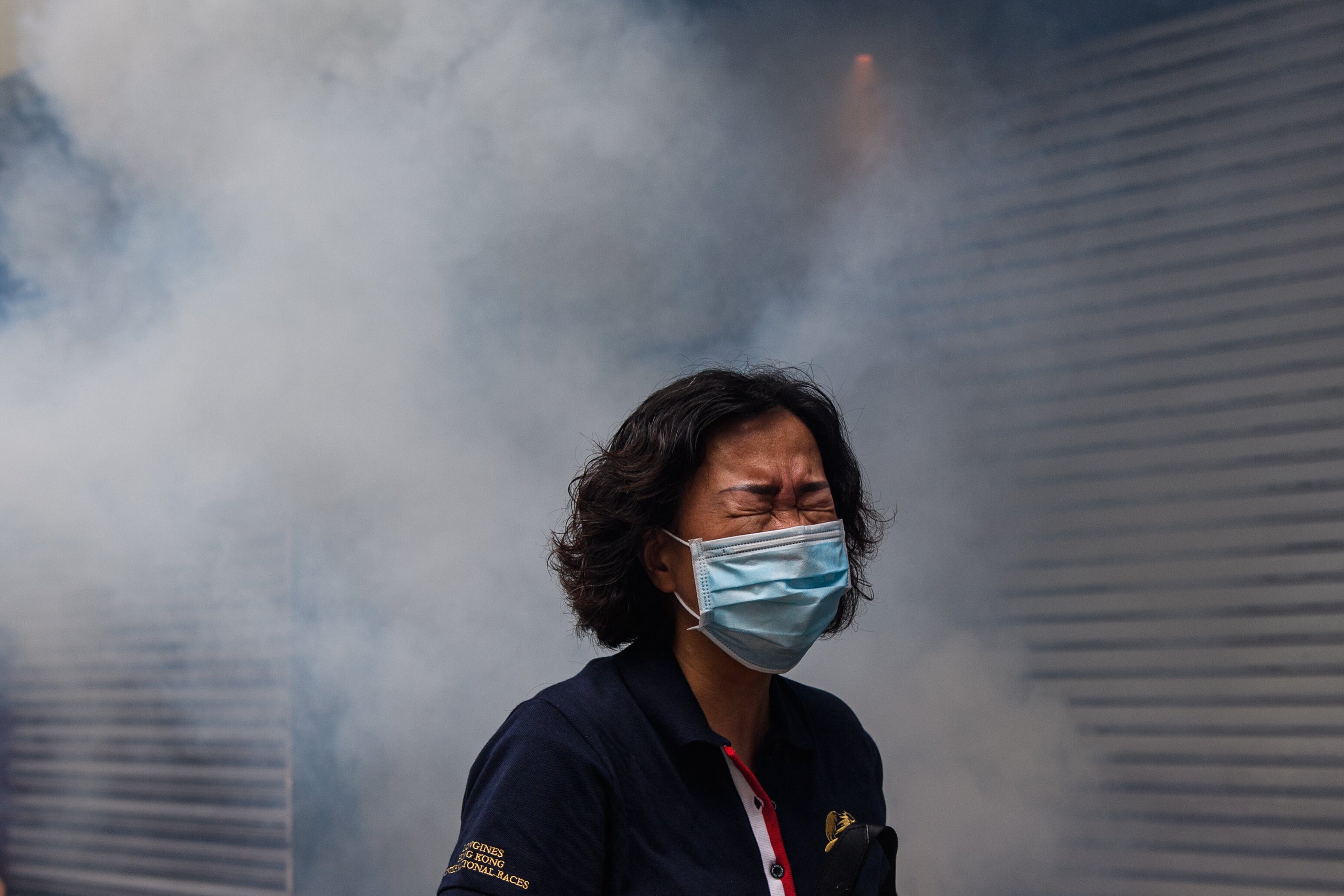
A woman reacts after riot police fire tear gas to disperse a pro-democracy rally against a proposed new security law in Hong Kong on May 24, 2020.


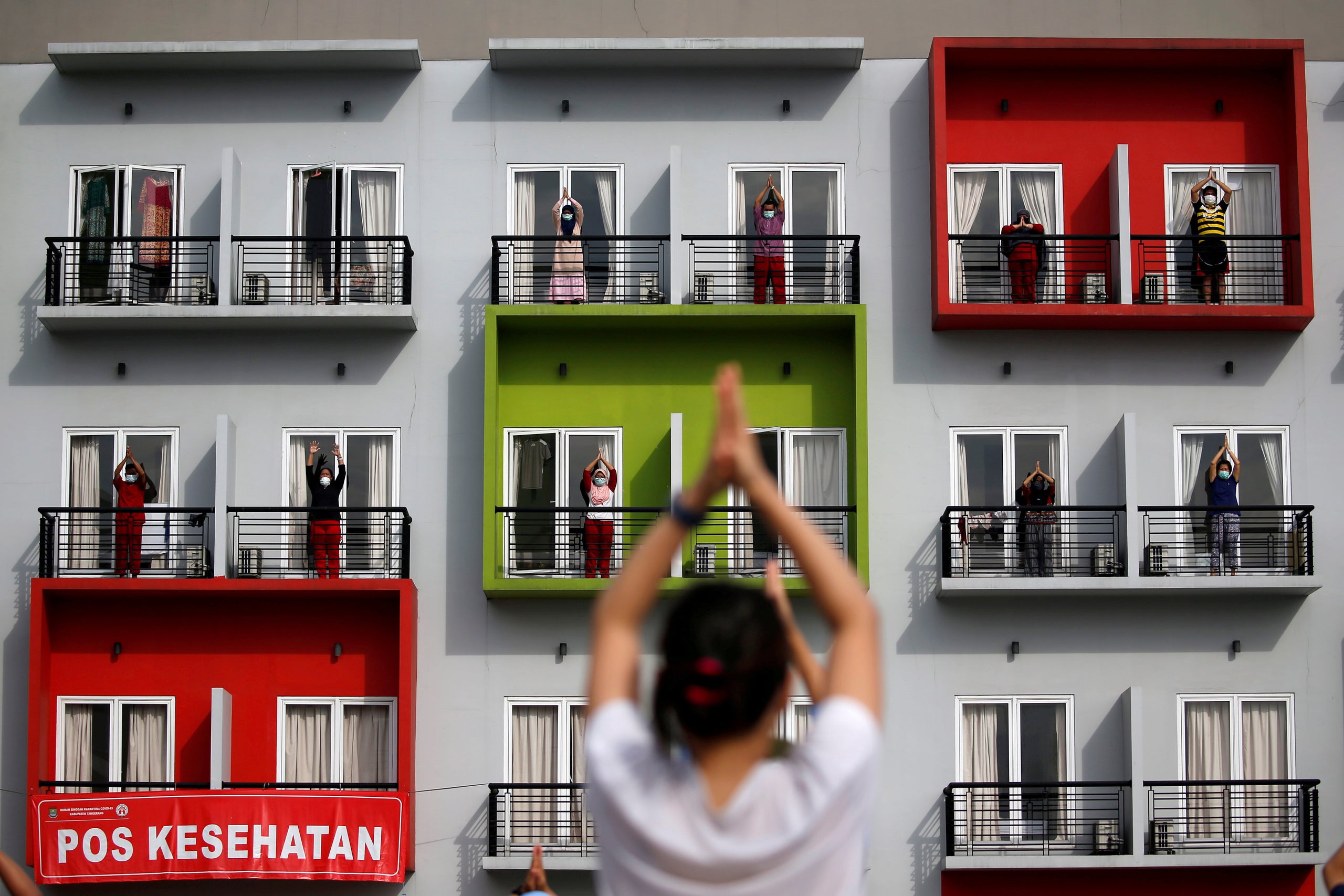
Patients exercise on the balconies of a training center that has been converted into a quarantine house in Tangerang, on the outskirts of Jakarta, Indonesia, on May 28, 2020.


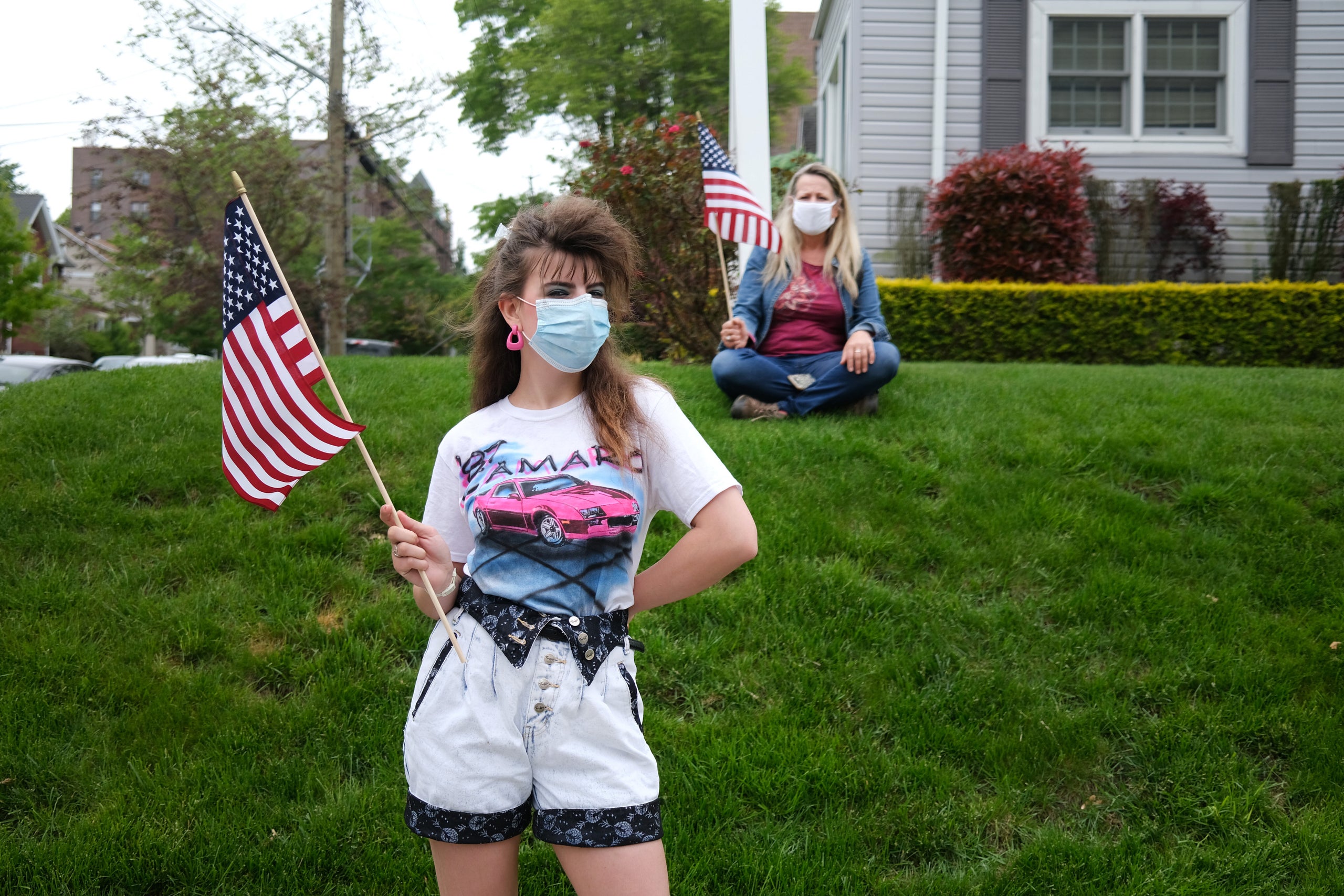
People wear face masks while participating in the annual Memorial Day Parade on May 25, 2020, in the Staten Island borough of New York City. Dozens of cars and nearly 100 members of the patriotic motorcycle group Rolling Thunder joined the event. This year’s parade was diminished in size and in person-to-person contact due to the coronavirus outbreak.


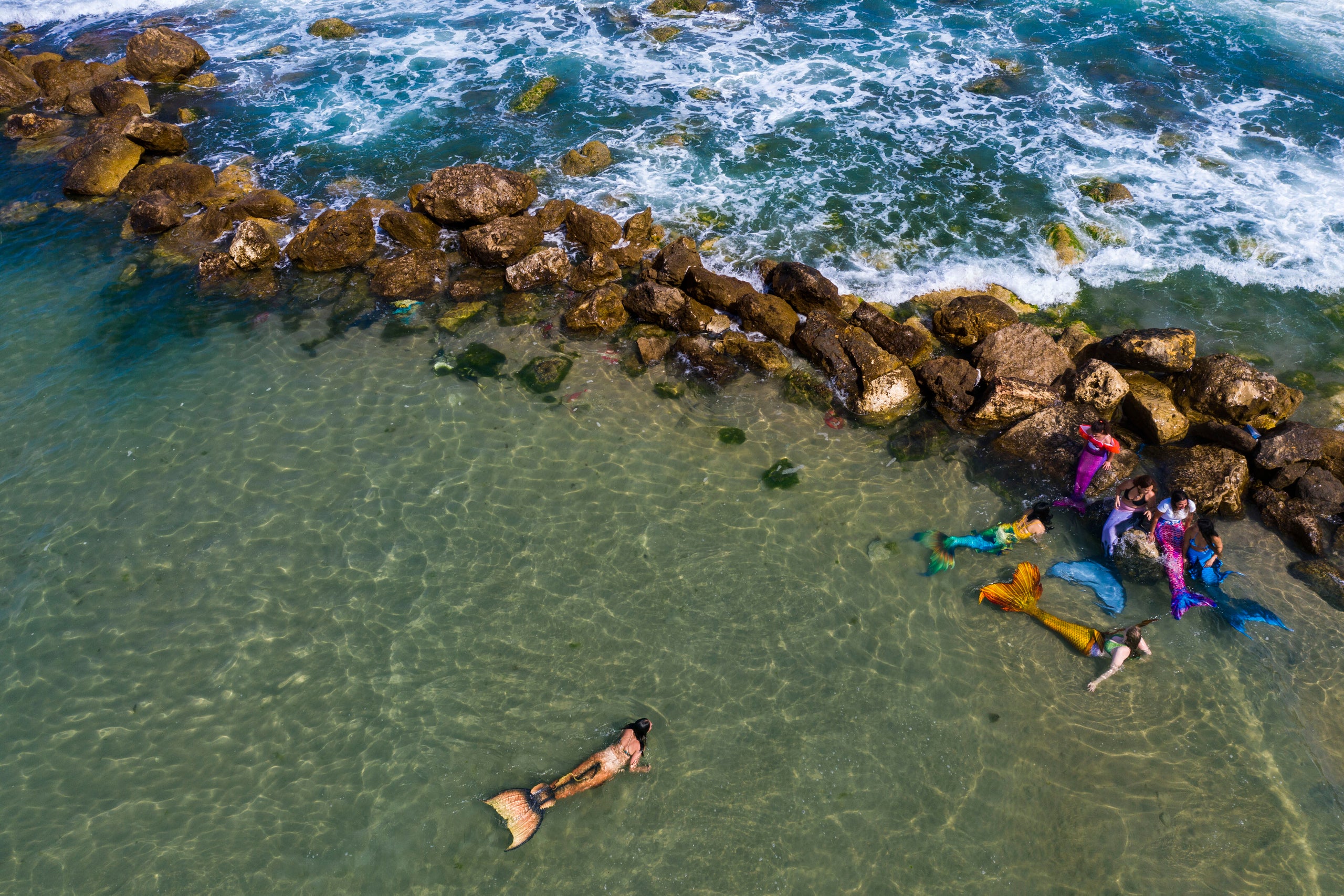
Members of the Israeli Mermaids Community swim with mermaid tails at the beachfront in Bat Yam, near Tel Aviv, Israel, to mark the beginning of the bathing season on May 23, 2020. 


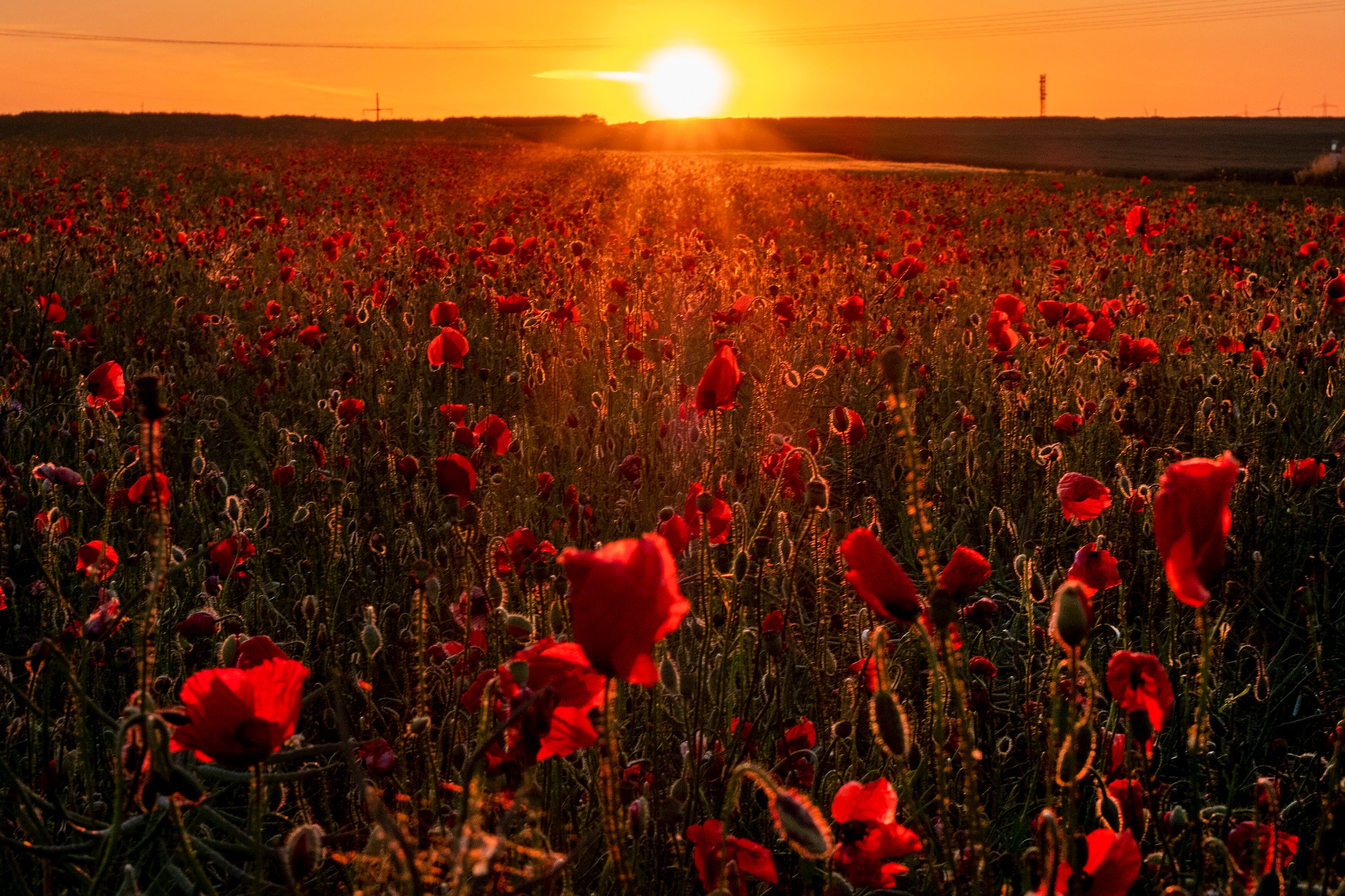
A field of poppies in full blossom as the sun rises in Frankfurt, Germany, on May 29, 2020.


Source link

Trump’s Looting and ‘Shooting’ Remarks Escalate Crisis in Minneapolis

President Trump issued a violent ultimatum to protesters in Minneapolis on Friday and inserted himself in a harshly divisive fashion into the growing crisis there, attacking the city’s Democratic mayor and raising the specter that the military could use armed force to suppress riots that erupted after the death of George Floyd, a black man, at the hands of a white police officer.

Mr. Trump’s threat to have unruly protesters shot — “when the looting starts, the shooting starts” — stirred an outcry in Minnesota and from his national critics, with his Democratic challenger in the presidential race, Joseph R. Biden Jr., expressing indignation that Mr. Trump was “calling for violence against American citizens during a moment of pain.”

The president framed his comments in explicitly ideological terms, as a denunciation of a liberal local government that had failed to maintain order, before abruptly retreating from them some 14 hours later in a slapdash effort to claim he had been misinterpreted. At an event in the Rose Garden on Friday afternoon, he made no mention of events in Minneapolis, took no questions and offered no acknowledgment of the spiraling conflagration over his initial outbursts on Twitter.

“I can’t stand back & watch this happen to a great American City, Minneapolis,” Mr. Trump wrote shortly before 1 a.m. on Friday. “A total lack of leadership. Either the very weak Radical Left Mayor, Jacob Frey, get his act together and bring the City under control, or I will send in the National Guard & get the job done right.”

Mr. Trump’s mix of demands and attacks came despite the fact that Gov. Tim Walz of Minnesota had already activated and deployed the National Guard in response to a request from local leaders.

Mr. Trump began talking about the unrest in Minneapolis overnight as cable news showed a police station engulfed in a fire set by protesters. The four city police officers involved in the death of Mr. Floyd were assigned to that station.

Mr. Floyd was killed on Monday after one of the officers, who were responding to a call about an alleged counterfeit bill used at a store, knelt on his neck while he was handcuffed and lying face down on the ground. Mr. Floyd called out, “I can’t breathe.” The officer, Derek Chauvin, and the three others were fired the next day. On Friday afternoon, Minnesota officials said that Mr. Chauvin had been arrested.

Mr. Trump, in his tweets, denigrated the protesters and issued demands in a situation that was already spiraling out of control.

“These THUGS are dishonoring the memory of George Floyd, and I won’t let that happen,” the president wrote in another post, which was flagged by Twitter. “Just spoke to Governor Tim Walz and told him that the Military is with him all the way. Any difficulty and we will assume control but, when the looting starts, the shooting starts. Thank you!”

In saying “when the looting starts, the shooting starts” Mr. Trump echoed a phrase coined by a Miami police chief in the 1960s about crackdowns on black neighborhoods during times of unrest. Walter Headley, the Miami police chief in 1967, warned that young black men who he called “hoodlums” had “taken advantage of the civil rights campaign,” and added, “We don’t mind being accused of police brutality.”

Shortly before his event in the Rose Garden — a statement announcing punitive measures against China — Mr. Trump tweeted in a puzzling construction that his remarks overnight had been “a fact, not a statement,” and said he had not been urging further violence but rather describing it as a natural consequence of looting.

Twitter officials appended Mr. Trump’s “shooting starts” tweet with a note saying the remark was “glorifying violence.” That provoked another tweet from the president accusing Twitter of having targeted “Republicans, Conservatives & the President of the United States” and prompting his aides to repost his original tweets on the official White House Twitter account. It was also flagged by Twitter.

On Friday afternoon, Mr. Biden condemned the president’s remarks, without naming Mr. Trump.

“This is no time for incendiary tweets,” Mr. Biden said over a livestream from his basement. “It’s no time to encourage violence.”

“The original sin of this country still stains our nation today and sometimes we manage to overlook it,” Mr. Biden said. “We just push forward with a thousand other tasks in our daily life, but it’s always there, and weeks like this, we see it plainly that we’re a country with an open wound. None of us can turn away.”

In a statement posted on Twitter, former President Barack Obama described hearing anguished reactions from African-Americans to the images of Mr. Floyd lying facedown with a knee on his neck. Mr. Obama said he shared their feelings.

“For millions of Americans, being treated differently on account of race is tragically, painfully, maddeningly ‘normal,’” in even the most ordinary situations, he said.

“This shouldn’t be ‘normal’ in 2020 America,” Mr. Obama said, calling for officials to investigate Mr. Floyd’s death and for all Americans to help end “the legacy of bigotry and unequal treatment.”

When the video of Mr. Floyd lying on the ground under the police officer’s knee first circulated, Mr. Trump called it “shocking,” and at the White House on Thursday, the press secretary, Kayleigh McEnany, said the president was “very upset” seeing it.

But the protests in Minneapolis have recalled some of the worst scenes of unrest in response to police brutality in the treatment of black men over the last 30 years.

When conflicts involving race has arisen during his presidency, Mr. Trump has often avoided taking a clear position. When neo-Nazis marched in Charlottesville, Va., in 2017 and a counterprotester was killed, Mr. Trump condemned the death but told reporters there were “very fine people” on “both sides” of the matter, prompting outrage. Mr. Biden referred to Mr. Trump’s comments about Charlottesville when he declared his campaign in 2019.

Mr. Trump’s hostility to black activists and his admiration of suppressive government force have been consistent features of his worldview for decades, stretching back even to a 1990 interview in which he spoke admiringly about the Chinese government’s crackdown on protesters in Tiananmen Square. (“That shows you the power of strength,” he told Playboy magazine.

The crisis in Minneapolis recalled scenes of police violence and civil unrest that scarred the 2016 presidential campaign, and that Mr. Trump seemed to use to his advantage in his contest with Hillary Clinton, his Democratic opponent. During the campaign, Mr. Trump criticized Black Lives Matter protesters seeking to call attention to police brutality, describing the activists as a “threat” in the summer of 2016.

A series of killings that summer — two incidents involving black men killed by police officers in Louisiana and Minnesota, and a mass shooting of police officers in Texas by a black gunman — set a bloody backdrop for Mr. Trump’s nominating convention and may have helped reinforce his law-and-order pledge to “make America safe again.”

Yet it was far from clear on Friday that Mr. Trump’s instinct for the mailed fist would offer him comparable political rewards in his re-election campaign.

Americans typically expect their president to be not just an enforcer but also a unifier and a healer, roles that Mr. Trump has repeatedly shown no interest in performing. His threat early Friday morning to have unruly protesters shot exemplified his preference for escalating conflict, often in violent terms, rather than easing it.

Should scenes of violence, rioting and arson continue to dominate television screens in the coming weeks, it could ultimately make Mr. Trump’s brute-force message more appealing to some of the white swing voters who embraced him reluctantly in the 2016 election.

But that, too, might carry a political price: Mr. Trump’s campaign has been making selective efforts to reach out to black voters, particularly young men, and it is difficult to see how that pursuit could have the desired effect if the president demonizes police protesters in harsh terms.

And as in other arenas of the 2020 campaign, Mr. Trump is confronting an elusive rival in Mr. Biden, who is one of only a few major figures left in the Democratic Party who can claim both a deep bond with black voters and a relatively conservative record on matters of law enforcement.

At a virtual fund-raiser on Thursday, Mr. Biden opened his remarks with a somber reflection on Mr. Floyd’s death, calling it a “brutal, brutal death.” He described the nation as struggling with “an open wound” and nodded to “an ingrained systemic cycle of racism and oppression” in America.

“It’s ripped open anew this — this ugly underbelly of our society,” he said.

Black activists and political groups responded to Mr. Trump’s statements with shock, accusing the president of using race as a political wedge at the expense of vulnerable communities. They pointed to Mr. Trump’s previous statements regarding protesters in Charlottesville as a counterexample, saying that his willingness to defend protesters who included racist and anti-Semitic individuals in 2017 did not extend to black protesters in Minneapolis.

Progressive groups said that the protests and actions in the Minneapolis community should not be seen in isolation, but a culmination of sustained police aggression and systemic inequality — present long before Mr. Floyd’s death.

“This is a clear representation of a president who has always seen those who stand up to injustice as enemy combatants, and has been uninterested — at every turn — in the role of uniting people,” said Rashad Robinson, president of Color of Change, a racial justice organization.

Katie Glueck and Astead W. Herndon contributed reporting.


Source link

Covid-19 crisis: Over to states as next phase of lockdown set to kick in

0


Two days before 4.0 comes to a close, the Centre and states engaged in hectic parleys to chalk out the road ahead. After taking chief ministers’ views on the contours of the next lockdown, Union Home Minister met Prime Minister on Friday before finalising the guidelines. Sources indicated that the focus this time would be on further easing the curbs on economic activities, including opening shops in malls, while maintaining stringent norms in the containment zones. Also, states are likely to have a bigger role than the Centre in deciding how 5.0 will play out from June 1.

After a first of its kind meeting between Shah and chief ministers, officials said from now on, measures would be reviewed every fortnight and restrictions would largely be decided by states. While many states opted to wait for the Centre’s guidelines, expected on Saturday, chief minister led the way in announcing significant relaxations from June 1.


ALSO READ: India GDP growth slows to 3.1% in Q4 as Covid-19 lockdown hits economy

Even as there’s no consensus among states on the shape of the next lockdown, many favoured extension of curbs to contain the spread of Covid-19 cases. Kerala, and are among those concerned that economic reasons outweighing health considerations could sharply increase the number of cases.

Therefore, they want the lockdown extended. ‘’Considering the cases are going up, the recommendations are not in favour of lifting of the lockdown,’’ a government official told Business Standard.

However, others such as West Bengal, Karnataka, Punjab, and Goa supported further relaxations to spur economic activity. After his meeting with Shah, Goa CM said he felt the lockdown may be extended for 15 more days. “However, we want some more relaxations like opening of restaurants with social distancing at 50 per cent capacity,” he said.

government on Friday allowed offices — private and government — to operate at full capacity from June 8; jute and tea industries would also be allowed to deploy full workforce. To facilitate this, public transport, particularly buses, would be allowed to ply, though crowding and standing will not be allowed.

ALSO READ: Govt unlikely to press for hike in GST rates for non-essentials next month

Banerjee also approved opening religious places from June 1 with restrictions. “Considering the sorry state of affairs in the country, let us come forward and pray together,” Banerjee said on Friday.

Karnataka, too, has decided to open the doors to religious places from June 1. Pujas can be offered through an app which would soon start taking bookings. The state is also in favour of opening restaurants and theatres from Monday, but the Centre will take a final call on the issue.

Punjab CM Amarinder Singh told a group of industrialists that his government wants to ensure 100 per cent operationalization over the next few days. He said 78 per cent of the industry had resumed operations, and 68 per cent of the migrant labour has opted to stay back in Punjab.

States’ stand

  • allows offices to operate at full capacity from June 8; religious places to open from June 1
  • Karnataka, too, will open religious places from June 1; pujas can be offered through app
  • Punjab wants to ensure industry functions at 100% capacity
  • Maharashtra has asked for resumption of suburban trains in Mumbai for emergency service
  • Jharkhand, Odisha, favour lockdown extension

While educational institutions will remain shut, the view was divided on whether the Centre should allow resumption of metro services, opening of restaurants, hotels and theatres from June 1.

International air travel is likely to remain suspended for some time.

The Centre-state talks on Friday also revolved around resumption of economic activities in the worst Covid-19 hit cities including the biggest urban centres of the country such as Mumbai, Delhi, Chennai, Ahmedabad, Pune, Hyderabad, Kolkata, Indore, and Jaipur. The Centre is concerned at the increase in cases in 30 municipal areas across states accounting for 80 per cent of the positive turnout in the country. Most states agree that the Centre should continue to restrict inter-state bus, train and flight operations.

ALSO READ: GDP to contract 10.8% without more fiscal stimulus, says Pronab Sen

Sources indicated that parts of Tamil Nadu — that had not reported new Covid cases or seen a decline in the number of cases — would see relaxations. But it may not be the same in Chennai as the numbers in the metro were increasing.

Telangana and Andhra Pradesh were treading cautiously as the number of cases was on the rise. No additional relaxations have been sought by the two state governments. Not much is expected to change in Maharashtra, which accounts for the highest share of confirmed Covid cases and fatalities. CM is understood to have asked for resumption of suburban trains in Mumbai for emergency service.

CM said his government was in no hurry to open the lockdown, and could go for an extension depending on the pattern of the spread.

Delhi health minister Satyendra Jain said large congregations should not be allowed. Schools, colleges, cinemas should remain shut, he said on a day when two floors of Parliament Annexe building were sealed after an officer tested positive.

In UP, the was slated to take stock of the situation with top district officials on Friday night. At present, there are about 1,200 hotspots in the state with a population of more than 5 million people belonging to 960,000 households, UP additional chief secretary Awanish Kumar Awasthi told the media.

ALSO READ: Coronavirus LIVE: Trump says US ‘terminating’ relationship with WHO

The fresh guidelines by the MHA are set to ask states to implement social distancing more strictly and increase fines on those violating this. Punjab on Friday increased fine on those found spitting in public places to Rs 500. CM has said he has received representations from many religious leaders to open religious places. Among others, Rajasthan plans to restrict the lockdown to “curfew and non-curfew zones”. Odisha, after an increase in the spread, favours extending the lockdown. home minister has said lockdown should continue beyond May 31 and justified strictness at the state’s borders with Delhi since free movement was likely to result in a surge in Covid cases in the state.


(With inputs from Avishek Rakshit, Samreen Ahmad, Virendra Singh Rawat, T E Narasimhan, Dasarath B Reddy, Aneesh Phadnis & Archis Mohan)


Source link