Jamila Thomas and Brianna Agyemang, two black women who work in music marketing, proposed that the music industry hold a day of reflection on Tuesday after the death of George Floyd.
At Styles, we spend a lot of our days chatting with each other about things we see online, trying to make sense of it all. Here, four women of color — Jasmine Howard, an operations manager; Tariro Mzezewa, a travel reporter; Lindsey Underwood, a Styles editor; and Caity Weaver, a Styles reporter — talk about the blackout on Instagram.
Lindsey: I don’t post on Instagram often, but today I felt a pull to post. My feed was flooded with black squares, but I just couldn’t pull the trigger. I felt conflicted about seeing so many of my white friends — who may have great intentions — posting the blackout. I just imagine some level of satisfaction they may feel that they “spoke out,†but I’m not sure what it really accomplishes.
Jasmine: I think most of them feel they should, or have to, so they’re not singled out for being the only ones not posting.
Tariro: We’ve all seen performative and insincere allyship in the days since George Floyd died in police custody, and some of us may come at something like this with some degree of skepticism.
I think it’s great that people want a visual uniting symbol of solidarity, but I can also see how people who haven’t said a word in the past — or in the past week — feel like they’ll look bad to their followers if they don’t post. So they post, but with no real intention of listening, learning, donating, protesting or helping beyond the post. The post makes them feel like they’ve done their part.
Jasmine: I’ve seen a few posts where I’m like, “I would’ve rather you’d done nothing.â€
Tariro: Yes! You say you’re posting to not take up space, but you’re still taking up space. Might as well use that to share resources and info, no?
Jasmine: Definitely — I’ve also gotten a lot of “I love you†or “tell me how to be better†texts from white friends attempting to be allies. Some of it seems sent with the expectation that I will immediately respond and acknowledge that they’ve made the effort and checked on their black friend. It’s still asking me to do the work.
Caity: My initial reaction was: This feels sort of empty. A couple of my black friends posted the squares, but the vast majority of people who did it on my feeds were white. Non-black people of color seemed to be split.
I started texting with a few friends — some black, some other POC — and the reaction from them, and from a lot of black people I follow on social media and whose judgment I tend to trust, was that they didn’t like the squares. But! Jasmine is also someone whose judgment I trust, who is vocal about activism on Instagram, and she posted a square. So I am eager to hear all her thoughts on it.
Jasmine: One friend flat out told me she’s happy I still love her.
Tariro: It feels like it’s a way for white people who aren’t comfortable talking about racism to avoid doing so entirely, while acting like they are doing something. Instead of having to confront this thing that makes you so uncomfortable, you can now post a square and feel like you did something.
Caity: I think it all gets back to meaning well versus doing well.
I have a white friend who, on Monday, posted videos of herself at a protest and shared information and links about activism in her Instagram Stories. It’s not her usual tone on Instagram. And I was genuinely touched by it. It made me feel happy and supported and loved.
(And she wasn’t tagging her black friends in these posts, mind.)
Early in the day I checked to see if she had done a black square post, and she hadn’t. So I sent her a note to say that I really appreciated all the other stuff she was doing, and to let her know, just in case she was wondering about it, that I personally was not loving the black squares. I wanted to make it clear her other actions mattered more to me.
I have felt overwhelmed by the news but also invigorated by all the people sharing ways to be helpful. To have huge black voids suddenly appear on Instagram was jarring. I don’t begrudge any black person, especially, posting the black box. Cardi B posted one, and she’s a super-vocal advocate.
Her account also highlights what I perceive as one of the flaws. She posted the box on her main feed and later uploaded an Instagram Story where she apologized for breaking the blackout to share information about voting in primary elections. And it’s like, oh, Cardi, please don’t apologize!
Tariro: I think that might be the only thing I’ve posted: someone else’s post urging people to vote. Also, guys, BRANDS! Brands love the square!
Caity: I love holding brands accountable financially. I’m glad record companies are making donations today. But also: I don’t look to brands for inspiration, news or guidance.
Gene Demby from NPR has been doing a Twitter thread of brands’ well-meaning but often tone-deaf responses. Seeing them in aggregate is surreal.
Did we need to hear this from a Garfield-themed food app?
Jasmine: LOL, we definitely did not. Also, WHERE HAVE YOU ALL BEEN THE LAST 60 YEARS?! Like, Land O’Lakes just took the Native woman off of their packaging. The Cleveland Indians are still the Cleveland Indians. So much wrong and you all think one black square makes you Malcolm X.
Caity: One brand that is actually helpful is Ben & Jerry’s. They are doing things like reminding voters in Montana to apply to vote by mail. They are not posting platitudes.
Tariro: I did a casual scroll-through some of my favorite beauty and clothing companies’ Instagrams yesterday. Crickets for a week. Today, the square. I always try to buy from black businesses, but I do think this has really made it a priority for me.
Caity: Yes! And in a month, I will still feel positively toward Ben & Jerry’s. I will not remember that a makeup brand posted a black square. Because Ben & Jerry’s is putting in the work regularly and not making a huge deal about it. I think people are rushing to seem profound, to show how deeply they are affected right now. But, really, the best thing for a brand to do is to throw money at important causes.
Tariro: Use that money and donate more than $50, brands.
Jasmine: Just pay.
Caity: Pay!
Jasmine: That’s really all any of them can do for us anyway. That’s why I post places to donate.
Caity: Look at it this way: You are paying for the pass that allows you to say nothing. This is your awkward-statement-avoidance tax.
Paul Hackett/ReutersEmma Watson has an Instagram following of more than 57 million.
Emma Watson has responded to scrutiny after critics accusing her of jumping on a trend by posting a trio of black squares on her Instagram account as part of the “Blackout Tuesday†campaign.
Watson’s feed initially featured three black squares with white borders, accompanied by the hashtags #blackouttuesday, #theshowmustbepaused, #amplifymelanatedvoice and #amplifyblackvoices.
The posts attracted thousands of comments on both Instagram and Twitter, with some arguing that Watson, with a platform of more than 57 million Instagram followers, could have done more to amplify Black voices, especially considering her role as a UN Women’s goodwill ambassador. Other commentators highlighted Watson’s stylistic choice of bordering each black square in white, arguing that she had focused on maintaining the aesthetic of her Instagram feed instead of communicating a message of solidarity.Â
emma watson has 57.1M followers on instagram, her first post about blm has over 1M likes and instead of sharing links to petitions and donations, she thought the best idea was sharing 🔳🔳🔳? tf is that, open your purse, SPREAD INFORMATION
emma watson not saying anything for the whole week and then posting a black blank pic in instagram that won’t help in anything is just the peak of white feminism
emma watson gave a 1000+ word, fact checked speech about women’s rights (heforshe movement) at UN headquarters but posted 3 identical pictures for blm on ig and logged off. this shit ain’t addin up sis
— AOS S7 SPOILERS | ᵇˡáµ🌈 natalie rushman lovebot (@widowsquake) June 2, 2020
Defenders were quick to point out Watson has frequently used her Instagram account to highlight Black creators and activists.
Emma Watson has been speaking up about racism since 2015 but y’all want to cancel her because she posted 6 posts in order to amplify a movement. Don’t talk about aesthetic when your fav never address issues on their Instagram. Emma’s whole feed is giving voice to minorities. pic.twitter.com/yEdHlgpcZg
Following the initial controversy, Watson added two more posts to her Instagram feed, one including artwork and a poem by Black painter Fahamu Pecou. Watson wrote that she had been “holding off posting until #blackouttuesday ended in the UK†and would devote future space on social media to sharing anti-racism resources.Â
The Blackout Tuesday campaign, which encourages people to post black squares to Instagram, was created by music executives Jamila Thomas and Brianna Agyemang. The campaign is part of their #theshowmustbepaused initiative “in response to the murders of George Floyd, Breonna Taylor, Ahmaud Arbery and countless other Black citizens at the hands of police,†according to a message on the movement’s website.Â
Despite the campaign’s objective, multiple voices on social media pointed out that many people had used the hashtag #BlackLivesMatter when posting the black squares, inadvertently covering up information related to donations and the struggles of Black Americans during the ongoing protests in the United States.Â
Groups of people from coast to coast protest police brutality after George Floyd died in Minneapolis police custody.
USA TODAY
The state waits on hundreds of millions of N95 masks. And House Speaker Nancy Pelosi calls on President Trump to be a “healer in chief.” Plus:Â I talk with the attorney who successfully argued to the state’s high court that video and other electronic records should not come with an out-of-reach price tag.Â
“For all those people hating cops across the nation,” the most controversial one said. “Just leave your name and address at your local police agency and let them know whenever you dial 911 or need emergency police services you no longer wish for them to respond to your calls for help.”
Sacramento County declared astate of emergency Tuesday afternoon as protests sparked by George Floyd’s death by a Minneapolis police officer continue across the country.
In Los Angeles County, officials continued a 6 p.m. curfew for the third day as protests across the region continued; 2,500 people were taken into custody between Friday and Tuesday morning, the LAPD told the LA Times. As curfew neared, the gatherings remained strong.
Pelosi condemns use of tear gas to clear church path
House Speaker Nancy Pelosi was one of several elected officials to condemn law enforcement officers using tear gas and rubber bullets to break up a peaceful protest at Lafayette Park near the White House.Â
Reporters at the scene described it as one of mayhem. President Trump would use the route to walk to nearby St. John’s Episcopal Church, where he held up a Bible. Trump’s appearance came after he said he would use military intervention if needed to quell the protests.Â
She said protesters were “beaten” so Trump could walk to the church. “That has no place and it’s time for us to do away with that. A time to heal,’ she said.
National Parks, the hottest May, evictions and the next stimulus bill
Your next stimulus check could be higher, but really, the proposal by House Democrats for the next stimulus package is more a starting point for negotiations.
What else we’re talking aboutÂ
Their lacrosse season was cut short, like the rest of their senior year activities, but these triplets at least, have had each other.Â
Bring your money and your masks: The Cabazon Band of Mission Indians has reopened Fantasy Springs Resort Casino in Indio. It follows Spotlight 29, Tortoise Rock, both Agua Caliente casinos in Palm Springs and several others that reopened last month.
Kids, teens and adults looking for ways to learn and talk about race have lots of good options. Here’s a good place to start.Â
Transparency files: Governments can’t charge for editing out 411 from public records
In December 2014, hundreds of people showed up to demonstrations in Berkeley to protest the decisions not to indict the officers involved in the deaths of Eric Garner and Michael Brown.Â
Garner died in July 2014 after New York City Police Officer Daniel Pantaleo placed him in a chokehold, a move prohibited by the department. Video captured Garner face down as he said “I can’t breathe” 11 times. Five years later, Pantaleo was fired but faced no criminal charges.
A month later, Brown was fatally shot by Ferguson (Missouri) Police Department Officer Darren Wilson. A grand jury opted not to indict Wilson, who resigned from the force not long after the shooting.Â
Several protesters who attended the Berkeley demonstrations claimed police injured them, which prompted the San Francisco chapter of the National Lawyers Guild to request footage from body cameras worn by officers at the protest.
The city of Hayward and its police department charged the Guild nearly $3,000 for the footage.Â
The American Civil Liberties Union of Northern California and the Law Offices of Amitai Schwartz sued, alleging agencies can’t charge for redacting information — in this case, billing the labor costs for editing out portions of the video police determined were “confidential.”
Last week, the California Supreme Court ruled against Hayward, agreeing the costs of redacting information couldn’t be transferred to the public.
Rachel Lederman, the attorney who requested the videos on behalf of the Guild, called the ruling an important victory for transparency.
“Body cameras can’t fully serve their function of promoting police accountability if it is prohibitively expensive for the public to get access to the videos,†she said in a release announcing the decision.
I talked to Schwartz, an attorney in Emeryville, more about the case. Over his 45 years in law, Schwartz has handled several California Public Records Act cases and numerous cases for the ACLU, including ones involving police accountability.Â
We talked via email. Answers have been edited for length and clarity.Â
Q: How did you get involved with this particular case?
A:Â In 2015, the ACLU asked me if I would represent the National Lawyers Guild, San Francisco Bay Area Chapter after it had been charged close to $3,000 by the City of Hayward for its labor costs in taking out certain portions of police body camera videos of police actions at a street demonstration.
Q: What did the state Supreme Court decision say, in essence?
A: The California Supreme Court interpreted the California Public Records Act, which is the state equivalent of the Freedom of Information Act. On May 28, the court issued its unanimous opinion, saying that the CRPA does not permit public agencies to charge requesters for the labor costs of taking confidential information out of electronic records, including police videos, before copies are released to the public and news media.
Q: Why was the ruling so significant?
A: If California agencies had been allowed to charge labor costs for removing information from public records, records including videos would be inaccessible because most persons, and most organizations and new media, would not be able to afford the costs charged. A long video, for example, could come to many thousands of dollars, if not more. This would have destroyed public access to most public records in California, at least those that include any confidential information.
Q: Another law that went into effect in 2019, SB 1421, was also designed to improve access to police records. Will the Hayward ruling have any impact on that law?
A: It will have an enormous effect because most SB1421 records will contain some confidential information. Now, requesters won’t have to pay for the labor costs of taking out the confidential information.
Q: Law enforcement in California historically has had great latitude when it comes to keeping records out of public view. Is that changing or getting better?
A: The landscape has changed over the past several years. Records of police agencies are far more open now and public accountability has gotten much better due to work of the Legislature and this court decision.
Q: The Hayward ruling seems particularly relevant today, as protests take place across the state, from the stay-at-home gatherings to the ones in response to George Floyd’s death by a Minnesota police officer. Will this ruling make it easier to get information on the response and see who was involved?
A: Yes, it should. (Author note: Body camera footage from the officers involved in Floyd’s death has not been released).
Q; Why is there such resistance to releasing the videos? Law enforcement has said the cameras are there to protect the officers as much as the public, providing less of a ‘they said, they said,’ back-and-forth situation.
A: In the Hayward case, the resistance was not to the idea of releasing the videos. Resistance came in the form of deciding who pays the labor costs involved. In effect, though, imposing excessive labor costs and charging requesters would put up a barrier to disclosure.
Q:Â Â Do you have any thoughts or reactions when you see what’s going on following Floyd’s death, in California or across the rest of the country?
A: It’s tragic. This has been going on during all the years I’ve practiced law. Mostly it was out of sight of the public, but not always. I think accountability has improved, but I am not optimistic that things will change much unless public attitudes change substantially and police reform becomes more than aspirational. And, of course, rooting out structural racism is essential.
By the way, if you’re planning to request electronic records, the Electronic Frontier Foundation recommends including language like this: “Pursuant to NLG vs. Hayward, S252445 (May 28, 2020), government agencies may not charge requesters for the cost of redacting or editing body-worn camera footage.â€
In California is a roundup of news from across USA TODAY Network newsrooms. Also contributing: San Francisco Chronicle, Los Angeles Times, Sacramento Bee.
Read or Share this story: https://www.usatoday.com/story/news/nation/2020/06/02/california-n-95-trump-george-floyd-public-records-tuesday-news/3123206001/
Written by Kamaal Saiyed |
Published: June 3, 2020 6:25:02 am
Fishermen take their boats to safety in Umargam taluka of Valsad in Gujarat. (Express photo by Javed Raja)
Dattatray Davne, 55, was out on the sea since Saturday, hoping to make up for the season lost during the lockdown. But the group he was part of was soon disappointed with the warning of cyclone Nisarga in the Arabian Sea and was forced to return to the shore. The fishing season ends on June 15 but now they have to wait for further advisories before venturing out into the sea.
When The Indian Express met Davne, fishermen were anchoring their boats on the Nargol beach and covering them with plastic sheets. The sky was overcast and it had started drizzling.
“This is end of season and we have been out on the sea for the past two days, hoping to get a good catch. We were around 13 nautical miles when we got information from other fishermen that a cyclone had developed and it might pass through south Gujarat. The Coast Guard officials in their boats also told us the same and we returned back. Had we waited for one more day, we might have got a good catch. Now we have to wait till we get further instructions from the authorities,†says Davne, president of Nargol Fishermen Association, who was accompanied by his two sons.
The Gujarat government has evacuated close to 79,000 persons living in coastal districts of Bharuch, Surat, Navsari and Valsad on Tuesday, with 6,000 of them from Valsad alone.
The famous black sand beach, Tithal, was closed for visitors and police were deployed.
The high tide at Tithal were the only remaining signs of the cyclone, as moderate rainfall with high speed winds brought immense relief from the scorching heat.
On Tuesday morning, two NDRF teams arrived in the district and took stock of the situation in the coastal villages and Tithal beach as people chose to stay indoors in Valsad town. Shops were open with no customers.
In Valsad, 35 villages — 18 in Valsad taluka, 13 in Umargam taluka and 4 in Pardi taluka — were put on alert in view of the cyclone. “We shifted around 6,000 people from coastal villages to 35 shelter homes in nearby places, maximum number being in Umargam taluka where families staying in 145 kutcha houses were shifted. We are also mantaining Covid-19 protocol in the shelter homes where food and other facilities are provided. Arrangements have been made in hospitals to deal with emergencies. We are well prepared,†said Valsad District Collector RR Rawal, who took charge of the district on Monday.
Hundreds of fishermen returned to Nargol village in Umargam taluka from the sea by Monday evening following the cyclone alert. The village is dominated by Mangela fishermen community though most of the residents of around 10,000 people, work in different factories in nearby Sarigam GIDC and Umargam GIDC. Many fishermen work as assistants in larger vessels in Diu, Okha and Porbander.
“During the past two months, due to lockdown, our business went down by 60 per cent. My sons and I were going round villages to sell our catch of shrimps, pomphret, lobsters, crabs, etc. We faced huge loss and are just surviving. I am planning to send my sons for some other work once the lockdown lifts. I will try to get them job in some industries in Vapi or Sarigam,†says Davne.
Sushmita Sen returns to screen with Hotstar Special show Aarya
A decade after her last Hindi film released, actor Sushmita Sen on Tuesday announced her digital debut with Disney+ Hotstar’s series Aarya. The actor will star in the title role in the Hotstar Specials series, directed by Ram Madhvani. Sushmita took to Instagram to share the first look of the show. “‘Because of You… I am.’ Aapne bulaya aur hum chale aaye! Hotstar Specials presents #Aarya. Coming soon!” she posted on Instagram.
Other details about the show are currently under wraps.
Sushmita, 44, announced her “second innings” in the showbiz in December 2019. The former Miss Universe was last seen in the 2015 Bengali film “Nirbaak”, while Anees Bazmee’s multi-starrer comedy “No Problem” marked her last Hindi film in 2010. She is best known for her performances in Bollywood films such as “Biwi No 1”, “Zor”, “Filhaal”, “Main Hoon Na” and “Maine Pyaar Kyun Kiya?”.
Recently, Sushmita opened up about her struggle with the autoimmune condition, Addison’s disease, which she fought for over four years through Nunchaku workout sessions. While Sushmita had been away from the big screen, she kept the fans entertained with her interesting social media posts with her boyfriend Rohman Shawl and two daughters. The actress keeps treating fans with her workout videos with Shawl and garners much praise. Recently, she shared a workout video which was all about what a ‘stable relationship needs’. Slaying a yoga posture in the video, Sushmita and Rohman looked madly in love.
Sushmita Sen wrote, “I love you my tough guy Rohman Shawl. A stable relationship needs a balanced center, flexible mind, mutual strength and deep trust. How symbolic is this posture! I love you guys.” Rohman shared the same video on Instagram and captioned it, “My strength.”
WhileRohman Shawl is 15 years younger than the actress, he fits perfectly into her family and the two are frequently seen complimenting each other on social media. Sushmita has always been quite vocal about her love for boyfriend Rohman as well. She never attempted to hide her relationship from the prying eyes of media. Â
As the country grapples with its many issues around race through protests, Riverdale actress Vanessa Morgan has spoken out about the way black people are portrayed in the media.
Specifically, Morgan, who joined The CW series in its second season, said she’s tired of black people “being portrayed as thugs, dangerous or angry scary people.†She added, “Tired of also being used as side kick non dimensional characters to our white leads. Or only used in the ads for diversity but not actually in the show.â€
Morgan plays Toni Topaz on the series based on the Archie Comics.
After someone commented that Morgan should get a higher salary, because she’s also part of an LGBTQ storyline, Morgan said she’s paid the least of the cast.
Lmao too bad I’m the only black series regular but also paid the least 😂👏🏽 girl i could go on for days 🐸
She called for people to leave her cast members alone, though, because they aren’t the ones to blame.
My role on Riverdale has nothing to do with my fellow castmates/friends. They don’t write the show. So no need to attack them, they don’t call the shots & I know they have my back. ♥️
A couple of Morgan’s fellow actors have already publicly supported her.
Vanessa Morgan, left, is speaking out about the lack of diversity in the media and in her show, “Riverdale.” (Photo: Kevin Winter/Getty Images)
In fact, Asha Bromfield, who appeared on the show in 2017 and 2018, echoed Morgan’s concerns about the way black characters are treated. Bromfield disagreed with the amount of screen time given to Josie and the Pussycats, a fictional band that appeared in the show made up of women of color. She played Melody Valentine, who was a member. “We had so much more to contribute than standing in the background and adding sass to the storyline,†Bromfield tweeted.
Don’t even get me started with how Riverdale treated the Pussycats. We had so much more to contribute than standing in the background and adding sass to a storyline. I stand with you @VanessaMorgan. https://t.co/IUMm9xaFYO
At one point, Morgan herself defended Ashleigh Williams, who played Josie, writing in part, “Maybe the show should write for her like the white characters.â€
Lili Reinhart, the actress who plays Betty Cooper on Riverdale, said Tuesday that she’s there for Morgan.
WASHINGTON — On the biggest day of voting since the coronavirus disrupted public life, Americans cast ballots in extraordinary circumstances on Tuesday, heading to the polls during a national health and economic crisis and amid the widespread protests and police deployments that have disrupted communities across the nation.
It made for some unusual scenes in this most unusual election season.
In the nation’s capital, for instance, polling places are open until 8 p.m., while the citywide curfew in place begins at 7 p.m. (the police did not anticipate arresting voters who broke the curfew).
In Philadelphia, 70 percent of polling places were closed while the authorities banned vehicle traffic and shut down public transportation in Center City, the downtown area, because of the unrest, meaning the only ways to get to polling sites were by foot or by bicycle.
And in Indianapolis, where 90 percent of polling locations were closed, voters faced long lines outdoors in 90-degree heat to vote in the remaining spots.
The voting also came amid a sustained assault on the electoral system by President Trump, who has falsely attacked mail voting as biased toward Democrats, threatened to withhold federal resources from states that mailed ballots to voters and suggested in general, with no evidence, the Democrats are looking to rig the election.
Voters in eight states and Washington, D.C., were choosing nominees for congressional and local offices while casting perfunctory primary ballots in the presidential contest, which has long been set between Mr. Trump and former Vice President Joseph R. Biden Jr.
The most prominent down-ballot race on Tuesday involved Representative Steve King of Iowa. Ostracized by his party after giving an interview questioning why white supremacy was considered offensive, Mr. King, a nine-term Republican, faced the toughest primary of his career.
Elsewhere, Valerie Plame, the former C.I.A. agent outed in what became one of the biggest scandals of the George W. Bush administration, was seeking the Democratic nomination for a House seat in New Mexico. Iowa Democrats were choosing a nominee to face Senator Joni Ernst in the fall. And Republicans in an open Indiana House district sold themselves as Trump allies in a seat Democrats hope to flip in November.
The impact of current events was evident in Philadelphia, where voters were confronted with the dual realities of going to the polls in a city shaken by confrontations between police and protesters. Activists were also concerned about the presence of police officers and National Guard members near polling places, which they said might intimidate some voters.
“We are seeing and feeling the effects of the police response to the protests over the last few days,†said Suzanne Almeida, interim executive director of Common Cause Pennsylvania. She cited the city convention center, where 18 polling locations had been condensed into one, as having a significant presence of National Guard troops, “which is obviously a deterrent to voters.â€
Voters reported wait times of 90 minutes to two hours at Finley Recreation Center and Anna B. Day School in the East Mount Airy neighborhood of Philadelphia.
And counties across Pennsylvania were swamped by a surge in absentee ballot requests. On Monday night, Gov. Tom Wolf ordered six countiesto keep counting ballots that arrived after Election Day for up to seven days, as long as they were postmarked by 8 p.m., a ruling that could be challenged in court.
Voting by mail was also an issue in Indiana, where the state’s rapid expansion of that process brought confusion and frustration, particularly in Indianapolis. The city had set a deadline of noon Tuesday to return mail-in ballots, yet polls for in-person voting were open until 6 p.m.
Republicans in Indiana’s Fifth Congressional District, which includes the northern swath of Indianapolis and counties to the north, were choosing among 14 candidates to replace Representative Susan Brooks, who is retiring. Democrats believe the seat will be competitive in November.
Some states with primaries on Tuesday saw surges in turnout as tens of thousands of voters cast ballots from home for the first time.
In Johnson County, which includes the University of Iowa, more people voted by mail in Tuesday’s election than had voted absentee in any contest ever, according to John Deeth, a county elections official.
Very few people in Iowa turned out to vote in person Tuesday. By 2 p.m., just 56 people had voted at the Coralville Public Library, according to Zach Wahls, a Democratic state senator who helped organize young people to work at polling sites so the state’s usual crop of older poll workers could be spared the risks of the pandemic. During the 2018 primary, 287 people voted in person at the library.
“We had a voter every 10 minutes or so,†said Mr. Wahls, who killed the time by reading “The Jungle†by Upton Sinclair. “It was very slow.â€
In Montana, where both parties have competitive primaries for governor, more than 57 percent of registered voters had returned mail ballots by Tuesday, the highest turnout of any 2020 state primary, according to the Vote at Home Institute, which promotes voting by mail.
Updated June 2, 2020
Will protests set off a second viral wave of coronavirus?
Mass protests against police brutality that have brought thousands of people onto the streets in cities across America are raising the specter of new coronavirus outbreaks, prompting political leaders, physicians and public health experts to warn that the crowds could cause a surge in cases. While many political leaders affirmed the right of protesters to express themselves, they urged the demonstrators to wear face masks and maintain social distancing, both to protect themselves and to prevent further community spread of the virus. Some infectious disease experts were reassured by the fact that the protests were held outdoors, saying the open air settings could mitigate the risk of transmission.
How do we start exercising again without hurting ourselves after months of lockdown?
Exercise researchers and physicians have some blunt advice for those of us aiming to return to regular exercise now: Start slowly and then rev up your workouts, also slowly. American adults tended to be about 12 percent less active after the stay-at-home mandates began in March than they were in January. But there are steps you can take to ease your way back into regular exercise safely. First, “start at no more than 50 percent of the exercise you were doing before Covid,†says Dr. Monica Rho, the chief of musculoskeletal medicine at the Shirley Ryan AbilityLab in Chicago. Thread in some preparatory squats, too, she advises. “When you haven’t been exercising, you lose muscle mass.†Expect some muscle twinges after these preliminary, post-lockdown sessions, especially a day or two later. But sudden or increasing pain during exercise is a clarion call to stop and return home.
My state is reopening. Is it safe to go out?
States are reopening bit by bit. This means that more public spaces are available for use and more and more businesses are being allowed to open again. The federal government is largely leaving the decision up to states, and some state leaders are leaving the decision up to local authorities. Even if you aren’t being told to stay at home, it’s still a good idea to limit trips outside and your interaction with other people.
What’s the risk of catching coronavirus from a surface?
Touching contaminated objects and then infecting ourselves with the germs is not typically how the virus spreads. But it can happen. A number of studies of flu, rhinovirus, coronavirus and other microbes have shown that respiratory illnesses, including the new coronavirus, can spread by touching contaminated surfaces, particularly in places like day care centers, offices and hospitals. But a long chain of events has to happen for the disease to spread that way. The best way to protect yourself from coronavirus — whether it’s surface transmission or close human contact — is still social distancing, washing your hands, not touching your face and wearing masks.
What are the symptoms of coronavirus?
Common symptoms include fever, a dry cough, fatigue and difficulty breathing or shortness of breath. Some of these symptoms overlap with those of the flu, making detection difficult, but runny noses and stuffy sinuses are less common. The C.D.C. has also added chills, muscle pain, sore throat, headache and a new loss of the sense of taste or smell as symptoms to look out for. Most people fall ill five to seven days after exposure, but symptoms may appear in as few as two days or as many as 14 days.
How can I protect myself while flying?
If air travel is unavoidable, there are some steps you can take to protect yourself. Most important: Wash your hands often, and stop touching your face. If possible, choose a window seat. A study from Emory University found that during flu season, the safest place to sit on a plane is by a window, as people sitting in window seats had less contact with potentially sick people. Disinfect hard surfaces. When you get to your seat and your hands are clean, use disinfecting wipes to clean the hard surfaces at your seat like the head and arm rest, the seatbelt buckle, the remote, screen, seat back pocket and the tray table. If the seat is hard and nonporous or leather or pleather, you can wipe that down, too. (Using wipes on upholstered seats could lead to a wet seat and spreading of germs rather than killing them.)
How many people have lost their jobs due to coronavirus in the U.S.?
More than 40 million people — the equivalent of 1 in 4 U.S. workers — have filed for unemployment benefits since the pandemic took hold. One in five who were working in February reported losing a job or being furloughed in March or the beginning of April, data from a Federal Reserve survey released on May 14 showed, and that pain was highly concentrated among low earners. Fully 39 percent of former workers living in a household earning $40,000 or less lost work, compared with 13 percent in those making more than $100,000, a Fed official said.
Should I wear a mask?
The C.D.C. has recommended that all Americans wear cloth masks if they go out in public. This is a shift in federal guidance reflecting new concerns that the coronavirus is being spread by infected people who have no symptoms. Until now, the C.D.C., like the W.H.O., has advised that ordinary people don’t need to wear masks unless they are sick and coughing. Part of the reason was to preserve medical-grade masks for health care workers who desperately need them at a time when they are in continuously short supply. Masks don’t replace hand washing and social distancing.
What should I do if I feel sick?
If you’ve been exposed to the coronavirus or think you have, and have a fever or symptoms like a cough or difficulty breathing, call a doctor. They should give you advice on whether you should be tested, how to get tested, and how to seek medical treatment without potentially infecting or exposing others.
The night’s most prominent contest involved Mr. King, who had long been among the most aggressive opponents of illegal immigration in Congress and was once photographed with a Confederate flag on his desk. He was finally disowned by his fellow Republicans after he made his comments about white nationalism in a New York Times interview last year. House Minority Leader Kevin McCarthy stripped Mr. King of his committee assignments, leaving him with little power to influence legislation.
Tuesday’s contest represented the toughest challenge of Mr. King’s career. Randy Feenstra, a state senator who has the support of Iowa’s Republican political establishment, raised three times as much as did Mr. King while touting himself as an effective surrogate for Mr. Trump and conservative values.
Three other Republicans were on the ballot in Iowa’s Fourth District, which covers the northwest quadrant of the state. The crowded field could benefit Mr. King; if no candidate receives at least 35 percent of the vote, the nomination will be decided by local party activists at a district convention, terrain likely to be more hospitable to Mr. King’s grass-roots politics.
The winner of the Republican primary will face J.D. Scholten, a Democrat and former minor-league baseball player who lost the 2018 general election to Mr. King by just 10,000 votes. Democrats believe Mr. Scholten could beat Mr. King but would face far longer odds against Mr. Feenstra.
Iowa Democrats were choosing a candidate to face Ms. Ernst. The Senate Democrats’ campaign arm endorsed Theresa Greenfield, a businesswoman who has proved to be an able fund-raiser and who consolidated support of the state’s Democratic political establishment. Yet Ms. Greenfield has three stout primary opponents, the strongest being Michael Frankel, a retired Navy vice admiral.
Elsewhere, Democrats in northern New Mexico will decide whether to hand the nomination for a safe congressional seat to Ms. Plame, the former C.I.A. agent, or to Teresa Leger Fernandez, a local lawyer who has the support of the Congressional Hispanic Caucus.
And in Montana, Representative Greg Gianforte, a Republican who lost the 2016 governor’s race to Mr. Bullock, is trying once again. Mr. Gianforte made national headlines in 2017 when he pleaded guilty to misdemeanor assault for attacking a reporter. He is locked in a tough primary with Tim Fox, the Montana attorney general.
The winner will face either Mike Cooney, Mr. Bullock’s lieutenant governor, or Whitney Williams, a businesswoman who is backed by Emily’s List, an organization that supports Democratic women seeking office.
WASHINGTON — Republican senators struggled Tuesday to address President Donald Trump’s harsh response to peaceful protesters who gathered outside the White House on Monday night, with many dodging questions about whether the tactics were too much or amounted to an abuse of power that infringed on people’s First Amendment rights.
“I didn’t really see it,†said Sen. Ron Johnson, R-Wis., when asked about the events of Monday night.
“I’m late for lunch,†said Sen. Rob Portman, R-Ohio.
“I don’t have a comment,†said Sen. Pat Roberts, R-Kan.
There were exceptions. Sen. Ben Sasse, R-Neb., put out a written statement criticizing the president’s visit Monday to historic St. John’s Episcopal Church, saying he’s “against clearing out a peaceful protest for a photo up that treats the Word of God as a political prop.”
And at an event hosted by Politico on Tuesday morning, Tim Scott of South Carolina, the lone African American Republican in the Senate, said the president shouldn’t have aggressively cleared the protesters.
“But obviously, if your question is should you use tear gas to clear a path so the president can go have a photo op, the answer is no,” Scott said. But later in the day, when NBC News asked him about the president’s response, Scott said he had “said too much.”
And some senators offered full-throated defenses of the president, with Steve Daines, R-Mont., thanking the president for his leadership and Ted Cruz, R-Texas, denouncing protesters outside the White House as the people who were abusing power, not police.
But the scattered responses underscored just how difficult Trump’s actions are for Republicans seeking re-election in November. The approach of Senate Majority Leader Mitch McConnell, R-Ky., illustrated the dilemma they’re in: They can’t be seen on television criticizing the president for fear he’ll attack them, but they’re also struggling to defend him.
Let our news meet your inbox. The news and stories that matters, delivered weekday mornings.
McConnell declined an opportunity to address Trump’s handling of the latest crisis, saying that he wouldn’t comment on whether the president was exhibiting the leadership the country needs and that he’s “not going to critique other people’s performances.”
He instead focused on trying to express empathy for peaceful protesters and leaders in his hometown, Louisville, where the death of Breonna Taylor in her home in March has also sparked grief and anger.
McConnell’s comments came after a weekly closed-door lunch for Senate Republicans at which Pat Roberts of Kansas said George Floyd, the black man who died in Minneapolis police custody last week, and the protests weren’t discussed. Instead, they spoke about pending nominations, the coronavirus pandemic and the Paycheck Protection Program.
Sen. Lisa Murkowski, R-Alaska, criticized the president, refusing to say whether she’d vote for him November “out of respect” for the deep political divisions roiling the country. She said she’s not sure whether her Republican colleagues are focusing on the pain the country is feeling right now.
“I’m not quite sure if we are focused on the right things right now,” Murkowski said, adding that the president isn’t delivering the leadership the country needs. “I think tone is really, really important right now. And I do not believe that the tone coming from the president right now is helping. It’s not helping me as a leader.”
The No. 2 Senate Republican, John Thune of South Dakota, said on “PBS NewsHour” that he hopes the president shows an “appreciation for the frustration, the anger, the anxiety that people are feeling” and “just being willing to listen.”
The president’s photo op in front of St. John’s Church, which was damaged in protests this week, was widely panned among Democrats and scorn by a few Republicans who subtly pointed out that a president who never goes to church and isn’t known to read the Bible brandished a Bible after protesters were moved violently.
Sen. Susan Collins, R-Maine, who has an uphill battle for re-election in her swing state, said the president looked “unsympathetic” and “insensitive” in front of St. John’s, saying it’s a church she believes he has attended just one time.
“The president ought to be trying to calm a nation, pledge to right historic wrongs and be a steady influence. I don’t think he was last night,” Collins said, adding that it was “painful” to watch protesters being tear-gassed so the president could walk across the street.
Sen. James Lankford, R-Okla., said it was odd for the president to wield a Bible the way he did. “I don’t think I’ve ever been to an event where I’ve stood outside a building and held up a Bible like that before, and I’m a person who reads the Bible every day,” he said.
Download the NBC News app for breaking news and politics
Criticizing the president often comes with huge risks for Republicans, who can see their voter bases of support slip away with a single critical tweet by the president. After a tumultuous six to nine months in 2017 when the president and the Republican Congress were in conflict, most Republicans resigned themselves to the fact that they would have to keep quiet or tread softly if they disagreed with the president.
And the formula has mostly been successful. Republicans have confirmed a record number of conservative judges and passed the largest tax cut in a generation.
But that strategy is being tested with a nation in the grips of several crises.
Sen. Rick Scott, R-Fla., a close ally of the president’s, demurred when asked whether Trump was doing a good job, but he said he’s “trying.”
It was hard to find a Republican supportive of the president’s threat to send in the armed military across the country. While Sen. Tom Cotton, R-Ark., has been advocating for the move for days, most Republicans said states should be left in charge to address the looting.
Sen. Lindsey Graham, R-S.C., who has announced that he will hold a hearing on police tactics in the Judiciary Committee, said: “Generally speaking, the military does not like getting in a position of having to police within the United States using force against fellow Americans. That should be the last resort, not the first resort.”
New South Wales – Five people from different households can visit now. There is no limit to the number of guests you can have over per day, as long as there are no more than five at a time. Guests can stay overnight.
Victoria – You can have up to 20 people at your home at any one time, including members of your household, children and babies. The Victorian Department of Health and Safety says you can have more than one set of visitors over per day, but that you should “be considered and use common senseâ€. You are allowed to have people stay over at your home.
Queensland – From noon, 12 June, up to 20 adults from different households are allowed to visit another home. The state government has tentatively announced that, from 10 July, up to 100 people may be allowed to gather in your home (for those of you who have homes big enough to accommodate 100 guests).
Tasmania – You can have up to five visitors over. These limits will be reviewed on 15 June.
Western Australia – Up to 20 people are allowed to gather publicly and privately.
South Australia – Gatherings of up to 10 people are allowed indoors, as long as the four square metres per person rule is met. From 5 June, this number will increase to 20 people.
Northern Territory – There is no limit on how many people can gather indoors or outdoors, but you must keep 1.5 metres between you and anyone with whom you don’t live.
ACT – Up to 10 people are allowed to gather at home in the ACT, including children and those living in the hosting household. It’s OK if two households coming together results in a gathering larger than 10. Indoor spaces must be large enough to allow on person for every four square metres.
New South Wales – Public gatherings of up to 10 people are allowed.
Victoria – From 1 June, up to 20 people can gather outside for recreational purposes, or to engage in activities like hiking, jogging and other non-contact sport.
Queensland – From 1 June, up to 20people can gather outside. The plan is that from 10 July,up to 100 people will be allowed to gather inside and outside.
Tasmania – Gatherings of up to 10 people are allowed outside. This number will increase to 20 people from 15 June. More than 50 people might be allowed to come together from 13 July.
Western Australia – Up to 20 people are allowed to gather outside at the moment. While exact figures have not been given, the WA government has said to expect further increases to the number of people allowed at indoor and outdoor non-work gatherings under phase three of the state’s plan to ease restrictions in the coming weeks.
South Australia – Up to 10 people can gather outside for non-work reasons, a limit that will increase to 20 people on 5 June. You must continue to practice physical distancing with anyone you don’t live with.
Northern Territory – There are no limits on gathering in the NT, but you should maintain physical distancing.
ACT – A maximum of 10 people from different households (including children) can gather together outdoors. A gathering of more than 10 people is allowed if they are all from only one or two households.
Can I visit someone in an aged care facility?
Please note that in every state, all visitors must have received this year’s flu vaccination, unless they have a documented medical contraindication to receiving the vaccine. Visitors cannot enter an aged care facility if they have recently been overseas, been in recent contact with a confirmed case of Covid-19, or are feeling unwell.
New South Wales – NSW Health provides guidelines for residential aged care facilities. Residents should only have one daily visit with a maximum of two visitors (immediately family or close friends), no large group visits or gatherings, and all visits should be short and take place in the resident’s room, outdoors or a specified area (instead of a communal area).
Victoria – As of 31 May, residents of care facilities, including aged care, can have up to two support visits each day, for up to two hours. The two visitors can go together, or in separate visits that total two hours. Those under the age of 16 can only visit if the resident is receiving end-of-life care or if they are in the company of an adult.
Queensland – Residential aged care residents can have one visit per day, for up to two hours. A maximum of two people can visit for the purpose of providing care and support.
Tasmania – Since 25 May, residents in aged care facilities can have one visit per day, of up to two visitors, for no longer than two hours. The visits cannot take place in common areas. Additional visitors are allowed for the purpose of end of life support, or if needed to reduce distress and confusion given a residents’ medical condition.
Western Australia – Each resident in an aged care facility can have up to two visitors at one time per day, including doctors. Only immediate social supports, like family members and close friends, professional help or advocacy services can attend.
South Australia – Residents can have one visit per day. Up to two people can visit them at the same time for the purpose of providing care and support. Visits cannot take place in communal areas.
Northern Territory – Residents can have up to two visitors at a time, and visits should be kept short. Children aged 16 years and under are not allowed to visit those in aged care facilities, except for special circumstances.
ACT – Residents can have one visit per day, of up to two people, for the purposes of providing care and support. Visits cannot last more than two hours. Those aged 16 years or younger can only visit on compassionate grounds for the purpose of visiting a resident at the end of life.
Can I eat at a restaurant, cafe or pub?
New South Wales – Yes, from 1 June,up to 50people can dine-in at cafes, bistros, and restaurants, as long as there are four square metres of space allowed per person. Pubs, registered clubs and casinos, and cellar doors that serve food are also allowed to open their dining areas. However, alcohol can only be purchased with food, or to takeaway. A maximum of 10 people are allowed per booking. However, gatherings for or immediately after a wedding are allowed up to 20 guests. Gatherings immediately after a funeral or memorial service are allowed to book for up to 50 guests as long as the venue can accommodate that many people. All diners must provide their name and contact details, including a phone number or email address, to allow for contact tracing.
Victoria – From 1 June, cafes, restaurants and other hospitality businesses like RSLs and bowling clubs are able to seat up to20 patrons in an enclosed space (find out what constitutes an enclosed space here). There canonly beone customer per four square metres and tables must bespaced at least 1.5 metres apart. Venues arealso required to keep the first name and phone number of every customer to help with contact tracing, if necessary. Alcohol will only be available to purchase with meals. From 21 June,the number of diners allowed will increase to 50 . Food courts will still only be able to offer delivery and takeaway.
Queensland – Yes, restaurants, cafes, pubs, registered clubs, RSL clubs and hotels (with a Covid-Safe Checklist) can seat up to 20patrons at any one time, as long as they can allow four square metres per person. Places in the outback are allowed up to 50 locals (who must show proof of residence) at any one time. Casinos areallowed to seat diners, but bars and gaming will have to stay closed. From 10 July,up to 100 people will be allowed to dine in. Food courts will be allowed to reopen.
Tasmania – Yes, restaurants, cafes, pubs, clubs, hotels and RSLs can seat up to 10 diners per dining room, as long as there is one person per four square metres. You can find out what constitutes a dining room here. Each dining area must also have separate waitstaff. Any alcohol must be purchased with a meal. From 15 June, the number of diners permitted will increase to 20. Over 50 diners might be allowed from 13 July.
Western Australia – Yes, cafes and restaurants (including in pubs, bars, hotels, casinos, clubs) can seat up to 20 diners. This number is expected to increase in the coming weeks.
South Australia – Yes.From 1 June, up to 80 diners are allowed at restaurants, cafes, wineries, pubs, breweries, and bars as long as they can contain them in groups of 20 in separate rooms or areas. There must be four square metres per person. Pubs, wineries and cellar doors are allowed to serve alcohol without food, but only to seated patrons.
Northern Territory – Yes. Activities that take less than two hours are allowed, including going to a cafe, sports club, restaurant, or RSL. Bars are allowed to open, but alcohol can only be served with a meal and gaming activities are not permitted. From 5 June, all business will be allowed to reopen as long as they have a Covid-19 plan. The two-hour limit will be lifted, allowing night clubs to reopen. You will be able to purchase alcohol from a bar. Licensed gaming activities, including TAB, will start again.
ACT – Yes, restaurants, cafes and other hospitality venues offering seated dining can host up to 20patrons per enclosed space (including children) at a time, while maintaining the four square metre rule. This means if a venue has multiple enclosed spaces, they can have multiple groups of up to 20 patrons.You can only purchase alcohol if you are having a meal.
How far can I travel on holiday within my state?
New South Wales – From 1 June,there are no limitations on travelling within the state, including for a holiday. A number of caravan parks and camping grounds have also reopened. Up to 10 people may stay in a holiday home or rental. More than 10 people can stay together if they are all members of the same household.
Victoria – There are no restrictions on how far you can travel within the state. From 1 June, you are allowed to stay in a holiday home or private residence, and tourist accommodation, including caravan parks and camping grounds, where there are no shared communal facilities.
Queensland – From 1 June, you will be allowed to travel anywhere in Queensland for recreational purposes. Camping and holiday accommodation, including caravan parks, are allowed to open.
Tasmania – There is no limit on where you can go within the state.
Western Australia – Residents are allowed to leave their homes for recreationalactivities including picnics, fishing, boating or camping. Recreationaltravel to mostnearby regions is now allowed, except to the Kimberley region, biosecurity zones in parts of the Shire of East Pilbara and the Shire of Ngaanyatarraku, and remote Aboriginal communities.
South Australia – There are no restrictions on travel within South Australia. Some Aboriginal communities across the state have chosen to close access to their townships and lands to non-essential outside visitors. Non-essential visitors to these communities have to quarantine for 14 days and be granted permission.
Northern Territory – Some remote communities are closed to all non-essential travel until 5 June, without exemption. See here for the list of remote communities.
ACT – There is no limit on where you can travel.
Podcast: listen to our daily episodes on Apple Podcasts, Spotify or search “Full Story” in your favourite app
Can I holiday in another state?
Queensland – No, entry into Queensland is prohibited unless you have applied for and been granted an exemption. But the state government has said that from 10 July, interstate travel may be allowed “subject to further planning and reviewâ€.
New South Wales – Residents are allowed to leave NSW, and visitors don’t need to quarantine. From 1 June, anyone in Australia isallowed to travel to regional NSW for a holiday.
Victoria – There are no restrictions on leaving or entering Victoria. From 1 June, overnight stays at tourist accommodation, caravan parks and camping grounds without communal facilities, ispermitted.
Tasmania – All non-essential travellers to Tasmania, including returning residents, must quarantine for 14 days upon arrival. Non-Tasmanian residents must carry out their quarantine in government-provided accommodation.
Western Australia – You cannot enter Western Australia unless you are granted an exemption on application.
South Australia – Anyone can enter South Australia but must quarantine for 14 days after arriving.
Northern Territory – Unless you have been granted an exemption, anyone entering the Northern Territory must complete 14 days of mandatory quarantine. You are required to pay $2,500 per person, or $5,000 for a family of two or more, to cover the cost of government quarantining.
ACT – There are no border restrictions.
How many people can attend a wedding or funeral?
New South Wales –As of 1 June, 20 people are allowed at weddings in NSW. Those attending will have to provide their name and contact details for contact tracing, if necessary. Funerals are allowed 50 guests as long as the four square metre physical distancing rule can be observed.
Victoria – From 1 June, how many guests you can have depends on whether you are hosting the ceremony at home or elsewhere. If it is held at a venue, the celebrant, couple being married, and 20 people will be allowed to attend a wedding. Up to 50 people will be allowed to attend a funeral, in addition to the officiant and funeral staff, as long as there are four square metres allowed per person. But if a wedding or funeral is held in a home, only 20 people in total will be allowed to attend (including the celebrant and couple/ officiant and staff).
Queensland – Since 1 June,up to 20people can attend a wedding. Funerals can have up to 50 guests. A maximum of 100 people should be allowed to attend weddings and funerals from 10 July.
Tasmania – Up to 10 guests, excluding the couple getting married and those facilitating, can attend a wedding. Indoor funerals can have up to 20 attendees, while outdoor funerals can have 30, excluding events staff or volunteers. From 15 June,the number of wedding guests allowed will increase to 20, while up to 50 guests will be allowed at funerals. These limits could relax further to 50-100 guests from 13 July, subject to review.
Western Australia – Weddings and funerals can have up to 20 people if held inside, or 30 if outside.
South Australia – Since 1 June, weddings can have up to 20 attendees, not including the celebrant, venue staff or any other person required to facilitate the wedding. Up to 50 people can attend a funeral.. This excludes those officiating the funeral or any staff required to carry out the funeral. If the ceremony involves food or drinks, no shared utensils can be used. Social distancing must be observed.
Northern Territory – There is no limit on the number of attendees.
ACT – Up to 10 guests can attend a wedding, not including the person/s conducting the ceremony. Indoor funerals can have up to 20 attendees, and outdoor funerals can have up to 30, not including the person/s conducting the service.
Can I go to church?
New South Wales – Yes, as of 1 June 50 people can attend religious gatherings and places of worship, as long as the four square metres physical distancing rule can be observed. The states chief health officer has urged congregations to reconsider activities that might spread the virus-like group singing and passing round of collection baskets.
Victoria – Yes, from 1 June, places of worship can open for private worship or small religious ceremonies of up to 20 people, plus the minimum number of people reasonably required for the service, is allowed in a single, undivided indoor space. There must be four square metres per person. At least one hour should be allowed between services or ceremonies to reduce the risk of crowds.
Queensland – Yes, as of 1 Juneup to 20people can visit a place of worship or attend a religious ceremony. This number will increase to 100 people from 10 July.
Tasmania – Yes, but only 10 people can attend a religious ceremony or private worship. This number will increase to 20 on 15 June, and possibly 50-100 on 13 July.
Western Australia – Yes, up to 20 patrons can attend places of worship at a time.
South Australia – Yes, from 1 June, 20people can attend at a time for private worship or religious gatherings. Social distancing must be observed.
Northern Territory – Yes, but you can only be there for less than two hours. There is no limit on how many people can attend a place of worship at the same time.
ACT – Up to 10 people can attend religious ceremonies and places of worship, not counting those conducting the ceremony.
Are schools back in session?
New South Wales – Yes, all students went back to school full-time on Monday 25 May.
Victoria – Partly. On 26 May, students from prep, year one, year two, years 11 and 12 returned to the classroom. Remaining year levels will return to school on 9 June.
Queensland – Yes, all students are back at school as of Monday 25 May.
Tasmania – Partly. Students in kindergarten-year 6, as well as those in Year 11 and 12, have returned. Students in years 7 to 10 will return on 9 June.
Western Australia – Yes, all students returned on 18 May.
South Australia – Yes, they reopened for term 2.
Northern Territory – Yes, since 20 Aprilall NT students are expected to physically attend school.
ACT – Partly. Students in preschool, kindergarten, years 1, 2, 3, 4, 7, 10, 11 and 12 have returned. From 2 June, students in Years 5, 6, 8, and 9 will also return to face-to-face learning.
Can I shop for clothes and other ‘non-essential’ items?
New South Wales – Yes.
Victoria – You are only supposed to shop for necessary goods and services. Most businesses are also required to keep a record of names and contact details of customers in case contact tracing is later required.
Queensland – Yes, retail shopping for non-essential items is back on.
Tasmania – Yes, you are allowed to leave your home to use businesses or services that are allowed to operate, which includes retail stores.
Western Australia – Yes, but you are not allowed to travel to some remote communities and biosecurity zones, as listed here.
South Australia – Yes.
Northern Territory – Yes.
ACT – Yes, but you must follow physical distancing measures at all time and going shopping in large groups is prohibited.
Are salons, spas and other beauty services open?
New South Wales – Hairdressers and barbers can open, but must allow four square metres per person within the premises and should minimise personal contact with the customer. As of 1 June, nail, waxing, tanning, and beauty salons can open to 10 customers at a time. There can only one person per four square metres (including staff) on the premises, and providers must have a Covid-19 Safety Plan. Tattoo parlours and massage parlours cannot provide services, but can sell products. From 13 June, tattoo and massage parlours will be allowed to reopen, with restricted numbers.
Victoria – Hairdressers and barbers are allowed to be open, but they are required to take your name and contact details should contact tracing become necessary. As of 1 June, beauty therapy, spray-tanning, waxing and nail salons, spas and massage parlours and tattoo and piercing services are able to reopen. Up to 20 customers areallowed on one premise, subject to the four square metre rule. Providers will still need to log customers’ contact details.
Queensland – Yes, beauty therapy and nail salons (with a Covid-safe checklist) have been allowed to reopen to up t0 20 people at a time. From 1 June,tanning salons, tattoo parlours and spas (with a checklist) are allowed to reopen. From 10 July, these businesses, along with non-therapeutic massage parlours, will be allowed up to 100 people on site.
Tasmania – Yes, hairdressers and barbers can open. But day spas, wellness centres, saunas and bath houses, and massage parlours are not allowed to operate. Beauty therapy, tanning, waxing, manicure and other nail treatments, ear and body piercing, tattoos, body modification and other similar services are unavailable. From 15 June, beauty services and day spas can reopen for up to 20 people at a time. Saunas and bathhouses will be allowed to open from 13 July.
Western Australia – Yes, hairdressers are allowed to serve up to 20 people, with one every four square metres. However, tanning, waxing, nail salons, tattoo parlours, spas and massage parlours are prohibited. Beauty therapy parlours can partially open to sell products, but not services.
South Australia – Yes, hairdressers and barbers can open, as long as the total number of people on site doesn’t exceed one person per four square metres. As of 1 June,beauty salons, nail and tattoo parlours, and non-therapeutic massage providers are also allowed to open.
Northern Territory – Yes, hairdressers, and nail, massage and tanning salons can open. Remaining beauty services, along with tattoo and piercing parlours, will be allowed to open from noon, 5 June.
ACT – Yes, hairdressers and barbers are allowed. As of 30 May,beauty therapy businesses, including nail salons, tanning and waxing services, day spas, including massage parlous and tattoo businesses areallowed to reopen. They cannot exceed oneperson per four square metres, including staff, and must keep a record of customers to enable contact tracing, if needed.
What about cinemas, entertainment venues, museums and libraries?
New South Wales – As of 1 June, museums, galleries and libraries areallowed to reopen to guests, as long as four square metres is allowed per person and they have a Covid-19 safety plan. Groups and tours aren’tallowed to run, and all library returns will go through a 24-hour quarantine. National Trust and Historic Houses Trust properties can open, as long as they follow the four square metres rule (including staff). Indoor cinemas and theatres must stay closed.
Victoria – From 1 June, galleries, museums, national institutions, historic sites, amusement parks, zoos and arcades are allowed to open up to 20 customers per separate space, with four square metres per person. Drive-in cinemas arealso allowed to recommence food and drink operations. From 22 June, the number of people allowed in these venues will increase to 50 per separate space. Up to 50 customers will be allowed to watch a film per cinema at movie theatres. Customers not from the same household will have to sit at least 1.5 metres apart, and the four square metre rule will apply. Concert venues and theatres will be able to reopen to 50 viewers per separate space.
Queensland – As of 1 June, libraries, along with museums, art galleries, and historic sites, can have 20 visitors at a time. Indoor cinemas, concert venues, theatres, arenas, auditoriums, stadiums, nightclubs, outdoor amusement parks, zoos and arcades are set to reopen on 10 July. All venues will be allowed to host up to 100 people at a time on site.
Tasmania – From 15 June, up to 20 people at a time will be allowed at cinemas, museums, galleries, theatres, performance venues and historic sites. This will increase to 50-100 people on 13 July.
Western Australia – Community facilities and libraries have been allowed to reopen. But public playgrounds, skate parks, zoos, cinemas, galleries, museums and concert venue can’t operate yet.
South Australia – From 1 June, libraries, community and youth centres, cinemas, theatres, galleries and museums can have up to 20 people at a time, as long as there is one person per four square metres. Up to 20 people can swim in a public swimming pool.
Northern Territory – Public libraries, art galleries, museums, and zoos can open. From noon onwards, 5 June, you will be allowed to attend cinemas and theatres, music halls, nightclubs, amusement parks, community centres, stadiums, sporting facility and similar entertainment venues.
ACT – Since 30 May, galleries, museums, national institutions and outdoor attractions, like the zoo, areallowed to reopen to groups of up to 20 people per designated session. Cinemas and other entertainment venues, along with night clubs and bars, have to remain closed
Can I go to the gym? What else can I do for exercise?
New South Wales – Indoor swimming pools and indoor recreational facilities like gyms, health studios and bowling alleys have to remain closed. But up to 10 people can gather in public, meaning that outdoor boot camps and non-contact sports are allowed. You can use outdoor gym equipment in public places, with caution, and engage in recreational activities like fishing, hunting and boating. Up to 10 people can swim in outdoor pools at a time. You can contact your local council to see if parks and beaches are open in your area; most historic sites and some beaches in national parks have been closed.From 13 June, though, gyms, fitness centres and studios (like dance studios) will be allowed to open for up to 10 people per class, and a maximum of 100 people per venue. Indoor pools and saunas will also be allowed to reopen, with restricted numbers. The Guardian has contacted NSW Health to clarify this figure. From 1 July, children’s community sport competitions will be allowed to restart.
Victoria – No: gyms, yoga studios, and fitness classes, and indoor personal training are prohibited. As of 1 June, up to 20people can gather outside for activities like hiking, jogging , bike riding, canoeing, kayaking and other non-contact sports. Outdoor boot camps of up to 20people plus the trainer are also allowed. Outdoor swimming pools can have 20 patrons per enclosed space and three swimmers per pool lane.Playgrounds, outdoor gums, and skateparks have also been open since 26 May. From 22 June, indoor sports facilities, like gyms, can open up to 20 clients at a time, per separate enclosed space, as long as the four square metre rule is followed. Only 10 people will be allowed per group per activity.
Queensland – Yes, as of 1 June, gyms, health clubs, yoga studios and community sports clubs can reopen to 20 people at a time. Up to 20 people can gather outside, play non-contact sport, and participate in outdoor group training and bot camps. Parks, playgrounds, skateparks and pools are open to up to 20 people at a time. The state government plans to increasethis number to 100 people from 10 July.
Tasmania – No: gyms, sporting venues, health clubs, fitness centres, wellness centres (including yoga and barre) and premises used for indoor social sporting-based activities are all prohibited. But up to 10 people at a time can use outside gyms, skate parks and play equipment in public playgrounds, or take part in boot camps and sports trainings. Indoor and outdoor pools are allowed to open for up to 10 people per pool. From 15 June, the number of people allowed for these activities will increase to 20 (excluding coaches or training staff). Indoor sport and recreation activities will start back for up to 20 attendees. Contact sports and activities will still be prohibited. The state government is considering whether to permit all full indoor and outdoor sporting from 13 July.
Western Australia – To an extent. Health clubs, fitness centres, yoga, barre and spin facilities, saunas, bathhouses and wellness centres can open for fitness classes or small group training with up to 20 participants, as long as there is at least four square metres per person allowed. But you can’t share equipment with other people in the same workout session meaning that you can use gym machines to workout. Up to 20 people can take part in non-contact sport, training, bootcamps, and play on tennis courts and golf courses. Swimming pools can have up to 20 patrons per pool.
South Australia – Yes, as of 1 June, gyms can open for up to 20 people per enclosed area. Up to 20 people can play outdoor, non-contact sport, take part in an outdoor bootcamp, and use gold courses, tennis courts and public gym equipment.Contact training for outdoor sports can begin again, with competition to commence from 27 June.
Northern Territory – Yes. Gyms, fitness studios, and indoor training activities like Cross Fit are allowed to operate. From midday, 5 June,you will be allowed to officiate, participate and support team sports, like football, basketball, soccer and netball.
ACT – Yes. Since 30 May, indoor gyms and fitness centres are allowed to reopen to 20 people in any enclosed space, as long as there is only one person per four square metres. Up to 20 people can take part in outdoor bootcamps and other non-contact training or sport.
Who decides if I am breaking the new laws?
Generally, enforcement will be left up to the discretion of police officers.
States have expressed different approaches, for example, the ACT says it will be issuing a warning in the first instance, while Victoria has adopted a more hardline attitude to those break social distancing rules.
NSW police commissioner Mick Fuller said he would personally review all physical-distancing fines issued in the state.
“If I think it’s unreasonable, it will be withdrawn immediately and we’ll make personal contact with the individual,†he said.
What are my options for challenging a fine?
Not all states have specified this, however, it appears these fines can be appealed using the same process as other fines issued by police.
Information on how to lodge an appeal should be available on your state or territory’s government website.
• Due to the unprecedented and ongoing nature of the coronavirus outbreak, this article is being regularly updated to ensure that it reflects the current situation at the date of publication. Any significant corrections made to this or previous versions of the article will continue to be footnoted in line with Guardian editorial policy.
We use cookies on our website to give you the most relevant experience by remembering your preferences and repeat visits. By clicking “Accept”, you consent to the use of ALL the cookies.
This website uses cookies to improve your experience while you navigate through the website. Out of these, the cookies that are categorized as necessary are stored on your browser as they are essential for the working of basic functionalities of the website. We also use third-party cookies that help us analyze and understand how you use this website. These cookies will be stored in your browser only with your consent. You also have the option to opt-out of these cookies. But opting out of some of these cookies may affect your browsing experience.
Necessary cookies are absolutely essential for the website to function properly. These cookies ensure basic functionalities and security features of the website, anonymously.
Cookie
Duration
Description
cookielawinfo-checbox-analytics
11 months
This cookie is set by GDPR Cookie Consent plugin. The cookie is used to store the user consent for the cookies in the category "Analytics".
cookielawinfo-checbox-functional
11 months
The cookie is set by GDPR cookie consent to record the user consent for the cookies in the category "Functional".
cookielawinfo-checbox-others
11 months
This cookie is set by GDPR Cookie Consent plugin. The cookie is used to store the user consent for the cookies in the category "Other.
cookielawinfo-checkbox-necessary
11 months
This cookie is set by GDPR Cookie Consent plugin. The cookies is used to store the user consent for the cookies in the category "Necessary".
cookielawinfo-checkbox-performance
11 months
This cookie is set by GDPR Cookie Consent plugin. The cookie is used to store the user consent for the cookies in the category "Performance".
viewed_cookie_policy
11 months
The cookie is set by the GDPR Cookie Consent plugin and is used to store whether or not user has consented to the use of cookies. It does not store any personal data.
Functional cookies help to perform certain functionalities like sharing the content of the website on social media platforms, collect feedbacks, and other third-party features.
Performance cookies are used to understand and analyze the key performance indexes of the website which helps in delivering a better user experience for the visitors.
Analytical cookies are used to understand how visitors interact with the website. These cookies help provide information on metrics the number of visitors, bounce rate, traffic source, etc.
Advertisement cookies are used to provide visitors with relevant ads and marketing campaigns. These cookies track visitors across websites and collect information to provide customized ads.


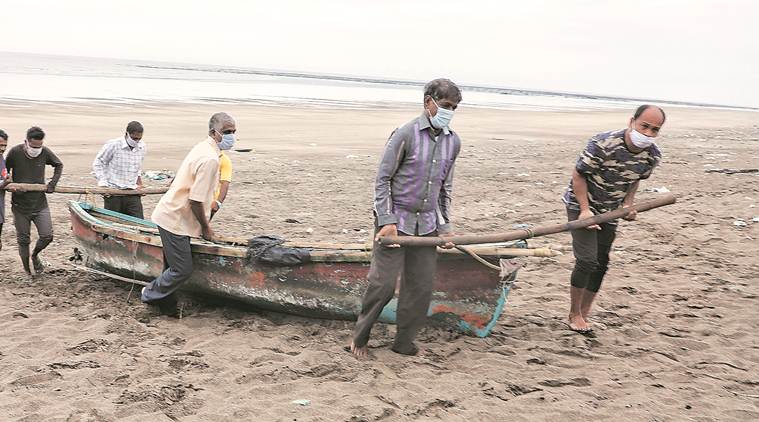 Fishermen take their boats to safety in Umargam taluka of Valsad in Gujarat. (Express photo by Javed Raja)


