Europe promises to reopen for summer tourism in wake of coronavirus

0

(CNN) — The world’s biggest tourist playground has been roped off since it became a coronavirus epicenter, but as summer looms Europe is desperate to lift restrictions to get visitors pumping much needed cash into stricken economies.

Across the continent, various nations currently sitting behind the firewall of quarantines or sealed frontiers, are figuring out how they can once again welcome holidaymakers.

Last week, the European Union unveiled an action plan to get its internal borders reopening, safely fire up its hospitality sector and to revive rail, road, air and sea connections that have been strangled during the pandemic.

It’s a situation eagerly anticipated by millions of would-be travelers, desperate to enjoy a slice of European sunshine and culture after weeks or months being sequestered at home under lockdown.

“We all need a break, especially after this confinement,” Thierry Breton, the EU’s internal market commissioner, said. “We want to enjoy summer holidays, we would like to see our families and friends even if they live in another region, in another country.

“But we want to be able to so while staying healthy and safe because we know the virus will stay for us for some time.”

The EU currently has recommendations in place to all its member nations that they restrict all non-essential visitors from outside. But with infection rates dropping off in some countries, this looks set to change.

Some countries, such as Greece and Italy, are already naming specific dates. On Saturday, Italy announced plans to reopen its internal borders next month, while German Chancellor Angela Merkel has said that many internal EU border restrictions would be lifted by June 15.

There’s even talk of permitting special “green corridors” or “travel bubbles” that would allow certain countries with low or sharply declining infection rates to open up to a select few destinations until borders are fully reopened.

Those moves have been backed in the EU plan which proposes lifting restrictions between member states of “sufficiently similar epidemiological situations,” in other words, the same rate of coronavirus infection.

Visitors from outside the EU could still face an indeterminate wait though.

The EU’s plan also sets out a roadmap for developing health and safety protocols for beaches, hotels, campsites, B&Bs, cafes and restaurants to protect guests and employees, such as allowing people to book time slots at the gym or swimming pools in advance.

It also aims to strengthen rules giving travelers the right to choose between vouchers or cash reimbursement for canceled transport tickets or package trips.

EU member states have also agreed to protocols to ensure tracing apps work across borders so that citizens can be warned of a potential infection with coronavirus while traveling within the bloc.

“This is not going to be a normal summer, not for any of us,” said Margrethe Vestager, the vice-president of the EU’s executive arm, the European Commission.”But when we all work together and we all do our part in the ways the Commission is setting out today, then we don’t have to face a summer stuck at home or a completely lost summer for the European tourism industry.”

While these new measures will help impose some order on a somewhat chaotic travel situation across the continent, it remains a fluid situation.

For the time being, if you’re planning to travel to or within Europe in coming months, here’s what you need to know:

France

France is the world’s most visited country, but the coronvirus crisis has cripped tourism here.

PHILIPPE LOPEZ/AFP/AFP via Getty Images

Travelers with France at the top of their list of places to visit once the coronavirus crisis is abating should prepare themselves for a long wait.

Much like the rest of the EU, its borders have been shut to non-EU visitors for the last two months — with the EU recently recommending an extension to the ban until June 15, 2020.

From now until at least July 24, anyone who enters the country, with the exception of EU citizens or arrivals from the UK, will be subject to a compulsory 14-day coronavirus quarantine.

While its lockdown is slowly being lifted, with schools, restaurants and cafes in the country to reopen in the coming weeks, France’s interior minister, Christophe Castaner, has made it clear the country will not be adapting its border restrictions for the foreseeable future.

However, hotels may be given permission to resume business in the coming weeks.

French hotel chain Accor has closed nearly two-thirds of its hotels, while those that remain open are being used to support healthcare and frontline workers, as well as “vulnerable populations.”

“One piece of good news is the initial recovery of the Chinese hotel market, with mild improvements in occupancy and food & beverage activity: an encouraging tell-tale sign,” a spokesperson for Accor tells CNN.

While waiting for the green light from the government, workers have been “setting stringent safety standards and cleaning protocols,” in preparation for reopening.

Although they aren’t expecting many, if any, international visitors in the coming months, much of Accor’s revenue is from domestic travel, which seems likely to increase considerably if border restrictions stay in place while restrictions are relaxed.

“When the lockdown measures soften, French tourists are likely to want to stay close to home in the short term,” adds the spokesperson.

“It will be the moment for them to rediscover their own country and we will be there to welcome them.”

Greece

santorini pixabay-1

Greece hopes to wlelcome back visitors as early as June.

Russell Yan/Pixabay

Greece may end up becoming one of the first European destinations to open up to tourists again.

The Mediterranean nation has managed to keep its coronavirus death toll remarkably low, with less than 170 Covid-19 deaths so far, by enforcing a strict lockdown early on.

This week, prime minister Kyriakos Mitsotakis announced the country would reopen to tourists on June 15.

“Let us make this summer the epilogue of the [Covid-19] crisis,” he added.

According to Mitsotakis, direct international fights to Greek destinations will slowly recommence from July 1, and tourists will no longer be required to take a Covid-19 test or go into quarantine.

However, tourism minister Haris Theoharis says health officials will conduct spot tests when necessary.

In addition, value added tax (VAT) on all transport will be reduced from 13% from 24% in a bid to entice travelers.

The news came shortly after archaeological site the Acropolis, located in Athens, reopened on May 18, along with the country’s high schools and shopping malls.

However, any summer 2020 Greece vacations will be very different to those of past years for obvious reasons.

“The tourism experience this summer may be slightly different from what you’ve had in previous years,” Mitsotakis told CNN earlier this month.

“Maybe no bars may be open, or no tight crowds, but you can still get a fantastic experience in Greece — provided that the global epidemic is on a downward path.”

Greece’s city hotels are scheduled to reopen on June 1 followed by seasonal hotels a month later.

At present, all international passengers must take a Covid-19 test upon arrival in Greece or go into quarantine for 14 days. Mitsotakis had previously suggested tourists would be required to undergo testing before their visit as a further precaution.

While the country may be priming itself to receive visitors again, getting there will prove to be a challenge for many.

At present, all non-EU citizens are banned from entering Greece until June 15, while the majority of low-cost carrier routes, which make up much of the country’s foreign air arrival, from neighboring countries are suspended.

Mitsotakis is banking on an influx of “more high-end tourists” to help re-energize the country’s tourism industry, which employs one in five Greeks.

Spain

Sanxenxo beach

New beach protocols in Spanih town Sanxenxo will involve allocating sunbathing spots on a “first come, first served” basis.

Courtesy Diario de Arousa

Spain’s lockdown proved to be one of the strictest in Europe — children were banned from leaving the house entirely at one stage.

But the popular destination, which welcomed a record 84 million visitors in 2019, is slowly easing restrictions, with beaches set to reopen in June and hotels in some parts of the country granted permission to resume business.

However, officials are understandably cautious about reopening the country, and it seems unlikely the current border restrictions, which ban non-essential travel to Spain for everyone other than Spanish citizens, residents and frontier workers, will change before the end of the summer season.

“We have to guarantee, when international tourism opens, that the person who comes to Spain is a safe person,” Spanish tourism minister Reyes Maroto recently told local newspaper El Pais.

“The issue of borders will be accompanied by the evolution of the health crisis,” he said.

“Therefore, I do not have the solution of when [they will be able to open]. On how you will be able to enjoy our beaches, we are defining different scenarios.”

One or two of these “scenarios” have already been announced, with a number of towns setting out new protocols to maintain social distancing measures on busy stretches of sand.

Canet d’en Berenguer, a Mediterranean town located just north of Valencia, will only allow 5,000 daily sunbathers on its local beach when it reopens, while Galicia’s Sanxenxo will allocate entry to its beach on a “first come, first served” basis.

Both are roping off small sections on the sands to ensure beachgoers can maintain a safe distance from each other, a move that may well indicate the future of beach visits.

Earlier this month, a senior government official admitted the country’s tourism industry wouldn’t be able to get going again until all internal and external borders within the EU are reopened.

“A big part of our economy depends on the movements of international visitors and of Spaniards,” said the official.

“But we have to have a health system that can take care of anyone who’s in Spain. That’s the fundamental issue.”

Italy

A general view shows the Vatican's empty St Peter's Square and its main basilica on April 6, 2020,

Italy is slowly lifting restrictions after weeks and weeks in lockdown.

ANDREAS SOLARO/AFP via Getty Images

Italy has been one of the destinations worst hit by the pandemic, with a “very long” lockdown imposed back in March, but the Beautiful Country won’t be off limits for much longer.

The Italian government has announced EU travelers will be allowed to enter without having to go into quarantine from June 3 in a “calculated risk” to get the country’s tourism industry moving again.

“We have to accept it, otherwise we will never be able to start up again.”

At present, Italy along with the rest of the EU, currently has restrictions in place on all non-essential travel from outside the Schengen Zone (a grouping of 26 countries that normally have open borders) — apart from the UK.

Travelers from EU countries have previously been required to undergo a two-week quarantine before entering the country.

The announced measures are a major step in the country’s efforts to restart its economy after more than two months of lockdown.

However, nearby Austria and Switzerland still have heavy restrictions in place regarding traveling across the borders, while many airlines have canceled the majority of their flights to Italy, so reopening won’t be a straightforward process.

But officials have made it clear they’re keen to get things moving.

“I have never spoken, nor ever thought, of closing the Italian borders to tourists for 2020,” Giorgio Palmucci, president of the Italian National Tourist Board (ENIT) told local reporters last month. “I am working on the exact opposite.”

All museums, including Rome’s Vatican Museums, are to slowly reopen throughout May. However, strict social-distancing rules will apply, with tickets bought in advance online.

St. Peter’s Basilica in the Vatican reopened on Monday May 18 after being closed for over two months.

The island of Sicily has already announced a scheme to entice travelers back, with subsidized holidays for both domestic and international visitors on offer.

Germany

Tourists stand near the Brandenburg Gate on March 13, 2020 in Berlin, Germany

Officials in Germany are in no rush to reopen its borders.

Maja Hitij/Getty Images

Germany has managed to contain its coronavirus fatality numbers somewhat due to substantial testing and contact tracing, but officials have seemed hesitant about letting tourists back in.

The fact that virus infections began rising in the country this week, just days after lockdown restrictions were eased, will have done little to ease concerns regarding reopening borders, although it was announced Wednesday that its frontier with neighboring Austria was being unlocked as of May 15.

Chancellor of Germany Angela Merkel wishes to stop border controls in the Schengen area within weeks.

“The aim is — if the infection process allows it — I want to stress that — that from June the 15th border controls in the Schengen area can be completely eliminated,” she said on Wednesday.

A spokesman for the Austrian Tourism Ministry says the chancellors of the two countries agreed to open the border in a first step for day trippers and commuters. A second step would see a normalized reopening as of June 15.

Germany remains closed to non-EU visitors, while many of its border crossings to neighboring states such as Denmark, the Netherlands, Belgium, Luxembourg, France and Switzerland are either closed or guarded.

Hotels are currently prohibited from accommodating tourists, and the majority of flights to and from Germany remain grounded.

Foreign Minister Heiko Maas has previously expressed concerns about reopening destinations too swiftly, stressing that European countries should come together to decide the best course of action.

“A European race to see who will allow tourism travel first will lead to unacceptable risks,” he told Bild am Sonntag newspaper.

United Kingdom

Tourists stand near the Brandenburg Gate on March 13, 2020 in Berlin, Germany.

Visitors to the UK are required to go into quarantine for 14 days.

Maja Hitij/Getty Images

The UK government’s decision to introduce a 14-day quarantine on all arrivals just as it begun to ease restrictions for residents has dashed any lingering hopes of reviving international tourism here in the coming weeks.

It’s thought the move, introduced for an indeterminate amount of time, will dissuade airlines from restarting flight operations quickly and officials have warned Brits that their prospects of a summer foreign escape are slim.

Asked in a BBC television interview whether UK citizens should book flights in July, Transport Minister Grant Shapps said: “I’m saying, right now you can’t travel abroad. If you are booking it you are clearly by very nature taking a chance of where the direction of this virus goes and therefore where the travel advice is in the future.”

Under current plans, hotels are likely begin to open in early July, but as EU border restrictions are still in place, it’s expected the UK will focus on domestic travel before any further decisions are made.

“With nearly 40 million inbound visitors per year, International visitors play a hugely important part of the UK visitor economy and we look forward to welcoming visitors back when it is safe to do so,” Nigel Huddleston, UK tourism minister, said during a speech at the Extraordinary G20 Tourism Ministers’ Meeting on Covid-19.

Sadly, there’s absolutely no indication of when that’s likely to happen.

Portugal

Portugal wild Algarve west beach

Portugal received 24 million tourists in 2019.

Regiao de Turismo do Algarve

Portugal has also begun to ease its lockdown restrictions, allowing hair salons, dry cleaners and repair shops to reopen.

Some restaurants, museums and coffee shops were allowed to opening at reduced capacity on May 18, as well as schools.

However, sunbathers will be required to adhere to Portugal’s social distancing rules by keeping 1.5 meters apart.

An app that allows people to check whether there’s space on the beach of their choice has been introduced in a bid to prevent overcrowding.

While it seems doubtful international visitors will be able to return before 2021, the destination has already put measures in place to alleviate the effects.

Rita Marques, the country’s Secretary of State for Tourism, recently launched a “don’t cancel, postpone” scheme, which allows tourists to reschedule any pre-arranged holidays to Portugal until the close of 2021.

This applies to all bookings made through accredited travel agencies, as well as hotels or Airbnbs, for trips scheduled between March 13 and September 30, 2020.

Meanwhile, national tourism authority Turismo de Portugal has devised a free hygiene-certification stamp to distinguish “Clean & Safe” tourism enterprises in order to gain visitors’ confidence.

Businesses will need to comply with hygiene and cleaning requirements for the prevention and control of Covid-19, in order to receive the stamp, which is valid for one year.

The aim here is to boost the sector’s recovery by reassuring visitors that all efforts are being made to ensure they’re protected.

Raul Martins, President of the Association of Portuguese Hotels (AHP,) says he expects most hotels in the country to reopen in July.

But like most other European countries, Portugal will have to rely on business from domestic travelers while border restrictions remain in tact.

Eliderico Viegas, head of the Association of Algarve Hotels and Tourism Enterprises, recently told Bloomberg he’s not expecting any international tourists in Portugal’s Algarve region until next year.

Croatia

A general view shows the Vatican's empty St Peter's Square and its main basilica on April 6, 202

Croatia suffered from overtourism previously, now the destination is keen to get travelers back.

ANDREAS SOLARO/AFP via Getty Images

But like many European destinations, Croatia is reliant on tourism, accounting for 20% of its GDP, and officials have suggested its borders may be opened to foreign tourists later this year.

However, the current limitations on foreign nationals are likely to remain in place until June 15.

Any non-nationals who are permitted entry may be ordered to self-isolate or spend 14 days in official government quarantine facilities “at the expense of the traveler.”

But officials are hoping to work around this by introducing a special “green corridor” between itself and the Czech Republic, another destination with a low number of coronavirus cases as early as this summer.

This would effectively mean any Czech tourists who can provide documentation to prove they’re not infected with the virus would be permitted to travel into Croatia.

“We have already discussed with the Czech Republic that they prepare their proposals and we will prepare ours,” Tourism Minister Gari Cappelli said during an interview aired on the state-run HRT radio.

Switzerland

A picture taken on from Mont-Pelerin, western Switzerland, on November 20, 2016 shows the cities of Vevey (below) and Montreux (background) on Lake Geneva. / AFP / FABRICE COFFRINI        (Photo credit should read FABRICE COFFRINI/AFP/Getty Images)

A picture taken on from Mont-Pelerin, western Switzerland, on November 20, 2016 shows the cities of Vevey (below) and Montreux (background) on Lake Geneva. / AFP / FABRICE COFFRINI (Photo credit should read FABRICE COFFRINI/AFP/Getty Images)

Fabrice Coffrini/AFP/Getty Images

By mid-May, the Swiss border crossings with Italy, France, Germany and Austria, will all have reopened, less than two months after they were shut by the Federal Council due to the pandemic.

But that doesn’t mean things have returned to normal when it come to traveling within the country.

Only Swiss citizens and permanent residents, as well as those who have to travel to Switzerland for professional reasons, are currently permitted to enter the country.

Plans to resume domestic tourism industry are moving ahead, with museums, bars and restaurants due to be reopened this week, followed by hotels towards the end of May.

Eastern Europe

Prague

The Czech Republic was one of the first European countries to close its borders back in March.

Pixabay/Creative Commons

Croatia isn’t the only country the Czech Republic is likely to share a “green corridor” with.

Proposals for a similar arrangement with Slovakia, one of the first European countries to ban international passenger travel, are apparently in the works.

Both countries have closed their borders to non-citizens and residents, along with Ukraine, Hungary and Poland, with a mandatory 14-day quarantine required for anyone coming from abroad.

While there’s been no clear indication from the governments of the aforementioned countries on when borders will be reopened, wearing a face mask in public spaces is now compulsory in Poland, Czech Republic and Slovakia.

As the likes of Czech Republic and Slovakia have expressed interest in solely opening up international tourism to less affected destinations, it’s fair to assume officials will be in no rush to welcome travelers from those destinations heavily affected, such as the UK and the US, as well as Spain and Italy.

Scandinavia and the Nordic region

Two ducks stand next to a couple as they enjoy the warm weather at the Kungstradgarden in Stockholm on May 8, 2020, amid the new coronavirus COVID-19 pandemic

Sweden’s government opted not to issue a lockdown

JONATHAN NACKSTRAND/AFP

As one of the only countries in Europe not to issue a lockdown, Sweden has few restrictions to lift.

However, its borders are still shut to countries outside the EU, EEA, or Switzerland, and these measures are set to remain in place for now.

Deputy Prime Minister Isabella Lovin has admitted the country’s tourism sector has been hit “incredibly hard” by the absence of travelers.

Lovin said it was wrong to suggest the more relaxed approach meant it was business as usual in Sweden.

“The biggest myth and misconception is that life goes on as normal in Sweden,” she recently told multi-regional publication The Local. “It absolutely does not.”

“A lot of small businesses are on their knees because production is down or has decreased a lot.

“It is not business as usual in Sweden but the opposite, things are very, very tough.”

Nearby Austria is planning a gradual return to normality, with hotels reopening from May 29.

The Geniesserhotel “Die Forelle” in Carinthia, is one of several establishments gearing up to welcome domestic travelers months after being forced to close their doors.

“We would like to offer our guests a wonderfully relaxed stay and of course we make sure that all hygiene regulations are observed,” says Hannes Muller, who runs the hotel.

Meanwhile Denmark plans to lift its remaining lockdown restrictions by the second week of June.

The country’s prime minister Mette Frederiksen has previously spoken of the possibility of reopening borders warning this could move things into “a negative direction.”

“It may help to move the infection in a negative direction. Of course, the borders must also be seen in the context of what is happening in the countries around us.” Frederiksen went on to suggest Denmark would not reopen borders until “at least.”

Iceland brought temporary internal border controls last month, banning all foreign nationals, except for nationals of the EU and associated European countries. Everyone arriving from outside the country has been required to complete a 14-day quarantine since April 24.

The Nordic country is now preparing to reopen in a bid to undo some of the damage caused by the closure.

Iceland’s government expects to start easing restrictions on international arrivals by June 15.

While the full details are yet to be confirmed, it;s thought travelers will be given the choice of a test on arrival or a two-week quarantine.

“Although Iceland is an island, it has always thrived through international trade and cooperation,” Foreign Minister Gudlaugur Thor Thordarson said in a statement.

“With only three cases of the virus diagnosed in May, we are once again ready to carefully open our doors to the world.

“While we remain cautious, we are optimistic as a country that we can successfully begin our journey back to normality.”

Baltic states

Vilnius, Lithuania

Lithuania is set to join a “travel bubble” with fellow Baltic states Estonia and Latvia.

PETRAS MALUKAS/AFP/Getty Images

The borders for Baltic countries Estonia, Lithuania and Latvia have been largely closed to foreign travelers due to the pandemic.

But as of May 15, each will lift restrictions for each other’s citizens, creating the European Union’s first official “green corridors” or “travel bubble.”

The new protocol, which is due to come into effect on May 15, was agreed after the states decided all three “had successfully managed the spread of Covid-19 and trust each other’s health care systems,” according to the Lithuanian government.
“We showed a good example by stating, very clearly, that only countries which successfully dealt with the situation can open themselves up,” Lithuanian Prime Minister Saulius Skvernelis said in a statement.

“I think we will keep to this principle when dealing with countries where the situation is very bad, which did not take measures to control the virus spread.

Skvernelis went on to suggest that Poland and Finland may be invited to join further down the line.

However, anyone traveling the countries from outside the “bubble” will be required to go into quarantine for two weeks.

“It’s a big step towards life as normal,” Juri Ratas, prime minister of Estonia, tweeted after the announcement.

CNN’s James Frater, Max Ramsay, Lindsay Isaac, Stephanie Halasz, Al Goodman, Mick Krever and Elinda Labropoulou contributed to this report.


Source link

Gauging the wider impact of #Coronavirus on the #NHS – EU Reporter

0

Coronavirus has hit the British health-care system like a wave, and the worst is still on the way according to many experts. It has sent tens of thousands of patients to the hospital wards, overwhelming an overloaded health-care system which was already showing cracks before the incident. It has also caused thousands of scheduled procedures to be delayed, while others are denied care, writes Colin Stevens.

These are just the immediate effects, however, and the repercussions of the virus are set to ripple through the health-care system for months. It could also have an effect on much more than just health care, and affect British society as a whole. Let’s gauge the wider impact of the coronavirus on the NHS, what we can expect for the future, and some possible solutions.

The labour shortage

Labour shortages have plagued the NHS for years, and the virus is only exacerbating them. Shortages first came to the forefront and the attention of the general public with the junior doctor strikes of 2016. Staff shortages have now been made worse due to the sheer number of healthcare staff who became ill or simply had to go into quarantine.

To address the situation, conservatives were elected with the promise of hiring fifty thousand new nurses at the start of 2020. However, they have failed to deliver at the most critical time. To put things in perspective, nursing vacancies were around 44,000 at the start of 2020, which is equal to 12% of the current nursing workforce, and were still far from the benchmarks set forth by the conservative government.

The immigration debate surrounding the Brexit issue is also affecting British healthcare. Many NHS frontline workers had their visas extended, for instance. It is also unclear how proposals to restrict international migration among low skill workers will impact support staff. More also has to be done to move domestic nurses through the pipelines.

For those wanting to enter the field, it would be wise to start looking at postgraduate nursing courses so you’ll have the credentials needed to qualify for newly funded positions. Uni Compare has a massive database of British universities you can search to find the right one for you. Their database allows you to search by location, study mode, TEF rating or university rating. You could also find institutions that will let you earn the degree part-time, full-time or both.

Failed promises are catching up

Promises of new hospitals usually get a lot of media attention, and are often used as political pet projects by parties. Unfortunately, they are a difficult and expensive endeavour, and that’s why these projects are often shelved. That probably explains why the promise of 40 new hospitals has been pushed back, if we are to believe that they were intended to be a reality in the first place.

There’s also the debate as to whether opening more hospitals would be the best solution. New construction often sucks up resources that could go toward repairing, maintaining, staffing and expanding overcrowded facilities, which is really at the core of the issue. A better approach could be to alter existing facilities so they can meet the constantly changing needs of the public.

The demand for flexibility will extend to individual healthcare providers. We may see more generalist education over specialist education. Furthermore, administrative personnel may be called upon to provide more patient care and support in emergencies.

Growing respect for ICU beds

The number of intensive care unit beds in the United Kingdom has been low by international standards, just as the number of doctors per capita. Yet, demand for ICU beds is growing due to an aging population which resulted in ICU bed occupancy hovering around 80% before the coronavirus hit. This meant there was no room for a sudden influx of additional patients which isn’t a one-time event as we see similar shortages when there is a bad flu season.

Impact on patients

The situation is set to impact patients in many ways. Wait times for elective care will most likely increase, and they might hit the levels seen in the early 1990s for public hospital patients. Many will cope by seeking private care and a large number are taking advantage of video and telephone conferences, but this will not reduce overall demand for healthcare and cannot eliminate the need for all in-person visits.

One possible solution could be to raise pay for nurses, something that will attract students to the profession and keep healthcare professionals in the field longer. Unfortunately, that’s an unpopular proposition, since it will result in higher taxes. Yet, we need more nurses and doctors to provide an adequate level of patient care as data on nursing strikes shows that mortality rates and readmissions go up around 20% if there aren’t enough nurses in the wards.

The coronavirus pandemic presents a clear, short-term crisis for the NHS. More importantly, it is making serious shortcomings clear that must be addressed on a systemic level.

Comments

Facebook comments

Tags: , , , ,

Category: A Frontpage, coronavirus, Coronavirus face masks, Coronavirus Global Response, COVID-19, Featured Article, Health, PPE, UK


Source by [author_name]

Sanders Campaign Asks Delegates To Sign Pledge They Won’t Openly Attack Biden

Sen. Bernie Sanders suspended his bid for the White House last month, effectively ceding the Democratic nomination to former Vice President Joe Biden. But not before the Vermont progressive won hundreds of delegates around the nation.

Now, Sanders’ presidential campaign is asking those delegates to sign a social media policy and code of conduct agreement ahead of the party’s convention later this summer in an attempt to minimize party infighting or online attacks against Biden akin to the rampant mudslinging by supporters in 2016.

The Washington Post first reported that the Sanders campaign sent out the 5-page agreements that threaten delegates can be removed the delegation should they violate any provisions. The campaign also asks signatories to “refrain from making “negative statements about other candidates, party leaders, Campaigns, Campaign staffers, supporters, news organizations or journalists.”

“Before tweeting or posting from your personal social media accounts, ask yourself these questions: If this appeared on the front page of The New York Times, would it compromise Bernie Sanders’s message, credibility, or reputation?” the social media policy reads in part. 

It continues: “This Campaign is about the issues and finding solutions to America’s problems. Our job is to differentiate the senator from his opponents on the issues — not through personal attacks.”

While the Post reported the agreement angered some delegates, Sanders’ campaign said those individuals were representative of the senator and had a “serious responsibility” going into the Democratic National Convention, set to take place in some form in August (organizers are still looking at how to do so amid the ongoing coronavirus pandemic).

“When delegates attend the Democratic convention, they will be representing Sen. Sanders, the ideas he ran on and the millions of working people who supported his campaign,” Mike Casca, Sanders’ campaign spokesman, told HuffPost in a statement. “That is a serious responsibility and we’re asking them to follow a basic code of conduct while carrying out that duty.”


“This Campaign is about the issues and finding solutions to America’s problems,” the document reads. 

The pledge is largely seen as an effort to avoid a repeat of 2016. At the time, Sanders asked his supporters to throw their weight behind then-presumptive Democratic nominee Hillary Clinton shortly before the convention began, but many delegates booed her during the event and refused to support her candidacy.

Sanders has endorsed Biden’s effort to unseat President Donald Trump in November, a move the former veep said meant “a great deal to me.” Sanders is also still on the ballot in some states, including during the primary in New York, where he’s hoping to win enough delegates to have a stronger voice as the party decides on its platform and rules.

“I’m asking every Democrat, I’m asking every independent, I’m asking a lot of Republicans, to come together in this campaign to support your candidacy, which I endorse,” Sanders said last month.

The pair are reportedly closer than Sanders and Clinton were in 2016, and the Vermont lawmaker said recently he hoped his supporters would “understand and do understand that Donald Trump is the most dangerous president in the modern history of this country.”

“I think, at the end of the day,” Sanders said on ABC, “they will be voting for Joe Biden.”


Source by [author_name]

Former White House Butler Who Served 11 Presidents Dies Of Coronavirus

A former White House employee who worked with 11 presidents ― from Dwight Eisenhower to Barack Obama ― died at the weekend aged 91 after contracting the coronavirus.

Wilson Roosevelt Jerman, who appeared alongside the Obamas in a photograph published in former first lady Michelle Obama’s best-selling memoir “Becoming,” retired in 2012 following 55 years of service.

He began his White House career in 1957 as a cleaner, gaining promoting to the role of butler during the Kennedy administration, his granddaughter, Jamila Garrett, told FOX 5 DC on Wednesday.

Garrett described her grandfather as a “loving and genuine man” who was “always about service” and “really authentic.”

The father-of-five “always taught us that there will be obstacles in your life, they will not disappear,” she added, noting his advice to “keep pushing forward.”

Check out the interview here:

Former President George W. Bush and former first lady Laura Bush paid tribute to Jerman, describing him as “a lovely man.”

“He was the first person we saw in the morning when we left the Residence and the last person we saw each night when we returned,” they said in a statement released to NBC News.

A HuffPost Guide To Coronavirus


Source by [author_name]

See what iconic French tourist sites look like now – CNN Video

0

The coronavirus pandemic has crippled France’s tourism industry. In response, the government has launched an ambitious bailout to try save the industry. CNN’s Cyril Vanier reports.


Source link

Covid-19 ‘tsunami’ overwhelmed a whole generation in northern Italy. Now their families want answers

0

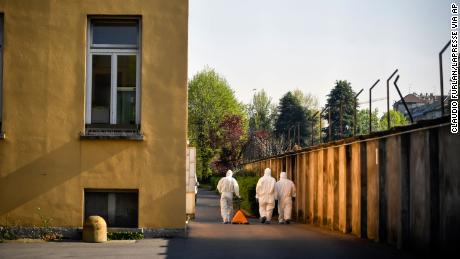
A simple, white plastic cross marks each grave. Taped to each cross is a piece of paper bearing a surname, sometimes with an initial, sometimes with a first name. No date of birth. No date of death. Cemetery workers have placed a single plastic flower on each grave.

Here lie those who succumbed to coronavirus in Milan, but whose bodies have yet to be claimed.

An official at the cemetery, who requested that his name not be used, told me most of them were old and had been in nursing homes. Many, he added, had no families. In a few cases, the families of the dead have been unable to claim the bodies because of the lockdown.

With morgues filled to capacity, and more dying each day at the peak of the outbreak, authorities in Italy’s coronavirus hotspots had little choice but to bury the unclaimed dead like this. If their families come forward to claim the bodies once the epidemic is over, the remains will be exhumed and reburied.

Those laid to rest here died alone. Then again, with coronavirus, almost everyone dies alone.

Carla Porfirio wanted desperately to be with her mother in her final moments.

Before the coronavirus outbreak, she visited her 85-year-old mother Michela, who suffered from Alzheimer’s disease, every day in Milan’s sprawling Palazzolo-Don Gnocchi Institute nursing home.

When the nursing home abruptly stopped relatives from visiting their loved ones as the virus spread, Porfirio said she called every day to ask about her mother. Every day the staff reassured her Michela was fine.

Porfirio is concerned that she wasn’t told when her mother first became unwell. When she called the home on Sunday April 5, she was informed that Michela had been put on oxygen and given morphine.

She died the next day.

Carla Porfirio's 85-year-old mother died in a nursing home in Italy.

“What’s so tragic for those of us who lost their loved ones,” Porfirio told CNN, her voice breaking with emotion, is that “we couldn’t be close to them in their last days as they suffered. They needed the hand of their loved ones.”

At the height of the pandemic’s rampage through northern Italy, the regional government of Lombardy asked nursing homes to make room for non-critical Covid-19 patients, to lighten the massive burden on hospitals.

Porfirio said the Palazzolo-Don Gnocchi nursing home put one of those patients in the same room as her mother and two other older women.

When Porfirio protested, she says a staff member told her the home had no choice; it had run out of space.

The Palazzolo-Don Gnocchi Institute told CNN in a statement that “starting from the detection of the first case … at the Palazzolo Institute, the Don Gnocchi Foundation started the isolation, mapping and swab testing procedures on contacts exposed to the risk of contagion … All Covid-19 positive cases were handled according to the protocols provided by the authorities, and in coordination with the authorities themselves.”

The institute did not respond to Carla Porfirio’s claims regarding the care of her mother.

Italian authorities are investigating a string of health violations at elderly care homes across the country during the Covid-19 crisis.

The Palazzolo-Don Gnocchi Institute believes the investigation will show their work was proper.

“We are confident that the brief presented by the Foundation’s lawyers at the Milan Public Prosecutor’s Office and documents subsequently acquired by the judiciary will confirm the correctness of the Foundation’s work in the context of this health emergency,” it said.

The two countries that show life beyond lockdown isn't what people think it will be

The Lombardy regional government told CNN it is not giving interviews on “the nursing home issue,” due to the ongoing investigation.

At least 15 facilities have been closed and their patients relocated after inspections by the Italian Police health force — Nuclei Antisofisticazione e Sanita (NAS) — found that many failed to follow coronavirus protocols, including providing enough protective equipment for staff and dedicated quarantine areas for suspected coronavirus patients.

Sixty-one people have been referred to judicial authorities. Another 157 people have been fined a total of more than $78,500 (72,000 euros).

Like many who lost loved ones in nursing homes to coronavirus, Carla Porfirio is indignant.

“It’s uncivilized,” she says. “We’re in 2020 and this still happens? The images are like the Spanish flu epidemic 100 years ago. And we’re in the same condition?” she asks.

Calls for answers

Not long ago, Alessandro Azzoni says his 75-year-old mother Marisa was physically strong and responsive, despite suffering from Alzheimer’s. He regularly took her for walks, for an ice cream, to dance in the park.

Now Marisa is in a critical condition, on life support, in a Milan hospital after being transferred from the city’s Pio Albergo Trivulzio nursing home.

The Pio Albergo Trivulzio nursing home also admitted Covid-19 patients, and the virus spread.

Azzoni presented a diagram on his phone of his mother’s nursing home, based on information from doctors and nurses he said worked at the home. Much of the map is colored red, showing wards which now house Covid-19 patients.

The home is being investigated over multiple manslaughter complaints filed by staff and relatives of patients who say it failed to protect residents and medical workers against infection.

Fresh out of medical school, young Italian doctors are being fast-tracked to the coronavirus frontline

Milan’s Public Prosecutor Mauro Clerici said last month he was looking into “more than 100 deaths,” at the home during the Covid-19 epidemic.

Clerici said the inquiry would center on “what crimes may have been committed in accordance with existing legislation as applied to a pandemic.”

No arrests have been made and no one has been charged in the case.

A spokesperson for the Pio Albergo Trivulzio nursing home refused to comment out of respect for the investigators, saying they needed “to work freely and without pressures of any sort.”

Last month, a spokeswoman for the home told CNN that “the rules regarding masks were followed,” adding that the number of deaths in the first quarter of 2020 were in line with those in the same period last year.

Azzoni, who founded a group demanding a criminal investigation into what happened at Pio Albergo Trivulzio, describes it as a “massacre.”

With an investigation, he says “we have the opportunity to completely change things, to put humans back at the center.”

The region of Lombardy accounts for about half of Italy’s 32,169 dead from the virus.

Nembro's main nursing home, where in the space of just a few weeks many of its residents succumbed to the virus.

One of the hardest-hit communities in Lombardy is the town of Nembro, in the foothills of the Alps.

Of the 87 residents in Nembro’s main nursing home, the Nembro Nursing Home Foundation, 34 died from the virus.

While law enforcement authorities won’t comment on whether the home is under investigation, its director, Barbara Codalli, told CNN there are no allegations of wrongdoing against the home which, she says, never took in any Covid patients.

As soon as staff realized that the virus had spread to the home, Codalli said: “We decided to shut down the structure to families and to close the day care, even if we didn’t know at the time what was actually happening, but with the feeling that something out of the ordinary was happening.”

“We started using PPE, masks, not easily because finding them was hard, we found them at absurd prices,” she adds.

As northern Italy is ravaged by coronavirus, there's trouble brewing down south

But still, the home was overwhelmed by the virus, which Codalli said badly hit its staff, killing its president and one of its doctors.

She blames the provincial health authorities for being late in testing the nursing home’s residents.

The Lombardy regional government, which oversees the health authorities, would not comment citing the ongoing investigation.

Barbara Codalli notes that when the first cases became evident in the third week of February it took weeks for swabs to be carried out.

“The very first swabs were done the 10th of April,” she says, “regardless of what some were claiming on television.”

Nembro’s mayor, Claudio Cancelli, confirmed to CNN that the first swabs, from the home’s most severely ill patients, were taken beginning on April 10; he says that testing of all staff and the remaining patients only began on April 23.

Fresh tombs in Nembro's cemetery. This town suffered one of Italy's highest per capita death tolls as a result of coronavirus. Its undertakers and cemetery workers have been busy.

In Nembro, we searched for death notices — but found only two recent ones. We called a funeral home to ask where we might find more. The undertaker explained the Nembro municipality had removed all but the latest ones, to avoid damaging morale in the town.

Mayor Cancelli confirmed that the death notices were removed, but denied that there was an official order to do so in order to boost citizens’ spirits. He insisted the decision had been based on common sense, adding that if doing so had improved morale, he was satisfied with that.

A set of notices from early March were found next to Nembro’s cemetery which showed that in the space of just three days — March 7 to 9 — five elderly men and women had passed away.

Funerals are finally being held again in Nembro as the lockdown in Italy eases.

‘A tsunami overwhelmed us’

Giacomo Boffelli, 84, died on March 11. Friends and family were finally able say their farewells two months later, at a simple ceremony near the entrance to the town’s cemetery.

His daughter, Nicoletta, read a statement. “We never abandoned you. We never would, because you will always be in our hearts.”

'The sea is stormy and the captain is dancing on the deck.' One view of the US from Italy in the time of coronavirus

Giacomo’s widow, Margherita, sat and listened, the mask covering her nose and mouth moist from her tears.

After the ceremony, as Giacomo’s ashes were placed in the family tomb, Nicoletta told me: “The woman who works here at the cemetery says that all of this part was empty before, and now it’s filling up.”

Indeed fresh pictures mark the tombs of the recently deceased. Undertakers and grave diggers are the busiest people in Nembro now.

“It was as if a tsunami overwhelmed us, especially the oldest people,” says Nicoletta.

Spring has arrived in Lombardy. In the region’s towns and cities, people are venturing out to enjoy the weather and their first hints of freedom, as the lockdown eases.

Yet unlike other parts of Italy where coronavirus’ toll was lighter, in Lombardy a hint of sorrow hangs in the air.

Beppe Severgnini, a columnist for the daily Corriere della Sera, who lives in the hard-hit town of Crema explained: “It’s so sad. Every time I open the obituary pages of the local newspaper, I find so many people that I know have died. A whole generation is being wiped out.”

Source link

Dramatic moment knife-wielding brothers shot by police aired in court

One of two brothers shot by police at a Victorian campground threatened to behead officers and said he wanted to become a martyr.

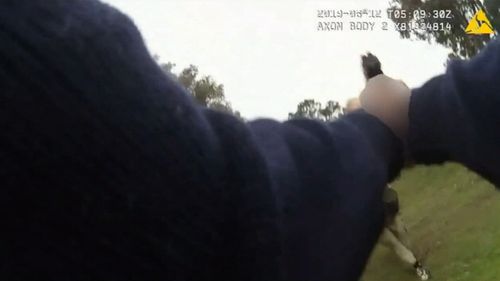
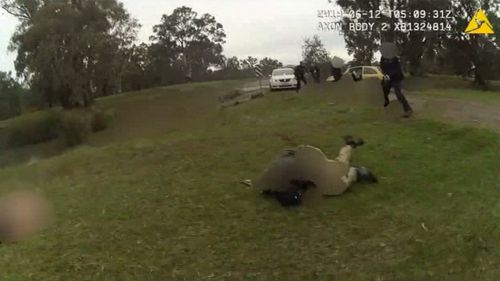
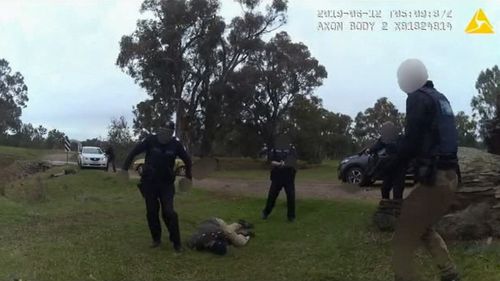
Footage played to a Melbourne court shows 19-year-old Joel Clavell being shot while charging at police with an axe on June 12 last year.

His older brother, Joshua Clavell, was also shot after ramming a police car and running at officers with a knife at the Barnawartha North campground

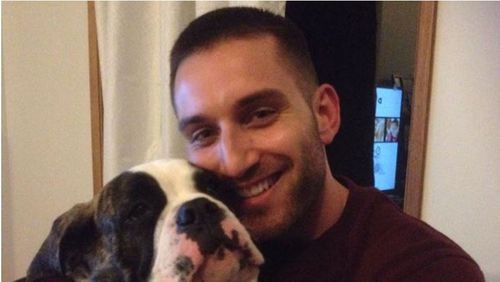
Joshua (left) and Joel Clavell were shot by police after threatening them. (Supplied) (Supplied)

Joel Clavell called police “dogs” and “mutts”, said he wanted them to drop their guns so he could chop their heads off and become a martyr.

“You’re in an outback area. This is not how you’re going to be a martyr mate,” one officer told him in body-worn camera footage released by the County Court of Victoria on Thursday.

“Your brother’s already down.

“We don’t want to shoot.”

The footage appears to show Joel Clavell charging at police with a hatchet in the moments before he was shot. (Victoria Police)
Mr Clavell can be heard calling officers “dogs” and goading them to shoot him. (Victoria Police)

The men had been at the Barnawartha North camp for the holy Muslim month of Ramadan, Joel Clavell’s lawyer Mel Walker said.

Joshua Clavell, 31, was wanted on a warrant for breaching a community correction order. Police spotted the brothers in a car at a nearby Barnawartha North service station and followed it.

Counter-terror officers were involved in the stand-off, but there was no evidence it was motivated by religious ideology.

“It doesn’t need to be extremist in a terrorism sense for me to be concerned about retribution to police … animosity towards police,” Judge Martine Marich said of the younger brother.

Vision showing the moment Joel Clavell was shot by police after charging at Victoria Police officers with a hatchet has been released. (Victoria Police)

Joel Clavell distrusted police after his father, Rodney Clavell, shot himself during a 12-hour siege at an Adelaide brothel in 2014.

The now-20-year-old admitted this contributed to the campground confrontation.

He has pleaded guilty to four counts of assaulting an emergency worker on duty and three of making threats to kill.

“But for him being with his brother … he wouldn’t have come across police in this context,” his lawyer Mel Walker said.

Joshua Clavell is said to have convinced his brothers to convert to an extreme form of Islam. (Supplied) (Supplied)

He hit his head hard when Joshua Clavell rammed the police car, and later said he didn’t remember saying he wanted to be a martyr or threatening to behead officers.

“But for the tourniquet being put on his leg, he was dead,” Ms Walker said.

She asked he be sentenced to time already served in custody and then placed on a community correction order.

Judge Marich said the seriousness of his crimes weighed against this.

Joshua Clavell has admitted to exposing an emergency worker to risk by driving and assaulting an emergency worker on duty.

He told police he didn’t know they had been looking for him that day.

He said he rammed the unmarked car because he didn’t know it was a police vehicle, and didn’t realise the plain clothes member pointing the gun at him was a police officer.

He will undergo a psychiatric assessment before the brothers return to court on June 15.

Source by [author_name]

MasterChef’s Instant Noodles Episode Is A Special One For Asian Australians

Contestants will be asked to “pimp up” some instant noodles, and while people from all walks of life are big fans of the two-minute treats, Asian Australians are particularly stoked.

Writer Benjamin Law said the episode is “a real Sophie’s Choice moment for every East Asian person”, asking his Twitter followers to pick their favourite type of instant noodles.

‘MasterChef’ judge Melissa Leong, who is proud of her Chinese Singaporean heritage, speaks about her fondness for noodles in a preview for the episode.

“Who doesn’t love these guys? I mean look, I’m obsessed with noodles. I think growing up in an Asian family, you know this.”

Competing in the immunity challenge is Poh Ling Yeow, Reece Hignell, Jess Liemantara and Simon Toohey.


Source by [author_name]

36,000 U.S. Lives Could’ve Been Saved If Social Distancing Was Imposed A Week Earlier: Study

In the first week of March, President Donald Trump was still downplaying the threat that COVID-19 posed on the United States. He urged Americans during a March 5 town hall to be “calm,” saying “it’s going to all work out.”

But according to research published this week by infectious disease modelers at New York’s Columbia University, tens of thousands of lives in the U.S. could have been saved had social distancing measures been imposed around the time of Trump’s town hall.

It wasn’t until March 16 that Trump told Americans to avoid non-essential travel and gathering in groups. The new study, which has yet to be peer-reviewed, says the lives of about 36,000 people could have been saved if such restrictions had been introduced just one week earlier.

And if the same restrictions had been imposed on March 1, researchers said, an estimated 54,000 fewer people would have died from the coronavirus by the first week of May.

“Our findings underscore the importance of early intervention and aggressive response in controlling the COVID-19 pandemic,” the researchers said in their paper. 

Even a week or two could make a “big, big difference,” epidemiologist Jeffrey Shaman, who led the research, told The New York Times.

“That small moment in time, catching it in that growth phase, is incredibly critical in reducing the number of deaths,” he said. 

Responding to the estimates by Shaman and his team, the White House told the Times that Trump’s restrictions on travel from China and Europe, imposed in January and mid-March respectively, mitigated the spread of COVID-19. 

During the town hall in early March, Trump touted his decision to restrict travel between the U.S. and China, where the coronavirus is believed to have originated, as a move that “saved a lot of lives.” 

“We’ve been given A-pluses for that” decision, he said.  

But Shaman’s research suggests that many more lives could’ve been saved had other interventions been taken at the time.

Such action would have had a “very drastic effect in reducing the number of cases and deaths that we would have seen thus far,” Shaman told CNN’s Don Lemon on Wednesday.

His team’s findings should also serve as a warning as states prepare to loosen virus restrictions, Shaman added.

“As we loosen these restrictions, it’s possible we could start to have the growth of the virus in a lot of communities if we’re not careful,” he told Lemon. “If social distancing practices lapse. If people aren’t wearing face masks as they start to go to businesses and restaurants and theaters. If we don’t monitor this and if we don’t recognize it really early and jump on it, it’s going to jump out of control again.”

A HuffPost Guide To Coronavirus


Source by [author_name]

Thousands left homeless in South Asia as cyclone heaps misery on coronavirus-hit communities

0

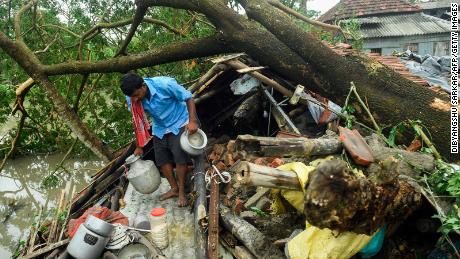
The state of West Bengal’s Chief Minister Mamata Banerjee said on Wednesday at least 12 people had died in eastern India, with one young girl in the Howrah district killed after a wall collapsed inside her home.

In neighboring Bangladesh, the death toll from Cyclone Amphan has risen 10, according to the governmental Health Emergency Operations Center. Among those killed was a 57-year-old Red Crescent volunteer in Barisal who drowned when attempting to help others to safety, the Red Crescent Society of Bangladesh said.

Large-scale evacuation efforts throughout India and Bangladesh appear to have saved many lives, but it could take days to realize the full extent of the deaths, injuries and damage from the cyclone. Fallen debris has made many of the roads impassible and heavy rains continue to fall on hard-hit areas.

Disaster teams worked throughout the night and into Thursday morning in India’s West Bengal and Odisha states, clearing trees and other debris from roads.

S.N. Pradhan, director-general of India’s National Disaster Relief Force (NDRF), said the worst of the damage is concentrated in two of West Bengal’s coastal districts and that the Sunderbans had been “pulverized” by the cyclone.

The Sunderbans are an ecologically fragile cluster of low-lying islands spread across India and Bangladesh, known for mangrove forests and rare wildlife, including the endangered Bengal tiger.

“Maximum impact, as expected has been seen there,” Pradhan said.

Four of the state’s least affected districts could be up and running in four to six days, and some coastal parts of Odisha are expected to be back up by this evening, he said.

“People have started moving out of shelters to assess the damage to their homes. Some have even started repairing their damaged homes,” Pradhan said.

In Kolkata, the biggest city in the direct path of the cyclone and home to 14 million people, Pradhan said that a lot of trees had been uprooted and “the city has never seen such high winds.”

Cyclone Amphan is a disaster bigger than the coronavirus outbreak, the state’s chief minister Banerjee said at a news conference Wednesday.

“The whole of the southern part of the state has been affected. We are shocked,” the chief minister said. “The cyclone has affected the electricity supply and destroyed many houses, bridges and embankments.”

In the areas affected by the cyclone, many villagers live in temporary homes with thatched or tin roofs, which were easily swept away in the powerful winds.

In Bangladesh, nearly every coastal district has been seriously affected by Cyclone Amphan, according to Ranjit Kumar Sen, an official at the Bangladesh Ministry of Disaster Management and Relief.

Sen said that the damage along the coast was “huge.” Among the 10 killed in the country, five people were in Barisal state — including the Red Crescent volunteer — four in Khuna, and one in Chittagong.

Several poorly maintained dams broke down even before the cyclone made landfall, causing extensive flooding in parts of the country.

Snigdha Chakraborty, with charity Catholic Relief Services, said the country saw storm surges as high as 15 feet (4.5 meters), inundating houses throughout the country.

Cyclone Amphan made landfall on India’s east coast, near Sagar Island in West Bengal, at around 5 p.m. local time Wednesday (7.30 a.m. ET) and began tracking north toward Kolkata, with wind speeds of up to 160 kph (100 mph), according to data from the US Joint Typhoon Warning Center.

Amphan weakened into the equivalent of an Atlantic tropical storm as it crossed the border between West Bengal and Bangladesh Thursday morning, but is still packing strong winds of up to 110 kph (68 mph). The system is expected to continue weakening over the next 24 hours as it travels northeast.

The next danger will come from the heavy rain, which could lead to flash flooding across the region through Thursday morning.

Mass evacuations and coronavirus

An ambitious evacuation mounted by India and Bangladesh saw an estimated 3 million people moved to safety across the two countries, according to regional authorities.

The relief operation came despite India and Bangladesh remaining under strict lockdown orders due to the coronavirus. The virus, which continues to spread through both countries, has complicated the emergency response, as relief teams grapple with how to get people to safety while also protecting them against the risk of Covid-19.

India passed more than 100,000 confirmed infections earlier this week, according to Johns Hopkins University, and recorded its largest single-day spike on Wednesday with 5,611 new cases. Meanwhile, Bangladesh’s infection count is rapidly rising, with more than 1,300 new cases on Sunday, its biggest rise to date. In total, the country has recorded 26,738 confirmed infections, according to Johns Hopkins.

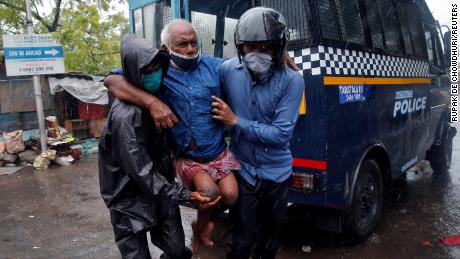
Police officers carry a disabled man to a safer place following his evacuation from a slum area in Kolkata, India.

In Odisha, where more than 150,000 people were evacuated, a total of 211 of the state’s 809 permanent cyclone shelters were being used as Covid-19 quarantine centers.

Pradeep Jena, special relief commissioner for Odisha state, said emergency services had to balance saving lives from the cyclone with saving lives from the coronavirus. In evacuation centers, Jena said they were trying to keep the elderly and pregnant women separate from the rest of the population and were working hard to obtain adequate soap.

“Social distancing is definitely a very good concept but enforcing it in the strictest possible manner in a disaster situation may not always be possible,” he said.

In India’s West Bengal, which bore the brunt of the cyclone’s winds, about 500,000 people were temporarily housed in storm shelters, according to authorities, while in Bangladesh the government said they had evacuated 2.4 million people as well as about 40,000 livestock animals.

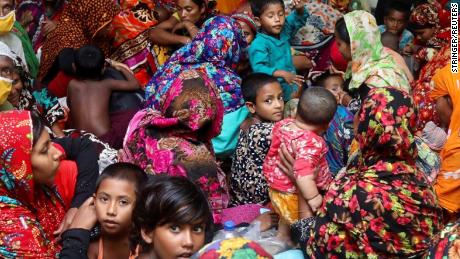
People gather at a cyclone center for protection before Cyclone Amphan made  landfall in Gabura, on the outskirts of Satkhira district, Bangladesh May 20.

It’s unknown when many of those people will be able to return home. Bangladesh Oxfam director, Dipankar Datta, said Wednesday that thousands of makeshift homes in Bangladesh had been uprooted due to the cyclone.

In what is likely to be one small glimmer of hope, Catholic Relief Services’ Chakraborty there had been no major damage reported so far in sprawling refugee camps in Cox’s Bazar, which are home to nearly 1 million Rohingya refugees and had been a source of concern to aid workers after Covid-19 cases were identified there last week.

Some weak shelters were damaged in the storm and now need to be repaired, she said.

Though there is concern that the precipitation from the storm — though it made landfall on the other side of Bangladesh — could still cause landslides and flooding in the camps.

Salman Saeed and Abir Mahmud in Bangladesh, CNN’s Rebecca Wright, Brandon Miller, Michael Guy, Joshua Berlinger, Ben Westcott and Manveena Suri contributed to this article.

Source link