California Issues Guidelines For Safe Reopening Of Houses Of Worship

LOS ANGELES (AP) — Rabbi Shalom Rubanowitz looks forward to reopening his synagogue doors — if his congregation can balance the laws of God and California during the coronavirus pandemic.

On Monday, the state released a framework that will permit counties to allow in-person worship services. They include limiting worshipers to 100 or less, taking everyone’s temperature, limiting singing and group recitations and not sharing prayer books or other items.

The Orthodox congregation of Shul on the Beach in Los Angeles County’s Venice Beach will follow the guidelines, consulting with rabbinical authorities who place a high importance on preservation of life, Rubanowitz said.

“We can do it, it’s just a question of how,” he said, noting that Orthodox believers are barred from using technology or carrying many personal items on the Sabbath.

The path of reopening provides “a great deal of hope,” he added. “That’s what people need.”

Houses of worship are the latest focus as the state eases mid-March stay-at-home orders that shut down all but essential services and kept 40 million Californians at home to slow the spread of COVID-19.

Social distancing precautions are cited for reducing rates of hospitalizations and deaths and most of California’s 58 counties are deep into phase two of Gov. Gavin Newsom’s four-stage plan to restart the battered economy. The state on Monday cleared the way for in-store shopping to resume statewide with social distancing restrictions, although counties get to decide whether to permit it.

Individual counties also will decide whether to allow the reopening of in-person services for churches, mosques, synagogues and other religious institutions. In-person religious services are relegated to phase three, which Newsom had said could be weeks away.

But they could come much sooner under the guidelines. Counties that are having success controlling the virus are likely to move quickly. Others with outbreaks — such as Los Angeles County, which has about 60% of California’s roughly 3,800 deaths — may choose to delay.

Orange County supervisors may consider a resolution being introduced Tuesday to reopen houses of worship next weekend under federal and state health guidelines.

Worshippers who are allowed to return will find some jarring changes. The state guidelines limit gatherings to 25% of building capacity or 100 people, whichever is lower. Choirs aren’t recommended. Neither are shaking hands or hugging. Worshipers are urged to wear masks, avoid sharing prayer books or prayer rugs, keep their distance in pews and skip the collection plate. Large gatherings such as for concerts, weddings and funerals should be avoided.

The guidelines say even with physical distancing, in-person worship carries a higher risk of transmitting the virus and increasing the numbers of hospitalizations and deaths and recommend houses of worship shorten services.

Each county will have to adopt rules for services to resume within their jurisdictions and then the guidelines will be reviewed by state health officials after 21 days.

Some church leaders aren’t eager to reopen. The Rev. Amos Brown, pastor of Third Baptist Church in San Francisco and head of the local NAACP chapter, led a protest Monday against reopening.

“We are not going to be rushing back to church,” he said by phone, noting that many leaders of his denomination have been sickened or died nationwide. Freedom of religion is “not the freedom to kill folks, not the freedom to put people in harm’s way. That’s insane,” he said.

But a few churches have defiantly reopened their doors already, a handful have sued the governor, and several thousand were threatening to ignore his orders and reopen for Pentecost on May 31.

Cross Culture Christian Center, a Lodi church that defied the governor and then sued him, said the guidelines were welcome but didn’t change anything.

“Our church and places of worship across California have suffered greatly because our leaders chose to marginalize and criminalize faith-based gatherings,” Pastor Jon Duncan said in a statement. “If we are to remain free, we must never allow this to happen again.”


Demonstrators protest during a rally to re-open California and against Stay-At-Home directives on May 1, 2020 in San Diego, California.

Some places of worship around the country opened over the weekend after President Donald Trump declared them essential and the federal Centers for Disease Control and Prevention released guidelines for reopening faith organizations.

But some of the largest religious institutions in California are taking a more cautious approach.

The Roman Catholic Diocese of Orange announced last week that it is phasing in public Masses beginning June 14, starting with restricted numbers of worshipers. At first, choirs will be banned, fonts won’t contain holy water and parishioners won’t perform rituals where they must touch each other.

“We know that God is with us, but at the same time we have to be careful and make sure that we protect each other in this challenging time,” Bishop Kevin Vann said Friday.

Two church services that already were held without authorization have been sources of outbreaks; one in Mendocino County and the other in Butte County.

For most people, the new coronavirus causes mild or moderate symptoms, such as fever and cough that clear up in two to three weeks. For some, especially older adults and people with existing health problems, it can cause more severe illness, including pneumonia, and death. As of Monday, California had at least 94,558 confirmed cases of COVID-19, more than 3,000 hospitalizations and 3,795 deaths.


Source by [author_name]

Wuhan performed 6.5 million coronavirus tests in just 9 days, state media reports

0

Wuhan’s ambitious citywide nucleic acid testing drive came after six new cases emerged in a residential community earlier this month — the first time local infections were reported following the city’s emergence from its months-long lockdown in April.
From May 15 to May 23, swab test samples were collected from more than nine million residents, China’s state-broadcaster CCTV reported, accounting for more than 80% of the city’s total population of 11 million.

Nucleic acid tests work by detecting the virus’ genetic code, and can be more effective at detecting the infection, particularly in the early stages, than tests which examine a body’s immune response, though the latter are easier to conduct.
The mass testing identified 198 asymptomatic cases — people who carry the virus but do not show symptoms, according to the state-run Health Times.

The speed and scope of Wuhan’s testing campaign — hailed as a “10-day battle” by local authorities — appears to have equaled or eclipsed the testing ability of many countries, including that of the United States.

On Friday alone, Wuhan conducted 1.47 million tests, according to CCTV.

In the US, the highest daily number of coronavirus tests conducted across the entire country currently stands at 416,183, according to Johns Hopkins University, which draws on data from the Covid-19 Tracking Project.

In total, the United States has performed 14,131,277 coronavirus tests since the pandemic began, according to the latest data from the US Centers for Disease Control and Prevention. However, that number also includes antibody tests performed in some states, which aren’t used to diagnose current infections but to indicate whether someone has been exposed to the virus in the past.

In Wuhan, sampling booths were set up in neighborhoods across the city, with residents in face masks lining up to take their swab tests. On Saturday, authorities set up 231 extra testing booths for people who had not been able to make the earlier tests, according to the Changjiang Daily, the official Communist Party mouthpiece in Wuhan.

Health care workers also paid door-to-door visits to some elderly and disabled residents to take their samples, the Changjiang Daily reported.

According to Chinese news outlet Caixin, in order to test quickly and widely, Wuhan’s health authorities combined some of the samples taken from multiple individuals together and tested them in a single tube — a method known as “pool testing.”

If a tube of pooled samples was tested positive, extra tests would be carried out on each individual’s sample separately to find the positive sample, the Caixin report said. It was unclear from the report what percentage of samples in Wuhan had been pooled for testing.

CNN has reached out to the Wuhan Health Commission for comment on the pooled sampling procedures but has not heard back.

In April, scientists in Germany proposed the pooling of coronavirus samples as a strategy to boost testing capacity when large numbers of asymptomatic people need to be screened, according to their research published in the medical journal The Lancet.

Source link

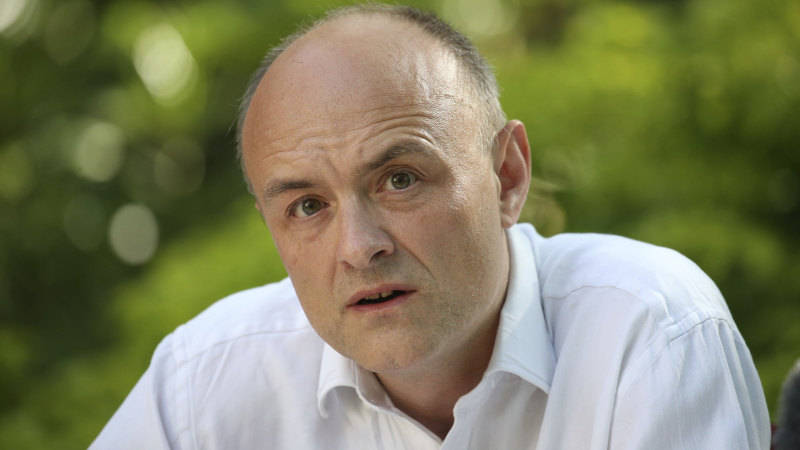
Defiant adviser adds to UK’s faltering pandemic response

Mr Cummings was a key figure in the Johnson government’s bid to shut down Britain’s parliament last year, a move deemed unlawful by the country’s Supreme Court. Since then Mr Johnson has won a parliamentary majority to pursue his policies on Brexit and other matters, but it is telling that this week nearly two dozen MPs from the governing Conservative Party have demanded that Mr Cummings step down.

Many of them clearly feel he has power beyond that appropriate for an unelected offical and, more importantly, that his power is impinging upon their own. Earlier this year Mr Cummings was instrumental in ending Sajid Javid’s tenure as Britain’s treasurer in a row over ministerial autonomy.

Australians do not have to look too far for an analogy to this state of affairs. One of the chief factors in backbench and ministerial disaffection with Tony Abbott was the frustration that Peta Credlin had become a gatekeeper to the prime minister’s office and a rival centre of power.

In a crisis such as that presented by the current pandemic, swift decision-making and clear leadership is crucial, but so is the role of the legislature as a check on the impulses of the executive. Above all, those who wield power – especially when they do so largely behind the scenes – cannot be exempted from accountability for their actions.

When the Johnson government’s leading medical adviser Professor Neil Ferguson and Scotland’s chief medical officer Catherine Calderwood were exposed for breaching lockdown restrictions, both eventually apologised for their actions and resigned.

His supporters may argue that Mr Cummings has a far more important place in the running of the country than either of them. Yet in arguing, as he has, that his is an exceptional case, he has once again assumed the role of examiner and examinee and inevitably given the impression that he is beyond reproach. That is not a healthy position for anyone in a democracy to occupy.

Loading

Australia’s national cabinet has allowed for welcome consultation between elected leaders across party lines. But failures overseas should remind us to guard against the use of this crisis by federal or state governments to avoid or curtail parliamentary process and scrutiny.

The Herald editor Lisa Davies writes a weekly newsletter exclusively for subscribers. To have it delivered to your inbox, please sign up here.

Source by [author_name]

How Can I Get Involved With Reconciliation Week Amid COVID-19 Restrictions

A week of events spent with brothers and sisters, aunties and uncles. Festivals, workshops, gatherings and learnings.

A time to share Indigenous culture with the rest of Australia. A date in the calendar dedicated to nurturing relationships between Aboriginal and Torres Strait Islander people and other Australians.

This is what National Reconciliation Week (NRW) has been about for the past two decades.

And while COVID-19 means community events have been cancelled, the key purposes of NRW remain the same, even if the celebration looks different.

“It’s a great time to share our culture with non-Aboriginal people and educate others about the importance of our culture and its central role in Australian society,” Dr Andrew Peters, senior lecturer in Indigenous Studies and Tourism at Swinburne University told HuffPost Australia.

So what is the history and how can you get involved this year?

Here’s what you need to know:

What Is Reconciliation Week?

Starting on Wednesday May 27, NRW will mark 20 years since 250,000 Australians walked across the Sydney Harbour Bridge and bridges in other cities around the country, to ‘bridge the gap’ between Indigenous Australians and non-Indigenous Australians.

Dr Peters, who is a proud Wurundjeri and Yorta Yorta man, said it’s an important event all Aussies should know about.

“We’re all on Aboriginal land, and it all contains story and history that we can all connect to. This isn’t a culture that was imported – it’s been a part of this land from the beginning,” he explained.

“It belongs to the land we now call Australia, so all of us are connected to it today.”

It’s important to know that the next chapter of Australia’s history can only happen if we understand the truth of our past and while many of these truths are hard to accept, many are stories of resilience, triumph and Indigenous excellence.

“There are some terrible parts of our history, but far more wonderful parts that shape who we are today. Reconciliation Week is a great time for Australians to start, continue, or strengthen their own journey of learning that the world’s oldest living culture is right here, and a part of us all. I think if all Australians look at the land as something to work with, and not on, these connections can start for anyone.”

SYDNEY, AUSTRALIA – JULY 13: An earth oven is dug up at Hyde Park on July 13, 2019 in Sydney, Australia. NAIDOC Week celebrations are held across Australia each year to celebrate the history, culture and achievements of Aboriginal and Torres Strait Islander peoples. NAIDOC is celebrated not only in Indigenous communities, but by Australians from all walks of life. (Photo by Jenny Evans/Getty Images)

How Will We Celebrate Amid COVID-19?

You can still be involved in Reconciliation Week even in a pandemic, NITV host Karla Grant told HuffPost Australia.

“While we can’t have the huge gatherings and events that we’d otherwise have during this week, we can still take part and get behind the many digital offerings happening online,” she said.

“We can find other ways of educating, creating greater awareness and understanding about the plight of Indigenous Australians and how we can all unite and work together as a nation to improve the lives of our First Peoples.”

Starting Monday and through until Mabo Day on June 3, NITV has a dedicated slate of coverage to celebrate Reconciliation Week 2020 including special episodes of The Point and Living Black which will explore how, 20 years on, COVID-19 has brought a new dimension to the event.

“As this year’s National Reconciliation Week theme says, we are In this together,” said Reconciliation Australia’s Chief Executive Officer, Karen Mundine.

“That theme is resonating now in ways we could not have foreseen but it reminds us whether in a crisis or in reconciliation, we are all in this together!”


Source by [author_name]

RNC Accused Of Attempting To Monetize Memorial Day With Trump Shop Tweet


POLITICS


The Republican National Committee’s attempt to hawk Trump 2020 campaign merchandise on Memorial Day did not go over well.

The Republican National Committee on Monday sparked anger and was accused of attempting to monetize Memorial Day after it posted this tweet:

The RNC drew stinging backlash from Twitter users after it promoted a “HUGE” Memorial Day sale on President Donald Trump’s 2020 reelection campaign website. It also offered a 25% discount.

The RNC has faced backlash before for attempting to hawk campaign merchandise on celebrated days. But for the vast majority of people who responded to its latest post, the sale on the day honoring fallen service members was a step too far: