Thursday, May 14, 2026

Your Genes May Affect How You’ll Heal If Wounded

0

MONDAY, June 22, 2020 (HealthDay News) — Your genes may have a big impact on bacteria in your wounds and how quickly you heal, new research shows.

The researchers said their findings could help improve wound treatment.

Chronic wounds — ones that don’t show signs of healing within three weeks — can be costly, and bacterial infection slows the process.

A range of bacterial species are present in chronic wounds, but it’s not clear why certain ones are found in some wound infections and not others.

In order to learn more, the researchers investigated the link between genes and bacteria diversity in chronic wounds.

They linked variations in two key genes — TLN2 and ZNF521 — to both the number of bacteria in wounds and the abundance of harmful ones, primarily Pseudomonas aeruginosa and Staphylococcus epidermidis.

Pseudomonas-infected wounds had fewer species of bacteria — and wounds with fewer species were slower to heal, the investigators found.

The results suggest that genetic variation influences the types of bacteria that infect wounds as well as the healing process.

The study by Caleb Phillips, an assistant professor of biology at Texas Tech University in Lubbock, and colleagues was published online June 18 in the journal PLOS Pathogens.

The authors described their study as the first to identify how genes influence wound bacteria and healing.

“This study demonstrates the ability to find variants in people’s genomes that explain differences in the microorganisms that infect their wounds. Such information is expected to guide new understanding about the mechanisms of infection and healing, and the establishment of predictive biomarkers that improve patient care,” the authors said in a journal news release.

— Robert Preidt

MedicalNews
Copyright © 2020 HealthDay. All rights reserved.

References


SOURCE: PLOS Pathogens, news release, June 18, 2020


Source link

Severe COVID-19 Raises Odds for Dangerous Heart Conditions 10-Fold

0

By E.J. Mundell
HealthDay Reporter

TUESDAY, June 23, 2020 (HealthDay News)

Doctors have long noted links between severe COVID-19 and heart trouble, but a new study helps quantify the magnitude of the problem.

The study of hundreds of hospitalized patients found that cardiac arrest and heart rhythm disorders are 10 times more common among COVID-19 patients requiring intensive care than among other hospitalized COVID-19 patients.

Just why the risk soars so high in the ICU isn’t clear, but it’s likely tied to the stresses of advanced illness, not a direct activity of the new coronavirus upon the heart, said study senior author Dr. Rajat Deo. He’s a cardiac electrophysiologist and associate professor of cardiovascular medicine at the University of Pennsylvania School of Medicine.

“Non-cardiac causes such as systemic infection, inflammation and illness are likely to contribute more to the occurrence of cardiac arrest and arrhythmias than damaged or infected heart cells due to the viral infection,” Deo said in a university news release.

A cardiologist unconnected to the new report agreed.

“We know that critical ill patients with COVID-19 have what we call a systemic inflammatory response, which creates a ‘cytokine storm,'” said Dr. Satjit Bhusri, from Lenox Hill Hospital in New York City. “This massive immune response, it appears, is the cause of the increase in heart rhythm disorders, rather than virus itself.”

The new study included 700 COVID-19 patients, mean age 50, who were admitted to the Hospital of the University of Pennsylvania between early March and mid-May. More than 70% of the patients were Black.

Overall, nine patients suffered cardiac arrest; 25 developed the irregular heartbeat known as atrial fibrillation; nine had clinically significant bradyarrhythmias (slow heart rhythms); and 10 had “non-sustained ventricular tachycardia events” — a rapid heart rate that stops by itself within 30 seconds.

Of the patients in the study, about 11% were admitted to the ICU. The only cases of cardiac arrest occurred among patients in the ICU, according to the findings published June 22 in the journal Heart Rhythm.

All of this echoes early reports that had suggested there was a high rate of heart rhythm problems among all COVID-19 patients, even those who are relatively young.

“In order to best protect and treat patients who develop COVID-19, it’s critical for us to improve our understanding of how the disease affects various organs and pathways within our body — including our heart rhythm abnormalities,” Deo said.

Dr. Laurence Epstein is system director of electrophysiology at Northwell Health in Manhasset, N.Y. Reading over the new findings, he said that the high rate of heart arrhythmias in COVID-19 “is not surprising given the severity of illness in many hospitalized COVID patients.” He noted that the rate of atrial fibrillation described in the Pennsylvania study (3.6%) is actually much lower than the rate of 19% he’s witnessed among Northwell Health patients.

And what about any long-term consequences for survivors?

“More research is needed to assess whether the presence of cardiac arrhythmias have long-term health effects on patients who were hospitalized for COVID-19,” Deo said. “In the meantime, it’s important that we launch studies to evaluate the most effective and safest strategies for long-term [anti-clotting] and rhythm management in this population.”

MedicalNews
Copyright © 2020 HealthDay. All rights reserved.

References


SOURCES: Satjit Bhusri, M.D., cardiologist, Lenox Hill Hospital, New York City; Laurence Epstein, M.D., system director, electrophysiology, Northwell Health, Manhasset, N.Y.; University of Pennsylvania, news release, June 22, 2020


Source link

Honduras President Hernandez Needed Oxygen to Battle Coronavirus, Doctor Says

0

FILE PHOTO: Honduras’ President Juan Orlando Hernandez speaks during a joint message with U.S. Department of Homeland Security (DHS) acting Secretary Chad Wolf (not pictured), at the Presidential House in Tegucigalpa, Honduras January 9, 2020. REUTERS/Jorge Cabrera

Hernandez announced last Tuesday that he had been infected, along with his wife and two aides, saying his symptoms were mild and he would work remotely, but later went to hospital.

  • Reuters TEGUCIGALPA
  • Last Updated: June 24, 2020, 12:29 PM IST

Honduran President Juan Orlando Hernandez needed oxygen after being hospitalised with the coronavirus last week, a military doctor said, warning that the leader remained in a “delicate” situation and would need to stay in hospital.

Tuesday’s remarks by Lieutenant Colonel Juan Diaz, who works in the military hospital in the capital, Tegucigalpa, offered the first public glimpse of the seriousness of Hernandez’s medical condition, stemming from treatment for pneumonia.

Diaz said the president’s condition was “somewhere between a good state and feverish with trouble breathing”, adding, “There is a clear improvement.”

Hernandez announced last Tuesday that he had been infected, along with his wife and two aides, saying his symptoms were mild and he would work remotely, but later went to hospital.

After he arrived with a cough, breathing problems and signs of inflammation, doctors at the hospital adjusted his medication, “including the application of oxygen”, Diaz said. It was not clear if Hernandez was still receiving oxygen.

They also changed his intravenous drip, he said, adding that Hernandez was in a stable but delicate state.

The health woes have been a fresh blow for the 51-year-old Hernandez, who has faced increasing domestic pressure after a drug trafficking investigation in the United States that swept up his brother threatened to engulf him as well.

Honduras has reported 13,943 infections and 405 deaths in the pandemic. But many Hondurans disobeyed the lockdown and the figures are likely to underestimate the impact of the outbreak.


https://pubstack.nw18.com/pubsync/fallback/api/videos/recommended?source=n18english&channels=5d95e6c378c2f2492e2148a2&categories=5d95e6d7340a9e4981b2e10a&query=Coronavirus+Outbreak%2CHonduran+President+Juan+Orlando+Hernandez%2CHonduras%2CHonduras+Coronavirus+Outbreak%2CJuan+Orlando+Hernandez&publish_min=2020-06-21T12:29:36.000Z&publish_max=2020-06-24T12:29:36.000Z&sort_by=date-relevance&order_by=0&limit=2

Source link

One in four EU citizens would bribe a public official: poll

0

Almost half of Europeans under 30 consider bribing a public official OK | Michal C izek/AFP via Getty Images

The degree to which corruption is deemed acceptable varies greatly between countries, however.

By

Updated

One in four EU citizens think it’s acceptable to sometimes bribe a public official to expedite urgent administrative matters, according to a survey by the EU’s Fundamental Rights Agency published Wednesday.

Almost half of Europeans under 30 consider bribing a public official OK, the poll found, although there are large differences between countries regarding the degree to which corruption is deemed acceptable.

While more than half of respondents in Slovakia, the Czech Republic and Croatia — and 48 percent in France — would consider resorting to bribery when dealing with officials, only one in five or fewer think the same way in Sweden, Malta, Finland and Portugal.

As for human rights, the poll found that in 11 of the 27 EU members, at least 50 percent of respondents “agree or strongly agree” that human rights abuses are not really a problem in their country, instead believing that’s something that happens elsewhere.

Meanwhile, nine in 10 respondents said human rights are important for creating a fairer society in their country, ranging from 76 percent in Hungary to 96 percent in Malta, and two thirds said human rights have meaning in their everyday lives.

At the same time, more than two thirds also said that some take unfair advantage of human rights, and a third agreed with the statement that “the only people who benefit from human rights are those who don’t deserve them, such as criminals and terrorists.”

The latter view is more common among the elderly — 38 percent of people over 65 said they agree with the statement, compared to 27 percent of people aged between 16 and 29.

The survey was conducted in 29 countries — the 27 EU member states, the U.K. and North Macedonia — between January and October 2019, polling between 1,000 and 3,000 respondents per country.


Source by [author_name]

Asia-Pacific stock markets highest since March despite Covid-19 fears – business live


A man walks past an electronic stock board showing Japan’s Nikkei 225 index at a securities firm in Tokyo today Photograph: Eugene Hoshiko/AP

Good morning, and welcome to our rolling coverage of the world economy, the financial markets, the eurozone and business.

Investors continue to be torn by optimism that the world economy is healing, and anxiety that a surge in Covid-19 cases could trigger fresh lockdowns and a deeper recession.

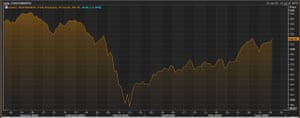
Overnight, Asia-Pacific stock markets have nudged their highest levels since early March, when the pandemic was gripping global markets. South Korea’s Kospi 200 is the best performer, jumping by 1.8%, while Australia’s S&P/ASX gained 0.2% and China’s CSI300 index picked up 0.3%.

This has pushed the MSCI index of Asia-Pacific shares outside Japan up 0.5% to its highest since pandemic lockdowns first cratered markets in early March, Reuters reports.


MSCI Asia-Pacific index

The MSCI index of Asia-Pacific stocks (ex-Japan) Photograph: Refinitiv

Jingyi Pan, market strategist at IG, says there are uncertainties of the lingering impact from the global pandemic, but….


Despite evidence of virus surges across the US, the market’s faith in reduced likelihood of the return of massive lockdowns had enabled investors to largely shrug off that concern.

Europe, though, is expected to dip around 0.6% at the open, after seven US states reported their highest coronavirus patient admissions in the pandemic so far.

Arizona, Arkansas, California, North Carolina, South Carolina, Tennessee and Texas –which also confirmed a record daily case increase on Tuesday – each admitted record numbers of infected people to hospital, the Washington Post reported.

California saw record infections, too, with more than 5,000 in a single day for the first time, as Arizona, Nevada and Missouri also reported record case increases.

Fiona Cincotta of City Index explains:


Reopening optimism is showing signs of fading with European stocks pointing to a lower open following two days of gains. The same stubborn optimism that saw Asian stocks creep up to 4-month highs overnight is not being felt here in Europe.

A quiet economic calendar will leave risk sentiment in the driving seat.

White House health adviser Dr. Anthony Fauci has also focused minds on the crisis, by warning that parts of the US are beginning to see a “disturbing surge” of Covid-19 cases.

IGSquawk
(@IGSquawk)

European Opening Calls:#FTSE 6293 -0.43%#DAX 12484 -0.32%#CAC 5005 -0.26%#AEX 572 -0.46%#MIB 19793 -0.25%#IBEX 7422 -0.23%#OMX 1677 -0.39%#STOXX 3288 -0.32%#IGOpeningCall


June 24, 2020

Shares are being supported by some better-than-expected surveys of purchasing managers released yesterday, showing that the UK’s factory sector has stabilised and France’s companies were growing again.

Hopes of another US stimulus package are also putting a floor under shares. US treasury secretary Stephen Mnuchin has suggested new legislation could be brought forward next month, telling reporters:


“We’re talking about a bunch of different ideas that we may need to do in another bill, and we want to take our time and make sure we’re thoughtful.

“So whatever we do it’ll be much more targeted, much more focused on jobs, bringing back jobs and making sure we take care of our kids.”

RANsquawk
(@RANsquawk)

– US Treasury Secretary Mnuchin said the administration is very seriously considering another stimulus bill and that the bill may pass in July


June 24, 2020

Coming up today

The International Monetary Fund will issue new economic forecasts later today, which may give an even gloomier view of the outlook than back in April.

As Bloomberg predicts:


Two months after its dire predictions of the steepest recession in almost a century, the International Monetary Fund will release new global economic forecasts this week that will probably look even worse.

Officials at the Washington-based Fund have warned that a revised outlook due on Wednesday may feature a more pessimistic view than in April. Back then, they said the “Great Lockdown” caused by the coronavirus would force a global contraction of 3% this year.

A gloomier forecast might reflect their assessment of the severity of damage caused by the widespread shutdown in activity. The U.K. economy, for example, instantly shrank by a fifth in April alone.

Bloomberg Economics
(@economics)

Two months after its dire predictions of the steepest recession in almost a century, the IMF will release new global economic forecasts today – here’s what to expect https://t.co/C4yytlVmdg pic.twitter.com/amk5c72RLP


June 24, 2020

We also get new business confidence reports from France and Germany, which may show a pick-up in morale.

The agenda

  • 7.45am BST: French business confidence for June. Expected to rise to 80 from 70.
  • 9am BST: IFO survey of German business climate for June. Expected to rise to 85 from 79.5
  • 2pm BST: IMF releases updated World Economic Outlook
  • 3.30pm BST: US weekly oil inventory statistics


Source link

#DigitalFinance – Commission holds closing pan-European conference following outreach events

0

The European Commission hosted the closing conference of the 2020 Digital Finance Outreach (DFO) event in Brussels on 23 June. This conference was the final in a series of 19 national events organized together with member states, which took place from February to June 2020. More than two thousand participants in the areas of Fintech and digital innovation in the financial sector took part. These events have provided an opportunity to gather views of key stakeholders in digital finance from across the EU. They have also helped to create awareness about the Commission’s ongoing and forthcoming work on digital finance.

An Economy that Works for People Executive Vice-President Valdis Dombrovskis said in his keynote speech: “To stay ahead of the game and compete globally, Europe must make the most of digital opportunities. Digital is the future of finance. We have been gathering many views and ideas on how we can best harness of the innovative potential of digital finance. Embracing digital finance and making it mainstream will also help to create jobs and economic growth for Europe as our countries recover from the coronavirus pandemic. At the same time, we need to continue regulating and supervising risks appropriately. Strong regulation and supervision are key to preserving trust in finance, both for traditional and for new players. ”

A full press release is available here. 

Source by [author_name]

Could search engines predict Covid-19 spread?

0

Scientists are investigating whether searches for particular medical problems could be used to predict a second spike in cases of Covid-19.

In the UK, searches for loss of taste and smell were peaking before lockdown, and long before those symptoms were announced as being linked to the disease.

BBC Click’s Spencer Kelly finds out more.

See more at Click’s website and @BBCClick


Source link

As Coronavirus Cases Cross 1 Lakh, 4 MMR Civic Chiefs Shunted Out

0

As the number of Covid-19 cases in the Mumbai Metropolitan Region crossed the 1 lakh mark on Tuesday, the state government effected a major bureaucratic shake-up by transferring four civic bodies chiefs in the region’s worst-hit Thane district, an official said here.

They include Thane Municipal Commissioner Vijay Singhal who has been replaced by another IAS officer Dr. Vipin Sharma.

Thane – with 26,506 cases and 751 fatalities – has emerged as the second worst-hit district after Mumbai in the state.

Additional Divisional Commissioner, Nagpur Abhijit Bangar has been posted as the new Municipal Commissioner of Navi Mumbai Municipal Corporation, replacing Annasaheb Misal.

Gadchiroli Zilla Parishad CEO, Dr. Vijay Rathod, has been assigned as the new Municipal Commissioner of Mira-Bhayander Municipal Corporation, to take the place of Chandrakant Dange.

Gondiya Zilla Parishad CEO, Dr M Raja Dayanidhi, has been posted as the new Municipal Commissioner of Ulhasnagar Municipal Corporation in place of Samir Unhale.

In mid-May, the state government had effected a similar operation by abruptly replacing the then high-profile Greater Mumbai Municipal Commissioner Praveen Pardeshi with another senior IAS officer IS Chahal, and later around 9 IAS officers were deployed in Mumbai to oversee various aspects of the war against the virus.


https://pubstack.nw18.com/pubsync/fallback/api/videos/recommended?source=n18english&channels=5d95e6c378c2f2492e2148a2&categories=5d95e6d7340a9e4981b2e10a&query=coronavirus+cases+in+Mumbai%2CCOVID-19+cases%2CGondiya+Zilla+Parishad%2CIS+Chahal%2CM+Raja+Dayanidhi&publish_min=2020-06-21T00:01:20.000Z&publish_max=2020-06-24T00:01:20.000Z&sort_by=date-relevance&order_by=0&limit=2

Source link

#EuropeanInnovationScoreboard 2020: EU’s innovation is increasing

0

The Commission has released the European Innovation Scoreboard 2020, which shows that Europe’s innovation performance continues to improve across the EU, surpassing for the second year the United States. Internal Market Commissioner Thierry Breton said: “This year’s scoreboard shows that the EU is already a good place to do innovation, but we need to further step up efforts across the EU to find global solutions to contain the virus, and at the same time, help Europe’s recovery from the crisis. More than ever, innovation is important since it lies at the heart of our efforts to beat the coronavirus pandemic.”

Innovation, Research, Culture, Education and Youth Commissioner Mariya Gabriel said: “The EU is leading the way out of the coronavirus crisis by intensifying its support to research efforts and bringing together diverse players of the innovation ecosystems, from both the public and private sector, that can transform new ideas into reality and improve the life of citizens. Post-covid EU will be stronger and more united than ever before leveraging its creativity and innovation performance as this year’s Scoreboard highlights.”

The results, which cover data from 2019, highlight the opportunities to better coordinate EU innovation policies, help Europe improve its global competitiveness and strengthen the key role innovation plays in overcoming the coronavirus pandemic. This has shaken the world in an unprecedented manner testing the resilience of our societies, economies, healthcare and welfare systems. The EU has done its utmost to use the tools at hand to protect lives whilst preserving the single market, and supporting Europe’s economy. Research and innovation have proven to be an essential part of the coordinated EU response to the crisis and they will be vital to support Europe’s sustainable and inclusive recovery.

Measuring innovation performance is a key element in achieving this goal. If you want to know more on the details of the European Innovation Scoreboard 2020 results, please find a press release and Q&A online.

Source by [author_name]

EU-China Summit: Defending EU interests and values in a complex and vital partnership

0

EU-China Summit: Defending EU interests and values in a complex and vital partnership

On 22 June, Commission President Ursula von der Leyen, Council President Charles Michel and High Representative/Vice-President Josep Borrell joined the Chinese President Xi Jinping (pictured) and Prime Minister Li Keqiang via video conference for the 22nd EU-China Summit. Presidents von der Leyen and Michel issued a joint press release at the end of the summit, which is available online and covers the comprehensive range of issues addressed by the leaders during their discussions. 

The Summit focused on three broad areas: EU-China bilateral relations, including the economy and trade, climate action, sustainable development and digitalisation, human rights, Hong Kong, and security and defence; mutual solidarity in response to the coronavirus pandemic and joint efforts in the socio-economic recovery; and international and regional issues.

The summit was followed by a press conference, at which President von der Leyen said: “It is time to accelerate on the very crucial areas of our relationship, to deliver on the important commitments from last Summit and address our concerns on reciprocity and the level playing field. As the European Union, we are committed to making swift and substantial progress. We count on the Chinese leadership to match our level of ambition.”

Read the full remarks of President von der Leyen at the press conference online.

In parallel to yesterday’s summit, Energy Commissioner Kadri Simson participated in the 9th EU-China Energy Dialogue, which focussed on clean energy policies in the context of the coronavirus pandemic and economic recovery. More information on the Energy Dialogue is available online. For more information on EU-China relations, consult the dedicated factsheet and the website of the EU Delegation in Beijing.

Source by [author_name]