Tuesday, April 28, 2026

Herbert Stempel, TV Quiz Show Whistleblower, Dies At 93

NEW YORK (AP) — Herbert Stempel, a fall guy and whistleblower of early television whose confession to deliberately losing on a 1950s quiz show helped drive a national scandal and join his name in history to winning contestant Charles Van Doren, has died age 93.

Stempel’s former wife, Ethel Stempel, told The Associated Press on Sunday that he died at a New York nursing home on April 7. She cited no specific cause of death.

Stempel’s long life was changed and defined by a TV face-off late in 1956, when he and Van Doren smoothly executed a fraudulent display of knowledge, gaps in knowledge and sportsmanship on “Twenty-One,” part of a wave of programs that offered big prizes for trivia experts. Confessions by Stempel and others badly tainted the young medium, helped lead to Congress’ banning what had been technically legal — rigging game shows — and to the cancellation of “Twenty-One” among others.

Interest was revived by the 1994 movie “Quiz Show,” directed by Robert Redford and starring John Turturro as Stempel and Ralph Fiennes as Van Doren, who died last year.

The undoing of “Twenty-One” was set off by declining ratings, and a producer’s refusal to uphold a dirty bargain.

Stempel, born in New York City and the son of Jewish immigrants, would boast of a “retentive memory” that had made him a quiz show star since childhood and a natural for “Twenty-One.” Hosted by Jack Barry, the program placed two contestants in isolation booths on opposite sides of the stage and challenged them on everything from modern sports to Civil War history. Stempel, identified by Barry as a 29-year-old G.I. Bill college student from Queens, had prevailed for six straight weeks and accumulated $69,500. But audiences were apparently bored and advertisers worried. Producer Dan Enright’s solution was to have Stempel lose to a more charismatic opponent, Van Doren, scion of a prominent scholarly family and himself a rising star at Columbia University. Stempel later said he agreed when Enright promised to make him a question consultant for “Twenty-One,” get him an appearance on “The Steve Allen Show” and allow him to compete on a future quiz program.

Stempel and Van Doren were an obvious contrast: The fair-haired and handsome Van Doren, and the relatively plain Stempel, a stocky, dark-haired man with glasses and a flat, nasally accent. Each duly played their parts: looking down, blinking nervously, wiping their foreheads and pretending to think out loud as they responded to such challenges as “Name the three heavyweight champions immediately preceding Joe Louis” and “Name the second, third, fourth, and fifth wives of Henry VIII and describes their fates.”

Stempel retained a wry sense of humor, responding “They all died” when asked about Henry VIII’s wives. But one wrong answer was personally painful: Which movie received the Oscar for best picture in 1955? As Stempel would explain, he knew the winner was “Marty,” the low-key drama starring Ernest Borgnine. He had seen it three times and related to its story of a lonely butcher in New York City. But he was told to guess “On the Waterfront,” the Oscar winner of 1954, and a film, ironically, about a boxer who throws a fight.

With tens of millions looking on, Stempel muttered “I don’t remember” three times, shook his head and weakly guessed, “On the Waterfront?” Upon Van Doren’s eventual victory, the contestants smiled and shook hands at center stage. Stempel, who still had nearly $50,000 in winnings, thanked Barry and the show’s staff for their “kindness” and “courtesy.” Barry in turn praised Stempel’s “courage” and “fighting spirit.”

Van Doren would continue winning for months, and was celebrated in a Time magazine cover story as “TV’s own health-restoring antidote to (Elvis the Pelvis) Presley.” Stempel, meanwhile, found himself shut out entirely. He would acknowledge his decision to speak out wasn’t a matter of conscience, but revenge. When he tried to get back in touch with Enright, he realized that the producer no longer was interested.

“He just completely forgot I ever existed,” Stempel later told the Archive of American Television. “He had a picture of Charles Van Doren in his office when I walked in there and all he could do was praise Charles Van Doren, tell me what a great contestant is.”

Stempel’s public declarations were initially dismissed, but as contestants on other shows made similar statements, authorities began to take action. A grand jury was convened in New York in 1958 and Congressional hearings began the following year, with Stempel and Van Doren both testifying and acknowledging their complicity. Van Doren, who had no further comment on the scandal until a 2009 essay in The New Yorker, was among those given suspended sentences for lying to the grand jury. Stempel would endure being “treated like a pariah” by his relatives and losing much of his prize money in an investment scam.

For years, he lived quietly in Queens with his second wife, Ethel (his first wife, Toby, died in 1980), working as an office manager, public school teacher and on the litigation support unit of the New York City Department of Transportation. He reemerged as a public figure in the 1990s, when “Twenty-One” was featured in a Julian Krainin documentary and in Redford’s movie, for which Stempel served as a consultant. He would say “Quiz Show” distorted his life and personality.

“I was a little miffed at the portrayal. I was showed to be a nerd, a square and a hyper little guy,” he told the Television Academy archive, remembering a humorous encounter with Turturro at a screening. “John walked over to me and he said to me, ‘If you punch me in the nose I would understand why. … And I didn’t want any trouble. I realized he played me over the top and so forth. He’s an actor. He’s told by the director, Redford, to play me in a certain way, and that’s how he played it. And I said, ‘No, John, everything’s cool.’

“And my wife, Ethel, is a very feisty woman, and she said, ‘Step aside, Herb, I want to take a crack at him.’”


Source by [author_name]

Obama says small minority of violent George Floyd protesters are “detracting from the larger cause”

Former President Barack Obama said a minority of violent protesters against the death of George Floyd were “detracting from the larger cause” on Monday.

In a blog post published this morning, Obama said violent protesters were “putting innocent people at risk” as he urged readers not to participate in destruction.

But he also said this time of pandemic and civil unrest could be a “real turning point” in American history if people “channel our justifiable anger into peaceful, sustained, and effective action.”

Writing about protesters demonstrating against the killing of Floyd in Minneapolis Police custody last Monday, Obama said: “The overwhelming majority of participants have been peaceful, courageous, responsible, and inspiring.


Barack Obama speaks to guests at the Obama Foundation Summit on the campus of the Illinois Institute of Technology on October 29, 2019 in Chicago, Illinois.
Scott Olson/Getty Images

“They deserve our respect and support, not condemnation—something that police in cities like Camden and Flint have commendably understood.

“On the other hand, the small minority of folks who’ve resorted to violence in various forms, whether out of genuine anger or mere opportunism, are putting innocent people at risk, compounding the destruction of neighborhoods that are often already short on services and investment and detracting from the larger cause.”

Obama later noted that the past few months had been “hard and dispiriting” for some Americans as more than 100,000 have died while millions have been thrown out of work amid the COVID-19 pandemic.

“But watching the heightened activism of young people in recent weeks, of every race and every station, makes me hopeful,” he added. “If, going forward, we can channel our justifiable anger into peaceful, sustained, and effective action, then this moment can be a real turning point in our nation’s long journey to live up to our highest ideals.”

The former Democratic president issued his remarks on Medium after the U.S. witnessed protests and riots for a sixth night running on Sunday.

Over the past week, riot police in many cities have clashed with protesters, hitting them with tear gas, cars, pepper spray and rubber bullets.

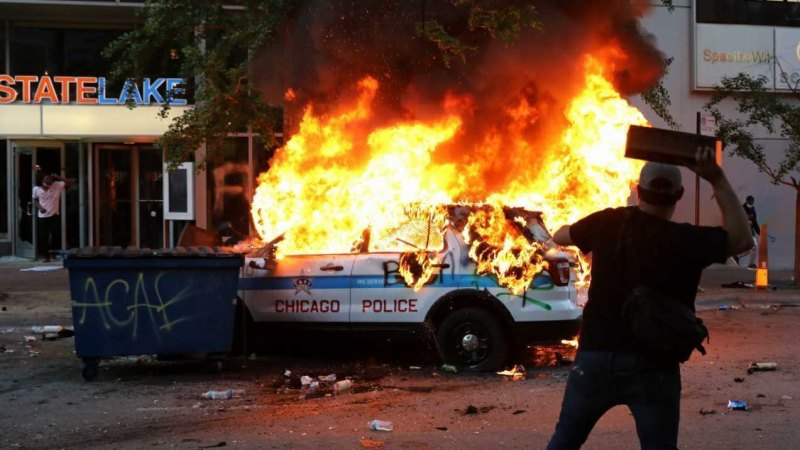
There have also been some scenes of a minority of protesters looting shops and setting fire to buildings as they demonstrate against police brutality.

Several fires broke out in Washington D.C. last night as protesters demonstrated near the White House.

Footage of a car driving into a crowd of Boston protesters yesterday has also circulated on social media.

The New York Times reported that the National Guard had been activated in at least 21 states as local law enforcement struggled to cope with the size of protests.

According to an Associated Press tally, more than 4,400 people had been arrested over the protests as of Monday morning.

Source link

Rampant violence, military escalation, and the role of intermediaries in Daraa, Syria

Nearly two years have passed since the Syrian regime declared its reclaimed control over Daraa governorate in southern Syria in July 2018. In contrast to other reconciled areas, the limitations imposed on the Syrian regime’s access to areas that engaged in the Russian-led negotiations, the significant number of unreconciled rebels, the widespread availability of light weapons, and the presence and resurgence of ISIS sleeper cells are but a few of the factors that make Daraa a unique post-reconciliation case in which territorial and security fragmentation is extremely salient.

What further distinguishes Daraa is the rampant violence that has plagued the region, starting soon after the rebels surrendered. Since August 2018, disappearances, guerrilla attacks, drive-by shootings, and attempted killings against all sides have become increasingly common. According to data collected and verified by the author, at least 530 violent incidents took place between August 2018 and May 2020 in Daraa and claimed the lives of more than 480 individuals on all sides.

However, on May 4, 2020, this wave of violence reached an alarming climax when Qasem al-Subehi, a former rebel, carried out an armed attack that killed nine policemen in Muzayrib town. In response, the Syrian regime mobilized its military forces in the western region of Daraa and promised to impose full control over the areas covered by the 2018 Russian-led agreement.

In order to understand the contours of the current security landscape, one should first understand that Daraa is an archipelago in which distinct political orders — a means of who controls which territories and in what ways — and disparate security climates exist. It is also necessary to unpack the intermediary role former rebel leaders and opposition figures play in post-rebellion local politics, particularly how their bargaining power, if it exists, limits the Syrian regime’s military actions, especially with regards to the ongoing military escalation in the western region.

The Eighth Brigade of the Fifth Corps: Daraa’s military intermediary

Soon after the rebel surrender in Daraa, Russia formed the Eighth Brigade, a subdivision of the Russian Fifth Corps, and entrusted Ahmad al-Oda, a former leader of the Sunna Youth Forces rebel group, with the command of the nascent unit, headquartered in the town of Busra al-Sham. Al-Oda was not only a strong and charismatic rebel leader — as many locals described him — but he also maintained robust ties with his former foot soldiers, invested in the Russian-led negotiations, and gained Russian patronage to protect his legacy and secure a crucial military role and legitimate authority in the post-rebellion era.

Under al-Oda’s command, the Eighth Brigade has incorporated nearly 1600 fighters, 900 of whom are former rebels that have undergone the rebel-military integration process. In the eastern region of Daraa, where the degree of penetration of the Syrian regime is relatively low, the Eighth Brigade is the chief armed actor that preserves order and security by setting up checkpoints and carrying out regular patrols. Together with the Russian military police, it has a monopoly on the use of violence and prohibits the entry of Syrian regime forces. In many instances, both Russian military police and Eighth Brigade soldiers have confronted Syrian state military and security forces, ordering them to remove their checkpoints and refrain from committing abuses against civilians and former rebels. Consequently, and with the exception of a few violent incidents, areas that fall under their control enjoy better security than other parts of the governorate.

In large part thanks to his Russian patronage that gives him bargaining power, al-Oda has the capacity to open direct channels with local institutions as well as Syrian regime security and military officials to convey civilian demands about service provision and security matters — and makes sure they are heard. Moreover, as al-Oda enjoys the backing of a military force and is respected by many tribal leaders, he has had a seat reserved at any negotiation table to defuse tensions that arise between the Syrian regime and the remaining rebel enclaves in Daraa. Building on this, he has been able to increase his influence and establish a popular base that extends beyond the eastern region of Daraa.

The Central Negotiations Committee

The Central Negotiations Committee (CNC) is a civilian body established on July 3, 2018 by the Central Military Operations Room — itself created on June 20, 2018 to organize military efforts and combat the Syrian regime’s offensive against Daraa. The CNC is an aggregation of ex-rebel leaders, former local activists, local notables, and lawyers, mainly concentrated in Daraa al-Balad and the western region of Daraa, where hundreds of unreconciled rebels and military defectors and draft evaders are sheltering. Since the CNC’s establishment, its members have communicated with Russia and the Syrian regime to ensure the implementation of the terms of the 2018 agreement, such as the release of detainees, determination of the fates of draft evaders, and the return of dismissed government employees to their jobs.

Lacking genuine Russian patronage and bargaining power, the CNC has been struggling in its negotiations with the Syrian regime, not only in matters related to detainees and security, but also to prevent local institutions from instrumentalizing essential services to sanction local communities’ perceived opponents. Despite the popular support its members enjoy, the CNC has only held a handful of fruitful meetings with Syrian regime officials and thus is largely ineffective as a civilian intermediary.

Unprecedented military escalation

The Syrian regime has been using the lawlessness and spread of violence in Daraa — mainly in areas represented by the CNC — as a justification to renege on the terms of the 2018 Russian-brokered agreement and to launch a military offensive to restore absolute control and a firm grip on security, as was the case recently in al-Sanamayn,where it regained full control of the city in early March 2020.

On May 4, 2020, the growing violence in Daraa escalated dramatically when Qasem al-Subehi, a former rebel, killed nine policemen in an attack on Muzayrib town in retaliation for the death of his son and son in law — for which he blamed the regime. The attack offered the Syrian regime a long-awaited opportunity to justify deploying its forces in a military escalation unprecedented since August 2018. The regime promised to pacify the region and bring the loosely controlled areas under its firm security grip.

These unfolding developments have put the CNC’s role as an intermediary to the test once again. Following the May 4 attack, the CNC quickly issued a statement, in which it condemned the action and disowned al-Subehi, but that did not stop the Syrian regime from preparing for a full-fledged military offensive. With military reinforcements arriving in western Daraa, the CNC appealed to Russia to intervene and held a series of meetings with the Syrian army and state security officers. On May 25, 2020 an agreement was reached by which the Syrian regime has agreed to halt its military offensive in return for setting up additional checkpoints, jointly staffed by the soldiers of the Fourth Division and integrated former rebels from Daraa, to secure the roads between cities in the region. The agreement also includes a provision that the Fourth Division soldiers will be withdrawn after 10-15 days, leaving the checkpoints staffed solely by ex-rebels integrated into its ranks.

However, on May 27, 2020, CNC members were ambushed near Muzayrib town by unknown gunmen. Four former rebels were shot and killed and three others were severely injured, including one who died three days later from his injuries, along with Mahmoud al-Baradan, a former rebel leader and CNC member. Al-Oda rapidly deployed his forces and helped to comb Muzayrib town for ISIS sleeper cells, which were believed to be behind the attack. In spite of that, the Syrian regime continued to deploy additional forces in the following days, not only on roads and highways, but also on the outskirts of several cities in what many considered to be a violation of the agreement, once again fueling rising tensions.

Looking ahead

There are three main scenarios for what might happen next in Daraa in the coming days. In the first scenario, the Syrian regime will recommit to the agreement, refrain from carrying out a military operation, and set up additional checkpoints to secure roads between the western region’s cities and military camps. The persistence of violent attacks and whether the Syrian regime will fulfil its promise and withdraw soldiers who are not from Daraa will be the two main determinants of whether there will be further escalation or de-escalation.

In the second scenario, the Syrian regime will continue to maneuver and use the armed attack on the CNC and any potential violent attacks in the region as a proof of the CNC’s inability to secure its areas, and consequently will move forward with its military operation. However, the available manpower and the abundance of weapons in the western region would make this scenario costly for the regime and likely to be viewed unfavorably by Russia and neighboring countries. Given the high levels of violence, instability, and regional spillover associated with a full-scale military operation, the Syrian regime might opt to negotiate a deal whereby it enters cities in the western region without actually fighting.

In the third scenario, in agreement with the CNC, al-Oda will take pre-emptive action and incorporate the unreconciled rebels in the western region. This would automatically bring the region under the protection of the Fifth Corps and thus block any potential military operation. Such a scenario would be welcomed by locals for two main reasons: First, it would avoid fierce fighting, bloodshed, and waves of displacement. Second, locals in the western region of Daraa want stability and security as part of a framework like that al-Oda established in the eastern region, where Syrian regime forces are banned from entry. And finally, as Iran and Hezbollah are widely believed to be the actual orchestrators of the military escalation in Daraa, many locals believe that al-Oda, who harbors enmity toward Iran and Hezbollah, is the only man capable of undermining their aspirations and curbing their influence in Daraa.


Abdullah Al-Jabassini is a non-resident scholar with MEI’s Syria Program, a Ph.D. candidate in international relations at the University of Kent in Brussels, a researcher for the Wartime and Post-Conflict in Syria project at the Robert Schuman Centre for Advanced Studies at the European University Institute in Florence, and a former visiting scholar at the European University Institute. The views expressed in this piece are his own.

Photo courtesy of Abdullah Al-Jabassini 


Source link

Left Without Work In The Lockdown, This Car Cleaner Became A TikTok Dance Sensation

0

Before the lockdown was announced, 29-year-old Arman’s daily routine included getting up early in the morning and washing as many as 20 cars a day―work that he has been doing since childhood. Once evening fell, he would switch gears completely. He’d meet up with his childhood friends Raj, Sonu and Karan for dance practice. Using an inexpensive Oppo phone with a broken screen, the friends would spend hours studying and choreographing dance moves to shoot the next day. 

This phone, Arman says, has been a “blessing” for him and has given his dancing career the kind of momentum he had only dreamed of earlier. Gifted to him by a close friend a year ago for performing at his wedding, this phone has enabled him to record himself dancing, find flaws, correct them, and to share his talent with the world. Most importantly, said Arman, the phone boosted his confidence because looking at his own dance videos showed him that he really was “quite good”.

This realisation finally sank home after a dance career that had already spanned more than 15 years. 

For the latest news and more, follow HuffPost India on Twitter, Facebook, and subscribe to our newsletter.

Arman, who was born and brought up in Valsad, Gujarat, said he has competed in over a 100 local competitions, and won over 50 awards, but there were few tangible rewards. The first time he competed was in 2007, at a dance competition in Valsad, at the age of sixteen. But it was only two years later, in 2009, that he finally won a prize―a sum of Rs 3000. Indeed, he has never earned more than that in any of the local competitions that he has participated in. While he was sometimes invited to perform at weddings and other events, these engagements never provided a sustainable source of income. Nonetheless, Arman continued to dream big.  “During these competitions, the public―in huge numbers―would gather around the dance ground and watch me perform. When they cheered, I felt so confident. I used to think I would someday be able to appear on TV and make millions clap for me,” said Arman. 

Back then, he had no idea that his dream of an audience of millions was going to come true via his humble mobile phone. 

One evening during dance practice, Arman’s friends showed him some TikTok dance videos for reference and suggested that he should use the platform too. “I used to upload funny videos, but comedy was never my thing. One day, my friends showed me some dance videos, and asked me if I wanted to upload such videos. I was a little hesitant at first, but I thought, what’s there to lose? So I gave it a shot.”

A TikTok sensation was thus born.

Arman Rathod, as of today, has 2.7 million followers on Tik Tok. Almost all his dance videos go viral on social media―most recently, his May 15 upload of him dancing to  Hrithik Roshan’s ‘You are my Soniya’ received six million views―and his inbox is brimming with messages from fans. “A lot of TikTokers send me messages saying they want to meet me and make videos with me after the lockdown, and I look forward to that,” he said.

“I used to watch all these dance shows on TV a lot, and wanted to be on that stage and compete with the best dancers, at least once in my lifetime”

Arman is a stage name and one that holds a lot of meaning for him, said the dance star, whose given name is Sanjay Rathod.  “I used to go to these local dance competitions where judges would often ask the same question to me, ’tumhara arman kya hai?’ [what is your dream?] to which I would often say, ‘For my talent to reach millions of people.’ Once, the answer to this very question earned me an award. They really liked my answer, which was, ’Mera arman hai ki meri tarah dancer banna logon ka arman ban jaaye kisi din’ [My dream is that people should someday aspire to become a dancer like me.] Since then I came to be known as Arman.” he recalled.

While being on TV was his most dearly held aspiration, his social media stardom has achieved what he always wanted. “It doesn’t matter anymore. My dream was to be seen and appreciated by people, and that’s happening even on TikTok.”

Arman told HuffPost India that when he was a child he pressurised his father to buy a small television set. After months of saving, when the set―a second-hand black-and-white TV―finally arrived, one of the first things Arman watched was Prabhu Deva’s ‘Mukkabla’ dance video from the 1994 Tamil film Kadhalan. 

He started to imitate the dance moves from the song almost obsessively. It took him months, but he finally perfected the steps to the song. 

“I used to watch all these dance shows on TV a lot, and wanted to be on that stage and compete with the best dancers, at least once in my lifetime,”  he shared. But even though he auditioned for several TV shows, including Dance India Dance, Chak Dhoom Dhoom and India’s Got Talent, he never got selected. 

 “I still didn’t lose hope. I continued to dance at home and finally my hard work has paid off,” he said. He has been self-training since the age of 14, said Arman, and he was never deterred by the absence of formal teaching. “First, TV was my trainer, and then YouTube,” he said. “I was alone, without a support system. Nobody understood my obsession for dance back then. But with time, people started to understand how serious I was about it.” 

However, while Arman pursued his passion for dance diligently over the years, he had to devote considerable time to the daily-wage jobs that gave him his living. Ironically, it was not until the lockdown that Arman’s dance career took off. 

“Finally, since my work had stopped due to the lockdown, I had ample time. I decided to give myself a chance. I danced to the tune of a South Indian song and uploaded it on TikTok, and it went viral. Since then, almost all my videos have become famous and are liked by a lot of people. Earlier, people used to look at me as a loser, a struggler, but now I have shown them that hard work really pays off,” he said. 


.

His viral videos prompted the organizers of Color TV’s Dance Deewane to invite him for auditions, according to Arman.  “Soon after this call, some people started spreading lies about me, saying that I dress fancily and live in a big house. None of it is true. The truth is, they had seen me in good clothes during dance auditions. No matter how poor I was, I saved for months to buy a pair of good pants and shirt for myself when I went for auditions because I wanted to look presentable. They saw those clothes and thought I was rich. They didn’t see the struggle behind it, how much hard work went into buying that one set of clothes,” said Arman.

This Wednesday, Arman posted a video showing his small house, covered with tin, his mother sitting on the floor sifting rice and father seated on a charpai. He also showed his meagre collection of clothes. “If you still think I am a fraud, don’t like my videos,” he appealed in the video, which he also uploaded on his Twitter account. 

Arman grew up in Gujarat’s Valsad, where he lives in a slum area in a small one-room hut that accommodates the family of eight. There is only one bed in the hut, for his elder brother who needs it due to his injured knees. The rest of the family―his mother, father, sister-in-law and her and his brother’s three children―sleep on the ground. Arman said that his brother still works occasionally in shops to help the family’s finances, despite his injured knees. “When he goes for these jobs, he has so much pain in his knees at night that he can’t sleep. He gets restless. But what can be done? He also has a wife and three kids to look after,” Arman sighed. 

His father, who is 65 years old, worked as a watchman in a local hospital for much of his life, but has been unemployed for a year due to ill health. The family’s primary earners are now Arman’s mother and sister-in-law, who both do domestic work at multiple houses and earn around Rs 5000 each per month. 

The lockdown, however, has shaken the family’s already precarious financial condition. 

“For at least a month, my mother and bhabhi were told not to go to the houses to work. We didn’t have any money, and were using the money my mother and bhabhi had saved up for themselves. The next month they requested their employers to hire them back because the family was close to starvation, and they were allowed to resume their duties,” said Arman, whose own work of washing cars―his main source of income―came to a halt due to the lockdown.  

“I never thought I would become so big. My life’s only dream was to appear on TV and become a star.

Arman studied in a government school until class seven, when he was forced to drop out in order to help his struggling family. “I had to start working because of the financial condition at home,” he said. Right from then until the lockdown was announced, Arman eked out a living by cleaning cars. “Everyday I would wash at least 20 cars, and still couldn’t earn much,” he said, adding that he would get Rs 30 to 40 for each vehicle he washed.  

During festivals, he would seek extra jobs to increase his income. “During Diwali, I would start working at some cracker shop because they needed more staff, sometimes I would sell colour during Holi, and during Ganesh Chaturthi, I would colour Ganesh idols for Ganpati Visarjan. For food, we would use our ration card to collect supplies.” 

Dancing was never a reliable  source of income. “Performing at weddings made me some money, but it wasn’t stable. Sometimes I would get so many invitations, sometimes none,” he said. 

Despite this, said Arman, his parents never came in the way of his passion. “Whatever I am today is because of my parents. They didn’t stop me from pursuing my passion even once, even though it didn’t get any money in the house. They have always supported me. They never nagged me for dancing or not making any money. My mother is proud of me because I share whatever little money I make with her,” Arman said.

To Arman, though, dancing was never just about the money. “I couldn’t study because of the financial situation at my house, but dance was something I could never give up. Even when I used to wash 20 cars a day, I would still have the energy to dance every evening for two or three hours.” 

According to him dance is a calling that he cannot help but answer. “Since I am not educated, my only talent and passion is dance. There is nothing else I know so well. I can’t even tell you how much my dance means to me.”

But his fame still surprises him at times. “I never thought I would become so big. My life’s only dream was to appear on TV and become a star. Even though I haven’t appeared on TV yet, I am still a star.” For now, that thought sustains Arman, even in the absence of financial succour. 


Source link

Lockdown Trapped Women In Violent Relationships. Their Abusers Might Kill Them When It Ends

0

Get the latest on coronavirus. Sign up to the Daily Brief for news, explainers, how-tos, opinion and more.

“I feel guilty for not being stronger sooner. I’m exhausted and I just want a way out.”

Nicola had reached the end of her patience with her boyfriend before the coronavirus lockdown began and had made preparations to leave him.

But then the Covid-19 pandemic hit, and the lockdown restrictions forced her to change her plans.

“I had prepared to leave my boyfriend and organised to go and stay with my mum.” she told HuffPost UK. “But then when the restriction came in, I wasn’t able to travel and with my mum’s already poor health, I couldn’t risk going there.

“I just told my mum that everything had got better with my boyfriend so that she wouldn’t worry. But it’s not true.”

In reality, Nicola, who is in her 20s and whose name has been changed to protect her identity, is living in fear at home with her boyfriend and her young daughter, desperately trying to keep safe.

I felt like I was trapped before quarantine happened, but now everything is a hundred times more intense.
Nicola, who is trapped in an abusive relationship during lockdown

“My partner is drinking a lot and his mood swings are really difficult to deal with.” she admitted. “He can’t go to work so he is at home all the time.

“He hasn’t been physically hurtful – yet – but he threatens he will sometimes and I believe him.

“Normally, I would have some time to myself during the day to look after my mental health. But now it’s constant stress for me.

“I felt like I was trapped before quarantine happened, but now everything is a hundred times more intense.

“I want to leave and go to my mum’s but I can’t cause more hurt to my family than I feel I already have from being with this person.

“I feel guilty for not being stronger sooner, even though I never asked for any of this. I’m exhausted and I just want a way out.”


Nicola’s tale depicts the plight of thousands of women across the country feared to be trapped in domestic abuse situations during lockdown.

Latest figures from domestic abuse charity Refuge show that since lockdown started, there has been a 66% rise in demand for its National Domestic Abuse Helpline, while there has been a staggering increase of more than 950% to the Refuge website.

While the government has made it clear that those suffering domestic abuse should seek help from services, and that escaping an abusive relationship is a lawful reason to leave the home, it is feared many victims are living in fear as they don’t want to worry their families at a troubling time and feel they have nowhere to go.

Campaigners’ fears centre around what will happen when lockdown is lifted as the most dangerous time for abuse victims is when they try to escape. It is then that violence increases – and for some people, it leads to death.

However, they point out that coronavirus and the lockdown or the lifting of it aren’t to blame for domestic abuse or a rise in the killing of women – but the actions of abusive and controlling men.

And they want to ensure adequate support services are available for victims all year round to make sure they are protected from potential harm.

The Counting Dead Women project, which identifies UK women killed by a man or where a man is the principal suspect, revealed to HuffPost UK that their latest figures show there were 32 suspected domestic abuse killings of females at the hands of men between March 23 – when lockdown began in the UK – and May 17.

One of the most infuriating things for an abuser is the feeling that they have lost control … so they take back control by taking their life.
Karen Ingala Smith, Counting Dead Women

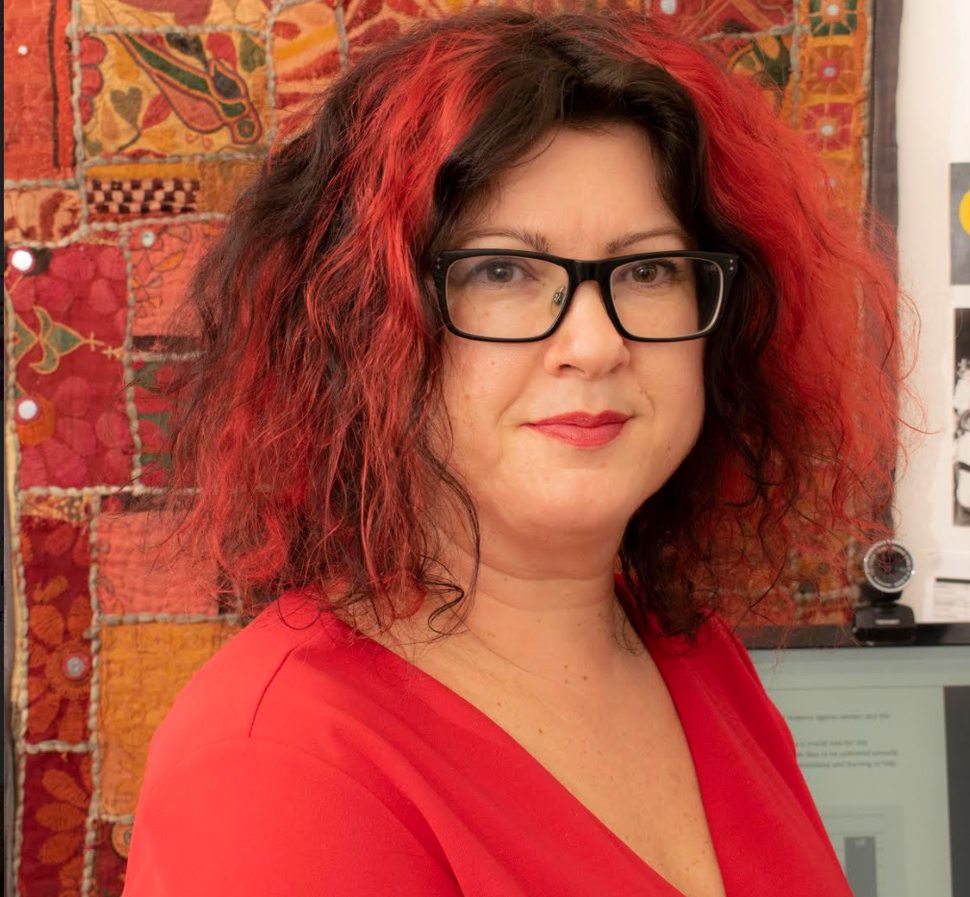
Karen Ingala Smith, founder of Counting Dead Women, told HuffPost UK it is important to stress that coronavirus doesn’t cause men’s violence and hasn’t increased the number of abusive men in the world.

However, she spoke of her fears that there might be a rise in women being killed after lockdown lifts due to a sense of losing control for the abuser when the victim makes her escape.

Karen Ingala Smith, founder of Counting Dead Women


Karen Ingala Smith, founder of Counting Dead Women

“One of the most infuriating things for an abuser is the feeling that they have lost control.” she said. “The actual leaving of the relationship by the woman is when men realise they have lost control.

“There is a potential for an increase in killings post lockdown because of a perceived loss of control by the abusers. So they take back control by taking their life.”

Smith says around a third of women killed by their partner or ex-partner are killed after separation and that as women may be finding it harder to leave abusive men in the current circumstances, there is a real risk of an increase in intimate partner homicide as lockdown eases.

Smith is troubled by the thought of the women such as Nicola and children who are currently trapped in lockdown with their controlling abuser.

“It must be soul destroying and horrible to have your life clipped by an abuser who is controlling you.” she said. “It erodes people’s confidence and their very essence.

“Domestic abuse is always a concern and worry – not just in lockdown but all the time. However, lockdown will be making it harder for some women to get help and the controlling behaviour posed on some of them will be greater than normal.

“Lockdown is another tool for abusers and abusers will pick up any tool they can to further their agenda.”

Some women have told domestic abuse services and supporters that their relationships which weren’t particularly controlling or abusive before lockdown have escalated into unhappiness.

Anita, who lives in Birmingham and has changed her name to protect her identity, told HuffPost UK that her relationship with her husband wasn’t too bad before lockdown – but things have got a lot worse.

He is blaming it on the virus, but I think that’s just an excuse for him to control me like he always wanted to.
Anita, who is trapped in a controlling relationship with her husband during lockdown

She said: “Before lockdown, he was controlling to a certain extent, but eventually, he would back down once I managed to reassure him that I wasn’t doing anything disrespectful when he wasn’t there.

“He never really liked me going to work or going out to see my sisters because he thought I might cheat on him or talk about him behind his back.

“Since social distancing has come into practice, it’s like the controlling part of him has taken over. He won’t even let me go to the supermarket or out for a walk. 

“He is blaming it on the virus, but I think that’s just an excuse for him to control me like he always wanted to.”


Anita says her husband is now saying he wants her to stay at home after lockdown ends and not return to her job even though he knows she loves what she does. “I am so frightened of what will happen when I finally tell him I don’t want to stay at home forever,” she added.

“The other day, he slammed a door on my hand when I was trying to leave to go for a walk. He apologised but it didn’t feel genuine.

“I can’t worry my family, they are already going through too much in their own lives. I feel isolated and totally alone.”

Helen Victoria, 31, who was herself in an abusive and controlling relationship between the ages of 15 and 23, is the founder of Living Liberte, a social enterprise that aims to prevent future relationship abuse by educating young people in the West Midlands about what a healthy relationship looks like and how to spot red flags of abuse.

Helen Victoria, founder of Living Liberte, a social enterprise that aims to prevent future relationship abuse by educating yo


Helen Victoria, founder of Living Liberte, a social enterprise that aims to prevent future relationship abuse by educating young people

She told HuffPost UK that during the lockdown period, she has had many enquiries from young women asking for guidance and she has been offering a free, confidential mentoring service for those in abusive situations to give then a safe space to share their experiences.

She says that since lockdown began, she has seen a spike in enquiries which shows no sign of waning.

“National lockdown has actually given us all the opportunity of insight into what it’s like to live within a controlling relationship.” she said.

“We are battling financial limitation, loss of personal empowerment and distinct uncertainty about our short and long term futures. These emotional experiences are correlative with those of being in an abusive relationship.

“Now, more than ever, we should be able to identify with the need of domestic abuse victims across our country.”

She added that while she signposts everyone she speaks to to further support from organisations that might be able to help them, she has found that most women just want to be heard and for their experiences to be validated.

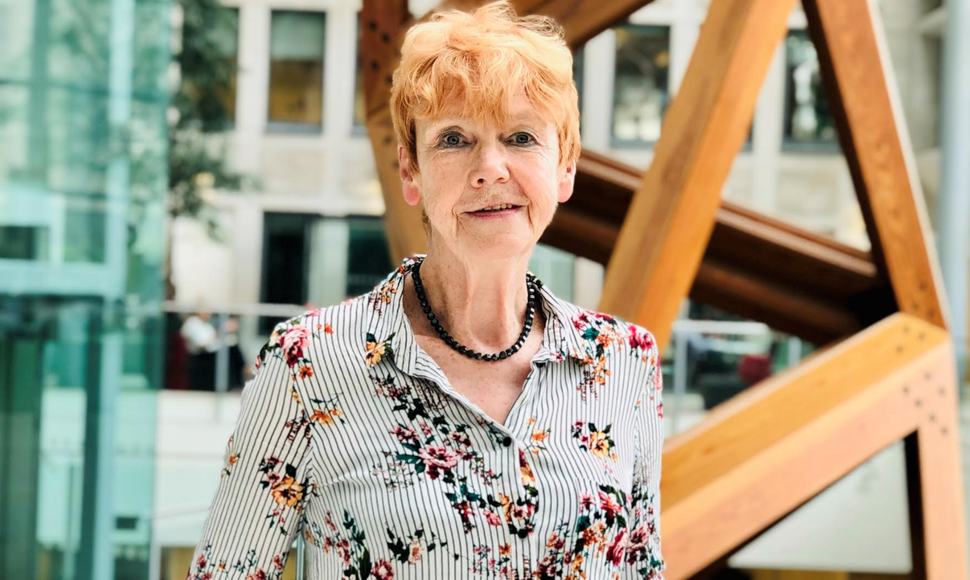
Dame Vera Baird, the victims’ commissioner for England and Wales, told HuffPost UK that those trapped in abusive situations during lockdown must be finding it increasingly difficult to cope.

Dame Vera Baird, the victims’ commissioner for England and Wales


Dame Vera Baird, the victims’ commissioner for England and Wales

“It must be tortuous for them.” she said. “Those who have been locked down with their perpetrator must be finding it incredibly hard as it will be non-stop and inescapable and it will be generating mental health issues for the future.”

She said that domestic abuse services are working and resources are available so people should seek help. However, she acknowledges that many victims are reluctant to do so as they don’t want to worry their loved ones at an already turbulent time.

“By and large, the families of those suffering abuse do not know about it as the perpetrator does his best to isolate her from her family and keep her away from them so he can block off all the escape routes.” she said.

“Many victims might feel they can’t tell people about the abuse while they are in lockdown as they feel there is nowhere for them to go.

“If there is someone in their family who is sick or vulnerable to Covid-19, they might think why pile more worry on them when they can’t come and rescue them.”

The most dangerous time for abuse victims is when they try to leave. That’s when the abuse and violence ramps up and even killings occur.
Dame Vera Baird, victims’ commissioner for England and Wales

Dame Vera says that although domestic abuse services such as Refuge have seen a huge rise in demand for support, police reports for domestic abuse have only seen a single digit rise.

She says it seems this is because victims either feel they can’t call the police in their current situation – or don’t dare contact them because they fear the repercussions.

“At the moment, victims of abuse are getting advice and support but they don’t dare to make that dramatic escape.” she said. “Police are gearing up for a spike in reports of domestic abuse when lockdown is over.”

She says it is important for resources to be in place for victims of domestic abuse when lockdown ends.

“The most dangerous time for abuse victims is when they try to leave.” she said. “That’s when the abuse and violence ramps up and even killings occur.”

If you, or someone you know, is in immediate danger, call 999 and ask for the police. If you are not in immediate danger, you can contact:

  • The Freephone 24 hour National Domestic Violence Helpline, run by Refuge: 0808 2000 247
  • In Scotland, contact Scotland’s 24 hour Domestic Abuse and Forced Marriage Helpline: 0800 027 1234
  • In Northern Ireland, contact the 24 hour Domestic & Sexual Violence Helpline: 0808 802 1414
  • In Wales, contact the 24 hour Life Fear Free Helpline on 0808 80 10 800.
  • National LGBT+ Domestic Abuse Helpline: 0800 999 5428
  • Men’s Advice Line: 0808 801 0327
  • Respect helpline (for anyone worried about their own behaviour): 0808 8024040


Source link

Fita submit court papers in preparation for cigarette ban showdown

With government set to head to court on Tuesday 2 June with the Fair Trade Independent Tobacco Association (Fita) over the controversial cigarette ban that has grabbed headlines throughout the nationwide lockdown, Fita have accused government of inflating the extent of initial public approval in the ban.

Cooperative Government and tradition Affairs (Cogta) Minister Nkosazana Dlamini-Zuma said that 2 000 people had voiced their agreement with the proposed ban in March 2020, but according to Fita, the documents submitted by government demonstrate that only a small number of those who mentioned cigarettes agreed with the motion. 

Government also saw a late bid to postpone the hearing dismissed by the Pretoria High Court over the weekend, with claims that the matter was no longer urgent tossed out. 

Fita have filed the initial court papers relating to their case and will await the response of government from 3 June. 

‘Public cigarette debate contained very few mentions of a ban’ 

Fita received over 4 000 pages of minutes, health guidelines and other supporting documents from the National Coronavirus Command Council (NCCC) on Saturday 30 May, and have now handed in their opening arguments to the court. 

“Yesterday (Saturday 30 May) we served our Supplementary Notice of Motion and Founding Affidavit on the Respondents as per the Court Order of 12 May 2020,” Fita said in a tweet. 

“We now await the filing of the Respondents’ Answering Affidavit by no later than 3 June 2020.”

According to Fita, of the 2 000 complaints against the sale of tobacco products cited by Dlamini-Zuma, only 1 897 submissions were made, with 66.7% not concerning the ban at all. 

BAT back in the mix 

Their court bid will now be substantiated by a bid by British American Tobacco (Batsa), who have said that their efforts to “constructively engage” with government have thus far been unsuccessful.

Johnny Moloto, Batsa’s head of external affairs, said that the company would reignite their court bid after having previously pulled out of an earlier show of force. 

“The government has decided to maintain the ban on tobacco products under the guise of limiting the spread of OVID-19 while allowing all other previously banned consumer products to go back on sale.

“Given the situation, and the lack of any response from the government, despite our ongoing efforts to engage with them, we are now commencing urgent legal proceedings,” Moloto said.

Batsa said it had received support from Japan Tobacco International and groups and organisations representing the tobacco value chain, including consumers, tobacco farmers and retailers.

Mlungisi Mtshali, a national spokesperson for the department of Co-operative Governance and Traditional Affairs said that the legal action in play by Batsa is a continuation of their previous application. 

“This (Batsa legal action) is a continuation of legal action facing the department in terms of the ban on the sale of cigarettes,” said Mtshali.


Source link

The Nation Seethes, and Trump’s Response Follows a Pattern


Good morning and welcome to On Politics, a daily political analysis of the 2020 elections based on reporting by New York Times journalists.


With protesters expressing a new level of outrage, President Trump blasts back — and Democrats seek to embrace a rising movement. It’s Monday, and this is your politics tip sheet.

  • Protests spread rapidly throughout the country over the weekend, beginning with calls for justice for George Floyd, a black man who died after a white Minneapolis police officer pinned down his neck. They blossomed into a nationwide weekend of forceful demands for racial justice, as well as for a decrease in funding for police departments. In cities from New York to Los Angeles, paramilitary-attired police officers squared off with demonstrators by the thousands in some of the most bellicose mass protests of the past half-century.

  • President Trump’s response to the upheaval has followed a familiar pattern: He issued a statement that seemed to condone violence (“when the looting starts, the shooting starts,” he tweeted, suggesting that the police could be justified in shooting protesters, and invoking a segregationist police chief from the 1960s); it was immediately met by a backlash. Only after a disquieting delay did he try to walk back the statement. It’s roughly the arc of countless similar incidents throughout his presidency, in which he has invariably sought to push the boundary to the right on what is considered acceptable discourse from a commander in chief — or from any major American politician.

  • Trump claimed later on Friday that he had been misinterpreted, and he said at a round-table discussion that he understood “the pain” behind the protests. But the president has made his position clear: He stands largely against the demonstrations, and in favor (as he has tweeted repeatedly since Friday) of “law and order.” His most pointed symbolic move of the weekend came on Sunday, when he said on Twitter that he would designate antifa — a loose collection of left-wing activists whose name stands for “anti-fascist” — as a terrorist organization. It remains unclear whether the president has the legal authority to make such a designation, but the strategic value was obvious: He was pointing attention toward one of today’s most belligerent leftist movements, while seeking to divert the spotlight away from the grievances of community-led protests in Minneapolis and other cities around the country. The growing death toll and economic devastation caused by the coronavirus went virtually unmentioned on Trump’s Twitter feed over the weekend.

  • But what about Joe Biden? For any presumptive Democratic nominee seeking to walk a moderate line, the specter of radical protests from the left in an election year would be grounds for concern. Studies show that since the 1960s, white voters in particular have been irked by the most aggressive forms of black activism. Democrats tend to fare poorly in elections held soon after urban uprisings and protests led by black people that include attacks on property. Democrats do better, the research suggests, in the wake of nonviolent black protest movements. But a rising tide of white racial awareness — driven partly by the circulation of videos showing police killings of black people, and partly by the rise of the Black Lives Matter movement — has coincided with an increasingly radical turn among millennials and Generation Z, changing the calculus of the Democratic Party.

  • Rather than simply urging protesters to stop damaging property and lighting structures ablaze, Tim Walz, the governor of Minnesota, sounded acutely aware of the delicate balance he needed to strike on Friday morning. “The ashes are symbolic of decades and generations of pain, of anguish unheard,” Walz said. “Now generations of pain is manifesting itself in front of the world — and the world is watching.” Just moments after Walz addressed Minnesotans, Derek Chauvin, the Minneapolis police officer who knelt on Floyd’s neck even after he had become unresponsive, was arrested and charged with third-degree murder.

  • The protests have led many black leaders to amplify their demands for tangible commitments from Biden on pursuing racial justice. Those leaders mostly agree that at the very least, Biden should pick a black woman as his running mate. Meanwhile, the past week’s events have turned an unflattering spotlight on Senator Amy Klobuchar of Minnesota, who is seen as a top contender to be Biden’s vice-presidential choice. She has been dogged by complaints about her work as the Hennepin County attorney in the early to mid-2000s; in that position, she declined to prosecute multiple cases against police officers who had been involved in shootings. One such case involved Chauvin, though it was dismissed only after Klobuchar had left her post to join the Senate.

  • Twitter took a first-time step on Friday to rein in Trump’s onslaughts, attaching a warning to his tweet condoning violence against looters. It was the latest in an ongoing saga between the president and what is still his most-used social media platform (if perhaps no longer his favorite). Unlike the warnings Twitter pasted on two other Trump tweets last week, this one prevented the message from being seen on his feed unless users clicked to view it. Last week, angered that Twitter was putting limits on what he could say, Trump threatened to cut social media companies’ legal protections in lawsuits over defamatory speech, and he sicced his followers on an individual Twitter employee who he (falsely) said had censored him.

Demonstrators walked down an avenue in Brooklyn on Saturday. All weekend, they gathered across New York City, with peaceful protests interspersed with outbreaks of violence.


For months, national Republicans had hoped that Secretary of State Mike Pompeo would return to Kansas and run for the Senate, confident that he could unite the party and keep the seat in Republican hands, as it has been since the 1930s.

But with Pompeo resistant to a run (not to mention mired in a congressional investigation into his use of State Department funds), and the June 1 filing deadline now at hand, Republicans are bracing for a messy intraparty brawl. And they’re increasingly anxious that a race in this deep-red state could be competitive in the fall.

Their biggest source of worry: the former Kansas secretary of state Kris Kobach, a hard-line Trump supporter who lost the governor’s race to Laura Kelly, a Democrat, in 2018. Kobach is a well-known, if polarizing, figure in the state, and some Republicans worry that he could win the primary but lose the general election to State Senator Barbara Bollier, a moderate Democrat from suburban Kansas City.

Anti-Kobach Republicans appear increasingly inclined to unite around Representative Roger Marshall, a deeply conservative congressman from the rural western part of the state. Any Democrat running statewide in Kansas faces a major uphill battle — but both Republicans would test whether there are limits to the success of a message rooted in fealty to President Trump even in Republican territory.

On Politics is also available as a newsletter. Sign up here to get it delivered to your inbox.

Is there anything you think we’re missing? Anything you want to see more of? We’d love to hear from you. Email us at onpolitics@nytimes.com.


Source link

We cannot reform ourselves out of the times we are in – The Mail & Guardian

It is a sad day when Target, a corporation, releases a statement more in touch with the reality of being black in America, than the black former President Barack Obama. In fact the most hard hitting words in his statement, “’the knee on the neck’ as a metaphor for how the system so cavalierly holds black folks down, ignoring the cries for help” are arguably not his, as he is quoting a friend.

Meanwhile, Target in their own words state categorically that, “The murder of George Floyd has unleashed the pent-up pain of years, as have the killings of Ahmaud Arbery and Breonna Taylor. We say their names and hold a too-long list of others in our hearts.” And, where Obama signals that not all cops are bad, his way of saying there are good people on both sides, the Target statement does not mention the police at all. For those who might have been hoping for a more progressive post-presidency Obama, it is time to simply recognise him as the first black president who gave us hope and leave it at that.

Both statements however do not go enough in understanding that, to put it bluntly, the United States is fucked unless we call for and find radical solutions. They don’t speak to just how weak the façade of democracy and how hollow the claim of being the “richest nation on earth” is. The US national debt stands at $25-trillion with about 10% of that being owned by China and Japan. Internationally, the US is becoming more isolationist, withdrawing from international treaties and organisations the latest one being the World Health Organisation, and this at a time of a global pandemic. In effect, it is becoming a colossal, irrelevant giant with a military-industrial-complex to match. And, without diplomacy more war is the likely recourse.

Forty-three million people in the US were living in poverty before the pandemic. Jobless claims stand at $40-million decimating the much touted middle class—which was made up of millions of people living from pay cheque to pay cheque, in mortgaged homes, and driving loaned cars. To put it another way, the dream never really existed for black people, and it had long died for millions of others. Racialised incarceration rates, always a major concern, and amongst the highest in the world, are now turned deadly by the pandemic.

There are 100 000 COVID-19 deaths, and because we have a government that delayed locking down and is now opening up the country for business without doing the minimum preparation of contact tracing and testing, we can be sure that without a vaccine, more people will die.

And in all these examples, black people have been doing most of the suffering and in today’s context, most of the getting sick and dying.

It is a terrible and worsening economic system, except for the wealthy, that has been driven by racist ideology. White supremacy is the opium of white people. Even the liberals and those on the left are beneficiaries, in the same way the North was benefiting from slavery in the South — money did not respect state borders, trade continued, and money was kept in banks in the North. They need to take responsibility for slavery, the very foundation on which our present racist society rests. No more saying my great-grandparents were not slave owners and/or I am not a racist and therefore it is not my concern.

When US Vice President, Mike Pence, tweets, “We condemn violence against property or persons” and in that order, he means white property and white persons. Having previously refused to acknowledge police racism and violence, he is in effect defending his soldiers out in the frontlines of the war against black people — the predators, the thugs, welfare queens and looters. On looting, I have only two words to say, it James Baldwin who said, “you’re accusing a captive population who has been robbed of everything of looting. I think it’s obscene.”

In a sense I can understand why the police sometimes seem perplexed when people protest, after all they are just doing the job the government has tasked them to do. But as agents and enforcers of a racist state, they must be protested, at least so they can enforce their mandate without shooting and strangling black people to death. So at least we can at least breathe, and live and work to dismantle the system that makes a racist police its foot soldiers.

Given the radical times we are in, both the vacuous and vicious nature of American capitalism and the failure and racism of the Trump regime have to go. Given how deep the hole we are in is, to crawl out there is no real difference between Obama, Trump, or Joe Biden. There was a vast difference between Bernie Sanders or Elizabeth Warren and Trump. But the fear that Sanders could not win led us to picking the safer bet in Biden. And for that choice black people, especially, will continue to suffer the most.

For Karl Marx, looking back on revolutionary France and its failure to transform the lives of workers, part of the problem was the impossibility of making change as if the past did not matter. He argued that, “Men make their own history, but they do not make it as they please; they do not make it under self-selected circumstances, but under circumstances existing already, given and transmitted from the past.” To end racism, we will have to change the structures from which it draws its mandate, and get rid of liberal and right-wing politicians who give it oxygen while we are being asphyxiated.

We cannot reform ourselves out of the times we are in.

This article was first published on Africa is a Country.


Source link

How close can you get to a black hole?

0

Streams of gas fall to their dooms, plunging into black holes, locked away from the universe forever. In their final moments, these gassy shreds send out one last flare of light, some of the brightest emissions in the universe. 

These death dives are too far away to be seen directly, but astronomers have devised a new technique for detecting their panicked cries for help. They’re using the method to test our knowledge of gravity in the most extreme environments in the universe.

Source link

George Floyd protests LIVE updates: US unrest ensues as Black Lives Matter demonstrators continue to clash with police

Bystander video showed the crowd parting seconds before the semi-trailer rolled through, then the truck gradually slowed and demonstrators swarmed the truck.

Public Safety Commissioner John Harrington said on Sunday that it initially appeared from traffic camera footage that the semi-trailer was already on the freeway before barricades were set up at 5pm. State Corrections Commissioner Paul Schnell said at a later briefing, however, that the truck went around a traffic barrier to stay on the road.

In a Sunday evening news conference, Governor Tim Walz described footage of the truck driving into the crowd as a “horrifying image” and said that it underscored the “volatile” nature of the situation.

“I don’t know the motives of the driver at this point in time,” he said. “But at this point in time to not have tragedy and many deaths is an amazing thing.”

AP

Source by [author_name]