Americans are now accustomed to reading about the removal of Confederate statues across the country, but effigies to the men who fought to preserve slavery are not the only controversial likenesses to be found in the United States. On Friday night in Louisville, Kentucky, a man protesting the recent police killing of George Floyd (who was unarmed), inadvertently broke off the hand of the statue of Louis XVI that sits in a public square of the city named after the French monarch.Â
The next morning, a man claiming to be a modern-day relative of Louis XVI’s took to the digital streets of Twitter to express his tone-deaf dismay. Louis de Bourbon, who goes by the title of Duke d’Anjou, opined early Saturday, “As the heir of #LouisXVI, and attached to the defence of his memory, I do hope that the damage will be repaired and that the statue will be restored …â€
If I were the self-professed last heir to the Bourbon throne, who many believe is only a pretender, I might think twice before attaching my name to the memory of a man who was part of a family that oversaw the most brutal and punishing slavocracy in the world.
Slavery in the French-claimed Americas began and ended with the Bourbons. The practice of kidnapping and then enslaving Africans was adopted under Louis XIII in the 17th century. The Code Noir decree, issued under Louis XIV to regulate France’s enormous slave system in Saint-Domingue, Guadeloupe, and Louisiana, not only mandated the expulsion of Jews from the colonies, but did very little to stop enslavers from exercising some of the cruellest tortures to be found anywhere in the Atlantic World.Â
Illustration depicting Francois Dominique Toussaint L’Ouverture participating in the successful revolt against French power in St. Dominique (Haiti). Hand-colored engraving.
Common punishments for enslaved people  —  who might have dared to run away, break a tool or otherwise refuse to completely give in to their master’s will  —  were burning and burying them alive; severing their limbs, ears and other body parts; bleeding them to death, and nailing them to walls and trees; as well as branding and other forms of mutilation.
The revised version of the Code Noir, issued under Louis XVI, was even worse. It spelled out in no uncertain terms that enslaved people were to be treated as meubles, or pieces of furniture, that could be bought, sold or discarded at the whim of any “ownerâ€.
Slavery was only abolished in the French colonies after Louis XVI  —  over whose fake hand Louis de Bourbon is now shedding all the white tears  —  was notoriously beheaded by the French Jacobins in January 1793. His death, however, did not stop this family from seeking to continue its practice of enriching themselves through the enslavement of black people.
Napoleon (not a Bourbon), who had come to power in France in 1799, officially reinstated slavery in the French empire in July 1802. But revolutionaries in Saint-Domingue put up the most ardent and ultimately successful fight against slavery the world had yet seen, culminating in Haitian independence in January 1804  —  enslaved people in Guadeloupe fought back, too, but they ultimately lost their struggle.
Even though Napoleon was busy fighting wars around the world, and seemed to lose sight of his loss in Saint-Domingue, successive Haitian governments remained wary that he might try to once again bring back slavery.
Under Louis XVIII’s authority, Malouet, the French minister of the marine, sent three commissioners to Haiti with the mission of coercing both Haiti’s leaders to surrender. He threatened that if they did not submit the Haitian people would be “treated as barbarous savages and hunted down like runaway slavesâ€.Â
One of the commissioners, Dauxion-Lavaysse, even sent a letter to Christophe that unabashedly revealed in no uncertain terms that France was ready “to replace the population of Hayti, which … would be totally annihilated by the forces sent against it.†The official reconquest instructions issued by Malouet, in fact, mandated the return of slavery and the wholesale extermination of most of the country’s population.
Although Louis XVIII’s plot was ultimately foiled by Christophe, not once, but twice  —  yes, Louis XVIII tried again in 1816 after the second restoration  —  the claim to dubious fame of his brother, Charles X, who succeeded him, was issuing the disastrous 1825 indemnity whereby the Haitian government was compelled into an agreement to pay 150-million francsas the price of Haiti’s liberty. Charles X’s successor, cousin Louis Philippe, was no better. Indeed, he oversaw the 1838 revision to that agreement which, while reducing the total amount to be paid to 90-million francs, forced Haiti to take out high-interest loans to pay the “debt.â€
Meet the proud legacy of the Bourbons. When they couldn’t re-enslave the Haitian people, they settled for impoverishing them. Contemporary economists, such as France’s own Thomas Piketty, are of the opinion that paying the indemnity  —  plus making the interest payments, which were only completed in 1947  —  led directly to Haiti’s precarious financial position today. Piketty has even publicly declared that he thinks France should repay Haiti “at least $28-billion†in restitution.
America’s statue problem goes far beyond the Confederacy
If I didn’t live in Charlottesville, Virginia  —  which has for years been embroiled in the fight to remove the statue of the leader of the Confederate army, Robert E Lee  —  I might be tempted to wonder about the US’s obsession with exalting the statues of and naming their cities after war criminals, imperialists, enslavers and traitors. (A gift from Louisville’s sister-city in France, Montpellier, Louis XVI’s statue was placed directly across from none other than that of Thomas Jefferson).Â
CHARLOTTESVILLE, VA – August 18, 2017: Sign underneath staue of Conferderate General Robert E. Lee that reads ‘HEATHER HEYER PARK’ on August 18, 2017 in Charlottesville. On August 12, 2017, a car was deliberately driven into a crowd of people who had been peacefully protesting the Unite the Right rally in Charlottesville, Virginia, killing one and injuring 28. The driver of the car, 20-year-old James Alex Fields Jr., had driven from Ohio to attend the rally. Fields previously espoused neo-Nazi and white supremacist beliefs. He was convicted in a state court of hit and run, the first-degree murder of 32-year-old Heather Heyer, and eight counts of malicious wounding, and sentenced to life in prison. On March 27, 2019, he pled guilty to 29 of 30 federal charges in exchange for the prosecutors not seeking the death penalty. (Photo by Bill Tompkins/Getty Images)
But sitting here in the aftermath of the fatal days of August 11 and 12 2017, I am well acquainted with the kind of predictable absence of self-awareness, coupled with an equally stunning lack of knowledge about their own family history, that would lead a white man like Louis de Bourbon to plead in such earnest notes for the restoration of a piece of stone rather than to demonstrate genuine concern for those righteously protesting the death of an actual human being.
And while the so-called Comte de Paris piled on Saturday afternoon with his own tweet lamenting the amputation, claiming that it was “the hand of Louis XVI … that helped the US people to gain its freedomâ€, let us never forget that it was with this same hand that Louis XVI stole the freedom of millions of Africans. No, like the statue of Napoleon’s wife Josephine, which was beheaded in Martinique more than 20 years ago, never to be repaired, the statue of Louis XVI should remain forever handless in memory of his perpetuation of slavery.
Marlene L Daut is professor of African diaspora studies and the associate director of the Carter G Woodson Institute for African American and African Studies at the University of Virginia. She is the author of Tropics of Haiti (2015) and Baron de Vastey and the Origins of Black Atlantic Humanism (2017). You can follow her on Twitter at @FictionsofHaiti.
Americans are now accustomed to reading about the removal of Confederate statues across the country, but effigies to the men who fought to preserve slavery are not the only controversial likenesses to be found in the United States. On Friday night in Louisville, Kentucky, a man protesting the recent police killing of George Floyd (who was unarmed), inadvertently broke off the hand of the statue of Louis XVI that sits in a public square of the city named after the French monarch.Â
The next morning, a man claiming to be a modern-day relative of Louis XVI’s took to the digital streets of Twitter to express his tone-deaf dismay. Louis de Bourbon, who goes by the title of Duke d’Anjou, opined early Saturday, “As the heir of #LouisXVI, and attached to the defence of his memory, I do hope that the damage will be repaired and that the statue will be restored …â€
If I were the self-professed last heir to the Bourbon throne, who many believe is a only pretender, I might think twice before attaching my name to the memory of a man who was part of a family that oversaw the most brutal and punishing slavocracy in the world.
Slavery in the French-claimed Americas began and ended with the Bourbons. The practice of kidnapping and then enslaving Africans was adopted under Louis XIII in the 17th century. The Code Noir decree, issued under Louis XIV to regulate France’s enormous slave system in Saint-Domingue, Guadeloupe, and Louisiana, not only mandated the expulsion of Jews from the colonies, but did very little to stop enslavers from exercising some of the cruellest tortures to be found anywhere in the Atlantic World.Â
Common punishments for enslaved people  —  who might have dared to run away, break a tool or otherwise refuse to completely give in to their master’s will  —  were burning and burying them alive; severing their limbs, ears and other body parts; bleeding them to death, and nailing them to walls and trees; as well as branding and other forms of mutilation.
The revised version of the Code Noir, issued under Louis XVI, was even worse. It spelled out in no uncertain terms that enslaved people were to be treated as meubles, or pieces of furniture, that could be bought, sold or discarded at the whim of any “ownerâ€.
Slavery was only abolished in the French colonies after Louis XVI  —  over whose fake hand Louis de Bourbon is now shedding all the white tears  —  was notoriously beheaded by the French Jacobins in January 1793. His death, however, did not stop this family from seeking to continue its practice of enriching themselves through the enslavement of black people.
Napoleon (not a Bourbon), who had come to power in France in 1799, officially reinstated slavery in the French empire in July 1802. But revolutionaries in Saint-Domingue put up the most ardent and ultimately successful fight against slavery the world had yet seen, culminating in Haitian independence in January 1804  —  enslaved people in Guadeloupe fought back, too, but they ultimately lost their struggle.
Even though Napoleon was busy fighting wars around the world, and seemed to lose sight of his loss in Saint-Domingue, successive Haitian governments remained wary that he might try to once again bring back slavery.
Under Louis XVIII’s authority, Malouet, the French minister of the marine, sent three commissioners to Haiti with the mission of coercing both Haiti’s leaders to surrender. He threatened that if they did not submit the Haitian people would be “treated as barbarous savages and hunted down like runaway slavesâ€.Â
One of the commissioners, Dauxion-Lavaysse, even sent a letter to Christophe that unabashedly revealed in no uncertain terms that France was ready to replace the population of Hayti, which … would be totally annihilated by the forces sent against it.“†The official reconquest instructions issued by Malouet, in fact, mandated the return of slavery and the wholesale extermination of most of the country’s population.
Although Louis XVIII’s plot was ultimately foiled by Christophe, not once, but twice  —  yes, Louis XVIII tried again in 1816 after the second restoration  —  the claim to dubious fame of his brother, Charles X, who succeeded him, was issuing the disastrous 1825 indemnity whereby the Haitian government was compelled into an agreement to pay 150-million francsas the price of Haiti’s liberty. Charles X’s successor, cousin Louis Philippe, was no better. Indeed, he oversaw the 1838 revision to that agreement which, while reducing the total amount to be paid to 90-million francs, forced Haiti to take out high-interest loans to pay the “debt.â€
Meet the proud legacy of the Bourbons. When they couldn’t re-enslave the Haitian people, they settled for impoverishing them. Contemporary economists, such as France’s own Thomas Piketty, are of the opinion that paying the indemnity  —  plus making the interest payments, which were only completed in 1947  —  led directly to Haiti’s precarious financial position today. Piketty has even publicly declared that he thinks France should repay Haiti “at least $28-billion†in restitution.
America’s statue problem goes far beyond the Confederacy
If I didn’t live in Charlottesville, Virginia  —  which has for years been embroiled in the fight to remove the statue of the leader of the Confederate army, Robert E Lee  —  I might be tempted to wonder about the US’s obsession with exalting the statues of and naming their cities after war criminals, imperialists, enslavers and traitors. (A gift from Louisville’s sister-city in France, Montpellier, Louis XVI’s statue was placed directly across from none other than that of Thomas Jefferson).Â
But sitting here in the aftermath of the fatal days of August 11 and 12 2017, I am well acquainted with the kind of predictable absence of self-awareness, coupled with an equally stunning lack of knowledge about their own family history, that would lead a white man like Louis de Bourbon to plead in such earnest notes for the restoration of a piece of stone rather than to demonstrate genuine concern for those righteously protesting the death of an actual human being.
And while the so-called Comte de Paris piled on on Saturday afternoon with his own tweet lamenting the amputation, claiming that it was “hand of Louis XVI … that helped the US people to gain its freedomâ€, let us never forget that it was with this same hand that Louis XVI stole the freedom of millions of Africans. No, like the statue of Napoleon’s wife Josephine, which was beheaded in Martinique more than 20 years ago, never to be repaired, the statue of Louis XVI should remain forever handless in memory of his perpetuation of slavery.
Marlene L Daut is professor of African diaspora studies and the associate director of the Carter G Woodson Institute for African American and African Studies at the University of Virginia. She is the author of Tropics of Haiti (2015) and Baron de Vastey and the Origins of Black Atlantic Humanism (2017). You can follow her on Twitter at @FictionsofHaiti.
And photographer Alberto Ghizzi Panizza then turned the eight-second footage into a composite photo – showing the tiny space station at 17 different points of its journey across the moon.
The 45-year-old photographer, from Parma, Italy, captured the striking photo at 10.28pm Italian time (9.28pm in the UK) on Sunday night.
The ISS crosses in front of the moon (Credits: Alberto Ghizzi Panizza/ SWNS.com)
The two Nasa astronauts had docked with the International Space Station just three hours beforehand, at 6.22pm BST – after launching from Florida at 3..22pm on Saturday (8.22pm BST).
Alberto said of the historic photograph: ‘It was a very emotional moment not only for me, but for all mankind.’
Coronavirus infections in hospitals and care homes are spilling into the community and sustaining the outbreak to the point that cases will remain steady until September, a leading scientist has warned.
Prof Neil Ferguson, the head of the outbreak influential modelling group at Imperial College London, said he was shocked at how poorly care homes had been protected from the virus and that infections in UK care homes and hospitals were now feeding into the epidemic in the wider community.
R, or the ‘effective reproduction number’, is a way of rating a disease’s ability to spread. It’s the average number of people on to whom one infected person will pass the virus. For an R of anything above 1, an epidemic will grow exponentially. Anything below 1 and an outbreak will fizzle out – eventually.
At the start of the coronavirus pandemic, the estimated R for coronavirus was between 2 and 3 – higher than the value for seasonal flu, but lower than for measles. That means each person would pass it on to between two and three people on average, before either recovering or dying, and each of those people would pass it on to a further two to three others, causing the total number of cases to snowball over time.
The reproduction number is not fixed, though. It depends on the biology of the virus; people’s behaviour, such as social distancing; and a population’s immunity. A country may see regional variations in its R number, depending on local factors like population density and transport patterns.
Ferguson, who quit as a member of the government’s Scientific Advisory Group on Emergencies (Sage) after breaking social-distancing rules, said that infected staff carrying the virus out of the workplace explained why the R value, the average number of people infected by a case, remained only marginally below one.Â
“I, like many people, am shocked about how badly European – or countries around the world – have protected care home populations,†Ferguson told a hearing of the Lords science committee. About 16,000 UK care home residents are believed to have died from Covid-19 in outbreaks that have struck 38% of care homes in England and 59% in Scotland.Â
“The infections in care homes and hospitals spill back into the community, more commonly through people who work in those institutions. If you can drive the infection rates low in those institutional settings, you drive the infection low in the community as a whole,†Ferguson said.Â
With the virus still circulating widely and restrictions being eased, Ferguson said there was “limited room for manoeuvre.†Lockdown reduced the spread of infection by about 80%, he said, “but to maintain control, we need to keep that transmission suppressed by about 65% so we have a little bit of wriggle room.â€
Prof Matt Keeling from Warwick University, whose modelling group is now providing the government’s “worst case scenarioâ€, suggested that researchers might have done more to understand the risks to care homes in particular.
“If the lockdown had been very strict, if we’d have thought more about what was happening in care homes and hospitals early on, maybe that was one of the areas where modellers did drop the ball,†Keeling told the hearing. “With hindsight, it’s very easy to say we know care homes and hospitals are these huge collections of very vulnerable individuals, so maybe with hindsight we could have modelled those early on and thought about the impacts there.â€
The researchers said it is still unclear what impact the recent easing of restrictions will have on the spread of the virus, but Ferguson dampened any expectations that the epidemic might peter out any time soon. “I suspect that under any scenario, the level of transmission and number of cases will remain relatively flat between now and September, short of very big policy changes or behaviour changes in the community,†he said.
“The real uncertainty is if there are larger policy changes in September, as we move into the time of year when respiratory viruses tend to transmit slightly better, what will happen then? And that remains very unclear,†he added.
Under further questioning about the outbreak, Ferguson described how scientists realised in early March that the UK had been much more heavily infected than anticipated, and that this was one of the reasons the country now has if not the largest, then one of the largest, epidemics in Europe.Â
“One thing the genetic data is showing us now is most chains of transmission still existing in the UK originated from Spain, to some extent Italy,†Ferguson said. “It is clear that before we were even in a position to measure it, before surveillance systems were even set up, there were many hundreds, if not thousands, of individuals coming into the country in late February and early March from that area. And that meant that the epidemic was further ahead than we had anticipated.â€
“That explains some of the acceleration of policy then. It also explains, to some extent, why mortality figures ended up being higher than we had hoped,†he added.
As ministers ease restrictions in England, health officials will rely on the new test-and-trace system to identify and clamp down on new outbreaks. The tests would be offered to people with symptoms, but since many people were infectious before feeling ill, and many never show symptoms at all, the system would have only limited use, the committee heard.Â
“By the time someone shows symptoms they have probably been infectious for a day or two,â€Â said Adam Kucharski, an associate professor and infectious disease modeller at the London School of Hygiene and Tropical Medicine. “As soon as someone becomes symptomatic, you have a very short time window before their contacts may become infectious and then you’ve got another generation of transmission to deal with.â€
Ferguson said the test-and-trace scheme “was not a panacea†because it relied not only on what proportion of people developed symptoms, but what proportion could identify past contacts, how quickly they could be contacted, and how many then abided by the self-isolation rules. He told the hearing that if the system worked perfectly, it might at best reduce R by 0.2 to 0.25, describing that as “significant, but not hugeâ€.
PHILADELPHIA — Joe Biden on Tuesday praised the nationwide peaceful protests to the death of George Floyd, calling his killing in police custody a “wake-up call for our nation” and drawing a stark contrast between President Donald Trump’s tactics and how he would respond.
In a speech from Philadelphia City Hall, Biden repeated Floyd’s final words before he died after a white Minneapolis police officer knelt on his neck for more than eight minutes — and said it was time “to listen to those words … and respond with action.”
“I can’t breathe. I can’t breathe. George Floyd’s last words,” the apparent 2020 Democratic presidential nominee said. “But they didn’t die with him. They’re still being heard. They’re echoing across this nation.”
“They speak to a nation where every day, millions of people — not at the moment of losing their life, but in the course of living their life — are saying to themselves, ‘I can’t breathe.’ It’s a wake-up call for our nation, for all of us,†Biden said.
Let our news meet your inbox. The news and stories that matters, delivered weekday mornings.
Biden said the country was “crying out for leadership that can unite us” — and that he, not Trump, could provide it.
“I won’t traffic in fear and division. I won’t fan the flames of hate. I will seek to heal the racial wounds that have long plagued this country — not use them for political gain,” he said. “I’ll do my job and take responsibility. I won’t blame others. I’ll never forget that the job isn’t about me.
Addressing Monday night’s events outside the White House when police used tear gas against peaceful protesters to clear the area for Trump’s photo-op outside St. John’s Episcopal Church, Biden said that, “We can be forgiven for believing that the president is more interested in power than in principle, more interested in serving the passions of his base than the needs of the people in his care.â€
Biden, noting that Trump had held up a Bible for the photo-op, said, “I just wish he’d open it once in a while.”
Trump, Biden added, “might want to open up the U.S. Constitution once in a while,” and read the First Amendment, hitting the president for urging governors across the U.S. to “dominate” protesters.
At the same time, Biden said there was “no place for violence” or “rioting” or “destroying property,” while also warning law enforcement that “nor is it acceptable for our police … to escalate violence.”
Biden’s remarks come a day after he spoke to African American leaders and visited a church in Wilmington, Delaware. On Sunday, he visited a site in Wilmington where demonstrators had protested Floyd’s death.
The former vice president recently came under fire for telling a radio host and African American voters in an interview that “you ain’t black” if they back Trump’s re-election. Biden later apologized for his comments, saying they were “really unfortunate” and that he “shouldn’t have been such a wise guy.”
Mike Memoli
Mike Memoli is an NBC News correspondent.Â
Adam Edelman
Adam Edelman is a political reporter for NBC News.
Rebecca Shabad
Rebecca Shabad is a congressional reporter for NBC News, based in Washington.
Winter’s harsh conditions can wreak havoc on your skin due to dry air that sucks out all its moisture and cold temperatures that can make your skin itchy. With the right routine you can protect and nourish your skin to keep it hydrated and soft.
Avoid super-hot showers
Hot baths and showers may seem like a good idea in cold weather. However, hot water can be damaging on dry winter skin as it depletes the little hydration that is left on your skin in winter.
Use bath oils and cleansing oil to retain moisture in your skin.
Switch moisturisers
Switching to a thicker moisturizer or cream in winter helps to seal in moisture in your skin to restore dry and cracked skin to it’s healthier and nourished form. Consider mixing oils into your lotion to seal moisture into your skin.
Moisturise frequently
For softer and hydrated skin, use moisturiser throughout the day, especially on your hands and face. Before going to bed, apply a hydrating moisturiser to your skin and slather it onto your neck and feet. Wear socks to trap the moisture in.
Avoid fragrance and alcohol
Invest in a fragrance- and alcohol-free cleanser to protect your skin from dryness and itchiness. Avoid using toners and if you can, wash your face only once a day.
Use facial oils or a nourishing cream to keep your face hydrated and healthy.
Stay hydrated and eat healthy
Drink lots of liquids in winter to keep your skin hydrated. Proper hydration has been linked to skin cell regeneration. Eat foods like avocado and omega 3-rich foods. Exercise also promotes healthy skin.
Lip care
Don’t neglect your lips. The skin around your lips is thin and requires extra care as it is easily susceptible to damage. To protect and replenish your lips, wear lip balm throughout the day and especially at night.
Indoor heat and breathing through your mouth can lead to dry and chapped skin, smooth over some Vaseline on your lips to repair it and fend off chapped lips.
The Chief Minister of Maharashtra Uddhav Thackeray has granted permission to shoot films and shows in Maharashtra. On Sunday night, the government issued regulations after considering the guidelines set by the members of the film industry. While the industry has thanked the CM, the Indian Film and Television Directors’ Association, headed by Ashoke Pandit, wrote to the CM’s office asking for two points in the regulations to be altered.
A part of the letter sent to the CM read, “Sir, let us inform you that major legendary actors viz. Amitabh Bachchan, Anupam Kher, Paresh Rawal, Annu Kapoor, Naseeruddin Shah, Dharmendra, Shakti Kapoor, Mithun Chakraborty, Pankaj Kapur, Jackie Shroff, Danny Denzongpa, Dalip Tahil, Tinnu Anand, Rakesh Bedi, Kabir Bedi and others. Legendary Directors, Film Makers & Writers viz. Anil Sharma, David Dhawan, Subhash Ghai, Shyam Benegal, Mani Ratnam, Prakash Jha, Shekhar Kapur, Vidhu Vinod Chopra, Mahesh Bhat, Priyadarshan, Gulzar, Javed Akhtar and others who are above 65 yrs are actively working in the industry. This clause is therefore impractical since it would restrict some of the great luminaries of our industry.â€
The second point that they raised was about the presence of doctors and nurses on shooting spots. “To have a Doctor and nurse stationed at each shooting premises. We would like to bring to your kind notice that the state is already facing issues due to non-availability of the Doctors and nurses to cope with the increased number of patients from the COVID-19 pandemic and therefore it is not practical to have a doctor and a nurse to be stationed at each shooting premises. Instead, we suggest having a Doctor and Nurse available area wise at the shooting locations,†the letter states.
Early this year, representatives from the Japanese Petroleum Export Company (JAPEX) visited Tripoli, the Libyan capital, and met with officials of the National Oil Corporation (NOC).[1] The consortium had just concluded a study about developing a concession in the Sirte basin.
The Japanese delegation’s visit came in the midst of longstanding internal turmoil in Libya. For nearly six years, Libya has been divided into two governments, an internationally recognized one in the west and a rival in the east. In April 2019, Khalifa Haftar, a renegade military commander closely linked to the eastern government had launched an assault on the capital, Tripoli, sparking the latest phase of Libya’s civil war. A German-sponsored peace conference held in January 2020 had promised to formalize a previous ceasefire backed by Russia and Turkey, but neither of Libya’s warring sides have upheld it, nor have their powerful external backers.[2] Oil production has rapidly declined as powerful tribes acting on behalf of Haftar’s forces blockaded eastern oil terminals starting in January.
It was hardly the first time Japan had made a foray into Libya — which has the world’s ninth largest oil reserves — during difficult times. In fact, the story of Japan’s relationship with Libya, which Tokyo often maintained even as other countries were shunning former Libyan dictator Muammar al-Qadhafi as a pariah, predates the latest outreach by many decades. Our account provides a fascinating window into Japanese diplomacy in the Middle East and North Africa (MENA) more broadly. More specifically, the story of Japan-Libya relations shows how Tokyo often pursued its own interests in the MENA region despite the preferences of the United States, with which Japan has a longstanding security alliance. This story also provides insight into how certain members of Japan’s conservative foreign policy establishment referenced anti-colonialism in their encounters with Arab leaders. Here, in turn, we can observe the outsized role played by individuals and associations oustide government who influenced Japan’s foreign policy toward the MENA region.
Japan, the Middle East, and the Japan-US Alliance
Japan’s relationship with the Middle East and North Africa is often described in terms of balancing energy dependence against the imperative of maintaining a strong security alliance with the United States.[3]
In general, Japan has followed the American policy line in MENA selectively, when it has served Tokyo’s interests.[4] When Tokyo has chosen to engage Washington’s enemies in the region, the United States sometimes tolerated Japan’s MENA diplomacy as a function of Japan’s energy needs. At other times, Washington was not fully aware of the nature and extent of Japan’s engagement in the MENA region. At the same time, Washington also did not hesitate to rebuke Tokyo when red lines were crossed.[5] Â
When Japan reached out to Libya and other states in the MENA region in the post-colonial era, it did not seek to leverage its strong security ties with the United States, nor did it reflexively support US interests in the region. Rather than being entirely non-ideological and pragmatic, Tokyo’s overtures to regimes in the region were often embedded in a particularly Japanese discourse that was well received in regional capitals.[6]
With anti-colonial ideologies such as pan-Arabism on the march across the region in the 1950s-1970s, some Japanese delegations visiting Arab capitals distinguished themselves from both Americans and Europeans by emphasizing Japan’s own anti-Western credentials. This framing was more than just window dressing. Critically, such appeals allowed Japan to establish deeper relationships and cultivate stronger business ties than otherwise would have been possible if Japan was perceived solely as a merchant state vassal of the United States.
The use of non-government proxy organizations, industry groups, and prominent individuals outside the government contributed to Japan’s ability to maneuver outside of US policy preferences in MENA. For example, groups such as the Japanese-Palestinian Friendship Organization recruited members of the Diet while promoting the PLO’s importance in the region and the need to strengthen Japan’s political links with the Palestinians. Tokyo also invited Palestinian representatives to visit Japan, but stopped short of recognizing the PLO formally at fear of offending Washington.[7]
The Roots of Japan’s MENA Diplomacy
Tokyo’s early diplomatic outreach to the MENA region was championed by postwar conservative elites who came of age during the era of Japanese militarism and colonial expansion. How these conservative elites understood Japan’s role in the world was most explicitly articulated by Takeyo Nakatani, a leading prewar right-wing figure who also played a major role in the Greater Asian Association.[8] This association provided the “pan-Asian†ideological basis for Japan’s conquest of East and Southeast Asia in the first half of the twentieth century by presenting Japan as the liberator of peoples living under the yoke of Western imperial powers.[9]
A tribute written by the Egyptian ambassador to Tokyo about Takeo Nakatani
Â
Nakatani maintained close ties with prominent conservatives after the war, some of whom were later rehabilitated and assumed prominent roles in the governance of postwar Japan.[10] Despite being banned from holding formal political office during the US occupation of Japan, Nakatani was an active member of Japan’s postwar elite circles.[11] Among other relationships, he remained close to Nobusuke Kishi,[12] Japan’s Prime Minister from 1957-1960. (Kishi, in turn, happens to be the maternal grandfather of current Prime Minister Shinzo Abe). Nakatani was also known to Yasuhiro Nakasone,[13] who served as Japan’s Prime Minister from 1982-1987.
After the Second World War, at face value Japan’s wartime ideologies were a discredited and spent ideological force. Nakatani nevertheless returned to the cause of pan-Asianism in a new way, dedicating himself to Afro-Arab-Asian solidarity.[14] In 1958, he founded the Japan Arab Association, which supported the pan-Arab cause of Egyptian president Gamal Abdel Nasser and other emergent Arab nationalist leaders. In the eyes of Nakatani, newly-empowered Arab leaders like Nassar were engaged in the noble task of throwing off the yoke of western domination. By contrast, Nakatani saw monarchies in the region as sclerotic, ideologically bankrupt, and corrupt.[15]
As one of Japan’s leading promoters of Japan-Arab relations with close connections to the political elite, Nakatani helped shape how the next generation of Japan’s Middle East hands — among them, former defense minister and current Tokyo governor Yuriko Koike — would experience the region.[16] Not only did he organize numerous seminars and symposia on the Arab world in Tokyo, Nakatani also enthusiastically touted a revisionist take on Japan’s role in the Second World War that cast the country in the heroic role of liberator of peoples of color from Southeast Asia to the Middle East and Africa.
In his book on Arab-Japan relations published in 1983, Nakatani maintained that “as a result of World War II, Asian nations were able to achieve independence. This was through Japan’s sacrifice in defeat in World War IIâ€.[17] Describing his role following World War II, Nakatani writes that he: “promoted the completion of independence for about 120 milllion Arabs who lived in the Middle East and North Africa, through cooperation with and modernization of the independent Arab nations.â€[18]
The imprint of prewar networks on Japan’s conservative postwar establishment was deep. When Nakatani, along with prewar associates and fellow pan-Asianists, Yasaburo Shimonaka and Yasuhiro Nakasone, were sent by Prime Minister Kishi to newly-independent states in the Middle East in 1957,[19] Nakatani expressed regret that others such as Shumei Okawa (who was prosecuted at the Tokyo Tribunal but moved to a military hospital following a determination of insanity) and Ikka Kita (a promoter of pan-Asianism who was executed for being implicated in a foiled coup in 1937) and Kametaro Mitsukawa (a fellow pan-asianist who died in 1936) could not join the delegation.[20]
The Beginnings of Japan-Libya RelationsÂ
Following the Kingdom of Libya’s independence in 1951, there was little interest in or knowledge of the far flung North African country in Japan. Libya was not among the countries visited by Japan’s first official postwar economic mission to the region in 1953;[21] and Tokyo did not establish diplomatic relations with Tripoli until 1957, nor establish an Embassy until 1973.
In the early 1970s, Japan began to take a greater interest in Libya. At the time, Libya was of particular interest because of Japan’s growing appetite for oil, and because Libyan crude was believed to be low in sulfur-content and therefore much cleaner than alternatives.
Just as Japan was looking to Libya, major political changes were underway in Libya. In 1969, inspired by other “Free Officer†military-led revolts in the Arab world, a young army officer named Muammar Qadhafi and a small group of fellow officers seized power from the weak Libyan monarch. Their ideology was explicitly pan-Arabist, and among their aims was to take back control of Libya’s massive oil resources from Western domination.[22] Â
In 1971, a group of Japanese business representatives, foreign ministry officials, and trade representatives departed from Cairo, where they attended the Aswan High Dam completion ceremonies, for the first visit of Japanese delegation to Qadhafi’s Libya.[23] Among them was none other than Takeyo Nakatani, who helped organize the five country tour of the Middle East and North Africa under the auspices of the Japan-Arab Association. Nakatani later described nervousness among Japanese officials since, at the time of their visit, Japan had no embassy in Libya, and the delegation was not sure what they could expect upon their arrival to Tripoli. Indeed, they could only rely on two Japanese trade representatives in Tripoli to plan their program.
In Tripoli, the Japanese delegation was welcomed by a number of high-ranking Libyan officials who escorted their guests to a hotel that, to the delight of the Japanese delegation, displayed a home-made Japanese flag.[24] The morning after their arrival, the Japanese delegation was received by Deputy Prime Minister Abdessalam Jalloud, Qadhafi’s right-hand man at the time who held multiple ministerial portfolios.
Jalloud pleased his guests by telling them he was familiar with Japan’s Meiji Restoration and that he sought to apply lessons learned from Japan’s state-building process to Libya. Jalloud also pointed out that Libya, like Japan, suffered greatly during the Second World War. Japan’s “heroic†economic recovery thus offered many lessons for Libya while creating opportunities for bilateral technological and economic cooperation.[25]
Nakatani and his colleagues felt there was no reason why Japan should be anxious about the political situation in the country despite Qadhafi’s hostility towards the West. Moreover, Nakatani recalled that he was “struck by the fact [Qaddafi’s government] had gained the trust and support of the nation.†He pointed out that carried out “nationalist revolutions†were in fact quite stable.[26]
Nakatani evidently still viewed the world in prewar Japanese pan-Asian colonial terms, which created a natural affinity between his worldview and Qadhafi’s pan-Arab ideology. Like Qadhafi, he saw Libya and other Arab states at risk of economic exploitation by the West. Nakatani further believed that Japan was at the vanguard of anti-colonialism, and sought to impress upon his Libyan hosts that cooperation with Japan could be achieved on better terms. After his death, Nakatani’s efforts were recognized by Arab dignitaries, who hailed his work to advance the pan-Arab cause after his death in 1990.[27]
Nakatani was an early mentor to a young Japanese woman named Yuriko Koike, while Koike’s father was a donor to Nakatani’s Japan-Arab Association.[28] It was not long after Nakatani’s 1971 trip to Libya that Koike, a fluent Arabic speaker who studied in Cairo and would later serve as Minister of Defense before being elected Governor of Tokyo in 2016, made her own first trip to Libya. Koike later recalled that the visit took place just three years after the 1969 revolution. She reported that she found Libya to be a very “lively†place.[29] In February 1973, Koike acted as an interpreter for a Japanese trading company delegation’s talks with Libya’s National Oil Company. Fortunately for Koike, the talks dragged on and she had to cancel her original return ticket to Cairo, which was scheduled to depart on February 21, 1973. That flight would be shot down by the Israeli air force for having entered Israel’s airspace over what was then the occupied Sinai. Koike thus credited her slow negotiating Libyan counterparts with saving her from boarding that flight.[30]
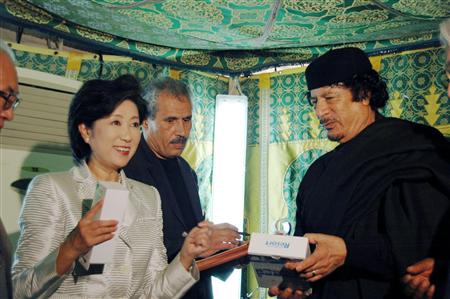
In 1978, Koike, now working as an interpreter and television producer, would meet Qadhafi for the first time in a Benghazi barracks to conduct an interview with the Libyan leader. However, Koike found in Qaddafi a very different kind of leader than the one described in glowing terms by her mentor. Koike pointed out that by this time Libya had become a police state in which no criticism was tolerated.[31]Â
However, despite the growing repression described by Koike in Libya, on September 1, 1978 (the ninth anniversary of Qadhafi’s revolution), Tokyo signaled the importance it attached to cultivating closer ties with Tripoli by establishing the Japan-Libya Friendship Association. While one could be forgiven for thinking this was a civil society initiative, in fact it was headed by former foreign minister and former Chief Cabinet Secretary to Prime Minister Eisaku Sato, Toshio Kimura. The association’s board also included representatives from leading firms in Japan’s corporate world.[32] In November 1979, Kimura led a friendship association delegation to Tripoli and met with Qadhafi to assess prospects for deepening economic ties between Libya and Japan.[33]
Japan-Libya Relations in the 1980s and 1990s
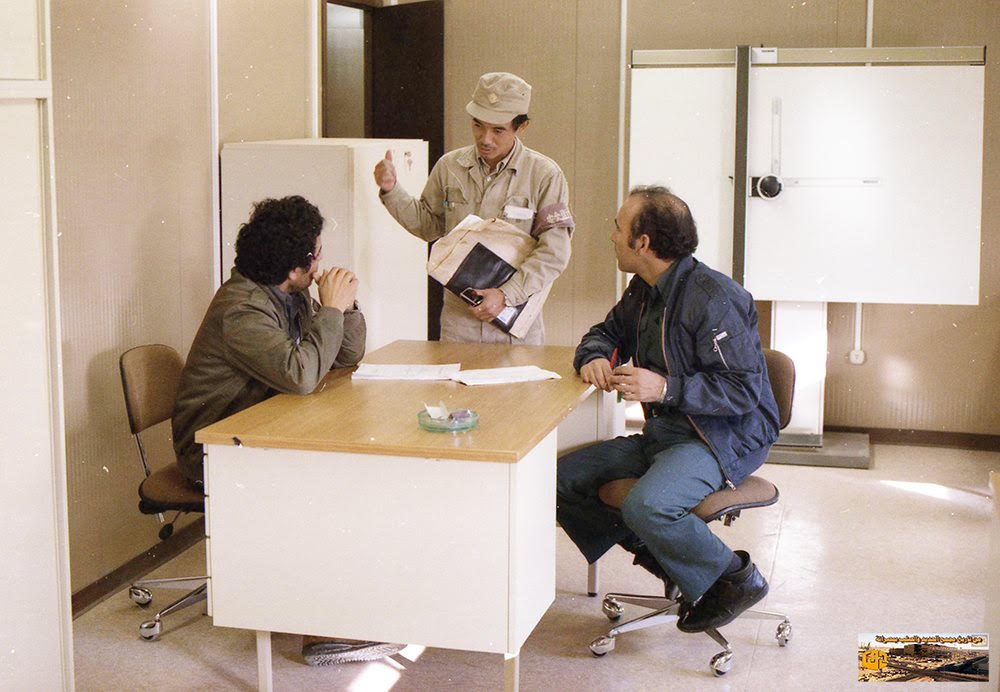
By the early 1980s, Japan’s outreach to Libya appeared to show signs of paying off in terms of new business deals for Japanese companies. In December 1980 Kobe Steel won a tender worth 160 billion yen to build a steel-making plant in Misrata. This was followed by an order in February 1981 for 10 billion yen worth of additional equipment.[34] Kobe Steel contracted Japanese firms Itochu and Nakanogumi to assist in constructing the new factory. By the end of the decade Misrata Steel Works had become one of the region’s leading steel producers, with a production capacity of 1.32 million tons of liquid steel per year.[35] Although Libya relied on iron ore imports from Brazil, the steel produced in Misrata was of high enough quality to be exported to Libya’s neighbors, Egypt and Tunisia, and also as far afield as Europe and the Persian Gulf.
Japanese engineer working at the Misrata Steelworks built by Kobe Steel in the 1980s
Â
With the Kobe Steel project in Misrata, an increasing number of Japanese engineers, businesspeople, and politicians began to travel to Libya. In 1985, another Japanese delegation was dispatched to Libya to attend the 1969 revolution’s 16th anniversary ceremony in Sabha again under the auspices of the Japan-Libya Friendship Association. While this was not a formal delegation from the Foreign Ministry — which might have raised Washington’s eyebrows given by then deteriorating relations between Qadhafi and the United States — much like Kimura’s visit in 1979, the 1985 delegation also included influential political personalities, albeit with no formal government positions.
Another figure played an important role in the development of Japan-Libya ties in the 1980s. Koji Kakizawa, a rising star in Japan’s governing Liberal Democratic Party (LDP), who would become Japan’s foreign minister in 1994, visited Libya twice. Kakizawa was part of the parliamentary delegation that traveled to the country under the auspices of the Japan-Libya Friendship Association in 1985. He returned to Tripoli in 1986 to meet with Qadhafi shortly after the US airstrikes (see below) and to confirm the safety of Libya’s 600-strong Japanese community. Kakizawa would later write about his meeting with Qadhafi in an edited volume published by the Japan-Libya Friendship Association in 1990, in which he, along with other contributors to the volume, expressed a largely uncritical view of Qadhafi.[36]
Japan was thus pursuing closer relations with Tripoli at a time when Qadhafi was seen as a pariah in Washington owing to his support for international terrorism. By the 1980s, Qadhafi had taken his revolutionary ideology overseas, supporting paramilitary groups such as the Irish Republican Army (IRA) and Palestinian Liberation Organization (PLO). On April 5, 1986, Libyan agents detonated a bomb at a discotheque in West Berlin frequented by US soldiers stationed inGermany. The bomb killed two American soldiers and a Turkish woman and injured 229 others, some of whom lost limbs and were permanently disabled.That same month, the Reagan administration responded by bombing targets in Libya, including Qadhafi’s compound in Tripoli.
However, Qadhafi’s continuing recklessness in the late 1980s only brought further international isolation, and made it increasingly difficult for Japan to continue its engagement with Libya. The final straw was the downing of a civilian airliner over Lockerbie, Scotland in 1988 by Libyan agents.
In 1992, the United Nations Security Council imposed sanctions on Libya in response to Libya’s involvement in the bombing of Pan Am flight 103 over Lockerbie in 1988, which killed 270 people. Japan, also a strong supporter of international institutions, complied strictly with the terms of the sanctions. Yet, even then, the diplomatic engagement did not stop: Kakizawa, who was by this point Japan’s foreign minister visited Tripoli twice, in 1998 and 1999.[37] Nevertheless, Japan’s close compliance with the sanctions outraged Qadhafi, who expected pan-Asian and pan-African solidarity to hold greater cache in Tokyo. The Libyan dictator, in fact, was deeply disgruntled that Japan observed the sanctions much more strictly than some European countries.[38]
The 2005 Breakthrough
By 1999, UN sanctions were suspended after Libya turned over two suspects in the Lockerbie case. Japan rushed to upgrade relations with Tripoli even as the United States kept its sanctions in place for several more years. In May 1999, Tokyo sent Kishiro Amae, director general of the Foreign Ministry’s Middle Eastern and African Affairs Bureau, became the highest-level Japanese government official to visit Libya since the UN sanctions were imposed. Amae visited Tripoli to try and assuage strong dissatisfaction among Libyan officials about what they viewed as a Japanese lack of interest in Libya. Late in 1999, Tokyo appointed an ambassador to Tripoli, where the Japanese mission had operated with a skeletal staff throughout the 1990s.[39]Â
Then, in 2003, US rapprochement with the Qadhafi regime opened up new possibilities for Japanese diplomacy and industry, signaling that Libya was now open for business. In April 2005, Saif al-Islam al-Qadhafi, the former Libyan dictator’s son and heir-apparent, embarked on a six-day visit to Japan to seek investment and technical assistance, meeting with then-Prime Minister Junichiro Koizumi and other top officials.[40] Saif also opened an art exhibition in Tokyo — largely financed by Japanese oil companies — that included archaeological artifacts from Libya and Saif’s own paintings. Yuriko Koike, then the environment minister, was among the attendees at the exhibition’s opening. Saif also visited the Aichi Expo, which featured a Libyan pavilion. Not long afterward, in June 2005, Senior Deputy Foreign Minister Ichiro Aisawa traveled to Tripoli and met with Qadhafi himself, inviting the Libyan leader to visit Japan in the future.[41]
All of these efforts bore fruit in October 2005, when Japanese companies were for the first time awarded the rights to develop Libyan oil fields. Nippon Oil, Mitsubishi Corporation, Japan Petroleum Exploration, Teikoku Oil and Inpex Oil were all awarded contracts. It was in fact the first time that Libya permitted its oil to go to an Asian country, and Japan beat out its competitor, China, in the bidding war.[42]
Japan-Libya Relations after the 2011 Revolution
In February 2011, when Libyan protesters took to the streets to demand Qadhafi’s exit from power, Japan was faced with a dilemma. For decades, Japan’s view of Middle East politics — perhaps even more so than Washington’s — had been framed by a conservative understanding of the region’s politics that saw Arab dictators as guarantors of domestic stability. However, with Ben Ali’s ouster in Tunisia and Mubarak’s fall in Cairo, the writing was on the wall. Despite Tokyo’s embrace of Qadhafi a decade earlier, in summer 2011 Japan recognized Libya’s rebel National Transitional Council (NTC) on the same day as the United States.[43] Yuriko Koike, who was now president of the Japan-Libya Friendship Association, was among the strong advocates of the NTC in Tokyo.
After Qadhafi’s demise in September 2011, Japan ramped up its engagement. From 2012 to 2013, there were four ministerial visits from Libya to Japan.[44] Despite an initial enthusiasm in Tokyo to play a role in Libya’s post-Qadhafi reconstruction and development, growing violence and the outbreak of civil war brought these efforts to a halt. In August 2019, the foreign minister of the internationally-recognized Libyan Government of National Accord (GNA), Mohamed Siala, visited Tokyo to take part in a regional development conference in Yokohama.
In general, however, Japan’s traditional approach to Libya faces serious constraints in the country’s current, chaotic environment. Consequently, Tokyo’s engagement on Libya has been muted in recent years compared to the enthusiasm of previous decades. The diplomatic tools that had helped Japan build relationships in Libya in earlier decades became less useful in the face of a fractured country and civil war. Koike, who previously penned op-eds and gave media interviews in support of the NTC, has been much quieter about Libya since becoming governor of Tokyo in 2016 (and is rumored to have prime ministerial ambitions). At the same time, Koike has sought to deepen ties between Japan’s capital and other parts of the Arab world, especially Saudi Arabia and the United Arab Emirates (UAE), both of which support Haftar in the ongoing civil war.Â
Washington, meanwhile, has been reticent to involve itself deeply in Libya, while the Trump administration has sent mixed signals about which of Libya’s warring sides it supports. The European Union has barely mustered a unified position on the Libyan conflict. The fact that the West itself has been disengaged and divided when it comes to Libya makes it even more difficult for Japan to exercise any diplomatic influence.
Conclusions
The story of Japan’s relations with Libya provides a window into how Japan has successfully cultivated ties with countries in the Middle East and North Africa. Relationship-building coupled with reassurances that Japan is interested in more than just oil has been a central element of Japan’s approach to the region since the days of Nakatani’s visits to Arab capitals. Such relationship-building — carried out over many years, often by individuals with no formal government positions working closely with “friendship associations†and industry groups — flew under the diplomatic radar of high international politics, but has nonetheless yielded significant payoffs. Moreover, Japan’s diplomatic approach was not divorced from its particular history and foreign policy identity, which itself is in part a product of elites socialized in the prewar years. These elites drew on Japan’s history and uniquely Japanese views of the world to connect with regimes in the region and assure them that Tokyo’s interests went beyond just access to oil. As current defense minister and former foreign minister Taro Kono said in a speech to the first-ever Japan-Arab dialogue in 2017, Japan focuses on “patience and persistence†in its Middle East diplomacy. Kono added: “Once we sow a seed, we do not rush. But we also do not stop. We move ahead step by step in a steady manner until harvesting fruit. This endurance with long-term foresights is Japan’s strength.â€[45]
Â
[3] Yukiko Miyagi, Japan’s Middle East Security Policy: Theory and Cases (New York: Routledge, 2013). Â
[5] William Nester and Kweku Ampiah, “Japan’s Oil Diplomacy: Tatemae and Honne,†Third World Quarterly 11, 1 (1989): 72-88. Â
[6] When Diet member Yasuhiro Nakasone (and future prime minister) met with Egyptian President Nassar in 1957, Nakasone expressed support for Nassar’s nationalization of the Suez Canal and emphasized Japan’s support for self-determination, anti-colonialism and international democracy. Yasuhiro Nakasone, translated and annotated by Lesley Connors, The Making of the New Japan: Reclaiming the Political Mainstream (New York: Routledge, 1999) 114-115. Â
[8] Torsten Weber, “The Greater Asia Association and Matsui Iwane, 1933,†in Sven Saaler and Christopher W. A. Szpilman (eds.), Pan-Asianism: A Document History, Volume 2: 1920 – present (Lanham, MD: Rowman & Littlefield Publishers, 2011): 137-140. Â
[9] Takeyo Nakatani, ShÅwa dÅranki no kaisŠ― Nakatani Takeyo kaikoroku (Tokyo: Tairyusha, 1989) 728-729. Â
[10] Tamon Highashinakano, “Kishi Nobusuke to gokoku doshikai,†Shigaku Zasshi 108, 9 (1999): 1619-1638. Â
[13] Nozomi Yamaguchi, “Kokka shugisha,†2015. Also see, Yasuhiro Nakasone, translated and annotated by Lesley Connors, The Making of the New Japan: Reclaiming the Political Mainstream (New York: Routledge, 1999) 114-115. Â
[15] See, for example, Nakatani’s description of his visit to Baghdad under King Faisal II. Nakatani, Arabu to Nihon (Tokyo: Hara ShoboÌ„, 1983) 31-34. Â
[21] Hiroshi Shimizu, “The Japanese Trade Contact with the Middle East: Lessons from the Pre-Oil Period,†in J.A. Allen and Kaoru Sugihara (eds.), Japan and the Contemporary Middle East (New York: Routledge, 2005): 42. Â
[22] Dirk Vandewalle (ed.), Libya Since 1969: Qadhafi’s Revolution Revisited (New York: Palgrave MacMillan, 2008). Â
[23] Nakatani, Arabu to Nihon, 202-206. A full list of members of the delegation can be found on page 200. Â
Image caption
The lights remained on in the US capital
Twitter has suspended hundreds of accounts for spreading claims about a Washington DC “blackout” which never happened.
Amid widespread civil unrest in the US, thousands to tweets using the #DCBlackout hashtag claimed that communications had been blocked in the capital to cripple protests.
But there was no evidence of this.
Twitter also said it had banned an account for inciting violence while impersonating a protest group.
The #DCBlackout hashtag trended on Twitter on Monday, with millions of tweets and retweets claiming that internet and phone communications were cut late in the night as the protests continued.
But reporters covering the protests had no such problems, and Twitter collated several of their tweets into a prominent link in Twitter’s main website sidebar. An internet monitoring service also said there was no indication of any widespread disruption.
A Twitter spokesperson said the social media site had “suspended hundreds of spammy accounts” that used the #DCBlackout hashtag, citing the company’s platform manipulation and spam policies.
The DC blackout hoax is a classic example of an internet rumour spiralling out of control.
The hashtag first started going viral on Twitter in the early hours of Monday. Panicky messages about a blackout also spread on Facebook, Reddit and later on Instagram too.
Some of the most shared posts were sent by users who were not based in Washington DC or even in the US.
Despite the lack of evidence of a blackout, the hashtag garnered more than 500,000 tweets from 35,000 unique accounts in a matter of hours and became a global trend.
Concerned residents in and around Washington DC then saw the trend on their social media feeds and began posting about it to find out what was going on.
So by the time Twitter removed it from its “trending topics” list, the claim may have been seen by millions worldwide.
This is a playbook we have seen over and over again.
When a major event is developing, rumours and claims about an emotional topic can go viral without any evidence to support them.
Twitter also suspended another account which claimed to represent the left-wing Antifa group, calling for violence.
But the antifa_us account turned out to be operated by a known white nationalist group operating under an assumed name, Twitter told US media.
Before it was suspended, it tweeted messages including: “Tonight … we move into the residential areas … the white hoods … and we take what’s ours”.
Image copyright Twitter
“Antifa”, a contraction of anti-fascist, refers to the loosely-organised far-left protest group that gained fresh prominence in the US after the controversial white supremacist rally in Charlottesville in 2017. Anti-fascists routinely organised counter-demonstrations at far-right events in the months afterwards – sometimes resulting in violent clashes.
The use of the label is controversial because, as the Anti-Defamation League writes, it is sometimes used “to include all counter-protesters, rather than limiting it to those who proactively seek physical confrontations with their perceived fascist adversaries”.
A Twitter spokesperson said the company noticed the account after it sent tweets inciting violence, and that it was eventually suspended for violating policies on fake accounts.
Prof Philip Howard from the Oxford Internet Institute said that while Twitter was taking action, conspiracy theories and polarising stories keep returning.
“It is difficult to know how much impact misinformation on any particular topic has. But people do still circulate it,” he said.
“The platforms are doing more and more to keep fake news in check. But each platform is different, and a large number of junk news stories come back in new forms, with new links and on new channels, very soon after it gets taken down.”
Before the pandemic shut down businesses, a robust economy had powered a building boom, sending office towers skyward in urban areas across the United States. The coronavirus outbreak, though, has scrambled plans and sent jitters through the real estate industry.
Skyscrapers scheduled to open this year will remake skylines in cities like Milwaukee, Nashville and Salt Lake City. Office vacancy rates, following a decade-long trend, had shrunk to 9.7 percent at the end of the third quarter of 2019, compared with 13 percent in the third quarter of 2010, according to Deloitte.
Developers were confident that the demand would remain strong. But the pandemic darkened the picture.
“There is a pause occurring as companies more broadly consider their real estate needs,†said Jim Berry, Deloitte’s U.S. real estate sector leader.
The timing is unfortunate for Mark F. Irgens, whose 25-story BMO Tower in Milwaukee opened in mid-April at the peak of the statewide lockdown in Wisconsin. A month later, a small fraction of typical daytime foot traffic was passing by as most businesses adhered to the governor’s stay-at-home directive, which expired last week. A restaurant that was slated for the ground level was canceled, and three potential tenants have delayed their plans.
Instead of showing off the building’s sparkling Italian marble floors and panoramic vistas of Lake Michigan, Mr. Irgens is worrying about who is going to pull out next and what type of corporate landscape he might face when the pandemic finally ends.
But he is not putting on the brakes. The BMO had been planned for five years, and he has leases to negotiate, investors to please, tenants to woo and loans to pay off.
“Development projects are different than making widgets,†he said. “You can’t stop; you can’t turn it off. You have to continue.â€
Slowly, workers are filling their BMO offices. Managers, who were scheduled to report on Monday, constitute about 15 percent of the building’s occupancy. Mr. Irgens thinks it will be the end of the summer before it gets up to 50 percent. Without a coronavirus vaccine, it may be year’s end before the building approaches a “normal†occupancy, he said.
Other developers around the country are also dealing with the fallout, especially for towers with Class A space, regarded as the highest-quality real estate on the market. In most cases, new buildings are not fully occupied, and developers were counting on a strong economy to do the work for them. For instance, the BMO Tower was 55 percent leased before the pandemic.
The question facing the owners of office towers is: Will anyone still want the space when coronavirus crisis fades?
If the economic pain drags on, there could be long-lasting changes to the way people work and how tenants want offices to be reimagined, said Joseph L. Pagliari Jr., clinical professor of real estate at the University of Chicago’s Booth School of Business. Some of the changes — like more spacious elevators — could be costly to put into place, he said.
The pandemic could be a “pivot point,†Mr. Pagliari said, and that would be bad news for building owners. The office towers were designed to be “best in class,†he said, but the pandemic has suddenly made their most salable amenities — common areas, fitness centers and food courts — into potential liabilities.
The economic crisis could also spur high interest rates on debt, which would cause building values to fall, Mr. Pagliari said. That may happen even if the crisis diminishes in the weeks ahead.
“The current pandemic has raised perceptions about the likelihood and consequences of future pandemics,†Mr. Pagliari said. Developers who can factor in such events will gain an advantage, but any skyscrapers that are built with pandemic fears in mind are years away.
The prospect that workers may want to continue working from home does not worry John O’Donnell, the chief executive of Riverside Investment and Development, which is developing a 55-story tower at 110 North Wacker Drive in Chicago. The tallest building erected in the city since 1990, it is scheduled to open in August and will be anchored by Bank of America. Other tenants include law firms, many of which are doing business from home.
“There is a need for collaboration, team building, common business cultures and a continuous desire to have social contact within a business,†Mr. O’Donnell said.
The building is 80 percent leased ahead of its August opening. One tenant signed for 40,000 square feet of office space at the height of the lockdown, which Mr. O’Donnell took as an encouraging sign.
The building is already being adjusted to meet post-pandemic needs, something Mr. O’Donnell said newer structures were better able to do. Amenities are being updated to be touch free. And owners are talking with tenants about walk-through thermal imaging to monitor workers and visitors for fevers.
The pandemic will result in a demand for more office space, not less, said Paul H. Layne, the chief executive of the Howard Hughes Corporation, a national commercial real estate developer based in Houston. Developers will move away from the industry-standard 125 square feet per person toward roomier workplaces.
But others say it is too early to tell when demand for office space will return. Jamil Alam, managing principal of Endeavor Real Estate Group, said the situation would vary by city.
“There will be winners and losers,†Mr. Alam said, explaining that he thinks denser metro areas like New York and Boston, which have been ravaged by the coronavirus, could find their luster lost in favor of smaller markets.
Endeavor, which is based in Austin, Texas, has a portfolio that includes 15.6 million square feet of commercial real estate in cities like Dallas, Denver and Nashville. One of its projects, the 20-story Gulch Union, will be the largest office tower in Nashville when it opens in August with 324,254 square feet of office space.
Smaller markets like Nashville are well positioned for companies wishing to pull up stakes from major metropolitan areas with higher density and costs, Mr. Alam said. Gulch Union has leased 27,000 square feet, and four more deals totaling 40,000 square feet are near completion.
Updated June 1, 2020
How do we start exercising again without hurting ourselves after months of lockdown?
Exercise researchers and physicians have some blunt advice for those of us aiming to return to regular exercise now: Start slowly and then rev up your workouts, also slowly. American adults tended to be about 12 percent less active after the stay-at-home mandates began in March than they were in January. But there are steps you can take to ease your way back into regular exercise safely. First, “start at no more than 50 percent of the exercise you were doing before Covid,†says Dr. Monica Rho, the chief of musculoskeletal medicine at the Shirley Ryan AbilityLab in Chicago. Thread in some preparatory squats, too, she advises. “When you haven’t been exercising, you lose muscle mass.†Expect some muscle twinges after these preliminary, post-lockdown sessions, especially a day or two later. But sudden or increasing pain during exercise is a clarion call to stop and return home.
My state is reopening. Is it safe to go out?
States are reopening bit by bit. This means that more public spaces are available for use and more and more businesses are being allowed to open again. The federal government is largely leaving the decision up to states, and some state leaders are leaving the decision up to local authorities. Even if you aren’t being told to stay at home, it’s still a good idea to limit trips outside and your interaction with other people.
What’s the risk of catching coronavirus from a surface?
Touching contaminated objects and then infecting ourselves with the germs is not typically how the virus spreads. But it can happen. A number of studies of flu, rhinovirus, coronavirus and other microbes have shown that respiratory illnesses, including the new coronavirus, can spread by touching contaminated surfaces, particularly in places like day care centers, offices and hospitals. But a long chain of events has to happen for the disease to spread that way. The best way to protect yourself from coronavirus — whether it’s surface transmission or close human contact — is still social distancing, washing your hands, not touching your face and wearing masks.
What are the symptoms of coronavirus?
Common symptoms include fever, a dry cough, fatigue and difficulty breathing or shortness of breath. Some of these symptoms overlap with those of the flu, making detection difficult, but runny noses and stuffy sinuses are less common. The C.D.C. has also added chills, muscle pain, sore throat, headache and a new loss of the sense of taste or smell as symptoms to look out for. Most people fall ill five to seven days after exposure, but symptoms may appear in as few as two days or as many as 14 days.
How can I protect myself while flying?
If air travel is unavoidable, there are some steps you can take to protect yourself. Most important: Wash your hands often, and stop touching your face. If possible, choose a window seat. A study from Emory University found that during flu season, the safest place to sit on a plane is by a window, as people sitting in window seats had less contact with potentially sick people. Disinfect hard surfaces. When you get to your seat and your hands are clean, use disinfecting wipes to clean the hard surfaces at your seat like the head and arm rest, the seatbelt buckle, the remote, screen, seat back pocket and the tray table. If the seat is hard and nonporous or leather or pleather, you can wipe that down, too. (Using wipes on upholstered seats could lead to a wet seat and spreading of germs rather than killing them.)
How many people have lost their jobs due to coronavirus in the U.S.?
More than 40 million people — the equivalent of 1 in 4 U.S. workers — have filed for unemployment benefits since the pandemic took hold. One in five who were working in February reported losing a job or being furloughed in March or the beginning of April, data from a Federal Reserve survey released on May 14 showed, and that pain was highly concentrated among low earners. Fully 39 percent of former workers living in a household earning $40,000 or less lost work, compared with 13 percent in those making more than $100,000, a Fed official said.
Should I wear a mask?
The C.D.C. has recommended that all Americans wear cloth masks if they go out in public. This is a shift in federal guidance reflecting new concerns that the coronavirus is being spread by infected people who have no symptoms. Until now, the C.D.C., like the W.H.O., has advised that ordinary people don’t need to wear masks unless they are sick and coughing. Part of the reason was to preserve medical-grade masks for health care workers who desperately need them at a time when they are in continuously short supply. Masks don’t replace hand washing and social distancing.
What should I do if I feel sick?
If you’ve been exposed to the coronavirus or think you have, and have a fever or symptoms like a cough or difficulty breathing, call a doctor. They should give you advice on whether you should be tested, how to get tested, and how to seek medical treatment without potentially infecting or exposing others.
How can I help?
Charity Navigator, which evaluates charities using a numbers-based system, has a running list of nonprofits working in communities affected by the outbreak. You can give blood through the American Red Cross, and World Central Kitchen has stepped in to distribute meals in major cities.
“Deals are still being done,†he said.
There will be an appetite for urban, walkable, mixed-use office environments, Mr. Alam said, and changes will need to be made in buildings over time, like fewer touch points on handles and elevator buttons.
But projects that have not been started yet will be paused, said Chris Kirk, managing principal of the Salt Lake City office of Colliers, the commercial real estate brokerage firm.
“If you are a developer or landlord or C.F.O., you are concerned,†he said. “Everyone is feeling the impact.â€
Salt Lake City is in a better position to weather the crisis than other markets, he added, because Utah has had fewer coronavirus cases than most states and has not been under a statewide lockdown.
And the city is experiencing a building spurt downtown. A 24-story Class A tower developed by City Creek Reserve, the development arm of the Church of Jesus Christ of Latter-day Saints, is scheduled for completion next year. The building, which will have 589,945 square feet of office space, is already 80 percent leased.
Salt Lake City has been averaging a new Class A office high-rise every decade, and the pace is increasing. Still, the pandemic might put the brakes on that.
“Anyone who would be coming out of ground speculatively now without the commitment has got to be thinking about their timing,†Mr. Kirk said.
Mr. Irgens hopes to ride out the pandemic and continue with other projects. In February, his company broke ground on a six-story building in Tempe, Ariz., and it is moving forward with a 235,000-square-foot Milwaukee office project that is 42 percent leased.
“My partners in my business are working really hard to figure out how to have business continuity, and it is really hard to do that,†he said. “Things are changing daily.â€
We use cookies on our website to give you the most relevant experience by remembering your preferences and repeat visits. By clicking “Accept”, you consent to the use of ALL the cookies.
This website uses cookies to improve your experience while you navigate through the website. Out of these, the cookies that are categorized as necessary are stored on your browser as they are essential for the working of basic functionalities of the website. We also use third-party cookies that help us analyze and understand how you use this website. These cookies will be stored in your browser only with your consent. You also have the option to opt-out of these cookies. But opting out of some of these cookies may affect your browsing experience.
Necessary cookies are absolutely essential for the website to function properly. These cookies ensure basic functionalities and security features of the website, anonymously.
Cookie
Duration
Description
cookielawinfo-checbox-analytics
11 months
This cookie is set by GDPR Cookie Consent plugin. The cookie is used to store the user consent for the cookies in the category "Analytics".
cookielawinfo-checbox-functional
11 months
The cookie is set by GDPR cookie consent to record the user consent for the cookies in the category "Functional".
cookielawinfo-checbox-others
11 months
This cookie is set by GDPR Cookie Consent plugin. The cookie is used to store the user consent for the cookies in the category "Other.
cookielawinfo-checkbox-necessary
11 months
This cookie is set by GDPR Cookie Consent plugin. The cookies is used to store the user consent for the cookies in the category "Necessary".
cookielawinfo-checkbox-performance
11 months
This cookie is set by GDPR Cookie Consent plugin. The cookie is used to store the user consent for the cookies in the category "Performance".
viewed_cookie_policy
11 months
The cookie is set by the GDPR Cookie Consent plugin and is used to store whether or not user has consented to the use of cookies. It does not store any personal data.
Functional cookies help to perform certain functionalities like sharing the content of the website on social media platforms, collect feedbacks, and other third-party features.
Performance cookies are used to understand and analyze the key performance indexes of the website which helps in delivering a better user experience for the visitors.
Analytical cookies are used to understand how visitors interact with the website. These cookies help provide information on metrics the number of visitors, bounce rate, traffic source, etc.
Advertisement cookies are used to provide visitors with relevant ads and marketing campaigns. These cookies track visitors across websites and collect information to provide customized ads.