Yes, COVID-19 Deaths Are Down. But There Are Worrying Signs of a Major Spike Ahead

0

In its ongoing campaign to minimize the coronavirus pandemic in the United States, the Trump Administration has repeatedly touted the fact that, while cases are skyrocketing on a national level, the number of daily deaths remain low relative to the height of the outbreak earlier this year.

“In a certain way, our tremendous testing success gives the Fake News Media all they want, CASES,” President Donald Trump tweeted over the weekend. “In the meantime, deaths and the all important mortality rate goes down.”

It is true that deaths due to COVID-19 are trending downwards, even as cases and hospitalization rates increase. However, infectious disease experts say it is too early to celebrate the lower mortality rate we’ve seen in recent weeks.

In part, that’s because it takes days, weeks or even months for a person to become infected, get sick, and die of COVID-19. On average, it takes five days for a person to develop symptoms after they’re infected, although in some cases it can take as long as two weeks. In most cases, it then takes additional time for people to become so severely ill that they need to be hospitalized. It might then take days or weeks more before they die. (Many people, of course, experience no or only minor symptoms, and never require hospitalization.)

The recent surge of COVID-19 cases in states like Arizona, Florida and Texas was first detected in late May. It’s likely too soon to tell for sure whether that surge will lead to a spike in deaths. But at least in one state, Texas, there’s already a major warning sign that more deaths are coming: hospitalizations are spiking, meaning lots of people are getting severely ill. And in New York, which was the hardest-hit state before the virus ebbed there, deaths clearly lagged behind hospitalizations:

In Texas, hospitalizations are already increasing rapidly by the day. Deaths are rising, slowly, for now—but based on trends seen elsewhere, like in New York, they will likely soon jump up as well:

“There are a lot of warning signs,” says Alison Hill, an infectious disease modeler at Harvard University. “Cases are going up very rapidly. The percent of tests that are being done, that are actually coming back positive for COVID, is really high. Those are all warning signs that in a few weeks we’re probably going to have a lot of people in the hospital, and a lot of people passing away.”

Even when deaths start to spike, we may not know right away, because of a lag in processing the sick and deceased. Doctors must often wait for test results, and it takes time to fill out death certificates. The rate at which states report deaths can also vary significantly.

Deaths may also be lagging because of who’s getting tested in the first place. The average age of people testing positive with COVID-19 has dropped, partially due to increased testing, and partially because some states reopened businesses that attract younger people, like restaurants and bars. Younger patients are less likely to experience the worst symptoms or die of the disease. And early in the pandemic, many of the deaths were centered in long-term care facilities, which may have become better at protecting residents over time.

Related Stories

However, Hill says that younger people who contract the virus can still spread it to older or otherwise more vulnerable people, potentially leading to more deaths further down the road. “I just don’t think that this will only be confined to 20-year-olds,” she says. “The population just isn’t isolated like that.”

Infectious disease experts have also raised other theories that could explain the drop in deaths. Hospitals may have gotten better at treating severe COVID-19, thanks to a combination of research and experience with what’s been a perplexing virus. Patients may also be more aware of the disease’s risks than earlier in the pandemic, which means they may go to the hospital sooner than before. Furthermore, some have raised the possibility that the virus has mutated into a less severe form.

But Hill says the virus is evolving “very slowly” so far, and she doesn’t see convincing evidence that it’s become less virulent. And that the data can lag behind reality, she says, is cause for more caution, not premature celebration. “You really need to do everything you possibly can now to stop spread, because by the time we start seeing hospitalization and deaths increase, it’s a little bit too late,” she says.

Correction, July 7

The Texas chart in the original version of this story incorrectly showed cumulative deaths. It has been updated to show daily deaths.

Write to Tara Law at tara.law@time.com.


Source link

Melbourne to reimpose six-week lockdown as Australia battles coronavirus outbreak

0

Starting from 11:59 p.m. on Wednesday, residents in metropolitan Melbourne will no longer be allowed to leave their homes unless it’s for grocery shopping, caregiving, exercise or work, Victoria State Premier Daniel Andrews announced Tuesday.

The measures, which are expected to remain in place for six weeks, come as the state of Victoria saw another record rise in daily coronavirus cases, with 191 new infections recorded for Tuesday. The state reported its previous high of 127 new cases on Monday.

“We know we’re on the cusp of something very, very bad if we don’t get on top of this,” Andrews told reporters in Melbourne on Tuesday, describing the surge in case numbers as unsustainable.

“I think a sense of complacency has crept into us as we let our frustrations get the better of us. I think that each one know someone who has not been following the rules as well as they should have. I think each of us know that we have got no choice by to take very very difficult steps,” Andrews said.

Victoria had previously reimposed local lockdowns on dozens of suburbs around Melbourne. On Monday, authorities announced the border between Victoria and New South Wales (NSW) — Australia’s two most-populous states — will be closed on Tuesday night, effectively cutting off Victoria from the rest of the country.

Border restrictions will also apply to metropolitan Melbourne and Mitchell Shire, a regional area of Victoria, on Wednesday night to limit the spread of the outbreak across the state, Andrews said.

“We’ve talked about this virus being like a public health bushfire. By putting a ring around metropolitan Melbourne, we’re essentially putting in place a perimeter to protect regional Victorians,” he said in a statement.

“It’s clear we are on the cusp of our second wave and we cannot let this virus cut through our communities.”

Under the new lockdown measures, cafes and restaurants that were allowed to reopen weeks ago will return to take away and delivery only. Beauty and personal services will be closed, as well as cultural and entertainment venues.

Schools will extend their holiday for another week, but senior secondary school students and students at specialist schools will return to school as planned on Monday.

“This is not where any of us wanted to be, but we have to face the reality of our situation. To do anything else would have deadly consequences,” Andrews said.

Of the 191 new cases detected on Tuesday, 13 came from the nine public housing estates under a “hard lockdown.”

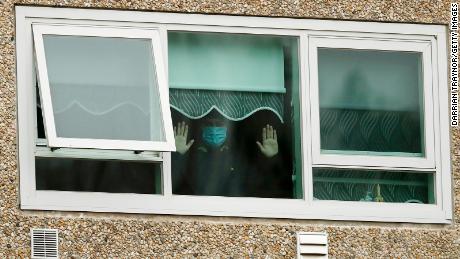
About 3,000 residents in the densely populated towers were suddenly put under a total lockdown on Saturday night, not allowed to leave their homes for any reason. So far, a total of 69 cases have been detected in these estates, and authorities aim to test every single resident.

“The strategy here is to complete the testing and then as soon as possible, once that testing is complete, to have those nine towers moved to the same footing that the rest of Melbourne will move to at 11.59pm tomorrow night — a stay-at-home with four reasons to leave,” Andrews said.

Coronavirus has infected more than 2,800 people and killed 22 in Victoria. Across Australia, more than 8,700 people have been infected and 106 have died, according to Johns Hopkins University’s tally.

Source link

Tougher lockdown to be imposed in Bengal from July 9

0

By: Express Web Desk | New Delhi |

Updated: July 7, 2020 9:24:09 pm


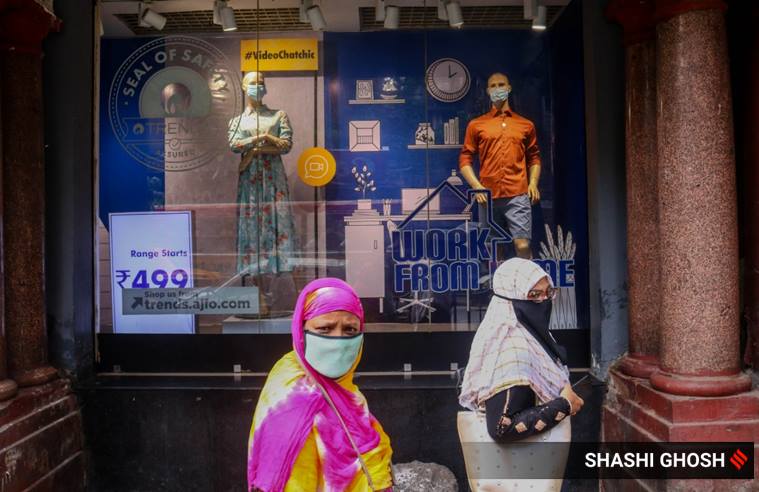
Women in mask outside a shop in Kolkata.

After a spike in COVID-19 cases, West Bengal on Tuesday announced a strict lockdown in containment zones and buffer zones across the state from July 9, 5 PM. All private and government offices in containment zones and buffer zones will remain shut. The transport services will also remain suspended till further notice.

Only essential services will be available.

Local authorities will try and arrange home delivery of essential commodities for the residents of these areas.

The government, however, did not mention how long the fresh spell of the shutdown will last.

The current phase of lockdown, in force till July 31, was largely limited to containment zones alone.

The number of containment zones in Kolkata have been increased from 17 to 33 after the city recently witnessed a major spike in COVID-19 cases. This spike in numbers comes after the West Bengal government had announced lockdown relaxations across the state.

📣 The Indian Express is now on Telegram. Click here to join our channel (@indianexpress) and stay updated with the latest headlines

For all the latest India News, download Indian Express App.

© IE Online Media Services Pvt Ltd

Source link

Shilpa Shetty sells her stake in IOSIS Wellness after 10 years; says she has got too much on her plate  : Bollywood News – Bollywood Hungama

0

Bollywood actress Shilpa Shetty took to her Instagram handle on Tuesday to announce that she has sold her stake from IOSIS wellness spa after having been the co-owner for ten years. The actress said that she has too much on her plate and therefore considered this to be the best decision. 

Shilpa took to Instagram and shared a n old picture with Kiran Bawa, who is her partner and also bought her stakes in the business. “It’s been 10 glorious years having partnered with @iosiswellness to take beauty and wellness across the country. Due to being over-committed with too much on my plate personally and professionally, I have decided to sell my stake and am happy to announce that my share in the business has been bought out by my partner, @kiranbawa76. I wish her all the best in taking this wonderful brand to greater heights. Would like to thank all our patrons, franchisees, and staff for their love & continued support,” she wrote. 

Meanwhile, on the work front, Shilpa Shetty will be soon seen in the film Nikamma which also stars Abhimanyu Dassani and Shirley Setia. The actress is also a part of the film Hungama 2 directed by Priyadarshan. The film also stars Paresh Rawal, Pranitha Subhash and Meezan Jaffrey. 

ALSO READ: Raj Kundra pens the loveliest birthday wish for Shilpa Shetty, calls her the queen of his life 

BOLLYWOOD NEWS

Catch us for latest Bollywood News, New Bollywood Movies update, Box office collection, New Movies Release , Bollywood News Hindi, Entertainment News, Bollywood News Today & upcoming movies 2020 and stay updated with latest hindi movies only on Bollywood Hungama.

Loading…

Source link

Hong Kong is a ‘City in Danger’ Under Security Law, According to Its Journalists

0

Hong Kong’s promised freedoms are now in danger, as the ruling Chinese Communist Party imposes a draconian security law on the city and the local authorities announce sweeping new powers to enforce it, according to a journalists’ group.

“There may be a mass drain of capital and a new wave of migration,” the Hong Kong Journalists’ Association (HKJA) said in an annual report release on Tuesday. “The city is in danger. People fear a loss of their freedoms.”

The report said Hong Kong now looks set to pay a “huge economic and political price” as police are given powers to order online service providers to take down content deemed problematic under the law, and to require organizations to hand over details of their sources.

“Hong Kong is entering into turbulent waters. Beijing will resort to harsh legislation, more direct interference and behind-the-scenes arms-twisting,” the report predicted.

“The police will intensify [their] use of force and tougher tactics to handle protesters,” it said, adding that the media have a duty to monitor and report on the law’s implementation, and the actions of those in power.

“They will be confronted with more suppression from the central government and Hong Kong government and the pro-establishment camp,” the report said, adding: “Hong Kong is now a city in danger.”

Under the national security law, which was imposed on Hong Kong on June 30 by decree from Beijing, the media will become an immediate target, the HKJA said.

“Any reports and commentary that oppose the authorities could fall into the trap of the national security law,” it said.

“A lot of journalists [are] deeply worried about their future and that they may become the victim of misfortune,” the report said.

“A news programme or a commentary article could become … evidence in the [prosecution] of national security offenses,” it said. “Journalists may be forced to keep silent, worsening the chilling effect on media freedom.”

The HKJA said the past year has seen a huge increase in police violence and obstruction of journalists trying to do their jobs, especially those reporting from the front lines of the anti-extradition movement that broadened into a mass campaign for fully democratic elections and police accountability.

Off limits for discussion

HKJA chairman Chris Yeung said stories about corruption among high-ranking police officers or interviews with former British colonial-era officials could all become off-limits under the new law, which outlaws anything likely to “cause Hong Kong residents to have misgivings” about the authorities.

“The current climate is such that people could be too afraid to speak [to the press],” Yeung told RFA.

He said new implementation rules taking effect on Tuesday would allow police to issue takedown notices to online content providers, and could compromise journalists’ ability to protect their sources.

“If these rules are used, it will be to ask media organizations and journalists to assist police with their investigations by asking for phone call transcripts or other relevant material,” he said. “In the past, if they wanted to search [a property] for journalistic material, they had to go to a court [to apply for a warrant].”

“Now there are no checks and balances, what option would journalists have but to comply? No, we couldn’t think of one either,” he said.

Platform and internet service providers are covered by the rules, and Facebook and WhatsApp said on Monday they had “paused” the processing of government requests for user data in Hong Kong.

The encrypted messenger Telegram, once widely used by the pro-democracy movement, also said it had ended cooperation with police and government in Hong Kong.

The National Security Law for Hong Kong bans a vaguely defined and all-encompassing slew of actions including many seen during last year’s pro-democracy protests and anti-extradition movement.

The law targets anyone in the world committing actions within its scope, regardless of whether they live in Hong Kong or are its permanent residents.

Anyone suspected of “crimes” under the law can be issued with a travel ban, with their passport confiscated and their assets frozen.

Under the implementation rules, warrantless searches of people’s homes may be authorized by a police officer carrying the rank of assistant commissioner, while “less intrusive” covert surveillance of suspects under the law can be authorized by a directorate-level police officer.

Reported by Man Hoi-tsan for RFA’s Cantonese Service. Translated and edited by Luisetta Mudie.


Source link

Israel launches Ofek 16 reconnaissance satellite into orbit

0

Israel has successfully launched a new reconnaissance satellite into orbit, the latest in a series of spy satellites for the country that date back to 1988. 

The Ofek 16 satellite lifted off at 9 p.m. EDT (0100 GMT) on Sunday, July 5. It was 4 a.m. local time in Israel, Monday, July 6, at launch time. The satellite reached orbit atop a Shavit 2 rocket that flew from the Palmachim air base in central Israel, according to a statement from Israel Aerospace Industries (IAI).

Source link

Chronic disease management extended to include over-70s

0

Chronic disease management extended to include patients 70 years and older up to year end

Dr Denis McCauley

The general practice chronic disease management programme for patients aged 75 and older, is being extended until the end of the year to support eligible patients aged 70 and over, offering patients one review.

Referred to as the Modified Structured Chronic Disease Management (MCDM) Programme, the scheme allows for patients to have one review, either under the chronic disease management or modified chronic disease management programmes, from June 1 to December 31, either remotely over the telephone / video or through an in-person review in the GP surgery.

The MCDM Programme has gone live but the adapted software package is not fully in place until mid-July.

The Health Service Executive (HSE) strategy and planning unit has advised GPs: “Details required to populate data returns relating to MCDM telephone consultations, that are required prior to the deployment of the modified software in your practice, will need to be recorded and saved in your GP practice management system.

“Once your practice management system has been updated, all the relevant data returns saved since July 1 can then be submitted to the HSE, and new modified reviews submitted as they are completed.

During this time, the HSE confirmed the MCDM Programme had been extended to adult General Medical Services (GMS) and GP Visit Card patients, aged 70 years plus, who had a diagnosis of one or more of the following conditions: asthma, type 2 diabetes, chronic obstructive pulmonary disease (COPD), cardiovascular disease including stable heart failure, ischaemic heart disease, cerebrovascular disease (stroke / TIA) and/ or atrial fibrillation as set out in the GP Agreement 2019.

Dr Denis McCauley, Chair of the Irish Medical Organisation (IMO) GP Committee, welcomed adaptation of the chronic disease programme due to the Covid-19 emergency, describing it as “a good idea”, giving GPs an opportunity to interact with elderly patients of 70 and over to manage chronic disease but also to see how they were at this stressful time.

The CDM software was very specific and Dr McCauley said while it was possible to submit for patients aged 75 or over right away on the software, it would not be possible to submit on the system for the patient group of 70 to 74 until the software modifications were completed.

The adapted programme allows one MCDM review to be provided by a GP and practice nurse where appropriate, by telephone/video call during 2020.

During a remote modified review, a GP may determine, using clinical judgment and in consultation with the patient, that the patient requires a review in the surgery for a full chronic disease review, including phlebotomy.

Dr McCauley said it was unknown at this point how many patients would continue to prefer being contacted by phone rather than being seen.

GPs must provide a written care plan to the patient following the completion of the CDM review, regardless of whether the review is the modified review or an in-surgery review.

Patients who have had a structured CDM review between January 1 and May 31, are eligible for inclusion in the MCDM once there is at minimum four months between reviews.

This means only eligible patients seen from January 1 to May 31, 2020 are eligible for a second review in 2020.

The fee payable in respect of a delivered through structured phone/video call for an eligible patient with one chronic condition is €55; with two of the listed chronic conditions is €65 and with three is €75.

The fee for an in-surgery review for a patient with one chronic condition is €105: with two is €125 and with three is €150.

valerie.ryan@imt.ie

Source link

Florida teen treated with hydroxychloroquine at home before dying of COVID-19, report says

CLOSE

6 easy steps to prevent the spread of COVID-19

Delaware News Journal

FORT MEYERS, Fla. – The family of a 17-year-old Florida girl who died last month from COVID-19 treated her symptoms at home for nearly a week before taking her to a hospital, a medical examiner’s report concludes.

The home care included giving the girl unproven drugs and putting her on an oxygen tank used by her grandfather.

Carsyn Leigh Davis died June 23 as Lee County’s youngest victim of the novel coronavirus. Nearly two weeks before her death she had attended a 100-person church function and, according to the Miami-Dade Medical Examiner’s Office, “She did not wear a mask. Social distancing was not followed.”

The News-Press could not independently verify which church was involved and a call to the possible host of the event was not returned Monday. A reporter also tried to reach the girl’s mother without success on Monday.

The girl had struggled with a number of health issues over the years, including a rare nervous-system disorder that resolved when she was 5, obesity and an auto-immune disorder, the report states.

Her mother, a nurse, and a man identified in the report as her father, a physician assistant, gave the girl azithromycin — an antibiotic being studied as a potential COVID-19 treatment — as a protective measure, the report states.

But on June 13, the girl developed a frontal headache, sinus pressure, and mild cough. The family assumed they were the result of a sinus infection, the report states.

On June 19, the girl’s mother noticed that she looked “gray” while sleeping. The girl was then given an unspecified dose of hydroxychloroquine — an arthritis and lupus drug some, including President Donald J. Trump, have touted as a possible treatment for COVID-19.

The report does not state if the girl had a prescription for either drug.

Either way, there is little evidence that hydroxychloroquine is an effective treatment of COVID-19. The Food and Drug Administration has warned people not to use the drug outside of supervised hospital settings because of its potential to cause heart, liver and kidney problems.

Her parents then employed oxygen used by her grandfather, who has chronic obstructive pulmonary disease, before taking her to Gulf Coast Medical Center in south Fort Myers.

Officials transferred Davis to The Golisano Children’s Hospital, which confirmed she had COVID-19. The girl’s family refused to allow her to be intubated, opting for plasma treatment, the report says. That didn’t work, and the girl was later intubated.

She was later transferred to Nicklaus Children’s Hospital in Miami.

A GoFundMe account set up in Davis’ name had received nearly $8,400 in donations as of Monday.

On it, her mother, Carole Brunton Davis, said: “We are incredibly saddened by her passing at this young age, but are comforted that she is pain-free. Heaven gained an angel. Carsyn did not have an easy life.”

Contributing: Melanie Payne, The News-Press 

Follow Frank Gluck on Twitter: @FrankGluck

Autoplay

Show Thumbnails

Show Captions

Read or Share this story: https://www.usatoday.com/story/news/nation/2020/07/07/teen-who-died-covid-19-got-hydroxychloroquine-treatment-home/5389870002/

Source link

US is ‘still knee deep in first wave’ of coronavirus, warns Fauci – live

Banks are the first line of defense with respect to preventing the facilitation of crime through the financial system, and it is fundamental that banks tailor the monitoring of their customers’ activity based upon the types of risk that are posed by a particular customer.In each of the cases that are being resolved today, Deutsche Bank failed to adequately monitor the activity of customers that the Bank itself deemed to be high risk.

In the case of Jeffrey Epstein in particular, despite knowing Mr Epstein’s terrible criminal history, the Bank inexcusably failed to detect or prevent millions of dollars of suspicious transactions.”

With respect to the case of Jeffrey Epstein, the Bank failed to properly monitor account activity conducted on behalf of the registered sex offender despite ample information that was publicly available concerning the circumstances surrounding Mr. Epstein’s earlier criminal misconduct. The result was that the Bank processed hundreds of transactions totaling millions of dollars that, at the very least, should have prompted additional scrutiny in light of Mr. Epstein’s history.”

Source link

Blocking cholesterol storage ‘could stop growth of pancreatic tumours’

0

Organoids of mouse pancreatic tumor cells are used as a model system to study tumor biology and treatments. (Credits: Tobiloba Oni / SWNS)

Blocking cholesterol storage could stop growth of cancerous tumours, according to a new study.

In a possible new strategy for treating the deadly disease, researchers were able to stop the cancer in its tracks by preventing cells from storing the waxy substance found in blood.

Scientists from the Cold Spring Harbor Laboratory in New York wanted to discover why pancreatic cancer cells make abundant amounts of cholesterol and if they make more of it than they need to support their own growth.

Most cells only make as much cholesterol as they need, but the researchers found cancer in the pancreas thrives off the process that keeps creating these fatty cells.

Tobiloba Oni, a graduate student, said: ‘This is unusual, because the cholesterol pathway is one of the most regulated pathways in metabolism.’

Professor David Tuveson, The Cancer Centre Director and The Director of the Cancer Therapeutics Initiative who led the research, said: ‘Cancer cells in the pancreas seem to thrive off this hyperactive cholesterol synthesis. The team thinks this is probably because they are taking advantage of other molecules generated by the same pathway.

‘They’re able to keep the pathway running and maintain their supply thanks to an enzyme called sterol O-acyltransferase 1 (SOAT1), which converts free cholesterol to its stored form and which pancreatic cancer cells have in abundance’

Mouse pancreatic tumor expresses SOAT1. SOAT1 RNA is stained in red. Tumor cell nucleii are stained in blue. (Credits: Tobiloba Oni / SWNS)

When researchers eliminated the enzyme through genetic manipulation, cells were prevented from converting and storing their cholesterol. This process stalled tumour growth completely in experiments on mice.

Mr Obi said normal pancreas cells were able to function without the enzyme, so it makes the technique a promising target for tackling pancreatic cancer.

He said: ‘The hope is that researchers will be able to develop a drug that selectively blocks the enzyme, impairing cancer cells but leaving normal cells healthy.’

The study was published in the Journal of Experimental Medicine.


Source link