Thursday, May 14, 2026

Yalgaar: Carry Minati’s latest rap song hits at trolls targeting him for Youtube vs TikTok controversy

Image Source : INSTAGRAM/@CARRYMINATI

Yalgaar: Carry Minati’s latest rap song hits at trolls targeting him for Youtube vs TikTok controversy

Popular YouTuber Carry Minati aka Ajey Nagar has set the internet on fire with his latest rap song Yalgaar. He has been ruling the headlines lately for his roast on TikTokers. He came up with the video titled ‘Youtube vs TikTok’ which went viral on the internet. In the video, he hilariously dissed the TikTokers, especially Amir Siddiqui. While the videos garnered much praise from a large part of the viewers, many objected to it and later YouTube removed the video for not adhering to its guidelines. The video had become the most-watched video on YouTube ever. A disheartened Carry Minati also shared his sadness over the same with his fans but did not lose hope. On Friday, he hit back at the trolls who targetted him on the controversy and gave them the perfect answer with his song Yalgaar.

YouTuber Carry Minati’s fans were on cloud nine when he released a new rap song Yalgaar on Friday and hit back at the trolls. Through the song, he announced that he is passionate about what he does and will not give up easily. The song also answers those who made fun of Minati’s controversy and asked him to change his ways. The song begins with Minati’s signature dialogue, ‘Toh Kaise Hian Aap Loh’ and then he sings, “Ek kahani hai jo sabko sunani hai, jalne valo ki toh rooh bhee jalani hai.”

Watch Carry Minati’s Yalgaar song here-

Just as Carry Minati’s song surfaced on YouTube, it went viral with netizens coming out in support of the song and making memes and creative posts about it. Through the song Yalgaar, Carry Minati pours his heart out and tells his side of the story. He also makes it clear that he will not back out and also lashes out on those who betrayed him during the controversy. He ends the song with ‘Carry Roast Karega’, making it loud and clear that he is not leaving the war so soon.

After the controversy, Carry Minati’s craze among the fans is on a rise. He already has over 20 million subscribers on YouTube and is all set to take over Amit Bhadana to become the most-followed YouTube artist in India. Talking about the song, the YouTuber has made it with Wily Frenzy. Sharing the post he wrote, “My mouth was shut but my mind wanted to explode when Youtube removed the roast video. I was so upset about it because first of all carry is the person I love the most and secondly that video was his baby and I remember how happy he was about all of it when the roast video came out. I just wanted to share this with all the people who love him and care about him, you guys are the best people on the planet. In the end, we are humans too and we get happy and sad too but if it’s about my baby brother, I am always ready to kill.”

For the unversed, Carry Minati started his YouTube channel when he was just 10-years-old. He was in class 12 when he decided to take his up as a profession and rose to fame with his roast ‘Bye Pewdiepie’. Carry aka Ajey Nagar has till now won 5 Youtube Creator Awards which include 2 Silver Play Buttons (For CarryMinati and CarryisLive), 2 Golden Play Buttons (CarryMinati and CarryisLive), and 1 Diamond Play Button for CarryMinati.


More Bollywood stories and picture galleries

For all latest news and updates, stay tuned to our Facebook page

Fight against Coronavirus: Full coverage


Source link

Spike Lee on What He Finds Encouraging About the Ongoing BLM Protests


Spike Lee Shares What He Finds Encouraging About the Ongoing Black Lives Matter Protests (Exclusive) | Entertainment Tonight


Source link

Brazil’s Bolsonaro threatens WHO exit: Live coronavirus updates

  • The World Health Organization (WHO) changed its position on masks, now encouraging people to wear them in crowded places, citing anecdotal evidence that supports their value in stopping the spread of the coronavirus. 

  • US President Donald Trump called for a shift in strategy against the coronavirus pandemic to focus resources on protecting “high-risk populations” while calling for a total end to stay-at-home orders in states throughout the country.

  • India’s COVID-19 deaths passed 6,000 after it registered 260 deaths in the last 24 hours. The country registered 9,304 new cases in yet another record single-day spike in infections, raising its totals to 216,919 cases with 6,075 deaths, the health ministry reported on Thursday.

  • The coronavirus death toll in Brazil soared to a new daily record, with 1,473 deaths logged at the end of Thursday. With more than 34,000 deaths, Brazil now has the third-highest toll in the world.

  • About 6.7 million coronavirus cases have been confirmed around the world, according to data from Johns Hopkins University. More than 394,000 people have died, including some 109,000 in the United States. More than 2.9 million people have recovered.

Here are the latest updates:

June 6, Saturday

01:23 GMT – Brazil’s Supreme Court halts police raids in Rio’s favelas

A Brazilian Supreme Court minister prohibited police raids in Rio de Janeiro’s favelas during the coronavirus pandemic, as criticism of brutal police tactics grows in Latin America’s largest nation.

In the decision, Minister Edson Fachin forbid raids in Brazil’s informal shantytowns “except in absolutely exceptional cases,” which must be pre-approved by the state prosecutor’s office.

Rio’s police forces are notoriously violent, having killed over 1,800 people in 2019. In May, police in Rio drew criticism for an operation in which a 14-year-old boy was killed, as well as another shootout in a coronavirus-stricken favela, which drew hundreds into the streets.

Congressman Alessandro Molon, whose PSB party filed the suit that resulted in the decision, called the ruling “historic”.

00:39 GMT – Bolsonaro threatens WHO exit

President Jair Bolsonaro threatened to pull Brazil out of the WHO after the UN agency warned governments about the risk of lifting lockdowns before slowing the spread of the novel coronavirus.

Speaking to journalists, Bolsonaro accused the WHO of being “partisan” and “political”. He said Brazil will consider leaving the body unless it ceased to work “without ideological bias”.


Brazil, Mexico coronavirus deaths hit daily record (2:15)

Earlier on Friday, when asked about efforts to loosen social distancing orders in Brazil despite rising daily death rates and diagnoses, a WHO spokeswoman said a key criteria for lifting lockdowns was slowing transmission.

“The epidemic, the outbreak, in Latin America is deeply, deeply concerning,” Margaret Harris told a news conference in Geneva. She said among six key criteria for easing quarantines, “one of them is ideally having your transmission declining.”

00:01 GMT – G20 pledges $21bn dollars to fight coronavirus

The Group of 20 (G20) rich and emerging economies has pledged more than $21bn to fight the coronavirus, a statement by the group said early on Saturday.

“The G20, with invited countries, has coordinated the global efforts to support the fight against the COVID-19 pandemic. To date, G20 members and invited countries have pledged over US$21 billion to support funding in global health,” the statement said.

The pledges will be directed towards diagnostics, vaccines, therapeutics, and research and development, the statement added.


Hello and welcome to Al Jazeera’s continuing coverage of the coronavirus pandemic. I’m Zaheena Rasheed in Male, Maldives. 

For all the updates from yesterday, June 5, go here. 


SOURCE:
Al Jazeera and news agencies

Source link

US: Minneapolis honours George Floyd by serving those in need

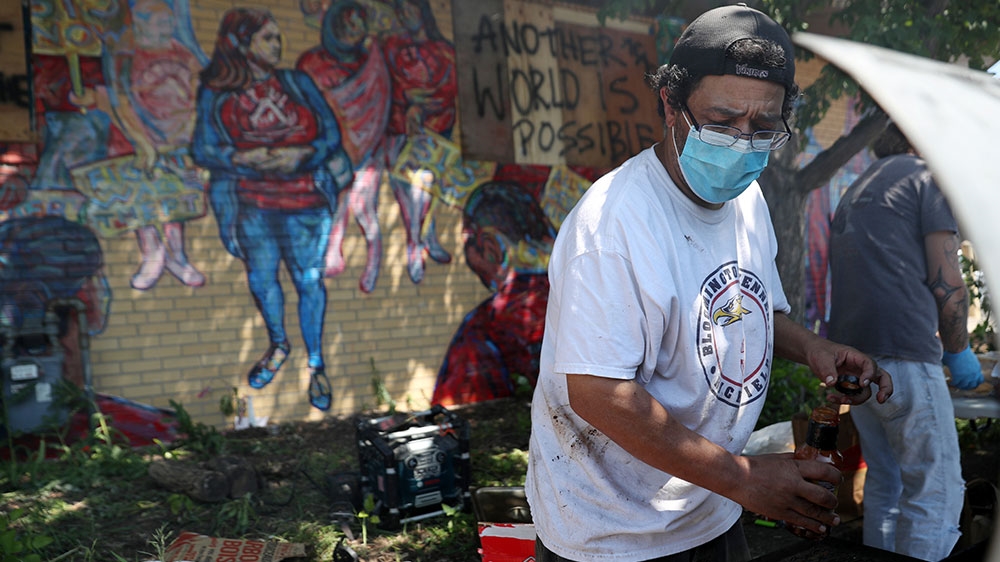
Minneapolis, Minnesota, US – A pop-up food pantry; a tagger who covers up profanity; an abandoned hotel that takes in homeless individuals and protesters. In between the news headlines that have thrust Minneapolis, Minnesota, into the United States national spotlight is a community that has come together to honour George Floyd by helping those in need.

Rows of tents flanked by piles of donated food, hygiene supplies, first-aid supplies and other goods line a field in Saint Paul, which neighbours Minneapolis, the city where Floyd was killed in late May.

More: 

The pop-up food pantry was started in the wake of the police killing of Floyd. The 46-year-old Black man died on May 25 after a white police officer knelt on his neck for nearly nine minutes as Floyd repeatedly pleaded, “I can’t breathe”, before going motionless.

The killing set off protests in Minneapolis and across the country, calling for justice for Floyd and an end to police brutality. As anger exploded, some of the protests turned violent, with fires, looting and vandalism. Some local businesses were hit. Others were already under strain from coronavirus lockdowns that had been in place for months.

“People are hurtin because of George[‘s] situation … And if George Floyd would have had justice from the beginning our stores would be up. If politicians, and lawmakers, and the legal world would take our lives seriously, this wouldn’t happen,” said Shay Webbie, a local comedian, who started the Saint Paul pop-up food pantry.

What started as one tent with two tables now covers an entire field with more than a half dozen tents and trailers. Similar initiatives can be seen across Saint Paul and Minneapolis. 

Hundreds of volunteers help with the Saint Paul food pantry – known on Facebook as ShayCares – and anyone in need can pick up supplies, no questions asked.

“It’s like watching your baby grow up and graduate,” said Webbie with tears in her eyes as she looked out over the field.

A woman distributes free food, essentials and water to the protesters at the makeshift memorial in honour of George Floyd in Minneapolis [Chandan Khanna/AFP] 

Kim Peter, 52, who moved into the neighbourhood when she was five years old, came with her sister to get supplies for their elderly mother, who is on a fixed income.

She told Al Jazeera that seeing how the community has come together made her feel “amazed”, “grateful”, and “humbled”.

“There’s so many words that can describe it,” she said as her sister pushed a shopping cart filled with toilet paper, eggs, butter, bread and sausage.

As incredible as the support has been, Peter knows it is going to take a lot more to get the community back on its feet. “A week from now, two weeks from now when the news is gone, we still have to live amongst this,” said Peter about the damage from last week.

Supporting local businesses

Other residents are focused on cleaning up and rebuilding the areas hardest hit. Clean-up crews have shown up in south Minneapolis neighbourhoods nearly every day since the protests began to collect rubbish and sweep up glass.

The Lake Street Council, an organisation that normally focuses on marketing Lake Street and supporting businesses, set up a donation service for businesses damaged by the protests. The fund has raised more than $4.9m as of Friday.

According to Allison Sharkey, who has spent the last six years as executive director of The Lake Street Council, the outpouring has been astounding. More than 57,000 donors have contributed. Sharkey told Al Jazeera that they did not have a goal in mind when they started the fundraiser, but “if we had, we maybe would have sought $50,000”.

When distributing the funds, the council said it will ensure that the money goes to locally-owned businesses, especially those run by owners of colour.

The council is asking itself: “How do we ensure that property stays in the hands of local entrepreneurs – of colour especially – rather than investors that are not from this community?” said Sharkey.

Minneapolis rebuilds

Community member Maurice Hull cooks up free food for people as they gather at a memorial for George Floyd that has been created at the place where he died in Minneapolis, Minnesota [Leah Millis/Reuters] 

Other residents have supported protesters by handing out water or offering their homes as places where protestors can charge their mobile phones or use the restroom.

A former hotel was converted into a shelter for the Minneapolis homeless population, whose members had nowhere to go when the curfew began and the police started clearing the streets.

“It feels good to see our community out here, but it’s horrible the circumstances in which we have gathered here today,” said Melissa Ferguson, a south Minneapolis native, on Sunday as she stood by the area where people were handing out food and supplies in south Minneapolis, at the intersection where Floyd was killed.

A local tagger, who goes by the name Simon, is using his artistic skills to help out. On Saturday, he used a can of spray paint to cover profanity painted on the side of a brewing company. He tagged “Floyd” while a fellow artist sprayed “George” onto another door.

He had started with a friend’s building and word spread to the brewery’s owner. “It turned out really good and I got a really good response from it, so I got invited out today to go walk around and try and do the same thing,” said Simon, who lives down the street. He views his work as a way to bring a more positive outlook to the situation.

Webbie, who started the food pantry pop-up, hopes the work she and others have started will continue long after the protests have ended and stores have reopened.

“It takes away some of the pain, but at the end of the night I still reflect on George Floyd,” said Webbie.

“Here’s the thing,” she added. “A lot of us are always about good. It just takes a situation like this for it to be seen.”


Source link

D.C.’s Mayor Fights for Control of Her City at Trump’s Front Door

WASHINGTON — After federal law enforcement agents and military troops lined up for days against protesters outside the White House, Mayor Muriel E. Bowser of Washington responded emphatically on Friday: She had city workers paint “Black Lives Matter” in giant yellow letters down a street she has maintained command of that is at the center of the confrontations.

The strong poke to President Trump within sight of his home underscored a larger power struggle between the two leaders over which one — the Democratic head of the District of Columbia or the president headquartered there — should decide who controls the streets that Mr. Trump has promised to dominate during protests over the killing last month of George Floyd in police custody in Minneapolis.

Ms. Bowser, a Washington native long steeped in city politics, again called on Mr. Trump on Friday to pull back all federal law enforcement officers and National Guard troops patrolling the city, including unidentified agents in riot gear, and said she would stop paying for the hotels for the Utah National Guard that she does not want in the city to begin with.

She renamed as Black Lives Matter Plaza the area in front of Lafayette Square where federal officials used chemical spray and smoke grenades on Monday to clear protesters ahead of Mr. Trump’s photo op at a historic church that faces the road that Ms. Bowser had painted. (The money for the paint job came out of the city’s mural program, city officials said.)

“We’re here peacefully as Americans on American streets,” Ms. Bowser said at the scene, standing near a sign reading, “Support D.C. Statehood.” “On D.C. streets.”

Mr. Trump, who has tried to appeal to his base by proclaiming himself a president of law and order, escalated the fight, calling Ms. Bowser “incompetent” on Twitter.

Ms. Bowser “who’s budget is totally out of control and is constantly coming back to us for ‘handouts,’ is now fighting with the National Guard, who saved her from great embarrassment,” Mr. Trump wrote. “If she doesn’t treat these men and women well, then we’ll bring in a different group of men and women!”

Ms. Bowser met this with her usual cool shrug. Asked about the president calling her incompetent, she said, “You know the thing about the pot and the kettle?”

Still, Trump officials appeared determined to make the standoff personal. Kenneth T. Cuccinelli II, the acting deputy secretary of the Department of Homeland Security, further belittled Ms. Bowser on Twitter by comparing her request to reduce the number of federal troops in Washington with the mentally ill wanting less medication.

While Mr. Trump has clashed with governors and mayors in recent months over his administration’s response to the coronavirus pandemic and deployment of the National Guard in their streets during nationwide protests of police killings, his face-off with Ms. Bowser pits the president in his current home, the international symbol of the United States, against the city in which it sits, one that lacks the self-governing authorities of other states and cities.

While the city’s mayors have long pushed for statehood — Washington has no voting representation in Congress, a fact denounced on its license plates — Ms. Bowser has been a particularly forceful voice in favor of rights and autonomy for the district as its population and federal tax contributions have swelled.

This week, as the mayor managed the federal takeover and huge protests in the city’s central business district in the middle of a pandemic, she had seen enough.

“Our approach is three-pronged,” John Falcicchio, her chief of staff, said in an interview. “We are going to say what we think is the right thing to happen, we are going to question their tactics, and we are going to show that we are actually in control.”

Mr. Trump and Attorney General William P. Barr have deployed the full arsenal of federal government law enforcement personnel, including officers from the Bureau of Prisons and Immigration and Customs Enforcement as well as Border Patrol agents.

This week, the Trump administration also floated using an obscure provision to take control of Ms. Bowser’s Metropolitan Police Department, but did not follow through.

The federal authorities — which also include officers from Homeland Security Investigations, the Secret Service, the Transportation Security Administration and the Federal Protective Service — are expected to maintain their presence through Saturday, when thousands of demonstrators plan to march to the White House.

Ms. Bowser, with the support of Speaker Nancy Pelosi, has accused the Trump administration of escalating tensions with demonstrators, including by positioning officers without identifying insignia face-to-face with protesters.

“These additional, unidentified units are operating outside of established chains of command,” Ms. Bowser wrote in a letter to Mr. Trump that her office released Friday. “This multiplicity of forces can breed dangerous confusion.”

The mayor also planned to write to governors who had deployed National Guard troops to Washington, asking them to call the units home.

Before Mr. Floyd’s killing, Ms. Bowser and Mr. Trump had engaged in cordial dialogue. The two had at least two phone calls in recent months to discuss coronavirus funding for Washington, according to a person familiar with the conversations, who said the two leaders got along during them.

After one of their calls, Mr. Trump announced on Twitter that Washington’s transit system would be receiving more than $876 million in federal funding, congratulating Ms. Bowser and calling it “a big boost.”

She responded with a tweet thanking the president for the call, but noted her administration would continue seeking an additional $775 million in stimulus funding “to make DC whole.”

But shortly after Mr. Trump lashed out at Ms. Bowser on Friday on Twitter, a lobbyist with close ties to the president announced the termination of a contract with the city government.

The lobbyist, Brian Ballard, a top fund-raiser for Mr. Trump’s re-election campaign, had entered into an agreement on May 15 to press Congress for additional coronavirus relief funding for Washington, according to a filing posted Friday.

While the District of Columbia is often treated like a state for the purposes of federal funding allocation, it was instead treated like a territory in the $2 trillion coronavirus stimulus bill signed by Mr. Trump in March. The classification meant Washington received only about $500 million, compared with a minimum of $1.25 billion allocated to each state, despite Washington’s being harder hit by the virus than most states. Its population of 705,000 is also larger than two states’.

Mr. Ballard’s firm had been pushing for Washington to retroactively receive the $750 million difference and to be treated like a state in any future coronavirus stimulus legislation, according to a person familiar with the effort.

“We are no longer in a position to deliver effective representation,” the firm wrote, “so we have respectfully withdrawn our engagement.”

The federal government has great control of the District of Columbia, an artifact of the Constitution that was updated in the 1970s with a federal law that gave the city partial autonomy, but allowed Congress to have vast powers over its laws and budget. Its National Guard is the only one out of the 54 states and territories that reports to the president.

Congress has invoked its will on the city several times over the years, blocking its needle exchange program at the height of the AIDS crisis, prohibiting the city from using its money to pay for abortions for poor women, pressing a charter school agenda on its education system and trying to block the city from requiring that most residents have health insurance. After Washington’s residents voted in 2014 to legalize the possession of marijuana — the same election that sent Ms. Bowser to the mayor’s office — Congress moved to nullify that.

During Ms. Bowser’s tenure, the city has continued along a rapid path of gentrification and has seen increases in crime and startling inequities in its school system, housing market and employment. The racial disparities in death rates between black and white residents are among the highest in the nation. Critics have accused Ms. Bowser of being too closely aligned with big developers; the city’s government, like the rest of the Democratic Party, is increasingly fractured between newer progressive members and those like Ms. Bowser who remain boosters of the business community.

And on Friday, the Washington chapter of Black Lives Matter tweeted that the mayor’s move to paint the mural in front of the White House was “a performative distraction from real policy changes.”

“We are still a city that is still deeply inequitable,” said Markus Batchelor, a candidate for the City Council who represents one of Washington’s poorest neighborhoods on its State Board of Education. “We invest more on the Police Department and corrections than on programs related to jobs, youth and mental health combined. So those are the things that really don’t translate in these public overtures of Black Lives Matter.”

Emily Badger contributed reporting.


Source link

75-year-old man pushed to ground by Buffalo police ‘comes from a peace tradition’

CLOSE

A 75-year-old man suffered a head injury and is in ‘stable but serious condition’ after he was shoved by police during a protest in Buffalo, New York.

Storyful

BUFFALO, N.Y. – Martin Gugino is not one to stand out in a crowd. 

The 75-year-old Amherst, New York, resident’s goal at rallies and protests is to ask questions, bring the community together and stand in quiet solidarity for peace, friends and his lawyer said Friday.

But he was thrust into the national spotlight Thursday night after he was pushed to the ground by a Buffalo police officer after peaceful protests at Buffalo City Hall. 

Videos from the incident showed Gugino approaching a line of police, and then an officer pushing him backward.

Gugino stumbled back and then fell to the ground, his head hitting the sidewalk. Blood pooled around the back of his head almost immediately. 

Bystanders who were at the scene said police called medical personnel, who showed up within minutes. 

June 5: Buffalo cops resign from unit in protest after two of their own are suspended for injuring 75-year-old

Photos: George Floyd’s life honored at memorial service in Minneapolis

“There was blood dripping out of (Gugino’s) ear,” said Jamie Quinn, 17, of Buffalo, who was there taking photos just after 8 p.m. Thursday, which is when the city’s curfew started.

Quinn was standing on the steps of City Hall right after the incident. Gugino’s fall appeared to have been an accident, he said, but Quinn was nevertheless disgusted by the actions of police in the moment. 

“I was simultaneously wanting to cry and trying not to vomit,” he said. 

Gugino is in serious but stable condition and is alert, according to the Erie County Medical Center.

“It is a tragedy,” said Terrence Bisson, who has known Gugino for about 10 years, referring to the incident Thursday. 

“(Gugino) comes from a peace tradition that meant it’s important to be witness to justice,” Bisson added. 

The two met each other through their work with Witness Against Torture, a group calling for the closure of Guantanamo Bay detention camp in Cuba, and through the Western New York Peace Center, a human-rights group.

Bisson last spoke to Gugino over Zoom on Monday night, and he said Gugino did not specifically mention going to the protests this week.

As of Friday evening, Bisson had not been able to speak to Gugino in the hospital.

Early Thursday morning, Gugino wrote on Twitter about his concerns with police curfews.

“Protests are exempt from curfews because Congress (and mayors) may make no laws that abridge the right of the people peaceably to assemble and complain to the government,” he wrote.

“The government should receive the complaint with thanks, not arrest the people or beat them.”

Buffalo Mayor Byron W. Brown released a statement Thursday evening about the incident, saying that he was “deeply disturbed” by the video.

The police chief, Byron Lockwood, ordered an internal investigation into the matter, and two officers were later suspended without pay.

Over 50 members of the Buffalo Police Department’s Emergency Response team resigned their special positions Friday in response to the suspensions, according to multiple news outlets.

“I hope to continue to build on the progress we have achieved as we work together to address racial injustice and inequity in the City of Buffalo. My thoughts are with the victim tonight,” Brown wrote in Thursday’s statement. 

His statements were echoed by Erie County Executive Mark Poloncarz in a briefing on Friday, who said the incident was “wholly avoidable.” 

“Buffalo is known as the city of good neighbors,” said Poloncarz. “Unfortunately, last night, it was not. What we saw last night in front of City Hall is not acceptable here; it is not acceptable anywhere.”

Erie County District Attorney John Flynn announced his office is looking into the incident to determine if criminal action is warranted, Poloncarz said. 

“We can only address racial injustice and eliminate police brutality when we are united in our efforts and do so under the law,” Poloncarz said.

Gugino’s goal is always “peace and justice,” and he is “very devoted to principle,” said Victoria Ross, executive director of the Western New York Peace Center. 

Gugino’s attorney, Kelly Zarcone, said in a statement Friday that her client has been a longtime peaceful protester, a human rights advocate and an “overall fan of the U.S. Constitution for many years.” 

“Mr. Gugino requests privacy for himself and his family as he recovers.  He appreciates all of the well wishes he has received and requests that any further protests continue to be peaceful,” the statement read. 

Follow Sarah Taddeo on Twitter: @sjtaddeo

Autoplay

Show Thumbnails

Show Captions

Read or Share this story: https://www.usatoday.com/story/news/nation/2020/06/05/martin-gugino-pushed-ground-buffalo-police-known-peaceful-man/3160820001/


Source link

Zuckerberg Says He’ll Review Policies That Allowed Trump’s Inflammatory Post

It turns out protests work. 

Facebook CEO Mark Zuckerberg announced Friday that the company will conduct a review of the policy he cited when allowing President Donald Trump’s violence-inciting post to remain up on the site. 

“We’re going to review our policies allowing discussion and threats of state use of force to see if there are any amendments we should adopt,” Zuckerberg wrote in a lengthy statement days after his employees staged a virtual walkout in protest of his response to Trump’s post. 

The outrage at Zuckerberg started after Trump published an inflammatory post on the platform about anti-racism protests, warning that “when the looting starts, the shooting starts.” The phrase originated with a combative Miami police chief threatening the young, largely Black, people involved in the civil rights movement in the 1960s.

Facing calls to take the post down or put a warning on it, as Twitter did, Zuckerberg initially responded to upset civil rights leaders and his own employees by saying the post did not violate any of Facebook’s policies. In a leaked call with around 25,000 employees this week, he argued that the language Trump used “has no history of being read as a dog whistle for vigilante supporters to take justice into their own hands.” He made the same argument in a statement earlier that week. 

The statement Zuckerberg issued Friday signals he’s taken some of that criticism to heart. He said Facebook will consider new rules for two specific types of posts.

The first category is posts of excessive use of police or state force. “Given the sensitive history in the US, this deserves special consideration,” he wrote. He added that in cases of ongoing unrest or conflict, “We already have precedents for imposing greater restrictions during emergencies and when countries are in ongoing states of conflict, so there may be additional policies or integrity measures to consider around discussion or threats of state use of force when a country is in this state.”

Zuckerberg also revealed that Facebook will review its policies on monitoring posts that could create confusion about voting or suppress voter turnout. He cited a hypothetical newspaper article warning people about COVID-19 risk if they go to the polls as an example of the type of post the company would monitor.

He also hinted that Facebook may mimic how Twitter handles posts that invite violence. Twitter covered Trump’s recent inflammatory tweet with a message that it was “glorifying violence” and required users to click through to remove the warning to see the post. While Zuckerberg said he likes that Facebook’s policy is to fully remove any posts that violate the guidelines, he’s open to hearing new ideas.

“In general, I worry that this approach has a risk of leading us to editorialize on content we don’t like even if it doesn’t violate our policies,” he wrote, “so I think we need to proceed very carefully.”


Source by [author_name]

Racism, deaths making First Nations sick

Institutional racism and systemic bias against indigenous Queenslanders is making them sick, a leading health body says.

Thousands of people plan to march through the streets of Brisbane on Saturday, calling for an end to the over-representation of First Nations people dying in custody, and racism towards black people.

It comes amid global protests in support of the Black Lives Matter movement and public outrage following the death of African American man George Floyd while being arrested in Minneapolis.

The Queensland Aboriginal and Islander Health Council says the circumstances surrounding Mr Floyd’s death are all too familiar to minority communities in Australia.

At least 432 Aboriginal and Torres Strait Islander people have died in police custody in Australia since the Royal Commission into Aboriginal Deaths in Custody report in 1991.

The QAIHC aims to eliminate health disparities experienced by Aboriginal and Torres Strait Islander peoples.

It says the impact of institutional racism and systemic bias experienced by First Nations people is having a direct impact on their wellbeing.

“Behind every life taken is a broken-down family and a disrupted community clouded in anger, mistrust and confusion,” it said in a statement.

“The long-term health impacts after a death in custody or incident of police brutality are endless.”

They include poor mental health, social and emotional distress, injury, harmful alcohol and substance use, self-harm, suicide ideation and attempts, and exacerbated physical health conditions due to disengagement with the health system, the QAIHC says.

“The death of one can very quickly become the death of many,” it added.

Scott McDougall, Queensland’s Human Rights Commissioner, urged Australian governments to actively work with Aboriginal and Torres Strait Islander communities in a “power-sharing” way.

“There are scandalously disproportionate numbers of Aboriginal children, women and men detained within a criminal justice system which habitually repeats patterns of policing established under past policies of dispossession and protection,” he said.

Police and the Queensland premier would prefer people show their support for an end to Aboriginal deaths in custody and systemic racism towards black people online.

However, they will not stand in their way.

The Facebook event page tells people to “wear a face mask and other PPE, use hand sanitiser, stay home if you are sick or at a high-risk status for infection”.

The march is due to begin at King George Square at 1pm and wind through the city to Musgrave Park.

Source by [author_name]

Jammu group questions new J&K Class-IV recruitment rules

0

By: Express News Service | Jammu |

Published: June 6, 2020 6:26:41 am


Sharma on Friday said that according to the rules, any person can apply in any district of J&K, and given that “we seriously need to consider that Kashmiris can apply in any district of Jammu’’.

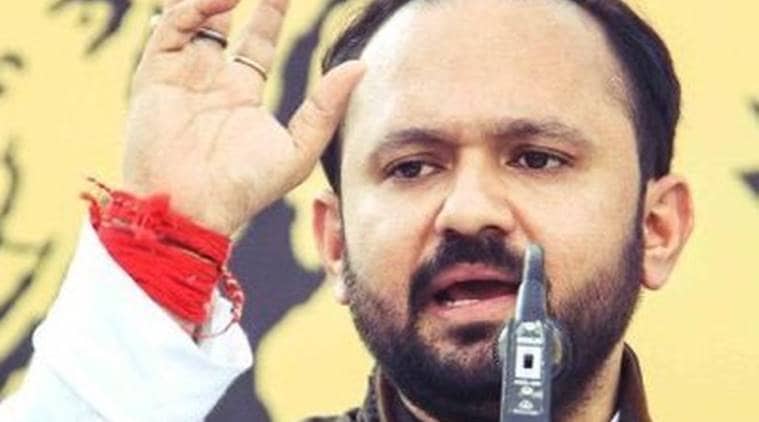
A day after he welcomed the new rules for recruitment of Class-IV employees in Jammu and Kashmir as “reasonable classification”, Ankur Sharma, chairman of Ikkjutt Jammu, which claims to fight against purported attempts by Kashmiris to change Jammu’s demography, on Friday criticised the same rules, saying that these will lead to “waves of Kashmiri settlements in districts of Jammu’’, who will “invade Jammu demographically’’.

Ikkjutt Jammu is against even settlement of nomadic Gujjars and Bakarwals in plains of Jammu division, calling it “land jihad by separatist jihadi elements”.

On Thursday, the J&K administration had notified rules providing for a common written test across the Union Territory for Class-IV posts arising at even district and divisional levels. Earlier, recruitment to Class-IV district- and divisional-level vacancies was made from among candidates from respective districts or divisions.

Sharma on Friday said that according to the rules, any person can apply in any district of J&K, and given that “we seriously need to consider that Kashmiris can apply in any district of Jammu’’. He said, “They (candidates from Kashmir) can get a job, buy property, get a house on rent, settle and live peacefully in any district of Jammu. Many of them even after encroaching forests and state lands in Jammu province are living peacefully.”

But, he asked, “can candidates from Jammu do the same and live peacefully in any district of Kashmir?’’

Sharma said, “Given the fact that De Facto Islamic State is calling shots in J&K, out of total number of posts advertised, what percentage of it do we think will go to Kashmir vis-a-vis Jammu: 70:30, 80:20, or 90:10? Even if it is 70:30, waves of Kashmiri settlements in districts of Jammu will invade Jammu demographically.”

📣 The Indian Express is now on Telegram. Click here to join our channel (@indianexpress) and stay updated with the latest headlines

For all the latest Jammu News, download Indian Express App.

© The Indian Express (P) Ltd

Source link

In CA: Hoses to septic tanks could work on rioters, longtime cop posts

CLOSE

It’s Arlene Martínez with news to take you into the weekend. 

But first, check out what to wear, what your rights are, how to treat pepper spray and tear gas and other tips before you head out to protest. 

In California brings you top stories and commentary from across the USA TODAY Network and beyond. Sign up for free delivery right to your inbox. 

Newsom calls for policing to get into the 21st century

Gov. Gavin Newsom on Friday ordered the state police training program to stop teaching officers how to use a long-controversial hold designed to block the flow of blood to the brain. The carotid restraint, aka sleeper hold or blood choke, is named because it applies pressure to the carotid arteries that supply blood to the brain.

It marked his first action on police use of force following nearly two weeks of protests across the country over the death of George Floyd in Minneapolis. Floyd died on Memorial Day after a police officer put his knee on Floyd’s neck for nearly nine minutes as Floyd repeatedly said, “I can’t breathe.” The officer continued applying the pressure even after Floyd stopped moving altogether. 

Since then, there’s been a renewed push for law enforcement to review their use-of-force policies, along with calls to defund or dramatically decrease spending on police.

San Diego police officers used the carotid hold 574 times between 2013 and 2018, and as late as last year staunchly defended the practice, saying it saved lives. On Monday, the department banned its use, effective immediately.  So did the San Diego County Sheriff’s Department. 

Newsom said departments are using methods that “put people’s lives at risk. That has no place any longer in 21st century practices and policing.”

Temecula Mayor James Stewart resigns after sending an email in which he stated he didn’t “believe there’s ever been a good person of color killed by a police officer” in Riverside County. Stewart says he isn’t sure how “good” got added to his voice-composed message. 

Shasta County Sheriff Eric Magrini said he didn’t invite militiamembers to attend a protest earlier this week in Redding, but he knew they were coming. 

The mayor of San Luis Obispo, where police used tear gas to disperse protesters, has asked for a wide-reaching explanation into the department’s use-of-force policies. The council set aside $160,000 this week for anti-racism efforts. (Opinion)

A group of doctors say unequivocally, coronavirus cases will rise as a result of the protests. 

Traveling considerations and watch to learn

So you wanna road trip? One couple who traveled from the Ojai Valley to Kansas City, Missouri, found few “pleasures of the open road.” 

And while we’re talking travel, some states require quarantining when you cross into their territory. Find out which state requires what.

20 movies and shows towatch in a pandemiclearn about racism in America. 

Phase 3: Get ready to work out, drink and camp

Schools, day camps, bars, gyms, campgrounds and professional sports can start reopening in counties that have met certain thresholds related to number of cases, tracing and preparedness starting next Friday. 

Mark Ghaly, the state’s top health official, said the state will release guidance to help the businesses reopen safely and minimize the risk of spreading the coronavirus.

The guidelines will also include rules on hotels, casinos, museums, zoos and aquariums and the resumption of music, film and television production. Nail salons are not yet cleared to reopen.

What’s happening in our prisons and courts 

An explosion of coronavirus cases was recorded at the Chuckawalla Valley State Prison in Blythe, surging from 148 on May 26, to 794 three days later. 

Nationwide, 40,000 people incarcerated at prisons have tested positive. Here’s a state-by-state look at where those cases are located. 

Monterey County moves toresume jury trials. 

What else we’re talking about

Oil companies like California Resources Corp. toil with collapse or bankruptcy, but that won’t stop its top executives from seeing big paydays.

Can the Apple Watch or Fitbit detect or predict the coronavirus in a wearer? New research, including out of the Stanford Healthcare Innovation Lab, aims to find out.

Amazon cuts $2 per hour hazard pay; Target will keep its for another month.

J.C. Penney announces which of its stores will permanently close. Nine California locations are on the list.

If racism exists, he’s ‘never’ seen it, Simi Valley cop-turned-elected official says

An elected official and 30-year LAPD veteran took to Facebook earlier this week to share a suggestion: “Wanna stop the riots? Mobilize the septic tank trucks, put a pressure cannon on em… hose em down…. the end.”

Simi Valley City Council member Mike Judge captioned the post with, “This is brilliant, it will also enforce the mask rule!”

On Thursday night, as petitions calling for his resignation neared 6,000 signatures, Judge apologized for “any offense my Insensitivity caused.” He said he spoke with an African American friend who told him those who don’t know him wouldn’t realize it was a joke.

In initially defending the post, Judge said he’d “never” seen an instance of racism. He then (wrongly) explained that a young, black activist who invited him to walk during a “peaceful protest” probably got the perception there was racism because of the role Simi Valley played in the 1992 trial of Rodney King. 

The trial of the four officers caught on videotape beating King was moved to Simi Valley over concerns publicity over the case would bias jurors against the officers; legal experts at the time argued Simi’s demographics would in turn bias jurors in favor of the officers.

Mikiiya Foster, a black teenager who is organizing a protest on Saturday, shot down Judge’s explanation. “As a white male he openly discredits a black woman’s experience with racism instead of coming from a place of understanding and empathy,” she said. 

In California is a roundup of news from across USA TODAY Network newsrooms. Also contributing: The Marshall Project, Los Angeles Times, Associated Press, San Diego Union-Tribune, San Luis Obispo Tribune. 

Read or Share this story: https://www.usatoday.com/story/news/nation/2020/06/05/california-protests-use-force-militia-covid-19-fri-news/3155790001/


Source link