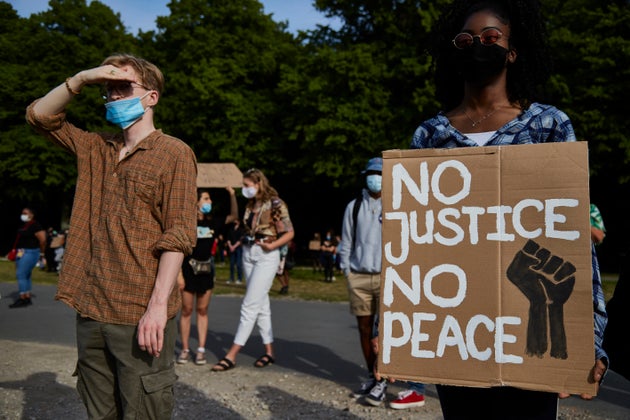
Isabella: What also may be different this time is that the power of this movement has transcended the American conversation to become a global conversation. In Australia, which is still feeling the consequences of a colonial past that dehumanized Indigenous people, a protest on Tuesday drew hundreds of people. If you’re angry about the U.S., many Indigenous Australians have said, you can’t ignore the problems at home. Calls for a treaty have renewed. “Be angry for us. Stand with us. Protest with us. Because we need you. I don’t want to live in a country where names become numbers,†said Nakkiah Lui, a writer and playwright (we talked to her in 2017 about some of these issues.)
Damien: Seeing the huge protests in Amsterdam and other European cities has been really striking. In New Zealand, too, there was quite a powerful Haka for Black Lives Matter as well, which I saw on Twitter. Social media is so dominant with all of this. It’s spreading the movement but I worry that it’s also contributing to divisions as each side shares only what confirms their pre-existing beliefs — and there’s a lot of misinformation around as well. The BBC had a pretty good rundown of misleading footage and conspiracy theories to avoid. What do you make of the role of social media?
Isabella: It’s complicated because social media has also brought out some frustrations about the most constructive actions to move forward. People have been encouraged to protest, show solidarity and share resources online. But outside of that, what’s next? Where is in most need of funding? How can policing be changed?
A common phrase I see is that silence is complicity, and it seems like more people than ever declaring their support. We had Black Out Tuesday this week on Instagram, where many people posted a black square with the hashtag #blacklivesmatter. But others then pointed out that if you include that hashtag, it changes the conversation that goes along with it, ultimately drowning out black voices and useful educational context — and that while a black square is a start, change has to be more than a trend.
That point has also been extended to brands and celebrities who have jumped in to express solidarity — only to have former black employees and colleagues point out their hypocrisy. What’s clear is that the conversation is now moving beyond social media to what’s concrete — listening, lobbying, donating, voting. James Baldwin said it plainly: “Not everything that is faced can be changed. But nothing can be changed until it is faced.â€
Damien: I was pretty impressed by what I saw in Newark, New Jersey. It’s the first city I covered as a reporter for The Times, and when I was there about 15 years ago, police brutality was a major issue and the anger at the government was intense. They had a bout of violent unrest there in 1967 after a black cabdriver was beaten up by the police. But this time, the mayor, Ras Baraka, and the chief of police, who is white, walked with protesters and after years of improvements with training, community policing and accountability for problematic police officers, there was no violence, no looting, just peaceful shared outrage and marching, at least for now.
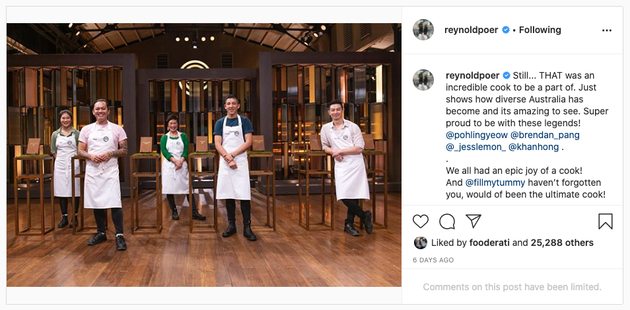
He also hasn’t shared a post on his profile since six days ago, though has continued sharing throughout the week on Instagram stories. Â
Last week Reynold apologised after a series of homophobic comments he made online six years ago resurfaced.
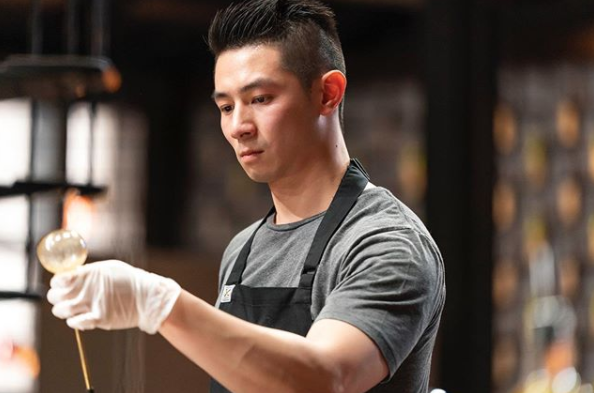
Channel 10 ‘MasterChef Australia: Black To Win’ contestant Reynold Poernomo
Instagram/reynoldpoer‘MasterChef Australia: Back To Win’s Reynold Poernomo has limited comments on Instagram
The posts in question, appeared on bodybuilding.com forums in 2014, reports Daily Mail Australia. Within these posts, Reynold, who had not yet appeared on ‘MasterChef’ in 2015, suggested gay people be “captured and put on an islandâ€.Â
“I would like to offer my sincere and deepest apologies for the comments that I made in 2014. I am ashamed of these comments and I regret them immensely,†Reynold said in a statement issued to HuffPost Australia by Channel 10.Â
“At the time these comments were made, I was a very immature, close-minded and insular 20-year-old. I have grown and matured a lot in the last six years. I am not the person I was back then.
“I have many friends and colleagues that are part of the LGBTIQ+ community. I wholeheartedly support them and care deeply for them. I am truly sorry and apologise for any offence or hurt they caused.â€
Channel 10 ‘MasterChef Australia: Back To Win’ contestant Reynold Poernomo
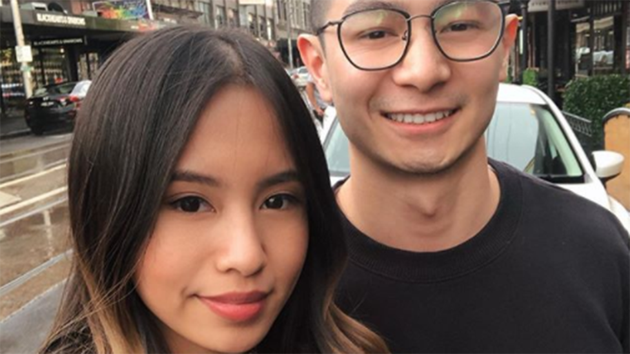
Instagram/cheliadinata‘MasterChef Australia: Back To Win’ contestant Reynold Poernomo and girlfriend Chelia Dinata
In screenshots published by Daily Mail, it appears Reynold commented under a thread titled, ‘First gay couple featured on the Disney Channel. Do you agree with them?’.Â
“I wish the world made a united decision where they will capture all gay people and put them on a remote island full of gays, that way straight ppl (people) will be happy and the freaks can go on and f** themselves,†he wrote.Â
He also commented under another thread titled, ‘Is homosexuality a mental illness?’. He wrote, “Yes end of threadâ€.Â
Reynold became a household name on Australian TV and was dubbed the ‘Dessert King’ after appearing in season seven of ‘MasterChef Australia’ in 2015. This year he has returned to the series for another shot at victory.
President Rodrigo Duterte renewed on Friday a threat to kill drug dealers after the Philippines seized 756kg (1,667lbs) of crystal methamphetamine just a day after the United Nations found “near impunity” in the drug war that has defined his administration.
The drugs, with a market value that police estimated at 5.1 billion pesos ($102m), was one of the biggest seizures in recent years, and Duterte said it was proof that the Philippines had become a transhipment point for illegal drugs.
More:
“If you destroy my country distributing 5.1 billion pesos worth of shabu … I will kill you,” Duterte said in recorded address, referring to the drugs.
The “war on drugs” has been a cornerstone of Duterte’s presidency since he came to power in the Philippines in 2016, despite criticism from opponents and human rights groups of widespread abuses.Â
The UN said in a report on Thursday that tens of thousands of people may have been killed amid “near impunity” for police and incitement to violence by top officials.
An undertaker removes the body of a suspected victim of the Philippines’ war on drugs from a street in Pasay city, south of Manila, in March 2019 [Francis R. Malasig/EPA]
Government data puts the number of suspected drug dealers and users killed in anti-narcotics operations since July 2016 at 5,600.
‘Abject failure’
Rights groups have accused the police of the summary execution of suspects. Police have denied the allegations, saying they have acted in self defence when suspects resisted arrest.
Duterte’s office dismissed the UN report as “rehashed claims” and the accusation of impunity as unfounded.
Phil Robertson, deputy director of Human Rights Watch’s Asia division, said the UN findings highlighted the “almost total” lack of accountability and the “abject failure” of justice in the country.
“With President Duterte continuing to urge killing drug users, so-called leftists and even violators of COVID-19 quarantine or curfew orders, there is little likelihood that national mechanisms will hold anyone responsible for the carnage of the drug war that has killed thousands of Filipinos,” Robertson said in a statement following the UN report’s release.Â
Duterte did not say where the drugs were believed to have come from, but said the Philippines was a transhipment centre for Mexican drug cartels.
Duterte also hurled insults at human rights groups for criticising his anti-narcotics campaign.
“As my father explained during his lifetime, a riot is the language of the unheard,†he tweeted.Â
It didn’t take long for white people to jump in and to try to correct him.
“He acknowledged that, but that’s not how he acted and that’s certainly not how he succeeded,†one man said.
“Your father was a brilliant man, but he wouldn’t condone the riots. He thought there was a better way to deal with the issues…†another argued.Â
“This is disrespectful to the ideas that your father lived for,†one person told King.Â
Reading the Twitter thread the next day, Evetty Satterfield, a Knox County, Tennessee school board member and a Black woman, was stunned.Â
“Being so filled with privilege you feel 100% comfortable with correcting MLK III is the epitome of white audacity,†she told HuffPost. “I cannot even fathom that kind of privilege.â€
“Our history is whitewashed,†she added. “MLK was one of the most hated men in America and was assassinated. Period.â€
Over the weekend, she shared her disbelief in a post that many on Facebook shared.Â
″[White people] were taught one Black history lesson and know more than what MLK children experienced first hand,†she wrote.Â
What Satterfield saw is nothing new: In times of great political strife, people reach for the civil rights leader’s words for consolation, solace, and as a balm to widespread societal pain.
But they also use them to quiet minority voices pushing for change. Just last January, King’s aforementioned son took umbrage at Vice President Mike Pence’s use of the slain icon’s words to make the case for a wall along the U.S.-Mexico border. (“Martin Luther King Jr. was a bridge builder, not a wall builder,†the younger King said.)
In the wake of protests following Floyd’s death, the misuse of MLK’s words has reached a fever pitch.
The White House is still using them. President Donald Trump’s press secretary, Kayleigh McEnany, on Monday played a video of “police protecting protesters and protesters embracing police†before ending the press briefing with a King quote. (It’s “beautiful to watch,†she said of the clip).
It’s time for a national moratorium on spewing MLK quotes. Who’s with me? https://t.co/yeRDeZ1W9P
On Instagram and Facebook, a meme frequently shared by those seeking to depreciate the current protests juxtaposes a photo of King walking arm-in-arm with other civil rights leaders during the 1965 Selma-to-Montgomery marches in Alabama with a photo of someone smashing a car window.
“This is a protest,†the overlaid text declares, “This is a riot.â€
Seeing that split-screen image over the weekend, musician Kennedy Rice was moved to share a split-screen of his own. It juxtaposed a similar image of King marching with a photo taken during “Bloody Sunday,â€Â a shocking moment during those Alabama marches when state troopers knocked protesters to the ground, beat them with nightsticks and unleashed dogs on them.
“There is clearly no ‘right way’ to protest,’ Rice, who performs under the name Anywhere Welcomes You, said in his post. “The oppressor doesn’t get to dictate how we get our voices heard.â€Â
Rice told HuffPost that those who use King’s message as a way to quell the current wave of protests “don’t know much†about King “at all.â€Â
“That or they have only been exposed to the sterilized version of his mission, words and methods,†he said. King, “by the admission of his own daughter, Bernice King, was ‘One of the most hated men in America’ during his lifetime.’â€
Though it’s not comparable with the intense animosity King generated in his time, Rice said he looks at the attacks directed at ex-NFL quarterback Colin Kaepernick for taking a knee during the National Anthem to protest police brutality and wonders: What kind of protest would be amenable to a certain segment of white America?
Bettmann via Getty ImagesMartin Luther King Jr. with his wife, Coretta, during the Selma-to-Montgomery marches in Alabama in 1965.
King preached a message of non-violence but he, like many other protesters of the era, employed tactics that Black Lives Matters protesters are heavily criticized for today: blocking roadways, for instance. King led the march that occupied the full width of the Edmund Pettus Bridge in Selma.Â
“For the people using Dr. King’s words against this movement, I’d tell them to educate themselves on Dr. King’s life, and not just the pretty ‘feel good’ bits,†Rice said.
The less “feel good bits†for white Americans uncomfortable with this current wave of protests include King’s letter from a Birmingham jail. At one point, he revealed his disenchantment with white moderates:Â
First, I must confess that over the past few years I have been gravely disappointed with the white moderate. I have almost reached the regrettable conclusion that the Negro’s great stumbling block in his stride toward freedom is not the White Citizen’s Counciler or the Ku Klux Klanner, but the white moderate, who is more devoted to “order†than to justice; who prefers a negative peace which is the absence of tension to a positive peace which is the presence of justice; who constantly says: ‘I agree with you in the goal you seek, but I cannot agree with your methods of direct action’; who paternalistically believes he can set the timetable for another man’s freedom; who lives by a mythical concept of time and who constantly advises the Negro to wait for a ‘more convenient season.’ Shallow understanding from people of good will is more frustrating than absolute misunderstanding from people of ill will. Lukewarm acceptance is much more bewildering than outright rejection.
King peacefully protested, yes, but he also pointed his finger at the white majority and asked them to take up the fight, not discourage it.Â
“Plus,†Rice added, “Despite his peaceful methods, he understood riots and unrest, famously stating that ‘a riot is the language of the unheard’ in his 1967 speech at Stanford University. It’s sadly still relevant today.â€Â
LaNeysha Campbell, a podcaster and entertainment writer, said she hopes those who post King quotes promoting peaceful demonstrations ask themselves where they would have stood in relation to him in 1965.Â
“The reality is, what Dr. King believed in ― non-violence and peaceful protesting ― was also considered to be radical at the time,†she said. “I think some who post his quotes are sugarcoating and misrepresenting the true intention of Dr. King’s message to silence protesters who they deem are being ‘too radical.’â€Â
Indeed, as many have mentioned, though he wasn’t perceived as nearly as radical as Malcolm X, King was still loathed by the powers that be and the majority of Americans in the 1960s. At the time of his death in 1968, nearly a third of Americans said he brought his assassination onto himself.Â
You should be saying, ‘Damn, why are you all still having to fight for anything 60 years after that?’ Of course you should be angry.Azie Dungey, a writer for “Unbreakable Kimmy Schmidt†and creator of the web series “Ask A Slave”
Azie Dungey, a writer for “Unbreakable Kimmy Schmidt†and creator of the web series “Ask A Slave,†said for most people, a deeper dive into the history of King and times he lived in is called for. The curriculum most U.S. students are taught for one month every year ― February, Black History Month ― isn’t going to cut it.Â
The civil rights movement occurred only a few decades after “Red Summer,†she noted, a period during which race riots targeting Blacks exploded in a number of cities in both the North and South. White terrorism across the country, including riots and lynchings, was widespread.
In Chicago in 1919, for instance, white mobs attacked and set fire to the Black community over a seven-day period, leaving an estimated 1,000 Blacks homeless. The majority of the 38 people reported killed were Blacks. The New York Times reported that in some cases, white officers rode with white gangs to shield them from arrest. Other officers failed to collect evidence from the scene, to protect the white assailants.
In 1921, white mobs over a two-day period rampaged through Black neighborhoods in Tulsa, Oklahoma, devastating what was then one of the most affluent Black communities in the country. Reports at the time put the death toll at 39; a 2001 state commission said it could have been as high as 300 ― with again, Blacks being the majority of those killed.
By the time King raised his voice to challenge systematic racism, he understood “that if we gave the white majority even the tiniest reason to attack us, especially in the South where the Klan was your employer, your white neighbor, the judge, jury and police, we would not live through the level of retaliation they would be able to inflict on us without impunity,†Dungey said.Â
Pierre Crom via Getty ImagesThe unrest in the U.S. following the death of George Floyd at the hands of Minneapolis police officers has spurred solidarity protests in Europe. Here, demonstrators gathered in The Hague in Holland for a rally against racism.
King’s fight was different from the one being fought in 2020, she added. He and his peers were fighting to integrate white spaces. Nonviolent resistance was a highly strategic move. Knowing what he knew of U.S. history, he knew there would be backlash to his protest movements. (Richard Nixon, highly strategic in his own right, went on to ride such backlashes to both the civil rights movement and anti-Vietnam protests to his 1968 presidential victory.) Â
In the ’60s, “we wore our Sunday best, held hands, sang Christian songs, and did not fight back also because we were still proving we were as human as a white person,†Dungey said. “We should never have had to prove that. But again, this was a strategy.â€
That’s still the strategy, by and large. Most in today’s civil rights movement have assembled peacefully to stand against police violence ― after Trayvon Martin, after Eric Garner, after Tamir Rice.Â
But given the regularity of these deaths, many Black Americans have found it increasingly frustrating to have their protests fall on deaf ears. And to have a white person post a choice quote to tone-police Black protesters feels like an intense form of gaslighting, Dungey said.Â
If you’re largely unaffected by police violence, what’s happening now may feel like a “niche political issue.â€Â For Black Americans, this is their lives.Â
“Look at photos of Black people being beaten, hosed, and bitten by dogs in the 1960s†during their marches. “How can you tell people now, ‘Yeah, do what they did!’ right now?†Dungey said. “You should be saying, “Damn, why are you all still having to fight for anything 60 years after that? Of course you should be angry.â€
By the age of 11, Cameron Welch had memorised the list of warnings his mum had given to him through the years whenever he was walking out the door: Don’t put your hands in your pockets. Don’t put your hoodie on. Don’t be outside without a shirt on. Check in with your people, even if you’re down the street.
A week ago, the 18-year-old from Houston shared the list in a powerful TikTok video that now has over 10.4 million views. “Jus some unwritten rules my mom makes me follow as a young black man#blacklivesmatter,†Welch wrote in the caption.
The checklist Welch recites is extensive, covering everything from how to behave in a store so a shop clerk won’t accuse you of stealing to clothes you shouldn’t wear while driving if you don’t want to be pulled over by the police:
– Don’t put your hands in your pockets.
– Don’t put your hoodie on.
– Don’t be outside without a shirt on.
– Check in with your people, even if you’re down the street.
– Don’t be out too late.
– Don’t touch anything you’re not buying.
– Never leave the store without a receipt or a bag, even if it’s just a pack of gum.
– Never make it look like there’s an altercation between you and someone else.
– Never leave the house without your ID.
– Don’t drive with a wifebeater on.
– Don’t drive with a du-rag on.
– Don’t go out in public with a wifebeater or a du-rag.
– Don’t ride with the music too loud.
– Don’t stare at a Caucasian woman.
– If a cop stops you randomly and starts questioning you, don’t talk back, just compromise.
– If you ever get pulled over, put your hands on the dashboard and ask if you can get your license and registration out.
Welch said that hearing about George Floyd’s death at the hands of Minneapolis police last week pushed him to speak out and share what it’s like to live with such a heightened awareness of the police.
“In this moment in our country, it was necessary for me to use my voice, so I put out the video,†he told HuffPost. “I wanted people to hear and understand the real truth of a Black man’s daily experience.â€
In the comments under the TikTok post, many Black and Latino teens said they’d memorised similar checklists from years of being lectured by their parents.
Parents raising Black children commented, too.
“Saving this video for my future son,†one TikTok user told Welch.
“His future shouldn’t be like this,†Welch wrote back.
In another recent video, Welch talks about how his friends don’t say “I’ll see you later†after hanging out at each other’s houses and heading home. Instead, they say, “Stay safe.â€
“Every Black man has that feeling of, ’Am I gonna come home today?†he says in the clip.
Welch said he hopes the viral videos open more people’s eyes to the unfair reality of everyday life for so many Black Americans.
“I want people to see that we need change and that no one should have to live like this,†he said.
By: Lifestyle Desk | New Delhi |
Published: June 5, 2020 10:00:35 am
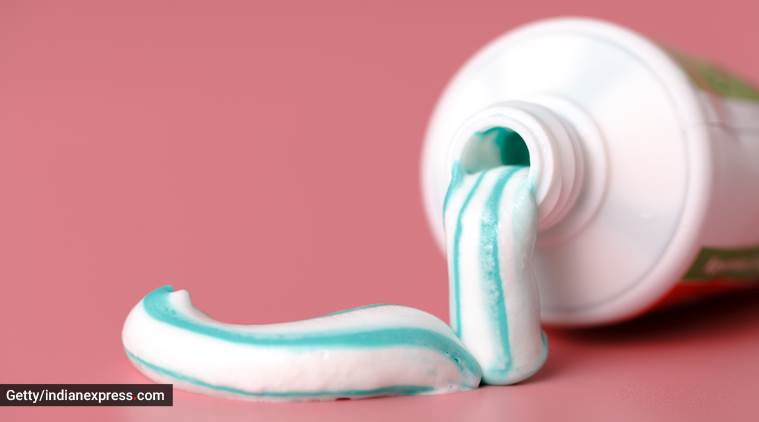
Toothpaste can help you in many ways; find out. (Source: Getty/Thinkstock)
We have always associated toothpaste with cleaning of teeth and dental and oral hygiene. Sometimes, some people link it to skincare, too, when they advise you to apply some on a particularly painful and red pimple. But, there are many other things that a toothpaste can do that you may not know about. There are some everyday hacks that you ought to know about, to make your life simpler. Here, we share some of them; read on.
* Sometimes, kids draw on the walls. And as shocked as you may be, it is a natural tendency for many kids. They find whatever they can — a pen, a crayon, a colour pencil — and begin to doodle on the walls, which become their canvas. Once they are done, just rub a little bit of toothpaste on the drawings to clean up the mess.
* Those who wear nail paints will know that the remover dries up in no time. So, what do you do when you do not have a nail polish remover and want to get rid of the chipping paint? Just mix toothpaste, some water and lemon juice to make an effective remover.
* Instead of looking for different ways to clean your bathroom, just dab a little bit of toothpaste to make the sink look sparkly clean. It is believed to be capable of removing any and all kinds of soap residue, and fight odours, too.
* Many people also get irritated when they see water marks and coffee rings on table tops. But, removing these marks is easier that you thought. You can do it with the help of a little bit of toothpaste and some water. Wipe it clean, and you will notice the difference.
* Say you have stained the carpet by spilling some wine or coffee over it. Do not panic. Nothing is going to happen to the rug, as long as you have some toothpaste at home. Just rub some using a sponge and consider the stain gone.
* Toothpaste can also be considered when you are looking to remove some scratches from glass surfaces, especially those on watches.
* It is also considered to be extremely helpful for when you have stained your white shirt with ink, and are looking for a quick remedy. Rubbing a bit of toothpaste on the ink stain is just what you have to do when washing the shirt.
On 3 June, the Commission proposed two amendments to the 2020 budget. The Commission is proposing to make €11.5 billion for crisis repair and recovery available already in 2020. Once available, the funding help the regions most in need, support businesses and those in need outside EU borders. This follows up on the major recovery plan that the Commission put forward last week, consisting of a new recovery instrument, Next Generation EU, embedded within a revamped long-term EU budget. As part of the plan, the Commission has proposed to raise €750bn on the markets and channel them to the EU recovery.
The Commission is also proposing to top up support for refugees and host communities in response to the Syria crisis by a total of €585 million.
€100m of EU assistance to Jordan and Lebanon will target areas such as access to education, support to livelihoods and provision of health, sanitation, waste services and social protection to host communities and refugees. €485m will support refugees in Turkey in 2020 and continue the EU’s two flagship humanitarian programmes, which provide monthly financial assistance to some 1.7 million refugees and help over 600,000 refugee children regularly attend school.
themovementink / InstagramCloth masks that read “Stop killing Black people” and were intended to protect demonstrators from COVID-19 were seized by law enforcement.
WASHINGTON ― Law enforcement agents have seized hundreds of cloth masks that read “Stop killing Black people†and “Defund police†that a Black Lives Matter-affiliated organisation sent to cities around the country to protect demonstrators against the spread of COVID-19, a disease that has had a disparate impact on Black communities.
The Movement for Black Lives (M4BL) spent tens of thousands of dollars on the masks they had planned to send all over the country. The first four boxes, each containing 500 masks, were mailed from Oakland, California, and were destined for Washington, St. Louis, New York City and Minneapolis, where on May 25 a white police officer killed George Floyd, a 46-year-old handcuffed Black man, setting off a wave of protests across the country.
But the items never left the state. The US Postal Service tracking numbers for the packages indicate they were “Seized by Law Enforcement†and urge the mailer to “contact the U.S. Postal Inspection Service for further information.â€
The US Postal Inspection Service did not immediately respond to HuffPost’s request for comment.
It’s not entirely clear what law enforcement entity seized the masks or why. But the Justice Department, led by Attorney General William Barr, has taken an aggressive posture against demonstrations and on Thursday expressed concern about “extremist agitators†who are “hijacking the protests to pursue their own separate and violent agenda.â€
The Movement for Black Lives is a group of more than 150 leaders and organisations that are “unified in a radical vision for Black liberation and working for equity, justice and healing.†It was started in December 2014, a few months after the unrest in Ferguson, Missouri, following the police killing of Michael Brown.Â
“Police have rioted coast to coast, beating and gassing protesters who have called for an end to police violence, with the explicit approval of President Trump,†Chelsea Fuller, a spokesperson for the Movement for Black Lives, said in a statement to HuffPost.
“Now, it appears they want to ensure that people who protest are susceptible to the same deadly pandemic that they have failed miserably at stopping,†Fuller added. “The continued surveillance and disruption of social movements under this administration is as chilling as it is dangerous. It should be roundly condemned.â€
The head of the federal Centers for Disease Control and Prevention said Thursday that protesters should  “highly consider†getting tested for the coronavirus and worried that protests could “unfortunately†turn into “a seeding event.â€Â
Kristen Bell is vowing to raise her daughters to be “anti-racist†and is sharing some suggestions with other parents about how they can educate their children, too.
The “Frozen†star said she is leaning into discomfort, as global protests continue over the deaths of George Floyd and others who’ve died in police custody, by opening an honest dialogue with her kids. Bell shares two daughters ― Lincoln, 7, and Delta, 5 ― with her husband Dax Shepard.
“I’ve been having a lot of conversations with my children about what’s happening right now because I think part of the problem’s discomfort,†Bell said in an interview with Channel Q radio’s “The Morning Beat†on Thursday. “Just because you’re uncomfortable, that can never be the reason that a solution is not found. But I think a lot of people are uncomfortable as to how to talk to kids about it.â€
Instead of placing the burden on the Black community, Bell said it’s the responsibility of white Americans to join in tackling these issues head-on.
“They’re trying to survive. We need to figure it out,†she said.
Bennett Raglin via Getty Images
Kristen Bell said she’s raising her daughters with Dax Shepard to be anti-racist.
“I showed my daughters some of the images that are happening right now,†she continued. “I think that they have more durability and more resilience than we give them credit for. I showed them specifically the parallel of what was happening in Michigan, where there were white people yelling in the face of cops, holding guns and nothing was happening, versus people that were sitting on the ground protesting peacefully, being tear-gassed.â€
Bell, in discussing the stark contrast in how police reacted to the anti-lockdown protests and the anti-racism demonstrations, said she asked her daughters questions like: “What kind of problems do you see with this picture?†and “Tell me about what you’re looking at right now?â€
“We had a very honest, hard, uncomfortable conversation about what was happening right now because I will — this, you can put it on my gravestone — I will raise anti-racists,†she continued. “I will. I will talk about it with them forever.â€
She added: “When we send them into the world they’re going to be formidable, opinionated, kind, morally compassed women and I’m so grateful for that.â€
And to parents who might be sheltering their children from these types of conversations, Bell suggested giving their kids more credit.
“They understand. They understand why when they are adults they will be putting their body between their Black brothers and sisters and someone trying to brutalize them if that need arises,†she said. “They know that that’s what they’ll be doing, and they are 5 and 7.â€
But before you heap any praise on the “Veronica Mars†alum, she said that’s not what she’s looking for.
“I am looking to be part of the solution,†Bell said, explaining that part of the process means owning up to mistakes. “They need to post when they donate not for a pat on the back, but simply to say, ‘I’m here, I’m listening, and I’m contributing.’â€
Amber Riley is over talking about what happened on the set of “Glee,†telling fans that she doesn’t “give a shit about this Lea Michele thing.â€
The singer and actor talked about her relationship with Michele to journalist Danielle Young in an Instagram Live interview on Wednesday, weighing in on the drama sparked on Twitter earlier this week.
On Monday, in response to a tweet by Michele about Black Lives Matter, fellow “Glee†star Samantha Marie Ware fired back at her and said Michele made “Gleeâ€Â a “living hellâ€.
“Remember when you made my first television gig a living hell?!?! Cause I’ll never forget,†Ware tweeted in all caps. “I believe you told everyone that if you had the opportunity you would ‘shit in my wig!’ amongst other traumatic microaggressions that made me question a career in Hollywood.â€
Riley, who previously addressed the controversy on Twitter with some giggly GIFs, told Young that she wasn’t sure how to address what was said. She said she was proud of Ware for “standing up for herself†and “not being fearful.â€
The 34-year-old said that she wouldn’t call Michele a racist and added that “a lot of Black actors and actresses†were “telling me their stories and were letting me know that they have dealt with the same things, being on set and terrorized by the white girls that are the leads of the show.â€
Riley summed up her feelings by saying, “I don’t give a shit about this Lea Michele thing. I really don’t give a fuck. I don’t. I don’t want to be asked about it — and I’m not talking to you, I’m talking about everyone else.â€
Riley added: “I don’t give a shit. People are out here dying. Being murdered by police. Trans women are being murdered at the hands of men who are upset about being trans-attracted.†Riley said she wishes Michele well and hopes “she has grown.â€Â
“There were a lot of black actors & actresses that were in my inbox…letting me know that they have dealt with the same things, being on set & terrorized by the white girls that are the leads of their shows.†pic.twitter.com/TQxvAQUFGe
Michele apologised on Instagram on Wednesday with a lengthy note acknowledging that she “clearly acted in ways that hurt other peopleâ€Â but added that she wasn’t aware of the specific incident Ware referenced in her tweet.
“Whether it was my privileged position and perspective that caused me to be perceived as insensitive or inappropriate at times or whether it was just my immaturity and me just being unnecessarily difficult, I apologize for my behavior and any pain which I have caused,†Michele wrote. “We all can grow and change and I have definitely used these past several months to reflect on my own shortcomings.â€Â
Riley said that she didn’t read the apology because she doesn’t “give a shit about it.â€
“She reached out to me; I responded to her. That’s where it ends for me,†Riley added. “I ain’t talk to that girl in two years, you know what I’m saying? I have no hatred or ill will on that end, and I want to make that very clear, that my life and what I talk about is not going to be about that. I will shut it down immediately. This is the first and last time I’m gonna say something.â€
Previously, Michele’s behaviour on the show’s set was touched on in “Glee†co-star Naya Rivera’s 2016 memoir, “Sorry Not Sorry: Dreams, Mistakes, and Growing Up.†Rivera wrote that Michele “didn’t like sharing the spotlight†and that the pair didn’t speak during the last season of the show.
Also this week, another co-star ― Heather Morris ― tweeted after Ware’s missive that Michele was “unpleasant to work with†and that because she treated “others with the disrespect that she did for as long as she did, I believe she SHOULD be called out.â€Â
We use cookies on our website to give you the most relevant experience by remembering your preferences and repeat visits. By clicking “Accept”, you consent to the use of ALL the cookies.
This website uses cookies to improve your experience while you navigate through the website. Out of these, the cookies that are categorized as necessary are stored on your browser as they are essential for the working of basic functionalities of the website. We also use third-party cookies that help us analyze and understand how you use this website. These cookies will be stored in your browser only with your consent. You also have the option to opt-out of these cookies. But opting out of some of these cookies may affect your browsing experience.
Necessary cookies are absolutely essential for the website to function properly. These cookies ensure basic functionalities and security features of the website, anonymously.
Cookie
Duration
Description
cookielawinfo-checbox-analytics
11 months
This cookie is set by GDPR Cookie Consent plugin. The cookie is used to store the user consent for the cookies in the category "Analytics".
cookielawinfo-checbox-functional
11 months
The cookie is set by GDPR cookie consent to record the user consent for the cookies in the category "Functional".
cookielawinfo-checbox-others
11 months
This cookie is set by GDPR Cookie Consent plugin. The cookie is used to store the user consent for the cookies in the category "Other.
cookielawinfo-checkbox-necessary
11 months
This cookie is set by GDPR Cookie Consent plugin. The cookies is used to store the user consent for the cookies in the category "Necessary".
cookielawinfo-checkbox-performance
11 months
This cookie is set by GDPR Cookie Consent plugin. The cookie is used to store the user consent for the cookies in the category "Performance".
viewed_cookie_policy
11 months
The cookie is set by the GDPR Cookie Consent plugin and is used to store whether or not user has consented to the use of cookies. It does not store any personal data.
Functional cookies help to perform certain functionalities like sharing the content of the website on social media platforms, collect feedbacks, and other third-party features.
Performance cookies are used to understand and analyze the key performance indexes of the website which helps in delivering a better user experience for the visitors.
Analytical cookies are used to understand how visitors interact with the website. These cookies help provide information on metrics the number of visitors, bounce rate, traffic source, etc.
Advertisement cookies are used to provide visitors with relevant ads and marketing campaigns. These cookies track visitors across websites and collect information to provide customized ads.



 Toothpaste can help you in many ways; find out. (Source: Getty/Thinkstock)

