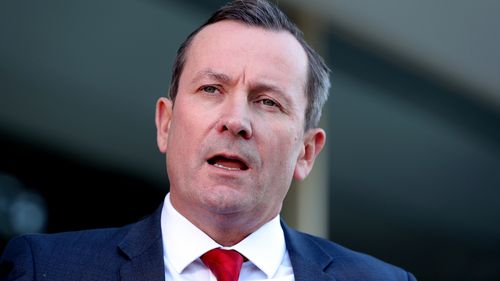
Clive Palmer has been denied entry to Western Australia as the state government remains adamant interstate borders will remain closed for months.
Mr Palmer wanted to visit WA for meetings with businesspeople, Senator Mathias Cormann and potential 2021 state election candidates for his United Australia Party but was knocked back.
A spokesman told AAP he had commenced a High Court challenge to the border closure and would cite a section of the constitution that stipulates trade between states must be free.
Clive Palmer has been denied entry into Western Australia – which has its borders closed as part of coronavirus lockdown restrictions – after he tried to attend a series of political business meetings. (AAP)
Mr Palmer accused Premier Mark McGowan of “denying Western Australians jobs and prosperity” by refusing to open interstate borders.
“He risks economic shutdown with his gestapo tactics,” the Queensland-based billionaire said in a statement.
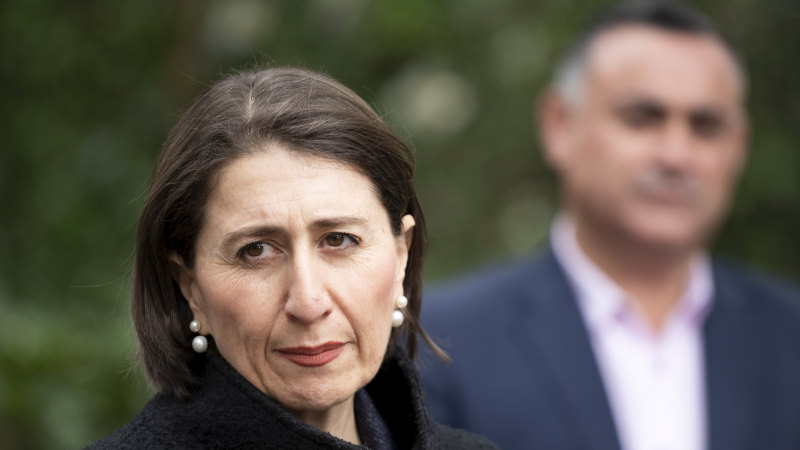
Mr McGowan batted away “bullying” from NSW Premier Gladys Berejiklian over interstate borders earlier this week, saying he wouldn’t take advice from the state at the centre of the Ruby Princess debacle.
WA’s chief health officer Andrew Robertson says it will take at least one month to confirm community spread had been eliminated in affected jurisdictions and until then, opening interstate borders was not recommended.
Meanwhile, Mr McGowan remains under pressure to fully reopen intrastate travel after WA’s 13 regions were slashed to four vast areas on Monday.
State Liberal leader Liza Harvey labelled his stance on intrastate borders “nonsensical”, given Perth residents could cram on to public transport but not visit northern regions or the Goldfields.
“Every day the Premier dithers, another West Australian small business closes its doors,” Ms Harvey said.
“Our tourism industry is on its knees.”
The incident could set up a war of words with Western Australia Premier Mark McGowan, after a spokesman for Palmer said he would launch a High Court challenge to the state’s border closure. (AAP Image/Richard Wainwright) (AAP)
Health Minister Roger Cook said on Thursday federal biosecurity zones had complicated reopening regional borders, but the police commissioner was working with the state solicitor’s office on dismantling them.
Only three active cases of coronavirus remained in WA as of Thursday.
For breaking news alerts and livestreams straight to your smartphone sign up to the 9News app and set notifications to on at the App Store or Google Play.
Having suffered through the Black Summer bushfires – a season that usually generates a third of annual income for NSW tourist hotspots – small towns were barely piecing themselves back together before COVID-19 hit.
Travel bans and social distancing restrictions forced the travel industry into more months of impacted business but as of June 1, people are free to travel around NSW.
Venues such as restaurants, pubs and cafes will be allowed to host 50 people which means bigger venues like wineries and surf clubs may reopen in time for the June long weekend.
Getty Images
Shoalhaven boasts beautiful seaside rock pools.
Deputy premier John Barilaro said June is a time to help NSW’s travel industry “fill their registers.â€
“We’ve opened up the regions and now it’s our happy hour, time to wine and dine,†he told reporters at a press conference.
“We want to see people visiting the regions visiting hotels, pubs, clubs, restaurants and cafes.â€
With the official word from authorities, it’s finally time to pack the car up, download the best podcasts and explore our own backyard again.
Whether it’s mapping a pie trail in the Southern Highlands, exploring antique shops for that one-in-a-million find on the South Coast or hitting the best surf beaches at Port Macquarie – here’s your guide to rediscovering NSW gems after two months in quarantine:
StephaneDebove via Getty Images
Lighthouse beach seen from the lighthouse in Port Macquarie in the summer
Port Macquarie
NSW’s Mid North Coast bore much of the brunt of the extensive and unprecedented nature of the 2019 bushfire season. According to Royal Fire Service statistics, the Lindfield Park fire in Port Macquarie burned for 210 days, more than 420,000 hectares of bushland was lost, one person was killed and local wildlife suffered greatly.
Liesa Davies, Group Manager Economic and Cultural Development at Port Macquarie-Hastings Council told HuffPost: “The Port Macquarie region is excited to start welcoming visitors back soon, and we’re certainly in a great place to do so.
“As one of the first areas to be affected by bushfires, our land and businesses were badly affected however the recovery we’ve seen here is tremendous – Port Macquarie Koala Hospital releasing 26 koalas into the wild earlier than expected due to recovered habitat is a testament to that.â€
Port Macquarie is known for its 17 beaches but it’s not just surfing and water sports but lush hinterland, wineries, the Billabong Zoo, river cruises and great camping that’s on offer to visitors.
“Our regional communities are really feeling the emptiness of visitors and they quite simply need us to visit so let’s get back on the road and help our beloved holiday destinations rebuild together,†NRMA Parks and Resorts CEO Paul Davies said.
“Book early to get in first to secure a spot and receive up to 20% off for until June 4.â€
Davies confirmed caravan parks and camping facilities have made some changes to ensure the safety of guests and staff in the wake of COVID-19, including contactless check-in, extra cleaning practices and social distancing rules in shared spaces.
Rex Ellacott via Getty Images
Scenes from Mud
Mudgee
Mudgee was named after the traditional Wiradjuri term “Moothi†which means “nest in the hills†and that’s exactly what the picturesque wine region is.
The refined country town is perched in rolling grassy hills four hours northwest of Sydney and offers over 40 family-owned cellar doors for the perfect sip and swirl experience.
Due to fresh produce being in abundance, the food scene is Mudgee is famous.
The breakfasts at Artisan on Lewis are as hearty as they are value for money and the 10-course degustation at the rustic Pipeclay Pumphouse is truly something to write home about – the slow-cooked lamb and mushroom ragu is a standout.
If it’s a food and wine adventure you’re after, Mudgee delivers. And with beautiful views to boot!
Glen_Pearson via Getty Images
Gulgong, Australia – January 3, 2012: Heritage streetscape of Gulgong, a 19th-century gold rush town in the Mudgee wine region of NSW, Australia
Gulgong & Rylstone
History buffs rejoice – visiting Gulgong is like stepping back in time with settlers from the gold rush of 1872. It’s not just the Pioneer’s Museum that offers a look back to colonial times, the main drag of town is almost exactly how it was 150 years ago – sans the modern cars of course.
Down the road is the quaint town of Rylstone, known for its brilliant dumpling restaurant 29Nine99 that does a wicked Yum Cha spread on weekends.
After lunch, head to family-run De Beaurepaire Wines for a tasting of French-style vinos handcrafted from selected parcels of grapes sourced from the property only.
Soil structure and high diurnal temperature range in the area means the region is similar to French wine country in Burgundy and Champagne. Win!
Kevin Mirc / EyeEm via Getty Images
Photo Taken In Hyams Beach, Australia
Shoalhaven
Less than a three-hour drive from Sydney, Shoalhaven boasts more than 100 beautiful beaches, friendly cafes and picturesque coastal walks. And, yes, it’s home to that famously dazzling white shoreline: Hyams Beach at Jervis Bay Marine Park.
If you want to skip the winter swim, remember that this is still vino country: try a wine, cheese and beer experience at Cupitt’s Estate or a sparkling at Annie’s High Tea.
Since we’ve all been cooped up in the home, Shoalhaven is one of those NSW destinations with plenty to offer when it comes to physical activity. From rock climbing to horse riding, renting a kayak, fishing, yoga, hiking and beyond, this is the place to get your body moving after lockdown.
When it comes to resting your head, Paperbark Camp is a great choice for glamping and Bangalay Villas offers super easy access to the beach. Plus, the Surf Club is a three-minute walk away.
shells1 via Getty Images
Early morning view from the banks of the Hawkesbury river, Sydney, Australia, NSW
Hawkesbury And Beyond
For those who’ve missed boating during the past two months of restrictions, a houseboat could be a unique accommodation idea with overnight boating also allowed from June 1.
“From rivers, bays, lakes, estuaries, harbours and coastal waters, NSW has a smorgasbord of fabulous waterways on which to enjoy all manner of boating from paddle, power and sail,†Boating Industry Association (BIA) President Darren Vaux said.
“You will also be able to relax and stay overnight on a boat which can only help deliver social benefits all round.â€
The relaxed restrictions means other water activities like whale watching, fishing charters and sightseeing cruises are all back on the cards.
In2theWild Tiny Holidays
Tiny Houses are all the rage, drop into the regional town on your way to pick up supplies and support the local community – safely.
Leura
About 90 minutes from Sydney, Leura is known as ‘the Jewel in the Blue Mountains Crown’ and it has a reputation for artisan goods. The delis are brimming with handmade chutneys, chocolates and cheese to make the most impressive of charcuterie boards.
Although famous for its Edwardian-style architecture, the tiny-house trend is hard to pass up. The Daisy House in Oberon Shire is perfect for sipping tea by the fire, reading a book with a view and savouring a bottle of local wine.
In NSW, there are 12 off-grid tiny houses set in secluded locations. With self check-in and no crowds, a tiny house escape is the perfect post-iso getaway.
Crisis Management Commissioner Janez LenarÄiÄ said: “The coronavirus pandemic is creating a humanitarian crisis of an enormous scale in some of the most fragile countries in the world. The pandemic threatens food security in countries where public health systems were already weak before this new crisis. We must act now to leave no area of the world unprotected. This is in our common interest. And it is crucial that humanitarian actors continue to have the access to carry out their life-saving work.â€
The new funding will help vulnerable people facing major humanitarian crises, notably in the Sahel and Lake Chad region, the Central African Republic, the Great Lakes region in Africa, Eastern Africa, Syria, Yemen, Palestine and Venezuela, as well as the Rohingya. It will provide access to health services, protective equipment, water and sanitation. It will be channelled through non-governmental organisations, international organisations, United Nations agencies, and the Red Cross and Red Crescent Societies.
Background
The €50m allocation comes in addition to significant humanitarian funding and actions already provided by the European Commission to respond to the most pressing needs created by the Coronavirus pandemic:
In February 2020, €30m was allocated to the World Health Organization. Since then, the Commission has, subject to the agreement of the EU budgetary authorities, planned around €76m to programmes included in the United Nations Global Humanitarian Response Plan. In addition, the Commission is providing direct funding for the work of humanitarian non-governmental organizations (NGOs) and the Red Cross/Red Crescent movement, which are in the frontline of the humanitarian response to Coronavirus.
The additional humanitarian funding comes on top of some €20 billion in development and emergency funding from the Commission and member states for both short-term and long-term needs around the world as part of a ‘Team Europe’ approach.
Trump has said he looks better in the mask, even though he has not been publicly seen wearing one despite recommendations to do so from his own administration. However, a photo emerged after the visit on Thursday showing Trump with a face covering, which NBC News later confirmed with a source:
President Trump wears a mask during his tour of the Ford Rawsonville Components Plant in Ypsilanti, Michigan, where ventilators, masks and other medical supplies are being manufactured. https://t.co/UCqBVUEuBZ
Bill Ford, the company’s chairman, said in a statement that Trump wore a mask behind the scenes.
“He wore a mask during a private viewing of three Ford GTs from over the years,†Ford said in a statement cited by NPR. “The President later removed the mask for the remainder of the visit.â€
While Trump may have worn a mask briefly, he attended multiple events throughout the visit without a facial covering. Nearly everyone else did. He has frequently resisted wearing a mask during the global pandemic, and didn’t put one on even while touring a facility that makes them.
“Somehow sitting in the Oval Office behind that beautiful Resolute Desk, the great Resolute Desk, I think wearing a face mask as I greet presidents, prime ministers, dictators, kings, queens, I don’t know, somehow I don’t see it for myself,†Trump said last month.Â
A HuffPost Guide To Coronavirus
Calling all HuffPost superfans!
Sign up for membership to become a founding member and help shape HuffPost’s next chapter
U.S. President Donald Trump | Alex Wong/Getty Images
But even the Trump administration is willing to upgrade ties only so far, fearing Beijing’s wrath.
As Taiwan’s president was inaugurated for a second term this week, Trump administration officials had some choices to make: How do they congratulate her? Which U.S. official does what?
And, above all, how much do they stick it to the Beijing government in the process?
They ultimately went with a mix: A State Department official and a top White House aide sent video messages for the event, while Secretary of State Mike Pompeo opted for a written statement in advance and some public remarks afterward. The U.S. also announced a potential deal to sell torpedoes to the island, whose disputed political status has long been a fraught subject of U.S.-China relations.
But U.S. President Donald Trump himself has yet to publicly weigh in.
So far, the maneuvering has appeared to be aggressive enough to inspire both Taiwanese gratitude and Chinese rhetorical backlash; Beijing has threatened “necessary measures in response†to America’s expressions of congratulations. But — for now at least — the Trump team’s tactics also have been restrained enough to keep tensions from spiraling out of control.
The Trump administration’s approach to Taiwanese President Tsai Ing-wen’s Wednesday inauguration in illustrative of its broader strategy toward an authoritarian government in Beijing that it views as a long-term threat to U.S. dominance: Push Chinese Communist Party leaders hard, but not to the point of diplomatic rupture or open warfare.
It is a tactic that has been pursued with added vigor in recent months as the coronavirus pandemic has hardened differences between U.S. and China, while giving Taiwan — which has seen just seven deaths since the outbreak began — something to boast about. For better or worse, Taiwan — whose democracy the Trump administration openly supports, but whose independence it does not — has become a useful cudgel for the United States.
“No Taiwan official is going to turn down some expression of help that’s offered on a silver platter from the United States,†said Daniel Russel, a former senior Asia hand in the Obama administration. He added, however, that Taiwan’s leaders have “very mixed feelings. Without a doubt, they harbor a great fear of being used as a pawn or a chip.â€
The relationship between Washington and Beijing has been on a downward slope for years, and it has grown increasingly ugly under Trump because of a tariff-driven trade war he launched over his belief that China was taking advantage of America on the economic front.
The coronavirus pandemic emerged in China late last year, and Taiwan, thanks to its past experiences with infectious diseases in the region, recognized the danger early. Its technocrat-driven response has severely limited the outbreak on its soil, and it has since touted its success as a counterpoint to Chinese stumbles. Taiwan has, among other moves, sent face masks to other countries, including the U.S. — part of a “mask diplomacy†strategy that Beijing also has used.
The U.S. has seized on Taiwan’s success as a hammer with which to hit China.
The Trump administration recently called on the World Health Organization to allow Taiwan to participate in meetings of the World Health Assembly, its main decision-making body, under observer status. The assembly met this past week, without the Taiwanese being permitted a role amid Chinese resistance. And America’s push for Taiwan’s inclusion was somewhat ironic given Trump’s own recent threats to quit the World Health Organization.
Still, the Trump administration clearly thought the effort was worth it to put Beijing on the spot.
“The [People’s Republic of China’s] spiteful action to silence Taiwan exposes the emptiness of its claims to want transparency and international cooperation to fight the pandemic, and makes the difference between China and Taiwan ever more stark,†Pompeo said in a statement.
“Taiwan is a model world citizen,†he added, “while the PRC continues to withhold vital information about the virus and its origins.â€
The Trump administration is also using Taiwan as a weapon in its battle with China over 5G wireless technology.
Earlier this week, American officials heralded an announcement by Taiwan Semiconductor Manufacturing Company, one of the world’s leading computer chip makers, that it would build a factory in Arizona. The next day, the Commerce Department announced a rule change that could bar Chinese tech giant Huawei from doing business with TSMC and other global chip manufacturers.
The U.S. and Taiwan do not have formal diplomatic relations, and officially the U.S. has a One China policy that recognizes the regime in Beijing as the government of China. But the U.S. and Taiwan maintain strong unofficial relations, as well as robust economic ties, and it is U.S. policy to help Taiwan defend itself against Beijing.
In the transition period before he took office, Trump agreed to speak to the Taiwanese president, a deviation from diplomatic norms that, while probably not part of a calculated strategy on Trump’s part, stunned Asia watchers. That incident aside, Trump aides have long seen bolstering Taiwan as critical to their pressure campaign on China’s communist leaders.
Perhaps nowhere has the effort to strengthen ties been clearer than in the military-to-military realm.
Last year, the Trump administration greenlit a controversial F-16 fighter jet sale and a $2.2 billion package of M1A2T Abrams tanks and portable Stinger anti-aircraft missiles that infuriated Beijing.
In keeping with the increased push for weapons sales to Taiwan, the State Department on Wednesday approved a possible sale of 18 submarine-launched torpedoes for $180 million. The proposed sale will serve as a “deterrent to regional threats,†the department said.
As China aggressively builds up its military capability, even signaling an increased willingness to attack Taiwan, U.S. officials are now pushing to normalize weapons sales, sell more advanced equipment and even potentially begin conducting joint naval exercises with the island — all moves sure to further enrage Beijing.
Some of the moves have been fueled by the coronavirus pandemic, which has “clarified†the competition with China in the public sphere, said Elbridge Colby, a former deputy assistant secretary of Defense. “Covid has made it clear that we are in a situation of competition … to the American people,†he said.
Randall Schriver, who served as assistant secretary of Defense for Indo-Pacific affairs until January, predicted that Washington will seek to help Taipei further modernize its military, potentially with additional sales of coastal missile defenses, spy drones and other intelligence, surveillance and reconnaissance capabilities.
“This was the trajectory that was already planned,†Schriver said. “The recent experience with coronavirus is an accelerant to some of those plans.â€
Officials have also considered enhanced training, including possible joint naval exercises, as a counter to the growing threat from Beijing, Schriver said. Aside from training associated with major foreign military sales such as the F-16 deal, historically, the U.S. military has refrained from exercising with Taiwan because of China’s sensitivities.
Outside the military realm, Taipei is pressing Washington for additional support. For example, Taiwanese officials are pushing for some kind of bilateral trade deal, Schriver noted. Taiwan is already a major U.S. trading partner.
Taiwan’s leaders have repeatedly expressed gratitude for Trump’s support over the years. For instance, Taiwan was one of a few foreign entities to offer aid to the United States — $800,000 worth — as Hurricane Harvey wreaked havoc in 2017, a symbolic move more than anything else.
This week, amid the inaugural festivities, Tsai’s government expressed its pleasure over receiving the various messages of congratulations from U.S. officials. In particular, it highlighted the video messages sent from Assistant Secretary of State David Stilwell and White House deputy national security adviser Matt Pottinger.
Both men made subtle digs at China in their comments.
Stilwell said “the world owes Taiwan a debt for ringing the alarm†about the coronavirus crisis early on. Pottinger, speaking in fluent Mandarin, hit a similar point, indirectly tweaking Beijing by reminding it that the illness began on its soil — a point China has at times sought to dispute through some of its messaging.
“Taiwan learned critical lessons from the 2003 SARS epidemic,†Pottinger said, according to a  translation shared on Tsai’s Twitter account, “and applied them in advance of the outbreak of the mysterious disease the Chinese state-controlled media called ‘Wuhan pneumonia.’â€
Pompeo did not go so far as to send a video message or engage in a phone call with Tsai, and Trump has kept silent, at least as far as has been publicly acknowledged. Serious direct engagement by a U.S. president or even his chief diplomat could have enraged Beijing well beyond its usual anger at U.S.-Taiwan overtures, analysts said.
But Pompeo’s issuance of a written congratulatory statement — which called Taiwan a “force for good in the world,†referred to Tsai as “Taiwan’s president†and was read aloud during Tsai’s inauguration ceremony — was a highly unusual, likely unprecedented, move.
The secretary of State further praised Taiwan during a press conference on Wednesday. However, Pompeo sidestepped a question on whether the U.S. should consider formalizing its relationship with Taipei, instead using the moment to criticize what he said was Beijing’s handling of the pandemic.
“We’re beginning to work to make sure we get America First, that we get this foreign policy right, and that we respond to these risks that the Chinese Communist Party presents to the United States in an appropriate way,†Pompeo said.
China’s government reacted in harsh but predictable terms to the American expressions of support for Taiwan this week, saying it threatens the bilateral relationship between Beijing and Washington.
“China will take necessary measures in response to the U.S. erroneous practices, and the consequences will be borne by the U.S. side,†Chinese Foreign Ministry spokesman Zhao Lijian said Wednesday.
People close to Taiwanese leaders say they are, for the most part, thrilled with the Trump administration’s pro-Taipei bent so far, but there are some lingering disappointments, some centered on diplomatic protocols.
The fact that no senior U.S. official visits Taiwan, despite U.S. legislation that encourages such travel, is one sore point. Another is the restrictions around the types of meetings Taiwanese representatives get with U.S. diplomats. Taiwan doesn’t have an embassy in Washington; its interests are instead represented by what’s known as the Taipei Economic and Cultural Representative Office.
Taiwanese officials are careful in how they speak about the all-important relationship with the U.S., mindful of Beijing’s red lines. A TECRO representative said that Taiwan was “grateful for the support from our diplomatic allies, as well as the United States, Japan, and many other like-minded countries on the issue of Taiwan’s participation in the World Health Assembly.â€
“It’s the little things,†said one person close to TECRO officials. Trump aides “all say, ‘I love Taiwan, it’s wonderful, it’s the greatest democracy in East Asia.’ But the Taiwanese can’t meet in the State Department. They have to meet in a restaurant.â€
There’s also the always unnerving questions about how reliable Trump himself truly is, given his vacillation toward China over the years and his occasional broadsides against longstanding allies.
While Trump campaigned for office on an anti-China message, he has generally tried to maintain a good relationship with Chinese leader Xi Jinping. He even praised Xi’s early response to the pandemic, possibly to protect an early-phase trade deal between the two countries and hopes of a bigger deal later.
In the same vein, Trump has kept to a minimum his comments on China’s human rights abuses in places like Hong Kong, where a pro-democracy movement has been met with crackdowns.
But Trump also has questioned the One China policy. Just days ago, he floated the idea of ending ties to Beijing, claiming, “You’d save $500 billion if you cut off the whole relationship.â€
He also recently jabbed at Xi, saying the Chinese leader was behind a “disinformation and propaganda attack on the United States and Europe.†China bashing also is a main theme of Trump’s ongoing reelection campaign.
Ultimately, “there is a tremendous amount of ambivalence in Taiwan and worry,†said Russel, whose positions in the Obama administration included serving as senior director for Asian Affairs at the National Security Council. “And there’s reason to worry that Trump will lose interest in Taiwan. He’d trade away Taiwan in a heartbeat if he thought it would get him his trade deal with China.â€
There are limits to how far the Trump administration is willing to go for Taiwan.
The administration appears to have no immediate plans to formally recognize Taiwan’s government, a measure viewed as extreme given Beijing’s longstanding demand that Taipei reunify with China under the “one country, two systems†proposal, Schriver said.
And, despite the opportunity posed by the unusually tense relations between the U.S. and China, there’s no discussion of supporting a Taiwanese bid for formal independence from Beijing. Such a move would be so provocative toward China that one senior Trump administration official said the sky “would fall.â€
“No one has ever talked about independence,†the official said. “Even the hard-core Taiwan lobby in D.C. doesn’t seriously say that.â€
That’s probably fine with Taiwan’s current leadership. On the island’s complicated political spectrum it is often cast as pro-independence, but it is also cognizant that declaring all-out independence anytime soon could prompt far more than just tough talk from Beijing.
The Taiwanese are “painfully aware of the fact that, while China may have limited options to punish the U.S., it has more options for punishing Taiwan,†Russel said.
Beachside vacations may seem like a distant memory during coronavirus lockdowns, but in Seoul’s Gangnam District, the ocean has come to the city.
A giant wave has appeared on the LED façade of the city’s SMTown COEX building, South Korea’s biggest digital billboard. The anamorphic illusion rears up before crashing into the surface of the screen, making the two-dimensional wraparound display seem more like a large tank.
Appearing for exactly one minute every hour, the simulation is so realistic it looks as if water is about to pour over the heads of people who pass through the busy commercial square.
Titled “WAVE,” the project was designed by d’strict — a firm that specializes in using immersive technology to create public art. The project took four months to execute from start to finish, including three months of digital design work to make sure it achieved the desired effect.
“We want to create overwhelming experiences,” said Jun Lee, Business Development Director at d’strict. “Waves are beautiful and dynamic in themselves but we chose them as our subject because they evoke feelings of comfort — which is much needed now.”
Social media split on whether it was relaxing or stressful. One user compared it to the inside of a washing machine while another mused that it was like a “self quarantined sea.”
The screen, measuring 80 by 20 meters (262 by 66 feet), is a popular platform for brand advertisements, K-pop videos, and more recently, digital art installations.
The creative project is the latest addition to d’strict’s portfolio, which includes commercial work and outdoor installations, for clients such as Samsung and LG.
This summer, d’strict is expected to launch an art- and technology-inspired indoor theme park on Jeju Island, featuring a holographic theater among other anamorphic spaces.
This article has been updated to reflect the inspiration behind d’strict’s upcoming venture.
Prime Minister Boris Johnson said on Wednesday (20 May) a “world-beating†programme to test and trace those suspected of having been in contact with people who have tested positive for COVID-19 would be in place by 1 June.
Britain is currently testing the app – based on Bluetooth – on the Isle of Wight off the southern coast of England where the government says more than half the residents had downloaded it.
James Brokenshire, the junior interior minister in charge of security, said there were technical issues with the app but that traditional measures would be used until it works.
“The track and trace system is going to be ready,†Brokenshire told Sky News.
“We obviously want to see that the app is put in place well and effectively, learning from the experience on the Isle of Wight and dealing with all of the feedback that we’re receiving on some of the technical issues, to ensure that the app is as strong as we can make it.â€
When asked directly if the system could work without the app, he said: “Yesâ€.
Tracking and tracing those infected is seen as crucial to preventing a deadly second wave of the outbreak – and thus getting the economy working again after the lockdown.
But Britain’s system has been dogged by criticism: opposition lawmakers said an earlier promise of a nationwide roll-out of a National Health Service (NHS)-developed smartphone app had slipped from the middle of this month.
The NHS Confederation, a group which represents the health service’s organisations, said the United Kingdom is at risk of a second jump in cases without clarity on government strategy.
“The relaxation of restrictions based on scientific advice is the right approach but it must be accompanied by an effective test, track and trace strategy which enables us to monitor local spread of the disease,†the confederation said.
“To achieve this we must have national, local and cross-agency involvement. Without this, we do face the risk of a second wave of infections.â€
When asked about a trial in Britain of anti-malarial drug hydroxychloroquine, the drug U.S. President Donald Trump says he takes, Brokenshire said that all drugs were tested carefully. When asked if he would take it, he said he felt there was no need to make such statements.
His comments come after Trump on Tuesday defended taking hydroxychloroquine to try to ward off the novel coronavirus despite medical warnings about its use.
“I’m taking hydroxychloroquine,†Trump, 73, said on 18 May. “All I can tell you is so far I seem to be OK.â€
Brokenshire also said restrictions on arrivals in Britain from overseas would be introduced early next month. He declined give any further details.
“Even something as simple as having joint cutlery on a table won’t be able to exist anymore,” she said. “A simple buffet won’t exist anymore. A communal food bowl won’t exist.”
Venues will be required to ensure patrons are seated before they are served and distanced in line with a four-square-metre requirement.
It comes one week after cafes and restaurants were allowed to reopen with 10 patrons, provided they served food. However, many venues decided against reopening because the 10-person limit was not financially viable.
Deputy Premier John Barilaro said the announcement would allow regional NSW to embrace visitors when the restrictions on travel are also lifted on June 1. “We’ve opened up the regions and now it’s our happy hour, it’s time to wine and dine,†Mr Barilaro said.
Treasurer Dominic Perrottet said the announcement meant NSW was leading the nation in terms of reopening the economy.
“There are about 280,000 people employed in this sector of the economy and allowing venues to safely cater for more customers will provide another boost to business and jobs,” he said.
He said the government’s decision to lift the limit to 50 patrons would help save thousands more jobs than if the next limit had been set at 20 patrons.
Under the restrictions, venues will not be permitted to take group bookings above 10 people.
The government agreed to take the step after negotiating with the Australian Hotels Association and ClubsNSW.
Clubs and RSLs that have multiple restaurants, cafes or bars on site will be able to seat 50 patrons at each venue.
NSW Treasurer Dominic Perrottet having a beer with the owner Justin Small at The Balmain last week. Credit:Edwina Pickles
Claude Tropea, owner of Stanley Street institution Bill & Toni’s Italian Restaurant, said the increase to a 50-patron limit would allow him to hire back four or five staff.
“It’s not just the staff. We’ve got customers showing up these days hoping to sit and we can’t accomodate them,†Mr Tropea said.
“It’s been very difficult, very stressful.â€
Hotels Association NSW chief executive John Whelan said the move was a “important and a positive step forward†for NSW pubs.
“The entire hospitality sector has been hard hit by the COVID-19 crisis with hotels shut down across NSW and 94 per cent of our workforce of 75,000 stood down or terminated,†he said.
Lisa Visentin is a state political reporter at The Sydney Morning Herald.
The mayor of a community near Dallas is under fire for writing that women shouldn’t lead the City Council’s invocation because of a Bible passage that says it’s shameful for women to speak in church.Â
“All I ask is that those leading the public prayer be young men,â€Â Wylie Mayor Eric Hogue wrote in an email to a member of the City Council who requested an invocation from members of a student group called Youth With a Mission, according to local media.Â
“I just was flabbergasted,†one of his constituents, Mary Shaddox, told KXAS-TV Fort Worth. “It’s 2020.â€Â
Hogue wrote that he takes the Bible literally and cited two biblical passages forbidding women to speak in church.Â
He noted that 1 Corinthians 14:34-35 states:
“Let your women keep silence in the churches: for it is not permitted unto them to speak; but they are commanded to be under obedience as also saith the law. And if they will learn anything, let them ask their husbands at home: for it is a shame for women to speak in the church.â€
And he said 1 Timothy 2:11-12 warns:
“Let the women learn in silence with all subjection. But I suffer not a woman to teach, nor to usurp authority over the man, but to be in silence.â€
KXAS noted that in Hogue’s 12 years as mayor, he has never selected a woman to read the invocation. However, he told the local CBS station that he hasn’t stopped women from delivering the invocation when they were selected by others.Â
“Yes, there have been multiple women that have led the prayers,†he said, adding that he has always been respectful “when a lady has showed up.â€Â
He told WFAA-TV, the Dallas ABC station, that he believes women can serve as president, CEO and school superintendent… but not preacher.Â
“If you attend Church of Christ, there will not be a female preacher. There will not be a female song leader. There will not be a female that leads the prayer,†Hogue told the WFAA, but he said there are “ladies that teach other ladies†as well as children’s classes.
Hogue is not running for reelection, but a local conservative Facebook group called Befuddled by the Clowns said the city shouldn’t wait for a new election and urged Hogue to step down.
Calling all HuffPost superfans!
Sign up for membership to become a founding member and help shape HuffPost’s next chapter
Former Vice President Joe Biden’s campaign removed the press from a fundraising call with Wall Street donors on Thursday shortly before the presumptive Democratic presidential nominee began taking questions from those on the line.
It was the first time Biden has limited media access to a virtual high-dollar fundraiser, Bloomberg News noted, and it drew criticism from reporters covering his campaign who said it went against his pledge of transparency.
“This pool report was written based just on his opening remarks because your pooler was quickly kicked off the phone call when Biden said he was ready to take questions from any of the 25 donors present, a move that goes against traditionally covering these pooled fundraisers in their entirety,†NBC’s Marianna Sotomayor, the reporter representing news organizations who covered the event, wrote. “Also, reporters heard Biden over the phone, not through Zoom as has been common practice in the virtual campaign era.â€
The event was hosted by the heads of three investment banking firms: Roger Altman of Evercore, Blair Effron of Centerview Partners and Deven Parekh of Insight Partners.
Biden’s campaign has been quite good about opening fundraisers so the public can get a sense of what he says to wealthy donors
Not tonight. @MariannaNBCNews, the pool reporter representing news organizations, was kicked off as he started taking questions from Wall Street donors pic.twitter.com/HpocNaed7u
Biden said last year that he would open all of his big-donor fundraisers to the media, and his campaign team said at the time that the move reflected a “commitment to transparency.â€
His campaign said Thursday’s fundraiser featured a “new format†when asked why reporters weren’t allowed to listen in to the question-and-answer portion, signaling Biden might limit press access in the future to court big-ticket donors. The campaign did not reply to HuffPost’s requests for a transcript of the questions or a list of those who attended the fundraiser.
“Tonight’s event was a new format as we enter a new phase of the general election campaign,†Rufus Gifford, Biden’s deputy campaign manager, said in a statement. “But we will continue to ensure press access to our virtual finance events as part of our campaign’s commitment to transparency ― one that vastly exceeds anything that Donald Trump and his campaign have offered the American people.â€
Reporters were able to listen to Biden’s opening remarks, during which he addressed what he called “anxious times†and lambasted Trump’s leadership throughout the pandemic that has infected more than 1.5 million people in the U.S.
“You know when Trump ran in 2016, he promised to stand up for the ‘forgotten man,’†Biden said. “As soon as he got elected, he sure as hell forgot them quick enough. Now we’re seeing the telltale signs of Trump-o-nomics in the way that he’s implemented this stimulus. No strings, no oversight, no [inspector general], no accountability, and is setting up what I would call a corrupt recovery.â€
Trump does not usually allow reporters to report on his own fundraisers, but many in the Democratic race had pledged to open up their own fundraisers during the 2020 election cycle.
Biden has been aggressively fundraising since Sen. Bernie Sanders (I-Vt.) ended his own Democratic presidential bid, seeking to build a war chest to counter the sizable fundraising arm wielded by Trump. The former vice president raised more than $60 million in April with the Democratic National Committee.
Calling all HuffPost superfans!
Sign up for membership to become a founding member and help shape HuffPost’s next chapter
We use cookies on our website to give you the most relevant experience by remembering your preferences and repeat visits. By clicking “Accept”, you consent to the use of ALL the cookies.
This website uses cookies to improve your experience while you navigate through the website. Out of these, the cookies that are categorized as necessary are stored on your browser as they are essential for the working of basic functionalities of the website. We also use third-party cookies that help us analyze and understand how you use this website. These cookies will be stored in your browser only with your consent. You also have the option to opt-out of these cookies. But opting out of some of these cookies may affect your browsing experience.
Necessary cookies are absolutely essential for the website to function properly. These cookies ensure basic functionalities and security features of the website, anonymously.
Cookie
Duration
Description
cookielawinfo-checbox-analytics
11 months
This cookie is set by GDPR Cookie Consent plugin. The cookie is used to store the user consent for the cookies in the category "Analytics".
cookielawinfo-checbox-functional
11 months
The cookie is set by GDPR cookie consent to record the user consent for the cookies in the category "Functional".
cookielawinfo-checbox-others
11 months
This cookie is set by GDPR Cookie Consent plugin. The cookie is used to store the user consent for the cookies in the category "Other.
cookielawinfo-checkbox-necessary
11 months
This cookie is set by GDPR Cookie Consent plugin. The cookies is used to store the user consent for the cookies in the category "Necessary".
cookielawinfo-checkbox-performance
11 months
This cookie is set by GDPR Cookie Consent plugin. The cookie is used to store the user consent for the cookies in the category "Performance".
viewed_cookie_policy
11 months
The cookie is set by the GDPR Cookie Consent plugin and is used to store whether or not user has consented to the use of cookies. It does not store any personal data.
Functional cookies help to perform certain functionalities like sharing the content of the website on social media platforms, collect feedbacks, and other third-party features.
Performance cookies are used to understand and analyze the key performance indexes of the website which helps in delivering a better user experience for the visitors.
Analytical cookies are used to understand how visitors interact with the website. These cookies help provide information on metrics the number of visitors, bounce rate, traffic source, etc.
Advertisement cookies are used to provide visitors with relevant ads and marketing campaigns. These cookies track visitors across websites and collect information to provide customized ads.