Sunday, May 17, 2026

This Homeless Choir From San Diego Strikes Gold On ‘America’s Got Talent’

Before coronavirus forced the country into quarantine, Derek Williams was “outdoors.” He’s part of a group of people experiencing homelessness who sometimes sleep in Balboa Park, a lush tourist area near downtown San Diego.  

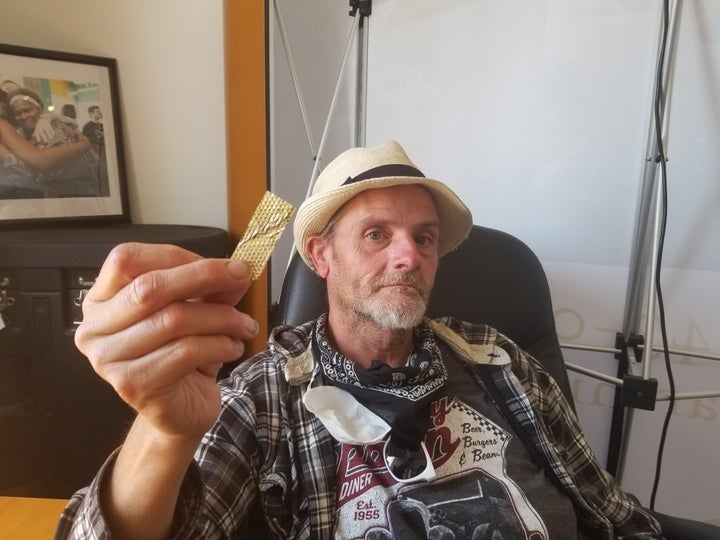
Williams has a scruffy, graying beard. He favors a beige fedora. The 55-year-old University of Southern California alumnus shelters in a camping tent he sometimes shares with an ex-girlfriend. There’s a twinkle in his blue eyes when he talks about singing to entertain friends who also live on the street. His showmanship has earned him the nicknames “DJ Derek” and “D-Rock.” 

A passion for music led D-Rock to join the Voices of Our City Choir, an organized singing group for local homeless folks. Over the last few years, Voices of Our City has metamorphosed into a lifeline for the disenfranchised, offering hope to the homeless. What once was a stem peeking out between a sidewalk crack has been tended into a flower garden of love and inspiration.

D-Rock and the rest of the choir got to share their skills with millions of viewers Tuesday night on the premiere of “America’s Got Talent,” NBC’s talent-show smorgasbord and ratings juggernaut, hosted by actor Terry Crews.


The Voices Of Our City Choir with “America’s Got Talent” host Terry Crews

And Voices of Our City’s “AGT” audition was a huge hit. The 2,500-person audience went berserk, standing and cheering wildly. Onstage and off, there were tears of happiness and joy and incredulity. Sure, “AGT” audiences are known for over-the-top applause. But the choir won the show’s coveted Golden Buzzer — complete with a shower of gold glitter — an award that grants the group automatic advancement to the show’s semifinal rounds.

Getting To The Show On Time

On a pre-pandemic March 7, D-Rock rises and shines early at his tent. He needs time to get to downtown San Diego’s East Village. That’s where a charter bus is waiting to take 50 choir members to audition for “America’s Got Talent.”

This year’s celebrity judges are TV personality Simon Cowell, comedian Howie Mandel and model/actors Heidi Klum and Sofia Vergara.

“Once I get on that bus, I know this is for real,” D-Rock says. “I had been telling people it was going to happen, but I’m not sure if I’d believed it myself.”

Derek "D-Rock" Williams with a piece of the golden glitter from the "America's Got Talent" audition.


Derek “D-Rock” Williams with a piece of the golden glitter from the “America’s Got Talent” audition.

The two-and-a-half-hour drive to Pasadena was like a magic carpet ride.

“Insane” is how Steph Johnson describes the vibe inside the “AGT” charter bus.

“Everybody is singing and cheering for each other — it’s total excitement,” says Johnson, a talented singer, songwriter and guitarist. She’s the founder, creative director and executive director of the 250-member Voices of Our City Choir, which recently became a 501(c)(3) nonprofit organization.

Johnson is the last one to board the bus. Often, she drives the choir to gigs in a much smaller Dodge van. On this day, she’s a passenger and is enjoying the ride.

“I take a seat on the back of the bus next to our board president and tell her I’m going to cry,” Johnson says. “She looks at me and goes, ‘That’s OK. I’ve already cried five times.’”   

The Birth Of A Homeless Choir

In a country with more than half a million unsheltered residents, the city and county of San Diego ranked fifth on the list of regions with the highest number of people experiencing homelessness.

Two years ago, Sean DiMarius was sleeping in the Alpha Project’s 325-bed Temporary Bridge Shelter. He noticed a flyer about the choir meeting in the Living Water Church of the Nazarene. His interest was piqued, but he demurred.

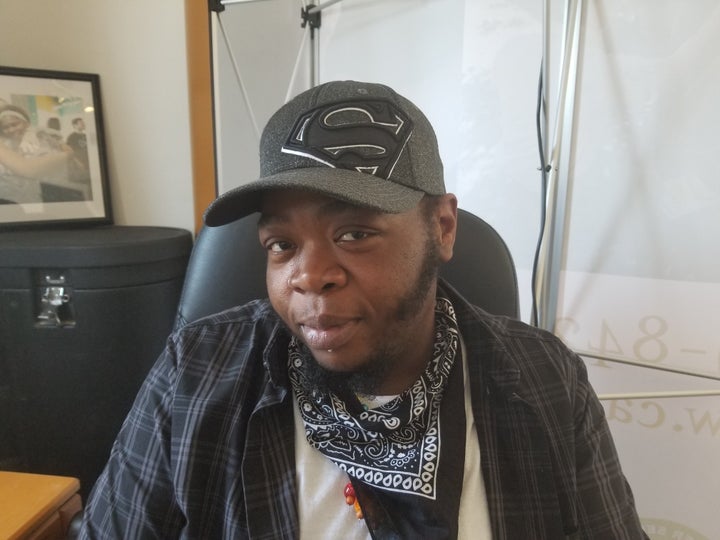
“I saw it was in a church, and I said no,” recalls the 40-year-old man, who identifies himself as transgender. He wears a Superman baseball cap over a short crop of red-dyed hair. “I didn’t want to hear no God talk, telling me God gonna make everything better while I’m sleeping on the street.”

By chance, DiMarius later met Johnson at a community event. Among a multitude of honors, Johnson was named 2020 Woman of the Year by San Diego assembly member Todd Gloria. Her own jazz album, “So in Love,” is due out this summer.

Sean DiMarius


Sean DiMarius

“I see and hear this wonderful lady playing music,” DiMarius says. “And it was like she’d come to get me.”

Armed with her 100-watt smile, Johnson gave DiMarius a choir songbook. Nobody smiles like that at everybody, he thought to himself. Shortly after, DiMarius showed up for a Friday choir practice. 

“Everybody starts hugging me,” he says. “I’m like, ‘Is this a cult?’ But, no, it’s not a cult. It’s a group of people that care about each other.”

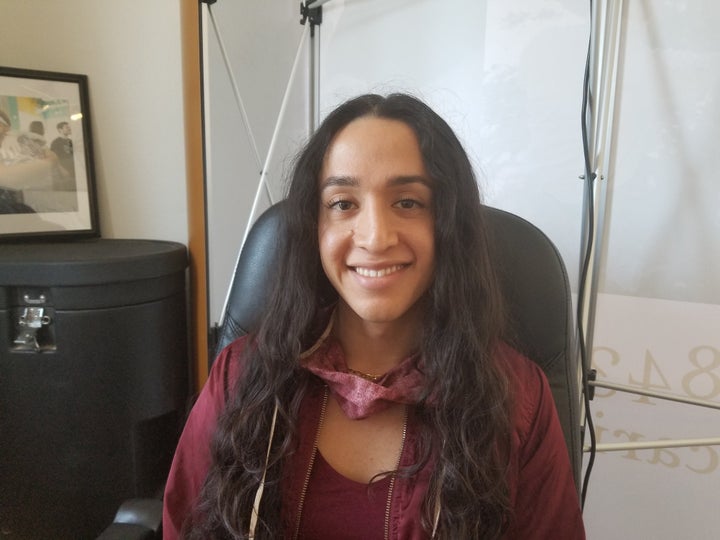
Ricky Infante


Ricky Infante

Ricky Infante agrees. The 25-year-old self-identified transgender woman has been on and off the streets since running away from home as a teen to escape physical and verbal abuse. She almost never misses a choir practice. 

“When I’m feeling negative, I can take in the ambiance of the choir and feel better,” Infante says shyly. “It’s filled with so much love and authenticity.”   

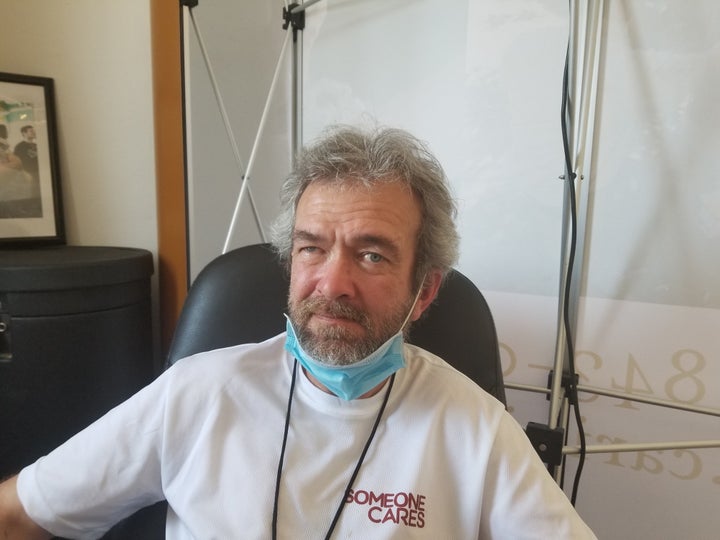
Johnson held the first official choir practice in 2016. It included a half dozen people, including Mark Sheetz. Homeless then and now, he’s sheltering during the pandemic with 1,200 others in the convention-less San Diego Convention Center.
Mark Sheetz


Mark Sheetz

“I had a feeling this choir could be something,” Sheetz, 57, says in a gravelly voice. “I guess I never thought it would get on ‘America’s Got Talent’ or that I’d meet Terry Crews.” 

John Brady is one of 60-plus choir members who found housing through services run by Voices of Our City. He is now a paid staffer and an advocate on several San Diego boards. He also advises the mayor and the city council on homelessness issues.

Brady was desperate and suicidal following a brutal hate crime and was living right outside the Living Waters Church when he first met Johnson. “I had a background in stage, lighting [and] audio,” he says. “I offered to set up the sound system in the church, and Steph roped me in.”

She Always Says ‘Yes’

Johnson and the choir are on a journey that’s likely to hit warp speed following the group’s national TV appearance on “AGT.”

In the last few years, Voices of Our City’s profile has risen. The choir is the subject of a Susan Polis Schutz documentary that aired nationally on PBS. The group sang “Amazing Grace” with the San Diego Symphony. And it performed at the historic Wiltern Theatre in Los Angeles on a bill with Jason Mraz and original members of The Doors.

How did the group get here? It wasn’t easy. The road was bumpy. Johnson points to one primary factor that moved the needle. When opportunities arose, she always said, “Yes.”

Steph Johnson, founder of the Voices of Our City Choir


Steph Johnson, founder of the Voices of Our City Choir

“If anybody reads about us or sees us on TV and is moved, they should come away with one idea,” Johnson says — smiling, of course. “It’s that one person really can make a difference.”

Not because that one individual has to carry the full burden or save the world.

“One person will attract another person and another,” Johnson says. “Pretty soon you have a mission. If your true intention is to create a solution for a societal problem, then it’s going to be a positive.”

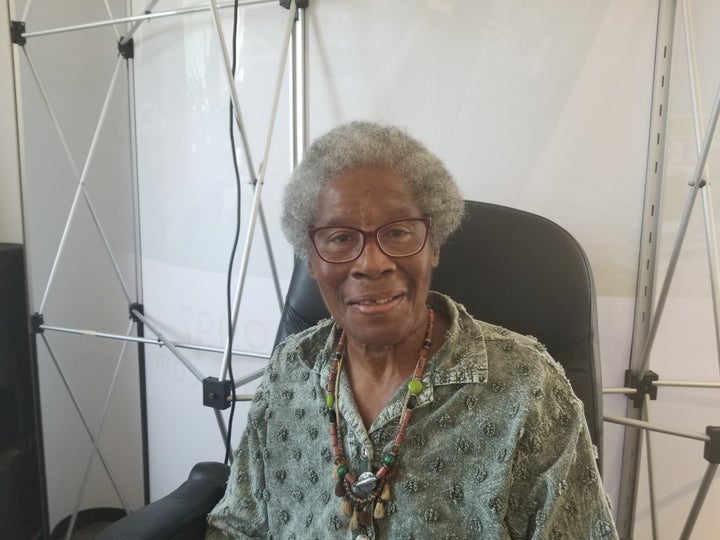
Johnson and the choir co-wrote an original song for the “AGT” audition, “Sounds of the Sidewalk,” about the homeless experience. The upbeat collaboration includes a spoken-word solo by 62-year-old Patricia Gaines.

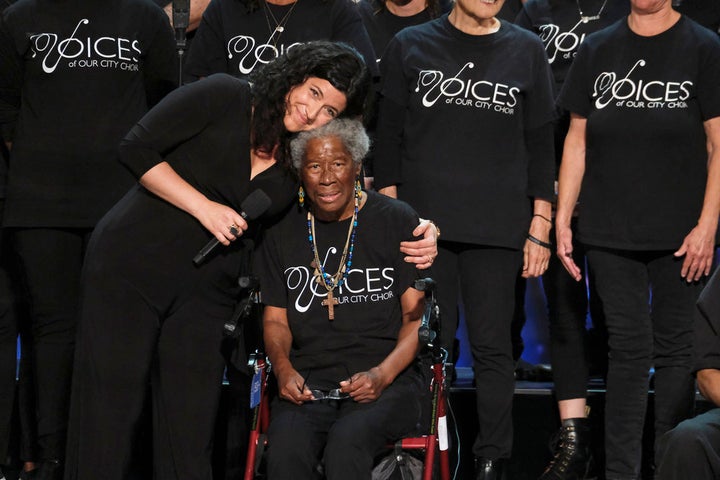
Homeless off and on for most of her life, Gaines uses a wheeled walker to get around. Soft-spoken and polite, she’s the epitome of that kindly lady who passes you the peace during church service.

It’s jarring when she quietly says that, if she wasn’t singing with the choir, she’d probably be out drunk somewhere.
Patricia Gaines


Patricia Gaines

“The choir is a blessing that drew me away from alcoholism,” Gaines says. “Not only that, it inspires me to write down what I’m feeling. Before, I kept those feelings on the inside. And drowned them with alcohol and drugs. Now, I let them out. And it matters to somebody.”

Apparently, her words matter to Simon Cowell.

“I’d seen Simon on TV before,” Gaines says. “And now, here I am shaking Simon’s hand. And he looks me in the eye and says, ‘I appreciate what you write. I appreciate what you done.’ This is Simon telling me this.”

Gaines’ solo on “Sounds of the Sidewalk” is about a bygone vision of her mother leaving the kids for an evening.

“She wore high heels and a nice dress, … and I would watch her going out … to do whatever it was,” Gaines recalls. “She was beautiful, and she had a rhythm. And she always told us, ‘Everything gonna be all right.’”

The Power Of Music

At the nucleus of the choir’s soul-tugging message: the power of music.

“Singing is a metaphor for having a voice,” Johnson says. “It feels good to open up and say what you want to say. Art is a vital way for people to rediscover their worth. And it has a ripple effect.”

Steph Johnson with Patricia Gaines of the Voices of Our City Choir


Steph Johnson with Patricia Gaines of the Voices of Our City Choir

She hopes the “AGT” exposure helps in some way to melt away the barriers separating people from those who live just outside their own safe walls.

“Think about how we’ve all been in quarantine,” Johnson says. “Imagine the whole world is instructed to stay home — but you don’t have a home. That adds an extra heaviness to homelessness. If it’s possible, it makes you feel even more alone. The isolation is triggering. It feels bleak. It’s like you matter even less.”

The choir will be back on TV later this summer. Rest assured, whether it’s a Christmas concert, a corporate gig or a highly produced TV talent show, Voices of Our City has the mojo to profoundly move an audience.

“It’s a cosmic and totally spiritual experience,” Johnson says. “Audiences don’t expect the choir to be brilliant. But our music hits on a deeply emotional level. It moves people, and it has a heavy impact.”

Now living in a single room occupancy hotel, D-Rock carries an “AGT” memento in his wallet — a rectangular piece of golden glitter that flitted into his mouth during the Golden Buzzer hoopla.

“We rocked the house,” D-Rock says.


Source by [author_name]

Crime Patrol actress Preksha Mehta, aged 25, commits suicide : Bollywood News – Bollywood Hungama

0

In one of the most tragic news, TV actress Preksha Mehta reportedly committed suicide at the age of 25. The actress had starred in TV shows like Crime Patrol, Laal Ishq, and Meri Durga. As per reports, the actress was suffering from depression.

Preksha Mehta’s found her body hanging from the ceiling fan on May 26, 2020. Her body has been sent for post-mortem. She even left behind a suicide note citing disappointments faced in her career and relationships. On May 25, she had left a cryptic message on her Instagram story that read, “Sabse bura hota hai, sapnon ka mar jaana (The death of the dreams is the worst).”

“During our initial investigation, we believe that she was suffering from depression. We are carrying out a detailed investigation in this case,” police told PTI.

Crime Patrol actress Preksha Mehta, aged 25, commits suicide

Preksha Mehta had recently gone back to her hometown in Indore amid the nationwide lockdown imposed due to coronavirus outbreak.

This is the second incident that has come into limelight amid lockdown. A few days ago, Manmeet Grewal, who starred in shows like Aadat Se Majboor and Kuldeepak, committed suicide due to financial troubles.

BOLLYWOOD NEWS

Catch us for latest Bollywood News, Bollywood Movies update, Box office collection, New Movies Release & upcoming movies info only on Bollywood Hungama.

Loading…

Source link

Wall Street Journal Board Condemns Trump’s ‘Presidential Smear’ Of Joe Scarborough

The editorial board of The Wall Street Journal published a column Tuesday condemning President Donald Trump’s implications that MSNBC host Joe Scarborough was responsible for an aide’s death.

The column, titled “A Presidential Smear,” deplores Trump’s baseless accusations against the “Morning Joe” host. The president has been tweeting suggestions that Scarborough, a former Republican congressman, was involved in the 2001 death of an intern in his Florida office. 

The editorial noted that Trump “sometimes traffics in conspiracy theories” but labeled his latest accusation “ugly even for him.”

Lori Klausutis, 28, died after hitting her head on a desk. Authorities determined that she fainted due to a previously undiagnosed heart condition and ruled that her death was accidental.

“Mr. Trump always hits back at critics, and Mr. Scarborough has called the President mentally ill, among other things. But suggesting that the talk-show host is implicated in the woman’s death isn’t political hardball. It’s a smear,” the editorial board wrote.

“Mr. Trump rightly denounces the lies spread about him in the Steele dossier, yet here he is trafficking in the same sort of trash.”

The editorial also praised Rep. Adam Kinzinger (R-Ill.) for calling out the president last weekend for spreading the unfounded conspiracy theory and asking him: “Just stop. Stop spreading it, stop creating paranoia. It will destroy us.”

The board acknowledged it had little expectation the president would stop. 

“Perhaps he even thinks this helps him politically, though we can’t imagine how,” the board wrote. “But Mr. Trump is debasing his office, and he’s hurting the country in doing so.”


Source by [author_name]

Trump says he wants full Afghanistan pullout but sets no timeline

President Donald Trump on Tuesday renewed his desire for a full military withdrawal from Afghanistan but added that he had not set a target date, amid speculation he might make ending the United States’s longest war part of his re-election campaign.

“We’re there 19 years and, yeah, I think that’s enough … We can always go back if we want to,” Trump told a White House news conference.

More:

Asked if the Thanksgiving holiday on November 26 was a target, Trump said: “No. I have no target. But as soon as (is) reasonable. Over a period of time but as soon as reasonable.”

The US has already begun to withdraw its forces as part of an agreement signed with the Taliban armed group in the Qatari capital Doha on February 29. By the second quarter of 2021, all foreign forces are supposed to withdraw, ending the US’s longest war.

The Taliban launched an armed rebellion after it was toppled from power by a US-led invasion in 2001.

Trump’s comments come as authorities in Afghanistan said they had released about 900 Taliban prisoners across the country on Tuesday, approximately 600 of them from the notorious Bagram jail near Kabul.

The release is a part of a pledge by the Afghan government to free up to 2,000 of the armed group’s prisoners in response to the Taliban’s three-day ceasefire offer, which began on Sunday to mark the Muslim holiday of Eid al-Fitr.

Prisoner release

On Tuesday, the Afghan government urged the Taliban to extend the ceasefire – only the second in nearly 19 years of war – which has mostly held across Afghanistan, providing a rare respite from the conflict’s grinding violence.

Withdrawal of American troops from Afghanistan was part of Trump’s 2016 election campaign [File: Leah Millis/Reuters]

“For better management of the prisoner issue, it is important to extend the ceasefire,” Javid Faisal, a spokesman for Afghanistan’s national security adviser, told a news conference.

The release was part of a prisoner swap under the Taliban-US agreement, as a precursor to peace talks between the armed group and an inclusive Afghan delegation aiming to end a two-decades-old war.

Taliban spokesman Suhail Shaheen, in a statement on Twitter, welcomed the release of 900 prisoners as “good progress” and said the group would in turn free a “remarkable number” of prisoners soon.

However, he said nothing about extending the ceasefire, which expired at midnight (19:30 GMT) on Tuesday.

Last month, the Taliban rejected a call by the Afghan government for a Ramadan ceasefire.

‘Bring peace’

Fighting between Taliban and Afghan forces had intensified before the ceasefire, and the government said it would resume an offensive against the armed group in the wake of its deadly attacks nationwide earlier this month.

“As per the guidelines of our leaders, and based on the agreement (the US-Taliban peace deal), we will not return to the battlefield,” a Taliban member, Noor Rahman, told Reuters after being released from Pul-e-Charkhi prison, located on the outskirts of Kabul.

Another freed prisoner, Qari Ahmad Sayeed, said he was delighted to be free, adding, “I hope this will result in bringing peace to the country.”

Faisal said all released Taliban members were being given new clothes, cash and transport home. The process was expected to be completed by midnight – the same time the ceasefire ends.

US Secretary of State Mike Pompeo, while welcoming the latest developments, has insisted that freed Taliban prisoners should not return to the battlefield.

President Ashraf Ghani has said his administration is ready to begin peace negotiations, seen as key to ending the war.

Government negotiators would be headed by Ghani’s former rival Abdullah Abdullah after the two signed a power-sharing deal last week that ended a months-long political crisis.

Prisoner releases began in April, but have been slow and marred by wrangling between the Taliban and the government, which was to free 5,000 prisoners under the Doha pact, while the Taliban would free 1,000 members of the Afghan security forces.

Before this week’s releases, Kabul had already freed about 1,000 Taliban inmates, while the group released about 300 Afghan security force captives.

Source link

Police searching for Baltimore suspect shot officer, carjacked another driver

Police in Baltimore were searching for a gunman who led police on a chase, shot an officer and carjacked at least one person in order to make his escape Tuesday night, police said.

The officer, who was struck in the abdomen, is expected to survive and may not require surgery, Commissioner Michael Harrison said at a hospital. The bullet is thought to have grazed him without striking any internal organs, the commissioner said.

“The officer was wearing body armor, which we believe very likely saved his life,” Harrison said.

The officer attempted to pull over an erratic driver who he believed was intoxicated about 9:30 p.m., the commissioner said.

After crashing, the driver fled on foot and the officer gave chase on foot, police said. The suspect is believed to have turned and fired, striking the officer at least once, Harrison said.

The gunman carjacked at least one person in a blue Toyota Camry in order to escape, and police believe he may have carjacked a second person but that had not been confirmed, Harrison said.

“There is a suspect on the loose who is armed and dangerous, who has fired, and shot, a police officer, and thank God that officer is doing OK at this moment,” Harrison said. “But we need help apprehending this violent offender tonight and as soon as possible.”

The officer, who has not been identified, was in good spirits at a hospital and gave his commanding officer a thumbs-up, Harrison said.

Mayor Bernard C. “Jack” Young hailed the officer’s bravery. “This officer put their life on the line for the residents of our City,” Young said in a statement.


Source link

What we know about the death of George Floyd: 4 Minneapolis police officers fired after ‘horrifying’ video hits social media

CLOSE

The FBI is investigating the death of a man after he was restrained by police in Minneapolis.

Storyful

Government officials and Minnesota locals alike expressed outrage after a video surfaced showing a white police officer kneeling on the neck of a black man and ignoring his pleas for help until first responders put him, unresponsive, on a stretcher. 

The man, identified at 46-year-old George Floyd, died at a local hospital, according to police. The case echoes the death of Eric Garner, another black man who died while a white officer restrained him, ignoring pleas of “I can’t breathe.” 

The four officers involved in the Monday incident were fired Tuesday, and the attorney for Floyd’s family, Ben Crump, called for their arrests. The officers have yet to be officially identified, but attorney Tom Kelly told The Associated Press he is representing Derek Chauvin, the officer seen with his knee on Floyd’s neck. Kelly declined further comment.

Here’s what we know so far: 

What’s in the video? 

A video taken by a bystander circulating on social media shows Chauvin with his knee pressed into Floyd’s neck while the man repeatedly says he can’t breathe. 

Floyd repeatedly pleads with Chauvin, at one point crying out for his mother and saying “everything hurts.” 

Two officers are featured prominently in the video — Chauvin and an officer who stands between bystanders and the officer on top of Floyd. 

“He’s talking, he’s fine,” one officer says to a person off-camera. 

GBI says investigation wrapping up: Man who filmed Ahmaud Arbery shooting arrested

“He ain’t fine,” the person replies before calling the officer a “bum” and saying he’s “enjoying what’s happening.” 

Chauvin keeps his knee pressed into Floyd’s neck and Floyd stops talking. About four minutes into the video, Floyd becomes unresponsive. Bystanders approach Chauvin and the officer draws something, causing one of the people off-camera to say, “He’s got mace.” 

Bystanders repeatedly ask the officers to check for a pulse. Chauvin doesn’t remove his knee from the man’s neck until EMS puts an unresponsive Floyd onto a stretcher, roughly four minutes after he stopped responding. 

What is a ‘neck restraint’?

The Minneapolis Police Department’s Policy & Procedure Manual defines a neck restraint as a “non-deadly force option.” 

The handbook reads: “Defined as compressing one or both sides of a person’s neck with an arm or leg, without applying direct pressure to the trachea or airway (front of the neck). Only sworn employees who have received training from the MPD Training Unit are authorized to use neck restraints.”

The book has two types of neck restraints: 

  • Conscious Neck Restraint: The subject is placed in a neck restraint with intent to control, and not to render the subject unconscious, by only applying light to moderate pressure. 
  • Unconscious Neck Restraint: The subject is placed in a neck restraint with the intention of rendering the person unconscious by applying adequate pressure. 

Minneapolis Police Chief Medaria Arradondo, speaking to reporters Tuesday, was asked about the use of the knee on Floyd’s neck during the arrest.

“We clearly have policies in place regarding placing someone under control,” Arradondo said, explaining that those policies “will be part of the full investigation we’ll do internally.”

Autoplay

Show Thumbnails

Show Captions

What do police say happened? 

The Minneapolis Police Department released a statement Monday that said officers responded to a report of a forgery in progress just after 8 p.m.

Police discovered a suspect and ordered him to get out of his car. 

“After he got out, he physically resisted officers,” MPD said in a statement. “Officers were able to get the suspect into handcuffs and noted he appeared to be suffering medical distress. Officers called for an ambulance. He was transported to Hennepin County Medical Center by ambulance where he died a short time later.” 

No weapons were used by anyone in the incident, according to the MDP statement, and the Minnesota Bureau of Criminal Apprehension was called to investigate the incident. 

Calling police: White woman fired after calling police on black man who asked her to leash her dog

Police on Tuesday updated the statement to add, “As additional information has been made available, it has been determined that the Federal Bureau of Investigations will be a part of this investigation.”

The Hennepin County Attorney’s Office is assisting with the investigation. 

The Bureau of Criminal Apprehension released a statement saying, “The names of the officers involved will be released once initial interviews with incident participants and witnesses have taken place.” 

Who are George Floyd and Derek Chauvin? 

Floyd, who worked security at Conga Latin Bistro, was described as a “gentle giant,” the Star Tribune of Minneapolis reported Tuesday. On Facebook, the restaurant posted pictures of Floyd, including one of him smiling at the camera in a “security” T-shirt. The caption reads, “We will always remember you.” 

Chauvin was one of six officers who fired their weapons in the 2006 death of Wayne Reyes, whom police said pointed a sawed-off shotgun at officers after stabbing two people. Chauvin also shot and wounded a man in 2008 in a struggle after Chauvin and his partner responded to a reported domestic assault.

What’s the response? 

The four officers involved in the incident were fired, Minneapolis Mayor Jacob Frey tweeted Tuesday afternoon. 

On Facebook, Frey said, “Being Black in America should not be a death sentence.” 

“Whatever the investigation reveals, it does not change the simple truth, he should still be with us this morning,” the mayor said. “I believe what I saw and what I saw is wrong on every level.”

Minnesota Gov. Tim Walz also took to social media to demand answers. Sen. Amy Klobuchar called the video “horrifying” and “gut-wrenching” and called for an investigation. 

More: Indiana lawmaker accused of racism for posting meme of black children celebrating ‘free money’

“The lack of humanity in this disturbing video is sickening,” Walz tweeted. “We will get answers and seek justice.”

Former Vice President Joe Biden, the presumptive Democratic presidential nominee, called for a “thorough” FBI investigation.

“George Floyd deserved better and his family deserves justice,” Biden tweeted. “His life mattered. I’m grateful for the swift action in Minneapolis to fire the officers involved — they must be held responsible for their egregious actions.”

Protesters filled the intersection in the street where Floyd died on Tuesday night, chanting and carrying banners that read, “I can’t breathe” and “Jail killer KKKops.” They eventually marched about 21/2 miles to a city police precinct, with some protesters damaging windows, a squad car and spraying graffiti on the building.

A line of police in riot gear eventually confronted the protesters, firing tear gas and projectiles. Some protesters kicked canisters back toward police. Some protesters stacked shopping carts to make a barricade at a Target store across the street from the station, and though steady rain diminished the crowd, tense skirmishes stretched late into the evening.

Crump, who is also part of the team representing the family of Ahmaud Arbery, the black jogger who was shot and killed after allegedly being pursued by a white father and son in Georgia, called the firing of the four officers a good “first step” in a statement.

On Twitter, Crump called for the four officers to be arrested on murder charges. 

“How many ‘while black’ deaths will it take until the racial profiling and undervaluing of black lives by police finally ends?” Crump said in a statement. 

Contributing: The Associated Press.

CLOSE

Four Minneapolis officers involved in the arrest of a black man who died in police custody were fired Tuesday after video showed an officer kneeling on the handcuffed man’s neck, even after he pleaded that he could not breathe and stopped moving. (May 26)

AP Domestic

Read or Share this story: https://www.usatoday.com/story/news/nation/2020/05/26/george-floyd-minneapolis-police-officers-fired-after-public-backlash/5263193002/


Source link

Excerpts: When Afghanistan was still considered the ‘just war’

My arrival coincided with a season of returns. Before I came to Kabul, I had met Afghan refugees who had fled during the Taliban rule to Delhi. They had been part of an exodus that commenced in the 1970s, at the onset of the country’s spiral of conflict.

By 2006, however, the direction of movement was reversed. Nearly 3 million refugees had come back to the country in the years following the defeat of the Taliban.

More:

Many of them were drawn to the capital for its relative security and the opportunities it offered. The majority were subsistence farmers returning from Pakistan and Iran.

There were also labourers, entrepreneurs, politicians and professionals. Along with these came foreign aid workers, consultants and journalists.

As the capital, Kabul was the centre of many of these forces, the city where all the gains and all the changes of the era arrived first and hit most powerfully. It was where worlds collided: the new with the old, the old with the ancient, the Afghan elite with the provincial migrants, the expats with the Afghans, the civilians with the government, the village with the city.


All these arrivals were to a city in flux. In retrospect, it was a troubled spring; but at the time there was still space for cautious optimism. Even as the war in Iraq floundered, Afghanistan was still considered the ‘just war’.

It had been five years since the Taliban government had been overthrown by the US and its allies, along with the Afghan military coalition called the Northern Alliance. It was believed that al-Qaeda had been chased out of the country.

The International Security Assistance Force (ISAF) – a UN-mandated, NATO-led mission – was established in December 2001 to safeguard the capital. In 2003 its mission was extended beyond Kabul.

There was a rush of foreign aid to rebuild the ruined country after decades of war. Afghans, tired of conflict and lawlessness, had responded with hope and optimism.

The 2004 elections had replaced the Transitional Authority established during the Bonn Conference with Hamid Karzai as president of the Islamic Republic of Afghanistan.

From the relative security of Kabul, it was possible to discern the gains made in education, women’s rights and infrastructure.

But already there were signs of unravelling: the resurgence of Taliban factions across the country, as well as rising discontent with the corruption and cronyism of the government.

Aid funds were poorly utilised – even the capital had little access to water, electricity and transport. More ominously, it was becoming a target for suicide bombings, explosions and kidnappings.

In February 2006, Foreign Policy magazine and the US-based Fund for Peace released their second ‘Failed State Index’. Afghanistan was placed at number ten on the list. It was a time that was not quite war, and certainly not peace.

In places, the bodies of old jeeps and tanks were used to build houses. The door of a vehicle became a bridge, the metal became sheltering walls. The fragments of the past had been rearranged into a new landscape.


The cycle of conflict that began in 2001 was underlaid by previous years of ethnic strife and sectarian violence, which resurfaced after the defeat of the Taliban [in 2001].

And there was more to it than military gains or losses. It was fuelled by the glut of weapons in the country, and the absence of a strong central government in the 1980s and 90s. It was shaped by the shadow economy of the opium trade, and the competition between different factions to control its gains.

Across the country, there had been displacement and erosion of civil society institutions and networks. The cities had poor infrastructure, the countryside had few livelihoods.

Within the government, there were high levels of official graft, and a legacy of war crimes and impunity. And there was the tsunami of aid money that brought corruption in its wake.

As the capital, Kabul was the centre of many of these forces, the city where all the gains and all the changes of the era arrived first and hit most powerfully. It was where worlds collided: the new with the old, the old with the ancient, the Afghan elite with the provincial migrants, the expats with the Afghans, the civilians with the government, the village with the city.

Taran Khan is an author and journalist based in the Indian city of Mumbai [Photo: Jonathan Page]

On this first journey, I was accompanied by my husband and a friend. Our assignment was to teach video production techniques to employees of a radio and TV station run by the Afghan government. We arrived full of ideas, certain we would have the time of our lives.

As I watched, the city transformed. Bare branches of trees gradually grew denser with blossom, infusing the air with a heady smell. Small streams and rivers filled up with water. From behind the ruins of mud walls, I saw new homes rising. The debris of war was everywhere.

In places, the bodies of old jeeps and tanks were used to build houses. The door of a vehicle became a bridge, the metal became sheltering walls. The fragments of the past had been rearranged into a new landscape.

Each day, we drove to work through the chaotic traffic of Kabul. Amid the snarls were large SUVs, their bodies emblazoned with the logos of different aid organisations, their radio antennae waving like irritable tentacles. There were also grey minivans called Town Aces, pronounced ‘Tunis’ by the Afghan commuters who packed into them.

The drivers would beat out the names of their destinations to a rhythm on the door without pausing for breath. ‘Karte Seh Karte Char Barchee Barchee Jada Jada Chowk Chowk Chowk,’ I heard.

Yellow-and-white Corolla taxis nosed in, along with cyclists and pedestrians.

Sometimes, the military convoys of ISAF soldiers would be stuck in the traffic too, and being by their side meant being uncomfortably aware that while they may be the intended targets of attacks, it was often the civilians beside them who bore the brunt of the explosions.

At every charahi, or crossroads, Kabul’s army of street children sold magazines and chewing gum and phonecards, or washed the windscreens of the cars waiting to move ahead.

In our commute of about an hour from Kolola Pushta to west Kabul, we crossed several landmarks and changing terrain, glimpsed in flashes through our car windows. It was only once we reached our workplace, and were in the company of our colleagues, that we walked.

Excerpted with permission from Shadow City, Taran Khan, Chatto & Windus, an imprint of Vintage

Source link

Coronavirus LIVE Queensland updates: police withdraw about one in 20 fines as the border stoush continues

If you suspect you or a family member has coronavirus you should contact (not visit) your GP, local hospital or 13HEALTH.

Source by [author_name]

Woman sues police department after officers allegedly stomp her stomach, leading to a miscarriage

A woman named Emerald Black is suing the Californian city of San Leandro after an alleged June 7, 2019 attack by police officers that she claims caused her to miscarry. Her attorneys filed a lawsuit against the city and its police on Monday.

According to the lawsuit, on the date in question, Black had just been released from the hospital for a pregnancy exam which confirmed she was at high risk for a miscarriage.

After the exam, Black, still dressed in “hospital clothing,” was a passenger in a car driven by her fiancée. When police pulled her fiancée over for having expired registration tags, Black informed officers she was pregnant and she was asked to remain in the car when police talked with her fiancée outside of the car.

Then, police allegedly yanked Black from the car, “taunted her, piled on top of her and stomped on her stomach leaving a shoe mark,” according to the court filing.

The attack caused Black to miscarry, she says. Now she’s suing for physical injuries, embarrassment, humiliation and emotional distress both from the incident and loss of her child.


A police officer.
Robert Alexander/Getty

The lawsuit alleges that police violated Black’s constitutional rights under the Fourth Amendment which prohibit excessive force and unlawful seizure since Black was allegedly unarmed, noncombative and had committed no crimes.

“Defendants had no probable cause or even reasonable suspicion to use any force whatsoever against Plaintiff. Therefore, the use of any force, was unlawful and excessive.”

Black’s lawyer also claims that the officers violated the state’s Bane Act which protects citizens from any intimidation that interferes with their civil rights. Lastly, lawyers accused police of false seizure and arrest.

Newsweek reached out to Black’s lawyers and the Leandro Police Department for comment. This story will be updated with any response.

This is not the first time police have been accused of mishandling a pregnant woman.

In May 2019, a Texas police officer shot and killed a woman during an arrest after she shouted, “I’m pregnant.” The woman had allegedly tried to grab the officer’s taser to use it against him.

In July 2019, New York City paid a $610,000 settlement to a woman who was shackled and handcuffed by police minutes before giving birth. Shackling pregnant prisoners during labor has been banned in New York state since 2009.

In July 2018, North Miami Beach police officer Ambar Pacheco was arrested after she allegedly kicked Evoni Murray, a pregnant woman, in the stomach. The woman was rushed to the hospital and gave birth to a healthy child. Pacheco was later charged with aggravated battery.

Source link

Conservative Commentator Rips ‘Weak, Insecure Coward’ Trump In Blistering Column

Conservative commentator and CNN host S.E. Cupp didn’t hold back on President Donald Trump in a new column, calling him out for attacking people who can’t defend themselves.

Specifically, Cupp targeted his consistent pattern of “picking on the dead and harassing their surviving family members,” as she wrote in an op-ed in the New York Daily News. 

Trump in recent days has been tweeting a baseless conspiracy theory that implies MSNBC’s Joe Scarborough might have killed a congressional intern in 2001, Lori Klausutis.

Klausutis worked in one of Scarborough’s Florida district offices when he was a Republican member of Congress. She was found dead in the office one morning, and authorities later determined that she had fainted due to an undiagnosed heart condition and fatally struck her head on a table.

Klausutis’s widowed husband, Timothy Klausutis, has asked Trump to stop spreading the “vicious lie,” but Trump has refused. 

“Even someone with just a modicum of decency and awareness of social mores would know better than to drag the deceased and their relatives through the muck for no good reason at all.”

But Trump, she said, “has neither decency nor awareness.”

And she noted Trump’s longtime pattern of using the deceased to advance his own agenda, mocking the late Sen. John McCain (R-Ariz.) and suggesting that the late Rep. John Dingell (D-Mich.) might be in hell. 

Cupp said Trump was “punching down” by attacking those who can’t defend themselves. 

“Punching down — even at the dead — isn’t the mark of a strong, secure, courageous man,” she wrote. “It’s the mark of a small, weak, insecure coward with no impulse control, compassion or common decency. That’s our president.”


Source by [author_name]