Snap Says It Will No Longer Promote Trump’s Account

0

WASHINGTON — Snap said on Wednesday that it had stopped promoting the Snapchat account of President Trump after determining that his public comments off the site could incite violence, in another hardened stance by a social media company against the president.

Snap, which makes the Snapchat app that is popular among young users, said Mr. Trump’s account would remain intact but would not be promoted on its Discover home page for news and stories. Mr. Trump’s account was previously regularly featured on Discover, along with the accounts of other high-profile users like the celebrity Kim Kardashian, the actor Kevin Hart and Gov. Andrew M. Cuomo of New York.

Snap’s move is part of a toughening position by social media companies against Mr. Trump’s posts, which are often aggressive and contain threats and inaccuracies. Over the past week, Twitter has labeled several of the president’s tweets for giving misinformation on voting and glorifying violence. In contrast, Facebook has not touched Mr. Trump’s posts, arguing that they are newsworthy and should remain up in the name of free speech.

Snap said it had decided to stop highlighting Mr. Trump’s account because of tweets, posted on Saturday, in which he threatened to send “vicious dogs” and “ominous weapons” into the protests that have erupted across the nation after the death of George Floyd, an African-American man who was killed in police custody in Minneapolis. The comments did not appear in Mr. Trump’s Snapchat account.

“We will not amplify voices who incite racial violence and injustice by giving them free promotion on Discover,” Rachel Racusen, a Snap spokeswoman, said.

After Mr. Trump’s comments, Evan Spiegel, Snap’s chief executive, addressed them in a lengthy message to his employees.

“We will make it clear with our actions that there is no gray area when it comes to racism, violence and injustice,” Mr. Spiegel said in the memo that was posted on Snap’s blog on Monday. “We simply cannot promote accounts in America that are linked to people who incite racial violence, whether they do so on or off our platform.” But the company would not remove accounts, he added.

Mr. Speigel said he had reached his decision while thinking about the future of the country and his company’s role in it, musing in his letter to employees about the intentions of the founding fathers and reflecting on the time he spent studying in South Africa.

White House representatives did not respond to requests for comment. Brad Parscale, the manager of Mr. Trump’s 2020 campaign, accused Mr. Spiegel of liberal bias and said, “Snapchat is trying to rig the 2020 election.”

Mr. Trump has been embroiled in a confrontation with social media companies since Twitter began labeling some of his tweets last week. He immediately accused Twitter, his preferred social media platform, where he has more than 81 million followers, of stifling his speech and meddling in the November presidential election.

In an apparent act of retaliation last Thursday, Mr. Trump signed an executive order intended to chip away at legal protections that internet companies rely on so that they are not liable for the content posted on their sites.

Twitter and others have denounced the executive order. Twitter has since pressed ahead in labeling more tweets by public officials, while Facebook has faced criticism for doing nothing about Mr. Trump’s posts. Mark Zuckerberg, Facebook’s chief executive, grappled with a virtual walkout on Monday by hundreds of his employees over the issue, but has continued defending his decision to leave Mr. Trump’s messages untouched.

Social media companies are entitled to enforce their own standards on speech, said First Amendment and social media speech scholars.

Snap’s decision “shows that companies increasingly understand that they do not need to be in the binary leave-up or take-down dynamic,” said David Kaye, a law professor at the University of California, Irvine, and the United Nations special rapporteur on freedom of opinion and expression. “They have multiple tools to deal with the dynamics of the spread of hateful content, disinformation, harassment and other kinds of content.”

But the impact of Snap’s action is likely to be modest, said Kate Klonick, an assistant professor at the law school at St. John’s University.

“The president doesn’t need to be promoted by Snap, or Twitter or Facebook,” she said. “His speech is amplified by social media organically.”

Mr. Trump has a following of about 1.5 million people on Snapchat, according to Bloomberg.On the account, he currently features video and images of his photo op in front of St. John’s Church in Washington, along with a screenshot of one of his tweets.

Mr. Trump was regularly promoted on the Discover feature, which is curated by people and algorithms and allows publishers and public figures to reach new Snap audiences.

People have been spending more time on Snapchat since the coronavirus pandemic began. Snap reported in April that its number of daily active users had grown more rapidly than expected, reaching 229 million people. Communication between friends was 30 percent higher in the last week of March than in the last week of January, Snap said.

Cecilia Kang reported from Washington, and Kate Conger from Oakland, Calif.

Source link

Malaria Drug Promoted by Trump Did Not Prevent Covid Infections, Study Finds

The malaria drug hydroxychloroquine did not prevent Covid-19 in a rigorous study of 821 people who had been exposed to patients infected with the virus, researchers from the University of Minnesota and Canada are reporting on Wednesday.

The study was the first controlled clinical trial of hydroxychloroquine, a drug that President Trump has repeatedly promoted and recently taken himself. Conducted in the United States and Canada, this trial was the first to test whether the drug could prevent illness in people who have been exposed to the coronavirus. This type of study, in which patients are picked at random to receive either an experimental treatment or a placebo, is considered the most reliable way to measure the safety and effectiveness of a drug. The participants were health care workers and people who had been exposed at home to ill spouses, partners or parents.

“The take-home message for the general public is that if you’re exposed to someone with Covid-19, hydroxychloroquine is not an effective post-exposure, preventive therapy,” the lead author of the study, Dr. David R. Boulware, from the University of Minnesota, said in an interview.

The results are published in The New England Journal of Medicine.

“If we could find something that would ameliorate infection, block it or make it milder after a solid exposure, that would be quite wonderful,” said Dr. Judith Feinberg, the vice chairwoman for research in medicine at West Virginia University. “What we want to do is limit the number of cases. There was great hope riding on this.”

The president’s promotion of the drug, and the backlash against it, have politicized medical questions that would normally have been left to researchers to answer objectively. Trump supporters and opponents have accused one another of twisting facts about the drug to make the president look either right, or wrong.

But Mr. Trump has not stopped touting the drug’s potential benefits. On Sunday, his administration announced that it was sending 2 million doses of the drug to Brazil, to treat patients and help prevent infection in health care workers. A White House official said the two countries would collaborate on research into its use.

Early in the pandemic, the drug’s use was spurred by anecdotal reports from China and France of patients who seemed to improve and laboratory findings of a possible antiviral effect. With no proven treatment for Covid-19, doctors have been desperate to give severely ill patients some kind of therapy.

Data from more recent studies have been called into question in the last week, furthering debates over the drug’s role in trials around the world. On Wednesday, the World Health Organization said it would resume trials it had temporarily suspended over the issues raised about data used in a study in the Lancet.

Interest in the drug surged after Mr. Trump began advocating it. It is approved to treat rheumatoid arthritis and lupus, as well as malaria, and is considered safe for those patients as long as they do not have underlying abnormalities in their heart rhythm.

Studies in very ill coronavirus patients have linked the drug — especially when combined with the antibiotic azithromycin — to dangerous heart-rhythm disorders, and both the Food and Drug Administration and the National Institute of Allergy and Infectious Diseases have warned that it should not be used outside of clinical trials or carefully monitored conditions in a hospital.

Some researchers say that safety concerns about the drug have been overblown, alarming the public and making it difficult to recruit participants for the studies needed to determine whether the drug has any value for treatment or prevention.

The new study included 821 people from across the United States and parts of Canada who had a either a high-risk or moderate-risk exposure to a person who had tested positive and was ill from the coronavirus. None of the participants had symptoms themselves. High-risk exposure meant they were less than six feet from a patient for more than ten minutes, with neither a mask nor a face shield. Moderate risk meant they wore a mask, but no face shield.

About 88 percent had high-risk exposures.

The participants, recruited online, ranged in age from 33 to 50, with a median age of 40. About half were women, and 66 percent of the total were health care workers. They were healthy and had no underlying health problems that would have made hydroxychloroquine dangerous for them. Most of the rest had been exposed at home, to an infected spouse, partner or parent.

Within four days of exposure, the participants were picked at random to receive either hydroxychloroquine or a placebo, and then followed to determine whether they had either laboratory-confirmed Covid-19 or an illness consistent with the virus, during the next 14 days.

The drug or placebos were mailed to them, and they then reported their symptoms online to the researchers, who did not examine them.

Not all the participants could be tested for the virus, because when the study was being conducted, there was still a shortage of test kits.

There was no meaningful difference between the placebo group and those who took the drug. Among those taking hydroxychloroquine, 49 of 414, or 11.8 percent, became ill. In the placebo group, 58 or 407, or 14.3 percent, became ill. Analyzed statistically, the difference between those rates was not significant.

  • Updated June 2, 2020

    • Will protests set off a second viral wave of coronavirus?

      Mass protests against police brutality that have brought thousands of people onto the streets in cities across America are raising the specter of new coronavirus outbreaks, prompting political leaders, physicians and public health experts to warn that the crowds could cause a surge in cases. While many political leaders affirmed the right of protesters to express themselves, they urged the demonstrators to wear face masks and maintain social distancing, both to protect themselves and to prevent further community spread of the virus. Some infectious disease experts were reassured by the fact that the protests were held outdoors, saying the open air settings could mitigate the risk of transmission.

    • How do we start exercising again without hurting ourselves after months of lockdown?

      Exercise researchers and physicians have some blunt advice for those of us aiming to return to regular exercise now: Start slowly and then rev up your workouts, also slowly. American adults tended to be about 12 percent less active after the stay-at-home mandates began in March than they were in January. But there are steps you can take to ease your way back into regular exercise safely. First, “start at no more than 50 percent of the exercise you were doing before Covid,” says Dr. Monica Rho, the chief of musculoskeletal medicine at the Shirley Ryan AbilityLab in Chicago. Thread in some preparatory squats, too, she advises. “When you haven’t been exercising, you lose muscle mass.” Expect some muscle twinges after these preliminary, post-lockdown sessions, especially a day or two later. But sudden or increasing pain during exercise is a clarion call to stop and return home.

    • My state is reopening. Is it safe to go out?

      States are reopening bit by bit. This means that more public spaces are available for use and more and more businesses are being allowed to open again. The federal government is largely leaving the decision up to states, and some state leaders are leaving the decision up to local authorities. Even if you aren’t being told to stay at home, it’s still a good idea to limit trips outside and your interaction with other people.

    • What’s the risk of catching coronavirus from a surface?

      Touching contaminated objects and then infecting ourselves with the germs is not typically how the virus spreads. But it can happen. A number of studies of flu, rhinovirus, coronavirus and other microbes have shown that respiratory illnesses, including the new coronavirus, can spread by touching contaminated surfaces, particularly in places like day care centers, offices and hospitals. But a long chain of events has to happen for the disease to spread that way. The best way to protect yourself from coronavirus — whether it’s surface transmission or close human contact — is still social distancing, washing your hands, not touching your face and wearing masks.

    • What are the symptoms of coronavirus?

      Common symptoms include fever, a dry cough, fatigue and difficulty breathing or shortness of breath. Some of these symptoms overlap with those of the flu, making detection difficult, but runny noses and stuffy sinuses are less common. The C.D.C. has also added chills, muscle pain, sore throat, headache and a new loss of the sense of taste or smell as symptoms to look out for. Most people fall ill five to seven days after exposure, but symptoms may appear in as few as two days or as many as 14 days.

    • How can I protect myself while flying?

      If air travel is unavoidable, there are some steps you can take to protect yourself. Most important: Wash your hands often, and stop touching your face. If possible, choose a window seat. A study from Emory University found that during flu season, the safest place to sit on a plane is by a window, as people sitting in window seats had less contact with potentially sick people. Disinfect hard surfaces. When you get to your seat and your hands are clean, use disinfecting wipes to clean the hard surfaces at your seat like the head and arm rest, the seatbelt buckle, the remote, screen, seat back pocket and the tray table. If the seat is hard and nonporous or leather or pleather, you can wipe that down, too. (Using wipes on upholstered seats could lead to a wet seat and spreading of germs rather than killing them.)

    • How many people have lost their jobs due to coronavirus in the U.S.?

      More than 40 million people — the equivalent of 1 in 4 U.S. workers — have filed for unemployment benefits since the pandemic took hold. One in five who were working in February reported losing a job or being furloughed in March or the beginning of April, data from a Federal Reserve survey released on May 14 showed, and that pain was highly concentrated among low earners. Fully 39 percent of former workers living in a household earning $40,000 or less lost work, compared with 13 percent in those making more than $100,000, a Fed official said.

    • Should I wear a mask?

      The C.D.C. has recommended that all Americans wear cloth masks if they go out in public. This is a shift in federal guidance reflecting new concerns that the coronavirus is being spread by infected people who have no symptoms. Until now, the C.D.C., like the W.H.O., has advised that ordinary people don’t need to wear masks unless they are sick and coughing. Part of the reason was to preserve medical-grade masks for health care workers who desperately need them at a time when they are in continuously short supply. Masks don’t replace hand washing and social distancing.

    • What should I do if I feel sick?

      If you’ve been exposed to the coronavirus or think you have, and have a fever or symptoms like a cough or difficulty breathing, call a doctor. They should give you advice on whether you should be tested, how to get tested, and how to seek medical treatment without potentially infecting or exposing others.


The drug also did not make the illness any less severe.

Side effects like nausea from hydroxychloroquine were more common than from placebos, 40.1 percent compared with 16.8 percent, but there were no problems with heart rhythm or any other serious adverse effects.

Infectious disease experts who were not part of the study said it was well done and answered an important question, though the results were disappointing.

Dr. William Schaffner, an infectious disease specialist at Vanderbilt University, said: “This was a large, randomized controlled trial done by very good people. Hydroxychloroquine did not provide a notable advantage.”

Noting that the drug had shown some ability to prevent the virus from infecting cells in laboratory studies, Dr. Schaffner said, “Unfortunately that did not translate into a beneficial effect in preventing the development of illness.”

The study did not address the question of whether hydroxychloroquine can prevent coronavirus infection if people take it before they are exposed to a sick patient. That possibility is being studied in other clinical trials involving health care workers and emergency medical technicians and other emergency medical workers.

At a Senate hearing on the F.D.A.’s oversight of foreign drug manufacturing on Tuesday, Democrats criticized the agency for its decision in March to give an emergency use authorization to hydroxychloroquine.

“The F.D.A., in my view, bowed to the pressure and issued what’s called an ‘emergency use authorization’ for the drug,” said Sen. Ron Wyden of Oregon, the ranking Democrat on the Senate Committee on Finance, which sponsored the hearing. “Doing so threw open the door to tens of millions of pills, including some, directly related to this hearing, manufactured inside facilities in Pakistan and India that have either failed F.D.A.’s inspection or never been inspected by the F.D.A. at all.”

Sheila Kaplan contributed reporting.

Source link

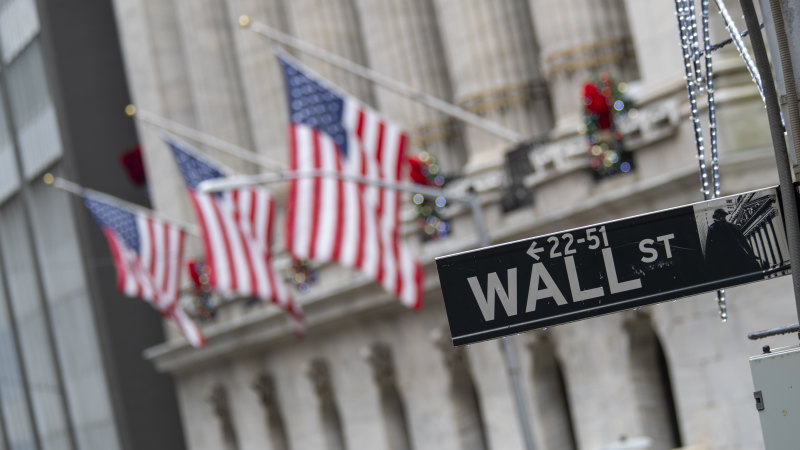
Wall Street surges on signs of economic rebound; Boeing soars

“With the market returning to all-time highs, there’s sentiment out there that the economy will get better in the second half of the year,” said Joseph Sroka, chief investment officer at NovaPoint in Atlanta. “There are a number of gates in the way between now and 2021, but barring another COVID-like event, there should be a fairly robust return to growth.”

Nationwide protests over the death of an unarmed black man in police custody extended through their eighth night as protesters ignored curfews, but violence subsided after President Donald Trump threatened to deploy the military.

A spate of grim economic data was not as bad as economists feared, with ADP reporting much fewer private-sector job cuts in May than expected.

Market participants now await the US Labor Department’s more comprehensive May jobs report, which is expected to show unemployment soaring to a historic 19.7 per cent.

The Dow Jones Industrial Average rose 440.59 points, or 1.71 per cent, to 26,183.24, the S&P 500 gained 38.06 points, or 1.24 per cent, to 3,118.88 and the Nasdaq Composite added 75.11 points, or 0.78 per cent, to 9,683.48.

Loading

Of the 11 major sectors in the S&P 500, all but healthcare were in positive territory.

Boeing gave the biggest boost to the blue-chip Dow, its shares rising 10.4 per cent following news that billionaire investor Daniel Loeb’s Third Point had taken a stake in the company.

Lyft jumped 10.4 per cent after the ride-sharing platform reported rides increased 26 per cent in May.

Microchip Technology surged 12.5 per cent after the chipmaker raised its forecast for current-quarter sales and profit.

Teleconferencing firm Zoom Communications nearly doubled its annual sales expectations, but also reported a sharp rise in costs. Its shares were up 5.8 per cent.

Cosmetics maker Coty Inc’s rose 10.9 per cent after announcing it was in talks to collaborate on a beauty line with reality TV star Kim Kardashian West.

Campbell Soup beat earnings expectations and hiked its full-year forecast, but troubles meeting surging consumer demand sent its shares down 4.9 per cent.

Advancing issues outnumbered declining ones on the NYSE by a 3.62-to-1 ratio; on Nasdaq, a 2.33-to-1 ratio favoured advancers.

The S&P 500 posted 30 new 52-week highs and no new lows; the Nasdaq Composite recorded 89 new highs and three new lows.

Source by [author_name]

EU-China summit postponed due to coronavirus concerns

0

The plan was to convene EU and Chinese leaders in Leipzig on September 14 | Thierry Charlier/AFP via Getty Images

Meeting was pitched as a landmark occasion to fall under Germany’s six-month Council of the EU presidency, which kicks off on July 1.

BERLIN — The EU and China agreed to postpone a summit in Germany set for September due to the coronavirus pandemic, the Berlin government announced Wednesday.

The plan was to convene EU and Chinese leaders in Leipzig on September 14 for a gathering aimed at deepening ties between the bloc and the world’s second-largest economy. It was pitched as a landmark occasion to fall under Germany’s six-month Council of the EU presidency, which kicks off on July 1. The aim was also to seal an investment protection agreement between Beijing and Brussels, but progress has been slow on reaching a deal.

Instead, the EU, Germany and China will work to find an alternative date for the meeting, according to Steffen Seibert, Chancellor Angela Merkel’s chief spokesperson. In a statement posted on Twitter, Seibert did not give any indication as to whether the summit would still take place this year.

The decision was taken after Merkel spoke with Chinese President Xi Jinping and European Council President Charles Michel by telephone earlier in the day, Seibert said.

Last week, German Foreign Minister Heiko Maas said Berlin wanted to help develop “a robust EU strategy on China” over the coming months.

Want more analysis from POLITICO? POLITICO Pro is our premium intelligence service for professionals. From financial services to trade, technology, cybersecurity and more, Pro delivers real time intelligence, deep insight and breaking scoops you need to keep one step ahead. Email pro@politico.eu to request a complimentary trial.


Source by [author_name]

Venice Glimpses a Future With Fewer Tourists, and Likes What It Sees

0

VENICE — For a change, it was the Venetians who crowded the square.

Days before Italy lifted coronavirus travel restrictions on Wednesday that had prevented the usual crush of international visitors from entering the city, hundreds of locals gathered on chalk asterisks drawn several feet apart. They had come to protest a new dock that would bring boatloads of tourists through one of Venice’s last livable neighborhoods, but also to seize a once-in-a-lifetime opportunity to show that another, less tourist-addled future was viable.

“This can be a working city, not just a place for people to visit,” said the protest’s organizer, Andrea Zorzi, a 45-year-old law professor who frantically handed out hundreds of signs reading, “Nothing Changes If You Don’t Change Anything.” He argued that the virus, as tragic as it was, had demonstrated that Venice could be a better place. “It can be normal,” he said.

The coronavirus has laid bare the underlying weaknesses of the societies it has ravaged, whether economic or racial inequality, an overdependence on global production chains, or rickety health care systems. In Italy, all those problems have emerged, but the virus has also revealed that a country blessed with a stunning artistic patrimony has developed an addiction to tourism that has priced many residents out of historic centers and crowded out creativity, entrepreneurialism and authentic Italian life.

For months, the alleys, porticoes and campos reverberated with Italian, and even with Venetian dialect. The lack of big boats reduced the waves on the canals, allowing locals to take their small boats and kayaks out on cleaner water. Residents even ventured to St. Mark’s Square, which they usually avoid.

Venice, which gave the world the word quarantine during a prior pandemic, has undergone many transformations in its roughly 1,500-year history. It started as a hide-out for refugees, became a powerful republic, mercantile force and artistic hub.

Now, it’s a destination that largely lives off its history and a tourism cash cow worth 3 billion euros, or about $3.3 billion. But with the money comes hordes of day trippers, giant cruise ships, growing colonies of Airbnb apartments, souvenir shops, tourist-trap restaurants and high rents that have increasingly pushed out Venetians.

That lucrative model is likely to return. But longtime proponents of a less touristy city are hoping to take advantage of the global standstill.

“This is a tragedy that has touched us all, but Covid could be an opportunity,” said Marco Baravalle, a leader of an anti-cruise-ship movement who called the absence of big boats “magnificent.”

He said he feared that the city’s mayor, Luigi Brugnaro, backed by powerful boating and tourism interests, would turn things back as soon as possible. “It’s going to be difficult,” Mr. Baravalle said. “But it’s our best chance.”

If tourism critics are in agreement that there needs to be a different vision for Venice, they are less clear on how to bring about a renaissance.

There is talk of a proposed international climate change center, of lower rents drawing local artisans and factory workers back to the islands from the mainland and of a creative community of artists, designers, web producers and architects.

In this floating field of dreams, people will come, just other kinds of people. The tourists would be more like the arts crowd that flocks to the Venice Biennale, and they would carry canvas tote bags and be interested in Venice’s heritage, its museums and galleries. Students would stay and become young professionals, draw start-up investors, and replenish an aging and diminishing population. Good restaurants and natural wine bars would push out the awful ones.

“The type of people you attract to Venice depends on what you offer,” said Luca Berta, a co-founder of VeniceArtFactory, which promotes new art in the city, as he stood in his exhibition space.

Alberto Ferlenga, the rector of the Iuav University of Venice, one of several colleges in the city, said his goal was to make Venice more a university town, with students and professors making the city their campus.

He said he was working on a project with the city, powerful Italian banks and Airbnb that would allow thousands of students — including international ones — to live in Airbnb apartments, which are now empty, instead of commuting from the cheaper mainland.

“Common sense says, ‘Let’s take advantage of it,’” Mr. Ferlenga said of the available housing. Students who stayed and built careers and families in Venice could prove as economically viable as the mass tourism market, he argued. “It would change everything,” he said. “In this moment, there is a temporary window.”

But as advocates of change talk of motivating long-term lending through housing-tax breaks, low-interest loans, and a restricting of infamously generous squatting rights, the window is already closing.

In recent days, the city was opened only to those in the surrounding Veneto region. The place was still jammed.

But the city was offered a sense of what was, and what could be. Only Italian — and Veneto-accented Italian — could be heard over the spritzes and plates of black squid ink spaghetti.

“We thought we’d take advantage of this last chance to see Venice when it is only for us, alone,” said Matteo Rizzi, 40, from nearby Portogruaro, whose children carried cameras as he crossed a bridge into the city from the train station. “It’s like having the museum to ourselves.”

  • Updated June 2, 2020

    • Will protests set off a second viral wave of coronavirus?

      Mass protests against police brutality that have brought thousands of people onto the streets in cities across America are raising the specter of new coronavirus outbreaks, prompting political leaders, physicians and public health experts to warn that the crowds could cause a surge in cases. While many political leaders affirmed the right of protesters to express themselves, they urged the demonstrators to wear face masks and maintain social distancing, both to protect themselves and to prevent further community spread of the virus. Some infectious disease experts were reassured by the fact that the protests were held outdoors, saying the open air settings could mitigate the risk of transmission.

    • How do we start exercising again without hurting ourselves after months of lockdown?

      Exercise researchers and physicians have some blunt advice for those of us aiming to return to regular exercise now: Start slowly and then rev up your workouts, also slowly. American adults tended to be about 12 percent less active after the stay-at-home mandates began in March than they were in January. But there are steps you can take to ease your way back into regular exercise safely. First, “start at no more than 50 percent of the exercise you were doing before Covid,” says Dr. Monica Rho, the chief of musculoskeletal medicine at the Shirley Ryan AbilityLab in Chicago. Thread in some preparatory squats, too, she advises. “When you haven’t been exercising, you lose muscle mass.” Expect some muscle twinges after these preliminary, post-lockdown sessions, especially a day or two later. But sudden or increasing pain during exercise is a clarion call to stop and return home.

    • My state is reopening. Is it safe to go out?

      States are reopening bit by bit. This means that more public spaces are available for use and more and more businesses are being allowed to open again. The federal government is largely leaving the decision up to states, and some state leaders are leaving the decision up to local authorities. Even if you aren’t being told to stay at home, it’s still a good idea to limit trips outside and your interaction with other people.

    • What’s the risk of catching coronavirus from a surface?

      Touching contaminated objects and then infecting ourselves with the germs is not typically how the virus spreads. But it can happen. A number of studies of flu, rhinovirus, coronavirus and other microbes have shown that respiratory illnesses, including the new coronavirus, can spread by touching contaminated surfaces, particularly in places like day care centers, offices and hospitals. But a long chain of events has to happen for the disease to spread that way. The best way to protect yourself from coronavirus — whether it’s surface transmission or close human contact — is still social distancing, washing your hands, not touching your face and wearing masks.

    • What are the symptoms of coronavirus?

      Common symptoms include fever, a dry cough, fatigue and difficulty breathing or shortness of breath. Some of these symptoms overlap with those of the flu, making detection difficult, but runny noses and stuffy sinuses are less common. The C.D.C. has also added chills, muscle pain, sore throat, headache and a new loss of the sense of taste or smell as symptoms to look out for. Most people fall ill five to seven days after exposure, but symptoms may appear in as few as two days or as many as 14 days.

    • How can I protect myself while flying?

      If air travel is unavoidable, there are some steps you can take to protect yourself. Most important: Wash your hands often, and stop touching your face. If possible, choose a window seat. A study from Emory University found that during flu season, the safest place to sit on a plane is by a window, as people sitting in window seats had less contact with potentially sick people. Disinfect hard surfaces. When you get to your seat and your hands are clean, use disinfecting wipes to clean the hard surfaces at your seat like the head and arm rest, the seatbelt buckle, the remote, screen, seat back pocket and the tray table. If the seat is hard and nonporous or leather or pleather, you can wipe that down, too. (Using wipes on upholstered seats could lead to a wet seat and spreading of germs rather than killing them.)

    • How many people have lost their jobs due to coronavirus in the U.S.?

      More than 40 million people — the equivalent of 1 in 4 U.S. workers — have filed for unemployment benefits since the pandemic took hold. One in five who were working in February reported losing a job or being furloughed in March or the beginning of April, data from a Federal Reserve survey released on May 14 showed, and that pain was highly concentrated among low earners. Fully 39 percent of former workers living in a household earning $40,000 or less lost work, compared with 13 percent in those making more than $100,000, a Fed official said.

    • Should I wear a mask?

      The C.D.C. has recommended that all Americans wear cloth masks if they go out in public. This is a shift in federal guidance reflecting new concerns that the coronavirus is being spread by infected people who have no symptoms. Until now, the C.D.C., like the W.H.O., has advised that ordinary people don’t need to wear masks unless they are sick and coughing. Part of the reason was to preserve medical-grade masks for health care workers who desperately need them at a time when they are in continuously short supply. Masks don’t replace hand washing and social distancing.

    • What should I do if I feel sick?

      If you’ve been exposed to the coronavirus or think you have, and have a fever or symptoms like a cough or difficulty breathing, call a doctor. They should give you advice on whether you should be tested, how to get tested, and how to seek medical treatment without potentially infecting or exposing others.


Toto Bergamo Rossi, director of the Venetian Heritage Foundation, who lives in a palace not far from the train station, said the hordes had rudely waked him that morning.

“I was really sad, and at the same time, really angry,” said Mr. Bergamo Rossi, whose 15th-century ancestor is depicted in an equestrian statue high above the square where the residents had protested. “We don’t want to go back to that. I want my city to be a real city.”

“Airbnb is like our Covid,’’ he added. “It’s like a plague, and it turned us into a ghost town.”

His organization has prepared an open letter on behalf of “citizens of the world” that he said he would send this week to leaders of the Italian government.

Co-signed by museum directors and academics, and also by Mick Jagger, Francis Ford Coppola and Wes Anderson, the letter presents “Ten Commandments” for the new Venice, including stricter regulation of ‘‘tourist flow’’ and the Airbnb market, and support for long-term rentals.

Supporters of the status quo are quick to dismiss such proposals as noise from the out-of-touch rich and famous. And local tourism workers said they hoped things would switch back soon.

“It’s been a bad period. But I think it will go back to how it was before in about two or three months,” said Jessica Rossato, 28, from nearby Camponogara as she stood outside the Banco Giro bar by the Rialto Bridge. “And that’s an absolutely good thing.”

But it’s not only Venice’s upper- and professional-class residents who hunger for a more livable city. A couple, who have a baby on the way and who were visiting from the mainland, said the rents, even in the more working-class districts, were too high for their salaries.

“We’d love to raise our child here,” said the pregnant woman, Sara Zorzetto, 30, who works with the handicapped and whose husband is employed at a nearby chemical plant. “But there’s no way.”

That is why the protesters in the square were arguing that something had to change. As they held their signs over their heads and applauded, Mr. Zorzi told them that their “common battle” during the period of lockdown “would not be in vain.”

A fellow demonstrator asked him if they would still march down to the new tourist port as planned. He explained that the police had nixed the idea out of coronavirus concerns.

“They say there are too many of us,” Mr. Zorzi said, shaking his head.

Source link

Early Facebook Employees Disavow Zuckerberg’s Stance on Trump Posts

Facebook did not immediately have a comment on the new letter.

Facebook’s leadership must reconsider their policies regarding political speech, beginning by fact-checking politicians and explicitly labeling harmful posts.

As early employees on teams across the company, we authored the original Community Standards, contributed code to products that gave voice to people and public figures, and helped to create a company culture around connection and freedom of expression.

We grew up at Facebook, but it is no longer ours.

The Facebook we joined designed products to empower people and policies to protect them. The goal was to allow as much expression as possible unless it would explicitly do harm. We disagreed often, but we all understood that keeping people safe was the right thing to do. Now, it seems, that commitment has changed.

We no longer work at Facebook, but we do not disclaim it. We also no longer recognize it. We remain proud of what we built, grateful for the opportunity, and hopeful for the positive force it can become. But none of that means we have to be quiet. In fact, we have a responsibility to speak up.

Today, Facebook’s leadership interprets freedom of expression to mean that they should do nothing — or very nearly nothing — to interfere in political discourse. They have decided that elected officials should be held to a lower standard than those they govern. One set of rules for you, and another for any politician, from your local mayor to the President of the United States. This exposes two fundamental problems:

First, Facebook’s behavior doesn’t match the stated goal of avoiding any political censorship. Facebook already is acting, as Mark Zuckerberg put it on Friday, as the “arbiter of truth.” It monitors speech all the time when it adds warnings to links, downranks content to reduce its spread, and fact checks political speech from non-politicians.

This is a betrayal of the ideals Facebook claims. The company we joined valued giving individuals a voice as loud as their government’s — protecting the powerless rather than the powerful.

Facebook now turns that goal on its head. It claims that providing warnings about a politician’s speech is inappropriate, but removing content from citizens is acceptable, even if both are saying the same thing. That is not a noble stand for freedom. It is incoherent, and worse, it is cowardly. Facebook should be holding politicians to a higher standard than their constituents.

Second, since Facebook’s inception, researchers have learned a lot more about group psychology and the dynamics of mass persuasion. Thanks to work done by the Dangerous Speech Project and many others, we understand the power words have to increase the likelihood of violence. We know the speech of the powerful matters most of all. It establishes norms, creates a permission structure, and implicitly authorizes violence, all of which is made worse by algorithmic amplification. Facebook’s leadership has spoken with these experts, with advocates, and with organizers, yet they still seem committed to granting the powerful free rein.

So what do we make of this? If all speech by politicians is newsworthy and all newsworthy speech is inviolable, then there is no line the most powerful people in the world cannot cross on the largest platform in the world — or at least none that the platform is willing to enforce.

President Trump’s post on Friday not only threatens violence by the state against its citizens, it also sends a signal to millions who take cues from the President. Facebook’s policy allows that post to stand alone. In an age of live-streamed shootings, Facebook should know the danger of this better than most. Trump’s rhetoric, steeped in the history of American racism, targeted people whom Facebook would not allow to repeat his words back to him.

It is our shared heartbreak that motivates this letter. We are devastated to see something we built and something we believed would make the world a better place lose its way so profoundly. We understand it is hard to answer these questions at scale, but it was also hard to build the platform that created these problems. There is a responsibility to solve them, and solving hard problems is what Facebook is good at.

To current employees who are speaking up: we see you, we support you, and we want to help. We hope you will continue to ask yourselves the question that hangs on posters in each of Facebook’s offices: “What would you do if you weren’t afraid?”

To Mark: we know that you think deeply about these issues, but we also know that Facebook must work to regain the public’s trust. Facebook isn’t neutral, and it never has been. Making the world more open and connected, strengthening communities, giving everyone a voice — these are not neutral ideas. Fact-checking is not censorship. Labeling a call to violence is not authoritarianism. Please reconsider your position.

Proceed and be bold.

Sincerely, some of your earliest employees:

Meredith Chin, Adam Conner, Natalie Ponte, Jon Warman, Dave Willner, on behalf of Ezra Callahan, Chris Putnam, Bob Trahan, Natalie Trahan, Ben Blumenrose, Jocelyn Blumenrose, Bobby Goodlatte, Simon Axten, Brandee Barker, Doug Fraser, Krista Kobeski, Warren Hanes, Caitlin O’Farrell Gallagher, Jake Brill, Carolyn Abram, Jamie Patterson, Abdus-Salam DeVaul, Scott Fortin, Bobby Kellogg, Tanja Balde, Alex Vichinsky, Matt Fernandez, Elizabeth Linder, Mike Ferrier, Jamie Patterson, Brian Sutorius, Amy Karasavas, Kathleen Estreich, Claudia Park

Source link

Tottenham reveal unnamed player has tested positive for coronavirus

Tottenham have revealed that one of their players has tested positive for Covid-19 and will self-isolate for seven days, although he is not experiencing any symptoms of the virus. The London club want to keep his identity confidential. It is understood he is not a key first-team player.

The positive test was the only one from the Premier League’s fifth and latest round of screening, which took in 1,197 players and members of staff at the 20 clubs – representing another boost on the road to Project Restart.

The league has pledged to make public the results of the tests in the interests of transparency and the aggregated numbers now show that there have been 13 positives from 5,073 people screened.

The fear has always been that high or rising numbers of infections could jeopardise the plan for the league to restart on 17 June and complete the remaining games by 25 or 26 July but that has not been the case thus far, showing the safety measures introduced at training grounds are proving robust. The isolated positive announced on Wednesday follows zero positive results from the previous round of testing.

The league and the clubs will hold their latest conference call on Thursday at which a variety of topics will be discussed. They include curtailment scenarios and a proposed fixture list, together with more technical matters relating to player registration, squad size and substitutes.

The Fiver: sign up and get our daily football email.

The Metropolitan police says it will look at the final proposed fixture list before recommending whether any games in London should be moved to neutral venues. In Liverpool, the city council’s safety advisory group is due to meet early next week, with Everton hoping it will allow them to stage the derby against Liverpool at Goodison Park over the long weekend of 19‑22 June.

Amazon has announced its four remaining televised matches will be made available free to air, to go alongside Sky Sports’ pledge to do the same with 25 of its 64 games and the BBC’s four terrestrial fixtures.

Source link

From a typist to a dollar millionaire: how a former resident of Kharkiv became one of the richest women in #Russia and #Ukraine

0

A new name, Liudmyla Burlakova (Marchenko – pictured right), has begun to appear in the rankings of Russia’s richest women recently. She is credited with owning hundreds of millions of dollars in wealth. But the most interesting thing in this story is that Liudmyla is a citizen of Ukraine with a life rich in criminal connections.

Liudmyla was born in Kyiv in 1951. Nothing is known about her father, but the girl was raised by her stepfather Viktor Mikhieiev, a former junior state security officer. There were rumors that he was fired from the KGB for being unfit for the position. Mikhieiev’s work was interesting and, as they would say now, filled with corruption – he was in charge of giving permissions to Soviet citizens for going abroad. The temptation to earn seems to have been irresistible for him. But even after his resignation, he kept on cooperating with the state security service, which later proved to be very useful for the activities of his wife and later of his daughter.

Her mother’s career was not so prestigious, but no less exciting. Liudmyla’s mother, Nina Mikhieieva, worked almost all her life in public catering, and most of her career fell to the position of senior bartender at the “Polit” cafe at the “Zhuliany” airport. It was there that the talents of the former KGB-man’s wife were revealed. It was there that she was able to use all her organizational skills to create a crime group, which she had been heading for many years.

The group was exposed in 1983, which ended in a criminal case.

Everything was far more than serious. Article 86-1 of the Criminal Code on the theft of state property in especially large amounts provided for severe punishment, up to the death penalty. The investigation established that Mikhieieva was a member of an organized crime group, which for years, together with the crime lords, not only stole state property, but also organized schemes to buy, sell and resell stolen goods and for money laundering.

For Mikhieieva, everything could have ended sadly, but her husband’s connections saved her.

The investigator of particularly important cases from the Transport Investigative Department S.I. Yablonskyi, who was in charge of the case, received a call “from someone further up the ladder” from the State Security Department and was urged to transfer citizen Mikhieieva to the City Psychiatric Hospital No 1 in Kyiv, better known as “Pavlovka”.

That was done on July 27, 1983.

After a short stay in the hospital, Mikhieieva was discharged with a diagnosis of  a “long-lasting reactive depressive psychosis” and a certificate stating that she could not be prosecuted due to her health condition. The family could breathe out.

One can only guess what influenced young Liudmyla more: her mother’s criminal talents and stepfather’s ability to pull strings, or it was just the times she lived in, but she mastered this “efficient way” to get rich without much effort quickly and well.

At first, she tried to do everything as other people do: graduate from the university and find a job. But something went wrong with her studies – it took her ten years to graduate from the correspondence department at the Kyiv Institute of Civil Aviation Engineers in 1981, exactly two years before the criminal proceedings against her mother started.

Then she worked as a secretary-typist and laboratory assistant at a military school. But it could not last long.

The Soviet Union had a few more years to live, but the familiar world was already going to pieces. In 1985, a fairly young and determined new General Secretary, Gorbachev came to replace the Kremlin old men. Perestroika and economic liberalization began, which opened new prospects for people with ambitions and a commercial acumen.

The wind of change caught Liudmyla in Kharkiv, which at that time was the epicenter of new challenges and opportunities. The city with a million-plus population, crowded with students, engineers and heavy industry enterprises, was a good jumping-off place for business.

In 1988, the executive committee of the Dzerzhinskyi City District Council of People’s Deputies registered a multidisciplinary cooperative research and production association “Integral” (Id. code 22624089), located at 92Б, Bilhorodska St. in Kharkiv.

The founders were Liudmyla (she got married then and took the surname Burlakova) and her relatives, the Kozakovs, dividing the shares –1 to Burlakova and 2 to the Kozakovs. A year later, they opened another company – “Sovinterfrans” with the same proportions (shares) in the property, followed by others.

Investments in the oil and cement business paid off. Things were going well.

However, as they say, money is never too much.

Liudmyla obviously learned well the lessons of the family in which she was raised and therefore, in addition to the main business, she apparently decided to open a more profitable but also an illegal business of money laundering. To this end, she invited her mother with her good connections in the criminal world and immunity from prosecution to work. She understood the importance of personal contacts and connections.

Money started coming in bags, black cash “from the criminal elements” in bags and tubes – those were the usual day-to-day activities.

However, in 1992-1993, their relationship with the gangland deteriorated sharply, it seems someone was scammed by them. Liudmyla hastily fled from the criminal elements to the United States, where she continued to manage Integral

Decades have passed since then, the former “guys in red jackets” have become respectable businessmen. There is no point in raising ghosts of the past. But only if the debts are closed in time.

Liudmyla Burlakova (Marchenko) has not done it, and in vain.

In the Noughties, the Ukrainian Justice became interested in Burlakova (Marchenko) due to the closure of the Integral cooperative. In December 2003 the Commercial Court of the Kharkiv Region heard the case No 16/480-03 on the winding up of the cooperative and concluded that there were all grounds to suspect a crime and material damage in an especially large amount. Just like with her mother twenty years ago.

As we can see, Marchenko is in no hurry to compensate the damage, ignoring the court’s decree and the partners’ demands to reimburse the funds due to them.

Criminal proceedings have been started for non-compliance with the Decree of the Kharkiv Regional Court.

And although the exact amounts of debt have not been made public, we can assume that these are serious amounts. According to the publications in the media, as well as from Liudmyla’s statements, the annual turnover of the Integral cooperative in the early 1990s amounted to $12-15 million.

According to experts, the approximate amount of unpaid taxes by Liudmyla Burlakova, including dividends from the investments she refers to, can currently reach $300 million. For comparison – the entire annual budget of Kharkiv is $450 million.

Let’s see what tricks Liudmyla Burlakova (Marchenko) will use, who will call and to whom, who will be offering money and what amounts to hush up the case!

It is still unclear how the stolen from the state will be reimbursed, as citizen Liudmyla Burlakova (Marchenko) has not appeared in Ukraine for a long time.

But the former Kharkiv resident should not expect that Interpol will work poorly, and this case will be forgotten in Ukraine. It is expected to be loud and demonstrative.

We are keeping an eye on the further development of events.  It will be interesting!


The sources for the information provided in the article are:

https://antikor.com.ua/articles/383053-ot_mashinistki_do_dollarovoj_millionershi_kak_byvshaja_harjkovchanka_stala_odnoj_iz_bogatejshih_henshchin_rossii_i_ukrai


Source by [author_name]

App it up: Three must-have apps to streamline your PC experience

There are several apps that can be installed on your laptop or PC that are very useful in terms of data usage, multimedia, and internet browsing. Below is a list of applications that will help you a great deal in future.

Potplayer

This is an excellent media player that will allow you to play any and every format of video and audio you come across. Most people are very familiar with VLC as it is one of the most popular media players today.

However, Potplayer is probably the better and smarter option because, unlike VLC, this media player has no limitations and allows you access to everything. It may seem a bit complicated to use at first because of all the options presented to you, but that is the beauty of this app.

It gives you different options concerning audio, subtitles, screen ratio, and a lot more.

It has an easy-to-use interface and is a pleasure to navigate with its various shortcuts once you have gotten the hang of it. It is also free to download.

Glasswire

This is probably a very good and helpful app to keep on your computer. The app can be installed straight from your Microsoft Store and will monitor your data usage. This app is probably best for people who are on a limited data plan or who would like to keep track of how much data they are using during a period of time. 

There is a premium version of the app, but the free version works perfectly and does the job well enough. The app monitors your data usage for the day/week/month and tells you which applications are using more data than they are supposed to. It is very helpful, and there is also a version available for your cell phones.

Opera Mini

You are probably wondering why you would need an internet browser when you have Google Chrome and Microsoft Edge, right?

Well, then it is important that you are made aware of the fact that Google Chrome uses a lot of your RAM and CPU and therefore slows down your computer speed to almost half of what it normally would be.

With Opera Mini, this would not be an issue as it does not take a lot of space nor does it use a lot of your computer’s RAM. Not only this, but it has a lot of cool features that Microsoft Edge and Chrome does not have, such as built-in WhatsApp, Instagram, and Facebook apps, built-in ad-blockers, as well as different themes and settings that can be applied.

The browser allows you to sign in with the same account you may have used on mobile or elsewhere and then links your account, and gives you access to all your bookmarks, and saved pages.

Opera Mini is very convenient, easy and fun to use and comes highly recommended over other browsers.


Source link

COVID-19: Confirmed cases in SA increase by 1 713, deaths now at 792

It’s day three of Level 3 lockdown and South Africans who are returning to some semblance of normal are urged to maintain social distancing protocols to curb the spread of the COVID-19 pandemic.

It was confirmed by the ANC earlier today that OR Tambo executive mayor Thokozile Sokanyile tested positive for COVID-19. The Eastern Cape has the second most confirmed cases in the country.

COVID-19 update: Saturday, 3 June 2020

Health Minister Zweli Mkhize announced on Twitter that the number of COVID-19 cases in South Africa now stand at 37 525; an increase of 1 713 since Tuesday, 3 June 2020.

Deaths also increased by 37, now at a total of 792, At the time of publishing, 19 682 people have recovered from the novel coronavirus. Health Minister Zweli Mkhize said:

“We note the same pattern that drove up the outbreak in Western Cape is building up in the Eastern Cape. The two provinces now consist of 78% of all positive cases. Additional attention is being directed to Eastern Cape to ensure the province can adequately respond to limit the escalation of infection”.

Health Minister Zweli Mkhize

Breakdown of new confirmed COVID-19 cases

New cases, deaths and recoveries by province

The confirmed COVID-19 cases per province is as follows:

Province Total Cases Deaths Recoveries
Gauteng 4 567 33 2 169
Western Cape 24 657 597 13 696
KwaZulu Natal 2 707 54 1 248
Free State 319 8 123
Eastern Cape 4 526 95 2 123
Limpopo 200 3 145
Mpumalanga 137 0 86
North West 314 1 59
Northern Cape 93 1 33
Unallocated 5 0 0

Tests and screening

As of today, a total of 785 979 tests have been conducted, of which 24 445 were done in the last 24 hours. The total number of tests conducted in the private sector stands at 388 302, of which 12 220 were done in the last 24 hours.

In addition, 397 677 tests were conducted in the public sector, with 12 225 being done within the last 24 hours. Minister Mkhize addressed the backlog of tests earlier this week as well.

Mkhize explained that there more 96 000 unprocessed tests, mainly due to the limited availability of kits globally and said SA will be sourcing as many kits as possible. He added:

“We shouldn’t panic about the fact that there are backlogs, we’ve gone all out, we’ve got a good stance of how the infection is raging. The approach is tactical, it does not really undermine our campaign”.

Global COVID-19 news: Total cases, US protests

At the time of publishing, global figures exceeded 6.5 million confirmed cases – 6 500 755 to be exact – with the death toll now standing at 383 992 and 3 095 694 recoveries.

The United States of America still has the most confirmed cases on the global scene, with 1 887 708 confirmed cases, 108 291 deaths and 646 614 recoveries. Out of the 1 132 803 active cases, 17 055 are critical.

America is fighting multiple battles at the moment. Approximately 40 million citizens are out of work due to the pandemic. In addition, widespread protests are taking place in all major cities.

Earlier this week, President Trump said in a briefing that he is America’s “president of law and order”. Meanwhile, metres from the White House, armed forces assaulted peaceful protesters at a church.

It was later revealed that authorities forcefully removed the peaceful group because Trump wanted a photo opportunity at the church, where he stood for two minutes, awkwardly holding a bible.

Watch: Military attacks peaceful protesters


Source link