Turkey readies for ‘new normal’ after declaring success against coronavirus

May 28, 2020

The government appears keen to kickstart the economy quickly after a two-month interruption of economic activity that has hit Turkish manufacturing and all but stalled its services sector.

A total of 124,369 people have recovered out of the 160,979 people who contracted COVID-19, the disease caused by the SARS-CoV-2 virus, Health Minister Fahrettin Koca said on Twitter. On Thursday, another 1,182 people were diagnosed with the disease and 30 people died, bringing the death toll to 4,461 — far below other countries with similar caseloads.

Turkey introduced strict measures even before it became a Middle East hotspot for the coronavirus pandemic last month. But new infection rates have slowed to their lowest levels since March, soon after the virus reached Turkey, prompting a senior Erdogan adviser to tweet last week, “#MissionAccomplished.”

“We now have the opportunity to take necessary steps toward the period we call ‘the new normal,’” Erdogan said after a four-hour cabinet meeting at his Istanbul residence. “Turkey’s thwarting of the outbreak and the loss of life and its attainment of a position that makes it an example to the world is a collective success for all 83 million of us.”

The ban on intercity travel will be “completely lifted” June 1, he said, but added it could be reintroduced for some provinces if required. Preschools, daycare centers, sports facilities, restaurants, cafes, open-air concert halls, museums, beaches and national forests are also permitted to re-open next week.

Stay-at-home orders for people age 65 and up and 18 and under will continue, with exceptions made for a few hours each week, he said. Residents in 15 provinces, including Istanbul and the capital Ankara, will be under curfew again this weekend before the easing begins on Monday, according to an Interior Ministry statement.

The government had already eased some rules, allowing hairdressers and shopping malls to reopen on May 11. Friday prayers will be allowed for the first time in two months this week at more than 1,900 of the country’s mosques, and the head of religious affairs said 1,003 animals will be sacrificed to celebrate the resumption of congregational prayers.

Separately, Erdogan announced that the triumphant Sura al-Fath from the Quran will be read from Hagia Sophia on Friday, the anniversary of the 1453 conquest of Istanbul by Ottoman forces. The Istanbul monument was an Orthodox church for nearly a millennium before its conversion to a mosque following the fall of Istanbul, then became a museum in 1935 in what is widely seen as a symbol of Turkish secularism. Certain religious groups have since called for it to be reopened as a mosque.

Some experts are warning that physical distancing rules are being loosened too soon in Turkey and that allowing public gatherings could affect the decline. Caghan Kizil, a professor of medicine at Dresden University in Germany who has closely followed the outbreak in Turkey, said on Twitter that Turkey may be pursuing a kind of herd-immunity strategy unless it sees a sharp rise in new infections, when it could reintroduce restrictions.

“It wouldn’t be wrong to say that the accelerated shift to normalization after a desired but debatable success story shows decisions rest more on political preferences then scientific figures,” Kizil tweeted.

Turkey had only just returned to rapid economic growth when the pandemic threw the global economy into a tailspin. The hit to Turkey’s economy is likely to be a 3% contraction this year, Fitch Ratings said this week.

But Finance Minister Berat Albayrak, who is Erdogan’s son-in-law, insisted the economy will expand this year. “When compared with the rest of the world, Turkey is among countries least affected, from growth to unemployment to many other fields,” he said on Wednesday. Turkey will release gross domestic product figures for the first quarter on Friday that are expected to show an expansion of 4.9% before the impact of the coronavirus restrictions were largely felt, according to a Bloomberg poll.

One side effect of the outbreak has been the proliferation of conspiracy theories across social media as well as in some nationalist newspapers that minorities, especially Jews, were somehow behind the outbreak, which emerged in China at the end of 2019. A man who set fire to an Armenian church door in Istanbul earlier this month reportedly told police he was angry because he believed Armenians caused the contagion.

This week, security footage showed a man climbing the gates of another Armenian church to tear down a cross. No arrests have been made in connection with the attack, which is the third against a church in one month, Garo Paylan, an opposition lawmaker who is of Armenian descent, told a news site.

It was unclear if the latest vandalism was sparked by misplaced anger over the coronavirus. But critics have warned that politicians’ recent rhetoric targets Turkey’s small communities of non-Muslims and has made them vulnerable.

Earlier this month, Erdogan said “Armenian and Rum lobbies” were among the “evil forces” conspiring against Turkey. (Rum is a term used for the tiny population of ethnic Greeks still living in Istanbul, as well as Greek Cypriots.) He also referred to militants in the outlawed Kurdistan Workers Party as “remnants of the sword,” a pejorative for survivors of the World War I-era genocide of Armenians by Ottoman forces.

“The administration’s spokesmen themselves have used hate speech that incites polarization and discrimination,” wrote lawmaker Tuma Celik, who is a Syriac Christian, in a parliamentary question submitted on Thursday following the latest attack on a church. “We could easily see serious damage caused by hate speech and actions in Turkey’s near future.”


Source link

Trump Officials Defend Their Handling Of Worker Safety During Coronavirus

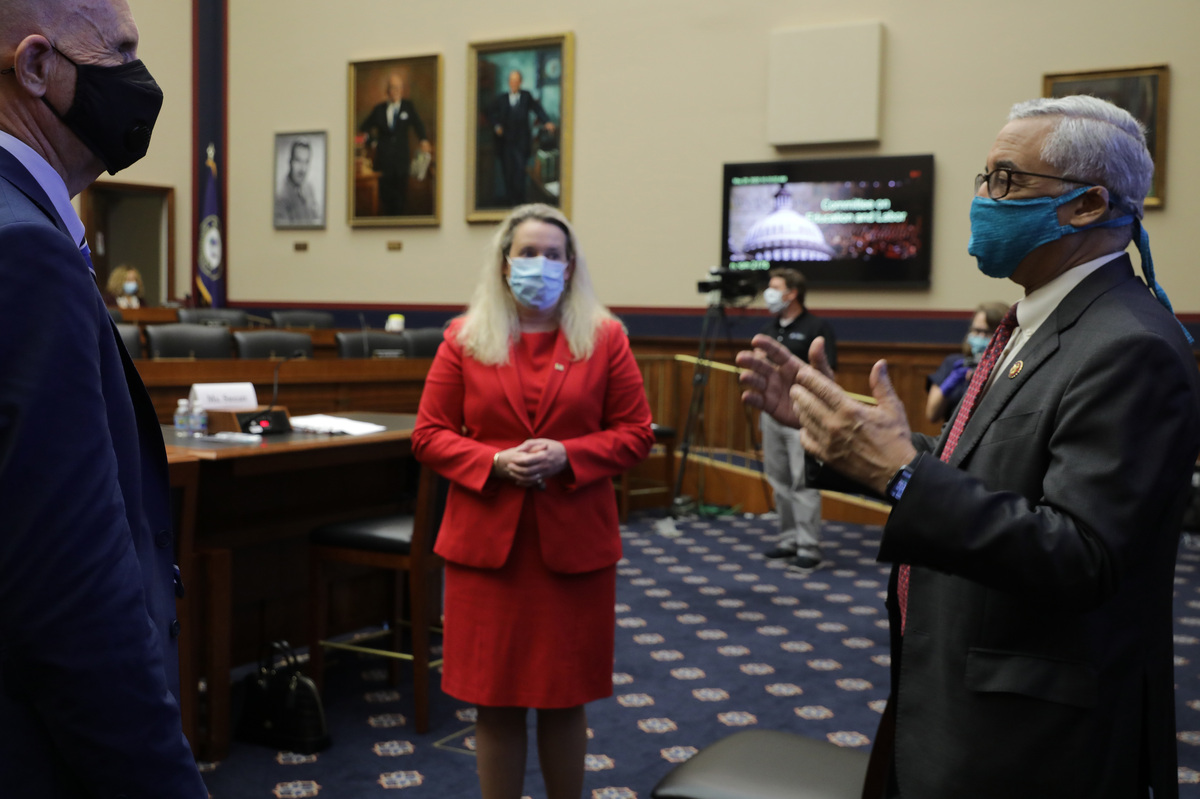
Occupational Safety and Health Administration Principal Deputy Assistant Secretary Loren Sweatt (C) and National Institute for Occupational Safety and Health Director John Howard (L) talk with House Education and Labor Committee Chairman Bobby Scott (D-VA) before a hearing about the federal government’s role in protecting workers during the novel coronavirus pandemic on Capitol Hill on Thursday.

Chip Somodevilla/Getty Images


hide caption

toggle caption

Chip Somodevilla/Getty Images

Occupational Safety and Health Administration Principal Deputy Assistant Secretary Loren Sweatt (C) and National Institute for Occupational Safety and Health Director John Howard (L) talk with House Education and Labor Committee Chairman Bobby Scott (D-VA) before a hearing about the federal government’s role in protecting workers during the novel coronavirus pandemic on Capitol Hill on Thursday.

Chip Somodevilla/Getty Images

Trump administration officials defended their handling of worker safety during the COVID-19 pandemic at a congressional hearing Thursday in Washington, D.C. But they acknowledged a grim new tally of deaths among doctors and nurses is “likely to be an underestimate,” according to testimony from Dr. John Howard, head of the National Institute for Occupational Safety and Health, a division of the Centers for Disease Control and Prevention.

This week the CDC raised dramatically its assessment of healthcare worker infections to more than 62,000, with at least 294 medical industry deaths linked to the coronavirus. Howard said federal officials still aren’t able to track the number of workers getting sick from the coronavirus in any industry or region of the country “due to data collection challenges arising from the pandemic.”

Still, Loren Sweatt, head of the Occupational Safety and Health Administration, told lawmakers federal agencies have reacted swiftly, offering updated safety guidelines to employers ranging from hospitals and nursing homes to meat-packing plants and warehouses.

“OSHA quickly pivoted to focus intensely on giving employers and workers the guidance they need to work safely in this rapidly changing situation,” Sweatt said.

OSHA is currently investigating more than 5,000 complaints from workers linked to COVID-19 risks in the workplace. Sweatt testified her agency has focused largely on convincing employers to resolve safety problems quickly and voluntarily. Only one company has been cited for wrong-doing since the outbreak began.

One focus of Thursday’s hearing was a set of new infectious disease regulations, designed to better protect workers during a pandemic like this one. The Trump administration shelved those proposed standards in 2017. Sweatt said existing rules and voluntary guidance measures already give federal agencies enough tools to protect workers.

She also suggested the regulations had “languished” previously under the Obama administration. But a review of federal documents by NPR found Obama-era officials worked steadily on new infectious disease standards for airborne and contact pandemics, following the standard process for implementing new regulations.

Work on the rules stopped after President Trump took office.

Republicans on the House Labor and Education committee praised that decision, suggesting the new rules would place an undue burden on business owners during an economic crisis. Rep. Virginia Foxx of North Carolina said companies are already doing their best to protect people on the job. “Every employer wants his or her workers kept safe, they are their most valuable assets,” she said.

But as the country moves to reopen and more Americans head back to work, Democrats on the panel argued infectious disease ruled should be adopted quickly as an emergency order. “Deep into this pandemic OSHA still hasn’t developed any enforceable standards for employers to follow that can protect workers from airborne transmission,” said Rep. Alma Adams (D-NC).

The lack of regulatory standards meant the Trump administration was able to relax voluntary safety guidelines repeatedly as the coronavirus spread and shortages of personal protective equipment became dire. Many hospitals, nursing homes and other workplaces were allowed to ration and reuse equipment even as workers got sick.

In his testimony, Howard acknowledged the CDC’s decision to allow hospitals and other workplaces to force workers to reuse personal safety equipment wasn’t based on conclusive evidence they would be protected from infection.

“The science about decontamination is relatively new and I mean very new,” he told lawmakers, suggesting the practice should only be used as a last resort.

Source link

Cameron Winklevoss Claims Fact Checking Is Censorship And Gets Fact-Checked

Censorship has always been a concern throughout American history. How important was censorship to our Founding Fathers? Our government was literally founded on it with the First Amendment which established freedoms such as speech, expression, press, protest and religion. With the recent attempts by countries to limit freedoms by censoring people’s abilities to express their thoughts and words, such as in Pakistan with the temporary banning of Twitter, Americans have unleashed a barrage of criticisms towards those governments who are attempting to squash one of America’s most cherished amendments. Most Americans may not be able to list all of our 27 amendments, but we never have a problem remembering the first. Though many governments throughout the world are guilty of violating specific freedoms, many Americans fail to realize that, just because our constitution states that we are entitled to certain freedoms, America hasn’t always necessarily practiced what we preach, or even founded our nation on.

AP


Source by [author_name]

Anti-Trump Republican group releases new ad taking aim at “Rich Mitch” McConnell in GOP leader’s home state

An anti-Trump political action committee released a new advertisement targeting Senate Majority Leader Mitch McConnell on Wednesday, as the long-standing Kentucky senator campaigns for his seventh consecutive term in office.

The advertisement, titled “#RichMitch,” was created by the Lincoln Project, a group composed of Republican strategists and consultants aiming to prevent President Donald Trump’s re-election in November. Its latest video highlights disparities between McConnell’s personal affluence and the financial well-being of Kentucky’s population, noting the state’s low ranking in terms of employment opportunities, education and health care, compared with other United States regions.

“After 35 years, Kentuckians are still waiting for the kinds of opportunities Mitch worked so hard to give himself,” the ad’s narrator says, citing various reports that indicate Kentucky’s unemployment rate is among the nation’s highest.

Figures published by various government agencies have supported the Lincoln Project’s statements about job opportunity. According to recent data released by the United States Bureau of Labor Statistics, unemployment was more prevalent in Kentucky than in 37 states and Washington, D.C., as of April. On May 7, the Department of Labor’s weekly report detailing nationwide unemployment claims showed the majority had been filed by Kentucky residents throughout the coronavirus pandemic.

McConnell, whose net worth was estimated to be more than $10 million in 2019, has received backlash from other state leaders, like New York Governor Andrew Cuomo, for suggesting regions facing economic deficits as a result of the virus outbreak should declare bankruptcy instead of requesting federal assistance.

Additional reports from U.S. News and Wallet Hub place Kentucky near the tail end of nationwide rankings in quality of and access to education. An evaluation of Kentucky’s public health system included in the United Health Foundation’s most recent annual report yielded similar findings about its caliber compared with other states.


Mitch McConnell speaks at a press conference in Washington, D.C., on May 19. Anti-Trump political group the Lincoln Project released an advertisement criticizing McConnell on Thursday, amid his campaign for another term as senator of Kentucky.
Drew Angerer/Getty

The Lincoln Project’s criticisms of McConnell come as he campaigns for re-election as senator, a post to which he was first elected in 1984. Though some polls have shown McConnell is one of the country’s least-favored lawmakers, others conducted more recently found respondents were essentially divided in their allegiances to the current Kentucky senator and his 2020 Democratic opponent, Amy McGrath.

With several months remaining in the state senate race, Lincoln Project Communications Director Keith Edwards told Newsweek that Wednesday’s McConnell commentary will not be its last. “This is just the beginning,” Edwards said.

In previous comments to Newsweek on May 12, McGrath shared her hopes for a Democratic win at the upcoming election, despite McConnell’s lengthy congressional history.

“People in Kentucky know that he doesn’t care about them, and they want him gone,” she said in reference to voters. “They’re tired of him.”

Responding to the Lincoln Project’s advertisement on Thursday, a McConnell campaign spokesperson told Newsweek, “No scam PAC of grifters has ever been less relevant and no group of DC consultants will be forgotten faster than these thieves who bet everything on three days of dishonest ads in Kentucky.”

The Lincoln Project did not reply to Newsweek‘s request for additional comment in time for publication.

Source link

Antarctic ice sheets capable of much faster melting than we thought

0

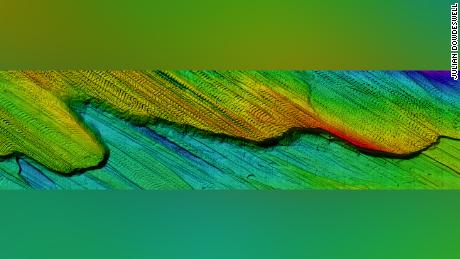
Studying patterns of wave-like ridges on the Antarctic seafloor, scientists from the Scott Polar Research Institute at the University of Cambridge found that some 12,000 years ago, ice retreated at speeds in excess of 10 kilometers (6.2 miles) a year — far more rapid than today’s retreat rates, which are calculated using satellite data.

Researchers warn that, should climate change carry on weakening ice shelves in coming decades, we could soon see similar levels of ice retreat — more than were thought possible — with huge implications for global sea levels.

Though sea ice conditions stopped the team from retrieving images of the legendary wreck, they were able to map the seafloor near to the Larsen Ice Shelf, east of the Antarctic Peninsula.

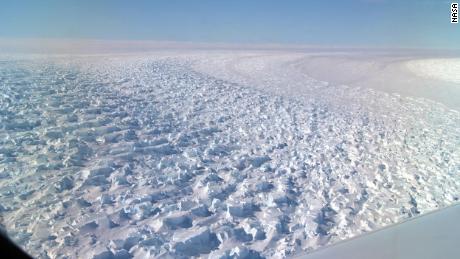
The Larsen Ice Shelf originally covered an area of 33,000 square miles, but has shrunk dramatically as air temperatures warmed in the second half of the 20th century.

Sections of the shelf have disintegrated and broken away, and in 2017 around 12% of the remaining lower middle section of the shelf broke away as a single massive iceberg, measuring some 2,240 square miles.

Using autonomous underwater vehicles (AUV) operating about 60 meters (197 feet) above the seabed, researchers studied ridges on the seafloor, which had been created by ice squeezing sediment on the sea bed as it moved and began to float.

“We saw these absolutely beautiful delicate patterns of backstepping sets of very small ridges spaced about 20 to 25 meters apart and about half a meter high,” Julian Dowdeswell, director of the Scott Polar Research Institute, told CNN.

By examining the footprint of the ice sheet and sets of ridges on the seafloor, the team was able to find new evidence of past ice retreats, published in Science journal Thursday, which were faster than those observed in even the most sensitive part of Antarctica today.

“We now know that the ice is capable of retreating at speeds far higher than what we see today. Should climate change continue to weaken the ice shelves in the coming decades, we could see similar rates of retreat, with profound implications for global sea level rise,” Dowdeswell added in a statement.

A recent study by NASA showed that Antarctica and Greenland’s ice sheets lost 118 gigatons and 200 gigatons of ice on average per year, which caused the sea level to rise by about half an inch between 2003 and 2019.
This giant glacier in Antarctica is melting, and it could raise sea levels by 5 feet, scientists say

Warmer summer temperatures are chiefly to blame for this ice loss, according to NASA. The warm temperatures have melted ice from the surface of the glaciers and ice sheets.

Experts say this new study shows that, given the speed at which the ice retreated in the past, the future rate of change and ice retreat could be significantly greater than previously thought.

“What the geological record is showing is rates of change can be significantly faster than the fastest rates that we’ve observed in the satellite record, which of course means that ice can in principle be decanted back into the ocean faster than we thought — with implications for sea level rise,” Dowdeswell told CNN.

He explained that knowing how fast the ice shelves are capable of melting is important when looking at how models project the polar ice cap melting in future decades — and how much sea levels might rise.

Before, if models predicted high rates of melt, experts may be inclined to believe this was not possible, Dowdeswell said. “But now we can say it has happened, and therefore it is possible.”

Experts have warned that over the next three decades, hundreds of millions of people worldwide are at risk of losing their homes as entire cities sink under rising seas.
Scientists have warned that the planet’s warming is accelerating melting in glaciers and ice sheets from Greenland to Antarctica, and that sea levels will likely rise more than previously projected by the end of this century.

Experts have said that sea level rise is likely to exceed three feet by 2100 if carbon emissions continue to increase, and many of the 680 million people around the world living in low-lying coastal areas will experience annual flooding events by 2050.

CNN’s Jessie Yeung, Drew Kann and Mallika Kallingal contributed to this report.

Source link

U.S. economy shrank at 5% annual rate in Q1

The downward revision to first quarter GDP reflected weaker investment by businesses in their inventories which was partially offset by slightly stronger consumer spending.

Economists believe the lockdowns that shut wide swaths of the economy and triggered the layoffs of millions of workers will send the GDP sinking at an annual rate of 40% in the current quarter. That would be the biggest quarterly decline on records that go back to 1947. It would be four times the size of the previous decline set back in 1958.

Many forecasters believe growth will rebound sharply in the July-September quarter with the Congressional Budget Office predicting GDP will rise at an annual rate of 21.5%. Still, that gain would not be nearly enough to make up for the economic output that was lost during the first and second quarters.

And many economists worry that the positive GDP performance being forecast for the second half of the year may not come about if the current efforts to re-open the economy do not go well. If the relaxing of stay-at-home rules results in a second wave of the coronavirus that could be a serious setback to efforts to get consumers out shopping again in stores and eating in restaurants.

Sung Won Sohn, a business and economics professor at Loyola Marymount University in Los Angeles, said he was forecasting GDP would grow at an annual rate of around 9% in the third quarter and 15% in the fourth quarter of this year if there is no second wave of the virus.

But he said even with those gains, GDP for the whole year will be down 5.3%. Sohn said it will take years to make up the lost GDP, noting that it took over six years for the economy to climb back to where GDP output was before the start of the last years.

The Trump administration, which had been counting on a strong economy to give President Donald Trump a big boost in his re-election battle, has been talking up the coming rebound.

Calling it a “transition to greatness,” the president envisions strong growth in the second half of the year.

“You’re going to see some great numbers in the fourth quarter, and you’re going to end up doing a great year next year,” Trump said recently.

But Sohn and other economists say that the economy will likely not achieve sustained GDP gains until a vaccine has been found and it is widely available, something that could still be a year or more away.

“I think there is a pretty good chance there will be a second wave of the virus,” Sohn said. “Just because we have a vaccine doesn’t mean we will stop the virus in its tracks because of the amount of time it will take to get people vaccinated.”

The GDP report Thursday was the second of three estimates for the first quarter. The 5% decline followed a 2.1% gain at an annual rate in the fourth quarter of last year.

For the first quarter, consumer spending, which accounts for 70% of economic activity, fell at an annual rate of 6.8%. It was the biggest quarterly decline since an 8.7% fall in the second quarter of 1980 but was still a slight improvement from the government’s first estimate of an even bigger 7.8% decline.

Businesses decisions to slow their inventory restocking trimmed 1.4 percentage-points from GDP in the first quarter, three times the initial estimate of a 0.5 percentage-point drag from restocking cutbacks.

Business investment in new plants and equipment fell at an annual rate of 7.9% in the first quarter, a slightly smaller decline than first reported, while residential construction increased at an 18.5% rate, slightly slower than first estimated.

Source link

More than two dozen North Korean bankers charged in $2.5 billion money-laundering scheme

0

Twenty-eight North Korean nationals face a slew of charges related to bank fraud, money laundering and criminal enterprises, in what appears to be the first case brought against members of the North Korean financial system.

The 50-page indictment, which was signed in February and unsealed Thursday morning in Washington, DC, federal court, details a web of front companies and “cover branches” of a state-sponsored bank that were stood up in foreign countries, including China and Russia to help skirt international restricts on the regime’s ability to spend globally. Five Chinese nationals also were charged.

The scheme, dating back to 2013, was allegedly built amid several years of escalating sanctions placed by the US and other world powers on North Korea that aimed to deter the country’s growing arms capacity and have crippled their economy. The bank at the center of the Justice Department’s allegations, the Foreign Trade Bank of the Democratic People’s Republic of Korea State, is the country’s main financial institution, and in 2013, was designated as a blocked entity by the US Treasury Department.

The indictment says the Pyongyang-based bank dispatched the defendants to countries including Russia, China, Thailand, Libya, Austria and Kuwait, where they took up residence and operated the new, secret branches, as well as more than 250 front companies.

From there, prosecutors say, they worked with “third-party financial facilitators to procure commodities and facilitate payments in US dollars on behalf of parties in North Korea.”

“The defendants and other co-conspirators concealed (Foreign Trade Bank) involvement in US dollar payments from Correspondent Banks in order to trick the banks into processing payments that the banks otherwise would not have done,” the indictment says.

Source link

Couples Who Eat Together May Not Stay Together

This also doesn’t take into account the crunches, lip smacks, cutlery scrapes and sated aahs so many people find so excruciating. But in many instances, the complainers are not just being ornery; they could have a condition called misophonia, in which one experiences strong negative feelings to specific sounds — like the proverbial nails on a chalkboard.

This is something Alex Olins is grappling with, not on her end, but on her husband’s. The director of an employment and citizenship program at a large nonprofit organization in Seattle, Ms. Olins, 49, is often on the receiving end of her husband’s ire, specifically as it relates to her chewing. “I don’t think I chew loudly,” she said. “No one else has ever mentioned this to me.” Except him.

Although her husband, John, was never diagnosed with misophonia, she believes he could have it. “It seems to me to justify or at least explain his irritability and sensitivity about this issue,” she said.

Since quarantining, and eating three meals together on a daily basis, the tension has gotten worse. In the past, the couple could tune out the aggravating things about each other — especially the food-related ones, “by not eating all of our meals together due to work, school and sports schedules, and being out and about in the world and living our lives freely,” Ms. Olins said. But it’s a different scene now. Any annoyance is intensified by the amount of time the family spends together.

Not that all of the meals are unpleasant. Many are fun, filled with laughter. But others, she said, are “a grind.” “We are fortunate to have enough to eat, a roof over our heads, and to be healthy, so we try to remind ourselves of that when we are just sick of each other,” Ms. Olins said. “Sometimes it works, sometimes not. I annoy John with my chewing and then I get annoyed with him for focusing on the negative when we need to try our best to be kind.”

Clearly, happy eating clans do exist. Some couples and families bond over simmering pots of chili, and ladle with love. Others handle their differences in other ways.

Source link

Pennsylvania Democrats Say They Weren’t Told When GOP Member Tested Positive

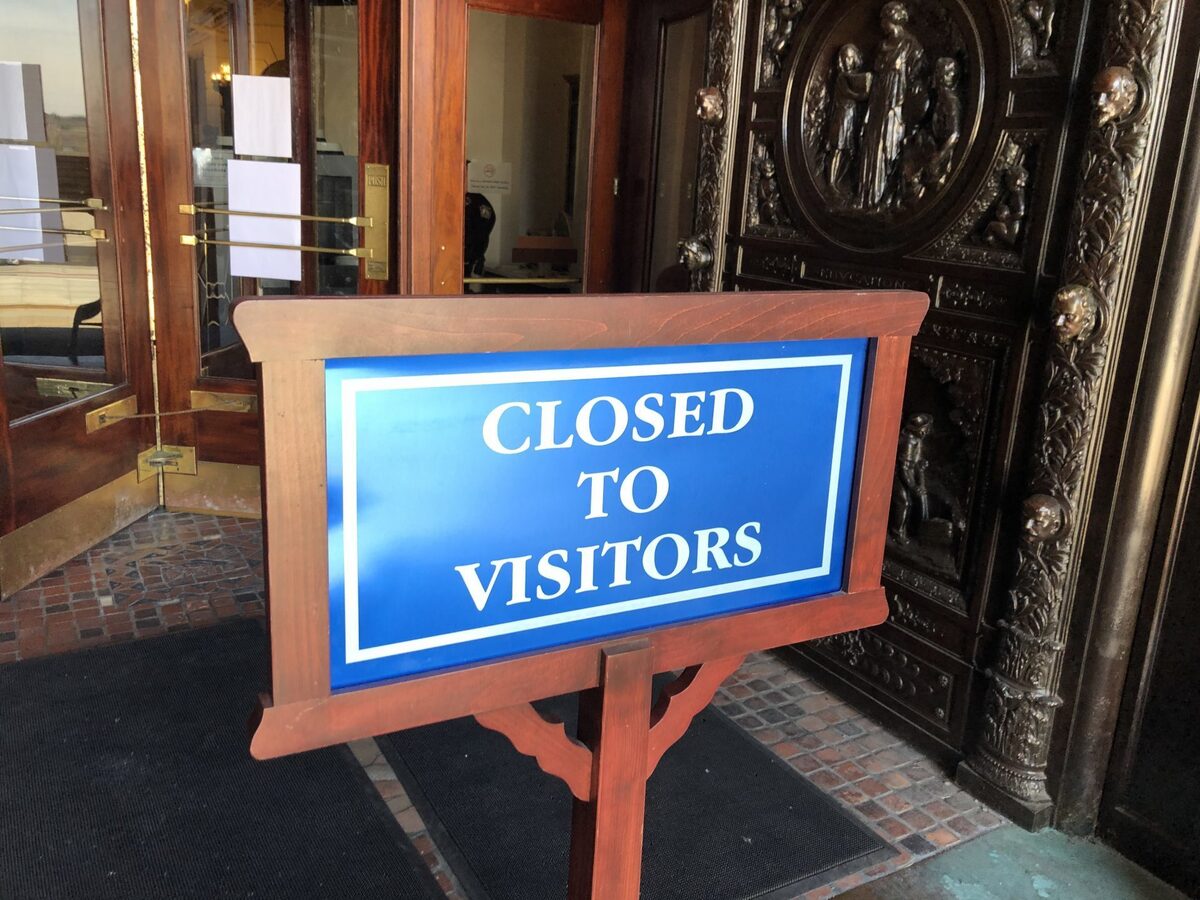
A sign outside of the Pennsylvania Capitol in Harrisburg on March 16. The Capitol was closed to the public, but lawmakers are still allowed to work there. Republican State Rep. Andrew Lewis recently tested positive for the coronavirus.

Ed Mahon/WITF/PA Post


hide caption

toggle caption

Ed Mahon/WITF/PA Post

A sign outside of the Pennsylvania Capitol in Harrisburg on March 16. The Capitol was closed to the public, but lawmakers are still allowed to work there. Republican State Rep. Andrew Lewis recently tested positive for the coronavirus.

Ed Mahon/WITF/PA Post

Even though the Pennsylvania House approved rules changes in March to allow nearly all members to vote remotely, some lawmakers have returned to the Capitol in Harrisburg to conduct business.

One of them, Republican state Rep. Andrew Lewis, said Wednesday that he was tested for the coronavirus on May 18 and his test came back positive on May 20. He says his last day working in the state Capitol was May 14.

The announcement raised questions about how many other lawmakers were exposed to the coronavirus, whether they were tested and who was notified about a potential risk.

Some Democratic lawmakers wrote on Twitter that they weren’t notified about Lewis’s case until Wednesday, a week after he got his test results back. In a statement, Democratic Leader Frank Dermody criticized House Republicans for not sharing the information more broadly.

“What makes this situation even more galling is that some House members, a vocal few, have attempted to make a virtue out of not wearing a mask when in close proximity to others,” Dermody said.

“…This attitude shows a fundamental lack of respect for fellow lawmakers, our staff and our families back home. On their behalf, we are demanding more answers about this than we’ve received thus far.”

Later Wednesday evening, a video posted to Facebook by state Rep. Brian Sims made its way around social media and state Rep. Kevin Boyle called on Attorney General Josh Shapiro to investigate.

In his statement, Lewis said he experienced mild symptoms, a fever that lasted about 24 hours, and a brief cough. He said he has recovered and completed a quarantine period, which he implied began when he was exposed to the coronavirus and not when he was diagnosed with it.

In a video message on Wednesday, Lewis said he wore a mask and didn’t shake any hands on May 14 — which he said was his last day in the Capitol.

“It’s pretty much a ghost town at the Capitol right now — the cafeteria’s closed — so I actually only interacted with a handful of folks, like maybe four or five people,” Lewis said in a Facebook livestream video.

Lewis said two state lawmakers who sit near him were both notified, as were others he had contact with on May 14.

During the coronavirus pandemic, Republican lawmakers, who control the Pennsylvania House and Senate, have tried to push Democratic Gov. Tom Wolf to allow more businesses to reopen. Wolf on May 19 vetoed a bill that would have required him to allow car dealers, barbers, hairdressers, messenger services, pet groomers and manufacturing operations to open statewide.


Source link

Coronavirus updates LIVE: Global COVID-19 cases top 5.9 million as Australian death toll stands at 103

If you suspect you or a family member has coronavirus you should call (not visit) your GP or ring the national Coronavirus Health Information Hotline on 1800 020 080.

Source by [author_name]