Gauteng Premier declares West Rand a COVID-19 hotspot [video]

West Rand in Gauteng has been declared a COVID-19 hotspot after 196 miners tested positive for the novel coronavirus at the AngloGold Ashanti Mponeng Mine.

In addition, 11 confirmed cases of COVID-19 had been reported at Sibanye-Stillwater in the West Rand after Gauteng Premier David Makhura met with representatives from mining houses and mining unions.

Increase in new COVID-19 cases on the West Rand

Sibanye-Stillwater spokesperson, James Welstead that the new cases were recorded “since operations resumed at 50% capacity when lockdown restrictions were lowered to level 4.

Based on the number of new cases, Gauteng Premier David Makhura calls for increased measures to be taken to curb the spread of the virus, and said that additional screening and testing resources would be made available.

“We met with [representatives] together with the department of mineral resources and energy to asses what they put in place including social distancing measures and sanitisation.”

Additional resources will be provided

He added that screening alone isn’t enough, mines should be able to test workers as well. He said both provincial and national support will be given to the West Rand.

“We want all those resources to be used as we plan ahead, hospitals and clinics owned by mining houses together with private and public sector clinics and hospitals on the West Rand. They are now being treated as one resource.”

He explained that it doesn’t matter at which mine positive cases are recorded, all cases will be dealth with centrally by pooling mining and government resources to “contain the pandemic in this area”.

Makhura said it’s a “great concern” that 196 were recorded in “just one week”, and added that the teams are working with local government to prevent the virus from spreading.

Makhura and MEC of Heath in Gauteng, Dr Bandile Masuku arrived at the Sibanye Gold Mine earlier today to assess health and safety protocols.

The team also visited the AngoGold Ashanti Hospital which is being refurbished into a COVID-19 facility.

Watch: Gauteng Premier shares outcome


Source link

Tropical Storm Bertha Hits South Carolina Coast

MIAMI (AP) — Tropical Storm Bertha made landfall on South Carolina’s coast Wednesday morning shortly after it formed, becoming the second named storm before the official start of this year’s Atlantic hurricane season.

A tropical storm warning was issued for South Carolina’s coast and the storm was expected to bring heavy rainfall, the U.S. National Hurricane Center said.

Bertha’s maximum sustained winds were near 50 mph (80 kph) as it came ashore but it was expected to weaken to a tropical depression after moving inland. The storm was centered about 40 miles (65 kilometers) northeast of Charleston, South Carolina, and was moving north near 15 mph (24 kph).

The storm caused minor flooding in Charleston with a few streets closed. But the city, which floods dozens of times a year, saw worse problems from an unnamed storm that dumped heavy rain last week.


A man rides a bicycle while holding an umbrella as rain from Tropical Storm Bertha flooded a few streets in Charleston, S.C., Wednesday, May 27, 2020. (Matthew Fortner/The Post And Courier via AP)

Along America Street in Charleston, residents awoke Wednesday to an intersection that had become a water-filled canal. Cars parked on the curb had water up to their doors, The Post and Courier reported.

Garbage cans had spilled over, and dirty diapers, magazines and food scraps clogged drains in the area, the newspaper reported.

Bertha was expected to move rapidly inland, spreading up to 4 inches (10 centimetres) of rain through eastern South Carolina into North Carolina and Virginia. Flash flood watches were issued as the region has already seen plenty of rain in May.

Earlier this month, Tropical Storm Arthur brought rain to North Carolina before moving out to sea. It was the sixth straight year that a named storm has developed before June 1, the official start of the Atlantic hurricane season.

The last time there were two named storms before June was in 2016, according to Phil Klotzbach, a research scientist with Colorado State University’s atmospheric science department. It also happened in 1887, 1908, 1951 and 2012, he said.

“Most of these early season named storms form, at least in part, from non-tropical or subtropical processes and don’t necessarily imply anything about the remainder of the season,” Klotzbach said in an email to The Associated Press.


Source by [author_name]

Sebastian Kurz cautious on Commission’s €750B recovery blueprint

0

Austrian Chancellor Sebastian Kurz | Sean Gallup/Getty Images

Austrian chancellor, speaking for the frugal faction, tells POLITICO he sees some positives in proposal.

BERLIN — Austrian Chancellor Sebastian Kurz said that he and the other leaders of the EU’s so-called frugal four group were encouraged by some aspects of the European Commission’s proposal for a coronavirus crisis recovery fund, but cautioned it represents just a “starting point” for negotiations.

“What we find positive — not just myself, but the Netherlands, Sweden and Denmark — is that there is a time limit and that the fund will be a one-time emergency measure and not the first step toward a debt union,” Kurz, who has emerged as the unofficial spokesman of the frugal faction, said in a telephone interview with POLITICO on Wednesday.

“Considering that there are many in Europe who want such a debt union, it’s important to us that this be clarified in writing once and for all,” he said, referring to concerns among the frugal group that the fund could morph into a permanent fixture, opening the door to mutualization of members’ debt under the banner of the EU.

“When it comes to the ratio of credits and grants, that’s an area where we really think there needs to be more negotiation,” Kurz added.

Under the proposal put forth by the Commission, the EU would create a €750 billion fund — called Next Generation EU — by selling bonds. About €500 billion would be disbursed as grants to those member countries most in need as a result of the crisis, while the remaining €250 billion would be available as credits, which countries would be obliged to repay.

In effect, the Commission proposal fuses a €500 billion Franco-German plan unveiled earlier this month with a model based on loans put forth by the frugal faction, a group so named due to its members’ purported commitment to budget discipline.

Kurz said that while he wasn’t surprised to see the Commission effectively adopt the Franco-German grant proposal, given those countries are the EU’s biggest members, the coming negotiations will have to be more inclusive.

“We need to take everyone’s interests into account and there are very different interest groups: the southern countries, who fundamentally always want more; the East Europeans, who have an interest in preventing everything from flowing south; and, of course, those who have to pay for it all, the net payers.”

At first glance, the Commission plan appears to be an attempt to placate the frugal four by tacking the credit component to the Franco-German plan. Whether the €250 billion in credits would ever be tapped however, is questionable, in part because the eurozone recently established an emergency loan facility under the aegis of its bailout fund, the European Stability Mechanism (ESM).

The ESM was conceived to help cash-strapped countries combat debt crises like the one that bankrupted Greece. It’s now been retooled to make it easier for countries struggling with the coronavirus crisis to borrow money — up to the equivalent of 2 percent of their national income, or €240 billion in total.

Why countries such as Italy, which are already drowning in debt, would need access to an additional credit facility is far from clear and prompted a degree of consternation in some quarters.

Kurz said the frugal four had yet to fully evaluate the Commission’s proposal in detail and settle on a common negotiating position, but would do so in the coming days.

Want more analysis from POLITICO? POLITICO Pro is our premium intelligence service for professionals. From financial services to trade, technology, cybersecurity and more, Pro delivers real time intelligence, deep insight and breaking scoops you need to keep one step ahead. Email pro@politico.eu to request a complimentary trial.


Source by [author_name]

Libya’s battle in the sky: How air superiority changed the war

Air power has played an increasingly important role in the Libyan conflict. The relatively flat featureless desert terrain of the north and coast means that ground units are easily spotted, with few places to hide.

The air forces of both the United Nations-backed Government of National Accord (GNA) and eastern-based commander Khalifa Haftar and his self-styled Libyan National Army (LNA) use French and Soviet-era fighter jets, antiquated and poorly maintained. 

More:

While manned fighter aircraft have been used, for the most part the air war has been fought by unmanned aerial vehicles (UAVs) or drones. With nearly 1,000 air strikes conducted by UAVs, UN Special Representative to Libya Ghassan Salame called the conflict “the largest drone war in the world“.

UAVs are useful for several reasons. Not only do they provide valuable information about the enemy that can be spotted a long way off, but they are able to attack any targets immediately with a far higher rate of success. In the event the drone is shot down and destroyed, the pilot is safe, back at base and able to pilot the next drone that takes off.


Russian fighters flown out of western Libya after Haftar retreat

Initial GNA success

The arrival of Chinese-made Wing Loong drones in 2016 made a significant difference to the LNA’s military capabilities. First used in the battle for Derna in eastern Libya, the drones had a decisive impact on the outcome as forces loyal to Haftar battled fighters from the Shura Council of Mujahideen in a brutal battle for the city.

These Chinese-made drones – operated by pilots from the United Arab Emirates (UAE) and flown out of the Al Khadim airbase in the east – have a combat radius of 1,500km (932 miles), meaning they can deliver precision-guided missiles and bombs, striking anywhere in the country.

These drones were used to great effect in the battle for Tripoli, which General Haftar announced in April 2019 against the GNA. Government forces were repeatedly pushed back into a tight pocket as the capital was besieged by the LNA. For all the talk of “precision” air strikes, the civilian casualty toll mounted as targets were hit in increasingly built-up urban areas.

There were now doubts that the UN-recognised GNA, led by Prime Minister Fayez al-Serraj, could hold out much longer, despite support from Italy and Qatar.

Su-35 long-range fighter jets were among those flown into Libya this month [File: Ilya Naymushin/Reuters]

Turkey’s intervention

That all changed in December 2019 when Turkish President Recep Tayyip Erdogan confirmed Turkey would sharply increase its military support for al-Serraj and the GNA.

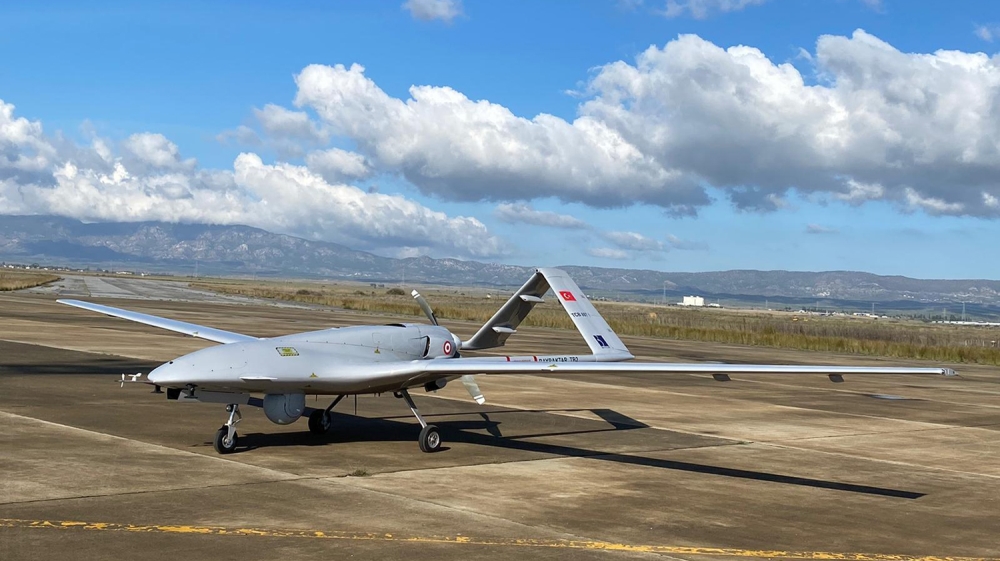
Along with troops, Erdogan sent Turkish-made armed drones, namely the Bayraktar TB2. Smaller and with a much shorter range than the Wing Loong, the Bayraktar was still able to engage and destroy the LNA’s ground targets, harass its supply lines, and attack forward air bases that were once considered safe. Pro-government ground troops could now advance with air cover, the enemy’s positions known to their commanders.

This, combined with the timely arrival of Hawk missiles, among other air defence systems, meant the main LNA airbase at Tripoli’s Mitiga airport could now operate without fear of attack.


Will setback to Khalifa Haftar change the course of Libya’s war?

The effect was dramatic as the GNA launched a counteroffensive and in a lightning strike seized the coastal towns of Surman, Sabratah and Al-Ajaylat along with the border town of Al-Assah. This was followed up by repeated attacks on the Al-Watiya airbase, which Haftar’s forces were using as their main point of operations. 

The airbase was finally retaken on May 18, a severe blow to Haftar’s ambitions in western Libya as not only was it the LNA’s principal headquarters there, it was also his supply and logistics hub. 

LNA units were forced to retreat, especially as their Russian-made, UAE-supplied, Pantsir S-1 air defence units were being comprehensively destroyed, leaving the retreating forces with little to no protection from air attacks. Media reports claimed sophisticated Turkish jamming gear was responsible for disorienting the Pantsir’s radar, leaving it vulnerable to air strikes from the Bayraktar drones.

A Turkish-made Bayraktar TB2 drone is seen shortly after its landing at an airport in Gecitkala, known as Lefkoniko in Greek, in Cyprus, Monday, Dec. 16, 2019. Turkey has dispatched the surveillance a

Turkish-made Bayraktar TB2 drones have hammered Haftar’s supply lines and troops [DHA via AP] 

Further advances to the south and east of Tripoli significantly loosened Haftar’s grip on the capital, as forces loyal to him have been forced to retreat. Hundreds of mercenaries from the Russian military contractor Wagner Group have been evacuated from Bani Walid airport.

In an ominous turn of events, the United States Africa Command said Russian fighter jets flew from its Khmeimin airbase in Syria to the LNA-held facility at Jufra, in central Libya, to bolster Haftar’s forces and their allies. Multirole MiG-29s and two Sukhoi Su-24 ground attack fighters were sent along with an escort of at least two Su-35 advanced 4.5 generation long-range fighter jets, in a clear signal to Turkey and the GNA that Haftar’s defeat should only go so far.

The US’s reaction to this has been sharp – the issuing of satellite photos an indication of its concern.

The potential threat is that Russia could “seize” bases on the Libyan coast and “deploy permanent anti-access, area denial capabilities” creating, according to US Air Force General Jeffrey Harrigian, “very real security concerns on Europe’s southern flank”.

While airpower can at times turn the tide in a military conflict, it has also been used in Libya as a threat-level indicator, a diplomatic tool, and a warning of potential escalation if events are left unchecked.


Source link

Which Walt Disney World Parks Are Opening July 11th?

Grab your Mickey Mouse ears and your magic wands! Disney World plans to re-open Magic Kingdom and Animal Kingdom July 11th and Epcot and Hollywood Studios July 15th.


Walt Disney World Parks in Orlando, Florida are slated to reopen in July 2020.
Alex Menendez/Getty

The parks previously shut down in mid-March due to the coronavirus pandemic.

“While there is still much uncertainty with respect to the impacts of COVID-19, the safety and well-being of our guests and employees remains The Walt Disney Company’s top priority,” Disney said in a statement when the parks initially closed.

Disney World Shanghai was the first Disney park to open on May 11 amid the coronavirus pandemic.

Disney Springs in Orlando has already begun a phased reopening on May 20, with temperature checks and social distancing measures in place. Additionally, Universal Orlando recently announced that they will reopen on June 5 at limited capacity.

Newsweek reached out for comment from Walt Disney World and has not heard back at the time of publication.

Source link

The Sisterhood: Reviving the evidence of things not seen – The Mail & Guardian

“I love you, but I don’t trust you”, whispers from black heart to black heart like a mantra against our farcical solidarity. Where self-deprecation meets self-love, can there be a successful collective? Can a revolution come from the transmuted wounds of the Black woman? Can a festival turn into eternal solidarity? Can we be friends and allies for long enough to defeat our common enemies, delirious self-doubt, capitalism’s ability to turn all creative output into a commodity? Can we override those epigenetic tendencies rooted in generational trauma, by simply gathering and sharing ideas on our own terms, or is it too late for that pure and reckless kind of love, that troubled and troubadour Black love? 

Can Black women who are also professional writers, griots in our own right, reclaim private generative and creative practices without sacrificing our careers in capitalist institutions? Or is it time we make that sacrifice, not of ourselves, but of the institutions that cannot survive without our energy as commodity, capital, indomitable soul? 

The 1960s and ’70s were decades riddled with Black collectives whose members, whether artists, scholars, or politicians, joined to refract the decay of impending late capitalism with collectively improvised strategies for recovery from that toxic system. The diaspora sometimes feels like one big festive party, but no one knows whose house it is, no one has openly volunteered to host the gathering, everyone is trespassing and exhibits the guilty decadence that comes with stealing oneself into pleasure under dire circumstances. 

Black women have done the most tending to that voluntary soul-risking that occurs when we try to counter the myth of white dominance and seek power in the Western world, as a diaspora and as individuals. 

Under those conditions, when acting openly makes you a moving target and constant witness of atrocity the general population might not be able to fathom, Black collectives become hypermacho to overcompensate for how petrified members are of the state; how subordinate to it even in insubordination. Black female members of these groups, groups like the Black Panthers, Kawaida, the Umbra Poets, Move Philadelphia, et cetera, feigned militant servileness at times, or just employed quiet grace that could be mistaken for obedience, to ensure that the survival of Black families and communities would not be undermined, as much by the gender war as by the race war. 

There is mildly disturbing footage of Amina Baraka for example, instructing a woman at the Spirit House she ran with her husband Amiri, that women must be feminine and constantly available to their men; that it is their duty to diasporic justice and revolution. She calls this a “collaboration” but its terms are indiscriminate black female submission to black men who preach about revolution. 

Festac in 1977 would be a galvanising factor in the evolution from the concept of the pious, black, revolutionary, trophy wife, to a very literal Sisterhood, wherein black feminine creative power could be explored for its own benefit. The first formal meeting of this group, who called themselves The Sisterhood in tender love and solidarity, the only sorority we’ve ever needed, was at June Jordan’s home in February of 1977 and featured a karass of Black women writers and thinkers. The summer festival had brought in its harvest of momentum; it had done the work, planted the seeds that would feed us in a more barren season and land. 

Instantly, the writers decided they would work together to create Black-owned and -run publications, vivid alternatives to the New York Times and the Village Voice, instead of the ever-fantasised ones extant in dream and idea. They would provide bodies for the ghost narratives of the future; they would tend to suspended bones, the writing that exceeded publishing outlets, that upset imperialism too much to extract resources from it; they would lend these coming children a skin of words. 

The Sisterhood would keep this clandestine, however, and use their ritual meetings not as bureaucratic alignment with this or any publishing goal, but as real opportunities to bond while safe from the white gaze, and the Black male gaze. The Sisterhood would gather like chrysalis in the Western literary world’s expansive blindspot and roil there, messy and preparatory. 

Toni Morrison, an editor at Random House at the time, would spearhead additional gatherings to plan for the publication, which would be called Kizzy, roots. They sought black investors and wanted to use “mass appeal” to address every aspect of Black survival. In the idea’s dying days, all of that fervour dissipated into a group of Black women discussing their depression and methods for surviving that: how could they be happy visionaries as Black women, and not the kind motivated or debilitated by anger? Where could they place their collective optimistic fatalism if not as Kizzy, as roots, as something harrowing? How could sorrow be avoided when mourning the impossible? Could lament be heroic also? 

Whether doing the tending to publication or to men or to one another, as Black women we have been socialised to neglect ourselves, and not notice for so long that it seems like every cathartic burst is thwarted by preemptive grudges or fantastical and urgent preoccupations with what our rebellion could become if we just see it through. The seeing it through; the capacity for porousness; the reluctant surrender to ourselves at the risk of upsetting our men and our children and our oppressors, all who say they love us — it seems like so much practice at not being completely seen causes Black women to internalise every critique and pathology of every blind entity, as natural healers, and in doing this we constrict ourselves. 

The Sisterhood was a beautiful mode of transmutation, but it was also a trauma bond; an occasion to commiserate and help one another to digest quiet neglect. We had moved past the “stand by your man” Black revolutionary ethos; we were now standing by one another, alone together, but that didn’t make for a more perfect union. It gave us a clearer mirror, more to face, more intended caretaking, this time at least with accomplices and willing shadows. 

In the constant tacit open combat that we Black women embrace, it isn’t enough for women to come together feeling impalpably connected; the maintenance of that tender sentiment requires “capital” — a Black-owned and -operated institution, a place to be and inscribe. 

When the first and most necessary step on that path was to create a functional chosen family, it seems The Sisterhood and Kizzy slipped into the quicksand of that sociology before ever reaching the economic and political force that would have made the endeavour exceed its founding members. Legacy building is the most threatened activity of Black life. Black women often take up this work because we can disguise it as vanity instead of the overt militancy it is. 

The Sisterhood fell prey to the bipolar nature of Black uprising throughout the diaspora. We’re either inundated with a will to power as we were in much of the 1960s and parts of the 1970s, or we’re dejected by all of the murders and state violence our will is met with, falling into either despair or the kind of apathetic decadence in which we use cultural production as an escape instead of a strategy toward resistance. Black Beauty is what we love. 

The Sisterhood possesses that beauty even still, compels Black women to make efforts at full self-actualisation. Today this history weighs on the consciousness like myths with the heroes and details mixed up and forgotten. Did the Sisterhood really exist for real? How do we archive and revive our evidence of things not seen?  Will we have to repeat this decadence and this despair endlessly because we never quite establish a place to put it, we never quite own the venue, and the healing bitter roots are rotting and fermenting into poison?  

At the same time, the Sisterhood reminds us that Black women are always our own antidote, our own cure. Even as we spend ourselves foolishly trying to save everyone we love, and even some people we hate, we are entirely capable of organising and healing ourselves first; maybe always just a little too altruistic to neglect the rest of the world the way it sometimes tries to neglect us. The Sisterhood was a refuge and refusal conceived by women who cared even when they didn’t have to, and could have been abject capitalists, which is proof that soul overrides elitism in great Black women and in Black culture at large, and that victimhood can and must be transcended.

Harmony Holiday is a writer, dancer, and archivist/myth scientist, and the author of Go Find Your Father/ A Famous Blues (Ricochet Editions, 2014) and Negro League Baseball (Fence Books, 2011). She lives in New York and Los Angeles. 


Source link

Euro zone economy to shrink between 8% and 12% this year: Christine Lagarde

0


The is likely to shrink between 8 per cent and 12 per cent this year as it struggles to overcome the impact of the coronavirus pandemic, President said on Wednesday.


The ECB earlier said the could shrink by between 5 per cent and 12 per cent, but speaking in a youth dialogue, Lagarde said that the “mild” scenario is already outdated and the actual outcome would be between the “medium and “severe” scenarios, Reuters reported.


In another major development, the European Union’s executive proposed a 750 billion-euro ($825 billion) recovery fund to help the bloc’s through the deep recession induced by the coronavirus pandemic, commissioner Paolo Gentiloni said on Wednesday.


Gentiloni, who is in charge of economic affairs at the commission, wrote in a tweet that the move is a European turning point to face an unprecedented crisis.


ALSO READ: WHO deeply troubled by increasing reports of domestic violence in Europe


However, the 27-nation EU remains deeply divided over what conditions should be attached to the funds, and Wednesday’s proposal from the EU’s executive arm is likely to set off weeks of wrangling.


The move comes with the world’s biggest trading bloc set to enter its deepest-ever recession as the impact from the coronavirus ravages economies. Virtually every country has broken the EU’s deficit limit as they’ve spent to keep health care systems, businesses and jobs alive.


Earlier this month, the leaders of Germany and France historically, the two main drivers of EU integration agreed on a one-time 500 billion-euro ($543 billion) fund, a proposal that would add further cash to an arsenal of financial measures the bloc is deploying to cope with the economic fallout.


ALSO READ: European swimming championships moved to May 2021 over coronavirus


That plan would involve the EU borrowing money in financial markets to help sectors and countries that are particularly affected by the pandemic. The European Commission’s blueprint is likely to resemble the Franco-German plan in many ways while attaching the fund to the EU’s next long-term budget.


The big question will be how much money will take the form of grants and how much would be loans. Austria, Denmark, the Netherlands and Sweden a group of countries dubbed the Frugal Four for their budgetary rectitude are reluctant to see money given away without any strings attached, and their opposition to grants could hold up the project.


Will it be grants or loans? And if it will be grants, who are going to pay the grants? Loans, I think is a more interesting way forward to discuss, but we also have to discuss under what conditions shall we give these loans, Swedish Finance Minister Magdalena Andersson said on Tuesday.


Whatever its content, the commission’s plan is likely to spark heated debate and the EU does not have time for the wrangling to drag on. The new budget period begins on Jan 1, and countries across the bloc are desperate for funds now.


All 27 member countries must agree for the recovery fund to take effect.


Source link

Coronavirus Live Updates: France Bans Hydroxychloroquine To Treat COVID-19

0

More than 5.6 million cases of the virus have been confirmed worldwide, and more than 351,000 people have died from it, according to data compiled by Johns Hopkins University. Efforts to curb the outbreak have led to the global disruption of daily life and the economy, as schools and workplaces shutter in hopes of slowing transmission.


HPFR 27 May

France has halted the use of hydroxychloroquine as a treatment for patients suffering severe forms of COVID-19.

HuffPost France reports (in French) that the decision comes just two days after the World Health Organization said it was pausing a large trial of the malaria drug due to safety concerns.

British medical journal The Lancet reported that patients getting hydroxychloroquine had increased death rates and irregular heartbeats, adding to a series of other disappointing results for the drug as a way to treat COVID-19.

U.S. President Donald Trump and others, including Brazil’s Jair Bolsonaro, have pushed hydroxychloroquine in recent months as a possible coronavirus treatment.

France decided at the end of March to allow the use of hydroxychloroquine in specific situations and in hospitals only. No vaccine or treatment has yet been approved to treat COVID-19 which has killed more than 350,000 people globally.

HPBR 27 May


HPBR 27 May

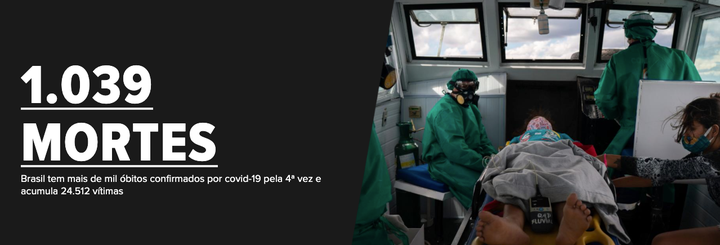
The march of coronavirus through Brazil shows no sign of slowing after the country recorded more than a thousand deaths in a day for the fourth time.

The total death toll in Brazil now stands at 24,512, while infections have risen to 391,222, second only to the U.S.

HuffPost Brazil reports (in Portuguese) that the state of São Paulo has recorded 6,423 deaths, followed by Rio de Janeiro with 4,361 deaths. The latest figures come as Brazil’s four largest news media outlets said they have withdrawn their reporters from coverage of President Jair Bolsonaro’s official residence due to the lack of security to protect them from heckling and abuse by his supporters.

Bolsonaro has made a habit of stopping at the residence’s entrance to speak to cheering supporters, take selfies with them and make comments to the journalists, but in recent days his supporters at the gates have turned on the reporters with angry verbal attacks. On Monday, about 60 supporters heckled the reporters loudly, with shouts of “liars,” “scum” and “communists.”

The attacks on journalists have intensified as Bolsonaro’s political situation has deteriorated under criticism of mishandling the coronavirus crisis. He is also under investigation for allegedly interfering in law enforcement and his supporters see the media as part of a plot to oust him.

— James Martin

New York Stock Exchange Reopens — 5/26/20, 10:50 a.m.

For the first time since it shut down in mid-March, traders returned to the floor of the New York Stock Exchange Tuesday morning, operating under COVID-19 safety measures, including temperature checks for anyone entering the building, mandatory mask-wearing and reduced capacity on the trading floor.

To commemorate Wall Street’s reopening, New York Gov. Andrew Cuomo (D) rang the bell at 9:30 a.m., which signals the traditional beginning of the trading day. 

The World Health Organization is pausing an international trial of hydroxychloroquine — the anti-malarial drug touted by President Donald Trump as a possible treatment for the coronavirus — due to concerns for the safety of patients, HuffPost’s Mary Papenfuss reports.

Officials cited a large study of 100,000 patients published Friday in The Lancet. Researchers found that patients treated with the drug in the hospital had a “significantly higher risk of death” than those who weren’t given it.

An April study of U.S. veterans produced similar results.

Since March, Trump has pitched the treatment as a “game-changer,” without evidence. On Sunday, he said in an interview that he had just completed a two-week course of treatment. “And by the way, I’m still here,” he told Full Measure News.

Pressure continues to build on Prime Minister Boris Johnson after a junior minister resigned from the British government over an alleged breach of lockdown rules by the U.K. prime minister’s top advisor, HuffPost U.K reports.

Douglas Ross, a junior minister in the Scotland Office, said Tuesday that he was quitting after hearing about Dominic Cummings’ efforts to defend his 270-mile trip from London to the northeast of England in March.

Ross said he could not “in good faith” tell his constituents who could not care for sick relatives or say goodbye to dying ones while obeying lockdown rules that Cummings acted appropriately.

Cummings remains under fire over allegations he breached coronavirus lockdown restrictions but Johnson’s chief adviser has said he does not regret his actions and declined to apologize.

At least 15 Conservative MPs have said Cummings should go, while several others have spoken out against his actions.

For more on the pandemic, go here.

A HuffPost Guide To Coronavirus


Source link

Turkey’s seasonal workers caught between virus, poverty

May 27, 2020

POLATLI, Turkey — The economic fallout of the COVID-19 pandemic has sparked food security fears across the world. In Turkey, it has underscored the crucial role that seasonal workers — impoverished people crisscrossing regions for manual jobs — play in the country’s food supply chain. Sustaining agricultural activity is critical for Turkey, where the pandemic has worsened existing economic woes, including an agricultural decline that has fueled food price hikes in recent years. But with the agricultural season now in full swing, seasonal workers are left with a tough choice: brave the coronavirus risk in neglected encampments to earn their bread or avoid risky working conditions and lose their scarce incomes.

On a roadside near Polatli, a town not far from Ankara, several hundred seasonal workers from Sanliurfa, a province some 900 kilometers (560 miles) away, have already erected a tent city where few precautions were visible against an outbreak when Al-Monitor visited last week. A few spacious tents aside, families of up to 10 people stay in small sheds made of tarps and sticks, many of which abut on another for steadiness. The only running water in the encampment comes from a sole irrigation hose. 

Life exposed to contagion risks is certainly not a matter of choice. Asked whether they were aware of the risks, a worker confirmed he did fear contracting the novel coronavirus. Then why not wear a mask, at least? “Where can I possibly get a mask from?” he replied. 

According to the workers, neither the field owners nor the authorities have tried to provide them with face masks. And no one from the local agriculture or health department has visited the encampment since the workers’ arrival in mid-May, they said. In another nearby tent city, the head of the group said, “We called the authorities. They said they were understaffed because of the coronavirus and would come only after the holiday.” He was referring to the three-day Eid al-Fitr holiday, which ends May 26.

Water in plastic washbowls, soap and dishwashing liquid is all the workers and their children have for cleaning and sanitation. Makeshift latrines and bathing spaces, covered with blankets for privacy, stand in close proximity to the tents. Women cook food in large pots over cooking pits in the ground, using dry branches to build fires.

Asked about the risk of contagion, one worker who brought his children along said, “We keep dying anyway. What difference does it make if I die in an accident or in a pandemic?” He was referring to the high rate of work accidents among seasonal agricultural workers in Turkey, a rate second only to that in the construction sector.

The workers expect to toil longer hours this summer because travel restrictions over the pandemic delayed their arrival, leaving a backlog of work in the fields. “Previously, we would work eight hours a day, but now we will be working 12 hours to get the job done,” the leader of the workers said. 

The labor shortages have already hit the crops in some regions. Cherry orchards went unharvested in the western Aegean region last month, while onions rotted in fields in the south.

The government has since eased travel restrictions for seasonal workers. Yet the conditions it imposed on social distancing and hygiene rules are hard for them to meet.

Ertan Karabiyik, secretary-general of the Development Workshop, a non-profit group that recently penned a report on the issue titled “Virus or Poverty?,” said, “The workers are required to increase distancing in the tents, but how are they supposed to get additional tents? They are required to wear face masks, but how are they supposed to get and pay for those masks? What the workers earn is already below the minimum wage — they cannot meet those requirements.”

Additionally, the workers now pay more to reach their workplaces as transportation services are required to operate on reduced capacities and charge higher fees from the passengers accordingly. To reach Polatli, the workers from Sanliurfa had to pay 400 Turkish liras ($59) per person, the payment for a week of labor in the fields.

The number of seasonal agricultural workers, estimated at some 800,000 in normal times, is expected to decrease across the country this year, according to Karabiyik. In Sanliurfa, for instance, a sixth of the usual 6,000 seasonal workers have stayed at home. 

And what happens if the coronavirus hits the encampments? “That would be the moment of truth,” said Besim Can Zirh, a sociologist at Ankara’s Middle East Technical University who contributed to the Development Workshop’s report. According to the scholar, an outbreak would probably lead to quarantining the affected encampment, leaving its inhabitants out of work and throwing both their wages and the crops into jeopardy. 

Without enough workers to cultivate or harvest the crops, disruptions in output might result in supply shortages and push prices up. According to Zirh, cherry and plum prices went up and tomato prices fluctuated in early spring when seasonal workers were still subject to tight travel restrictions. An onion producer in the southern province of Hatay, interviewed for the report, said he had to leave his crops in the field because he failed to find workers to employ, Zirh said. 

Without additional support for seasonal workers, productivity in agriculture might decrease. Neither Zirh nor Karabiyik expect a major food crisis in Turkey, but further increases or fluctuations in agricultural product prices could be imminent. In April alone, food prices rose 2.53%, well above the 0.85% overall consumer inflation, compounding a similar uptick in March.


Source link

Children who trade are an important part of the economy – The Mail & Guardian

The experiences of containing the spread of Covid-19 has posed both obstacles and opportunities for the formal and informal sectors of South Africa’s economy. Some have had the good fortune of navigating and manoeuvring successfully through the pandemic, but others are sinking. 

The Covid-19 lockdown has negatively affected children who are informal traders. Child traders have not been able to sell their wares, and the meagre income they used to get has meant  devastation for them and their families.  

In the Mapungubwe Institute for Strategic Reflection’s book, Beyond Tenderpreneurship: Rethinking Black Business and Economic Empowerment, it is argued that the informal sector has to be better understood so that economic empowerment policies can be designed for it. The publication further argues that the opportunities that this economy has for entrepreneurship and employment could expand economic participation and emerging policies should not impose formal sector regulatory mechanisms in the informal business context.  South Africa needs to re-look at informal trading and come up with policies that aim at alleviating the plight of child traders. 

The legal working age in South Africa is 15 and, according to Statistics South Africa’s Survey of employed and the self-employed 2013, informal traders aged 15-24  account for 4.9% of the informal sector in South Africa. This makes child informal traders aged 15-17, in particular, one of the most vital working-age populations. Their contribution to the economy, however, remains largely unexplored which makes them vulnerable.

Thousands of children are forced to become traders to escape poverty and sustain their families. In 2013, more than a third of children were living below the Food Poverty Line (FPL) of R441 per month. This means that 33.3% of children cannot afford to buy a basket of food that costs R441 at 2020 prices. These children also live in homes where there is no working adult. 

Research conducted by Wilson Mabasa (2015): The impact of informal traders on the economic development of Limpopo, found that that province has one of the largest informal sectors in South Africa. I have also personally observed this in the village I grew up in, Turfloop, near Polokwane. There are plenty of children going from door to door, selling different things in order to survive.

One of them is 19-year-old Lesedi*, who started selling fried fish wrapped in newspaper for R7 a portion, from the age of 12. Growing up in a female-headed household, with an unemployed mother, three other siblings, and her own two children, social grants and selling fish are the only sources of income for her family. 

Every day after school, from about 3pm to 6pm, she would go around the streets selling and soon earned the nickname “Fish”. On a good day, especially after pay-days, Lesedi would make about R350 and on bad days, she’d make about R70, bringing in roughly R4 000 a month. Selling fish meant she could avoid using up her children’s social grants. 

Since the Covid-19 lockdown, this system has drastically changed. Neighbours are not buying from child traders because they fear contracting Covid-19. There is also growing apprehension of meeting police officers on the streets, so most traders do not even come out to sell. 

To make the situation worse, Lesedi does not qualify for a trading permit — since she sells hot, cooked food door-to-door  — or unemployment relief. All that she receives from the government’s R500-billion relief package is the South Africa Social Security Agency (SASSA) grant for her two children. The threat of hunger is looming, although the increased grants and food parcels do all help somewhat.

It stands to reason that informal child traders have a wealth of trading knowledge that should be harnessed and nurtured. The government should mobilise these young entrepreneurs, support and encourage them to succeed and inspire others to do the same.  

The department of small business development should also provide training and skills that will enable these young entrepreneurs to grow from being survivalists to being self-employed. 

*Not her real name

Keabetswe Mogosoane is a political economy research intern at the Mapungubwe Institute for Strategic Reflections. She holds a BA communication degree and BA honours in political studies from North West University


Source link