Thursday, May 14, 2026

Hong Kong Protests Seen as ‘Threat to National Security’: China

0

The ruling Chinese Communist Party is imposing a draconian new sedition and subversion law on Hong Kong because Beijing views recent protests in the city as a threat to national security, a top official in charge of implementing policy for the city said on Monday.

Zhang Xiaoming, a deputy director of the Hong Kong and Macao Affairs Office under China’s cabinet, the State Council, said Beijing’s announcement of the law last month was “based on the fact that the actions of internal and external enemies of Hong Kong have caused prolonged chaos there, and endangered national security.”

Zhang accused the protesters, the majority of whom have engaged in peaceful demands for fully democratic elections and greater police accountability in the face of widespread violence by riot police, of “showing obvious signs of terrorism.”

But “even more serious” was the advocacy of self-determination and independence by some groups, who had “insulted and burned the Chinese flag,” Zhang said in a speech marking the 30th anniversary of Hong Kong’s mini-constitution, the Basic Law.

Zhang repeated Beijing’s view that its sovereignty over Hong Kong would always trump the city’s promised “high degree of autonomy,” citing speeches by late supreme leader Deng Xiaoping before the handover.

He also repeated accusations that “foreign forces” were responsible for “fanning the flames” of the protest movement.

“Some foreign and Taiwanese forces have blatantly interfered in the affairs of Hong Kong, stirring up trouble and fanning the flames and causing waves of trouble … for the Legislative Council [LegCo] of Hong Kong and other seats of political power,” Zhang said.

He said the threat of sanctions under the Hong Kong Human Rights and Democracy Act had codified that interference into U.S. law.

Zhang said Beijing had had no choice but to impose the law on Hong Kong in spite of it being the city’s duty to enact the law itself under the Basic Law, citing filibustering by pro-democracy lawmakers that had repeatedly delayed the progress of the National Anthem Law banning “insults” to the Chinese national anthem through LegCo.

“I fear it would be even more difficult to complete the national security legislation within the expected time frame,” he said. “The central Government’s action at this time is an inevitable decision made under the constraints of realpolitik.”

He said Beijing had made the move after the protest movement, which began as mass opposition to now-shelved plans to allow extradition to mainland China, “highlighted the risk to national security.”

“The [legislation] is now all the more urgent and can brook no further delay,” Zhang said.

Hong Kong civil servants warned

His speech came as the head of Hong Kong’s traditionally neutral civil service warned its members they would need to pick a side and realize that they work for China as well as Hong Kong.

Secretary for the Civil Service Patrick Nip said the city’s 180,000 civil servants would do well to remember that they have a dual role.

He also appeared to warn them to be careful what they say online.

“There is incredible connectivity available via today’s internet, and speech that you think is private could in the final analysis turn out not to be private,” Nip warned.

“When you’re a public servant, you have to behave in a way that is appropriate to who you are, which means that there are some things that you’re not allowed to say or do, that might give rise to doubt or concern over whether you actually support government policy,” he said.

According to the South China Morning Post, Nip also said civil servants should remember that have “dual identities,” as they serve the government of China as well as Hong Kong.

He said future civil service training programs would aim to “strengthen civil servants’ sense of national identity.”

But Leung Chau-ting, chairman of the Hong Kong Federation of Civil Service Unions, said he didn’t understand what “dual identities” meant, and called for clarification.

“I think there’s an element of threat to what Patrick Nip was saying,” Leung told RFA. “Some civil servants have private accounts on Facebook, and I have freedom of speech to say what I like.”

“There is nothing in the civil service regulations to say that I can’t exercise my freedom of expression as a private individual [online],” Leung said.

He said mainland Chinese civil servants are subject to a completely separate set of rules from those in Hong Kong.

“We have our own civil service handbook that we have to abide by,” Leung said. “Does this mean we are going to have to take account of both handbooks? In all my years as a civil servant, I have never heard of such a thing.”

An end to autonomy, freedoms

Beijing last month ratified a plan to impose draconian sedition and subversion legislation on Hong Kong that will enable its feared state security police to operate in the city, which was promised the continuation of its traditional freedoms under the 1997 handover to China.

In a move that likely signals the end of Hong Kong’s promised autonomy and traditional freedoms of speech and association, the powerful National People’s Congress (NPC) standing committee will now draft the legislation and insert it into Hong Kong law without going through LegCo.

Meanwhile, U.S. President Donald Trump has warned that Chinese and Hong Kong officials “directly or indirectly involved in eroding Hong Kong’s autonomy” will face sanctions.

As Zhang repeated Beijing’s announcement that the national security law would be imposed on Hong Kong regardless of opposition, pro-democracy figures said there were already signs that they are under surveillance.

Civic Party lawmaker Jeremy Tam said he was followed by an unidentified man in the vicinity of LegCo on Friday night, while former student leader Joshua Wong and district councilor Tiffany Yuen also reported being followed and filmed by unidentified personnel for several days.

Yuen said there were people “hanging around” as they visited an address in San Po Kong.

“When we left, they were still there. Joshua Wong asked them if they were state security police [from mainland China], but they denied it, and they denied being from [Beijing’s] Central Liaison Office,” she said.

Reported by Wong Lok-to and Man Hoi-tsan for RFA’s Cantonese Service. Translated and edited by Luisetta Mudie.



Source link

Pakistan knows how to defend itself, FM Qureshi warns India over airstrike threats

Foreign minister Shah Mehmood Qureshi emphasises that India should stop making empty threats in Islamabad, on June 09, 2020. — AFP/Files

ISLAMABAD:  New Delhi should dare not make such a blunder because Islamabad knows how to defend itself, Foreign Minister Shah Mehmood Qureshi said Monday, while responding to India’s blatant threat of an airstrike on Pakistan.

“Let me make it clear to Amit Shah that if India made the mistake of attacking, we will give a befitting response,” Qureshi said. “If India attacks, there will be an immediate response.”

The foreign minister emphasised that India should stop making empty threats.

Referring to the Indian home minister statement from earlier today, he said Shah’s comments were irresponsible and that the world should take notice.

“Pakistan has always talked of peace but India is playing with the lives of innocent people,” Qureshi said.

“Amit Shah should tell what he thinks of Laddakh. Why does India not launch a surgical strike on Laddakh? Why is the Indian media silent on the Laddakh issue?”

The foreign minister said the minorities in India were dissatisfied with the Prime Minister Narendra Modi-led government but that the Bharatiya Janata Party (BJP) administration “wished to shift the blame of its failures on Pakistan”.

“India’s economic conditions have worsened. India has reached the extreme in committing atrocities in Kashmir. And India wants to sabotage the Afghan peace process,” Qureshi said, adding that New Delhi was threatening Pakistan to divert attention from its internal situation.

Source link

BAME People Pleaded For Help During The Coronavirus Pandemic. This Is How They Were Let Down

0

Get the latest on coronavirus. Sign up to the Daily Brief for news, explainers, how-tos, opinion and more.

In the early days of the coronavirus pandemic, Dr Chaand Nagpaul found himself puzzled, and alarmed. 

The north London GP was noticing high numbers of patients from Black, Asian and minority ethnic (BAME) backgrounds dying of Covid-19.

“At our practice, we experienced the death of BAME patients who we would have not expected to die including younger patients and it was very distressing.

“These were people who we would not have expected to die but they were succumbing to this disease.”


Dr Chaand Nagpaul, a GP and chair of the council at the British Medical Association

After it emerged that the first 10 doctors who died of Covid-19 in the UK were all of BAME origin, Nagpaul, who is also chairperson of the British Medical Association (BMA), called on the government in early April to urgently investigate the disproportionate impact coronavirus appeared to be having.

“We found out that the first 10 doctors that had died from coronavirus were all from a BAME background and all apart from one of them was from abroad.”

Nagpaul’s concerns deepened when figures published by the Intensive Care National Audit and Research Centre revealed that a third of people in the UK admitted to intensive care due to Covid-19 by that point were from a BAME background.

“We spoke out then as these statistics about BAME NHS doctors dying and about the high proportion of BAME intensive care admissions were stark, took us completely by surprise and were alarming.”

Nagpaul wrote formally to NHS England chief executive Sir Simon Stevens urging him to investigate the virus’s impact on BAME communities as well as the high number of deaths among BAME doctors specifically.

“We asked for action from the government to protect both health workers and people from BAME communities.” Nagpaul told HuffPost UK. “There wasn’t an understanding as to why this was happening. But there were things the government could have done.”

Nagpaul was invited by Simon Stevens to take part in an urgent meeting the following week about the impact of Covid-19 on the BAME population. The government subsequently announced the launch of the review led by Public Health England.

Nagpaul says the BMA has repeatedly called on the government and Public Health England to make sure the review looked at real-time data and factors such as the working hours and shift patterns of the deceased doctors; the personal protective equipment (PPE) they were supplied with and their level of exposure to Covid-19 patients.

The BMA also urged NHS England to develop risk assessments to protect healthcare workers at greatest risk of coronavirus so they could be protected and redeployed to other areas.

As the weeks passed, more health workers from BAME backgrounds were dying and Nagpaul says there have now been more than 200 deaths of healthcare workers from all backgrounds who have died as a result of coronavirus.

Of the doctors who have died, 90% have been from BAME backgrounds, while 70% of deceased nurses have been of BAME origin. Overall, more than 60% of healthcare workers who have died of Covid-19 have been BAME.

Nagpaul says NHS England finally wrote to all trusts to tell them that BAME healthcare workers should have a risk assessment – but he says they failed to explain how this should happen, prompting him to write another letter.

Then just over two weeks ago, NHS Employers published guidance tools for trusts on risk assessments. However, Nagpaul said the issue was these were not being implemented in a systematic manner, so he wrote to all doctors in the UK of a BAME origin telling them they were entitled to a risk assessment.

I don’t think anyone was expecting a clear scientific explanation instantly as to why there were such high numbers of BAME deaths to coronavirus. But what we were expecting was some practical action to protect those that we know to be at risk.
Dr Chaand Nagpal, British Medical Association

Nagpaul admitted to HuffPost UK that the BMA had to repeatedly push for action as they felt it was critical for people to be protected while the review took place.

He said: “The BAME community has served the nation at every level throughout the lockdown from healthcare, public transport and serving in shops and supermarkets.

“Clearly, the BAME community and the medical profession feels they deserved more prompt action when these stark statistics came to light.

“I don’t think anyone was expecting a clear scientific explanation instantly as to why there were such high numbers of BAME deaths to coronavirus.

“But what we were expecting was some practical action to protect those that we know to be at risk.”

The awaited Public Health England report was published this week and identified a higher mortality risk among BAME people. 

The research suggested that people of Bangladeshi ethnicity were twice as likely to die of coronavirus as those who are white British and that those of Chinese, Indian, Pakistani, other Asian, Caribbean and other Black ethnicities had a 10% to 50% higher risk of death than white people.

But the report has been surrounded by controversy and has been highly criticised for failing to bring any new facts to light and failing to make any recommendations.

“It’s like going to the doctor and being told you are ill,” said Weyman Bennett, co-convener of Stand Up To Racism. “It is completely stating the obvious.

“All they have done in this report is point out that BAME people are at higher risk to coronavirus. They haven’t explained why or said what they can do to prevent it.”

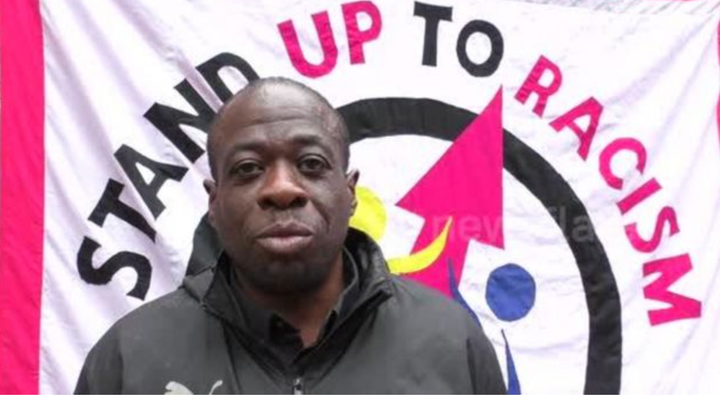
Weyman Bennett, co-convener at Stand Up To Racism.


Weyman Bennett, co-convener at Stand Up To Racism.

Bennett told HuffPost UK he first became aware of the early signs that high numbers of people from BAME communities were being affected by coronavirus in early March, as he was involved in organised a demonstration for anti-racism day on the 21st, but people began pulling out.

“There were lots of BAME people who were planning to attend the demonstration, but early on, people began saying they couldn’t come as they were sick. We identified coronavirus was becoming a problem even before the government lockdown and we announced we were cancelling the demonstration.” 

It’s like going to the doctor and being told you are ill. It is completely stating the obvious.
Weyman Bennett, Stand Up To Racism

But Bennett says his first real inkling of the disproportionate effect of Covid-19 on the BAME community came when a friend – a black man living in North London – told him he had lost 19 of his friends to the disease.

“I knew then that BAME people were being disproportionately impacted by this pandemic.

“My concerns grew when a friend of mine who works in ICU told me that there were high numbers of BAME people in intensive care fighting Covid.

“The warning signs were there and people were calling for action and investigations. Why didn’t the government listen?”

Bennett told HuffPost UK he believes institutionalised racism has played a role in the disproportionate numbers of BAME deaths to coronavirus as he feels many people from the community feel they cannot speak up about their concerns about being exposed to risk.

“The warning signs were there and people were calling for action and investigations. Why didn’t the government listen?”
Weyman Bennett, Stand Up To Racism.

He said when Stand Up To Racism tried to raise the issue about BAME people being disproportionately affected by Covid-19, he felt they were made to feel as though they were exploiting the situation when they were actually trying to save lives.

Sabby Dhalu from Stand Up To Racism added that a key issue she feels has been ignored in the PHE report is the lack of PPE for doctors and nurses and the issue of BAME health workers feeling like they were being targeted to work on Covid wards.

She told HuffPost UK research had shown that NHS staff from BAME backgrounds were less likely to be in senior positions, more likely to be bullied and felt less confident about raising concerns around health and safety.

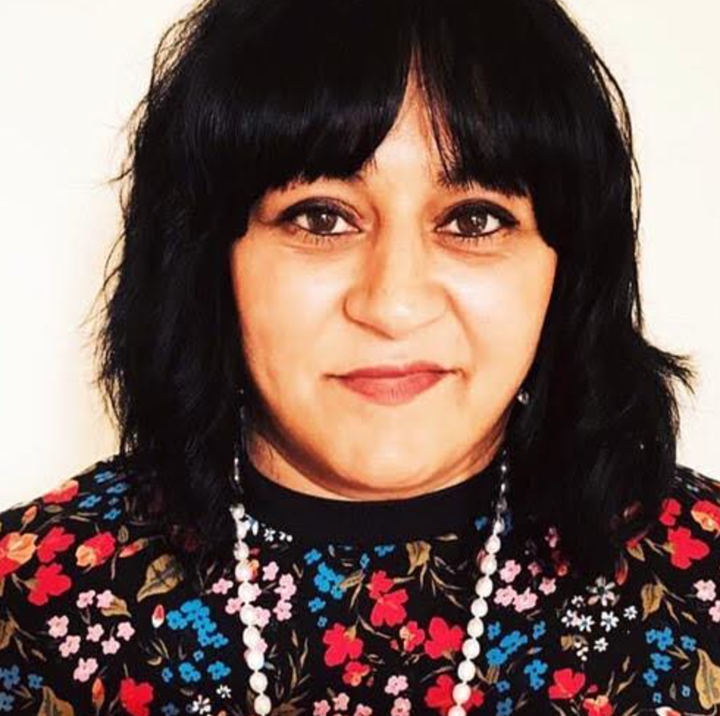
Sabby Dhalu, co-convener for Stand Up To Racism


Sabby Dhalu, co-convener for Stand Up To Racism

“The government has not only been slow to respond to this issue – it actually seems to have ignored certain issues.

“Now that lockdown has eased quite significantly, there are fears of a second wave – which could again disproportionately affect BAME communities.

“The government does not have a clear plan for protecting the health and safety of people and we feel people, particularly those from BAME backgrounds, are being led like lambs to the slaughter back to the workplace.”

GMB, Britain’s general union, has criticised the Public Health England report for telling people what they already know – that BAME workers have made a disproportionate sacrifice during this pandemic. 

Rehana Azam, GMB national secretary, told HuffPost UK that people from BAME communities had been “massively let down.”

“People have been dying and government ministers have been too slow to protect lives.” she said. “They keep saying this virus doesn’t discriminate but the response and the lives lost definitely shows that BAME people have experienced a discrimination that ended in their deaths.

“But I don’t think it was down to the government not listening – I think they didn’t have a clue what they were doing and have been far too slow.

“We have had a chaotic dealing of this crisis from the start and they didn’t seem to take any notice of what was happening globally.” 

Rehana Azam, GMB national secretary


Rehana Azam, GMB national secretary

Azam says her biggest criticism is that Secretary of State Matt Hancock commissioned Public Health England to carry out the review into the disproportionate BAME deaths due to Covid-19. 

“You can’t mark your own homework.” she said. “Someone totally independent should have done this review. 

“We have lost valuable time by having a report undertaken on facts that were already in the public domain.

“All this report does is give data on BAME deaths. We need answers and solutions.”

You can’t mark your own homework. Someone totally independent should have done this review.

Patrick Vernon, Windrush campaigner, has been personally affected by the coronavirus pandemic as he lost his brother-in-law to the disease at the end of March.

He told HuffPost UK he feels the government has not been listening to BAME voices, and an independent public inquiry is now needed for transparency. 

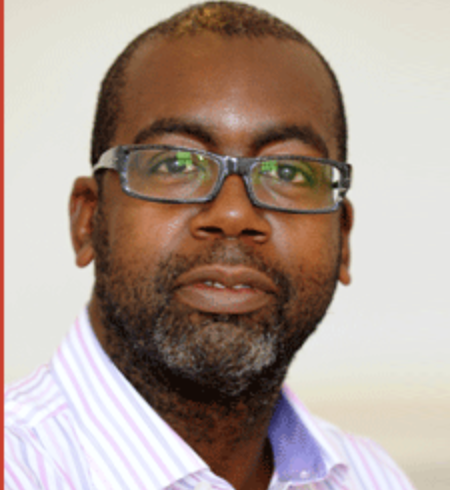
Patrick Vernon

Patrick Vernon

“My brother-in-law was in his early 50s and had underlying health conditions and was admitted to hospital. While he was there, he had a Covid test and was positive and died within a week.

“We suffered the grief of losing a family member and the impact on my sister. I also know other BAME people who have died as a result of Covid-19.

“The warning signs were there early on in this pandemic that BAME communities were disproportionately affected as we could see what was happening around the world.

“We need evidence from frontline staff, families and experts to fully assess the impact of coronavirus on BAME communities and learn lessons from what went wrong.”
Patrick Vernon

“The Public Health England review has been a complete botch job and we now need an independent public inquiry. They had a colourblind approach.

“We need evidence from frontline staff, families and experts to fully assess the impact of coronavirus on BAME communities and learn lessons from what went wrong.”

Dr Salman Waqar, general secretary of the British Islamic Medical Association, told HuffPost UK that the exact nature of the disproportionality of coronavirus deaths needs to be researched and that BAME groups must be an integral part of the conversation.

“As the first 10 doctors who died from Covid-19 were all from BAME backgrounds, it dawned on us all that this disturbing fact may not be a tragic coincidence,” he said.

“Nearly all explanations that have been offered are not new. We have known about differential attainment, workplace discrimination, health inequalities and even excess mortality amongst BAME groups for a long time.

“The solutions are not complex but require compassionate and inclusive leadership that has the trust of BAME communities.

“The recognition that this is wrong and a problem to be fixed is only the first step and requires everyone to do their part by aligning themselves as part of the solution.

“Focus must turn towards credible and enduring actions such as improving BAME representation and visibility in NHS management and public health communications which speak to BAME communities.”

Equality watchdog the Equality and Human Rights Commission has announced it will be carrying out an inquiry into “long standing structural race inequality” which it says has been thrown into stark relief by the coronavirus pandemic.

The EHRC says analysis and evidence based guidance is needed to tackle issues including Covid-19 death rates in minority groups.

A Public Health England  spokesperson told HuffPost UK: “On Tuesday PHE published the rapid data review and this has been published in full.  

“This was contributed to by Professor Kevin Fenton alongside a wide variety of PHE colleagues.

“Professor Fenton has been engaging with a significant number of individuals and organisations within the BAME community over the past couple of months, to hear their views, concerns and ideas about the impact of the virus on their communities.   

“The valuable insight he has gathered will inform the important work the Equalities Minister Kemi Badenoch is now taking forward.”  


Source link

Rugby Premiership clubs agree to cut salary cap by £1m

0

Last Updated: 08/06/20 8:03pm


Premiership rugby clubs have agreed to cut the league’s salary cap from £7m to £6m for the 2021-22 season.

The reduction is designed to help clubs overcome financial losses caused by the ongoing coronavirus pandemic.

More to follow…


Source link

Canada’s Jobless Rate Is Now Twice As High As Europe’s. Here’s Why.

0

MONTREAL ― Since the COVID-19 lockdowns began in March, some 5.5 million Canadians have lost their job or seen hours cut at work. It’s similar south of the border, where an estimated 40 million people had lost work in the crisis as of late May.

Canada’s official unemployment rate has more than doubled, to 13.7 per cent from around 5.5 per cent at the start of the year. In the U.S, the jobless rate quadrupled to 14.7 per cent in April, from 3.4 per cent before the crisis.

It is a stunning toll, one that Canadians and Americans will inevitably feel for years to come, and it’s worse than the unemployment situation in almost all other developed countries.


Canada has among the developed world’s highest unemployment rates amid the COVID-19 pandemic.

In the eurozone ― the 19 countries that use the euro ― the unemployment rate in April was 7.3 per cent, up just one percentage point from before the pandemic. (May numbers are not yet available in Europe.) In Germany, the jobless rate ticked up to 3.5 per cent, from 3.4 per cent before the COVID-19 lockdowns.

And then there’s Italy, stricken hard and early in the pandemic, where the economy minister declared that “nobody must lose their job because of the coronavirus.” The jobless rate there fell to 6.3 per cent in April ― though mostly because many people who were jobless before the pandemic stopped looking for work, not because the country is adding jobs.

So how did this happen? How can Canada be seeing a much worse job crisis than Italy? After all, our government hasn’t skimped on the stimulus programs.

Watch: U.K. will cover 80% of redundant workers’ salaries through the pandemic. Story continues below.

In a rapidly unfolding crisis like a pandemic, small decisions can have ripple effects that can have outsized consequences. And as it turns out, Canada ― along with the U.S. ― took a different approach from European countries, and they got very different results.

In essence, European governments have a tradition of wage support programs for business to prevent layoffs; in North America, governments always focused on income supports for those already laid off.

In Italy, Germany and elsewhere in Europe, governments announced very quickly that businesses would receive wage subsidies to keep people employed during the shutdown. The result is that even businesses that were forced to close entirely often kept their workforce, on the expectation they would need them again after the lockdown.

In Germany, for instance, the existing Kurzarbeit system allowed companies to slash their employees’ hours, with the government covering 60 per cent of the lost income. Typically companies top that up and employees end up getting 80 per cent of their regular pay.

In Italy, the Cassa Integrazione Guadagni includes a program where a company with 15 or more employees can cut workers’ hours, and the CIG will cover 80 per cent of wages for up to a year.

France has a similar scheme to Italy’s, and there, the program is currently keeping 10 million people in their private-sector jobs.

The result is that European businesses were able to keep their workforce during the shutdowns. In Canada, as in the U.S., the initial emergency measures didn’t give businesses much hope they could hold on to their staff with help from the government.

Prime Minister Justin Trudeau announced a wage subsidy on March 18 of just 10 per cent of wages, an amount that seemed more symbolic than useful to the business groups that panned it as inadequate.

The U.S. announced a program of loans to businesses on March 25, some of which would be forgivable if businesses kept their staff. There has been no direct wage subsidy, though it is (still) being debated in Congress.

No doubt hearing the feedback from business groups, Canada’s Liberal government quickly expanded the wage subsidy to 75 per cent on March 29, nine days after the original announcement. But in those crucial nine days, many businesses made fateful decisions about layoffs on the expectation that meaningful wage support wasn’t coming.

“Nothing was announced for several weeks, (and the program) basically just started to deliver money a few weeks ago,” Dan Kelly, president and CEO of the Canadian Federation of Independent Business, told HuffPost Canada earlier this week. 

“In that time, most employers had to lay off their workers, they didn’t have cash to hang on. … As a result, millions of Canadians became unemployed that might not have.”

There are many scenarios where you would be better off not opening, where you are better off keeping sales low.
Dan Kelly, Canadian Federation of Independent Business

One thing that helped employers make that decision was that, by the time the 75-per-cent subsidy ― known as the Canada Emergency Wage Subsidy, or CEWS ― was rolled out, the government had already announced the $2,000-a-month Canada Emergency Response Benefit (CERB) for the unemployed. 

Knowing the CERB was there “made me feel less awful” about laying off staff, the owner of an independent bookstore in Western Canada told HuffPost, asking not to be identified, out of concern for professional repercussions.

The owner would bring staff back to pre-pandemic levels “in a heartbeat” if the wage subsidy was there ― but it isn’t for their store. That’s because to qualify for the CEWS, a business has to have seen at least a 30-per-cent drop in revenue. If you rise above that level, you no longer qualify for the benefit.

The bookstore owner estimates their business has seen a drop of 26 per cent in sales. The store is operating online and through curbside pickup, but staff have been rehired only at reduced hours.

“I don’t want to put my staff at risk or our families, or some of our customers who are quite elderly and frail,” the owner said. But “it would be nice if we had jobs to come back to after. How do you balance that? It’s really challenging.”

Without financial support, there is little they can do; the owner isn’t even drawing a salary, and is living off their laid-off partner’s CERB payments. Thanks to online sales, “it’s been an easier pivot for us, but for others (in the community) … some of them won’t reopen at all,” the owner said.

‘Perverse signals’

And in its current form, the CEWS could actually be slowing down the return to pre-pandemic hiring levels. As it’s designed, the CEWS creates an incentive for businesses to keep their revenue suppressed, CIBC economist Avery Shenfeld wrote in a report last month.

The cutoff for qualifying “could have a business opting to shorten hours of operation if, for example, sales were about to creep above that (30-per-cent) mark,” Shenfeld wrote.

Kelly said he has been hearing from members that this is happening, and worries the CEWS is sending “perverse signals” to business owners on how they should be operating.

“There are many scenarios where you would be better off not opening, where you are better off keeping sales low,” he said. 

But he noted that Prime Minister Justin Trudeau appears aware of the problem and has signalled that “during the reopening phase a different approach is necessary.”

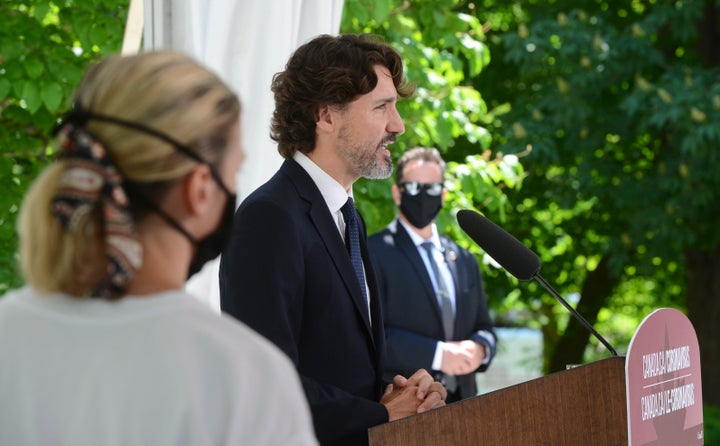
Canadian Prime Minister Justin Trudeau holds a press conference at Rideau Cottage in Ottawa on June 5, 2020.


Canadian Prime Minister Justin Trudeau holds a press conference at Rideau Cottage in Ottawa on June 5, 2020.

Kelly is encouraged by the fact the federal Liberals have extended the CEWS to August, as he figures it will be more useful ― and the uptake will be higher ― now that lockdowns are ending and businesses are opening up again. If so, the CEWS could end up helping to rehire some of the people that it arrived too late to help at the start of the pandemic.

“It’s a credit to the government” that it is staying flexible on policy as the crisis unfolds, he said.

Even those who point out the shortcomings in the program don’t lay much blame at policymakers’ feet.

“These nuances aren’t a sign that the initial decisions were flawed,” Shenfeld wrote. “Simple designs were needed to get them up and running in a hurry. But just as a patient has to be carefully weaned off pain medication, policymakers need to adjust their prescriptions as we take small steps towards economic health.”


Source link

Niecy Nash Says Police “Pulled a Taser” on Her Son for a “Rolling Stop”

Niecy Nash is speaking out.

In an interview with The Hollywood Reporter, the Reno 911 star opened up about her family’s experiences with police brutality, telling the publication that her son Dominic Nash was recently tasered by police for “a rolling stop.”

“My son got stopped leaving my house last Sunday. And they pulled a taser on him for a rolling stop,” she recalled, after explaining that she’s a “f–king wreck” in light of the events that have unfolded in the wake of George Floyd‘s death. “And then proceeded to question him and ask him, ‘You have on a T-Mobile shirt. Do you work there? Because if you do, how did you afford this car? Because this is a 2020.'”

Nash continued, “They don’t know if he was a manager. They don’t know if he was an owner. They don’t know if he had a rich mama. But what they probably felt like was how did this young black boy get a car that I don’t even have. And we fitting to make you suffer for it.”

Black Lives Matter: In Stars’ Own Words

When asked for comment, the LAPD informed E! News that they were not aware of the incident described by Nash and were unaware of her THR interview.

Prior to Floyd’s passing, the Claws star said that she always told her son to “just comply” with police, noting that the manner of Floyd’s death has left her searching for answers. 

“So while I receive phone calls where people are saying, ‘What can white people do? What can non-black people do?’ I’m trying to figure out what to tell my own son,” Nash said. “I used to say, if you just comply, get home, and if there was a wrong that happened, we’ll right it later. But now we watched a murder on national TV when George Floyd was murdered. I don’t know because he complied. He was in handcuffs. He was on the ground with his hands behind his back. So I don’t even know.” 

Niecy Nash, 2019 Emmy Awards, 2019 Emmys, Red Carpet Fashion

She added, “People are calling me, asking me to tell them something. And I’m trying to figure out what to tell mine.”

Drawing similarities to Dr. Martin Luther King Jr., Nash later said, “The people that are saying be peaceful, stay at peace? That was all Martin Luther King stood on and he was murdered anyway. Stay peaceful, stay peaceful in a country that has only taught you that you get what you want by uprising.” 

As for how those looking to become allies can help, Nash stressed that finding ways to take action shouldn’t fall on the black community’s shoulders. “It isn’t the responsibility of the oppressed to tell the oppressor what to do and how to right the wrong,” she explained. “So my suggestion is you need to ask non-black people what they can do. Are they fighting for equal pay? When they come on these sets, are they making people feel welcome? How are they moving in these scripts and when they look at how people are depicted?”

She continued, “Don’t call one more black person and ask them nothing about nothing. You call the white people and ask them what they could do because black people, by definition, can’t be racist because we’re not the ones in power.”  

Nash also told the outlet that she and her colleagues have come together to show their support for Floyd. “For the cast of Reno 911, we play bumbling cops on television but in real life, we got together as a cast and donated $10,000 towards George Floyd’s funeral,” she shared. “It is important to know that even in our art, we have humanity.”

“E! stands in solidarity with the black community against systemic racism and oppression experienced every day in America,” the network said in a statement on May 31. “We owe it to our black staff, talent, production partners and viewers to demand change and accountability. To be silent is to be complicit. #BlackLivesMatter.”

Source link

Joe Biden Does Not Want to Defund the Police, Spokesman Says

Former Vice President Joseph R. Biden Jr. “does not believe that police should be defunded,” a spokesman for his campaign said Monday, weighing in on a call from protesters and activists that has gathered steam as protests against police brutality and systemic racism have grown.

The spokesman, Andrew Bates, said in a statement that Mr. Biden “hears and shares the deep grief and frustration of those calling out for change” and “supports the urgent need for reform.” But Mr. Bates emphasized that Mr. Biden believes providing funding is necessary to help improve policing, including by supporting “community policing programs that improve relationships between officers and residents.”

“This funding would also go towards diversifying police departments so that they resemble the communities in which they serve,” Mr. Bates said. “We also need additional funding for body-worn cameras.”

The Biden campaign released the statement as “defund the police” has emerged as a rallying cry following the killings of George Floyd in Minneapolis and Breonna Taylor in Louisville, Ky., both of whom were black. Mr. Floyd died after a police officer knelt on his neck for nearly nine minutes. Ms. Taylor was shot dead by officers who entered her home during a raid.

Mr. Biden was traveling to Houston on Monday to meet with Mr. Floyd’s family, one day before his funeral is set to take place there.

The campaign pointed to a criminal justice plan that Mr. Biden released last year, which promised $300 million for the federal Community Oriented Policing Services program, or COPS.

More recently, Mr. Biden has called for “real police reform” and urged Congress to pass a series of measures, including ones that would outlaw chokeholds by the police, stop the transfer of military weapons to police departments and create a model standard for the use of force. He also pledged to create a national police oversight commission in his first 100 days in office.

Calls for a wholesale dismantling of local police departments are a long way from becoming Democratic Party orthodoxy. Even in the progressive movement, leading presidential candidates like Senators Bernie Sanders of Vermont and Elizabeth Warren of Massachusetts focused their criminal justice platforms on reactive measures such as eliminating cash bail and significantly decreasing the incarcerated population.

Since the Black Lives Matter movement began in 2013, a wave of more progressive district attorneys have been elected in cities like Chicago, Philadelphia and Ferguson, Mo. Even those officials — who are often at odds with their local police departments — have not embraced a police-free future, most likely because few elected officials know what one would look like at this time.

But activists have still asked Democratic lawmakers to make clear that they understand the problems with policing go beyond the need for body cameras or sensitivity training, and some have begun to respond.

Senator Kamala Harris of California, a former district attorney and state attorney general who is seen as a possible running mate for Mr. Biden, said on Monday that public safety needed to be reimagined.

“To have cities where one-third of their entire budget is going to policing, yet there is a dire need in those same cities for mental health resources, for resources going into public schools, resources going into job creation — come on, we have to be honest about this,” she said on ABC’s “The View.”

She did not call for eliminating all police officers.

President Trump’s re-election campaign had sought to focus attention on how Mr. Biden was responding — or not responding — to calls to defund police departments. Trump officials and surrogates on Monday held a conference call with reporters in which they argued that his silence on the call to defund the police was an implicit endorsement of it.

It was their latest attempt to tie Mr. Biden to the most progressive wing of his party, and to portray the Democratic Party as soft on crime.

“Where has Joe Biden been?” Tim Murtaugh, the Trump campaign’s communications director, said shortly before the Biden campaign released its statement. “By his silence, he is endorsing chaos and anarchy and lawlessness.”

After Mr. Biden released his statement through Mr. Bates, Mr. Murtaugh pressed the former vice president to comment himself.

“Joe Biden is the leader of his party and he could single-handedly step in and steer elected Democrats away from this terrible policy, which invites chaos in American communities, but he has remained secluded in his basement saying nothing,” Mr. Murtaugh said in a statement. “The ‘defund the police’ train has already left the Democrat station, and Joe Biden is merely a weak passenger.”

Katie Glueck, Astead W. Herndon and Annie Karni contributed reporting.

Source link

Australian Citizen Jailed in Vietnam ‘Vanishes’ in Custody

0

Concern is growing for an Australian citizen who has disappeared in Vietnam’s prison system while serving a 12-year term for engaging in acts of “terrorism,” according to media reports.

Chau Van Kham, a resident of Australia and member of the banned U.S.-based Viet Tan opposition party, has not been seen or heard from for nearly four months, Australia’s Guardian newspaper said on June 6.

Labeled a terrorist group by Vietnam in October 2016, Viet Tan describes itself instead as committed to peaceful, nonviolent struggle to promote democracy and human rights in Vietnam.

Sentenced on Jan. 19, 2019, and held initially in Ho Chi Minh City, the 70-year-old Chau has now “disappeared” in custody, with no word of his present whereabouts given to family members or to consular officials, who were last in contact with him at the beginning of the year, the Guardian said.

Potentially life-threatening conditions from which Chau, a Sydney resident, suffers may now be made worse by the conditions of his confinement, Chau’s son told the Guardian in its report, adding that his father has been denied “any forms of communication with the outside world.”

“I worry not only for his health but his mental state . . . it frightens me [to think] how he’s doing inside,” Chau’s son said.

“He’s now on a long journey until his release with no support from the Australian government at all, it seems like they’ve forgotten him.”

Call for government action

In a May 27 letter to Australia’s Minister for Foreign Affairs, Australian parliamentarian Chris Hayes meanwhile expressed “deep concern” over Chau’s continued imprisonment and urged swift government action to protect his well-being.

“I am advised by Mr. Chau’s Australian lawyer that all prisoner visitation rights have been canceled, and further [that] Mr. Chau has not been able to make or receive telephone calls from family or consular officials,” Hayes wrote.

Vietnamese officials cited concerns over the spread of coronavirus for the restrictions on prisoner contacts, Hayes said, adding that when Chau’s sister attempted to visit him on May 10 to deliver food and medicine, she was told only that he was no longer held at that prison.

“In view of the above, it would be appreciated if you could take all possible steps to secure Mr. Chau’s welfare, including all feasible and appropriate action to ensure that ongoing consular assistance is provided and that Mr. Chau is given access to his prescribed medication,” Hayes wrote.

Dissent is not tolerated in Vietnam, and authorities routinely use a set of vague provisions in the penal code to detain dozens of writers, bloggers, and activists calling for greater freedoms in the one-party communist state.

Estimates of the number of prisoners of conscience now held in Vietnam’s jails vary widely.

New York-based Human Rights Watch has said that authorities held 138 political prisoners as of October 2019, while Defend the Defenders has suggested that at least 240 are in detention, with 36 convicted last year alone.

Reported by RFA’s Vietnamese Service. Written in English by Richard Finney.


Source link

Mali orders probe into killings of 43 civilians in two villages

The Malian government says it has ordered an investigation into whether soldiers killed dozens of people during attacks on two villages last week.

Armed men dressed in military fatigues raided the village of Binedama on Friday, killing 29 people including women and children, and burning down houses, according to officials. Two days earlier, attackers had killed 14 people in the village of Niangassadiou, the government said in a statement.

More:

Both villages are in Mopti, a volatile region in the centre of the country that has seen many attacks and tit-for-tat ethnic killings over the past few years.

In both cases, community leaders said attackers targeted members of the Fulani group – semi-nomadic herders who have been accused by rival farming communities of supporting local armed groups, making them targets of violence from ethnic vigilante militias and sometimes government forces.

Fulani association Tabital Pulaaku said all the victims were innocent civilians. Last week, it accused Malian soldiers of carrying out both attacks, saying the troops surrounded Binedama in pick-up trucks before moving in, and attacked a trade fair at Niangassadiou.

The government acknowledged the accusation and said it had asked the military and the justice system to conduct the investigation.

“If it turned out that these killings were the work of national army members, sanctions matching the seriousness of these actions would be taken by the head of the military,” it said in its statement issued late on Sunday.

Human rights groups accused Malian armed forces of targeting people suspected of being armed group sympathisers and carrying out extrajudicial killings, kidnappings, torture and arbitrary arrests.

The government acknowledged some abuses by its forces in the past but also rejected many allegations made by rights groups. The military promised to investigate the charges.

On Friday, tens of thousands of people took to the streets of the capital, Bamako, to demand the resignation of President Ibrahim Boubacar Keita, who was re-elected in 2018 for a second five-year term on a promise to bring peace in a country torn by armed groups and worsening violence.

Keita is struggling to maintain support amid a rapidly deteriorating security situation that has claimed thousands of lives, forced hundreds of thousands to flee their homes and devastated the economy.ÙŽ

On Monday, officials from the United Nations, West Africa and the African Union (AU) met Mahmoud Dicko, an influential Muslim leader behind the demonstrations.

A source close to the coalition organising the protests, speaking on condition of anonymity, told AFP news agency: “The international community wanted to have information about our aims and then play the role of mediator, naturally.”

MINUSMA spokesman Olivier Salgado said the head of the peacekeeping mission, Mahamat Saleh Annadif, “along with representatives from regional organisations, met certain organisers (of Friday’s rally) but also with representatives of national authorities… to find ways of renewing dialogue.”

Mali has been in crisis since 2012 when Tuareg separatists launched a rebellion in the north, which was quickly commandeered by armed group fighters.

French forces intervened the following year to drive them back, but the fighters have regrouped and extended their operations into neighbouring Burkina Faso and Niger, triggering a bloody conflict.

Source link